Delaware Last Will and Testament for Single Person with No Children
What is this form?
The Last Will and Testament for a Single Person with No Children is a legal document that outlines how a person's assets will be distributed after their death. This form is specifically designed for individuals who are single and do not have children, providing tailored provisions for appointing an executor and specifying beneficiaries. Unlike wills meant for those with dependents, this document simplifies the estate planning process for those who have fewer complications regarding heirs.
Main sections of this form
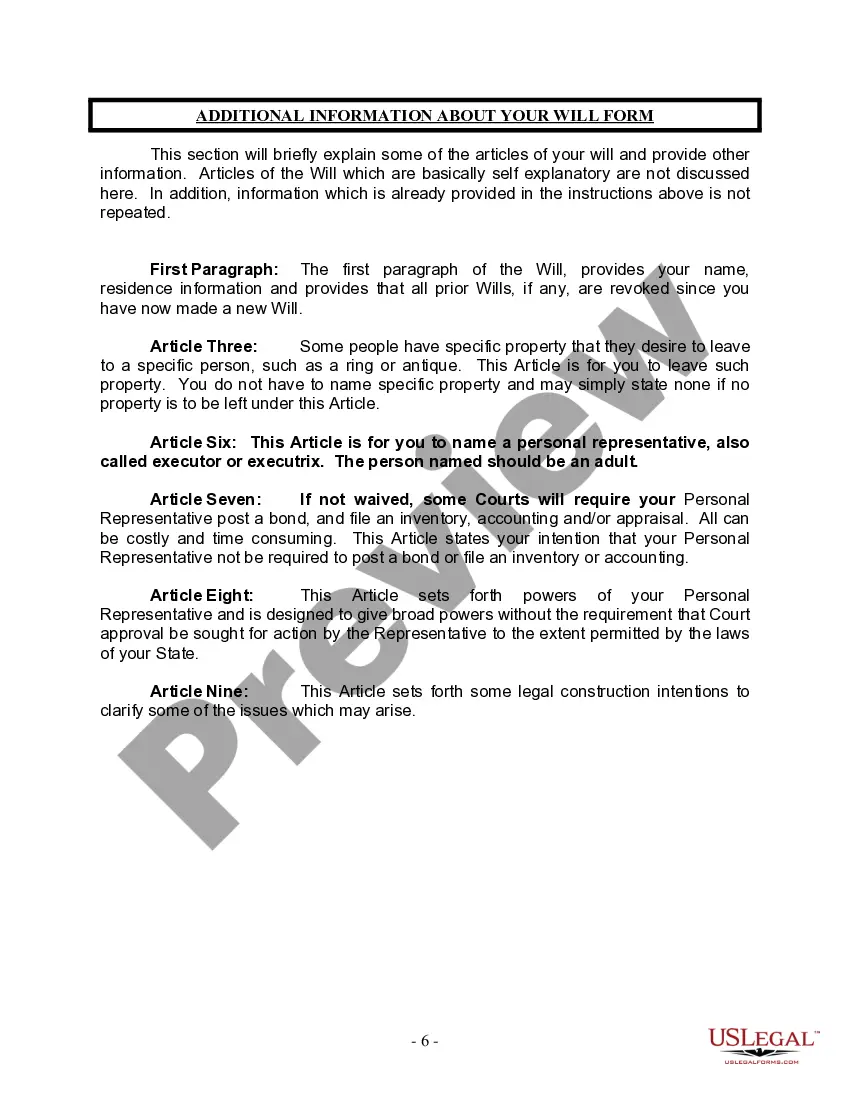
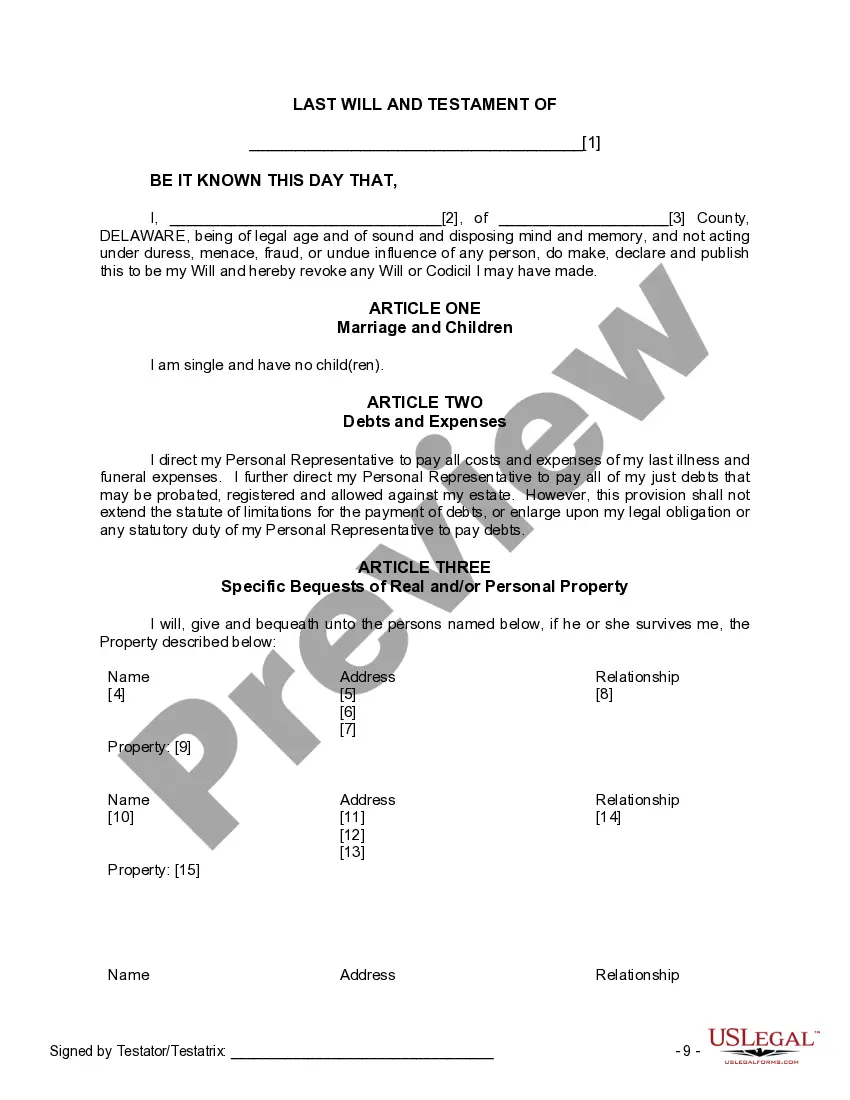
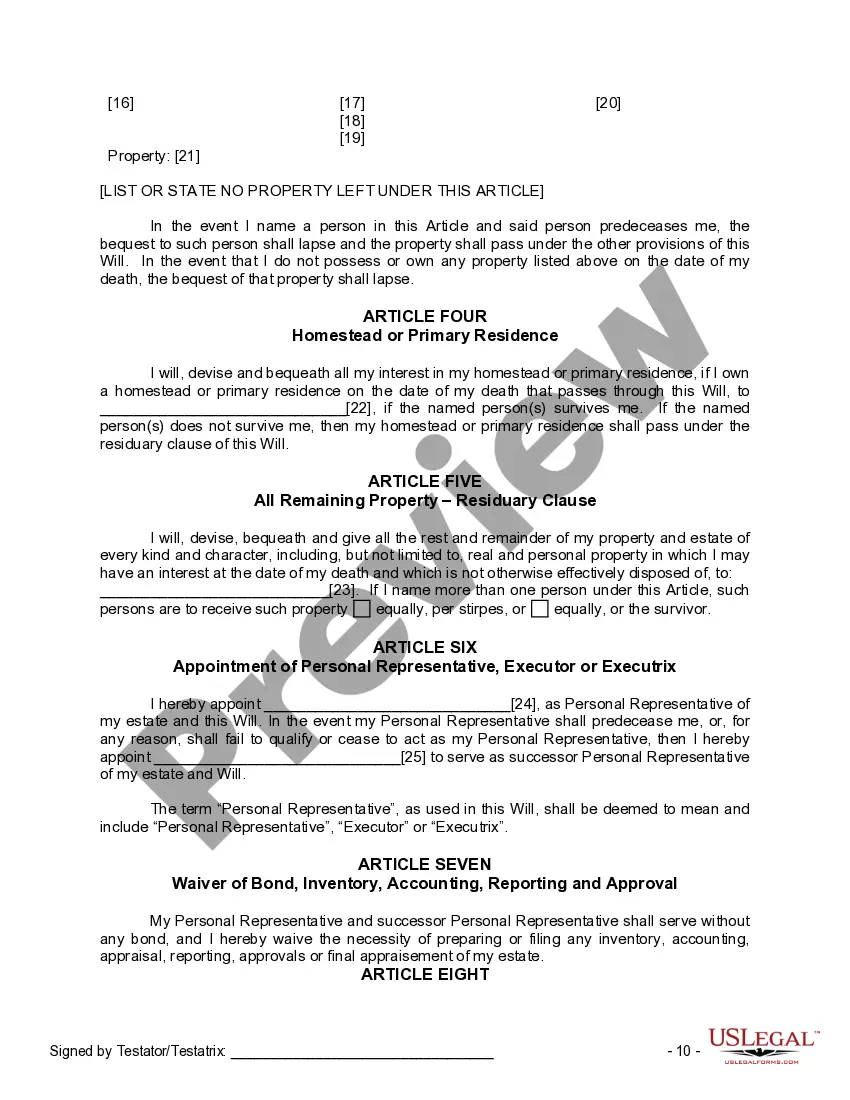
- Personal Representative: Appoint an executor to manage the estate after your death.
- Specific Bequests: Designate particular property items to specific individuals.
- Homestead Distribution: Specify who will receive your primary residence.
- Residuary Clause: Determine how to allocate remaining assets not specifically mentioned.
- Witness Requirements: The will must be signed in the presence of two unrelated witnesses.




When this form is needed
This form is necessary when a single person with no children wishes to clearly outline their wishes regarding asset distribution after death. It is particularly useful to ensure that your property is inherited by individuals of your choice, avoiding complications that can arise if you die without a will, such as intestacy laws leading to unexpected beneficiaries.
Who should use this form
This form is suitable for:
- Single individuals without children
- Those wishing to appoint an executor for their estate
- Persons seeking to simplify the distribution of their assets
- Individuals wanting to avoid the probate process complications involved with intestacy
How to prepare this document
Follow these steps to complete your Last Will and Testament:
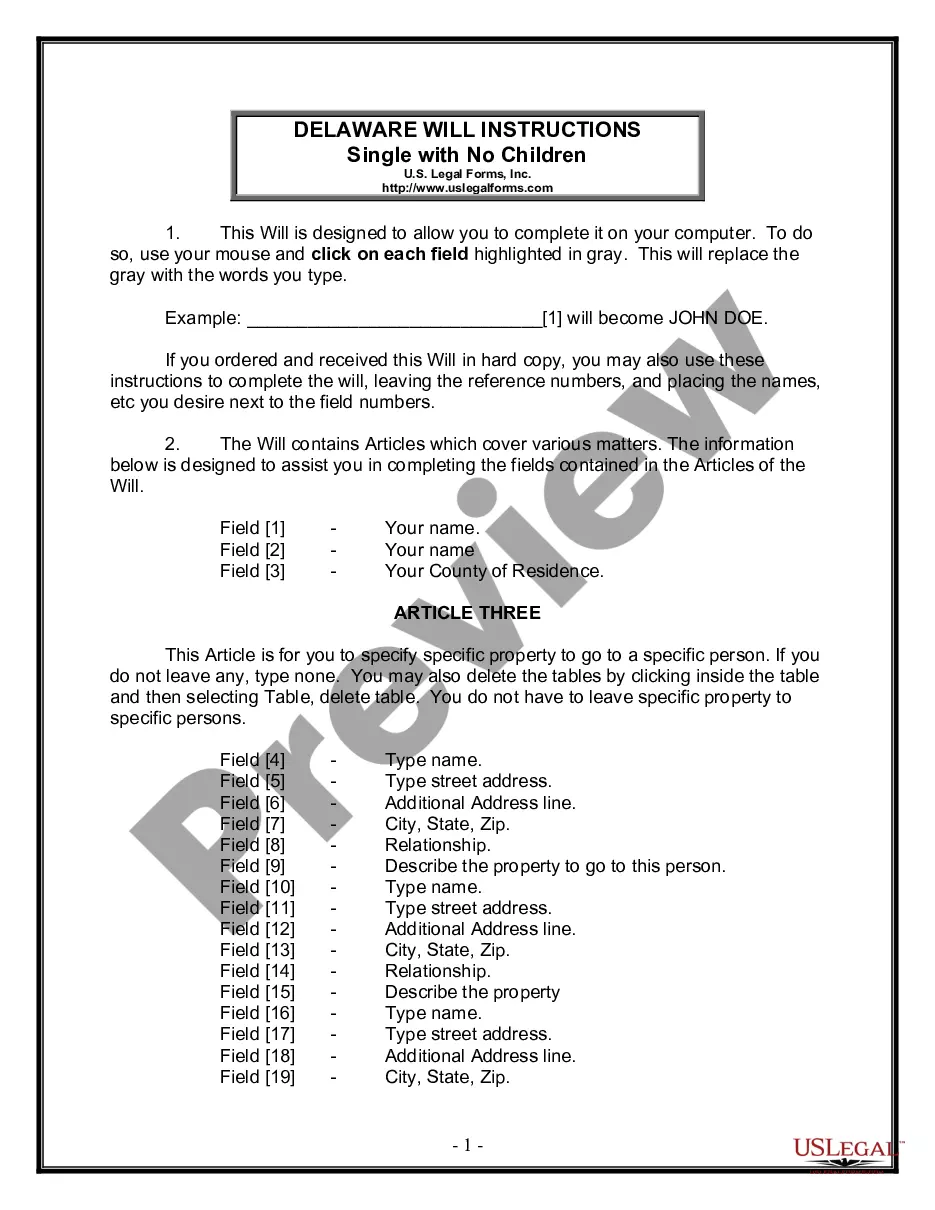
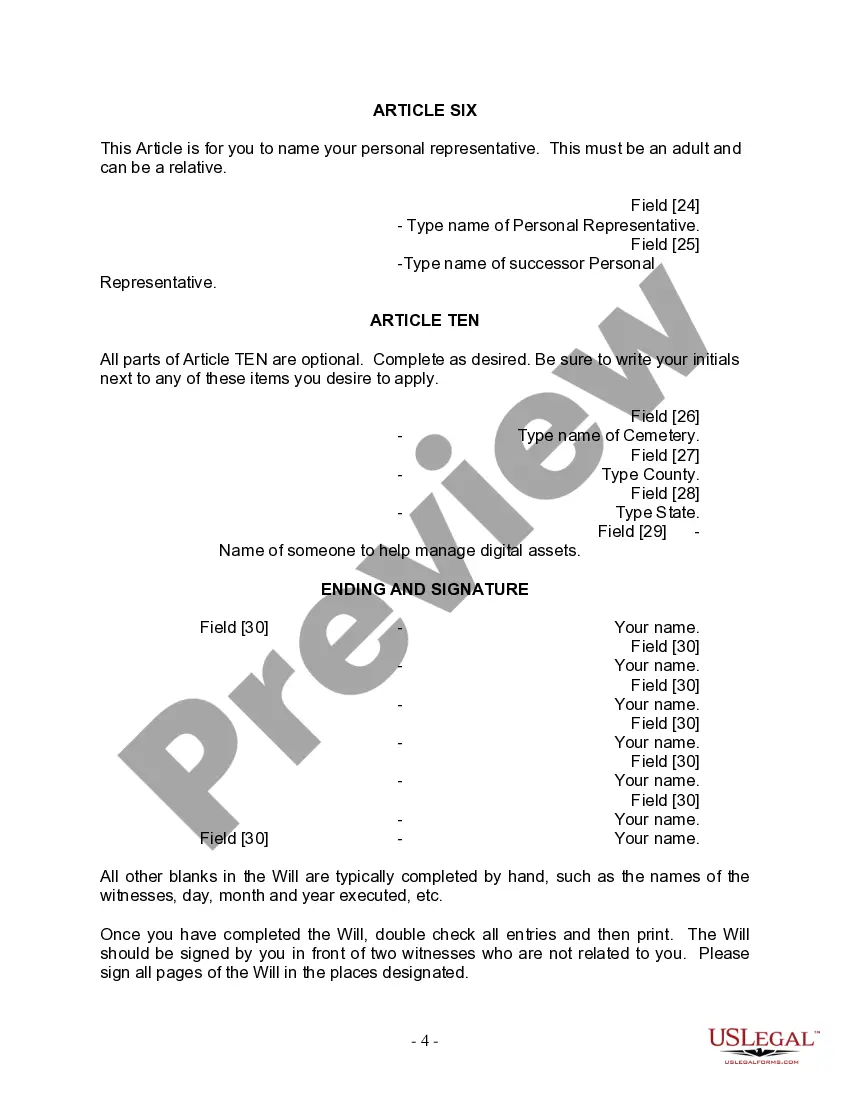
- Identify yourself and provide your county of residence.
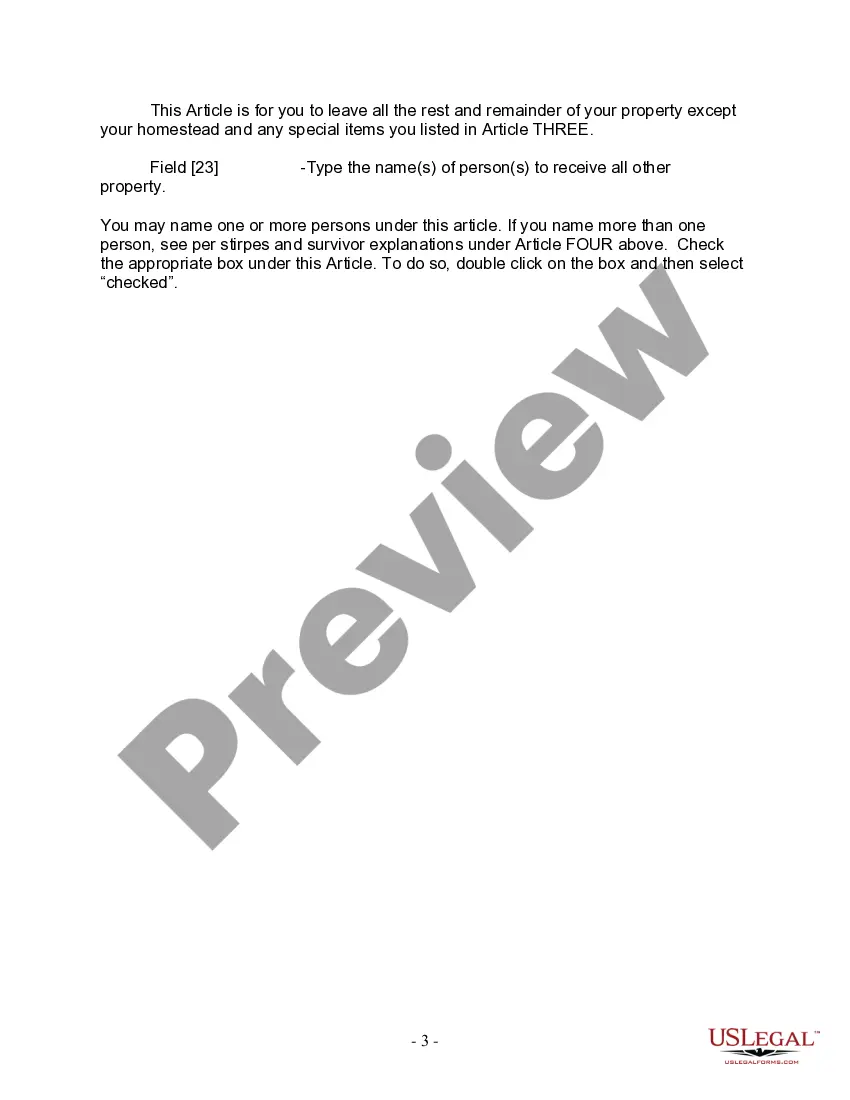
- Designate your beneficiaries by naming them and the specific property you wish to leave to each.
- Appoint a personal representative (executor) who will manage your estate.
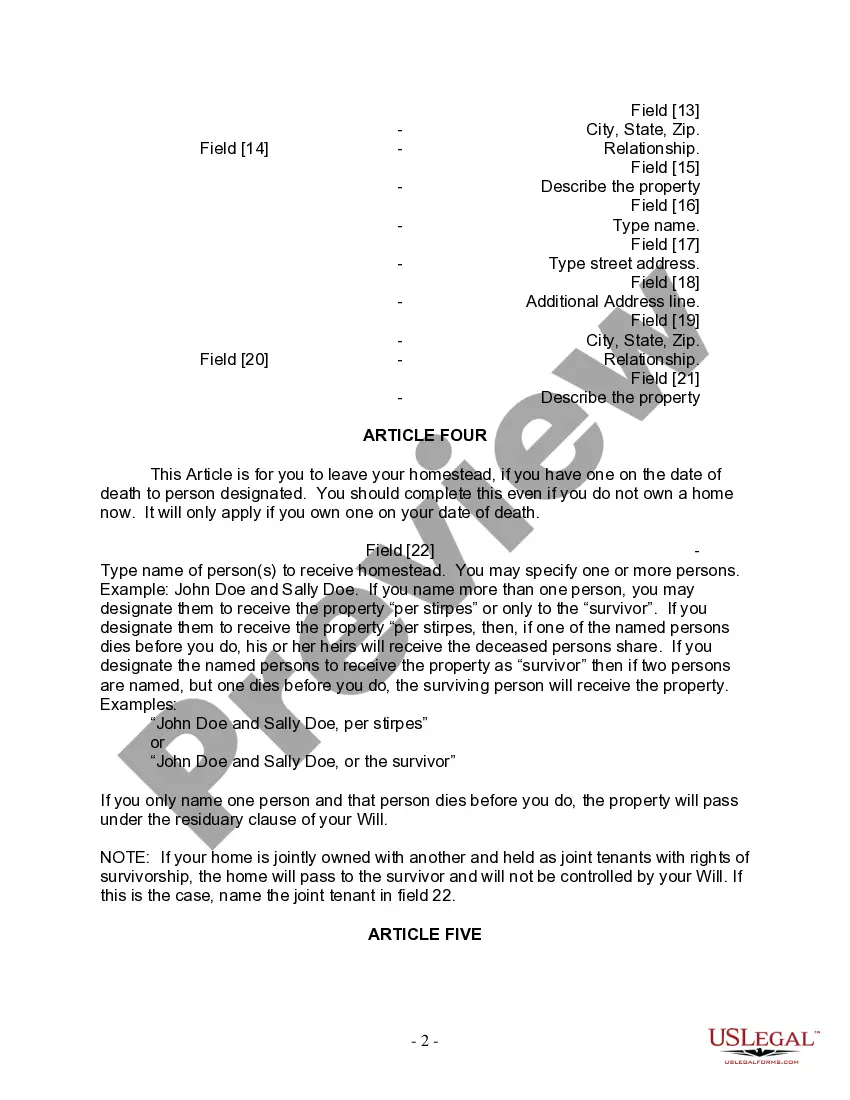
- Include a clause about your primary residence if applicable.
- Sign the will in front of two witnesses who are not named in the will.
Does this document require notarization?
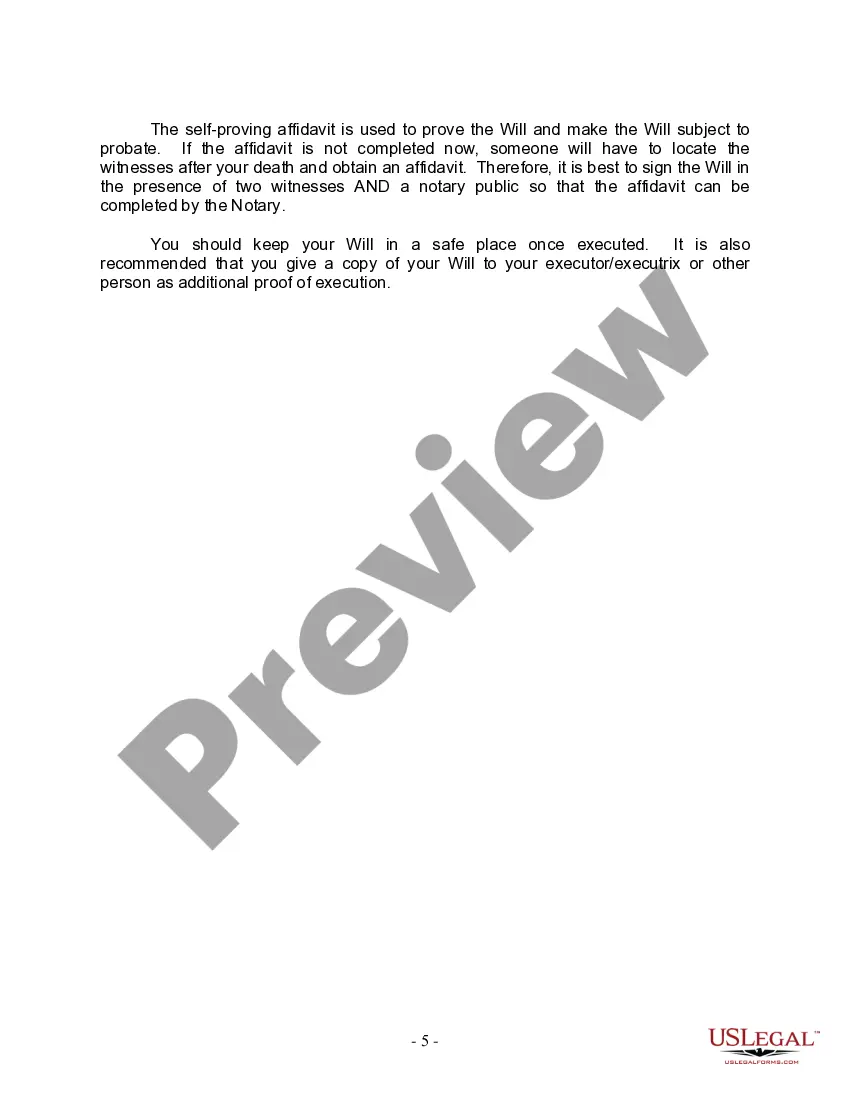
Yes, this form must be notarized to be legally valid. It is recommended to have the will signed in the presence of a notary public to create a self-proving affidavit, which can simplify the probate process and validate the will without needing witness testimony after your death.
Get your form ready online
Our built-in tools help you complete, sign, share, and store your documents in one place.
Make edits, fill in missing information, and update formatting in US Legal Forms—just like you would in MS Word.
Download a copy, print it, send it by email, or mail it via USPS—whatever works best for your next step.
Sign and collect signatures with our SignNow integration. Send to multiple recipients, set reminders, and more. Go Premium to unlock E-Sign.
If this form requires notarization, complete it online through a secure video call—no need to meet a notary in person or wait for an appointment.
We protect your documents and personal data by following strict security and privacy standards.

Make edits, fill in missing information, and update formatting in US Legal Forms—just like you would in MS Word.

Download a copy, print it, send it by email, or mail it via USPS—whatever works best for your next step.

Sign and collect signatures with our SignNow integration. Send to multiple recipients, set reminders, and more. Go Premium to unlock E-Sign.

If this form requires notarization, complete it online through a secure video call—no need to meet a notary in person or wait for an appointment.

We protect your documents and personal data by following strict security and privacy standards.
Common mistakes to avoid
- Failing to properly sign the will in front of witnesses.
- Not naming a personal representative, leaving the estate administration process unclear.
- Omitting specific property bequests, leading to unintentional distribution.
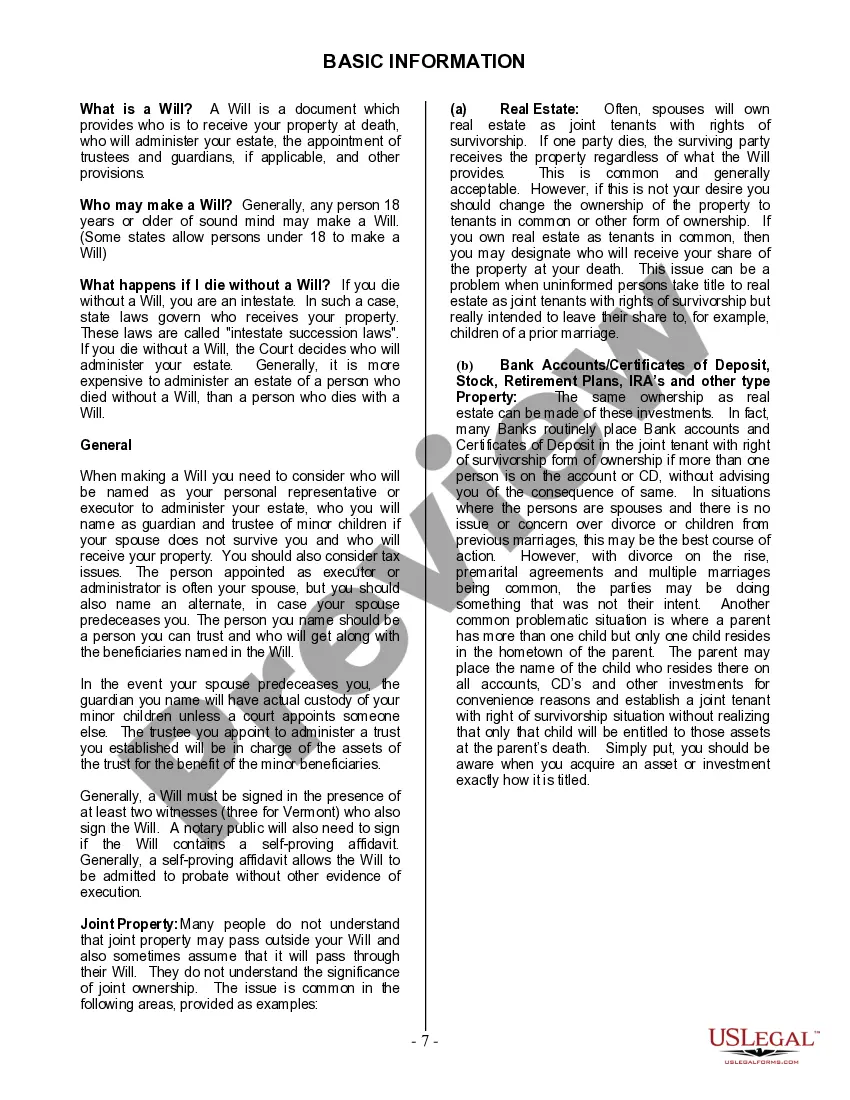
- Assuming the will will cover jointly owned assets without proper specification.
Benefits of using this form online
- Convenient online access to the form allows for easy completion and customization.
- Improved accuracy due to clear instructions for filling out the form.
- Ability to store the completed will digitally for safe keeping.
- Instant access to updates or modifications as personal circumstances change.
Summary of main points
- The Last Will and Testament is essential for specifying how your assets will be distributed after your death.
- It is specifically crafted for single individuals without children, simplifying the estate planning process.
- Proper execution, including witness signatures and possible notarization, is crucial for the willâs validity.
Looking for another form?




Form popularity
FAQ
To write a will for a single person in Delaware, begin with a clear title, stating it is your Last Will and Testament. List your assets and specify how you wish them to be distributed. If you have no children, designate an executor to manage your estate. Utilizing a service like USLegalForms can simplify the process and ensure your will is legally sound.
Yes, a handwritten will, also known as a holographic will, can be valid in Delaware as long as it meets specific legal requirements. The will must be signed and written entirely in your handwriting. This can be a suitable option for those creating a Delaware Last Will and Testament for a Single Person with No Children, but it’s wise to be cautious about meeting all necessary criteria.
You can obtain a form to write your own Delaware Last Will and Testament for a Single Person with No Children from various online platforms, including USLegalForms. This site offers easy-to-use templates that ensure your will complies with Delaware laws. Selecting a reliable source will help you create a valid will without unnecessary complications.
You do not need a lawyer to make a Delaware Last Will and Testament for a Single Person with No Children. While a lawyer can provide valuable guidance, many people successfully write their own wills. It's important to ensure your will meets Delaware's legal requirements, which you can achieve by using resources and templates available online.
Leaving a child out of your Delaware Last Will and Testament for Single Person with No Children involves specifying your decision in the document. Ensure that your will explicitly states that the child is not included as a beneficiary. This clarity can help manage expectations and reduce legal complications later on. USLegalForms offers comprehensive tools to help you express your wishes clearly and legally.
Yes, you can exclude one child from your Delaware Last Will and Testament for Single Person with No Children. It's important that your will clearly reflects your decision to omit that child. This way, the exclusion is documented and protected against challenges in the future. Utilizing services from USLegalForms provides the guidance needed to craft a will that accurately depicts your wishes.
To exclude a child from your Delaware Last Will and Testament for Single Person with No Children, you should clearly state your intentions in the will. You must indicate that you do not wish to include that child as a beneficiary. It is crucial to be explicit to prevent any potential disputes after your passing. Using a reliable platform like USLegalForms can help ensure that your will is drafted correctly and meets your specific needs.
To create a Delaware Last Will and Testament for Single Persons with No Children, you typically need personal identification and a list of your assets and beneficiaries. It's also helpful to have any previous wills on hand. Platforms like USLegalForms can provide you with checklists and templates to ensure you have everything needed.
No, Delaware does not require a will to be notarized, but doing so can add an extra layer of validity. A Delaware Last Will and Testament for Single Persons with No Children should simply be signed in the presence of two witnesses. Notarization can simplify the probate process if you choose to include it.
You can write your own Delaware Last Will and Testament for Single Persons with No Children. However, it is crucial to follow the state laws to ensure its validity. Resources available on platforms like USLegalForms can help guide you through the process of creating your own will.