Delaware Revocation of Power of Attorney for Care of Child or Children
What is this form?
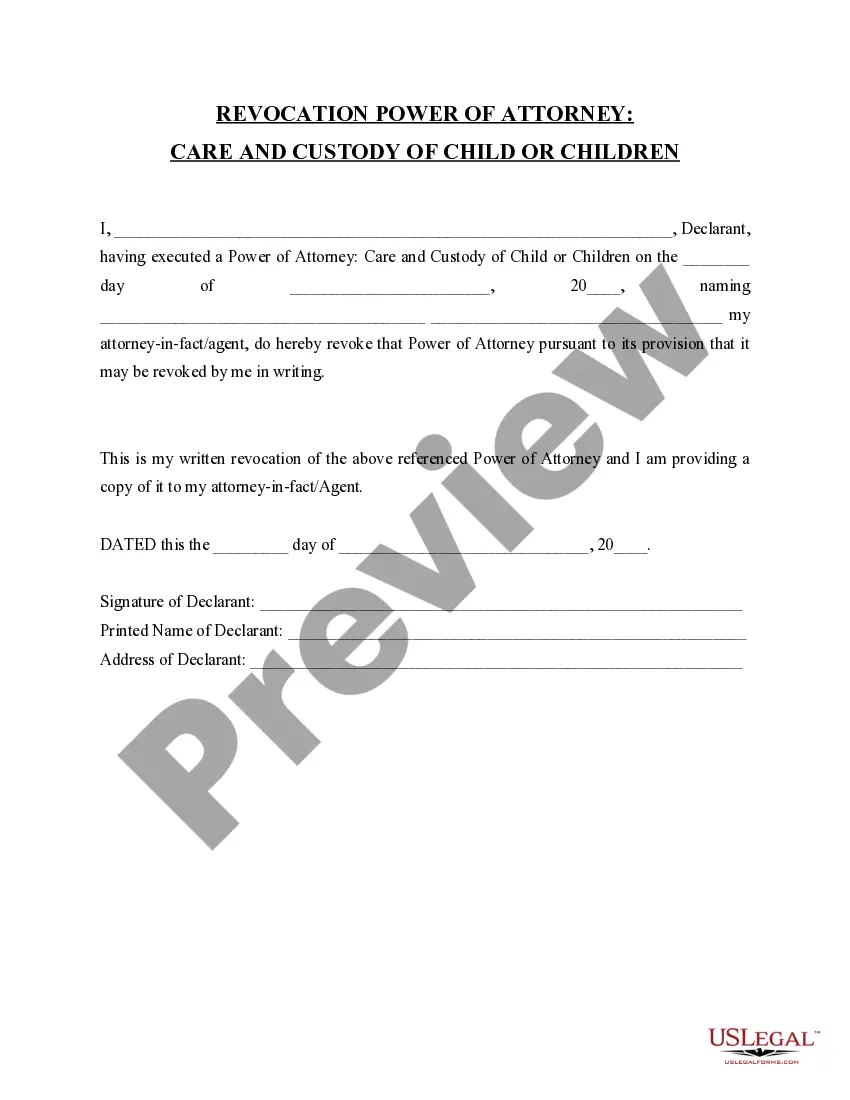
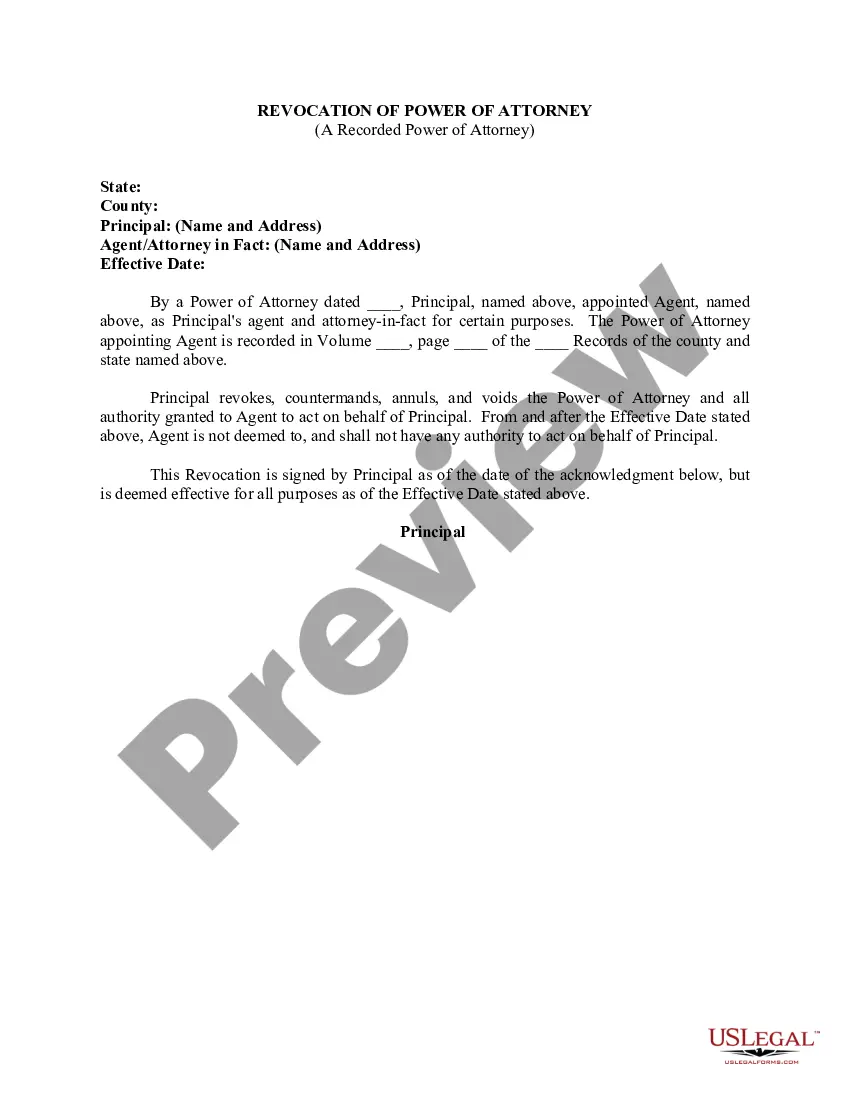
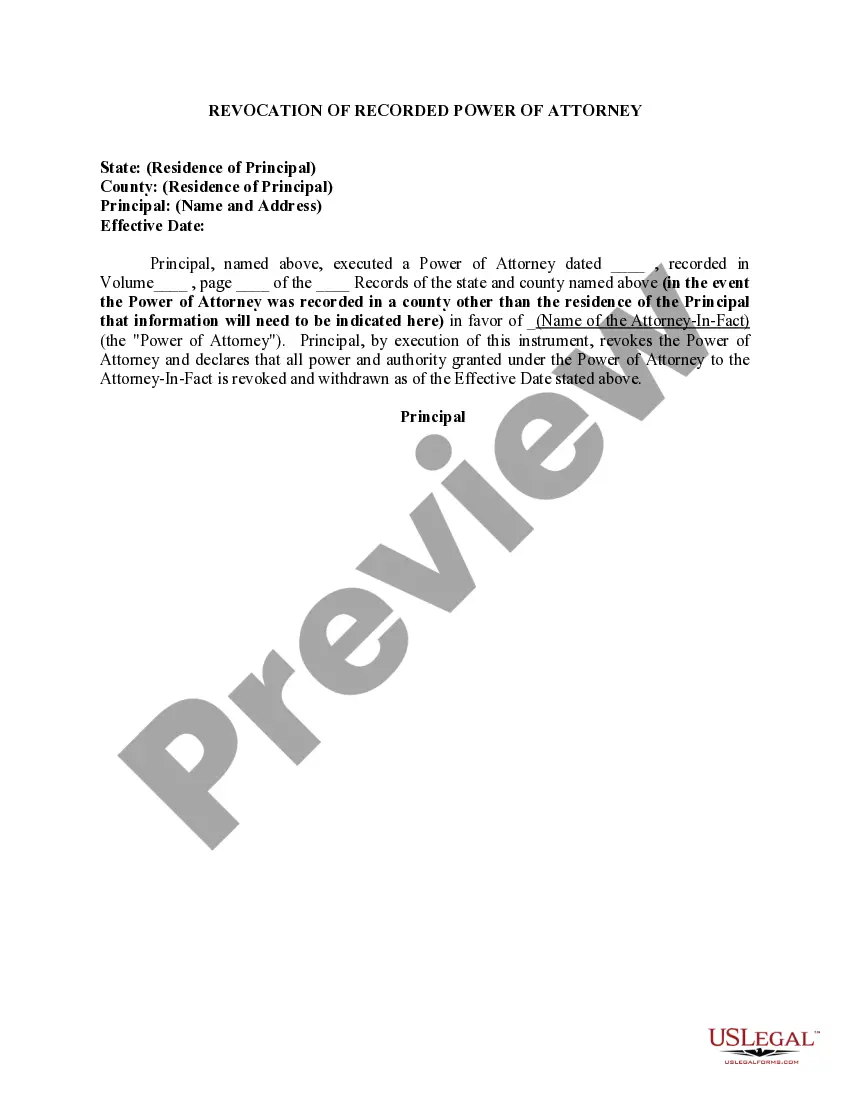
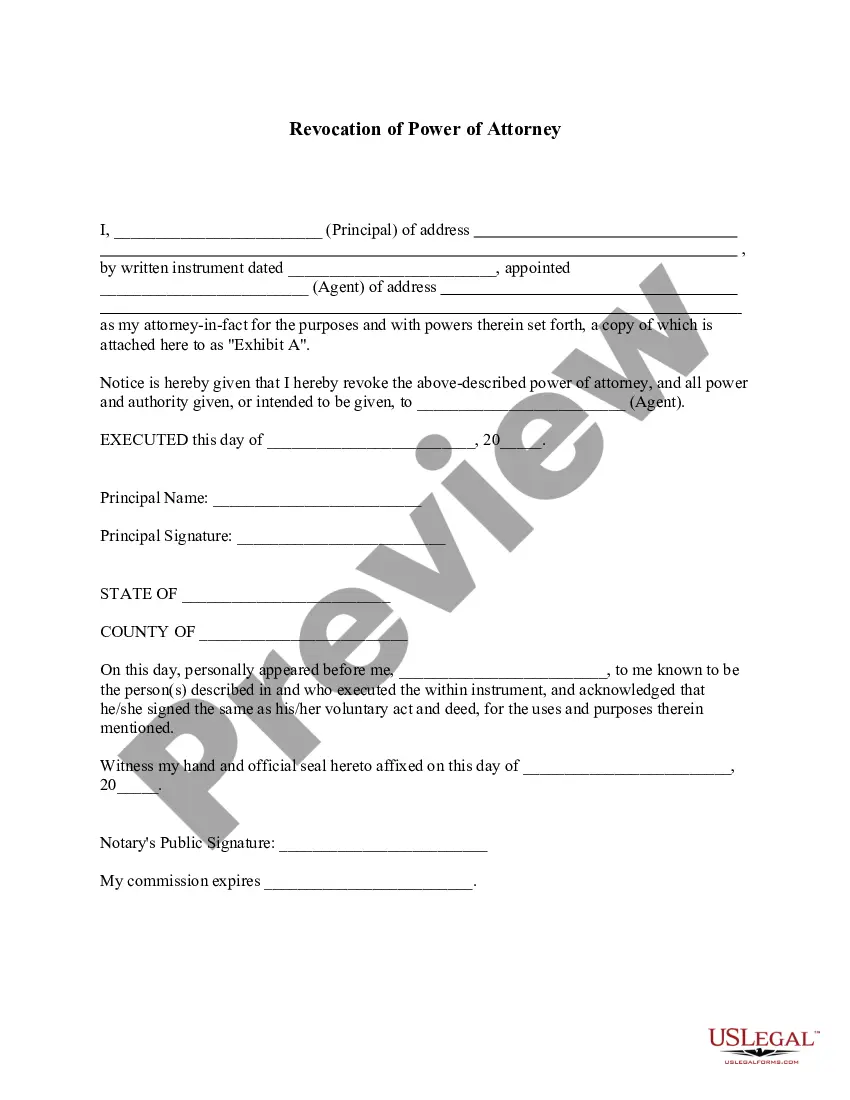
The Revocation of Power of Attorney for Care of Child or Children is a legal document that allows a parent or guardian to revoke a previous power of attorney granted for the care and custody of their child or children. This form streamlines the process of formally removing legal authority from an appointed agent, ensuring that any future decisions regarding the child's welfare are made solely by the parent or guardian. It is important to understand that this revocation can be done at any time, provided that the declarant is competent to make decisions. Unlike other legal forms concerning power of attorney, this document specifically addresses the context of child custody and care.
Form components explained
- Declarant's information: Includes the full name of the individual revoking the power of attorney.
- Details of the original power of attorney: Specifies the date the initial power of attorney was executed and the appointed agent.
- Revocation statement: Clearly states the intent to revoke the previously granted power of attorney.
- Date of revocation: Indicates when the revocation takes effect.
- Signature and printed name of the declarant: Necessary for validating the revocation.
- Address of the declarant: Required for identification purposes.
When to use this form
This form should be used when a parent or legal guardian wishes to terminate an existing power of attorney arrangement that allows another person to make decisions regarding the care and custody of their child or children. Situations may include a change in circumstances, the need for a different caretaker, or simply a desire to reclaim full authority over custody matters. Revocation is crucial for ensuring that the child's welfare decisions are made by the appropriate person.
Who should use this form
- Biological parents or legal guardians who wish to revoke a previously granted power of attorney for child care.
- Individuals who have recognized the need to update or change their child custody arrangements.
- Any parent or guardian who has legal competence and wishes to ensure their authority in decision-making for their children is restored.
How to prepare this document
- Identify yourself as the Declarant and provide your full name.
- Fill in the date when the original power of attorney was executed.
- Specify the name of the attorney-in-fact or agent whose authority you are revoking.
- Clearly state your intent to revoke the power of attorney in the designated section.
- Enter the date of revocation and ensure your signature is present.
- Print your name and provide your address for identification purposes.
Notarization requirements for this form
This form does not typically require notarization unless specified by local law. Be sure to review your state's requirements to confirm whether notarization is necessary for legal validity.
Get your form ready online
Our built-in tools help you complete, sign, share, and store your documents in one place.
Make edits, fill in missing information, and update formatting in US Legal Forms—just like you would in MS Word.
Download a copy, print it, send it by email, or mail it via USPS—whatever works best for your next step.
Sign and collect signatures with our SignNow integration. Send to multiple recipients, set reminders, and more. Go Premium to unlock E-Sign.
If this form requires notarization, complete it online through a secure video call—no need to meet a notary in person or wait for an appointment.
We protect your documents and personal data by following strict security and privacy standards.

Make edits, fill in missing information, and update formatting in US Legal Forms—just like you would in MS Word.

Download a copy, print it, send it by email, or mail it via USPS—whatever works best for your next step.

Sign and collect signatures with our SignNow integration. Send to multiple recipients, set reminders, and more. Go Premium to unlock E-Sign.

If this form requires notarization, complete it online through a secure video call—no need to meet a notary in person or wait for an appointment.

We protect your documents and personal data by following strict security and privacy standards.
Typical mistakes to avoid
- Failing to include the date of the original power of attorney.
- Not signing the document or forgetting to print the name properly.
- Neglecting to provide an accurate address, which may lead to issues in identification.
- Providing incomplete information about the attorney-in-fact or agent.
Why complete this form online
- Convenient access to the form anytime, allowing for easy completion at your own pace.
- Editable templates ensure you can fill in your specific information accurately.
- Compliance with legal standards, providing peace of mind regarding accuracy and validity.
Key takeaways
- The Revocation of Power of Attorney for Care of Child or Children allows parents to regain control of their child's custody decisions.
- It is essential to complete the form accurately and provide all necessary details.
- This form is compliant with legal standards and helps ensure the safety and welfare of the child or children involved.
Looking for another form?







Form popularity
FAQ
In the context of the Delaware Revocation of Power of Attorney for Care of Child or Children, a Power of Attorney cannot make decisions regarding adoption, change of a child's primary residence, or consent to marriage. These actions require more complicated legal processes that exceed the authority of a Power of Attorney. Therefore, it’s crucial to recognize the limitations of this legal role and consult with a legal expert for guidance. Utilize platforms like uslegalforms to get the necessary documentation and understand your responsibilities.
Serving as a Power of Attorney comes with significant responsibilities, especially concerning the Delaware Revocation of Power of Attorney for Care of Child or Children. If you make a decision that adversely affects the child's welfare, you may face legal consequences. Furthermore, if you act contrary to the child's best interests, other family members might challenge your authority. It's essential to understand these risks and manage them thoughtfully.
Abuse of power of attorney occurs when the agent misuses their authority for personal gain, such as selling the principal's assets without consent. Another example includes making decisions that do not align with the principal's best interests. Understanding the implications of these actions is essential when considering the Delaware revocation of power of attorney for care of child or children, as it protects those involved from potential harm.
To supersede a power of attorney, you must create a new power of attorney document that explicitly states it replaces the previous one. Clearly outline your new choices and intentions regarding the care of your child or children. Using a reliable platform like USLegalForms can help you draft these documents accurately and in compliance with Delaware laws.
A child does not typically have the authority to override a parent's power of attorney unless specific provisions allow it. The power of attorney remains in effect until officially revoked by the parent or deemed invalid by a court. It's vital to understand the nuances of the Delaware revocation of power of attorney for care of child or children to make informed decisions.
After the death of the principal, any abuse of power of attorney may lead to civil or criminal penalties against the agent. Courts may impose fines, and in some cases, the abuser can face imprisonment. It is crucial to handle powers of attorney responsibly, particularly in regard to the Delaware revocation of power of attorney for care of child or children obligations.
Generally, a child cannot override a power of attorney unless they are granted a specific power to do so within the document or by a court. In Delaware, the original grantor of the power of attorney maintains authority unless legally revoked. Understand the implications of the Delaware revocation of power of attorney for care of a child or children when navigating such situations.
To write a revocation of power of attorney for the care of a child or children in Delaware, you must create a document that clearly states your intention to revoke the previous power of attorney. Include your name, the date of the revocation, and the details of the original power of attorney. It's advisable to consult a legal professional or use resources like USLegalForms to ensure the revocation meets all legal requirements.
To revoke a power of attorney in Delaware, first draft a clear revocation letter that includes your identifying information and the details of the original power of attorney. After signing and dating the letter, distribute copies to all parties involved, including the agent and any institutions that received the original document. Keep in mind that prompt communication is key to a successful Delaware Revocation of Power of Attorney for Care of Child or Children.
To revoke power of attorney in Delaware, create a revocation document that clearly states your intention to revoke. Make sure to sign and date this document and send copies to the attorney-in-fact and any other relevant parties. Additionally, you may want to notify local agencies or institutions that held copies of the original power of attorney. Following these steps ensures a successful Delaware Revocation of Power of Attorney for Care of Child or Children.