Delaware Warning of Default on Commercial Lease
Understanding this form
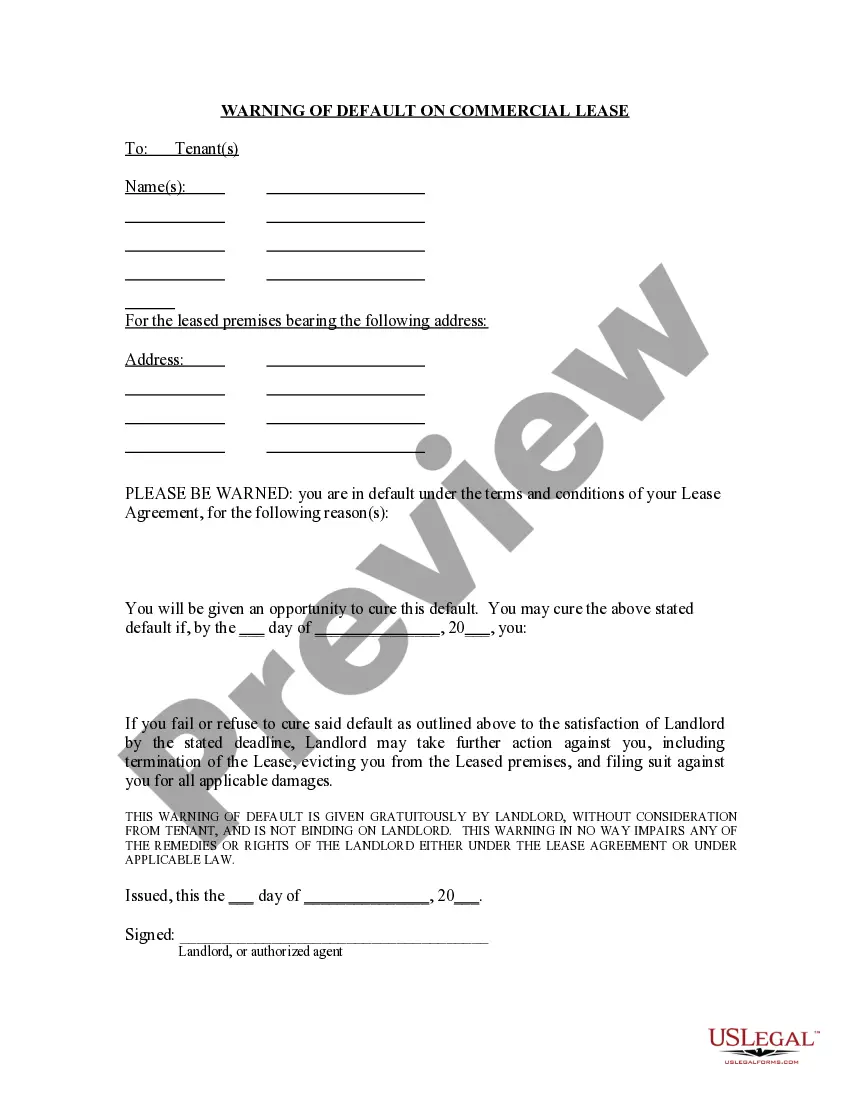
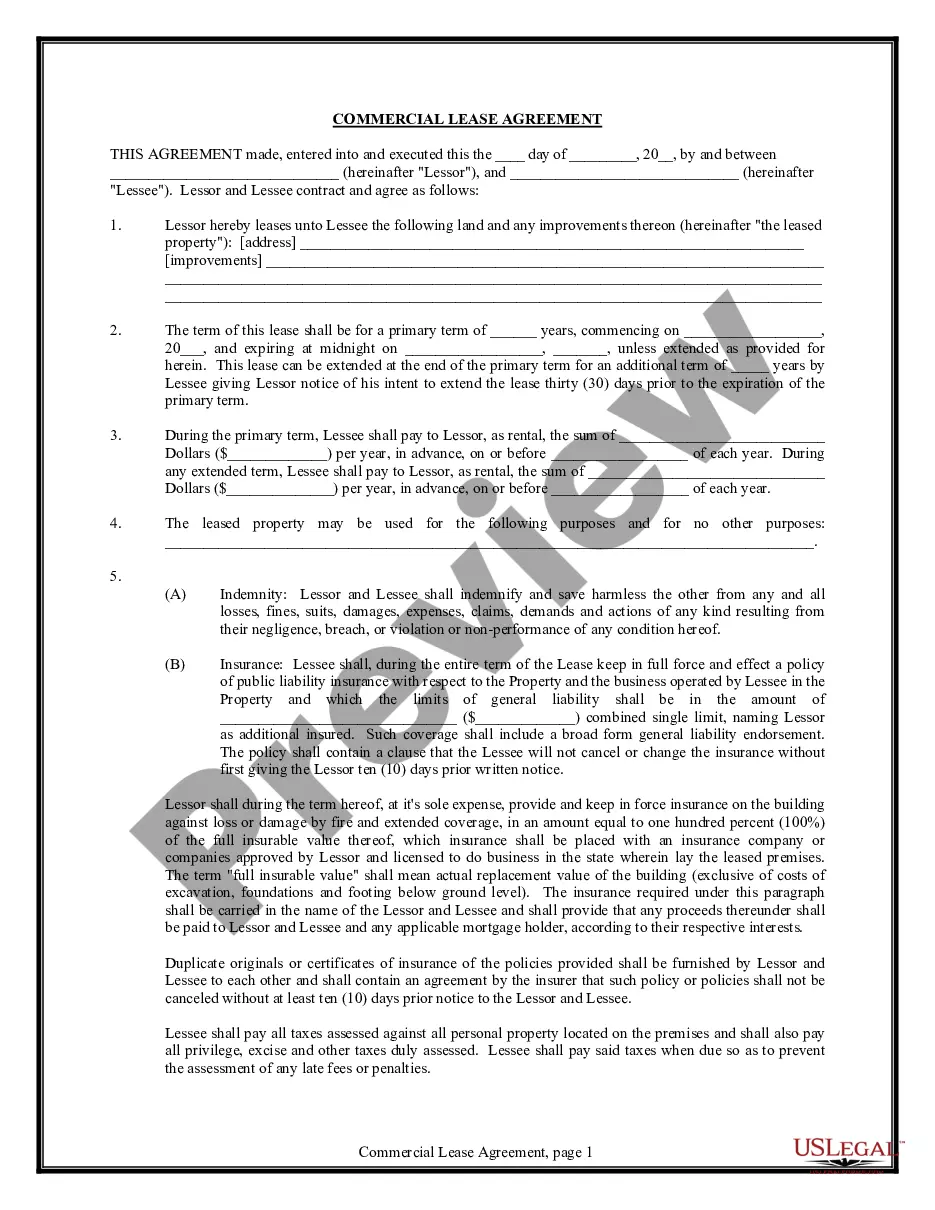
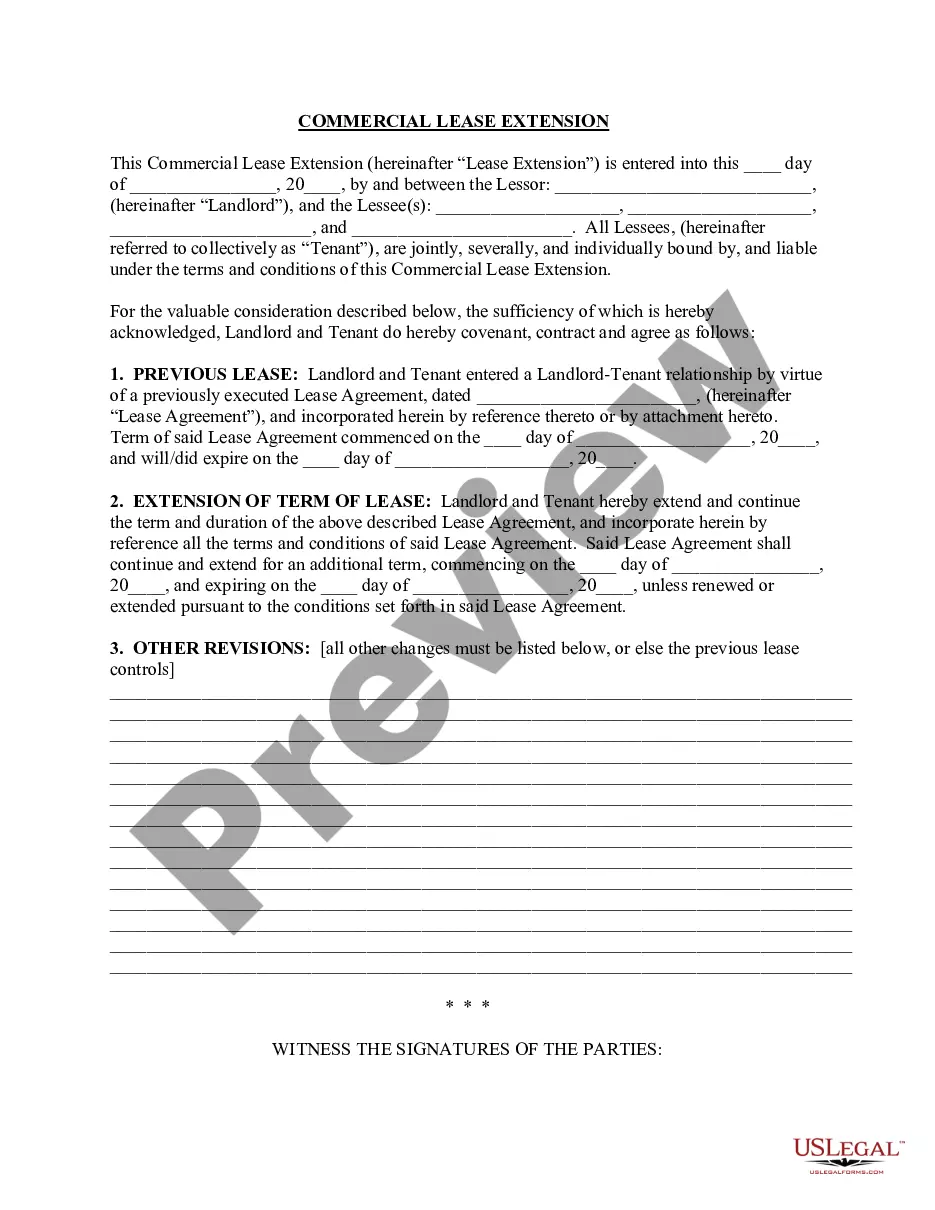
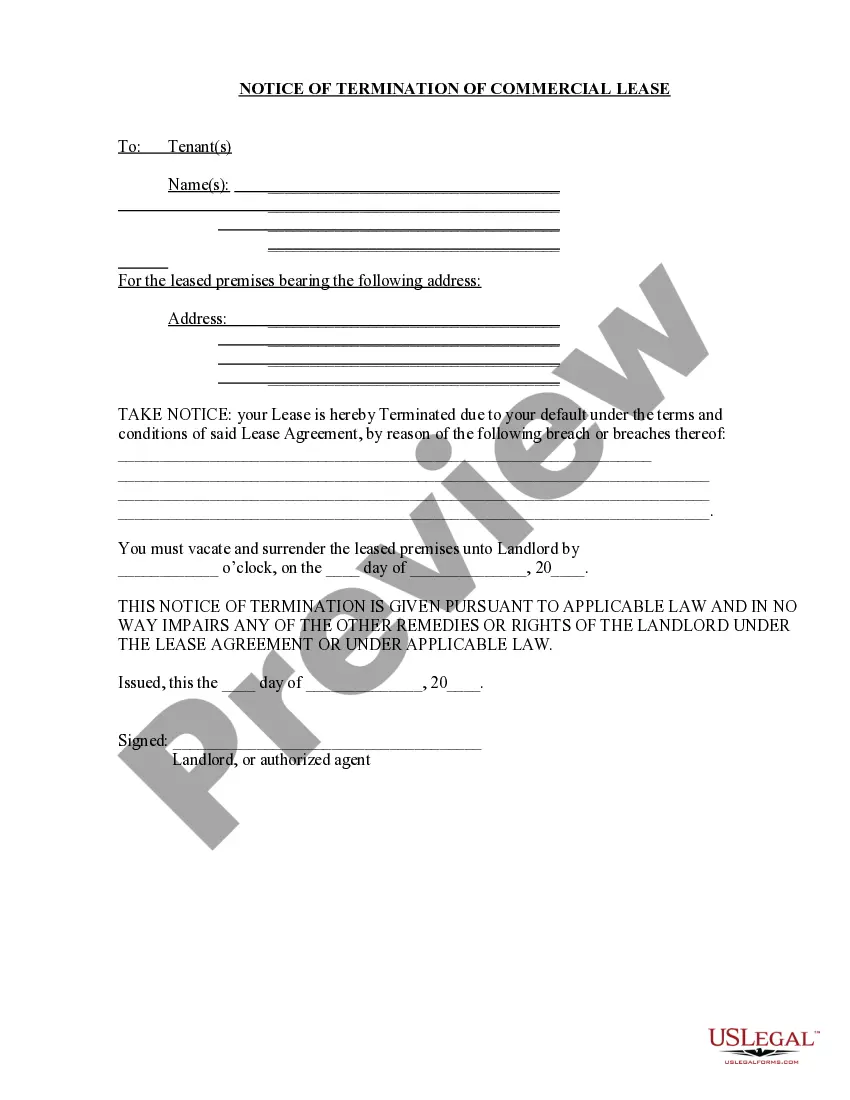
The Warning of Default on Commercial Lease is a formal notice from a landlord to a tenant indicating potential default under a lease agreement. This letter serves to alert the tenant regarding specific conditions that, if not rectified, may lead to legal action for eviction or the application of the security deposit. Unlike a wider range of lease forms, this document specifically addresses the issue of default and sets the stage for any necessary legal recourse, ensuring that both parties are aware of their rights and obligations.
Key parts of this document
- Identification of the landlord and tenant
- Specific date of issuance
- Details outlining the default conditions
- Space for landlord's signature or authorized agent
- Disclaimer about the non-binding nature of the warning
When to use this form
This form is used when a landlord needs to inform a tenant about an impending default related to their commercial lease. Situations may include failure to pay rent on time, breach of lease terms, or failure to comply with maintenance obligations. It is essential to issue this warning before taking further legal actions, such as initiating eviction proceedings.
Intended users of this form
This form is intended for:
- Landlords of commercial properties
- Property managers acting on behalf of landlords
- Tenants who wish to understand their lease obligations
Instructions for completing this form
- Enter the date of the warning issuance
- Clearly identify the landlord and tenant by name
- Specify the default conditions that need to be remedied
- Sign the document as the landlord or an authorized agent
- Keep a copy for your records and ensure timely delivery to the tenant
Is notarization required?
This form does not typically require notarization unless specified by local law. It is essential to check state regulations to ensure compliance regarding formal notices related to lease agreements.
Get your form ready online
Our built-in tools help you complete, sign, share, and store your documents in one place.
Make edits, fill in missing information, and update formatting in US Legal Forms—just like you would in MS Word.
Download a copy, print it, send it by email, or mail it via USPS—whatever works best for your next step.
Sign and collect signatures with our SignNow integration. Send to multiple recipients, set reminders, and more. Go Premium to unlock E-Sign.
If this form requires notarization, complete it online through a secure video call—no need to meet a notary in person or wait for an appointment.
We protect your documents and personal data by following strict security and privacy standards.

Make edits, fill in missing information, and update formatting in US Legal Forms—just like you would in MS Word.

Download a copy, print it, send it by email, or mail it via USPS—whatever works best for your next step.

Sign and collect signatures with our SignNow integration. Send to multiple recipients, set reminders, and more. Go Premium to unlock E-Sign.

If this form requires notarization, complete it online through a secure video call—no need to meet a notary in person or wait for an appointment.

We protect your documents and personal data by following strict security and privacy standards.
Mistakes to watch out for
- Failing to provide adequate details about the default conditions
- Not including the date of the notice
- Neglecting to sign the warning
- Using vague language that may confuse the tenant
Why use this form online
- Convenient access to professionally drafted legal forms
- Editable templates that allow customization according to specific needs
- Instant download for immediate use
- Reliability, knowing that forms comply with legal standards
Legal use & context
Utilizing this Warning of Default on Commercial Lease is important in protecting the landlord's rights while also fulfilling the legal obligation of informing the tenant. Failing to provide such a warning may hinder future eviction proceedings if necessary.
Quick recap
- This form acts as a formal notice of potential default to the tenant.
- Landlords must specify the conditions that constitute the default.
- It is crucial to issue this warning before pursuing eviction.
- Complete and keep copies for documentation purposes.
Looking for another form?



Form popularity
FAQ
In Delaware, the notice period a landlord must provide to a tenant to vacate typically depends on the lease terms and the reason for termination. For most situations, a 60-day notice is standard when a landlord seeks eviction. It is crucial to follow these guidelines to ensure all parties are treated fairly and legally, particularly when navigating a Delaware Warning of Default on Commercial Lease.
Section 5513 of the Delaware landlord-tenant code pertains to the rights and responsibilities of landlords regarding the ejection of tenants. This section emphasizes the need for compliance with all legal procedures when removing tenants from a property. Knowing this section helps landlords navigate the challenges associated with tenant defaults, especially while issuing a Delaware Warning of Default on Commercial Lease.
The default clause in a commercial lease specifies what actions constitute a violation of the lease terms. It typically outlines the remedies available to landlords in case of tenant default, such as eviction or seeking damages. Understanding the default clause is critical for both landlords and tenants to mitigate conflicts, making it especially relevant under the Delaware Warning of Default on Commercial Lease.
A notice of default on a commercial lease serves as a formal declaration from the landlord indicating that the tenant has failed to meet specific lease obligations. This notice is typically the first step before further legal actions are taken, such as eviction proceedings. It is important for landlords to document these notices accurately to establish a clear timeline of events, particularly concerning Delaware Warning of Default on Commercial Lease.
Section 23 of the Landlord and Tenant Act outlines the circumstances under which landlords must provide proper notice to tenants regarding the lease's termination. This section helps protect tenants while giving landlords the legal backing to reclaim possession of their property. Familiarity with this section can support both parties in maintaining transparency and adherence to the lease terms, especially in the context of a Delaware Warning of Default on Commercial Lease.
In Delaware, when a tenant defaults on a commercial lease, a landlord has several basic remedies. The landlord can choose to terminate the lease and regain possession of the property. Alternatively, the landlord can seek damages for unpaid rent and any additional costs incurred. A Delaware Warning of Default on Commercial Lease helps initiate this process by formally notifying the tenant of their default.
The most common form of landlord default often involves failure to maintain the property. This could include issues such as neglecting essential repairs or not providing necessary services. When faced with such situations, tenants should issue a Delaware Warning of Default on Commercial Lease to document their concerns and formally notify the landlord. Utilizing resources like uslegalforms can assist you in navigating this process smoothly.
If a landlord defaults on their obligations, tenants have specific rights under Delaware law. Typically, tenants may be able to seek remedies such as rent reduction or lease termination. A Delaware Warning of Default on Commercial Lease may also come into play, as it allows tenants to formally notify their landlord of the default and seek resolution. Knowing these rights can empower you to take appropriate actions.
In general, a landlord cannot simply lock out a commercial tenant without following proper legal procedures. In Delaware, landlords must issue a Delaware Warning of Default on Commercial Lease prior to taking any action. This warning provides tenants with the opportunity to rectify the situation before any drastic measures occur. Understanding your rights as a tenant can help you avoid unnecessary conflicts.
If you default on a commercial lease, you could face serious repercussions, including eviction and loss of security deposits. Additionally, the landlord may seek damages, which might affect your business credit and reputation. Understanding the Delaware Warning of Default on Commercial Lease is essential, as it provides guidelines on resolving issues before they escalate into legal battles, offering a path to restore compliance.