Delaware Letter from Landlord to Tenant about Tenant engaging in illegal activity in premises as documented by law enforcement and if repeated, lease terminates
Understanding this form
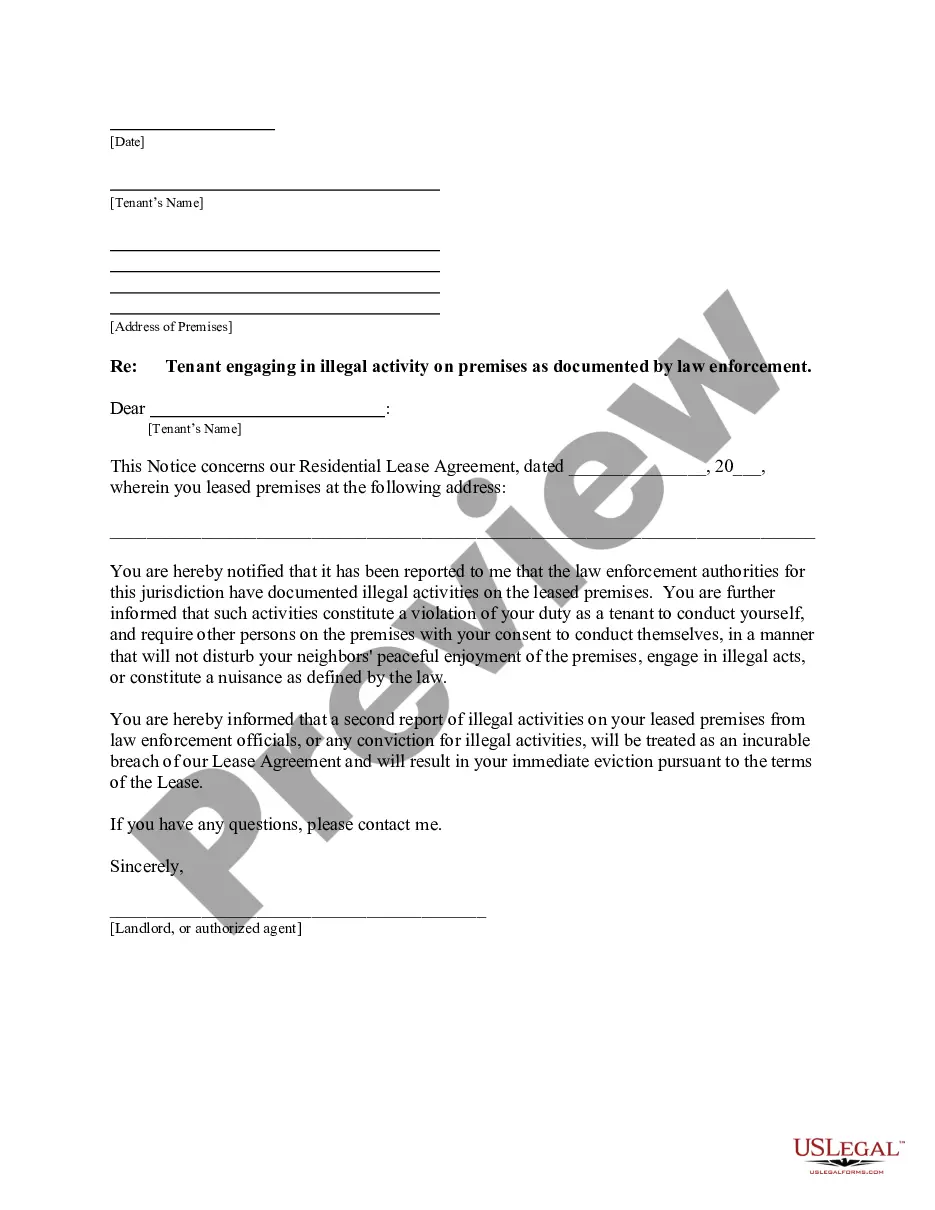
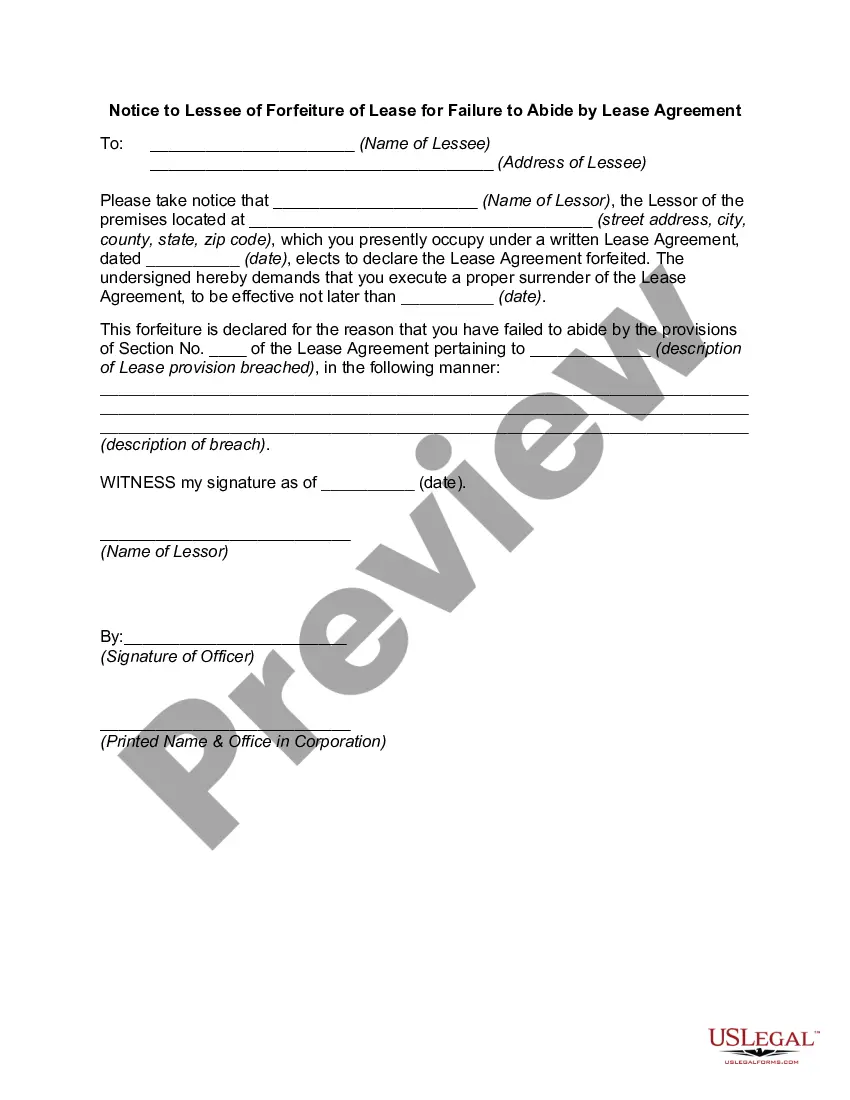
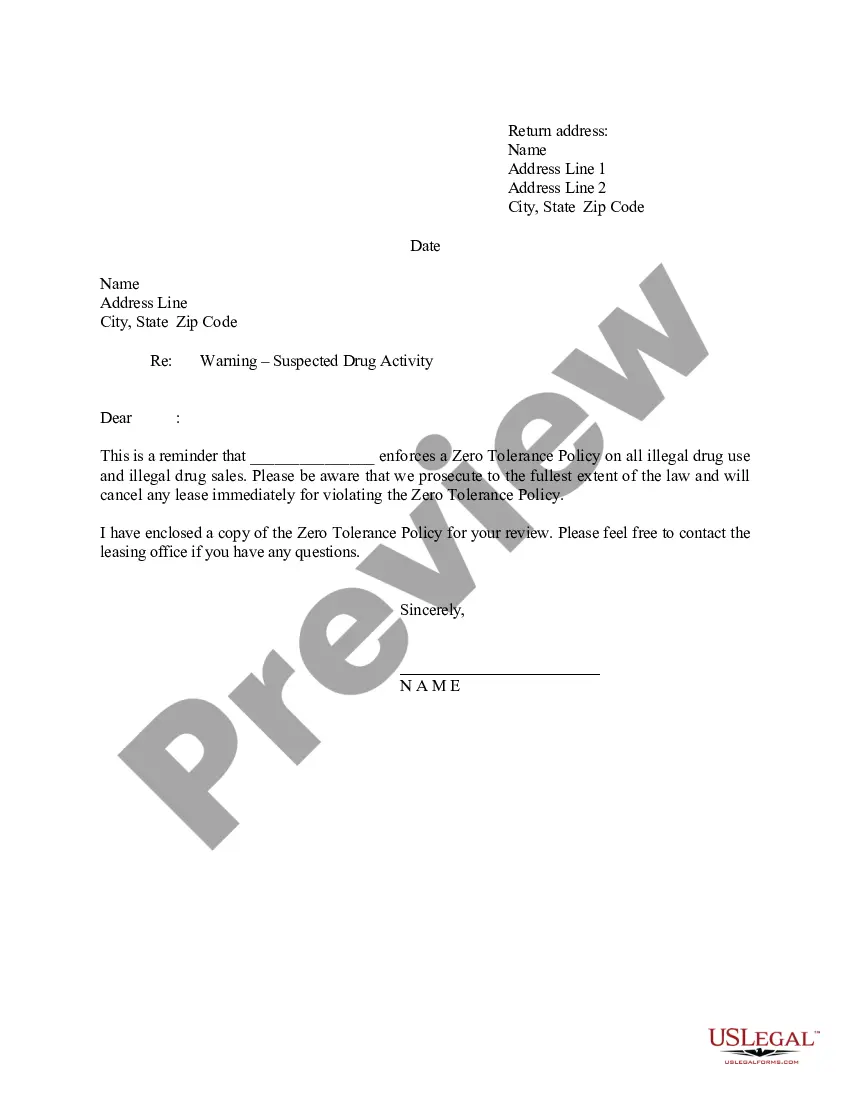
This letter from the landlord to the tenant addresses illegal activities reported on the leased premises as documented by law enforcement. Its primary purpose is to formally demand that the tenant cease such activities. This form is crucial for landlords who need to enforce lease agreements and ensure their properties are not used for illegal purposes, distinguishing it from other lease-related communication forms.
Key parts of this document
- Notification of illegal activities documented by law enforcement
- Explanation of tenant's responsibilities and duties
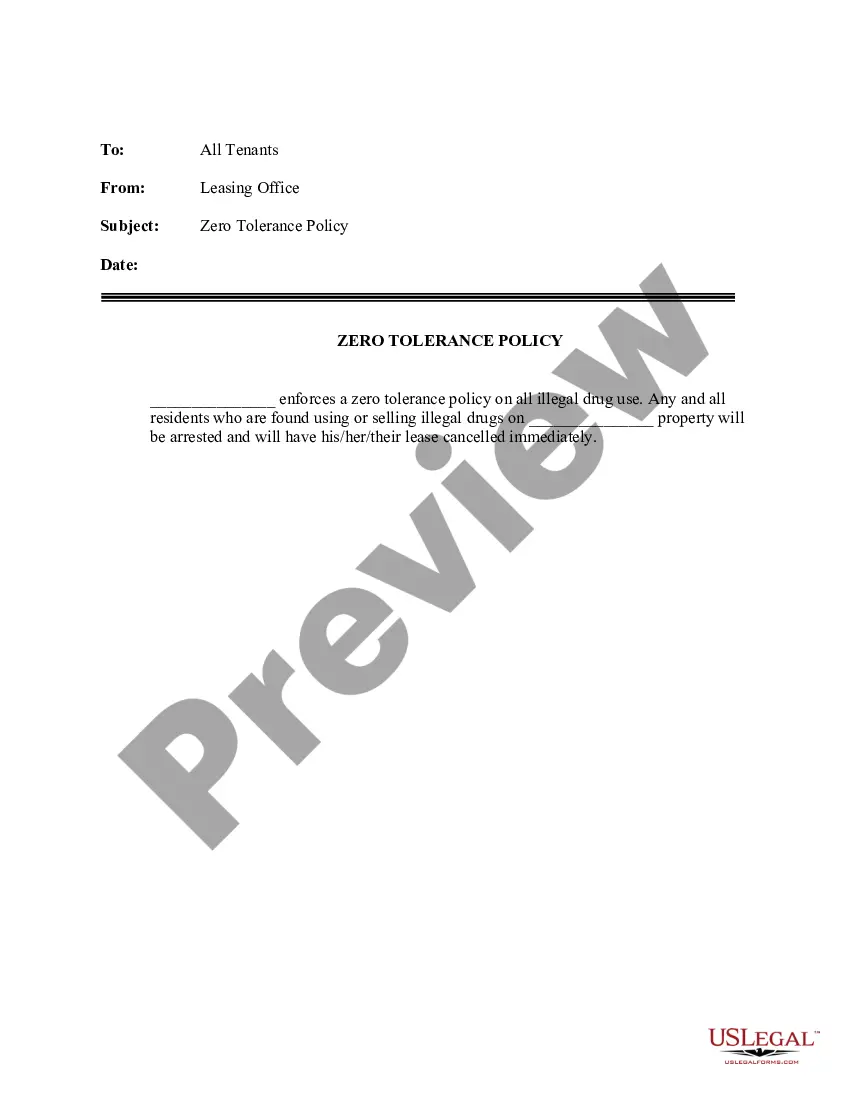
- Warning regarding potential eviction for repeated violations
- Contact information for further inquiries
- Signature line for the landlord

When to use this document
This form should be used when a landlord becomes aware of illegal activity occurring on the leased premises. It is necessary when law enforcement has documented such activities, providing the landlord with grounds to address the issue formally. The letter serves as a warning to the tenant and outlines potential consequences if the behavior continues.
Who should use this form
- Landlords dealing with tenants involved in illegal activities
- Property management companies responsible for lease enforcement
- Individuals renting out their property who want to maintain legal compliance
Completing this form step by step
- Identify the tenant by name and address the letter accordingly.
- Provide details regarding the illegal activities reported by law enforcement.
- Clearly state the tenantâs obligations under the lease agreement.
- Inform the tenant about the consequences of repeated illegal activities, including eviction.
- Sign and date the letter to validate the communication.
Notarization guidance
This form does not typically require notarization unless specified by local law.
Get your form ready online
Our built-in tools help you complete, sign, share, and store your documents in one place.
Make edits, fill in missing information, and update formatting in US Legal Forms—just like you would in MS Word.
Download a copy, print it, send it by email, or mail it via USPS—whatever works best for your next step.
Sign and collect signatures with our SignNow integration. Send to multiple recipients, set reminders, and more. Go Premium to unlock E-Sign.
If this form requires notarization, complete it online through a secure video call—no need to meet a notary in person or wait for an appointment.
We protect your documents and personal data by following strict security and privacy standards.

Make edits, fill in missing information, and update formatting in US Legal Forms—just like you would in MS Word.

Download a copy, print it, send it by email, or mail it via USPS—whatever works best for your next step.

Sign and collect signatures with our SignNow integration. Send to multiple recipients, set reminders, and more. Go Premium to unlock E-Sign.

If this form requires notarization, complete it online through a secure video call—no need to meet a notary in person or wait for an appointment.

We protect your documents and personal data by following strict security and privacy standards.
Avoid these common issues
- Failing to provide accurate details of the illegal activity.
- Not including contact information for follow-up questions.
- Neglecting to keep a copy of the letter for record-keeping.
Benefits of completing this form online
- Convenience of downloading and completing the form at your own pace.
- Editability to tailor the letter to specific situations or jurisdictions.
- Access to professionally drafted content that meets legal standards.
Legal use & context
This letter serves as a formal means of notifying tenants of illegal activities and outlining potential consequences, ensuring that landlords have taken the necessary steps to document tenant misconduct. Using this form helps protect landlords from future legal claims while ensuring compliance with lease agreements.
Quick recap
- This letter is crucial for landlords facing illegal activities by tenants.
- It outlines obligations and consequences clearly.
- Utilizing this form can streamline communication between landlords and tenants.
- Ensures legal validity while addressing serious lease violations.
Looking for another form?

Form popularity
FAQ
Breaking a lease in Delaware without penalty may be possible under certain circumstances, such as domestic violence or unsafe living conditions. If you receive a Delaware Letter from Landlord to Tenant about Tenant engaging in illegal activity in premises as documented by law enforcement and if repeated, lease terminates, you may have grounds to terminate the lease. Consulting legal counsel can provide guidance tailored to your specific situation.
Tenant rights in Delaware include the right to a habitable living space, privacy, and protection from retaliation for complaints. Tenants also have the right to contest unlawful evictions, especially in cases where the landlord alleges illegal activities, which may be documented through a Delaware Letter from Landlord to Tenant about Tenant engaging in illegal activity in premises as documented by law enforcement and if repeated, lease terminates.
To take legal action against your landlord, document all issues and violations thoroughly, including written notices and any Delaware Letters from Landlord to Tenant about Tenant engaging in illegal activity in premises as documented by law enforcement and if repeated, lease terminates. Next, consult with an attorney who specializes in landlord-tenant disputes to explore your legal options and proceed accordingly.
In Delaware, there are no state laws that limit rent increases, so landlords have considerable discretion. However, they must provide proper notice according to the lease agreement. If tenants face significant rent increases, especially after issues related to illegal activities, such as those addressed in a Delaware Letter from Landlord to Tenant about Tenant engaging in illegal activity in premises as documented by law enforcement and if repeated, lease terminates, they may have grounds for negotiation.
Section 23 of the Landlord and Tenant Act states that landlords must follow legal procedures when terminating a lease. It emphasizes the need for proper documentation, particularly when there are allegations of illegal activities that could lead to issuing a Delaware Letter from Landlord to Tenant about Tenant engaging in illegal activity in premises as documented by law enforcement and if repeated, lease terminates.
You can report a landlord in Delaware by contacting the Delaware Department of Justice or your local housing authority. Gather all evidence related to the complaint, such as a Delaware Letter from Landlord to Tenant about Tenant engaging in illegal activity in premises as documented by law enforcement and if repeated, lease terminates, to support your case. Reporting can lead to meaningful action against landlords who violate tenant rights.
To file a complaint against a landlord in Delaware, start by contacting the Delaware Attorney General’s office or your local Department of Housing. Document all incidents, including the Delaware Letter from Landlord to Tenant about Tenant engaging in illegal activity in premises as documented by law enforcement and if repeated, lease terminates. You may also consider using mediation services for quicker resolutions.
Section 5106 of the Delaware landlord-tenant code pertains to the general obligations of both landlords and tenants in maintaining a lawful living environment. This includes guidelines on how to handle breaches of lease terms, particularly concerning illegal activities. If violations arise, a Delaware Letter from Landlord to Tenant about Tenant engaging in illegal activity in premises as documented by law enforcement can be issued, clearly outlining the implications for lease termination. It's vital for both parties to understand their rights and responsibilities.
Section 5314 of the Delaware tenant code outlines tenant obligations concerning property maintenance and lawful conduct. This section emphasizes that tenants must adhere to local laws, avoiding activities that could jeopardize their tenancy. When illegal actions occur, a Delaware Letter from Landlord to Tenant about Tenant engaging in illegal activity in premises as documented by law enforcement can serve as a notice of possible lease termination. Understanding these responsibilities is crucial for all tenants.
In Delaware, there is no specific limit on how much a landlord can raise rent, but they must provide proper notice. Typically, landlords may increase rent at the end of a lease term, provided they fulfill notification requirements. If a tenant engages in illegal activities, landlords have the right to act swiftly, and a Delaware Letter from Landlord to Tenant about Tenant engaging in illegal activity in premises as documented by law enforcement can be an effective tool in these situations. Clear communication ensures transparency.