District of Columbia Last Will and Testament for Married Person with Adult and Minor Children
What is this form?
This Last Will and Testament form is specifically designed for married individuals with both adult and minor children. It establishes your wishes regarding the distribution of your property, appointment of a personal representative or executor, and provisions for your spouse and children. This form ensures that your loved ones are taken care of according to your wishes and that minor children's assets are handled appropriately in a trust if necessary.
Form components explained
- Appointment of a personal representative or executor to manage your estate.
- Designation of beneficiaries who will receive your property.
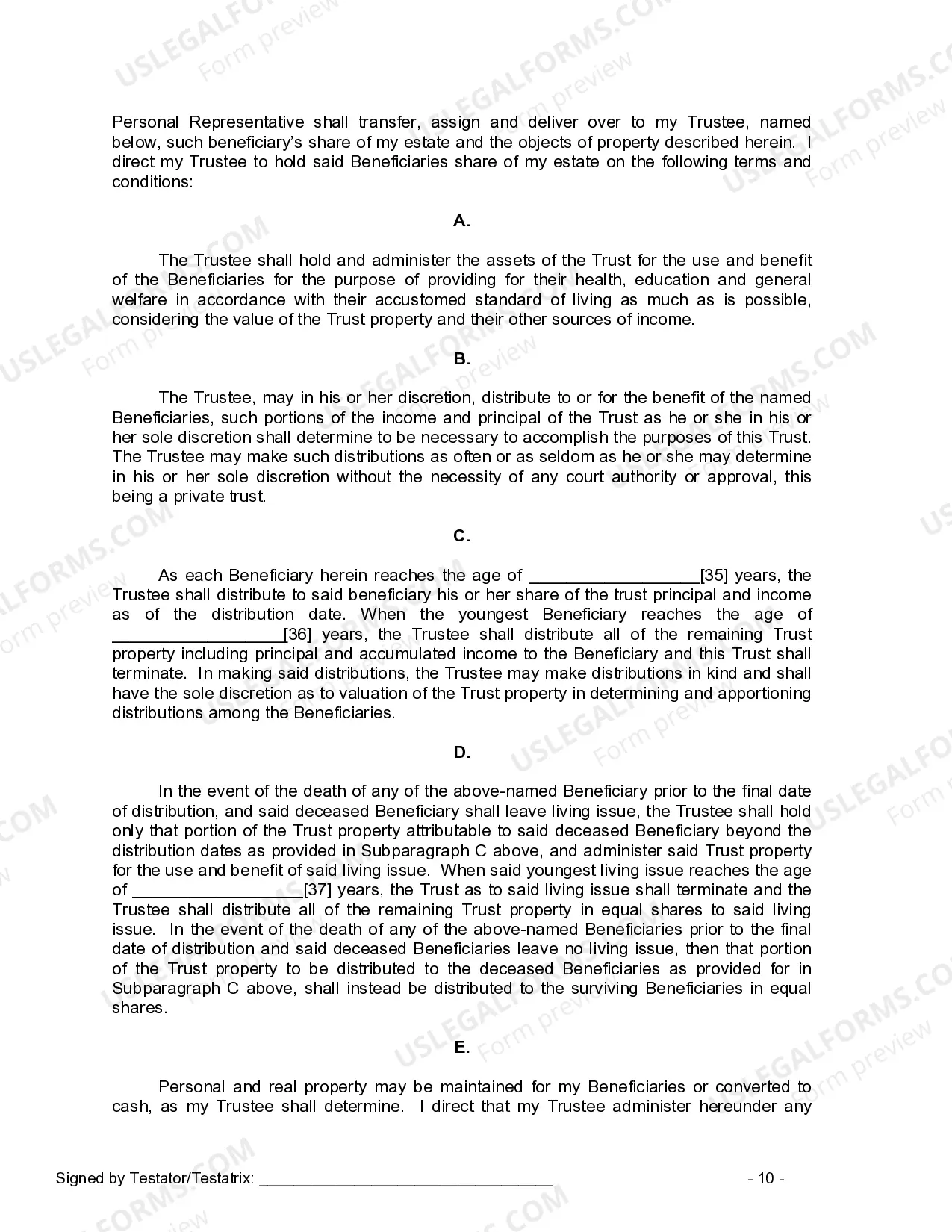
- Establishment of trusts for the benefit of minor children.
- Provisions for your spouse regarding the homestead and other assets.
- Guardianship arrangements for minor children in the event both parents pass away.
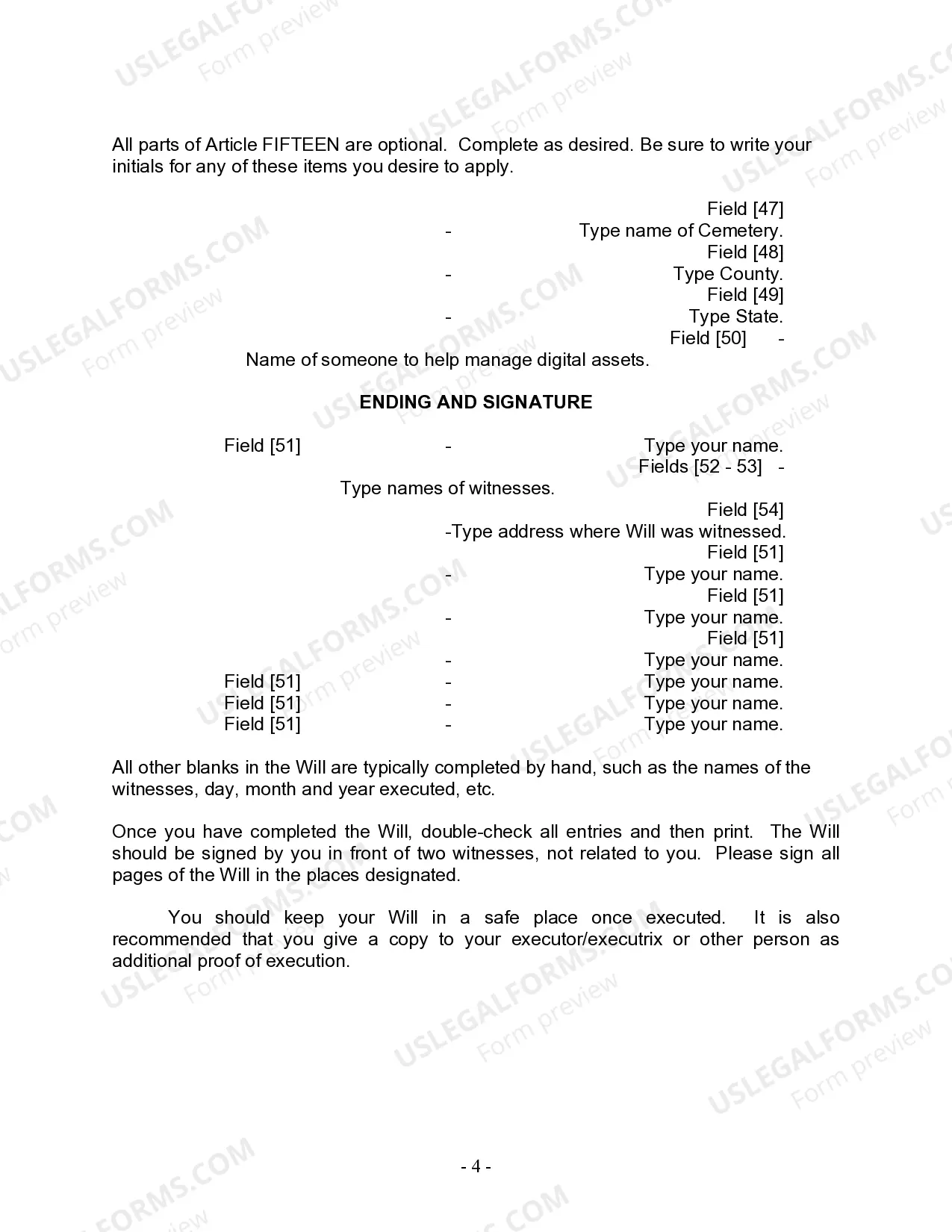
- Instructions for signing and witnessing the will to meet legal requirements.







When to use this document
This form should be used when a married person wants to declare their final wishes regarding property distribution, guardianship, and management of their estate, especially when there are both adult and minor children involved. It is suitable for anyone wanting to ensure their loved ones are provided for according to their precise instructions upon their passing.
Intended users of this form
Eligible users include:
- Married individuals with adult and minor children.
- Any person wishing to establish a clear plan for asset distribution after death.
- Individuals wanting to appoint a personal representative or guardian for minor children.
- Those who may have specific items to be left to particular individuals.
Steps to complete this form
To successfully complete this Last Will and Testament form, follow these steps:
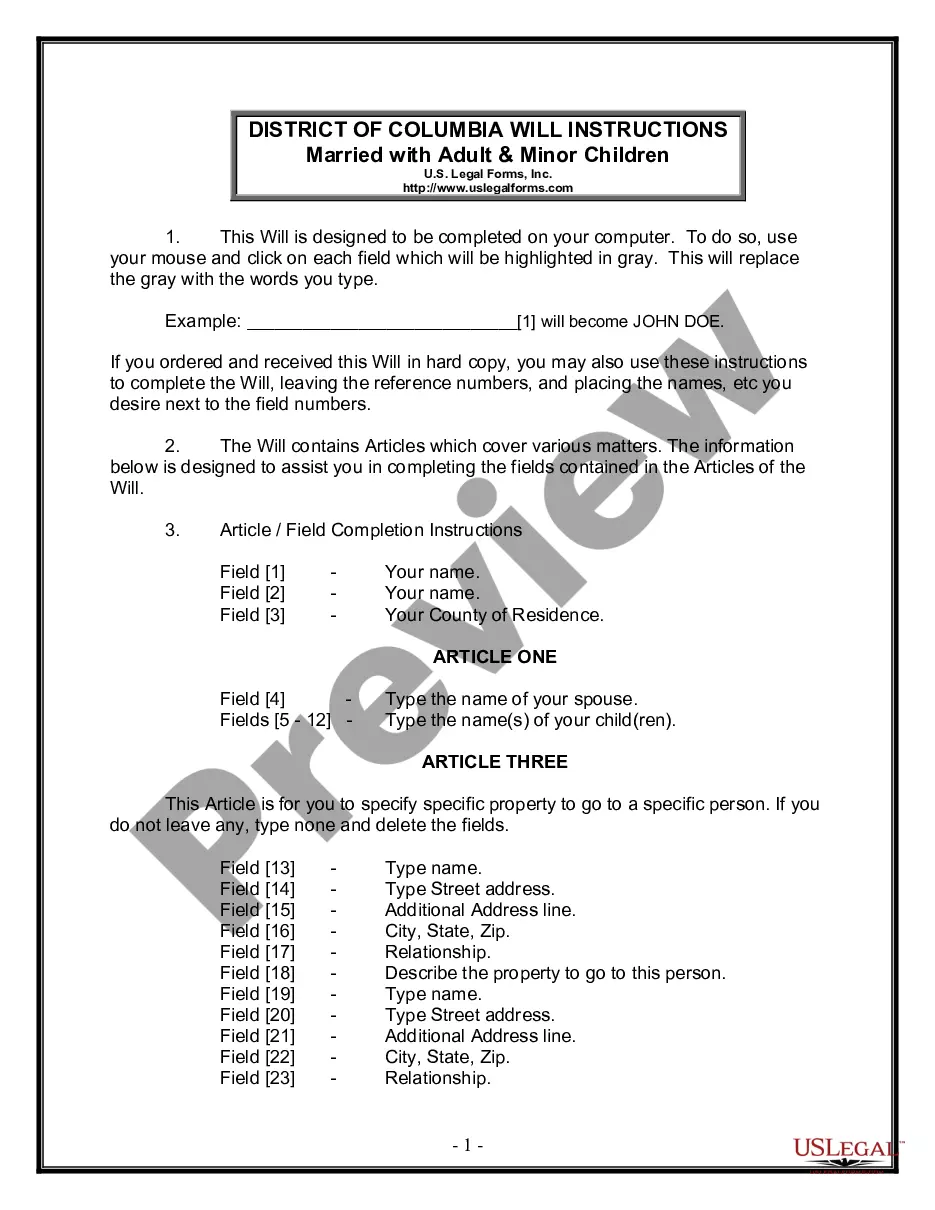
- Identify yourself by entering your full name and county of residence.
- Provide the names of your spouse and children in the designated fields.
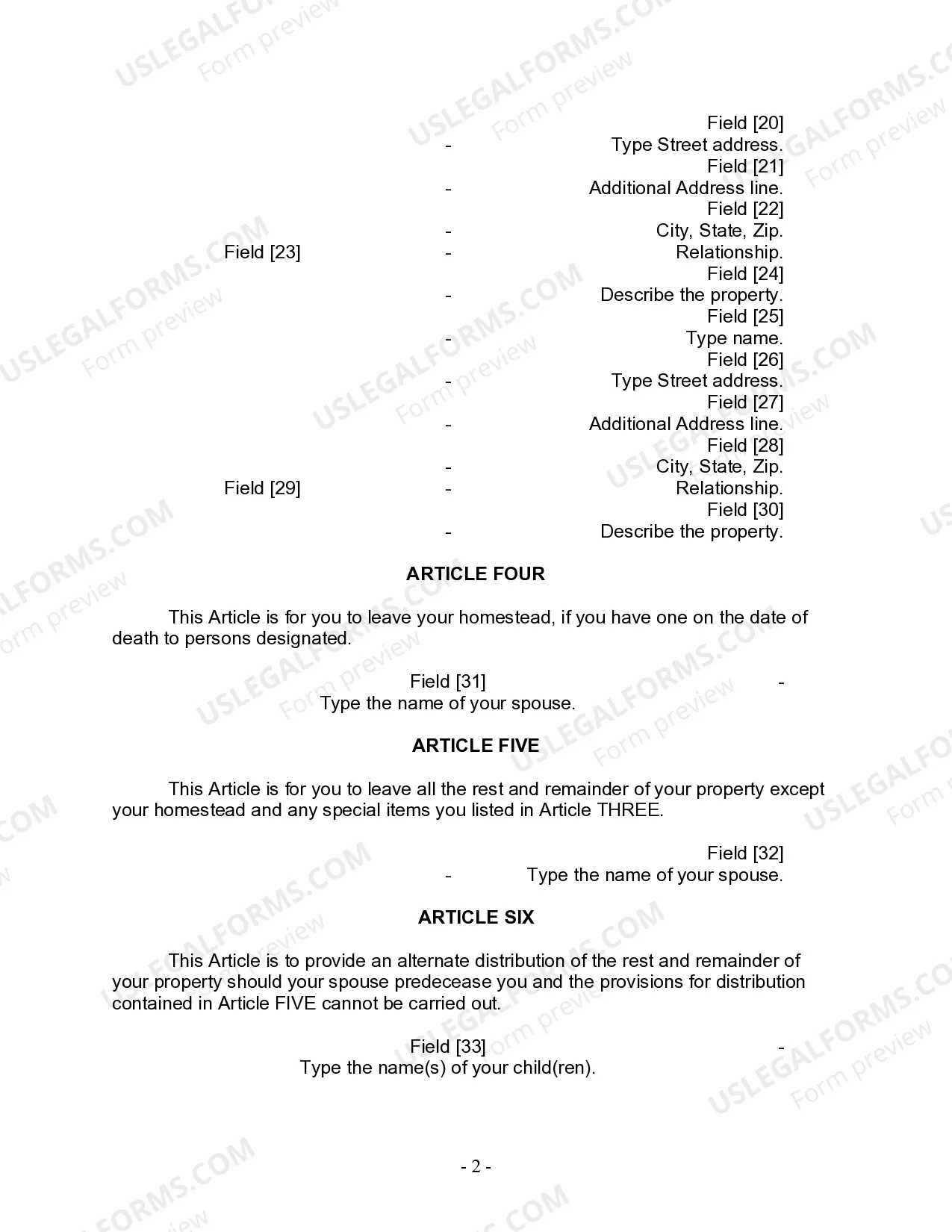
- Specify any specific property to be bequeathed to individuals, if applicable.
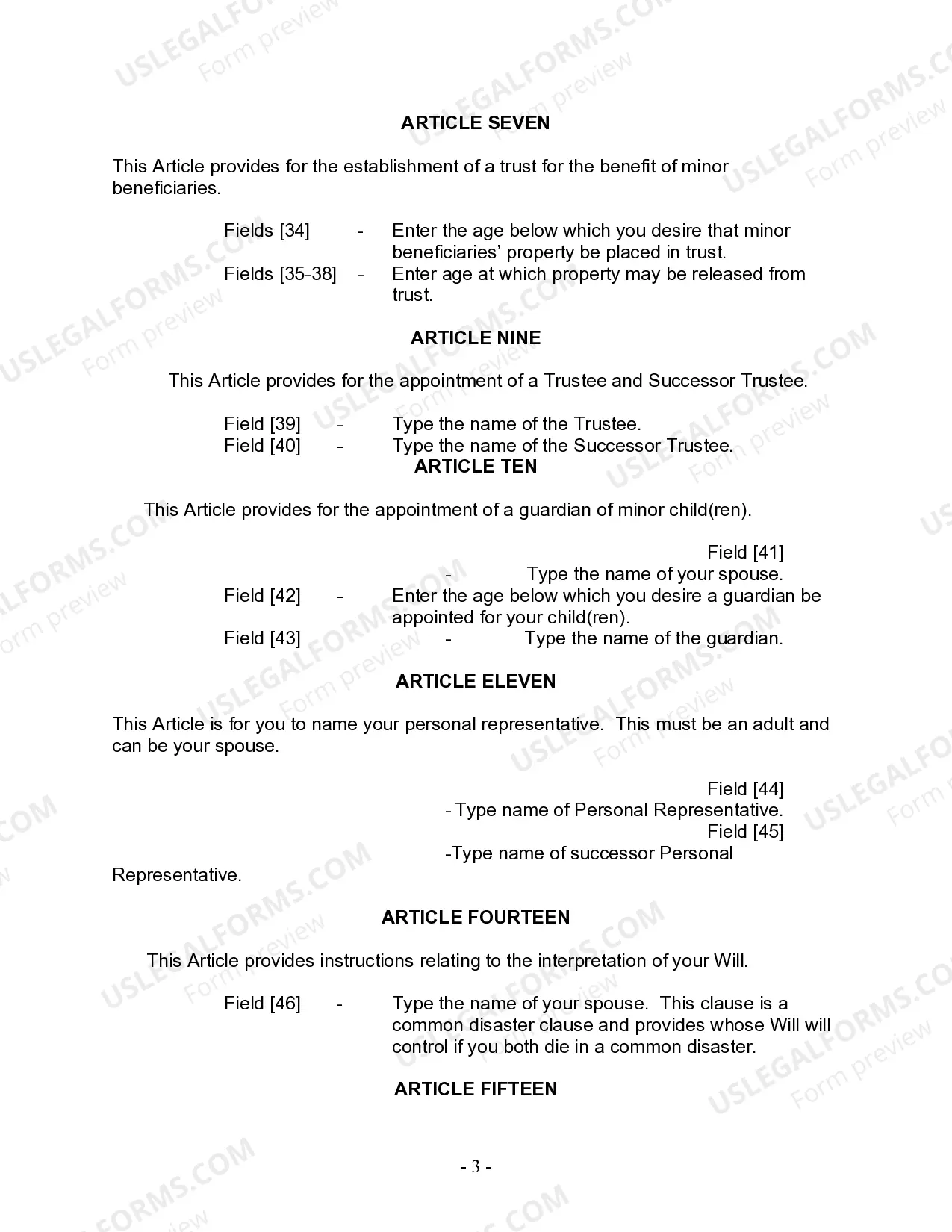
- Designate a personal representative who will carry out your wishes.
- Gather signatures from two witnesses who are not related to you.
- Store the completed will in a safe place and inform your chosen representative of its location.
Does this form need to be notarized?
This form does not typically require notarization unless specified by local law. However, if applicable, it is recommended to have the will notarized to streamline the probate process.
Get your form ready online
Our built-in tools help you complete, sign, share, and store your documents in one place.
Make edits, fill in missing information, and update formatting in US Legal Forms—just like you would in MS Word.
Download a copy, print it, send it by email, or mail it via USPS—whatever works best for your next step.
Sign and collect signatures with our SignNow integration. Send to multiple recipients, set reminders, and more. Go Premium to unlock E-Sign.
If this form requires notarization, complete it online through a secure video call—no need to meet a notary in person or wait for an appointment.
We protect your documents and personal data by following strict security and privacy standards.

Make edits, fill in missing information, and update formatting in US Legal Forms—just like you would in MS Word.

Download a copy, print it, send it by email, or mail it via USPS—whatever works best for your next step.

Sign and collect signatures with our SignNow integration. Send to multiple recipients, set reminders, and more. Go Premium to unlock E-Sign.

If this form requires notarization, complete it online through a secure video call—no need to meet a notary in person or wait for an appointment.

We protect your documents and personal data by following strict security and privacy standards.
Mistakes to watch out for
- Failing to have the will signed by two disinterested witnesses.
- Not designating alternative beneficiaries in case the primary beneficiaries do not survive.
- Leaving out important details, such as the identification of the personal representative.
- Not updating the will after significant life changes, like divorce or the birth of another child.
Why complete this form online
- Convenience of completing the form online.
- Editability allows for easy adjustments before finalizing the document.
- Instant download ensures you have your document ready when needed.
- Drafted by licensed attorneys to ensure legal compliance.
Key takeaways
- The Last Will and Testament is essential for married individuals with children to specify asset distribution and guardianship.
- Careful completion and witnessing of the will are critical to ensure it is legally valid.
- Updating your will regularly is important to reflect changes in life circumstances.
- Using online forms can provide a convenient and efficient way to handle estate planning.
Looking for another form?






Form popularity
FAQ
Yes, it is advisable for each married person to have their own will. Individual wills allow both spouses to express their unique wishes and address personal assets. This approach also clarifies intentions regarding children, which can be especially important when dealing with both adult and minor children. By preparing their District of Columbia Last Will and Testament for Married Person with Adult and Minor Children, couples can ensure that their individual desires are fully respected.
No, you do not have to register a will in Washington, D.C., during your lifetime. However, it is essential to keep your will in a safe place, and inform your spouse or trusted family members where it is located. Once you pass away, your will must be filed for probate to validate it. This process ensures that your District of Columbia Last Will and Testament for Married Person with Adult and Minor Children is executed according to your wishes, thus protecting your family's interests.
In Washington, D.C., wills do not necessarily have to be notarized to be valid. However, notarization can simplify the probate process significantly. It provides added assurance that the will reflects the testator's intentions and reduces disputes among heirs. Including this step in the District of Columbia Last Will and Testament for Married Person with Adult and Minor Children can help ensure smoother execution of your wishes.
Most married couples benefit from a joint will or mutual will, but a separate will is often more flexible. A separate will is ideal for those with unique family situations, like blended families or different asset distributions. It allows each spouse to address their preferences, ensuring the estate planning adheres to the District of Columbia Last Will and Testament for Married Person with Adult and Minor Children. Moreover, this option adapts well to changing family dynamics.
Husbands and wives may choose to create separate wills for various reasons. For instance, they might have different assets, specific wishes regarding their children, or distinct beneficiaries. A separate will allows each spouse to tailor their estate plan according to their circumstances. This flexibility helps ensure the District of Columbia Last Will and Testament for Married Person with Adult and Minor Children meets their individual needs.
Sample wording for the Last Will and Testament in the District of Columbia typically begins with a clear declaration of your identity and that you are of sound mind. A simple template might read, 'I, Your Name, declare this document to be my Last Will and Testament.' You should specify how you wish to distribute your assets, naming beneficiaries, and appointing guardians for minor children. Various resources, including uslegalforms, provide templates to ensure you structure your will correctly and capture the necessary legal language.
A last will and testament does not override a marriage; rather, it complements it by detailing how assets are to be distributed upon death. In the case of the District of Columbia Last Will and Testament for Married Person with Adult and Minor Children, married individuals can explicitly state their intentions regarding their shared and individual property. However, state laws may affect how certain assets are treated, so couples should ensure that their wills accurately reflect their desires and are compliant with local regulations. It's wise to seek advice to ensure your will aligns with marital laws.
The best type of will for a married couple often depends on their specific circumstances. Joint wills can simplify some aspects of estate planning, but many couples in the District of Columbia find that individual wills provide more flexibility. Using the District of Columbia Last Will and Testament for Married Person with Adult and Minor Children, spouses can detail their individual wishes while ensuring guardianship and financial decisions for minors are clearly articulated. Consulting with legal professionals can help determine the right approach.
While married couples can share a will, it is often advisable for each spouse to have their own separate will. The District of Columbia Last Will and Testament for Married Person with Adult and Minor Children allows each partner to specify individual wishes and address personal assets. Doing so ensures that each person's intentions are honored, especially if there are previous children or assets from prior relationships. Additionally, separate wills can help clarify estate distribution, reducing confusion and potential conflict.
Wills serve as essential legal documents that outline how a married couple wishes to distribute their assets after death. In the District of Columbia Last Will and Testament for Married Person with Adult and Minor Children, you can ensure that both your adult and minor children benefit according to your wishes. This legally binding document helps clarify your intentions and can prevent potential disputes among heirs. It's crucial for married couples to create a will that reflects their unique family situations.