District of Columbia Last Will and Testament for a Married Person with No Children
Understanding this form
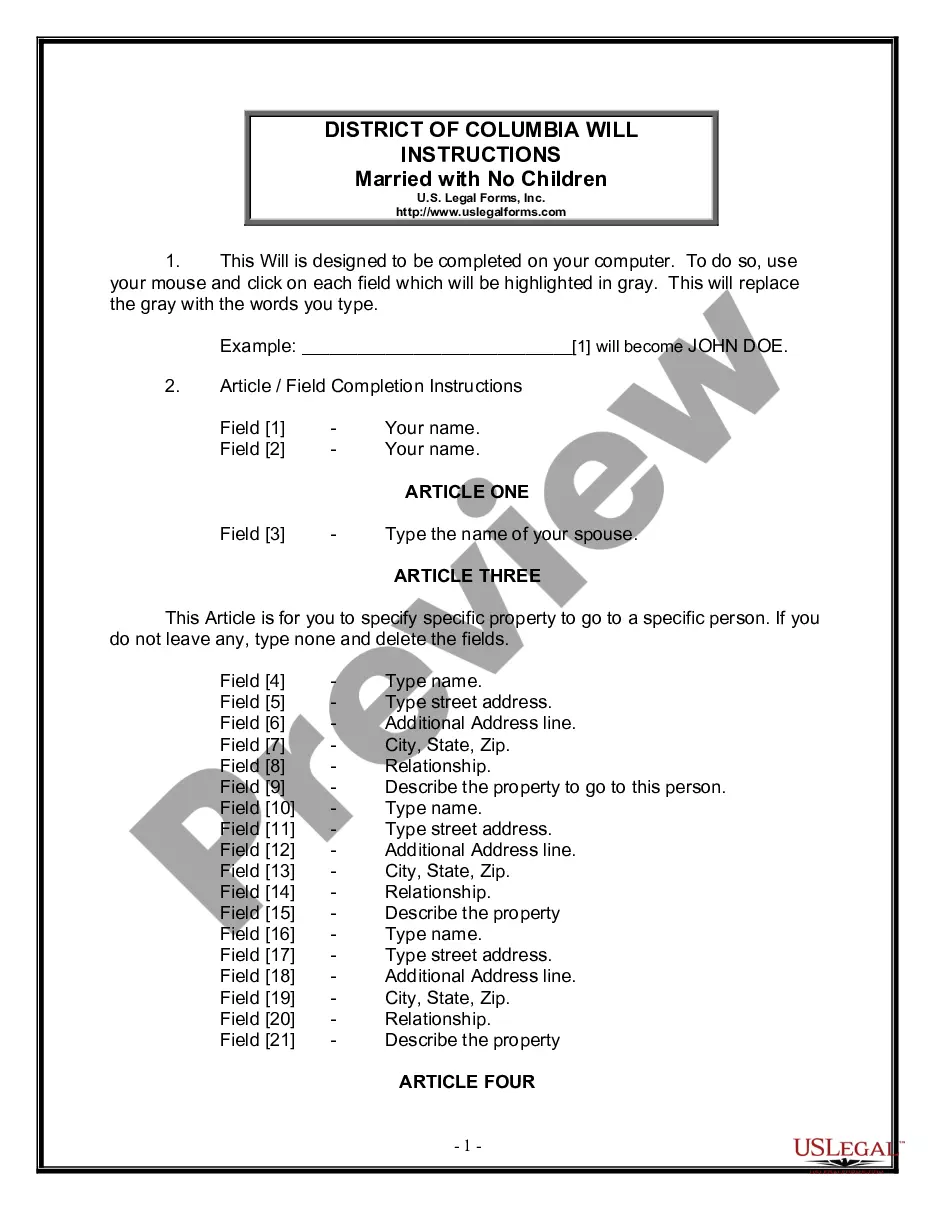
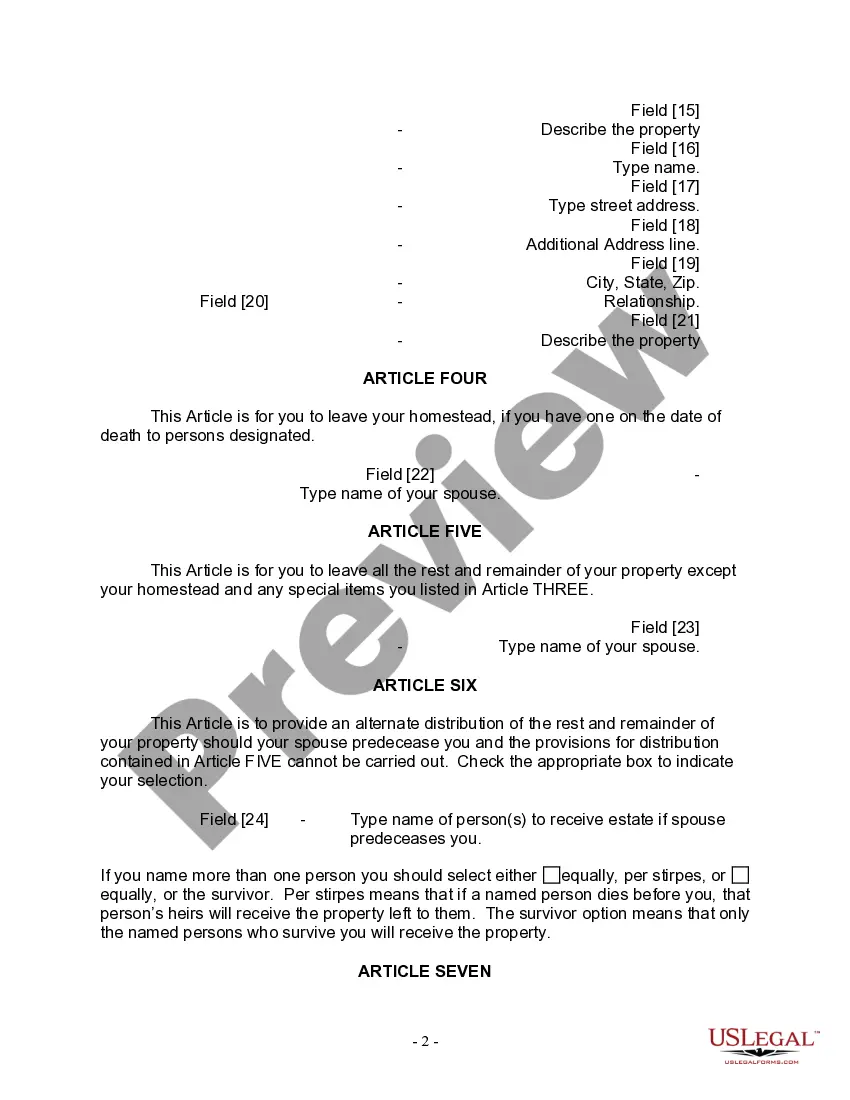
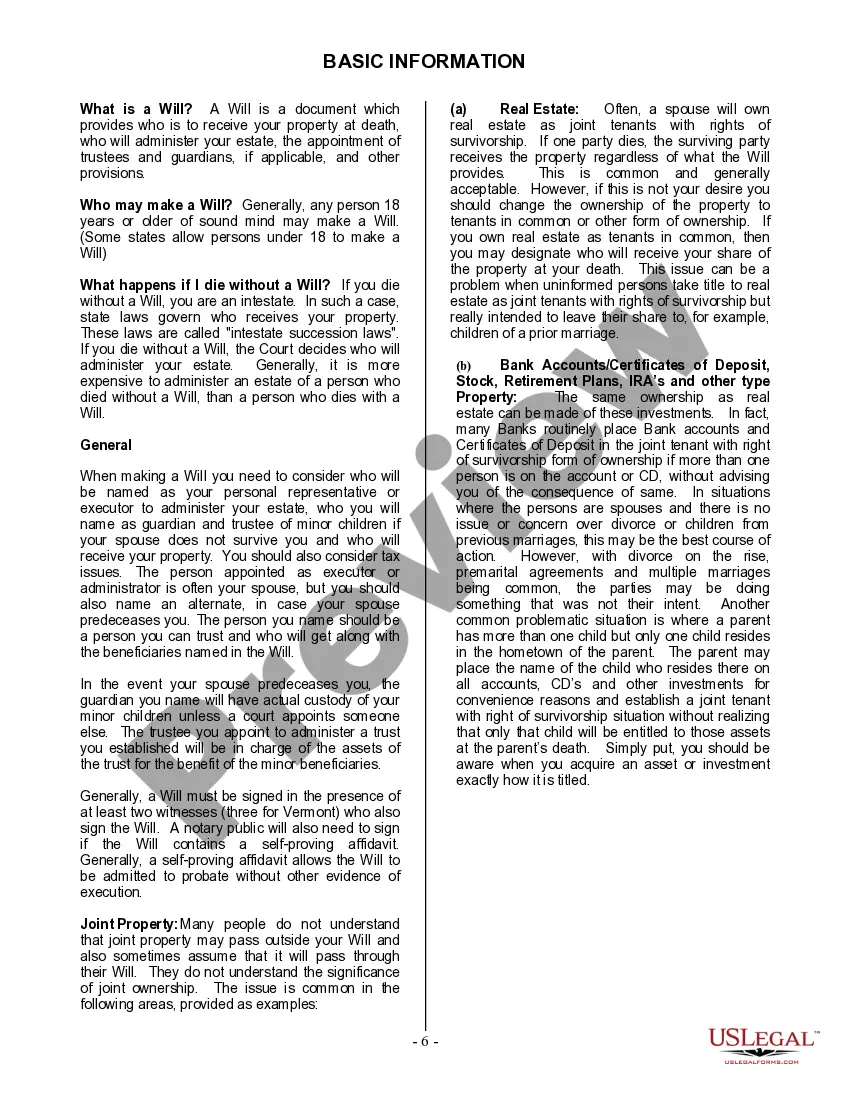
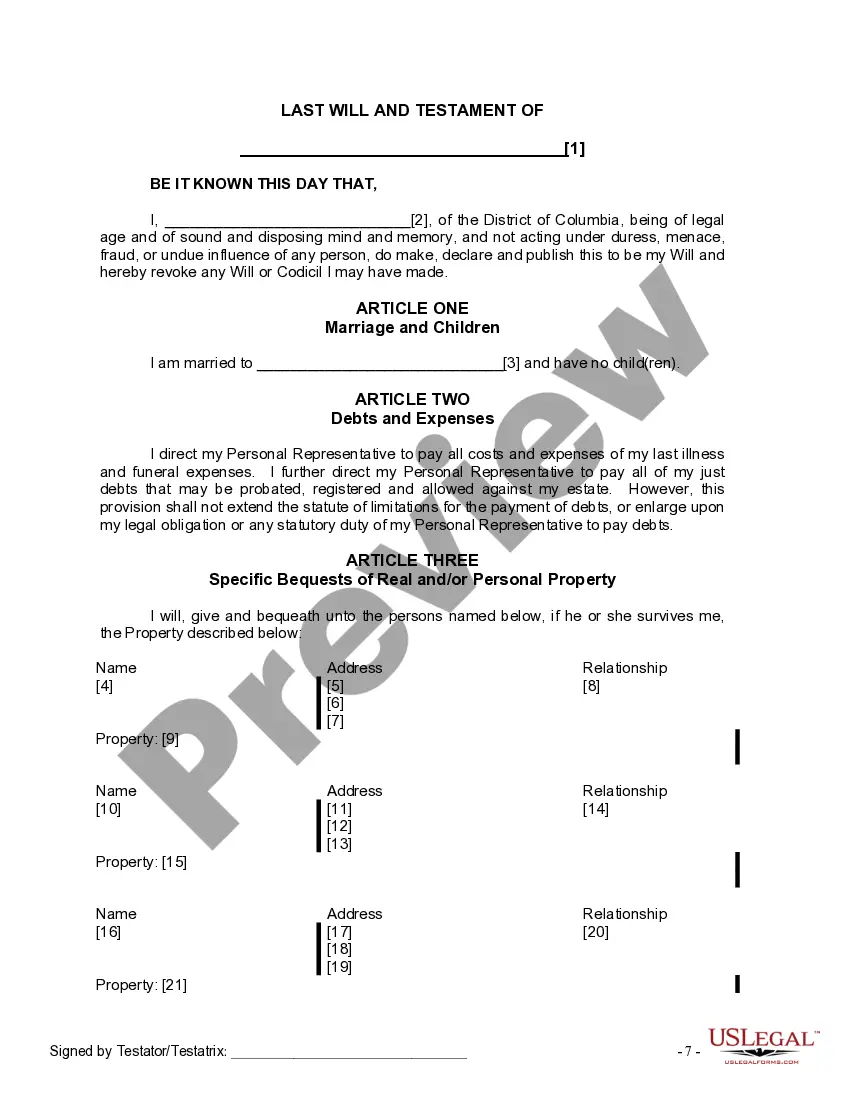
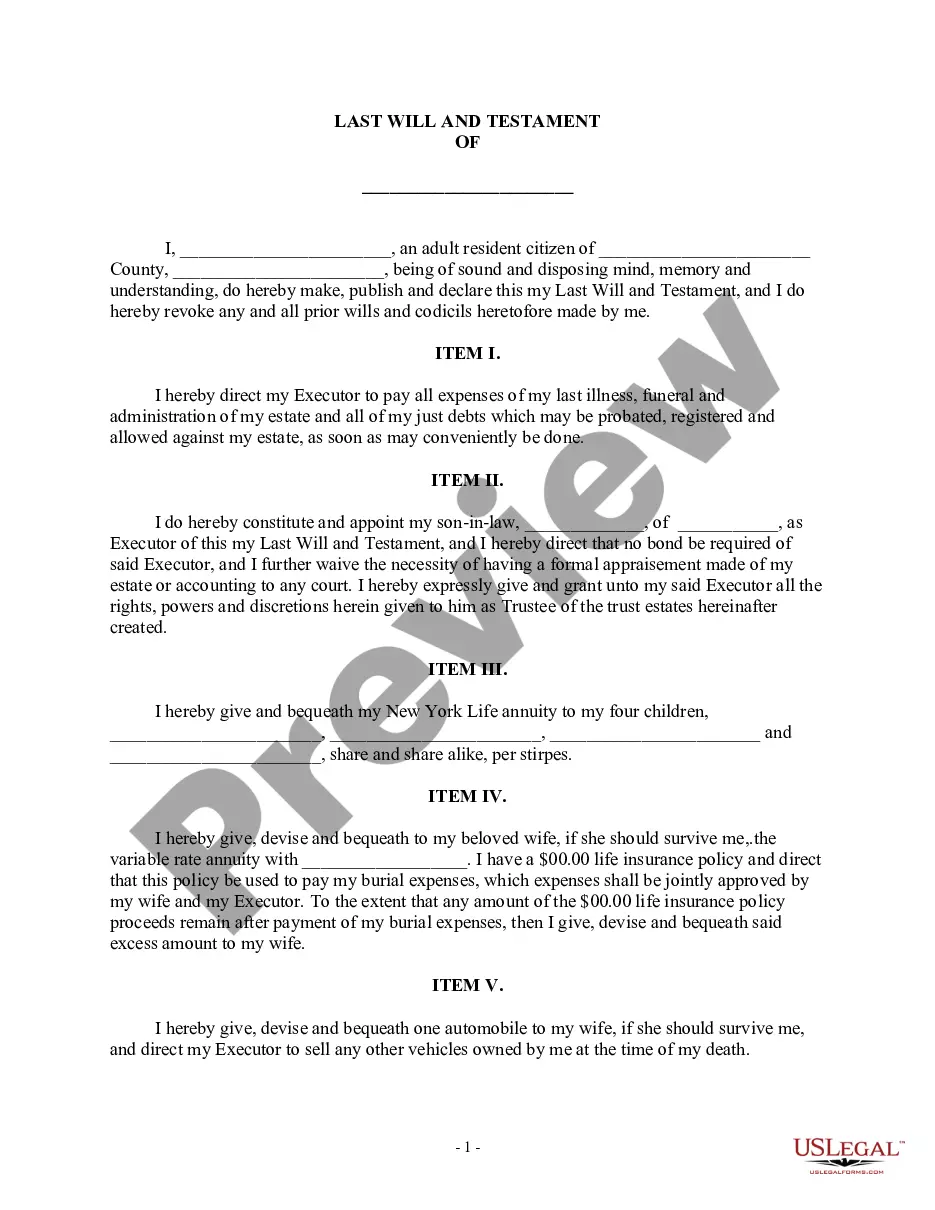
The Last Will and Testament for a Married Person with No Children is a legal document that outlines how a married individual wishes to distribute their assets upon death. Unlike a standard will, this form specifically caters to spouses who do not have children, ensuring that the spouse and other designated beneficiaries are accounted for. It simplifies the estate planning process by clearly stating the testatorâs wishes and providing for the appointment of an executor to manage the estate.
Form components explained
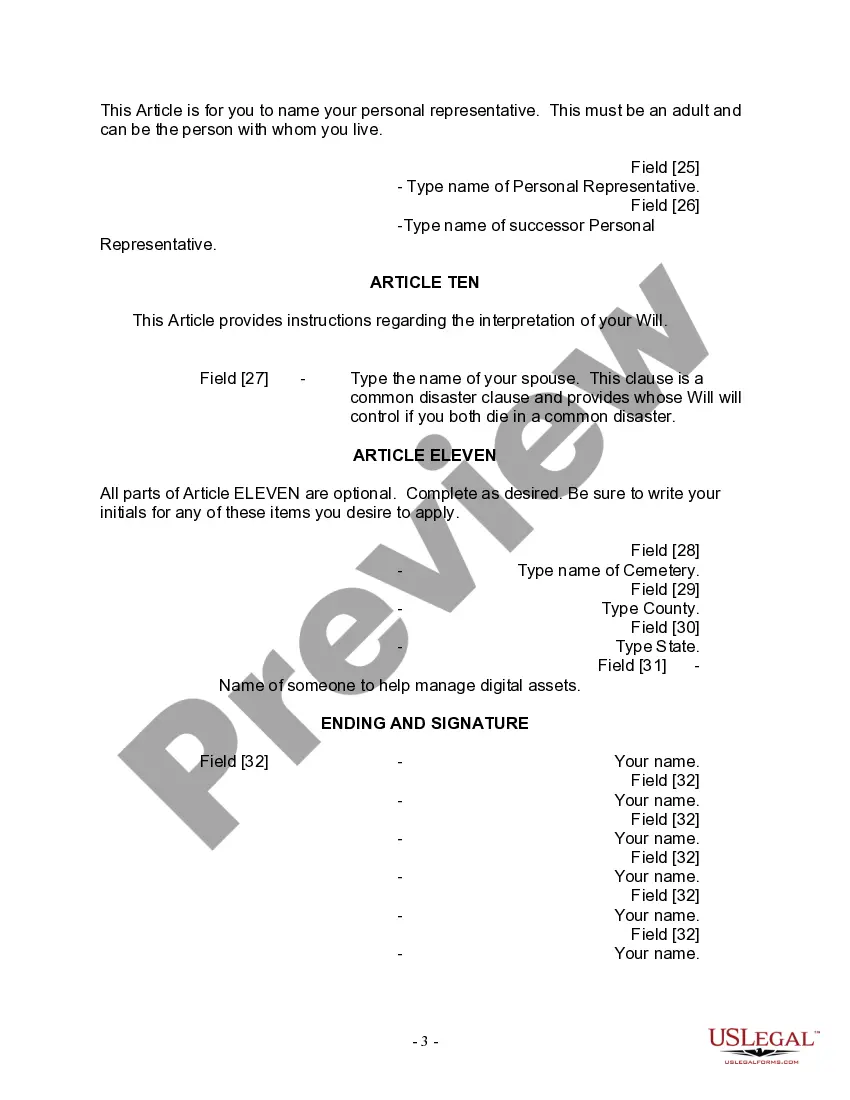
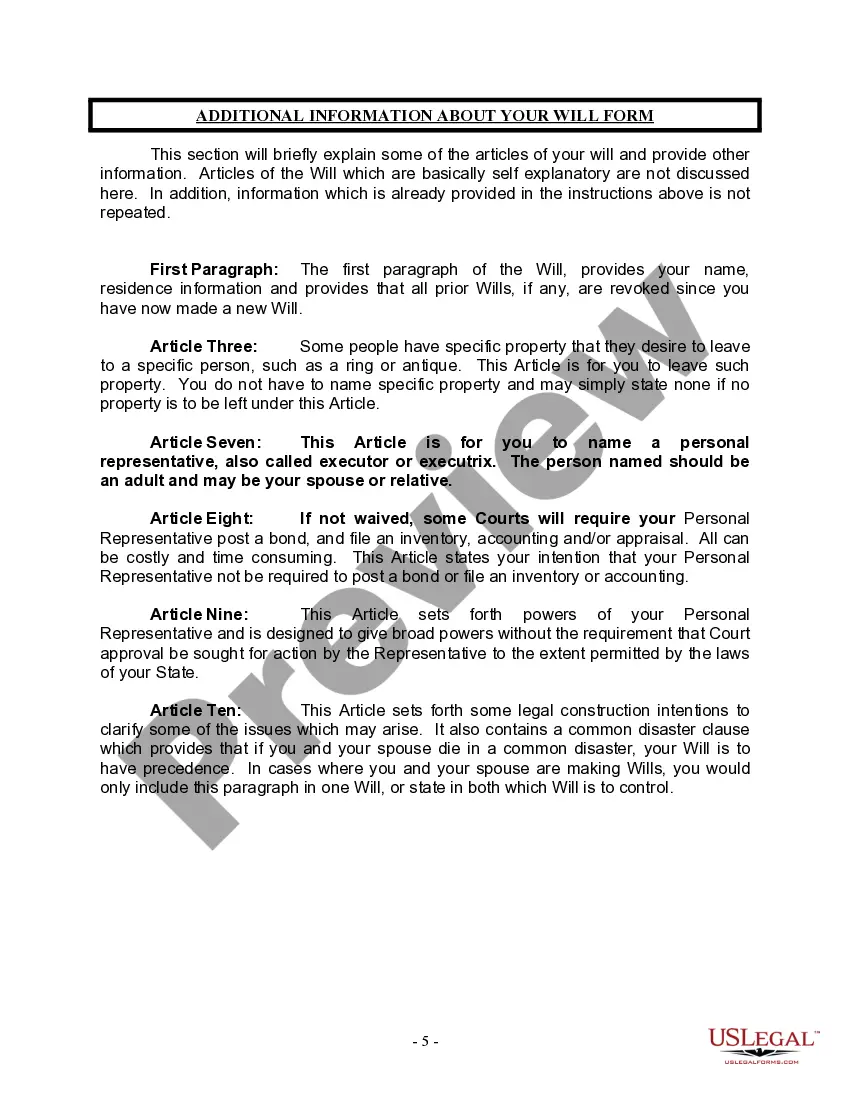
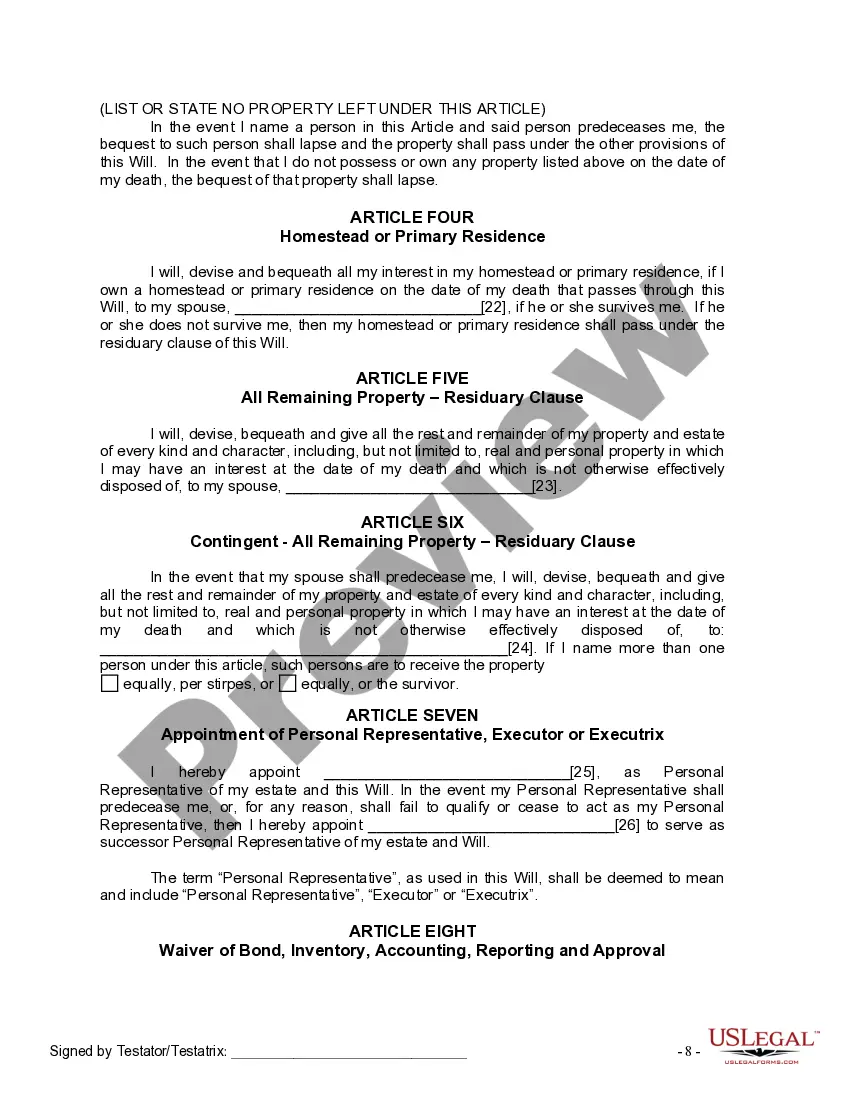
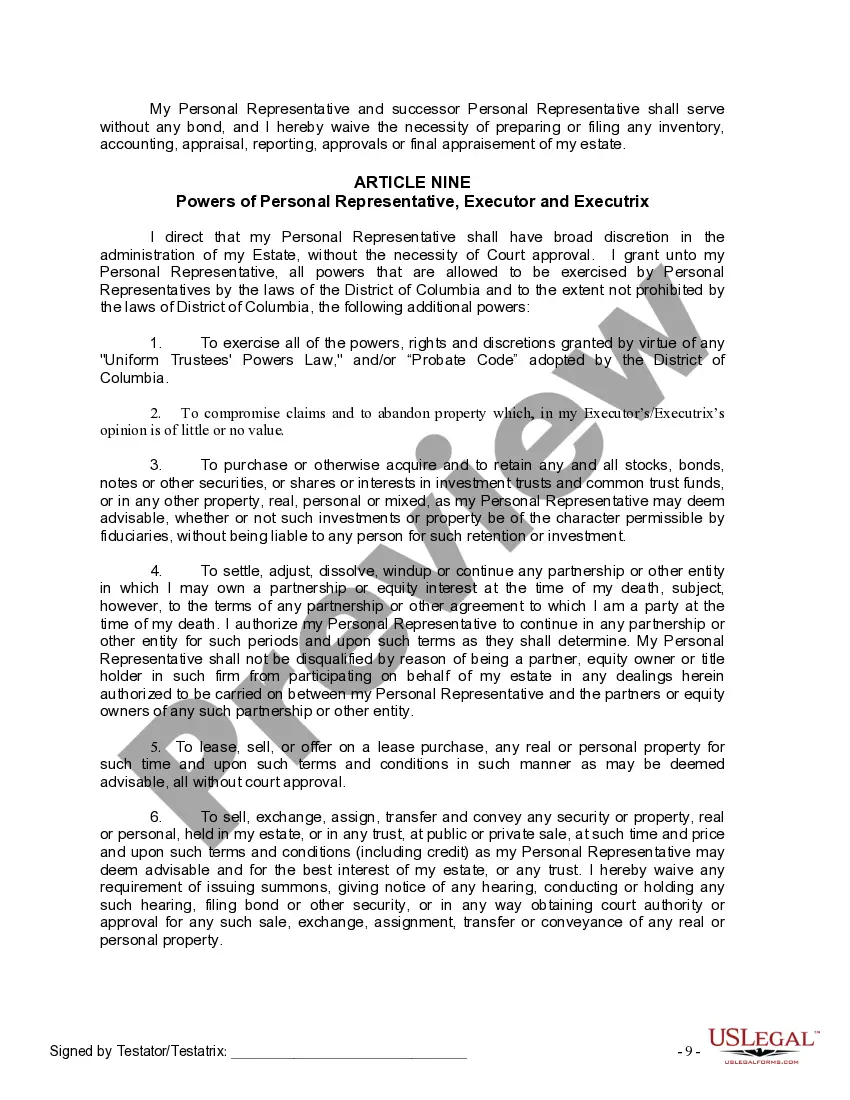
- Appointment of a personal representative or executor to manage the estate.
- Specific bequests of property to designated persons.
- Provisions detailing the distribution of the homestead or primary residence.
- Contingency clauses for alternate beneficiaries if the spouse predeceases the testator.
- Legal powers granted to the personal representative for estate management.
- Signature and witness requirements to validate the will.




When to use this document
This will should be used when a married person without children wants to specify how their estate will be handled after their death. It is essential for individuals who wish to ensure that their spouse receives their assets and to outline any specific bequests. This form is also applicable when someone desires to streamline the probate process by clearly stating their wishes in a legally binding document.
Who needs this form
- Married individuals with no children who want to create a will.
- Spouses looking to ensure their partner inherits their estate.
- Individuals wishing to designate a personal representative to handle their estate after death.
- Anyone wanting to outline specific bequests of property to friends or family members.
Instructions for completing this form
- Enter your name and address in the designated fields to identify yourself as the testator.
- Provide your spouse's name and specify any property you wish to bequeath to others.
- Designate a personal representative who will manage your estate after your passing.
- Review all entries for accuracy and completeness before finalizing your will.
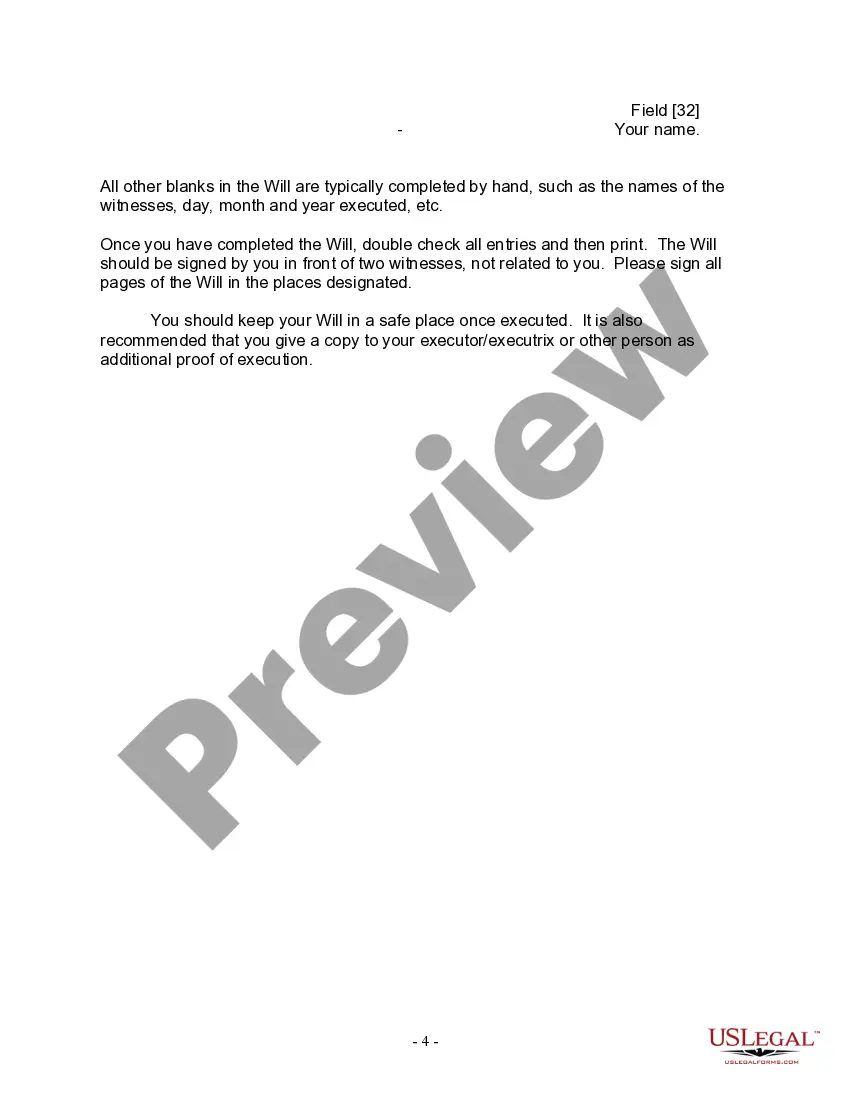
- Ensure the will is signed in the presence of two non-related witnesses and includes their signatures.
Notarization requirements for this form
This form does not typically require notarization unless specified by local law. However, including a notary public's signature can expedite the probate process by making your will self-proving.
Get your form ready online
Our built-in tools help you complete, sign, share, and store your documents in one place.
Make edits, fill in missing information, and update formatting in US Legal Forms—just like you would in MS Word.
Download a copy, print it, send it by email, or mail it via USPS—whatever works best for your next step.
Sign and collect signatures with our SignNow integration. Send to multiple recipients, set reminders, and more. Go Premium to unlock E-Sign.
If this form requires notarization, complete it online through a secure video call—no need to meet a notary in person or wait for an appointment.
We protect your documents and personal data by following strict security and privacy standards.

Make edits, fill in missing information, and update formatting in US Legal Forms—just like you would in MS Word.

Download a copy, print it, send it by email, or mail it via USPS—whatever works best for your next step.

Sign and collect signatures with our SignNow integration. Send to multiple recipients, set reminders, and more. Go Premium to unlock E-Sign.

If this form requires notarization, complete it online through a secure video call—no need to meet a notary in person or wait for an appointment.

We protect your documents and personal data by following strict security and privacy standards.
Typical mistakes to avoid
- Failing to sign the will in front of the required witnesses.
- Not clearly specifying the beneficiaries, leading to potential disputes.
- Omitting alternate beneficiaries in case the primary ones do not survive.
Why complete this form online
- Convenient access to legal documents that can be filled out at your own pace.
- Editability allows customization to suit individual needs and circumstances.
- Reliable resources ensure adherence to legal standards for a valid will.
What to keep in mind
- The Last Will and Testament ensures your assets are distributed according to your wishes.
- The form is particularly tailored for married individuals without children.
- It is vital to have the document properly witnessed and signed to ensure its validity.
Looking for another form?
Form popularity
FAQ
To draft a will in D.C., start by clearly stating your wishes regarding your estate. You can choose to use templates or resources online, such as uslegalforms, to help ensure that your District of Columbia Last Will and Testament for a Married Person with No Children meets all legal criteria. Finally, ensure that the document is signed and witnessed according to D.C. laws.
In Washington, D.C., a will does not need to be notarized to be valid. However, notarization can help simplify the probate process. For your District of Columbia Last Will and Testament for a Married Person with No Children, you may wish to consider including a self-proving affidavit to allow for easier verification during probate.
Yes, you can create a will without your spouse's knowledge in D.C. However, it's essential to consider that honesty and transparency in your marriage typically provide more peace of mind. Having a District of Columbia Last Will and Testament for a Married Person with No Children that reflects your true intentions can help avoid misunderstandings in the future.
To determine if a will is valid in D.C., check for witnesses and ensure the document is signed by the testator. The District of Columbia Last Will and Testament for a Married Person with No Children must comply with specific state laws, which include being in writing and not being created under duress. If you have questions about validity, consulting a professional can be beneficial.
No, you do not need an attorney to notarize a will in D.C. You can choose to have a notary public perform this service independently. However, seeking legal guidance can ensure that your District of Columbia Last Will and Testament for a Married Person with No Children is properly prepared and meets applicable laws.
Yes, you can write your own will in Washington, D.C., and it can be notarized. While drafting your District of Columbia Last Will and Testament for a Married Person with No Children, ensure that your document meets all legal requirements. Notarization adds an extra layer of credibility, but it is not mandatory for the validity of the will.
In the District of Columbia, you do not need to register a will during your lifetime. However, you must file the will with the probate court after your death. This process ensures that your District of Columbia Last Will and Testament for a Married Person with No Children is recognized and executed according to your wishes.
Marriage does not automatically invalidate a will in the USA, including the District of Columbia. However, marrying can change the distribution of your estate, especially if your spouse is not mentioned in your current will. For this reason, it's prudent to review your District of Columbia Last Will and Testament for a Married Person with No Children after marriage. Using platforms like uslegalforms can help you make necessary updates easily.
Individuals who are not named beneficiaries in a will will not inherit anything under that document. Additionally, any disinherited children or spouses, unless specifically omitted in your District of Columbia Last Will and Testament for a Married Person with No Children, should also be noted. Understanding exclusions is important when planning your estate. Trust uslegalforms to assist in discerning who should be included in your will.
A will does not take precedence over a marriage in the District of Columbia. If you're married, your spouse has specific rights to inheritance that a will cannot negate. This is critical when drafting your District of Columbia Last Will and Testament for a Married Person with No Children. Always consult with experts or uslegalforms to navigate these protections effectively.