District of Columbia Last Will and Testament for Divorced Person Not Remarried with No Children
About this form
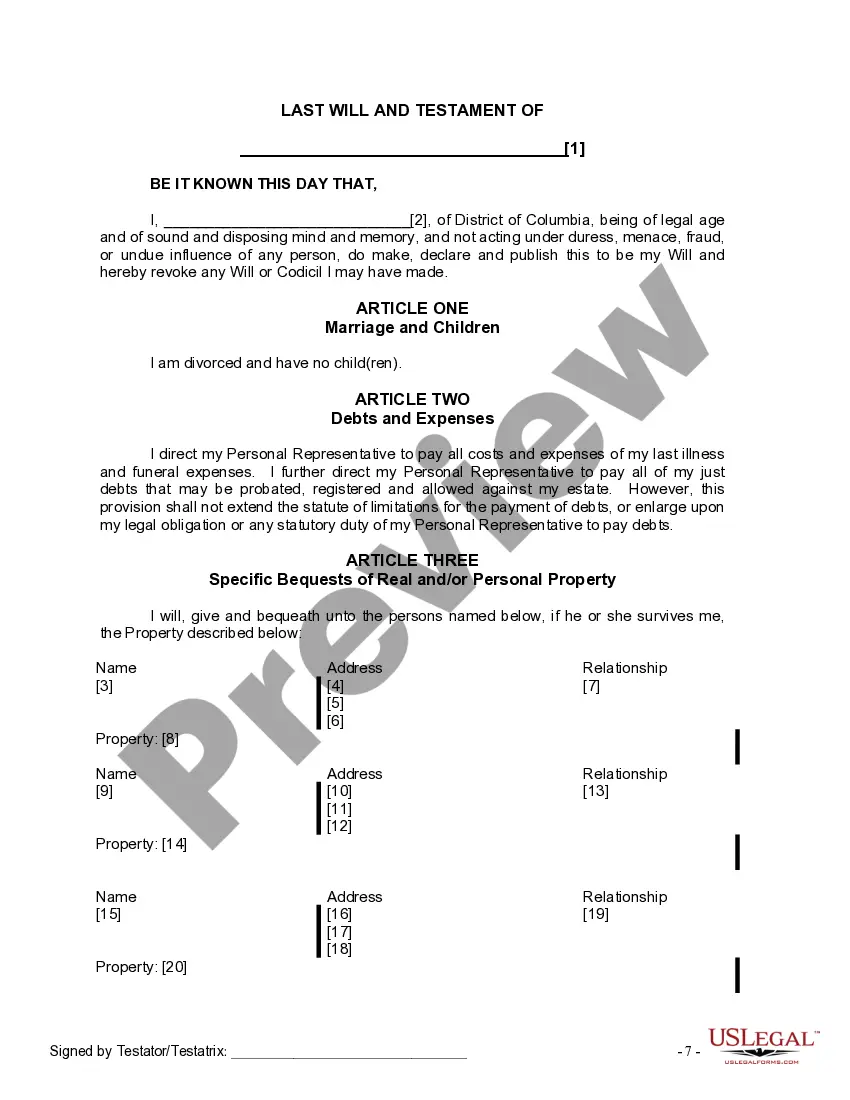
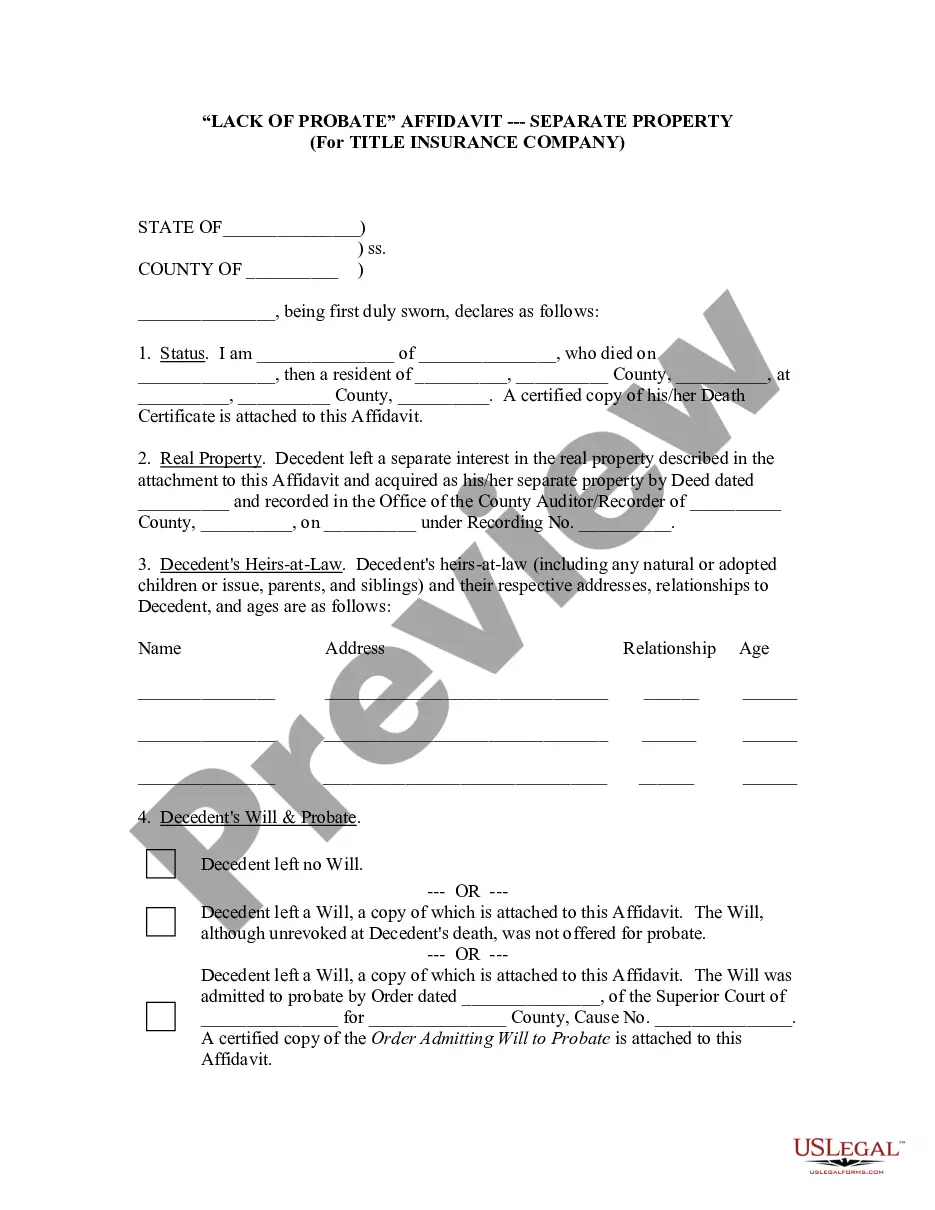
This Last Will and Testament for Divorced Person Not Remarried with No Children is a legal document that outlines how a personâs assets should be distributed after their death. Specifically designed for individuals who are divorced, not remarried, and have no children, this will allows the individual to designate heirs, appoint a personal representative, and address specific requests regarding their property. The form also includes critical provisions that differentiate it from similar legal documents.
Main sections of this form
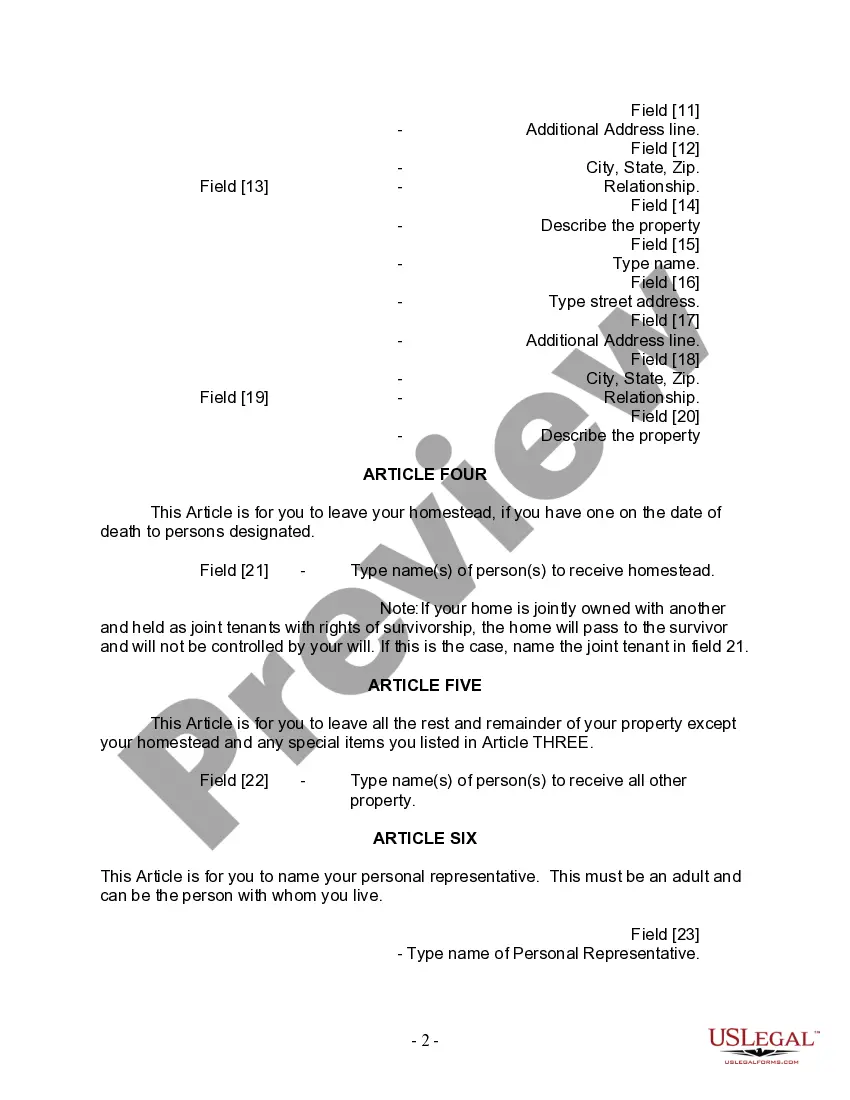
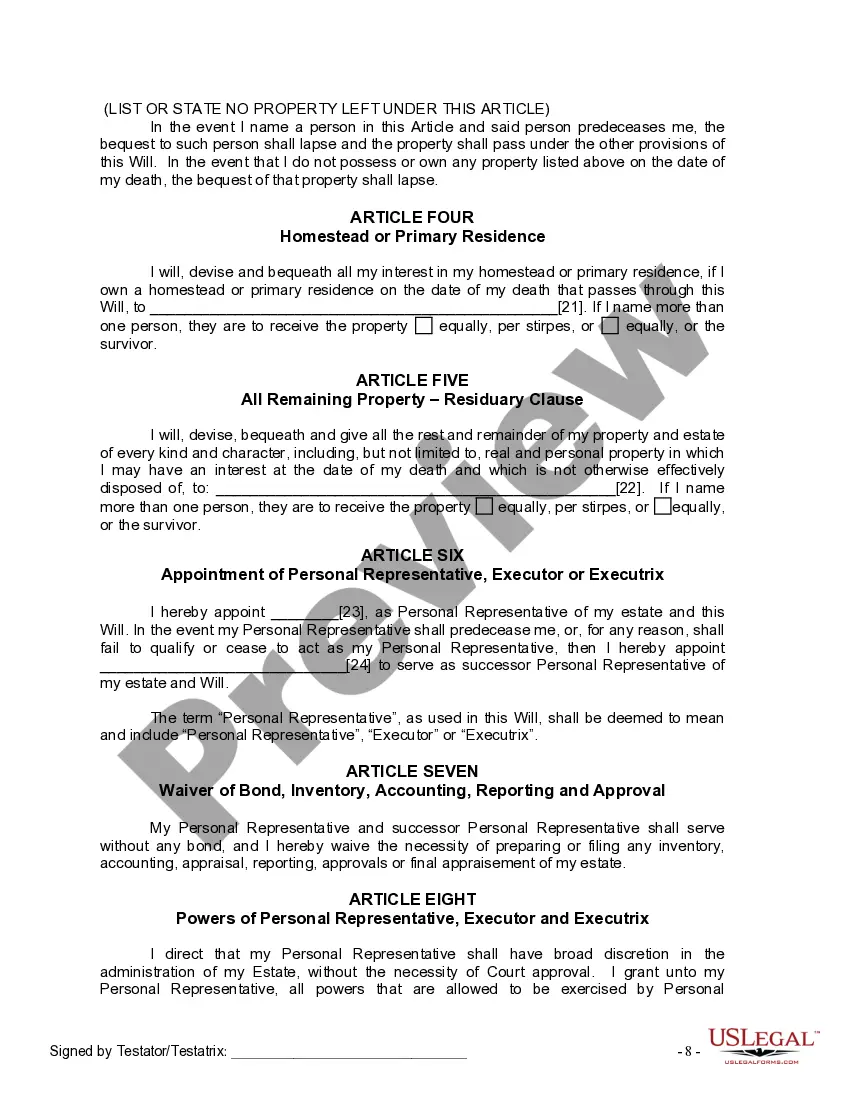
- Appointment of a personal representative (executor) to manage the estate.
- Specification of specific bequests for real and personal property to designated individuals.
- Provisions for the distribution of the individualâs homestead or primary residence.
- Residue clause for the allocation of any remaining property not specified in earlier articles.
- Waiver of bond and requirement for an inventory of the estate.
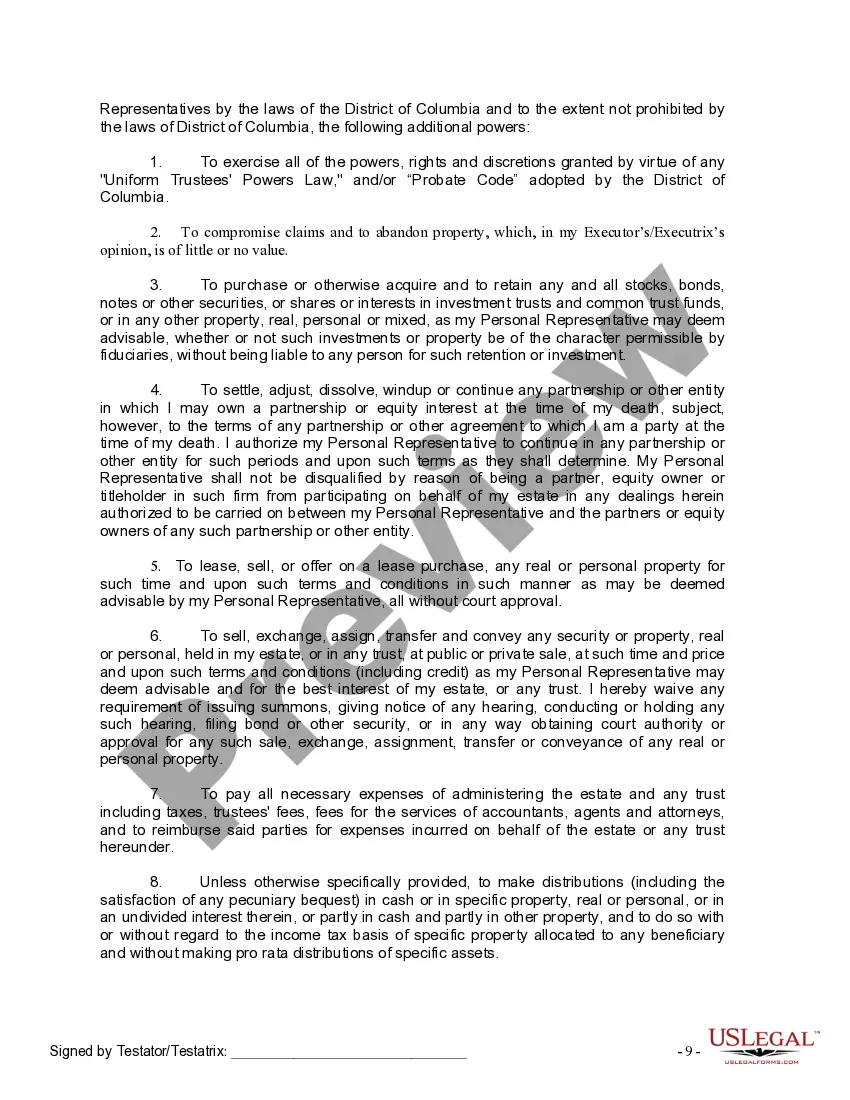
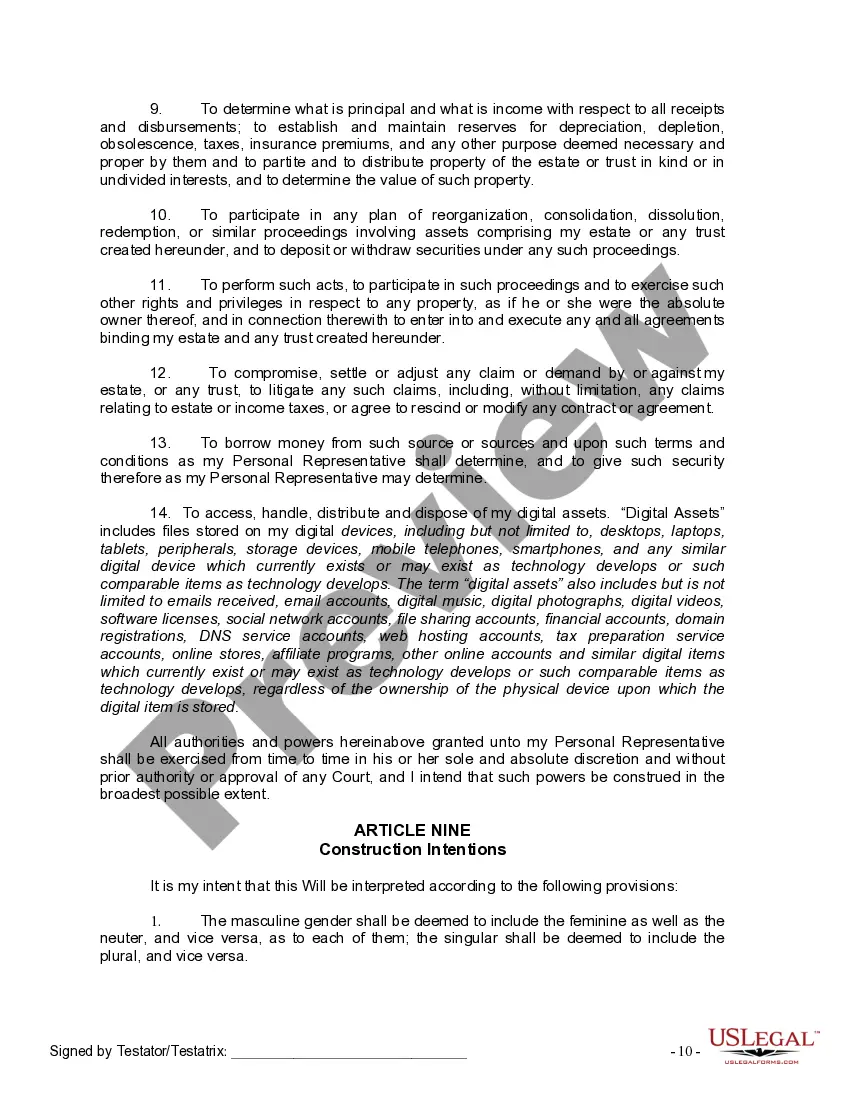
- Broad powers granted to the personal representative for estate management.




When to use this form
This form is needed when a divorced individual without children wishes to effectively manage their estate after passing. It is particularly important for those who want to ensure their specific wishes about property distribution are followed, especially if they have sentimental or valuable items they wish to leave to particular individuals.
Who needs this form
This form is suitable for:
- Divorced individuals who are not remarried.
- Individuals with no children who want to designate heirs for their property.
- People looking to clearly articulate their final wishes to avoid disputes among potential heirs.
How to prepare this document
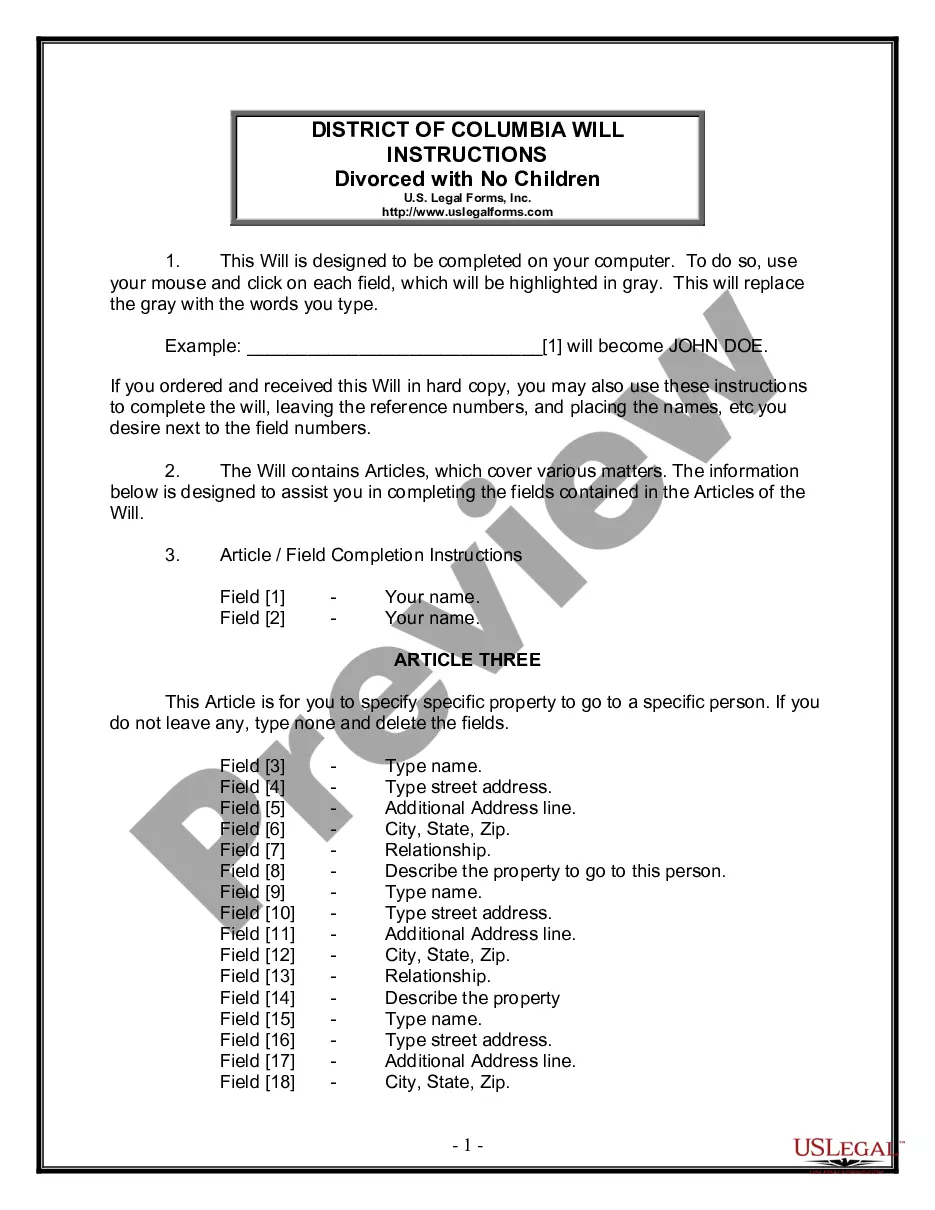
- Input your full name and address in the designated fields.
- Designate who you want to inherit specific items or properties.
- Identify your personal representative and their successor.
- Detail any specific requirements regarding your burial or cremation in the optional provisions if desired.
- Sign the document in front of two witnesses and complete the notary process if applicable.
Notarization requirements for this form
This form does not typically require notarization unless specified by local law. However, if a self-proving affidavit is included, notarization will be necessary to ensure broader legal acceptance.
Get your form ready online
Our built-in tools help you complete, sign, share, and store your documents in one place.
Make edits, fill in missing information, and update formatting in US Legal Forms—just like you would in MS Word.
Download a copy, print it, send it by email, or mail it via USPS—whatever works best for your next step.
Sign and collect signatures with our SignNow integration. Send to multiple recipients, set reminders, and more. Go Premium to unlock E-Sign.
If this form requires notarization, complete it online through a secure video call—no need to meet a notary in person or wait for an appointment.
We protect your documents and personal data by following strict security and privacy standards.

Make edits, fill in missing information, and update formatting in US Legal Forms—just like you would in MS Word.

Download a copy, print it, send it by email, or mail it via USPS—whatever works best for your next step.

Sign and collect signatures with our SignNow integration. Send to multiple recipients, set reminders, and more. Go Premium to unlock E-Sign.

If this form requires notarization, complete it online through a secure video call—no need to meet a notary in person or wait for an appointment.

We protect your documents and personal data by following strict security and privacy standards.
Common mistakes to avoid
- Failing to properly sign and date the will in front of required witnesses.
- Not clearly specifying beneficiaries which can lead to disputes.
- Overlooking the need for a notary if a self-proving affidavit is included.
- Not keeping the will in a safe, accessible location after execution.
Advantages of online completion
- Convenience of completing the form quickly from home.
- Editability allows users to customize their will according to their specific needs.
- Reliability of using a template prepared by licensed attorneys.
Looking for another form?









Form popularity
FAQ
Yes, you can write your own will in DC. However, using a structured approach, like the District of Columbia Last Will and Testament for Divorced Person Not Remarried with No Children, can simplify the process. Platforms like uslegalforms can offer templates and guidance, helping you create a valid will that reflects your intentions clearly and legally.
A will does not override divorce papers, as they serve different purposes. While a District of Columbia Last Will and Testament for Divorced Person Not Remarried with No Children can outline your wishes for asset distribution, divorce papers dictate the terms of your marital separation. Always ensure both documents align with your overall estate planning goals.
A will does not take precedence over a marriage; however, a properly drafted will can express your intentions. With a District of Columbia Last Will and Testament for Divorced Person Not Remarried with No Children, you can state how you wish your assets to be divided. This document serves as a guiding tool, but your spouse may still have certain rights depending on the state.
A will can specify your wishes regarding the distribution of your assets, but it may not completely override spousal rights. In certain circumstances, such as a District of Columbia Last Will and Testament for Divorced Person Not Remarried with No Children, you may clarify your desires regarding your estate. However, it's essential to consult with a legal expert to understand the nuances of spousal rights in your situation.
If you get divorced, your previous will still remains valid, but its terms may be affected by state laws. In many cases, a District of Columbia Last Will and Testament for Divorced Person Not Remarried with No Children can help ensure that your decisions regarding asset distribution are followed despite the divorce. Consider reviewing or updating your will to reflect your current situation.
Marriage does not automatically invalidate a will in the USA. However, the creation of a District of Columbia Last Will and Testament for Divorced Person Not Remarried with No Children can help clarify your intentions post-divorce. If you marry again, it's wise to update your will to reflect your new circumstances and wishes.
Yes, you can have a will without your spouse. In fact, creating a District of Columbia Last Will and Testament for Divorced Person Not Remarried with No Children is crucial for outlining your wishes after separation. This ensures that your assets are distributed according to your preferences, rather than state law which might favor your ex-spouse.
After a divorce, a District of Columbia Last Will and Testament for Divorced Person Not Remarried with No Children can have significant implications on how your estate is distributed. If your will still lists your ex-spouse as a beneficiary, it may lead to unintended distributions. It is crucial to update your will post-divorce to reflect your current wishes and to ensure your assets go to the individuals you intend.
A will generally does not override the terms of a divorce settlement in the District of Columbia. If your divorce settlement specifies how assets should be distributed, it will take priority over your will. To avoid any conflicts, it’s advisable to clearly outline your intentions in your estate planning documents, especially if you are a divorced person not remarried and without children.
In Washington, D.C., a District of Columbia Last Will and Testament for Divorced Person Not Remarried with No Children does not necessarily need to be notarized. However, having a will notarized can add a layer of validation that may simplify the probate process. It is always a good idea to consult with a legal expert to ensure your will meets all requirements.