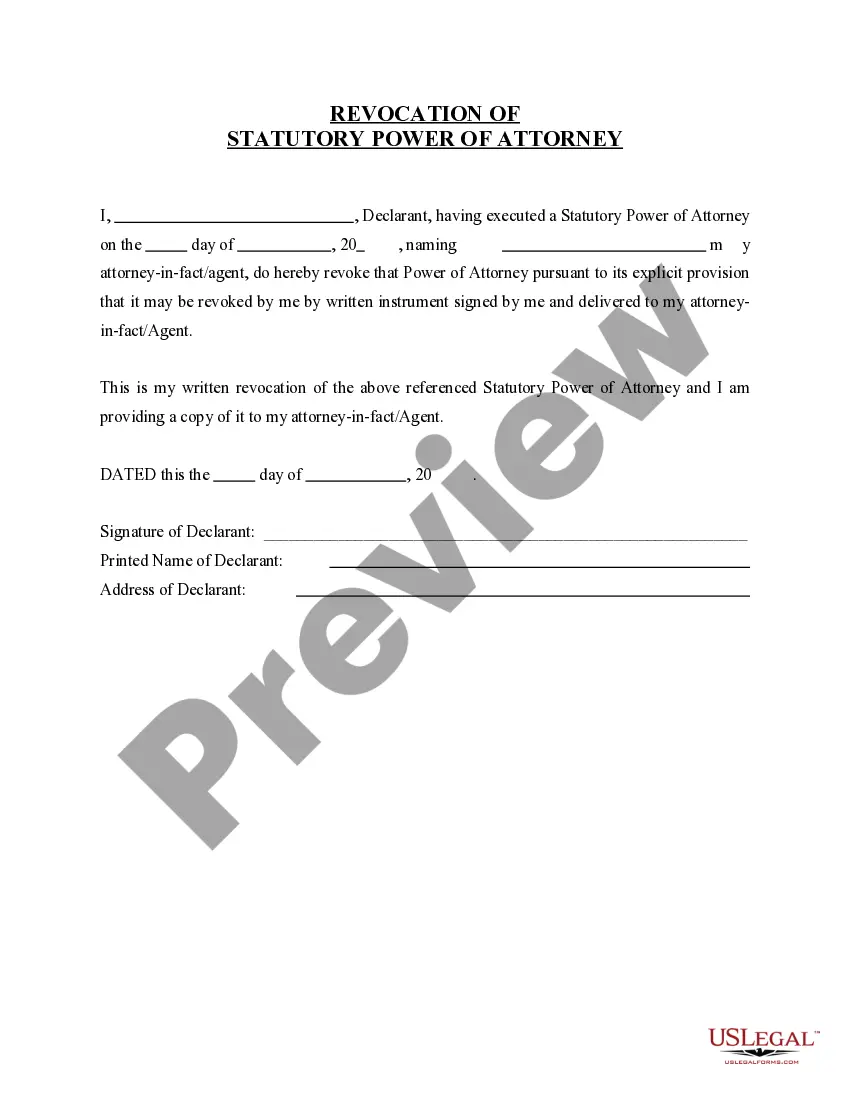
District of Columbia Revocation of Statutory General Power of Attorney - General, Durable, Limited
About this form
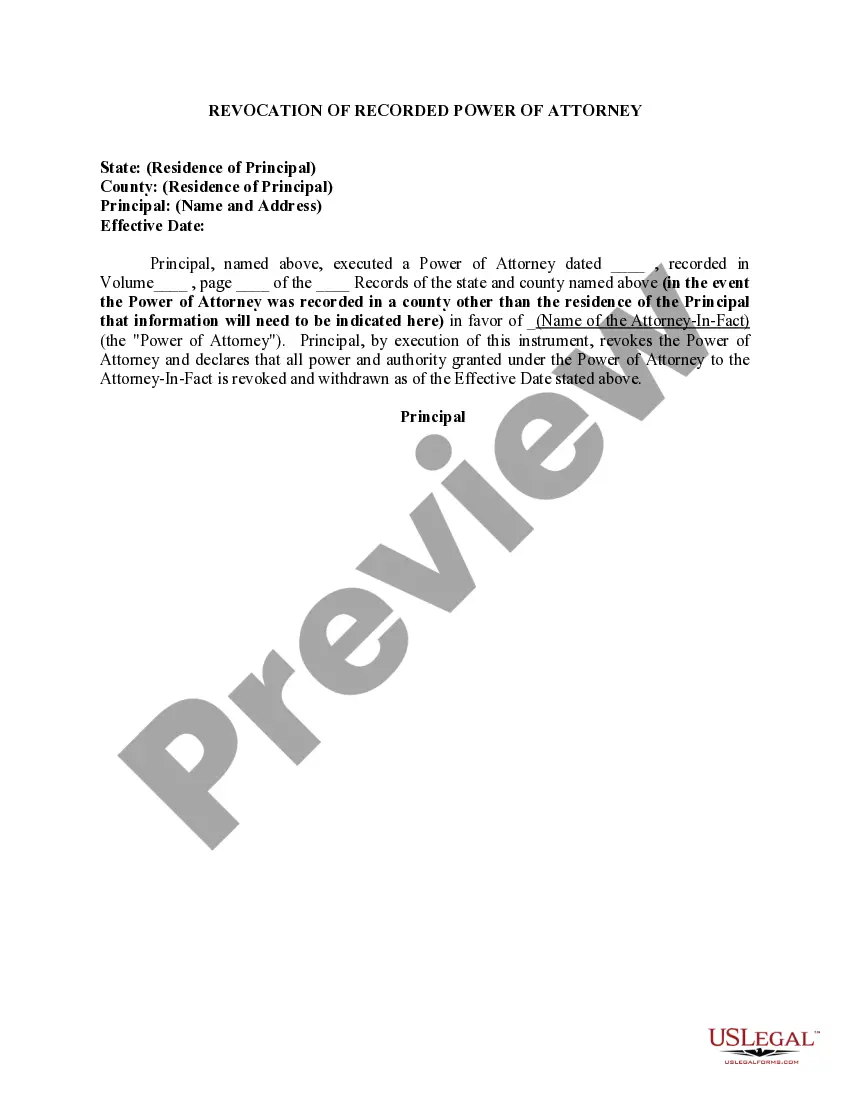
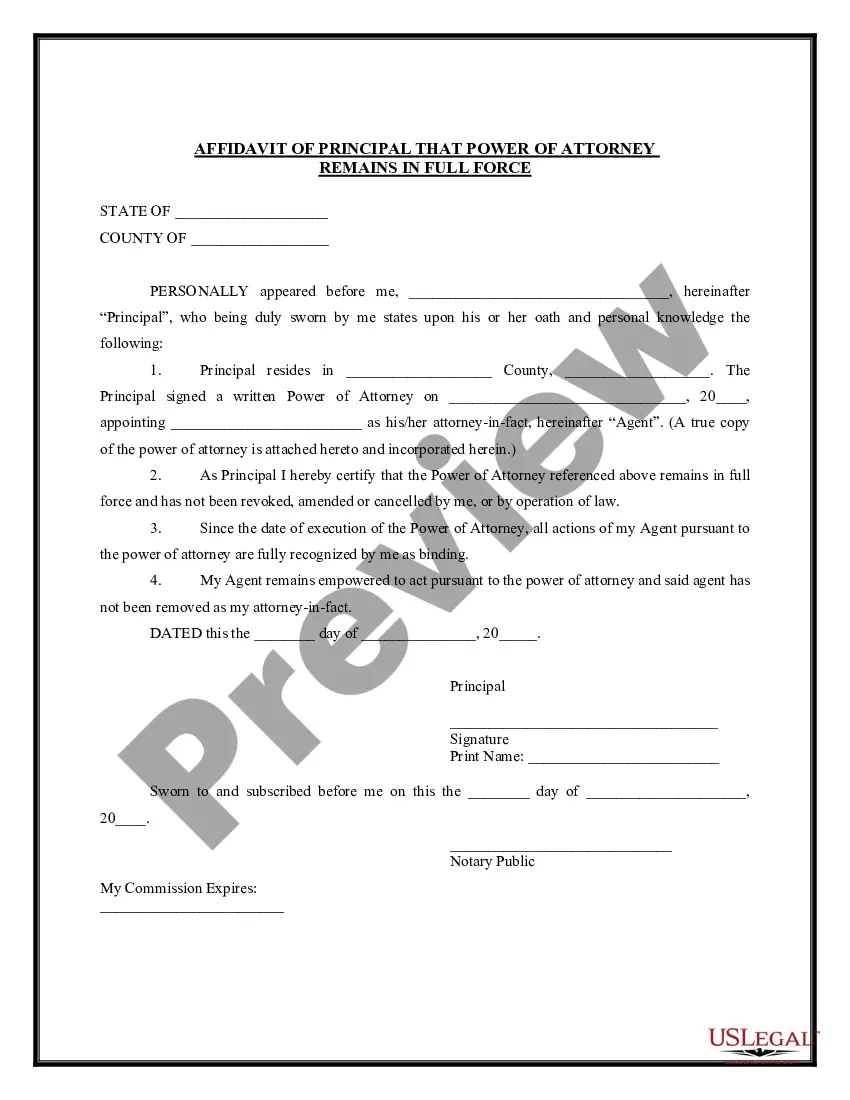
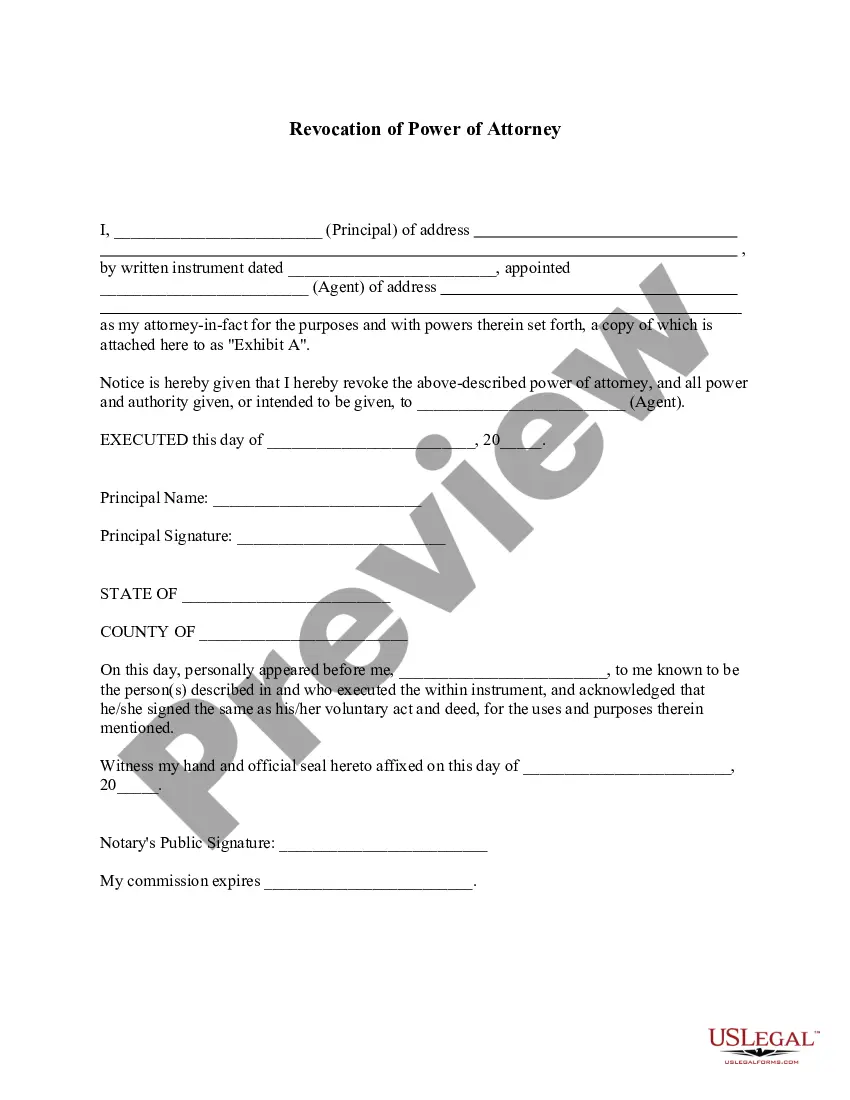
The Revocation of Statutory General Power of Attorney is a legal document that formally cancels the authority previously granted to an attorney-in-fact or agent to act on your behalf in various matters such as finances, property management, banking, and business dealings. This form differs from other power of attorney forms by specifically revoking prior authorities established under a Statutory Power of Attorney, ensuring that the previous agent no longer holds any power. It's essential that this document is signed and notarized to ensure its legality.
What’s included in this form
- Confirmation of revocation of the prior power of attorney
- Specification of the parties involved, including the principal and agent
- Signature line for the principal
- Notarization section to validate the document
- Provision for delivering copies to the former agent
When to use this document
This form should be used when you decide to revoke an existing power of attorney arrangement. Common scenarios include changing your attorney-in-fact, changing life circumstances that warrant a different choice of agent, or when you no longer need someone to manage your affairs. It is crucial to ensure that the revocation is executed to prevent any unauthorized actions by the former agent.
Who should use this form
Eligibility
- Any individual who has previously granted a power of attorney.
- Individuals seeking to make changes in their legal representation for financial, legal, or property matters.
- Those who wish to ensure that their previous decisions regarding the power of attorney are no longer valid.
How to prepare this document
Steps to Complete the Form
- Read the existing power of attorney document to understand what authority you are revoking.
- Clearly state your intent to revoke by filling out the revocation form, indicating both the previous agent and the principal.
- Sign the form in the presence of a notary public.
- Provide a copy of the completed and notarized revocation to your former attorney-in-fact.
- Keep a copy of the revocation for your records.
Notarization guidance
Yes, this form must be notarized to be legally valid. Notarization adds an extra layer of security by verifying your identity and the authenticity of the document. US Legal Forms offers integrated online notarization services with 24/7 availability, allowing you to complete this process securely through a video call without the need to travel.
Get your form ready online
Our built-in tools help you complete, sign, share, and store your documents in one place.
Make edits, fill in missing information, and update formatting in US Legal Forms—just like you would in MS Word.
Download a copy, print it, send it by email, or mail it via USPS—whatever works best for your next step.
Sign and collect signatures with our SignNow integration. Send to multiple recipients, set reminders, and more. Go Premium to unlock E-Sign.
If this form requires notarization, complete it online through a secure video call—no need to meet a notary in person or wait for an appointment.
We protect your documents and personal data by following strict security and privacy standards.

Make edits, fill in missing information, and update formatting in US Legal Forms—just like you would in MS Word.

Download a copy, print it, send it by email, or mail it via USPS—whatever works best for your next step.

Sign and collect signatures with our SignNow integration. Send to multiple recipients, set reminders, and more. Go Premium to unlock E-Sign.

If this form requires notarization, complete it online through a secure video call—no need to meet a notary in person or wait for an appointment.

We protect your documents and personal data by following strict security and privacy standards.
Mistakes to watch out for
- Failing to sign the document in front of a notary.
- Not providing the former agent with a copy of the revocation.
- Using vague language that does not clearly indicate revocation.
- Neglecting to mention any specific powers that are no longer granted.
Why complete this form online
- Convenience of downloading and filling out the form from your home.
- Editability allows you to customize the document to meet your exact needs.
- Reliability from utilizing a template drafted by licensed attorneys.
Quick recap
- The form effectively cancels any previous power of attorney rights granted to an agent.
- Notarization is required to ensure the validity of the revocation.
- Providing notice to the previous agent is necessary to prevent future misunderstandings.
Looking for another form?







Form popularity
FAQ
The primary difference lies in their duration of effectiveness. A standard power of attorney may terminate if the principal becomes incapacitated, whereas a durable power of attorney remains effective under those circumstances. The District of Columbia Revocation of Statutory General Power of Attorney - General, Durable, Limited can be tailored to include specific terms regarding durability. This distinction is crucial when selecting the appropriate power of attorney.
While both durable power of attorney and statutory power of attorney serve similar purposes, they are not the same. A durable power of attorney is specifically designed to remain in effect even if you become incapacitated. On the other hand, a statutory power of attorney may be limited by state laws and provisions. It's essential to understand these distinctions to ensure your preferences are upheld.
DC Code 21 2601 outlines various regulations regarding powers of attorney in Washington, D.C. This code provides legal guidance on establishing, maintaining, and revoking different types of powers of attorney, including the District of Columbia Revocation of Statutory General Power of Attorney - General, Durable, Limited. Familiarizing yourself with this code helps you navigate any legal complexities involved in managing powers of attorney effectively.
A POA, or power of attorney, and a DPOA, or durable power of attorney, differ mainly in their duration of effectiveness. A District of Columbia Revocation of Statutory General Power of Attorney - General, Durable, Limited can be either durable or non-durable. A non-durable power of attorney ceases if you become incapacitated, while a durable power remains effective in such situations. Understanding these differences aids in making informed choices.
To file for power of attorney in Washington, D.C., you must prepare the necessary documents, including a District of Columbia Revocation of Statutory General Power of Attorney - General, Durable, Limited. The documents should be signed in the presence of a notary public. Once the paperwork is complete, you can provide copies to the parties involved and ensure relevant stakeholders are informed. Uslegalforms offers tailored templates to simplify this process.
To remove yourself as someone's power of attorney, you should draft a revocation document. This document should state your intention to revoke the District of Columbia Revocation of Statutory General Power of Attorney - General, Durable, Limited and must be signed and dated. Once the form is complete, provide a copy to the person whose power you hold and notify any relevant institutions or parties involved. It's advisable to seek legal counsel to ensure the process is executed correctly.
The best power of attorney depends on your specific needs and circumstances. A District of Columbia Revocation of Statutory General Power of Attorney - General, Durable, Limited can provide flexibility in managing your affairs. For most individuals, a durable power of attorney is recommended because it remains effective even if you become incapacitated. Always consider your personal situation and consult a legal expert when making this important decision.
A legal power of attorney cannot make decisions regarding the principal's own healthcare if they are competent to make those choices, cannot alter or revoke the power of attorney itself, and cannot create or change a will. This limitation ensures that critical personal decisions are left in the hands of the individual unless they are incapacitated. When considering the District of Columbia Revocation of Statutory General Power of Attorney - General, Durable, Limited, it is important to be aware of these boundaries so you can plan accordingly.
A key disadvantage of a power of attorney lies in the potential for abuse of authority by the appointed agent. If your agent acts unethically, they can make decisions that may harm your financial or personal well-being. Therefore, it's essential to understand the implications of granting a District of Columbia Revocation of Statutory General Power of Attorney - General, Durable, Limited, and to choose someone trustworthy to avoid any unpleasant situations.
The most powerful power of attorney is typically a durable general power of attorney. This type of document remains effective even if you become incapacitated, enabling your appointed agent to make significant financial and healthcare decisions on your behalf. In the context of the District of Columbia Revocation of Statutory General Power of Attorney - General, Durable, Limited, it is crucial that individuals select their agents wisely, as they will have broad authority to act in your best interests.