District of Columbia Notice of Default on Residential Lease
Overview of this form
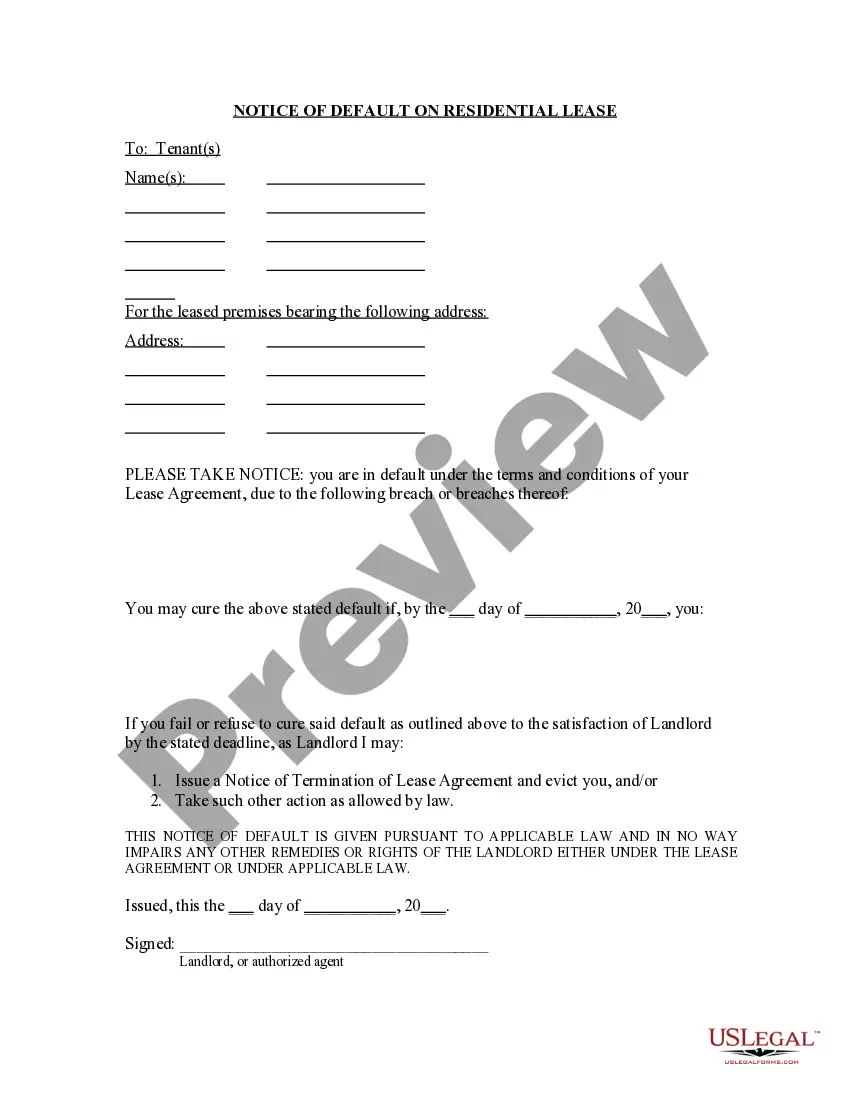
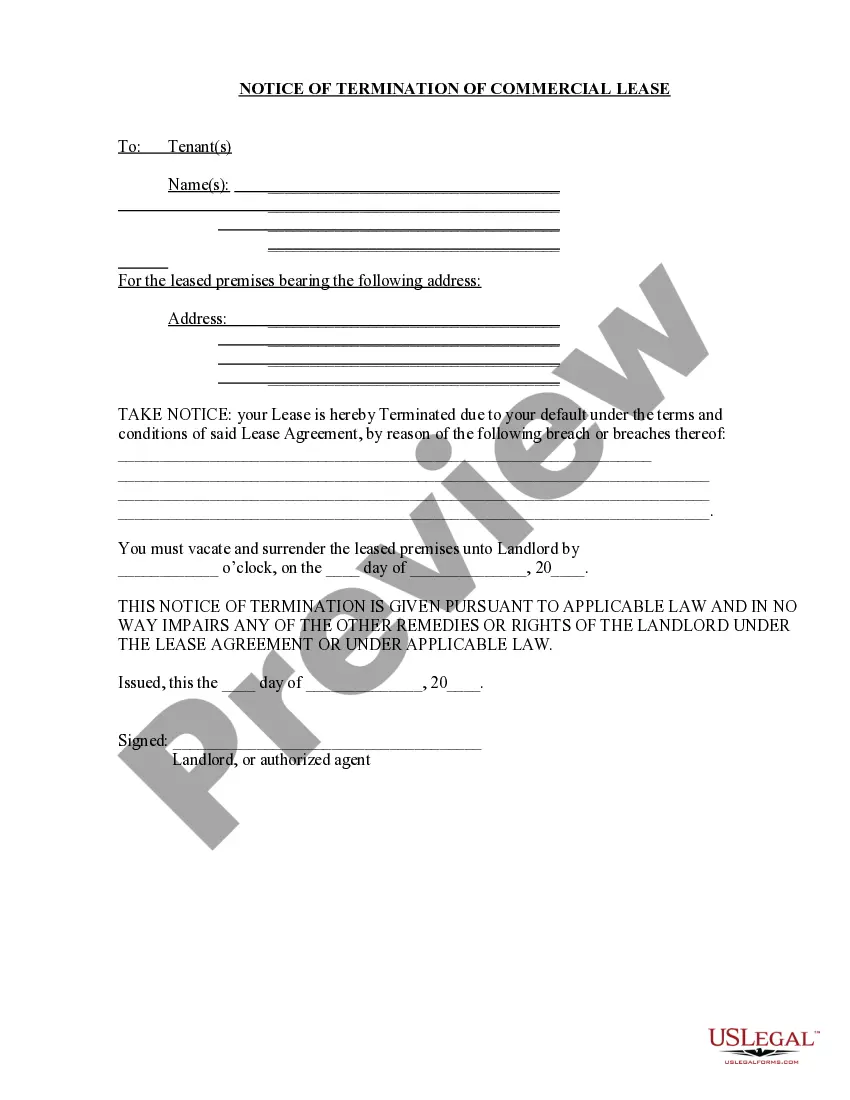
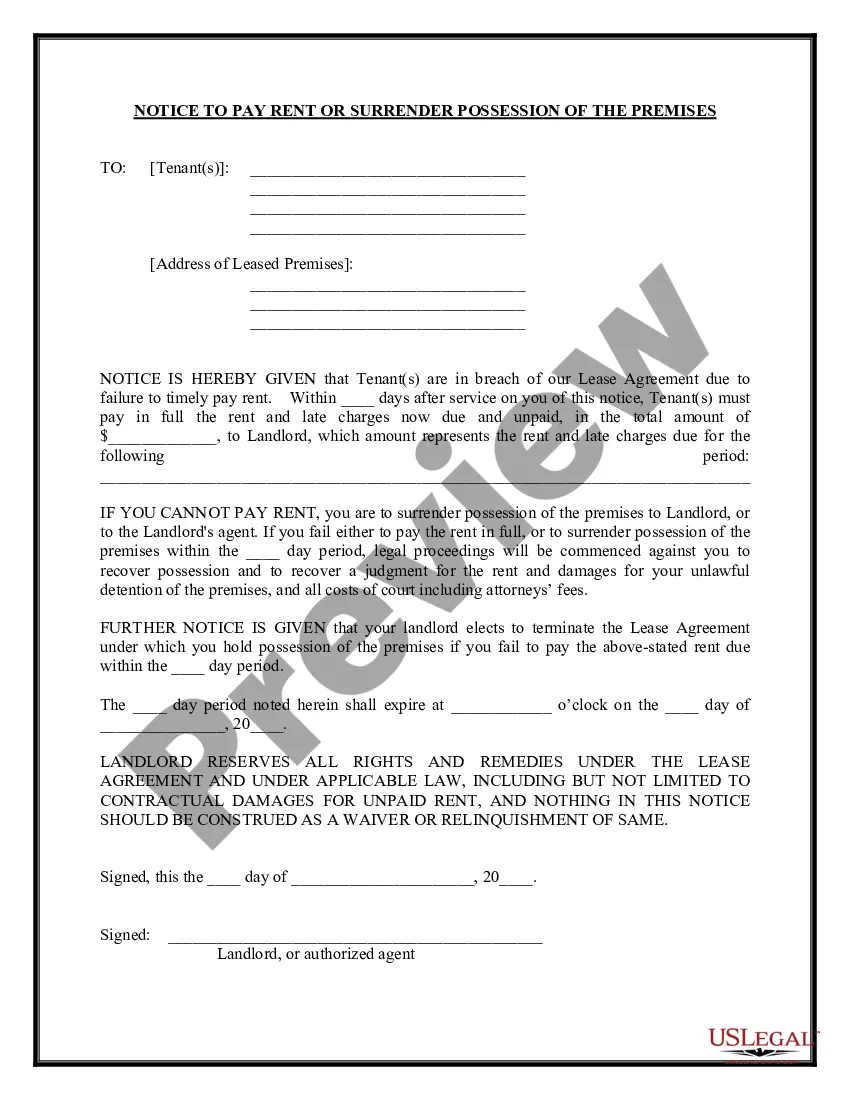
The Notice of Default on Residential Lease is a formal document used by landlords to inform tenants of a failure to comply with the lease terms, specifically in failing to pay rent on time. This notice outlines the specific reasons for the default and provides a deadline for the tenant to remedy the situation. This form is crucial in the landlord-tenant relationship, as it serves as a precursor to potential eviction proceedings, distinguishing it from other formal eviction notices by focusing specifically on the default in rent payment.
Form components explained
- Identification of the landlord and tenant involved in the lease agreement.
- Specific reasons for the default, primarily focused on late or non-payment of rent.
- Deadline date by which the tenant must cure the default.
- Statement of potential consequences if the tenant does not rectify the default.
- Signature line for the landlord or authorized agent.

Common use cases
This form should be used when a tenant has failed to make rental payments as stipulated in their lease agreement. It acts as a formal notice that allows the tenant a chance to cure the default within a specified timeframe before further legal action, such as eviction, is initiated. Using this form ensures that landlords follow proper legal protocols to maintain compliance with landlord-tenant laws.
Intended users of this form
- Landlords who have tenants that are not paying rent on time.
- Property management companies acting on behalf of landlords.
- Individuals renting out residential properties who need to document defaults by tenants.
Instructions for completing this form
- Identify the landlord and tenant by entering their names and contact information.
- Specify the property address where the lease agreement is in effect.
- Clearly outline the specific reasons for the default related to the lease terms.
- Set a deadline for the tenant to remedy the default, ensuring the date is clearly indicated.
- Sign the notice to validate it and ensure it conforms to legal requirements.
Notarization guidance
This form does not typically require notarization to be legally valid. However, some jurisdictions or document types may still require it. US Legal Forms provides secure online notarization powered by Notarize, available 24/7 for added convenience.
Get your form ready online
Our built-in tools help you complete, sign, share, and store your documents in one place.
Make edits, fill in missing information, and update formatting in US Legal Forms—just like you would in MS Word.
Download a copy, print it, send it by email, or mail it via USPS—whatever works best for your next step.
Sign and collect signatures with our SignNow integration. Send to multiple recipients, set reminders, and more. Go Premium to unlock E-Sign.
If this form requires notarization, complete it online through a secure video call—no need to meet a notary in person or wait for an appointment.
We protect your documents and personal data by following strict security and privacy standards.

Make edits, fill in missing information, and update formatting in US Legal Forms—just like you would in MS Word.

Download a copy, print it, send it by email, or mail it via USPS—whatever works best for your next step.

Sign and collect signatures with our SignNow integration. Send to multiple recipients, set reminders, and more. Go Premium to unlock E-Sign.

If this form requires notarization, complete it online through a secure video call—no need to meet a notary in person or wait for an appointment.

We protect your documents and personal data by following strict security and privacy standards.
Common mistakes to avoid
- Failing to specify the exact amount of rent due.
- Not providing a clear deadline for the tenant to cure the default.
- Omitting the signature of the landlord or authorized agent.
- Not delivering the notice according to legal requirements (e.g., method of delivery).
Advantages of online completion
- Convenience of downloading and printing the form at your convenience.
- Editability to customize the form according to specific needs.
- Access to professionally drafted forms, ensuring legality.
- Time-saving, avoiding lengthy consultations with an attorney.
Legal use & context
- This notice serves as a prerequisite for initiating eviction proceedings.
- Ensures that landlords comply with state laws regarding tenant notifications.
- Acts as a formal record of the default before further legal actions are considered.
What to keep in mind
- The Notice of Default on Residential Lease is essential for complying with legal procedures when dealing with tenant defaults.
- Clearly communicate reasons for default and deadlines to tenants to avoid disputes.
- Utilizing this form protects landlords' rights and sets the stage for potential eviction actions if necessary.
Looking for another form?
Form popularity
FAQ
In general, landlords in Washington D.C. must provide advance notice before entering a rental property. However, there are exceptions, such as in emergencies that threaten the safety or integrity of the property. Understanding when and how to legally enter a property is crucial for landlords to ensure compliance with local laws, and reviewing resources on the US Legal Forms platform can provide valuable insights.
To file a District of Columbia Notice of Default on Residential Lease, first complete the notice document with accurate information. Next, deliver the document according to state laws, often via certified mail or in person. After delivery, it is advisable to keep copies of the notice and proof of delivery to maintain a clear record of the filing process.
A District of Columbia Notice of Default on Residential Lease must include specific elements, such as the names of the parties involved, the property address, and a clear description of the default. It's important to outline the required actions the tenant must take and provide a timeline for compliance. Ensuring that your notice meets these requirements helps prevent potential legal issues down the road.
Writing a default notice involves clearly stating the reason for the default, referencing the specific lease agreement, and providing a deadline for the tenant to remedy the situation. Additionally, including information about the potential consequences of inaction is crucial. For templates and legal guidance, you may explore the resources offered by the US Legal Forms platform.
A District of Columbia Notice of Default on Residential Lease is typically delivered in person or through certified mail, ensuring proof of delivery to the tenant. This method guarantees that the tenant receives the notice, as it requires a signature upon receipt. Understanding the delivery process is essential for compliance and ensures that the notice is legally valid.
To locate properties under a District of Columbia Notice of Default on Residential Lease, begin by checking online real estate databases and local government property records. You can also consult with real estate agents who specialize in distressed properties. Additionally, consider visiting the US Legal Forms platform, where you can find resources related to notices of default.
Receiving a notice of default is certainly concerning, but it is not the end of the world. It serves as a warning, allowing you the chance to correct any lease violations before more severe actions are taken. By addressing the issues promptly, you can maintain your tenancy and avoid escalation. Utilizing resources, like USLegalForms, can assist you in understanding and managing a District of Columbia Notice of Default on Residential Lease effectively.
Default refers to a failure to meet the terms of a lease agreement, while foreclosure involves the legal process where a lender takes back property due to non-payment. In the realm of the District of Columbia Notice of Default on Residential Lease, default is relevant to renters who breach lease terms, whereas foreclosure is typically associated with homeowners and mortgages. Understanding these distinctions can help tenants navigate their rights and responsibilities effectively.
When you receive a notice of default, it means that you have an opportunity to address the issues mentioned in your lease. Typically, this notice outlines the exact nature of the default and sets a timeline for corrective action. If resolved promptly, tenants can avoid more severe consequences, such as eviction, underlining the importance of addressing the District of Columbia Notice of Default on Residential Lease swiftly.
A notice of default on a house is a formal notification indicating that a tenant has failed to comply with the terms of their lease agreement. In the context of the District of Columbia Notice of Default on Residential Lease, this document alerts tenants about their lease violations, giving them a chance to rectify the situation. Understanding this notice is crucial for both tenants and landlords, as it can influence subsequent actions.