District of Columbia Letter from Landlord to Tenant as Notice of Abandoned Personal Property
What is this form?
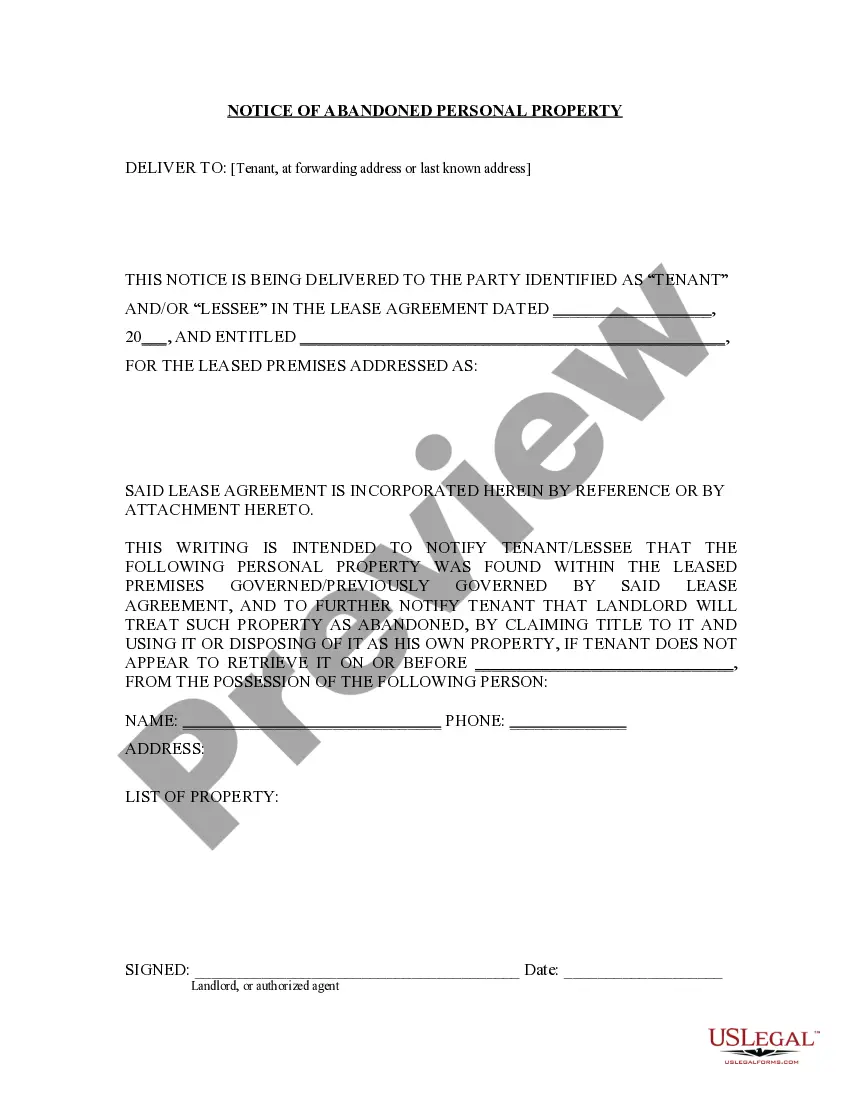
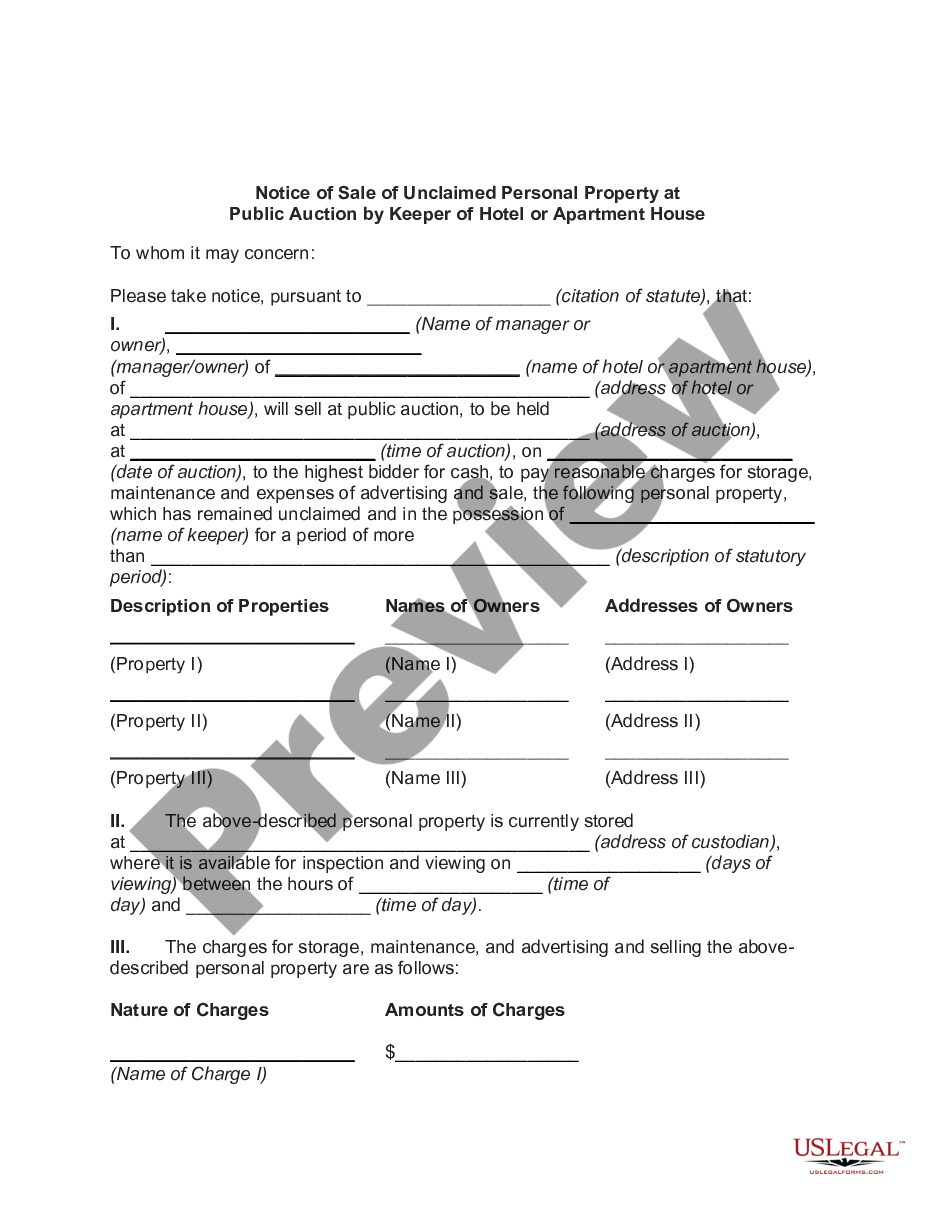
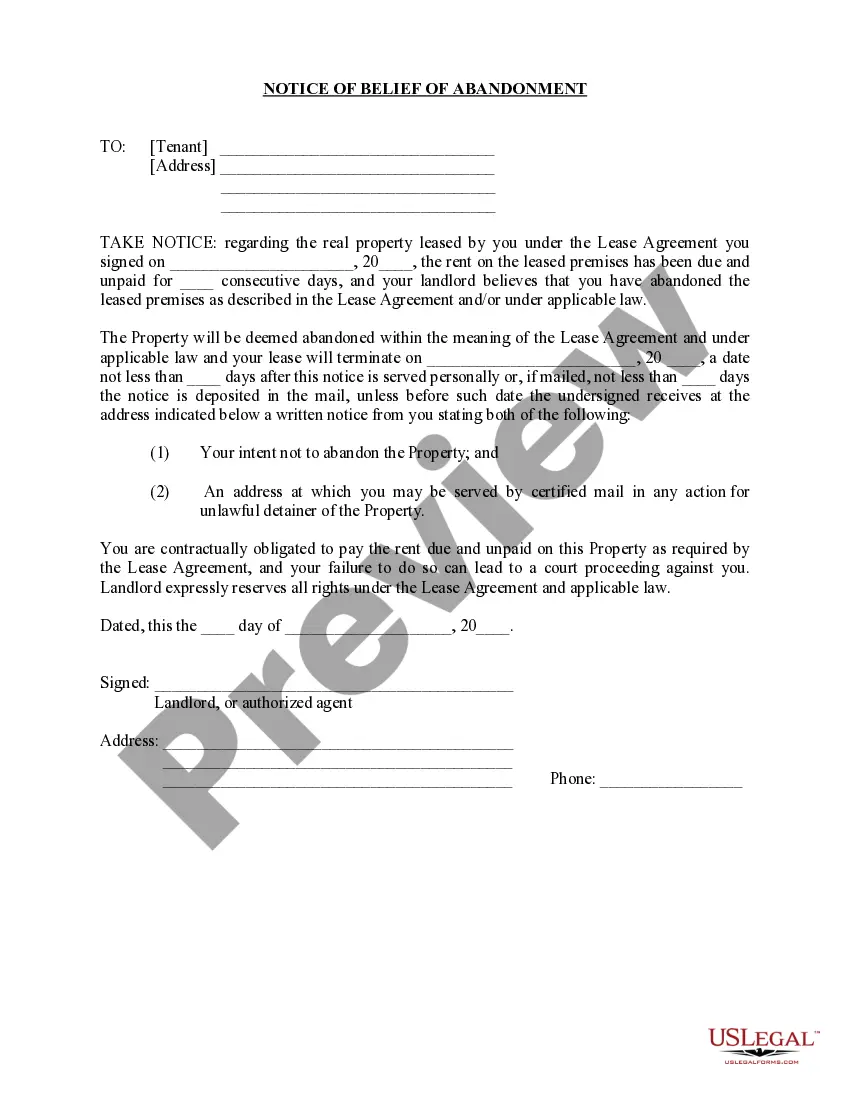
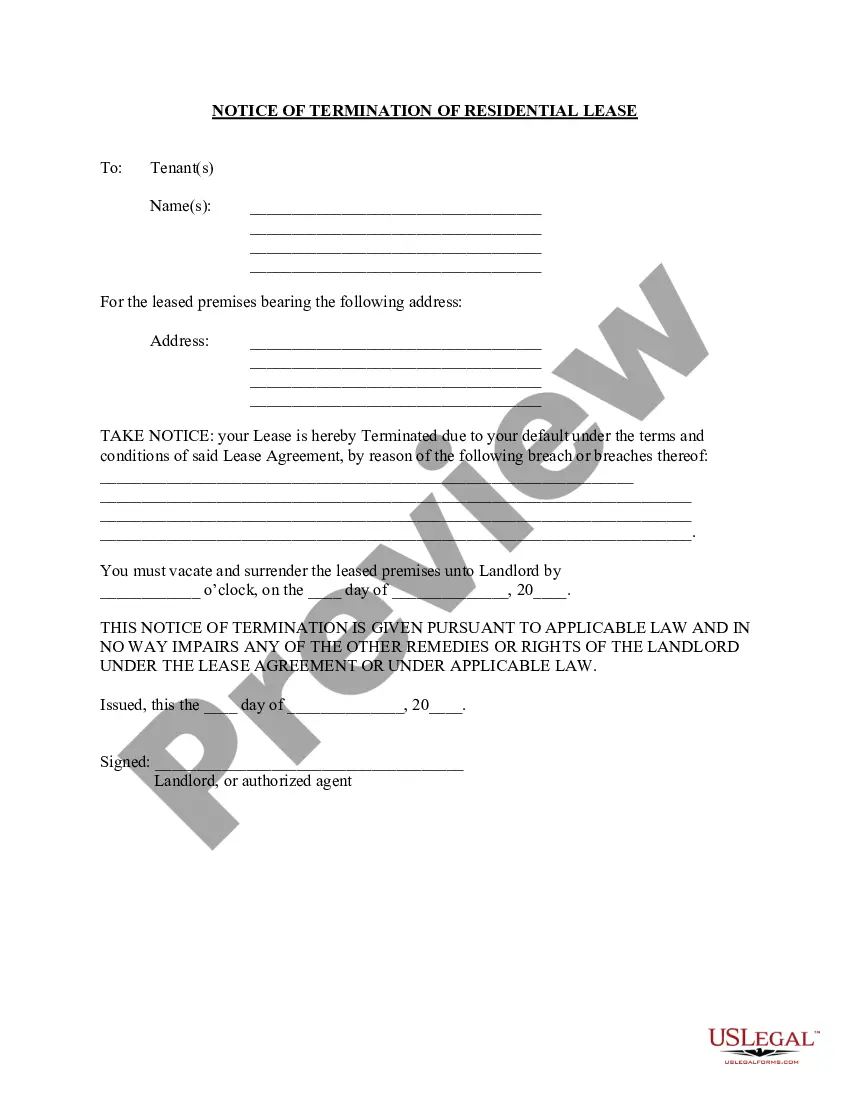
This Letter from Landlord to Tenant as Notice of Abandoned Personal Property is a formal communication that notifies a tenant about personal belongings left behind in rented premises. This notice sets clear instructions for the tenant regarding the retrieval of their property or the consequences of abandonment, where the landlord may dispose of or claim the property. This form is important for landlords ensuring compliance with state laws governing abandoned property, making it different from other eviction or rental termination notices.
Form components explained
- Identification of the tenant and the leased premises.
- A description of the abandoned personal property.
- A deadline for the tenant to retrieve their belongings.
- Statement of the landlord's intent to claim or dispose of the property if not retrieved.
- Signature and contact information of the landlord.
Common use cases
This form should be used when a tenant has vacated the rented property, leaving personal items behind. It is particularly useful when there is uncertainty about whether the tenant intends to retrieve their belongings. By issuing this notice, landlords can clarify their rights regarding the unclaimed property and establish a clear timeline for the tenant's response.
Who this form is for
- Landlords or property managers managing rental properties.
- Tenants who have inadvertently left personal belongings behind.
- Legal professionals advising landlords or tenants on property issues.
Instructions for completing this form
- Identify the parties involved by entering the landlord's and tenant's names.
- Specify the location of the leased premises.
- List the items considered abandoned and describe them clearly.
- Enter the deadline for the tenant to reclaim their belongings.
- Provide your contact information for any follow-up by the tenant.
- Sign and date the document to validate it.
Does this document require notarization?
Notarization is not commonly needed for this form. However, certain documents or local rules may make it necessary. Our notarization service, powered by Notarize, allows you to finalize it securely online anytime, day or night.
Get your form ready online
Our built-in tools help you complete, sign, share, and store your documents in one place.
Make edits, fill in missing information, and update formatting in US Legal Forms—just like you would in MS Word.
Download a copy, print it, send it by email, or mail it via USPS—whatever works best for your next step.
Sign and collect signatures with our SignNow integration. Send to multiple recipients, set reminders, and more. Go Premium to unlock E-Sign.
If this form requires notarization, complete it online through a secure video call—no need to meet a notary in person or wait for an appointment.
We protect your documents and personal data by following strict security and privacy standards.

Make edits, fill in missing information, and update formatting in US Legal Forms—just like you would in MS Word.

Download a copy, print it, send it by email, or mail it via USPS—whatever works best for your next step.

Sign and collect signatures with our SignNow integration. Send to multiple recipients, set reminders, and more. Go Premium to unlock E-Sign.

If this form requires notarization, complete it online through a secure video call—no need to meet a notary in person or wait for an appointment.

We protect your documents and personal data by following strict security and privacy standards.
Common mistakes
- Failing to clearly identify all items left behind.
- Not providing a reasonable deadline for retrieval.
- Ignoring state-specific laws that require additional steps or notices.
- Forgetting to sign the notice before sending it to the tenant.
Advantages of online completion
- Convenient download option allows for immediate access.
- Editable fields make it easy to personalize for your situation.
- Forms are drafted by licensed attorneys, ensuring legal compliance.
- Reduces the risk of errors compared to handwritten notices.
Legal use & context
- This notice serves as a legal declaration to the tenant regarding their abandoned property.
- Failure to respond to this notice may allow the landlord to dispose of the property legally.
- Understanding the legal implications can protect both tenants' and landlords' rights.
Quick recap
- The form is essential for notifying tenants of abandoned property.
- Clear communication follows legal guidelines, protecting both parties.
- Always adhere to local laws when issuing notices regarding abandoned property.
Looking for another form?
Form popularity
FAQ
To write a formal letter to your tenant, use a professional format, addressing them respectfully. Include relevant details such as the reason for the letter; if you are writing about abandoned property, highlight how this pertains to the District of Columbia Letter from Landlord to Tenant as Notice of Abandoned Personal Property. Ensure the letter is concise, clear, and provides information on next steps, maintaining a serious yet approachable tone.
Writing a move out notice to a tenant involves stating your intention clearly and providing a timeline. You should mention the end of the lease and any requirement relating to abandoned items, referencing the District of Columbia Letter from Landlord to Tenant as Notice of Abandoned Personal Property if applicable. This ensures the tenant knows what to expect and their obligations before vacating the property.
To write a notice letter to your tenant, start by addressing the tenant directly and stating the purpose of the letter. If the notice involves abandoned property, refer to the District of Columbia Letter from Landlord to Tenant as Notice of Abandoned Personal Property for guidance. Clearly specify any actions required or deadlines, which helps ensure your tenant understands their responsibilities.
When writing a tenancy notice, be sure to clearly state the purpose of the notice, whether it's regarding rent, property conditions, or abandonment. Use a format similar to the District of Columbia Letter from Landlord to Tenant as Notice of Abandoned Personal Property, clearly identifying your relationship to the tenant. Include necessary details such as dates and required actions, maintaining a professional tone throughout.
To write a quick notice letter to a tenant regarding abandoned personal property, start with a clear subject line. Reference the specific problem, such as the property being abandoned, and mention your intention to send a District of Columbia Letter from Landlord to Tenant as Notice of Abandoned Personal Property. Keep the tone direct yet polite, ensuring your tenant understands what actions they should take next.
DC Code 42-3505.01 A outlines the landlord's responsibility regarding abandoned property left by a tenant. It stipulates procedures for notifying tenants and handling unclaimed belongings. Familiarity with this code helps landlords protect their interests while complying with legal requirements. Using a District of Columbia Letter from Landlord to Tenant as Notice of Abandoned Personal Property can ensure adherence to these regulations.
Tenant abandonment occurs when a tenant vacates the rental property without notifying the landlord and without settling their obligations, such as rent. It typically involves leaving belongings and failing to communicate intentions. Factors like overdue rent payments and lack of activity in the unit can contribute to this determination. Understanding tenant abandonment is crucial for landlords, especially when serving a District of Columbia Letter from Landlord to Tenant as Notice of Abandoned Personal Property.
To write a formal letter to a tenant, start with a professional heading that includes your name and address, along with the tenant’s information. Clearly state the purpose of the letter, such as a proper notice regarding abandoned personal property. Utilize a respectful tone, and include specific details such as dates and actions required. Remember, a well-structured District of Columbia Letter from Landlord to Tenant as Notice of Abandoned Personal Property can help maintain clarity and professionalism.
A letter of abandonment is a formal communication from a landlord to a tenant, stating that the tenant's personal belongings are considered abandoned. This letter often includes details about how long the tenant has to retrieve their belongings, as well as subsequent actions the landlord may take. In the District of Columbia, this letter is crucial for legal clarity regarding abandoned items.
If you leave belongings behind when moving, your landlord may consider them abandoned, leading to potential disposal or storage of those items. Landlords usually inform tenants through a District of Columbia Letter from Landlord to Tenant as Notice of Abandoned Personal Property, detailing the next steps. It’s advisable to collect your belongings promptly to prevent complications.