District of Columbia Letter from Tenant to Landlord about Illegal entry by landlord
Overview of this form
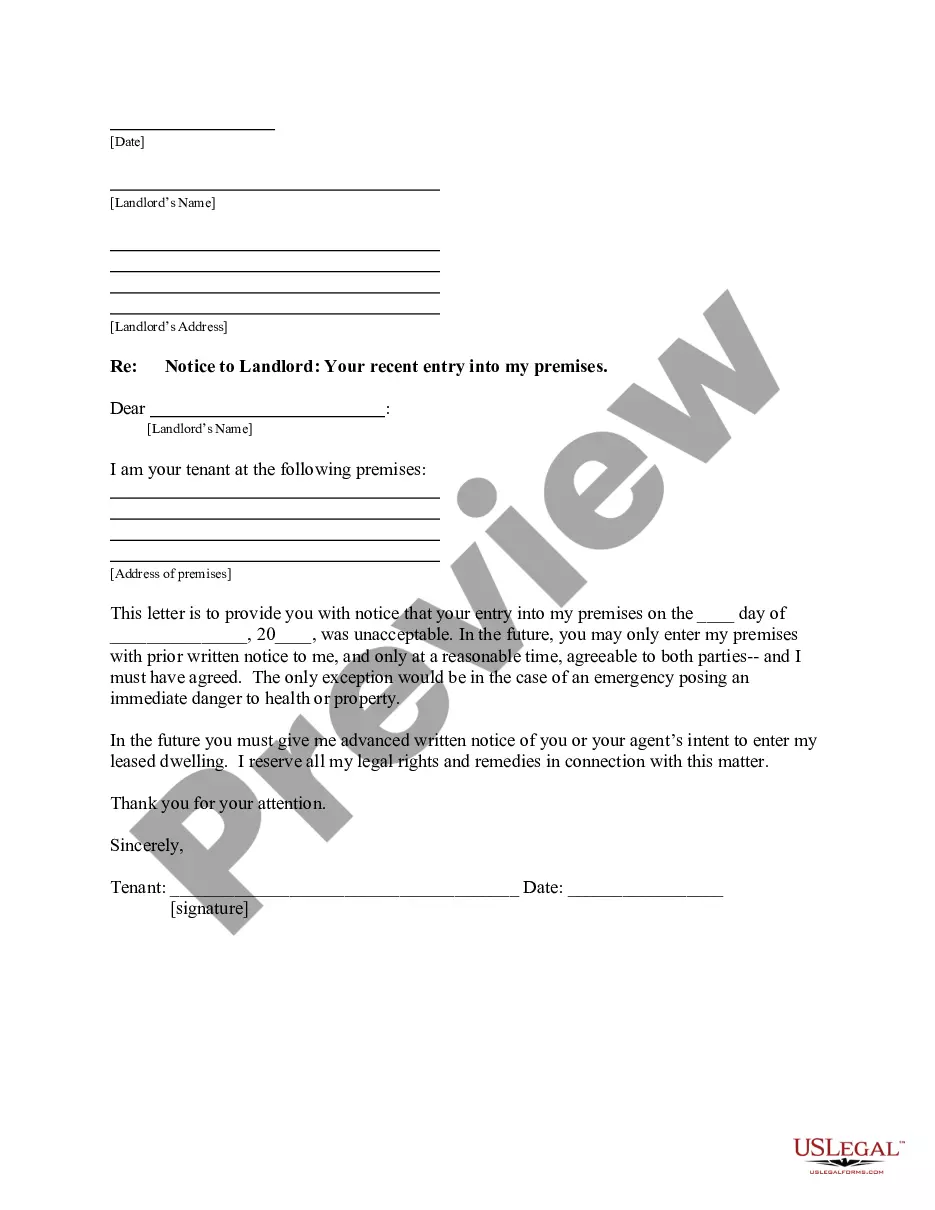
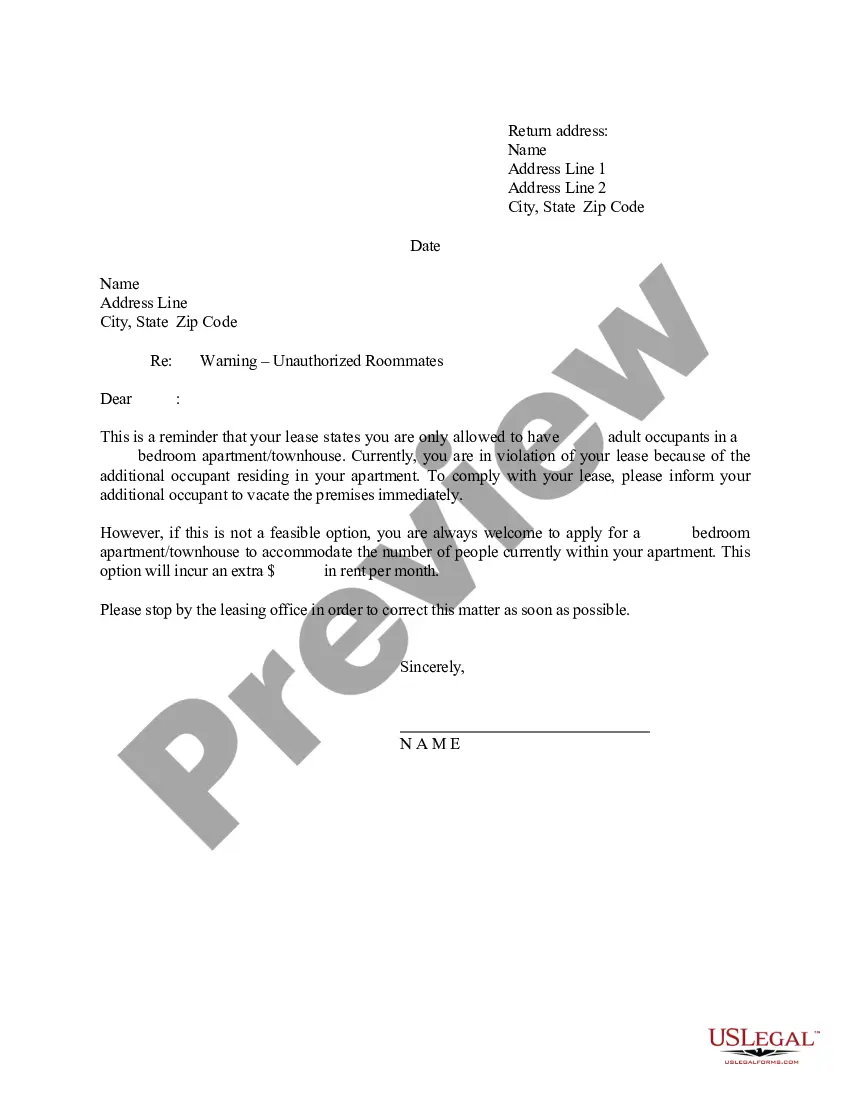
This form is a Letter from Tenant to Landlord about illegal entry by the landlord. Its purpose is to formalize a tenant's request for prior written notice of any future entries into the leased premises by the landlord or their agents, except in emergency situations. This form helps protect tenant rights within the landlord-tenant relationship, ensuring that landlords respect personal space and privacy.
Main sections of this form
- Tenant's name and contact information
- Landlord's name and contact information
- Statement requesting advanced written notice for entries
- Reservation of legal rights related to privacy violations
- Signature line for the tenant
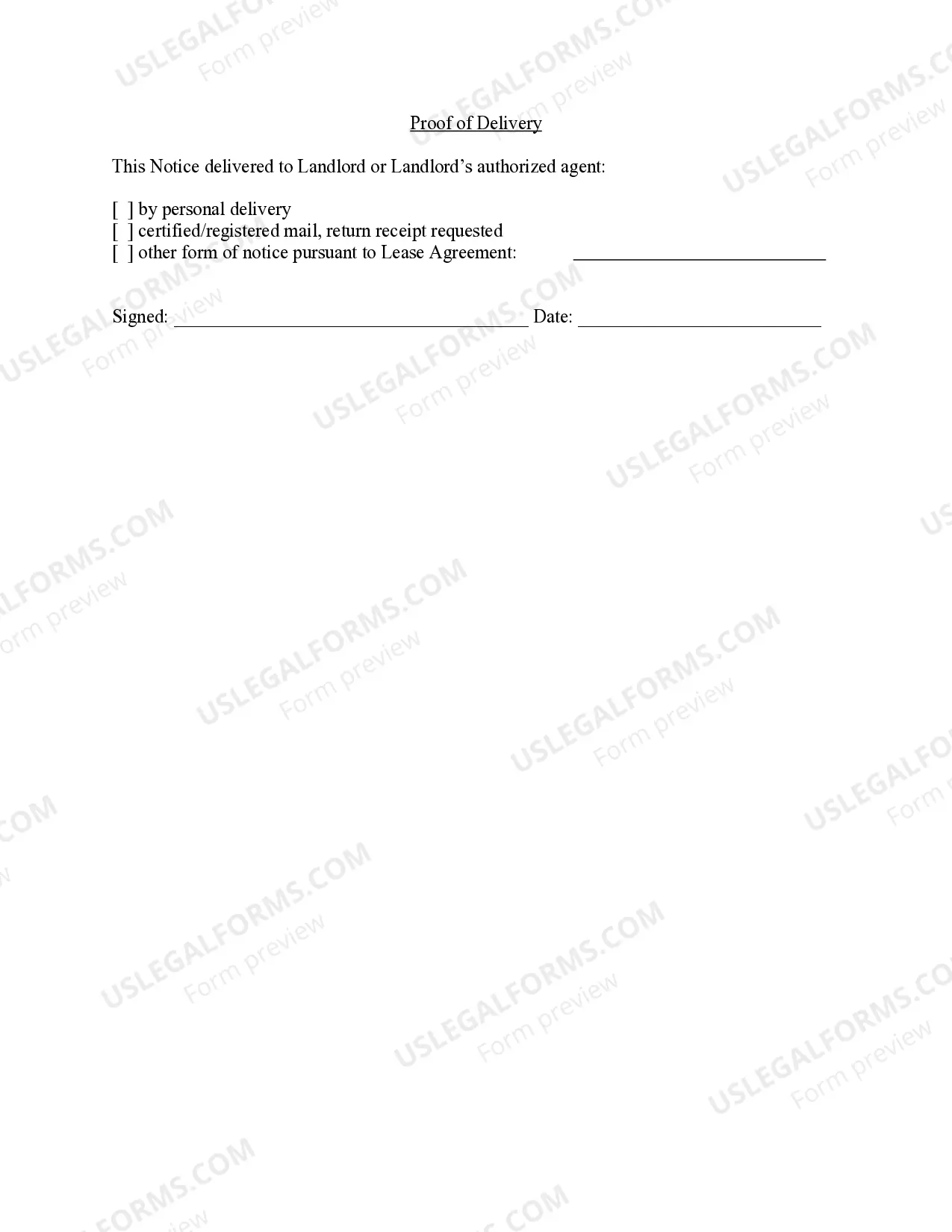
- Proof of delivery options for notifying the landlord

When this form is needed
This form should be used when a tenant feels that their landlord has entered their property without proper notification or consent. It is particularly useful in situations where the tenant wants to assert their rights regarding privacy and establish clear communication protocols for future landlord entries.
Who needs this form
Intended Audience:
- Tenants who have experienced illegal entry by their landlord
- Individuals renting residential properties
- Tenants seeking to establish clear boundaries with their landlords
Completing this form step by step
Steps to Complete this Form:
- Fill in your name and contact information as the tenant.
- Enter your landlordâs name and contact information.
- Clearly state your request for written notice of future entries.
- Sign and date the letter.
- Choose your preferred method of proof of delivery and include it accordingly.
Notarization guidance
This form does not typically require notarization unless specified by local law. However, it is advisable to send it through certified or registered mail for tracking purposes.
Get your form ready online
Our built-in tools help you complete, sign, share, and store your documents in one place.
Make edits, fill in missing information, and update formatting in US Legal Forms—just like you would in MS Word.
Download a copy, print it, send it by email, or mail it via USPS—whatever works best for your next step.
Sign and collect signatures with our SignNow integration. Send to multiple recipients, set reminders, and more. Go Premium to unlock E-Sign.
If this form requires notarization, complete it online through a secure video call—no need to meet a notary in person or wait for an appointment.
We protect your documents and personal data by following strict security and privacy standards.

Make edits, fill in missing information, and update formatting in US Legal Forms—just like you would in MS Word.

Download a copy, print it, send it by email, or mail it via USPS—whatever works best for your next step.

Sign and collect signatures with our SignNow integration. Send to multiple recipients, set reminders, and more. Go Premium to unlock E-Sign.

If this form requires notarization, complete it online through a secure video call—no need to meet a notary in person or wait for an appointment.

We protect your documents and personal data by following strict security and privacy standards.
Common mistakes to avoid
- Failing to include the correct contact details for both tenant and landlord.
- Not signing or dating the letter before sending.
- Omitting the reservation of rights, which may weaken the request.
Benefits of completing this form online
- Conveniently download the form for immediate use.
- Editable format allows for personalized adjustments before sending.
- Prepared by licensed attorneys, ensuring reliability and legal compliance.
Looking for another form?
Form popularity
FAQ
When writing a request to your landlord, begin with a polite salutation and clearly state the purpose of your letter. Make sure to specify what you are asking for in a direct and concise manner, providing any necessary details that support your request. If your request relates to concerns about illegal entry, incorporating references to the District of Columbia Letter from Tenant to Landlord about Illegal entry by landlord can help clarify the seriousness of your situation.
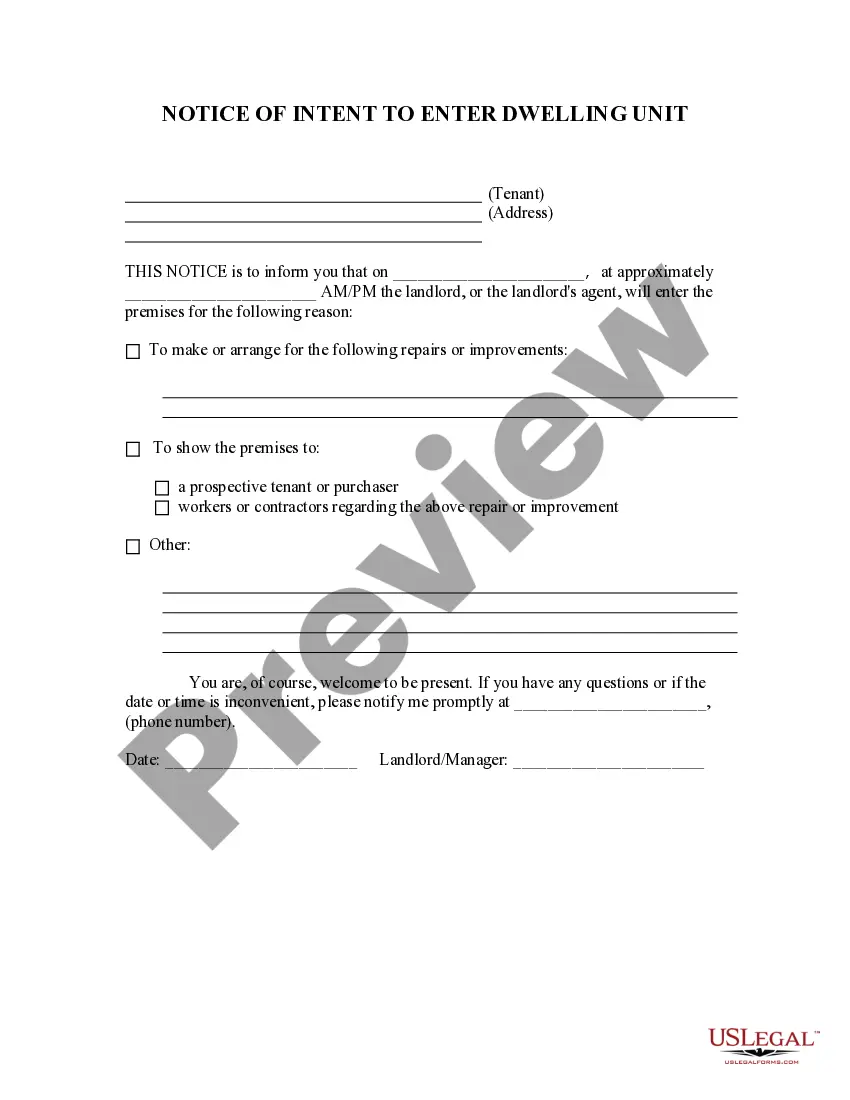
A notice of intent for entry is a formal communication from a landlord, informing a tenant of their intention to enter the rental property. This notice typically includes the purpose for entry, the date, and the time frame. Understanding this notice is crucial for tenants, particularly in the context of a District of Columbia Letter from Tenant to Landlord about Illegal entry by landlord, as it outlines tenants' rights regarding privacy and property access.
To write a letter aimed at preventing eviction, clearly explain your situation and express your commitment to resolving any issues. It is beneficial to highlight any steps you are taking to address the landlord's concerns. Make reference to your rights and any relevant regulations, such as the District of Columbia Letter from Tenant to Landlord about Illegal entry by landlord, to reinforce your position and seek a positive resolution.
To propose an idea or request, start with a concise introduction that explains your proposal. Clearly outline the benefits of your suggestion and how it will contribute positively to the rental relationship. It is essential to present your proposal in a manner that emphasizes respect and collaboration, particularly when discussing sensitive topics like a District of Columbia Letter from Tenant to Landlord about Illegal entry by landlord.
Begin your letter with a respectful greeting, addressing your landlord by their name, if known. You may open with a statement of purpose, such as expressing your concern regarding specific issues, including those related to illegal entry by the landlord. Make sure to state clearly that you wish to address your rights as a tenant, referencing the District of Columbia Letter from Tenant to Landlord about Illegal entry by landlord for context.
To sue your landlord for unsafe living conditions, first document the specific issues you face, including any instances of illegal entry. You may want to send a District of Columbia Letter from Tenant to Landlord about Illegal entry by landlord to formally announce your concerns and give them a chance to rectify the issues. If they do not respond appropriately, you can file a lawsuit in the appropriate court. Consulting legal services or platforms like uslegalforms can help you understand your rights and the proper procedures to take.
Filing a complaint against a landlord in DC involves gathering evidence of their misconduct, such as illegal entry into your home. You can file your complaint with the local housing agency or through online platforms that specialize in tenant rights. A well-crafted District of Columbia Letter from Tenant to Landlord about Illegal entry by landlord can be an effective tool to clearly communicate your grievances. Remember to keep copies of all communications for your records.
Reporting a landlord in DC can be an essential step toward resolving housing issues. You can report any violations, including illegal entry, to the Department of Housing and Community Development. Using a District of Columbia Letter from Tenant to Landlord about Illegal entry by landlord can also strengthen your case. Make sure to provide detailed documentation of the issues to ensure a thorough investigation.
To handle an irresponsible landlord, start by documenting any issues you experience, including illegal entry. You can use a District of Columbia Letter from Tenant to Landlord about Illegal entry by landlord to formally express your concerns. This letter serves as an official notification and may motivate the landlord to address the problems. If the situation does not improve, consider contacting local housing authorities for further assistance.
When drafting a legal letter to your landlord, begin by clearly stating your name, address, and date. Outline the issue at hand, such as illegal entry or unauthorized occupants, and express your concerns concisely. You can refer to a District of Columbia Letter from Tenant to Landlord about Illegal entry by landlord to understand the proper format and necessary content. Make sure to include a request for action and any relevant deadlines to ensure a timely response.