Connecticut Last Will and Testament for Divorced Person Not Remarried with Adult and Minor Children
Overview of this form
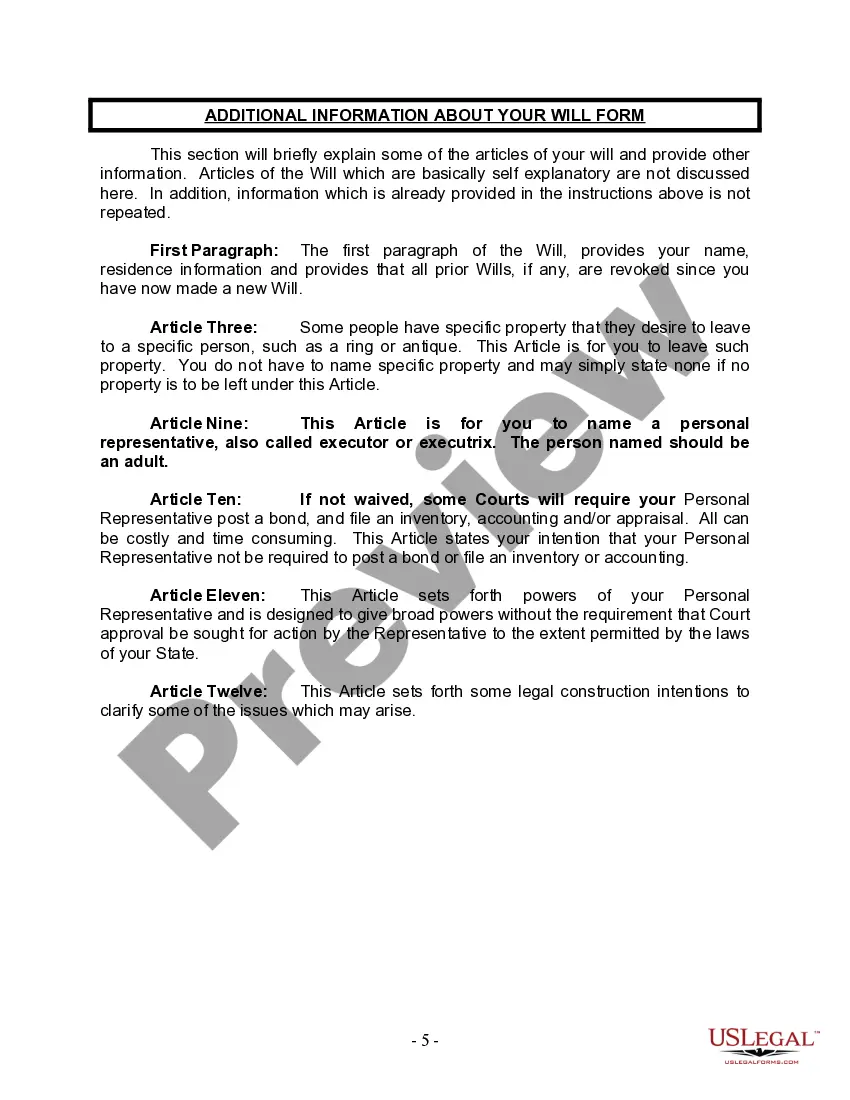
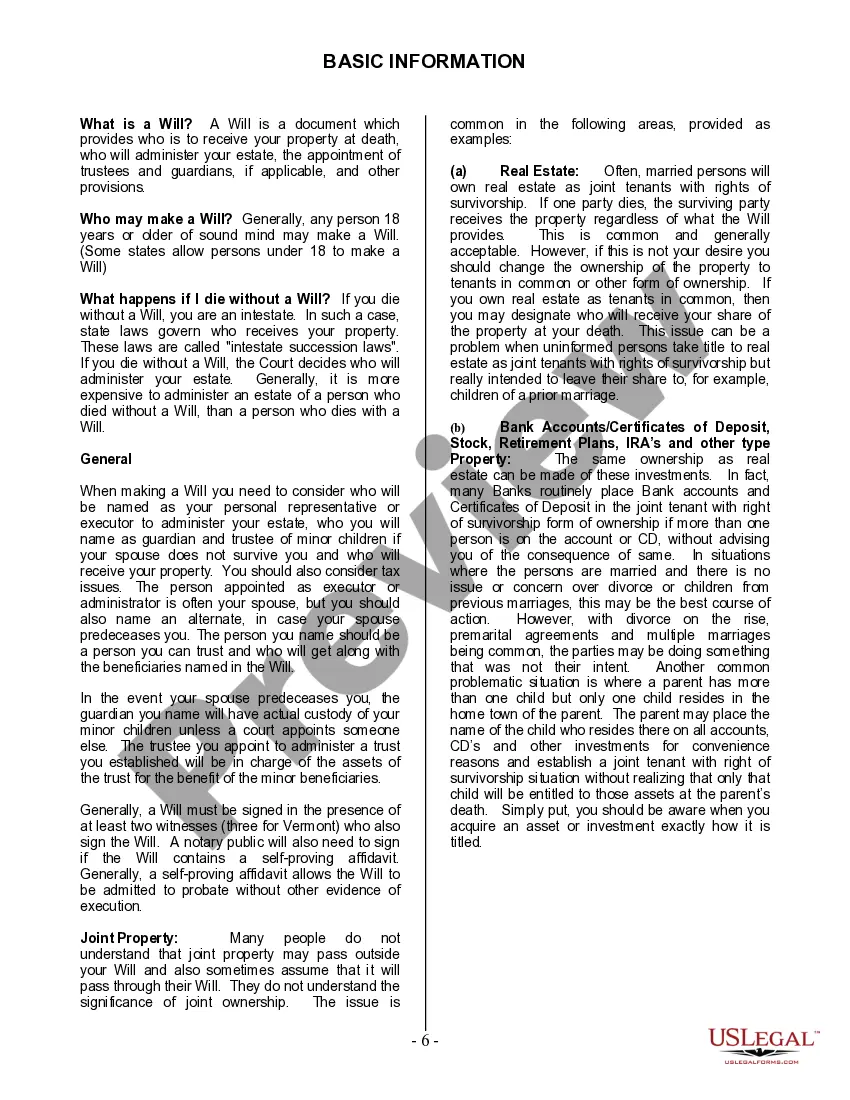
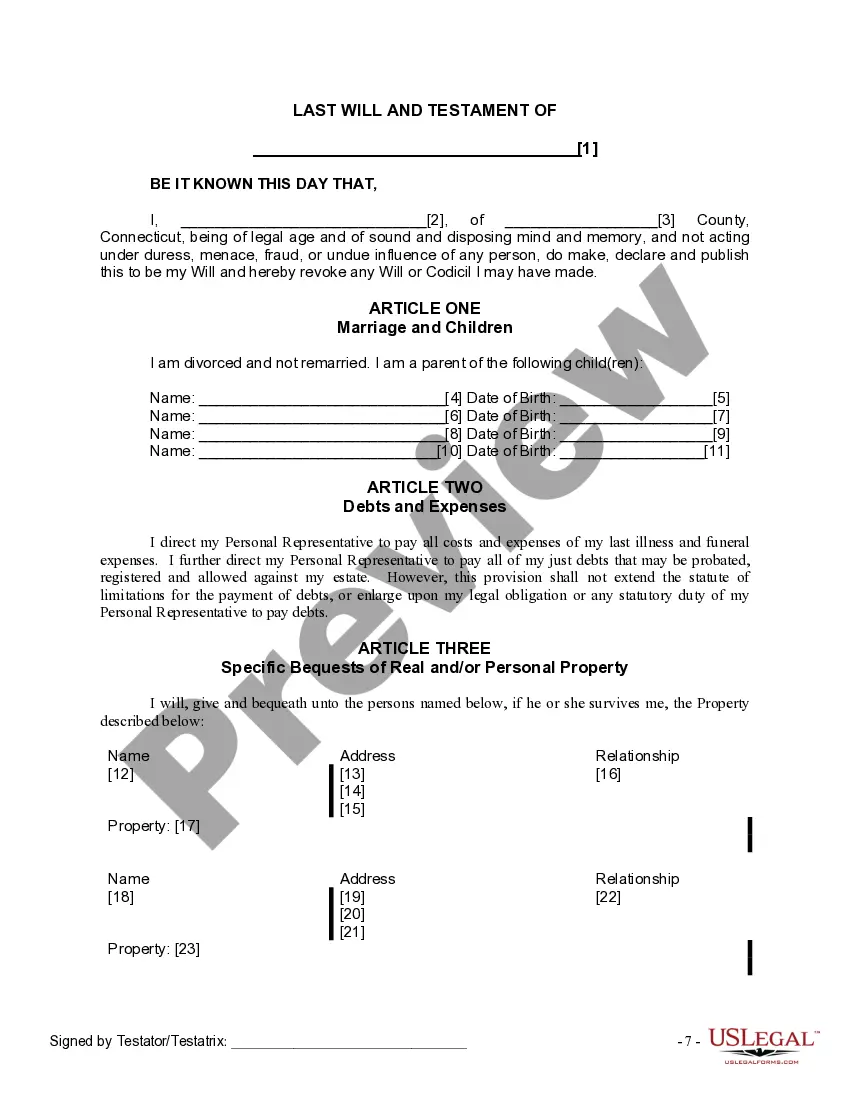
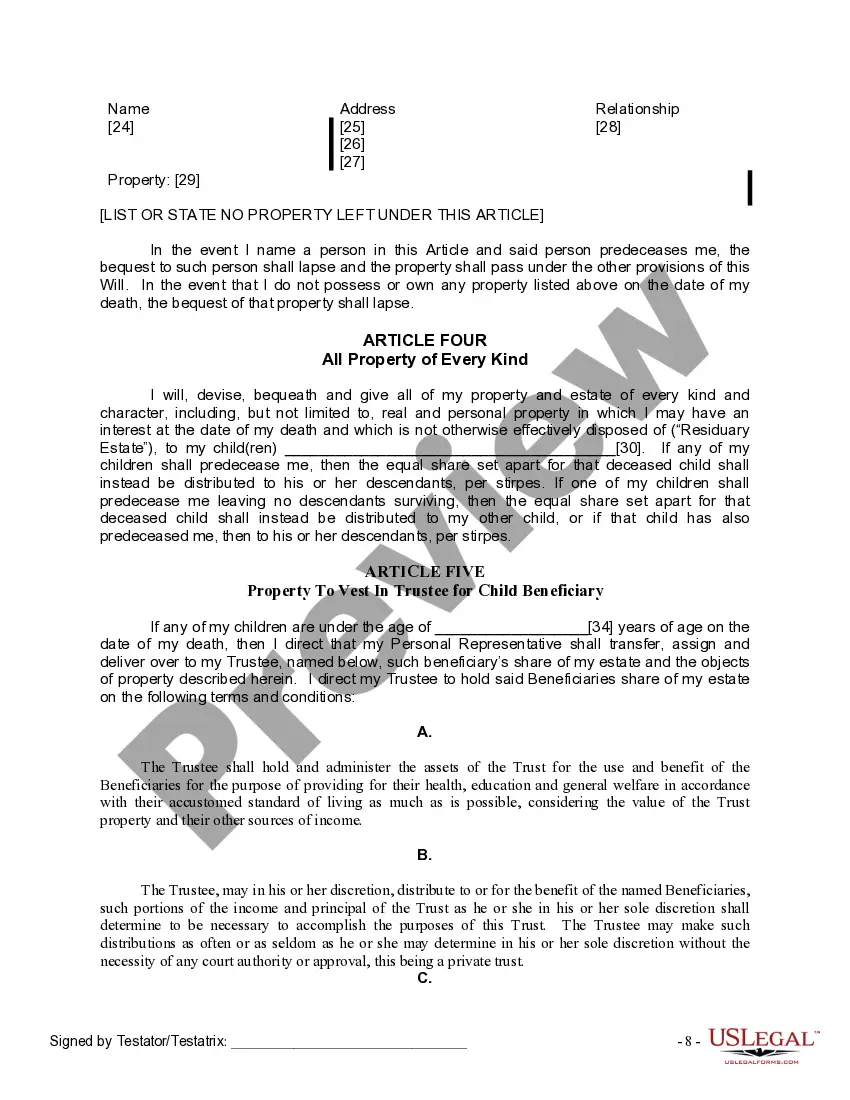
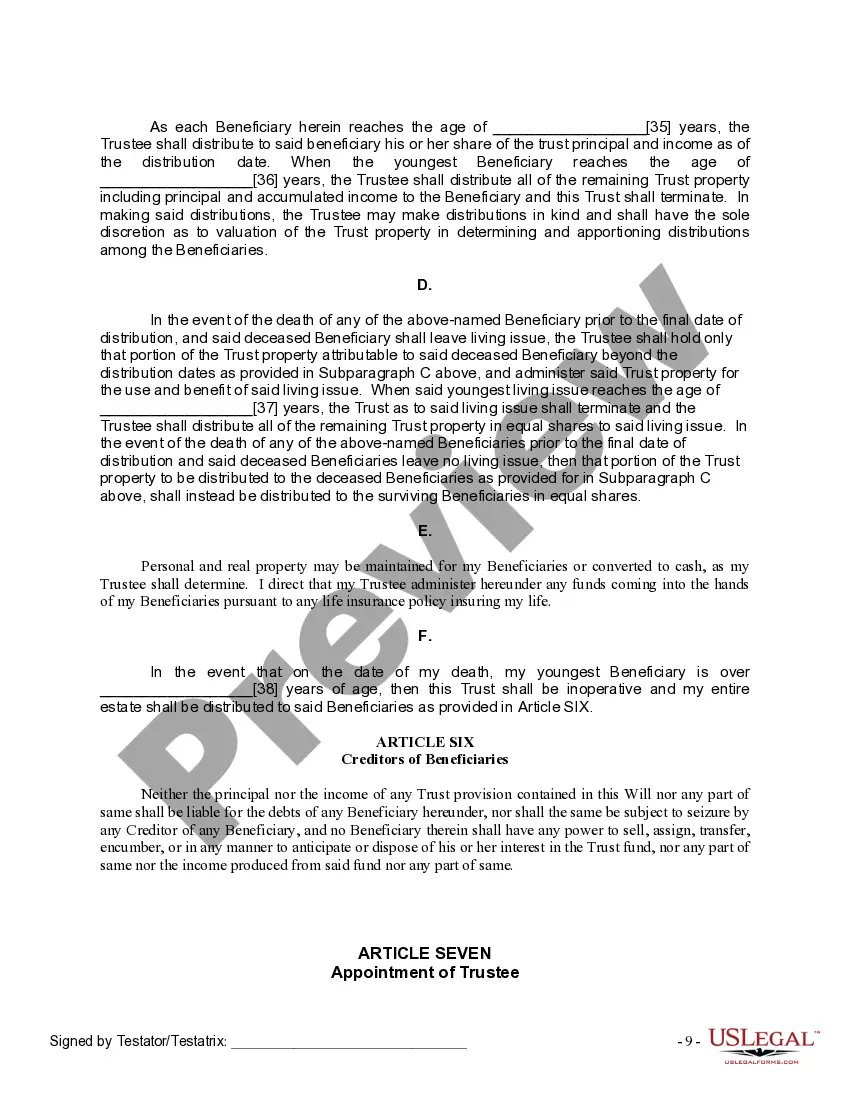
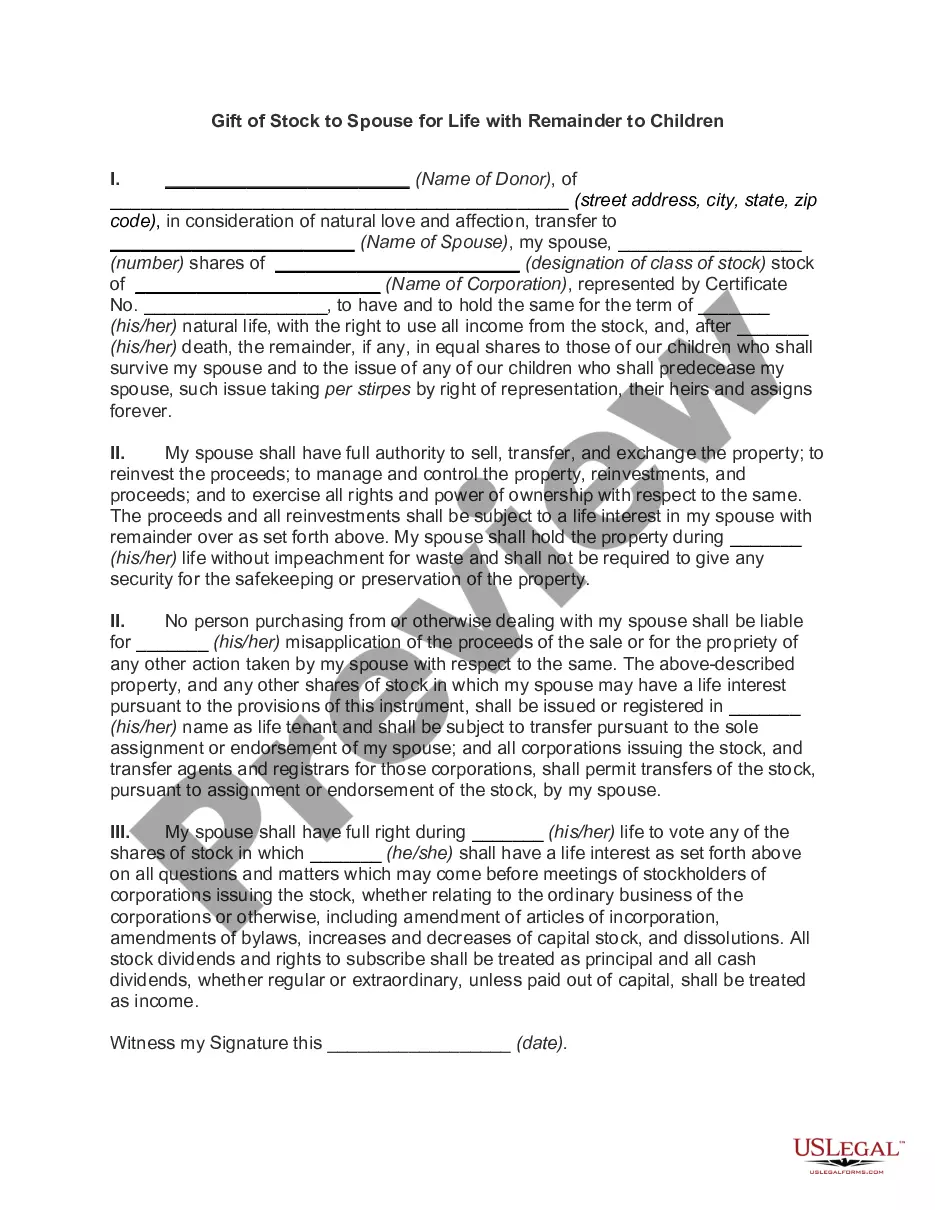
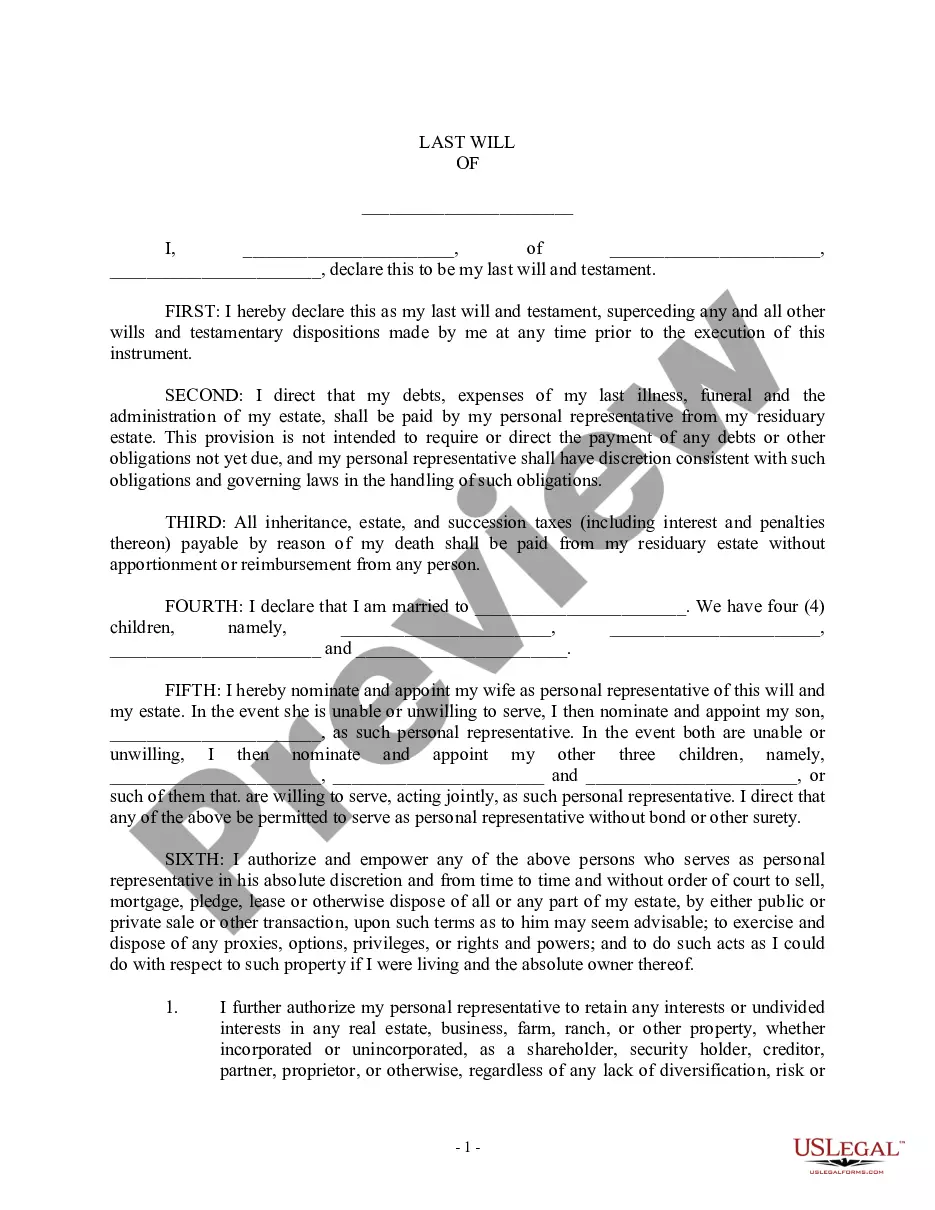
The Last Will and Testament for Divorced Person Not Remarried with Adult and Minor Children is a legal document tailored for individuals who are divorced, have not remarried, and have both adult and minor children. This form establishes the distribution of your property, appoints a personal representative or executor, and provides for the welfare of minor children through a trust, ensuring they are cared for until they reach adulthood.
Main sections of this form
- Appointment of a personal representative or executor to manage your estate.
- Designation of beneficiaries, including both adult and minor children.
- Establishment of a trust for minor children until a specified age.
- Provision for specific bequests to named individuals.
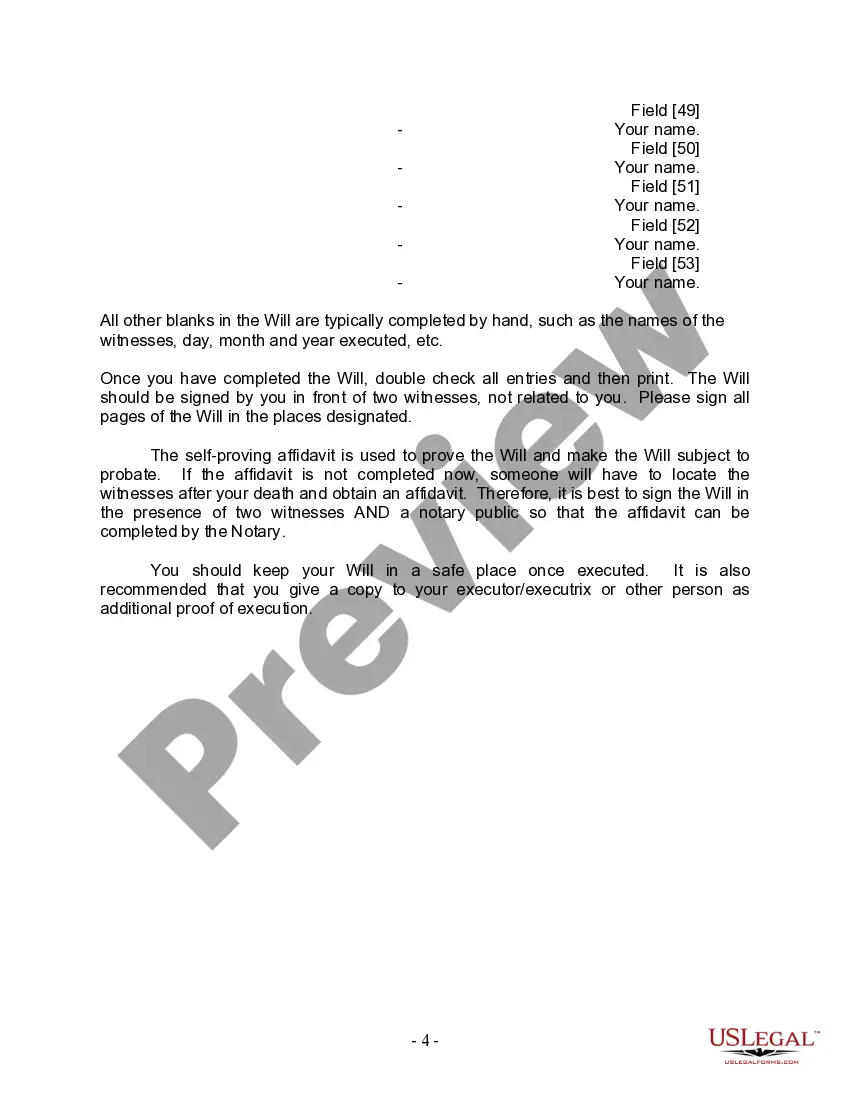
- Instructions for signing and witnessing the Will to ensure its legal validity.



Situations where this form applies
This form is necessary when you want to legally outline how your assets will be distributed after your death, particularly if you have children from a divorce who may require special considerations for their inheritance. It is essential to use this Will if you wish to appoint a guardian for minor children or if you want to ensure that your adult children receive a specific share of your estate.
Who this form is for
- Individuals who are divorced and have not remarried.
- Parents with minor children who require a trust for asset distribution.
- Those wanting to designate specific individuals for property and guardianship.
- Anyone needing a clear plan for the distribution of their estate to adult and minor children.
How to complete this form
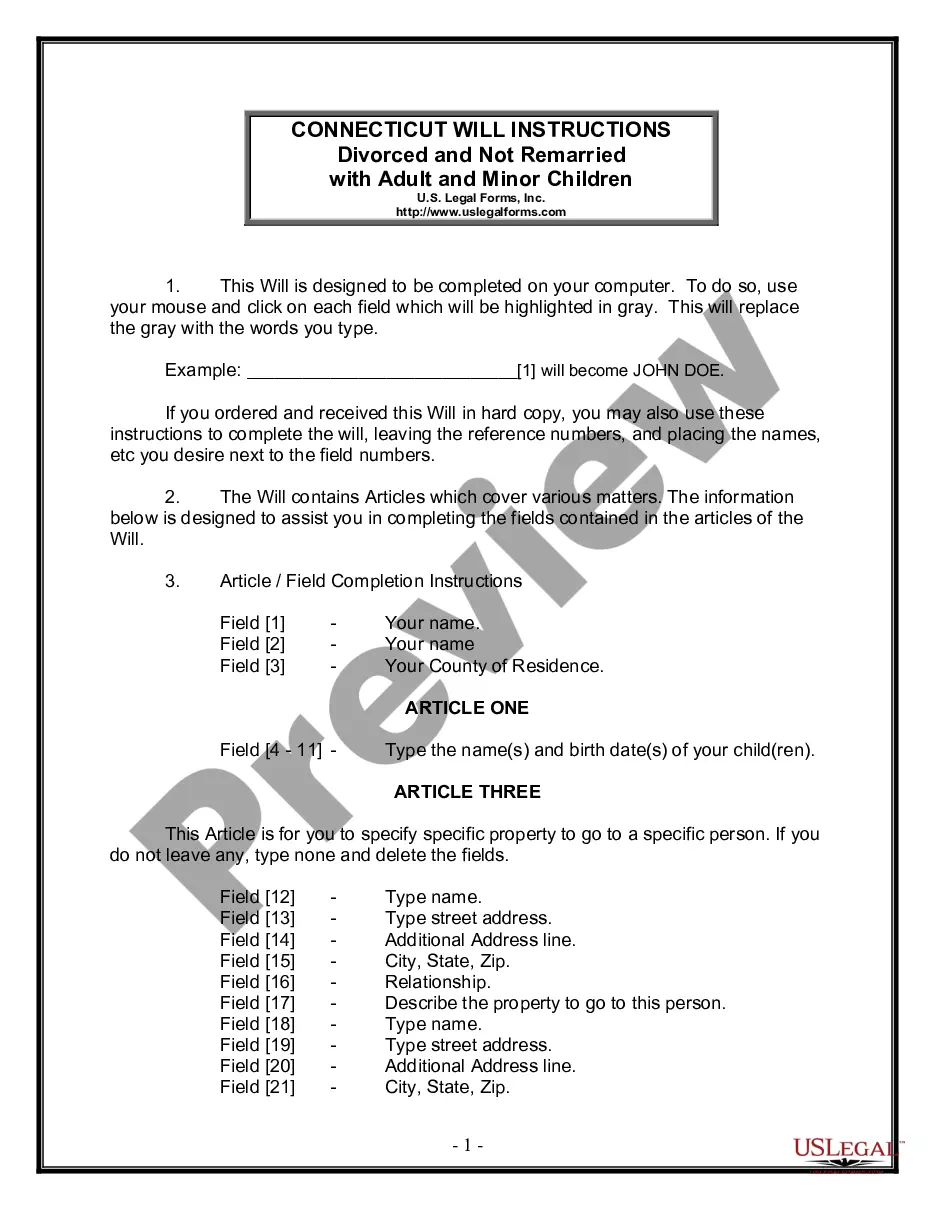
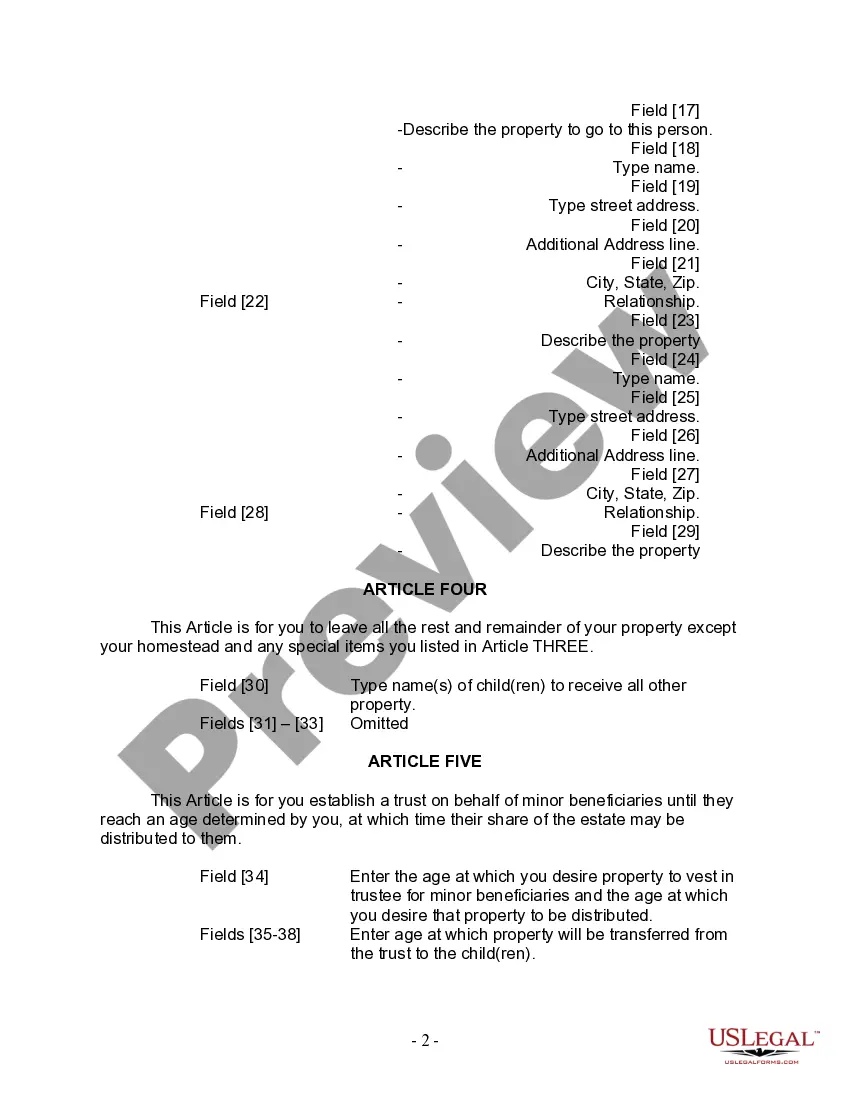
- Start by entering your full name and county of residence at the beginning of the Will.
- List the names and birth dates of your children to specify your beneficiaries.
- Designate specific properties and individuals for any bequests you wish to make.
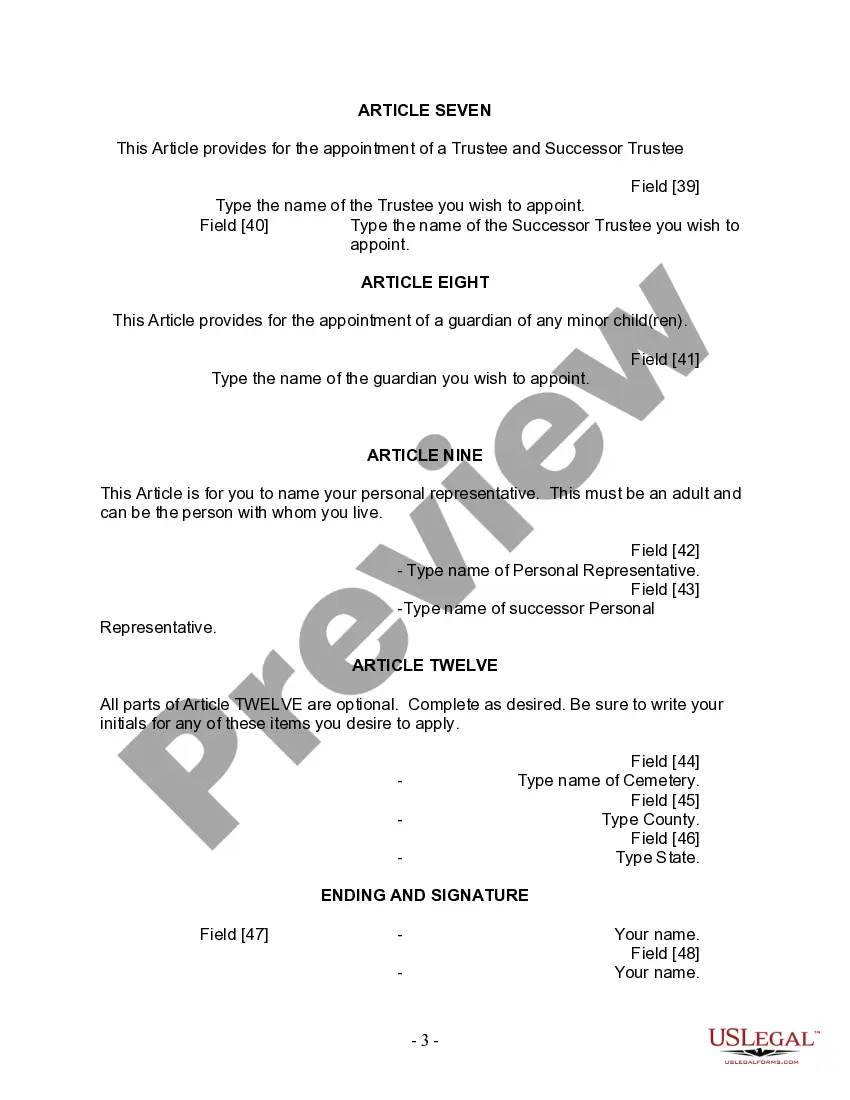
- Identify a personal representative and any successors to manage your estate.
- Sign the Will in the presence of two witnesses, ensuring they are not related to you or named in the Will.
Is notarization required?
Yes, this form must be notarized to be legally valid. Using US Legal Forms, you can conveniently access integrated online notarization services for a secure and efficient process without the need for physical travel.
Get your form ready online
Our built-in tools help you complete, sign, share, and store your documents in one place.
Make edits, fill in missing information, and update formatting in US Legal Forms—just like you would in MS Word.
Download a copy, print it, send it by email, or mail it via USPS—whatever works best for your next step.
Sign and collect signatures with our SignNow integration. Send to multiple recipients, set reminders, and more. Go Premium to unlock E-Sign.
If this form requires notarization, complete it online through a secure video call—no need to meet a notary in person or wait for an appointment.
We protect your documents and personal data by following strict security and privacy standards.

Make edits, fill in missing information, and update formatting in US Legal Forms—just like you would in MS Word.

Download a copy, print it, send it by email, or mail it via USPS—whatever works best for your next step.

Sign and collect signatures with our SignNow integration. Send to multiple recipients, set reminders, and more. Go Premium to unlock E-Sign.

If this form requires notarization, complete it online through a secure video call—no need to meet a notary in person or wait for an appointment.

We protect your documents and personal data by following strict security and privacy standards.
Avoid these common issues
- Failing to have the Will signed in the presence of two qualified witnesses.
- Not specifying provisions for minor children or omitting a guardian designation.
- Overlooking the need for the Will to be witnessed and notarized where required by state law.
Why complete this form online
- Convenience of completing the form from home at your own pace.
- Easy editing capabilities to ensure accuracy before finalizing.
- Access to templates prepared by licensed attorneys, ensuring legal compliance.
Looking for another form?
Form popularity
FAQ
In many cases, it is better for a husband and wife to have separate wills. This arrangement helps to ensure that both spouses' individual wishes are honored, particularly when children from prior relationships are involved. By having separate wills, each person can address their unique circumstances without potential conflict. If you're drafting a Connecticut Last Will and Testament for Divorced Persons Not Remarried with Adult and Minor Children, independent wills can provide a clearer path forward.
Married couples do not have to have separate wills, but it is often advisable in certain situations. Separate wills allow each spouse to specify their wishes clearly, especially if they have children from prior marriages. This clarity can prevent misunderstandings and disputes after death. If you’re looking for guidance on creating a Connecticut Last Will and Testament for Divorced Persons Not Remarried with Adult and Minor Children, consider consulting dedicated resources that can assist you.
Yes, a married couple can share a will, often known as a joint will. This arrangement allows them to outline their wishes together, but it may not always be the best option, especially for those with children from previous relationships. Sharing a will can complicate matters later, particularly with properties or assets that require separate considerations. When preparing your Connecticut Last Will and Testament for Divorced Persons Not Remarried with Adult and Minor Children, think carefully about your family dynamics.
Yes, you can write your own will in Connecticut, but it is important to follow specific guidelines to ensure it is valid. Utilizing the local laws, you can create a will that reflects your wishes, especially if it involves children or divorce. However, consulting with a professional can provide peace of mind and ensure the will is enforceable. For a Connecticut Last Will and Testament for Divorced Persons Not Remarried with Adult and Minor Children, consider using resources available on platforms like uslegalforms.
The best will for a married couple often depends on their specific situation, especially in Connecticut. A common choice might be a joint will or individual wills that complement one another. If either spouse has children from previous marriages, it's crucial to consider how the estate will be divided. For those navigating a Connecticut Last Will and Testament for Divorced Persons Not Remarried with Adult and Minor Children, understanding these dynamics is key.
A will does not override a divorce decree regarding the division of assets as laid out in the decree itself. Instead, the divorce decree holds stronger legal weight in ensuring that assets and obligations are handled as per the agreement. It is advisable to craft your Connecticut Last Will and Testament for Divorced Person Not Remarried with Adult and Minor Children carefully, taking into account these legalities.
A will does not supersede marital property laws, as assets owned jointly or categorized as marital property will usually be governed by divorce agreements or state laws regarding property distribution. Thus, these assets will not be distributed according to your will. Clarifying this when drafting your Connecticut Last Will and Testament for Divorced Person Not Remarried with Adult and Minor Children helps avoid future conflicts.
After a divorce, the will remains valid; however, any provisions naming the ex-spouse as a beneficiary are automatically revoked under Connecticut law. Therefore, the remaining beneficiaries will still receive their shares unless the will is updated. Reviewing your Connecticut Last Will and Testament for Divorced Person Not Remarried with Adult and Minor Children ensures that your estate distribution aligns with your current family situation.
In Connecticut, getting a divorce typically revokes any provisions in a will that favor the former spouse. This means your ex-spouse will not benefit from your estate after a divorce unless specified otherwise in your will. It's crucial to update your Connecticut Last Will and Testament for Divorced Person Not Remarried with Adult and Minor Children post-divorce to reflect your intentions.
Generally, a will can coexist with the terms outlined in divorce papers, but it may not negate those terms. If a divorce settlement designates asset distribution, your will should align with those agreements to avoid confusion. It’s wise to revisit your Connecticut Last Will and Testament for Divorced Person Not Remarried with Adult and Minor Children after divorce to ensure it reflects your current wishes.