Oregon Conservatorship Checklist - Adults
About this form
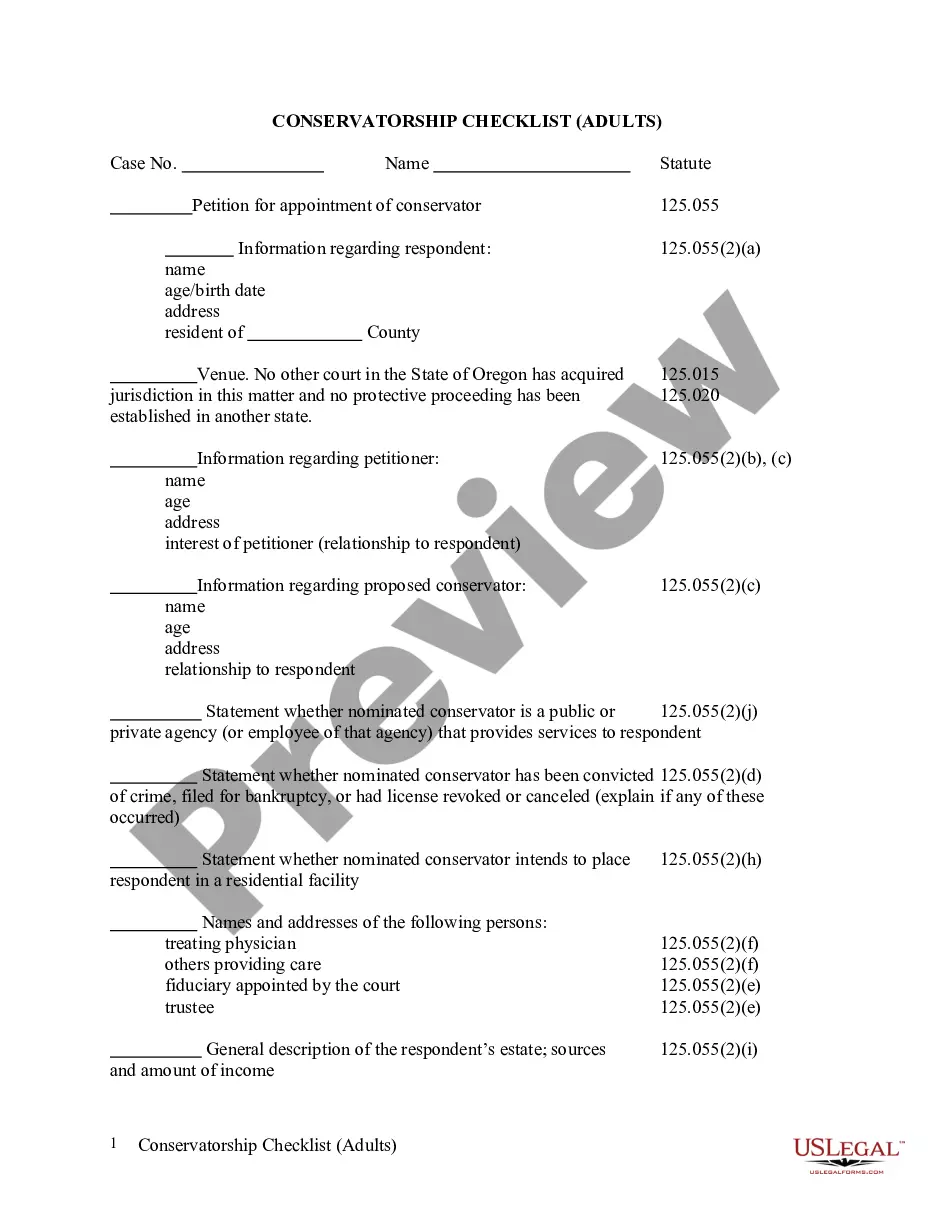
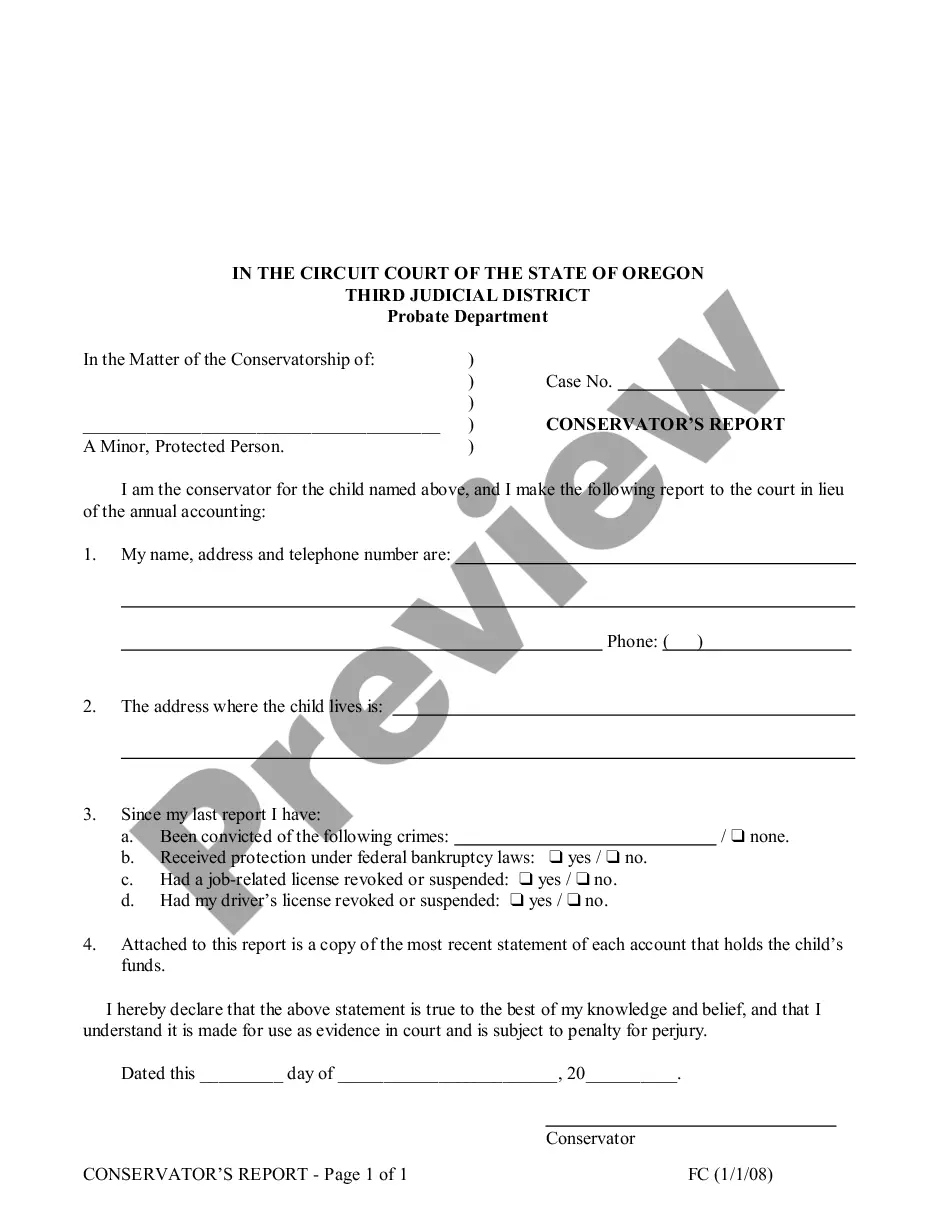
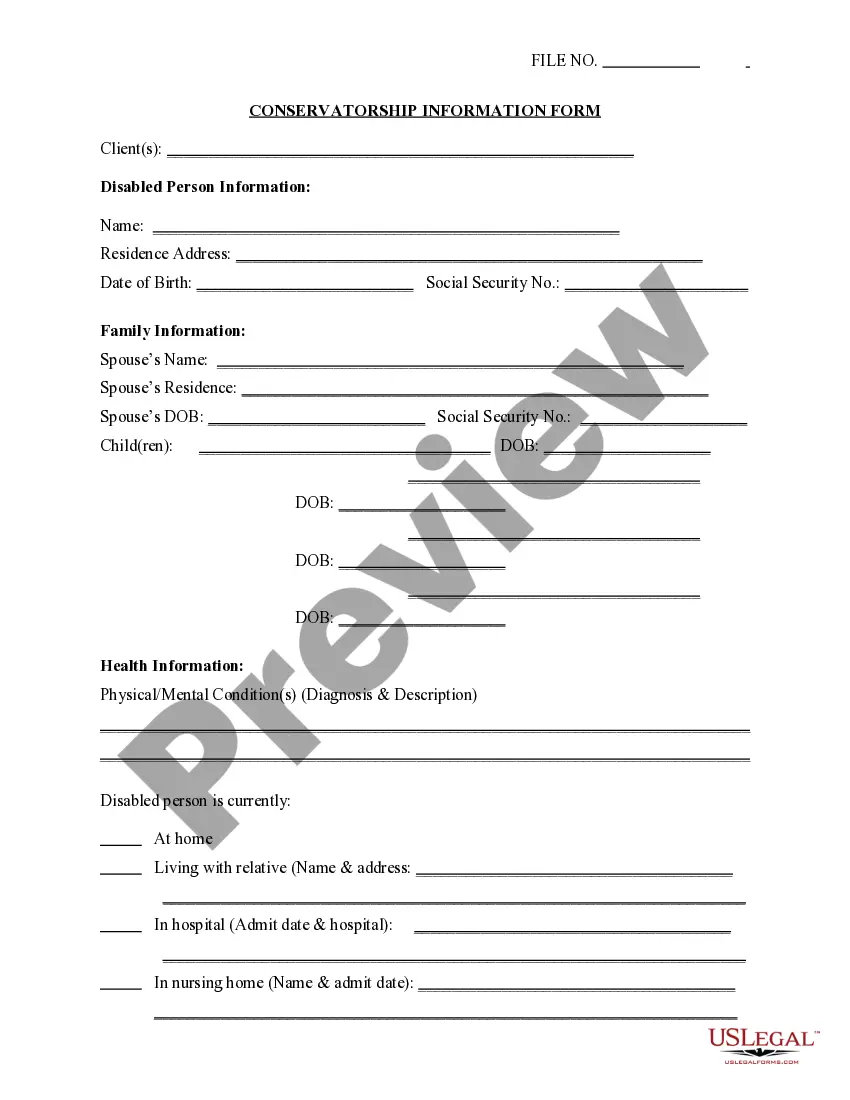
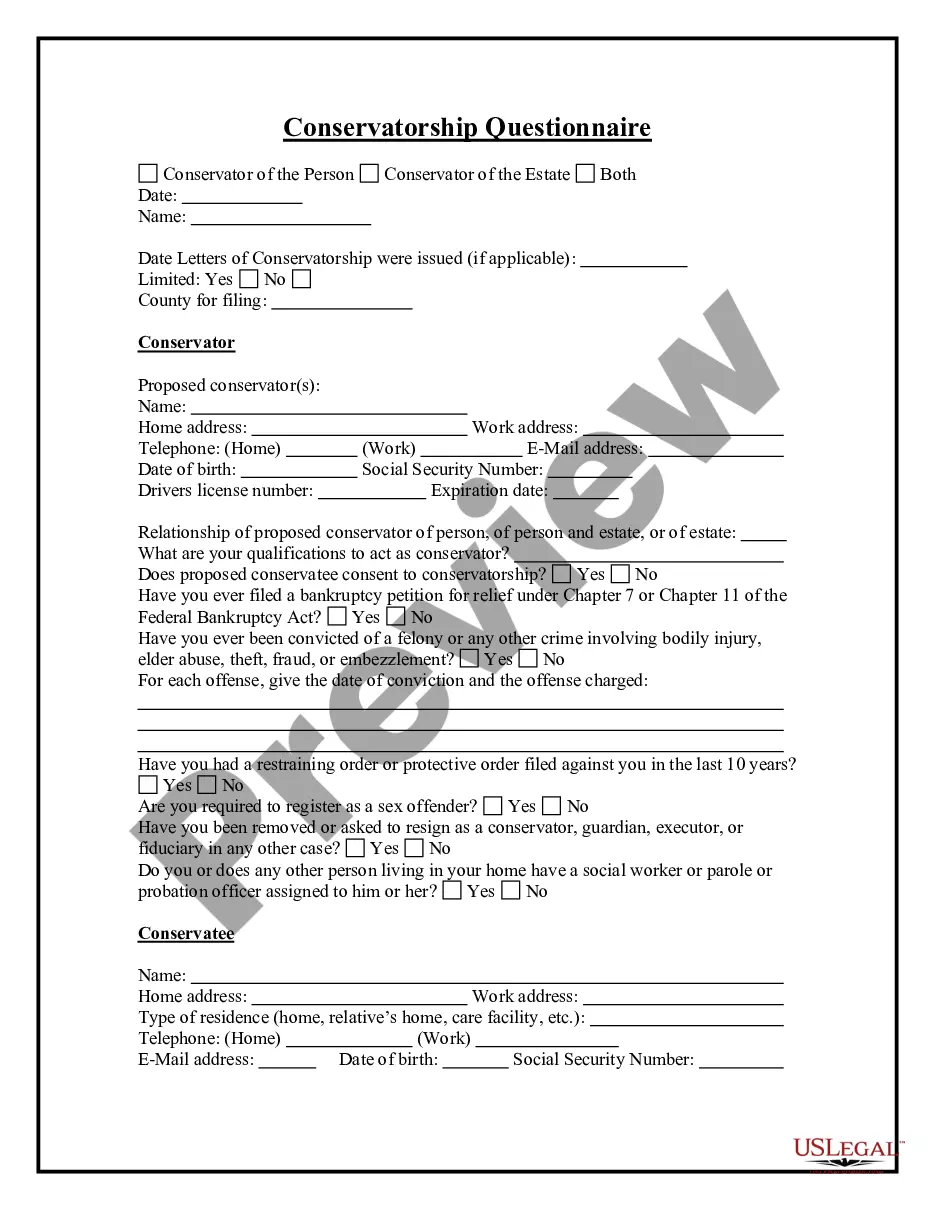
The Conservatorship Checklist for Adults is a legal document used in Oregon to guide individuals through the process of establishing a conservatorship. This form outlines essential information required for court approval to manage the financial affairs and personal care of an adult deemed incapacitated. Unlike other legal forms, this checklist focuses specifically on adults, ensuring that all necessary details are accounted for to safeguard the interests of the respondent.
Form components explained
- Case Information: Includes case number, respondent's name, and relevant statutes.
- Petitioner Details: Information regarding the individual seeking conservatorship, including their relationship to the respondent.
- Proposed Conservator Information: Names and details of individuals nominated for the role of conservator.
- Financial Details: Overview of the respondent's estate and sources of income.
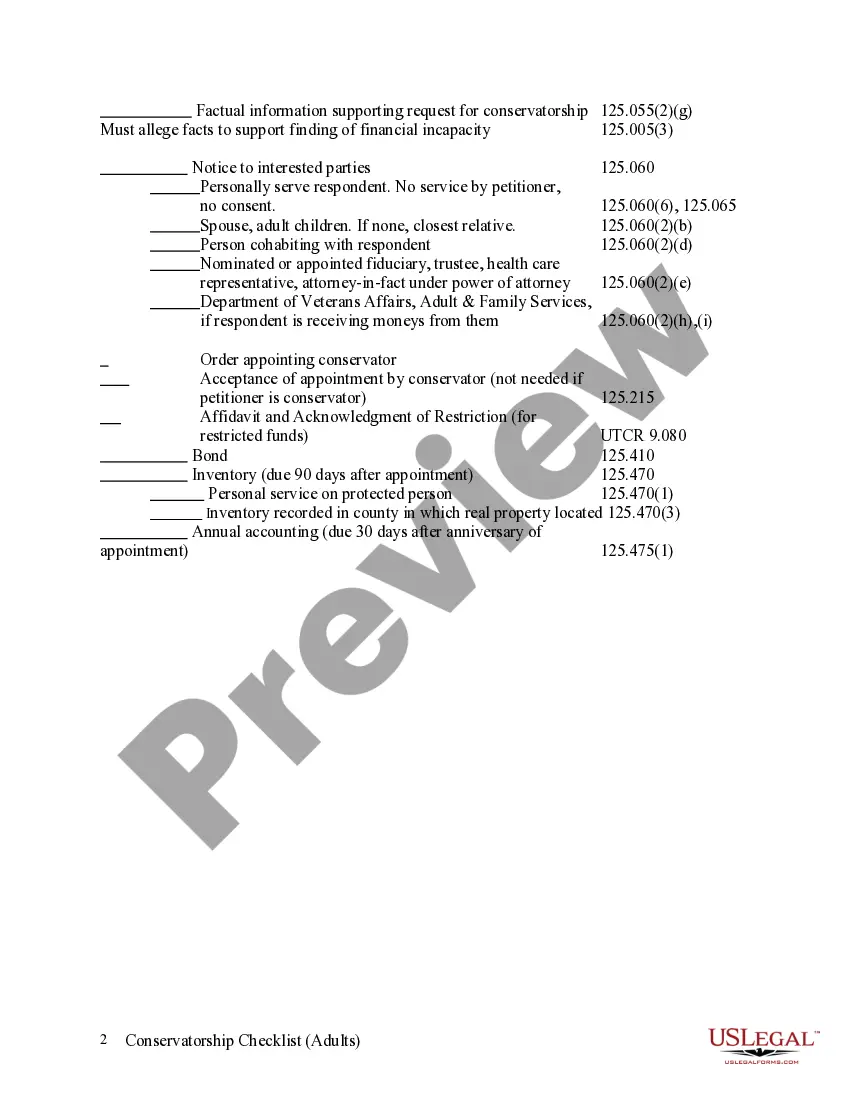
- Support Statements: Factual information that supports the need for conservatorship based on financial incapacity.
- Notice Requirements: Information on serving interested parties and the respondent about the conservatorship proceedings.
- Documentation for Court: Includes consent forms, affidavits, and accounting requirements.

Situations where this form applies
This form should be used when an individual needs to establish legal authority to manage the affairs of an adult who cannot make informed decisions due to mental incapacitation. It is applicable in scenarios such as when an adult suffers from a serious health decline, cognitive impairment, or mental illness that affects their ability to handle finances and personal care independently.
Who this form is for
- Family members or close relatives of an adult in need of assistance.
- Legal guardians seeking to formalize their role in managing an adultâs affairs.
- Individuals appointed by the court to act on behalf of the respondent.
Completing this form step by step
- Gather essential information about the respondent, including full name, age, and address.
- Provide details about the petitioner, including their relationship to the respondent and any relevant background.
- List potential conservators and provide their contact information.
- State the reason for requesting conservatorship with supporting facts about the respondent's financial incapacity.
- Ensure to notice all interested parties as per legal requirements, which may include relatives and agencies.
Does this form need to be notarized?
This form does not typically require notarization unless specified by local law. However, certain sections, such as affidavits, may need to be authenticated. Always verify local requirements for specific notarization rules.
Get your form ready online
Our built-in tools help you complete, sign, share, and store your documents in one place.
Make edits, fill in missing information, and update formatting in US Legal Forms—just like you would in MS Word.
Download a copy, print it, send it by email, or mail it via USPS—whatever works best for your next step.
Sign and collect signatures with our SignNow integration. Send to multiple recipients, set reminders, and more. Go Premium to unlock E-Sign.
If this form requires notarization, complete it online through a secure video call—no need to meet a notary in person or wait for an appointment.
We protect your documents and personal data by following strict security and privacy standards.

Make edits, fill in missing information, and update formatting in US Legal Forms—just like you would in MS Word.

Download a copy, print it, send it by email, or mail it via USPS—whatever works best for your next step.

Sign and collect signatures with our SignNow integration. Send to multiple recipients, set reminders, and more. Go Premium to unlock E-Sign.

If this form requires notarization, complete it online through a secure video call—no need to meet a notary in person or wait for an appointment.

We protect your documents and personal data by following strict security and privacy standards.
Common mistakes to avoid
- Failing to include all necessary information about the respondent and proposed conservator.
- Not properly serving notice to all interested parties.
- Submitting the form without necessary supporting documentation.
Benefits of completing this form online
- Convenient access at any time to download and fill the form.
- Editability allows for easy updates and modifications before final submission.
- Ensures you have the most up-to-date version reflecting current laws.
Looking for another form?

Form popularity
FAQ
How is a guardianship or conservatorship set up? Someone interested in the individual's welfare must file a petition in Superior Court, Probate Division, requesting appointment of a guardian or conservator. Once the petition is reviewed by the Probate Division and accepted for filing, a hearing is scheduled.
Under U.S. law, conservatorship is the appointment of a guardian or a protector by a judge to manage the financial affairs and/or daily life of another person due to old age or physical or mental limitations. A person under conservatorship is a "conservatee", a term that can refer to an adult.
Establishing and funding a revocable living trust is a simple way to avoid a court-supervised conservatorship if you should become mentally incapacitated. You can nominate someone now to take care of your personal affairs later, rather than rely on a court to select someone you might not want to act on your behalf.
Someoneusually a family memberfiles a petition with the court to become the conservator for an individual. The petition will state that the individual in question is unable to manage his or her income and property without assistanceand without management assets will be wasted or dissipated.
File a Petition For Conservatorship with the court: File a Confidential Supplemental Information Form: File a Confidential Conservatorship Screening Form: File a Duties of Conservator Form: Serve Notice on the Conservatee: Provide Notice to the Conservatee's Relatives:
Temporary Conservatorships A temporary conservator is usually appointed for a fixed time period, usually 30 to 60 days.
Get a capacity assessment. Have a professional assess whether the adult can make decisions on their own. Fill out the application forms. If you want to apply for guardianship. Submit your application package.
Guardianship also can be required when a person with Alzheimer's or dementia is no longer able to legally sign power of attorney documents due to mental incapacitation. Guardianship gives you the legal right to make decisions for a parent or loved one with Alzheimer's or dementia.