Connecticut Revocation of Power of Attorney for Care of Child or Children
Overview of this form
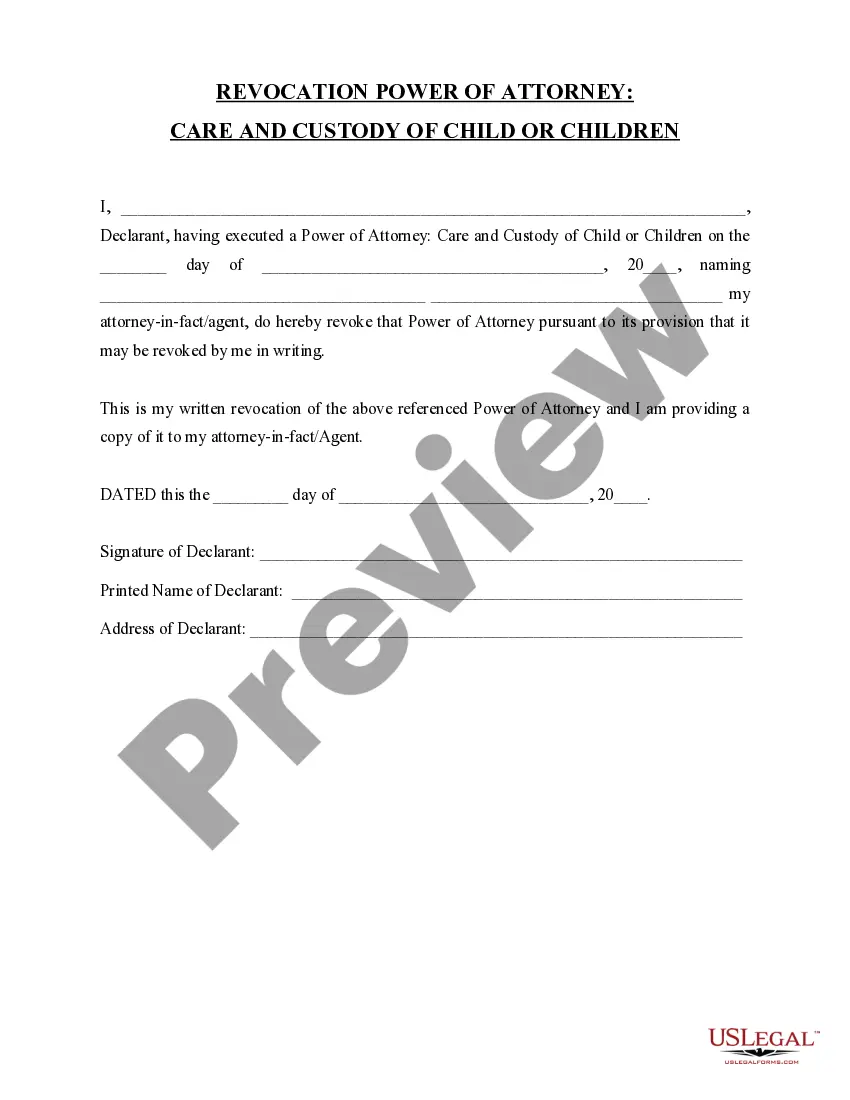
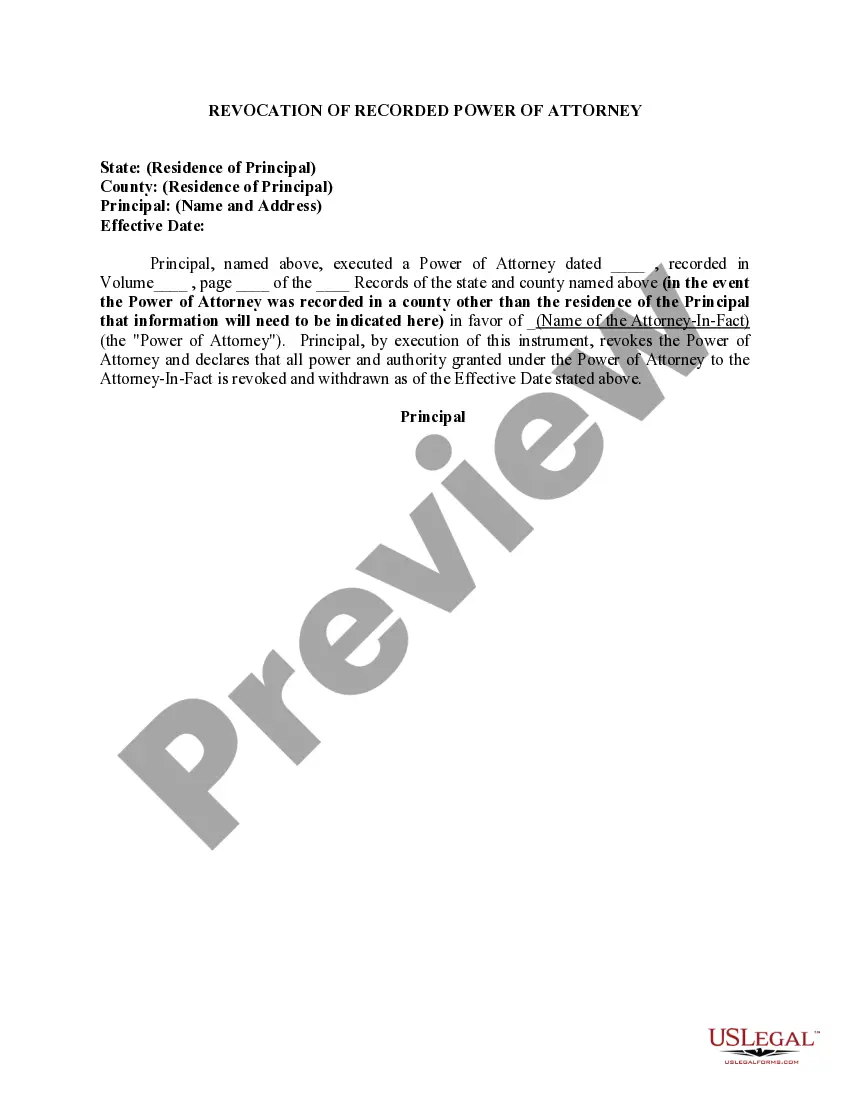
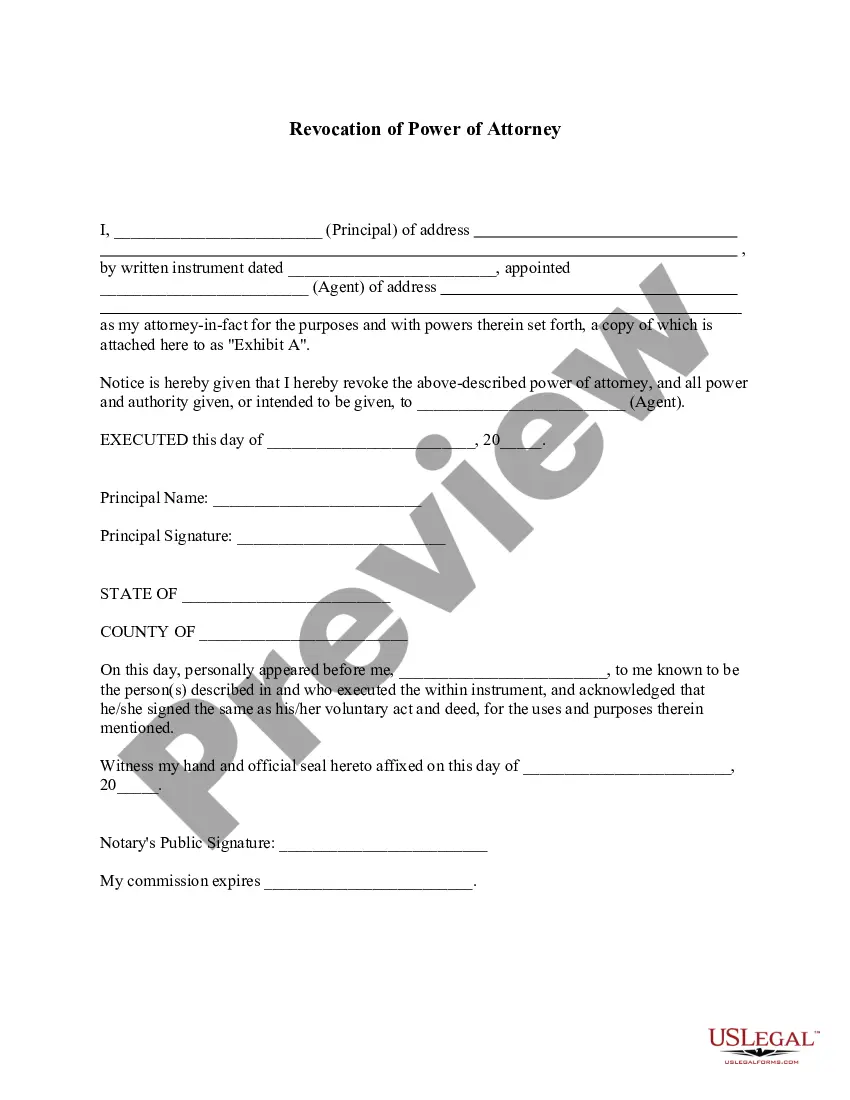
The Revocation of Power of Attorney for Care of Child or Children is a legal document that allows a parent or guardian to revoke a previously granted Power of Attorney regarding the care and custody of their child or children. This form is significant because it provides a clear and official method of terminating the authority assigned to an attorney-in-fact, ensuring that the rights and responsibilities regarding child care are reassigned as intended. Unlike other forms of power of attorney, this specifically addresses custodial responsibilities for minors.
Key components of this form
- Declarant's name: The individual revoking the Power of Attorney.
- Date of original Power of Attorney: The date when the initial document was executed.
- Name of attorney-in-fact: The person who originally was given authority over child care.
- Written revocation statement: A clear declaration that the Power of Attorney is revoked.
- Date of revocation: The date when the revocation is signed.
- Signature of Declarant: The signature of the individual revoking the Power of Attorney.
When to use this form
This form should be used when the principal (the person who granted the Power of Attorney) wishes to cancel or withdraw the authority given to someone else regarding the care of their child or children. Situations may include when a parent feels that they can care for their child independently again, or if there has been a change in circumstances that affects the suitability of the attorney-in-fact.
Who should use this form
This form is intended for:
- Parents or legal guardians who have previously signed a Power of Attorney for child care.
- Individuals who are competent and wish to revoke any prior arrangements for child custody.
- Those needing to update their custodial arrangements due to changing personal circumstances.
Instructions for completing this form
- Identify the declarant: Enter your name in the designated field.
- Provide the date of the original Power of Attorney: Fill in the date on which you granted the Power of Attorney.
- List the attorney-in-fact: Write the name of the person who was previously authorized to care for your child or children.
- Complete the revocation statement: Indicate clearly that you are revoking that authority.
- Date and sign the form: Enter the date of revocation and provide your signature to finalize the revocation.
Is notarization required?
This form does not typically require notarization unless specified by local law. Ensure to verify local requirements to determine if notarization is necessary for your specific situation.
Get your form ready online
Our built-in tools help you complete, sign, share, and store your documents in one place.
Make edits, fill in missing information, and update formatting in US Legal Forms—just like you would in MS Word.
Download a copy, print it, send it by email, or mail it via USPS—whatever works best for your next step.
Sign and collect signatures with our SignNow integration. Send to multiple recipients, set reminders, and more. Go Premium to unlock E-Sign.
If this form requires notarization, complete it online through a secure video call—no need to meet a notary in person or wait for an appointment.
We protect your documents and personal data by following strict security and privacy standards.

Make edits, fill in missing information, and update formatting in US Legal Forms—just like you would in MS Word.

Download a copy, print it, send it by email, or mail it via USPS—whatever works best for your next step.

Sign and collect signatures with our SignNow integration. Send to multiple recipients, set reminders, and more. Go Premium to unlock E-Sign.

If this form requires notarization, complete it online through a secure video call—no need to meet a notary in person or wait for an appointment.

We protect your documents and personal data by following strict security and privacy standards.
Avoid these common issues
- Failing to date the revocation, which may cause confusion about when the authority was terminated.
- Not providing the full names of both the declarant and the attorney-in-fact.
- Inadequately notifying the attorney-in-fact of the revocation, which could lead to unintended consequences.
- Neglecting to keep a signed copy of the revocation for personal records.
Why use this form online
- Convenience of downloading the form instantly, allowing for immediate action.
- Editability to customize the form as needed for your specific circumstances.
- Access to reliable templates that adhere to legal standards.
Summary of main points
- The Revocation of Power of Attorney allows parents to formally withdraw custody authority.
- This process is essential to realign custodial responsibilities as personal circumstances change.
- Completing this form properly ensures your child's care is managed by the intended individual.
Looking for another form?
Form popularity
FAQ
Removing yourself as someone's power of attorney requires a straightforward process. Start by drafting a formal notice of revocation that indicates your intention to withdraw your authority under the Connecticut Revocation of Power of Attorney for Care of Child or Children. Distribute this notice to all pertinent parties, including the individual and any institutions involved. Using uslegalforms can simplify this process by providing the necessary documents to ensure everything is legally sound.
To remove yourself as a power of attorney, you need to create a formal revoked power of attorney document. This action must align with the procedures outlined in Connecticut's laws regarding the Connecticut Revocation of Power of Attorney for Care of Child or Children. After you notarize the document, share it with the relevant parties and institutions, so they understand your decision. If needed, uslegalforms can help provide templates for a seamless process.
Verbal revocation of a power of attorney is generally not sufficient to ensure legal clarity. It is vital to execute a written document that explicitly states your intent to revoke under the Connecticut Revocation of Power of Attorney for Care of Child or Children. This formal approach protects your rights and the wellbeing of the child or children involved. Always consult a legal expert if you have concerns about the revocation process.
To resign from your role as power of attorney, you must provide a written notice of resignation. This document should state your intention to revoke your authority regarding the Connecticut Revocation of Power of Attorney for Care of Child or Children. After completing this, make sure to send the notice to all parties involved and the relevant institutions, ensuring they are aware of your resignation. It is also wise to keep a copy for your records.
Yes, a legal guardian typically has the authority to override a power of attorney when they are appointed by the court. This means that if a guardian is established, their decisions take precedence over those made under a POA. It’s essential to understand how the Connecticut Revocation of Power of Attorney for Care of Child or Children interacts with guardianship, particularly in matters regarding a child’s well-being. Seek assistance from reliable platforms like US Legal Forms for clarity and support.
The penalties for abuse of a power of attorney can include civil penalties, forced restitution of misappropriated funds, and in severe cases, criminal charges. Understanding these consequences is vital if you're considering filing for the Connecticut Revocation of Power of Attorney for Care of Child or Children. Such actions not only protect you but also your children from potential harm. Consulting with a legal professional can offer you guidance on the steps to take.
To revoke a power of attorney in Connecticut, start by creating a written revocation document that clearly states your intent. It’s important to sign this document and notify the agent and any institutions that have relied on the original POA. Utilizing resources like US Legal Forms can guide you through the Connecticut Revocation of Power of Attorney for Care of Child or Children, ensuring you meet all legal requirements.
Yes, a parent can revoke a power of attorney at any time, as long as they are mentally competent. The process of revoking varies, but it typically involves drafting a written revocation and notifying all relevant parties. For those looking to initiate the Connecticut Revocation of Power of Attorney for Care of Child or Children, this ensures that the previous agent can no longer act on behalf of the parent or child.
To prove power of attorney abuse, gather evidence such as financial records, witness testimonies, and documentation that shows misuse or unauthorized actions taken by the agent. This is crucial when considering the Connecticut Revocation of Power of Attorney for Care of Child or Children. You may also seek legal advice to ensure you have a solid case. Documenting every incident will strengthen your position.
Writing a revocation involves drafting a clear document that states your intent to revoke the power of attorney. It should include your name, the date, and details about the power of attorney you wish to rescind. For guidance, the US Legal Forms platform provides easy templates to assist in creating valid documentation for Connecticut Revocation of Power of Attorney for Care of Child or Children.