Connecticut Landlord Tenant Closing Statement to Reconcile Security Deposit
What is this form?
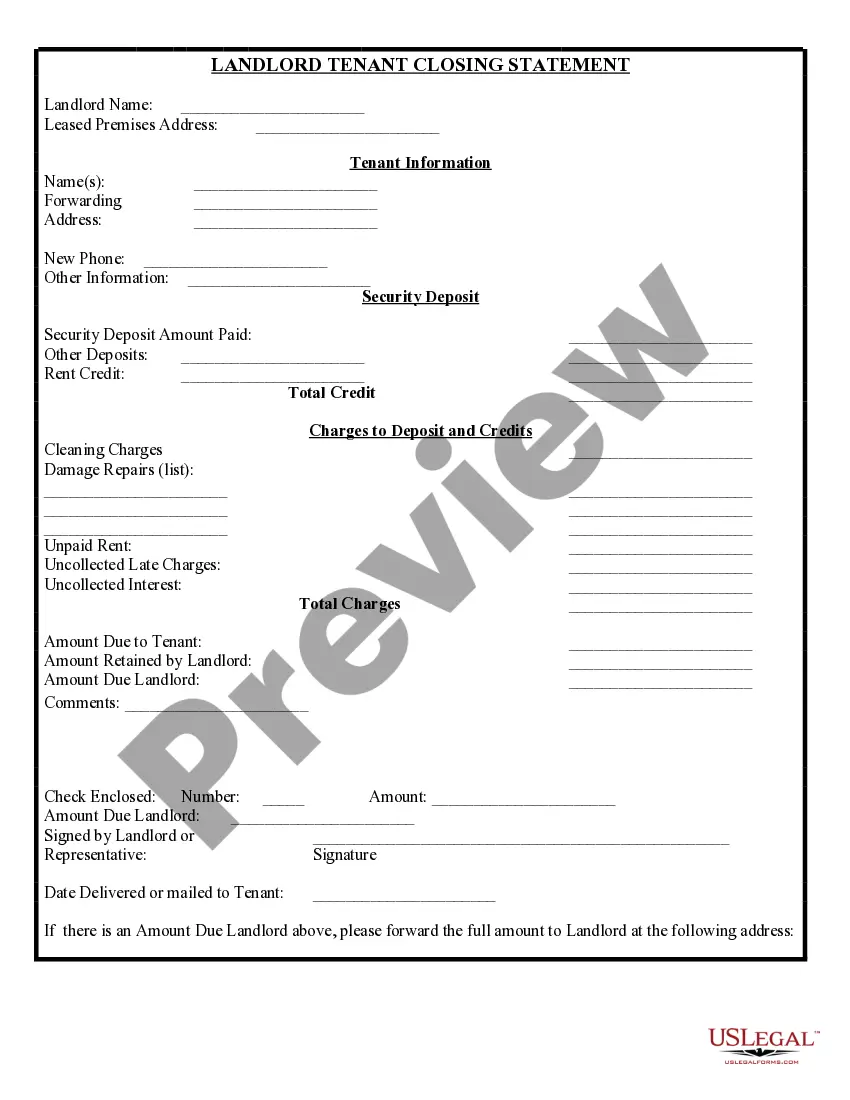
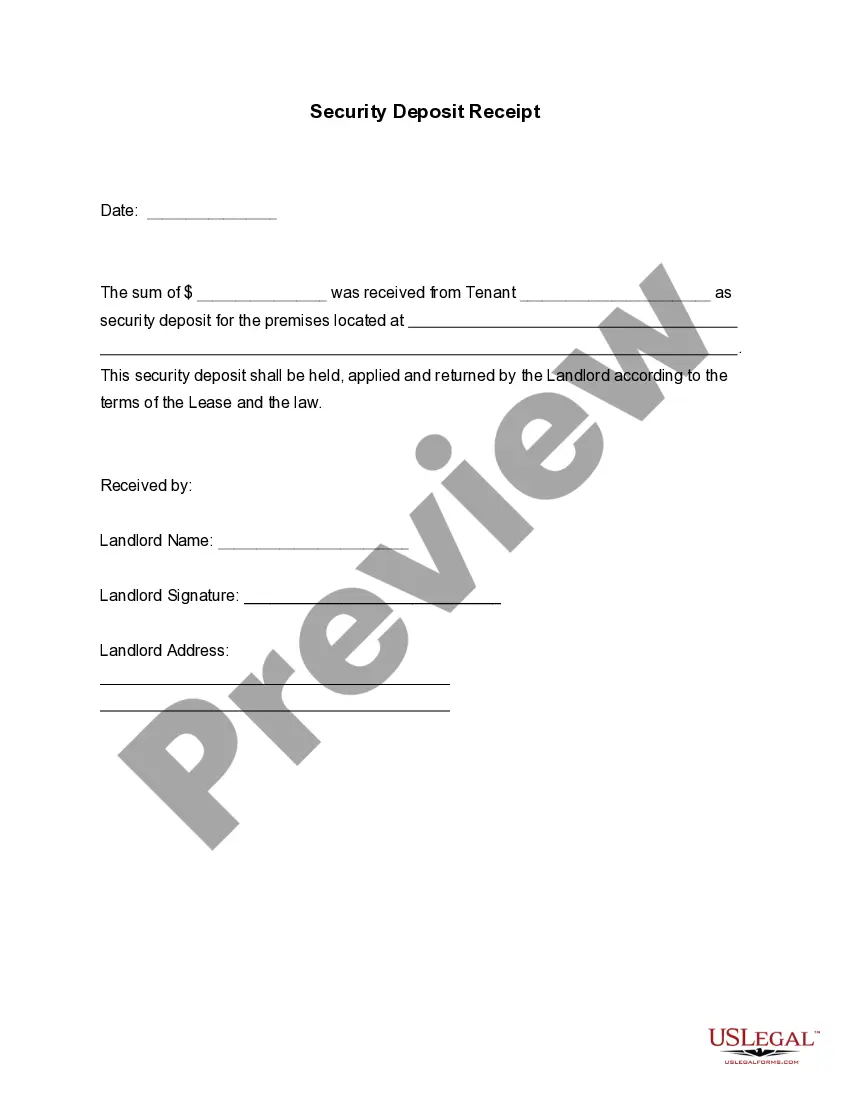
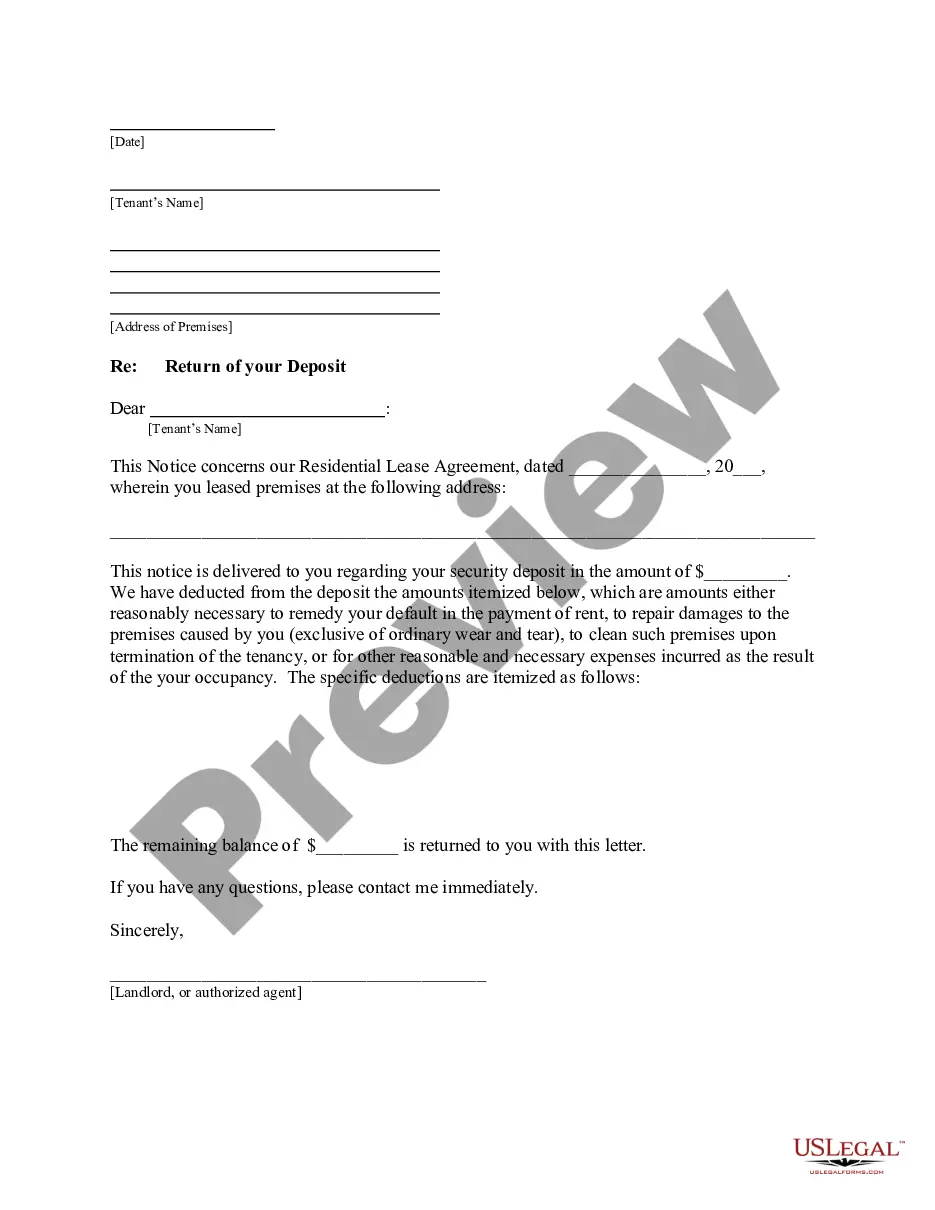
The Landlord Tenant Closing Statement to Reconcile Security Deposit is a legal document that helps landlords and tenants outline the deposits and credits held by the landlord. This form records any deductions from the security deposit for damages and ensures clarity regarding the funds due back to the tenant. It is distinct from other rental documents because it focuses specifically on the financial reconciliation of the security deposit following the end of a tenancy.
Form components explained
- Tenant and landlord information: names and contact details of both parties.
- Security deposit details: total amount of the security deposit received by the landlord.
- Deductions: itemized list of any deductions from the deposit for damages or repairs.
- Credits: any credits that may apply, such as unpaid rent or other charges.
- Final accounting: calculation of the balance due to the tenant after deductions and credits.
- Signatures: spaces for both parties to sign and date the form, confirming agreement to the stated amounts.
When this form is needed
This form should be used at the end of a tenancy when the landlord computes the final accounting of the security deposit. It is essential for situations where there are deductions for damages beyond normal wear and tear, providing documentation of how the deposit was reconciled. Using this form helps all parties maintain clear communication regarding any financial obligations or returns of the deposit.
Intended users of this form
- Landlords who need to return part or all of the security deposit to tenants.
- Tenants who wish to receive a clear and itemized statement regarding their security deposit.
- Property managers who oversee rental agreements and handle security deposits.
How to complete this form
- Identify the parties: enter the names and addresses of the landlord and tenant.
- Specify the security deposit: clearly state the total amount of the security deposit received.
- Document any deductions: itemize any amounts deducted for damages or unpaid rent.
- Calculate the balance: determine the amount due to the tenant after deductions are made.
- Gather signatures: both the landlord and tenant should sign and date the document to ensure mutual agreement.
Notarization requirements for this form
Notarization is not commonly needed for this form. However, certain documents or local rules may make it necessary. Our notarization service, powered by Notarize, allows you to finalize it securely online anytime, day or night.
Get your form ready online
Our built-in tools help you complete, sign, share, and store your documents in one place.
Make edits, fill in missing information, and update formatting in US Legal Forms—just like you would in MS Word.
Download a copy, print it, send it by email, or mail it via USPS—whatever works best for your next step.
Sign and collect signatures with our SignNow integration. Send to multiple recipients, set reminders, and more. Go Premium to unlock E-Sign.
If this form requires notarization, complete it online through a secure video call—no need to meet a notary in person or wait for an appointment.
We protect your documents and personal data by following strict security and privacy standards.

Make edits, fill in missing information, and update formatting in US Legal Forms—just like you would in MS Word.

Download a copy, print it, send it by email, or mail it via USPS—whatever works best for your next step.

Sign and collect signatures with our SignNow integration. Send to multiple recipients, set reminders, and more. Go Premium to unlock E-Sign.

If this form requires notarization, complete it online through a secure video call—no need to meet a notary in person or wait for an appointment.

We protect your documents and personal data by following strict security and privacy standards.
Common mistakes
- Failing to provide accurate amounts for deductions, which can lead to disputes.
- Not signing the statement, making it less enforceable.
- Omitting important details, such as the reason for deductions.
- Using outdated forms that may not comply with current state laws.
Advantages of online completion
- Convenience: accessible anytime, allowing for quick preparation and delivery.
- Editability: easy to modify the form to suit specific needs and add necessary details.
- Reliability: provided by licensed attorneys designed to comply with legal standards.
Legal use & context
- This form serves as a formal record of the security deposit reconciliation, which can be useful in legal disputes.
- It helps clarify financial transactions between landlords and tenants, reducing potential misunderstandings.
- Using an accurate and detailed form can bolster claims in case of disagreements over deposit returns.
Quick recap
- The Landlord Tenant Closing Statement is crucial for documenting the reconciliation of a security deposit.
- Clear itemization of deductions and credits is essential to avoid disputes.
- Both landlords and tenants should maintain copies of this document for their records.
Looking for another form?
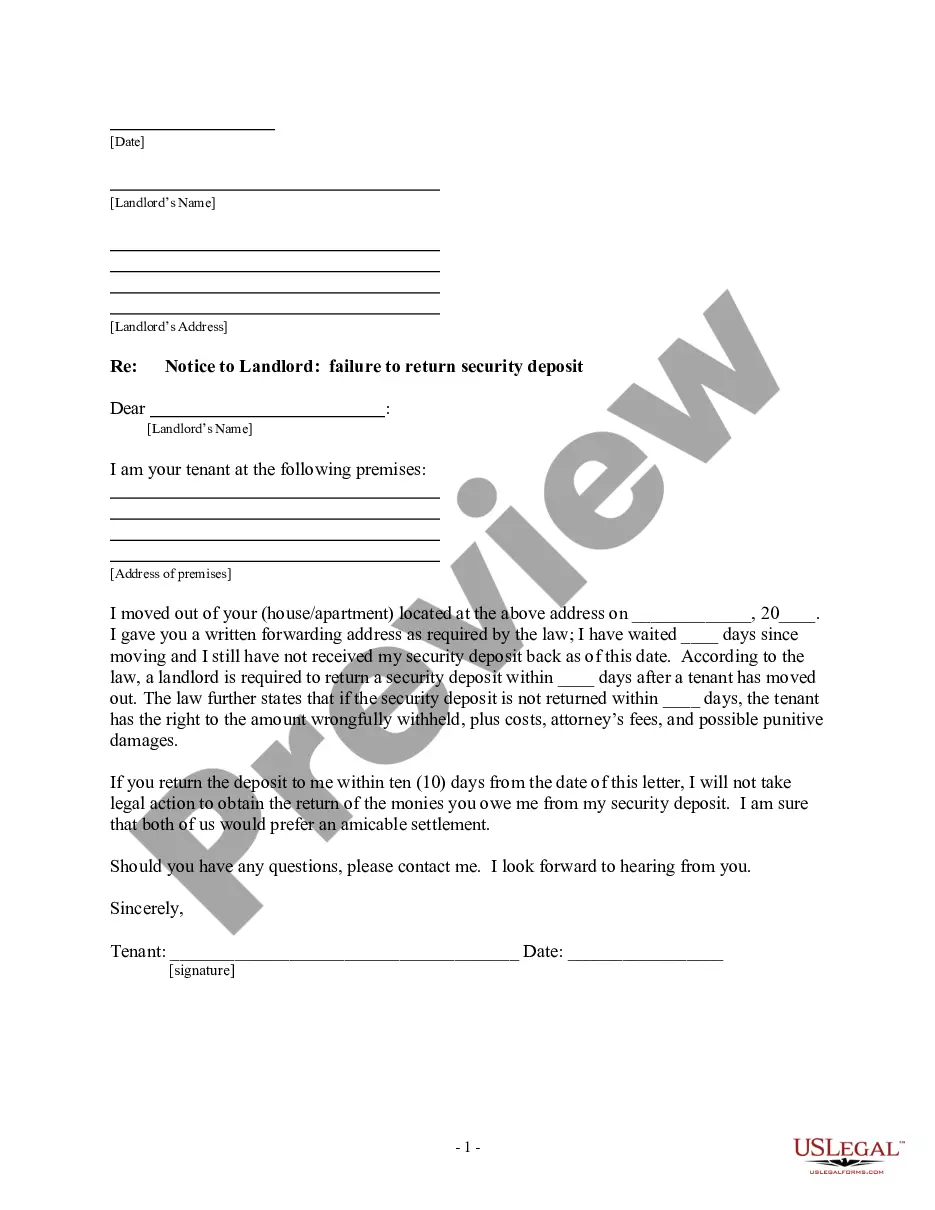
Form popularity
FAQ
To write a letter requesting your security deposit back, include relevant details such as your name, address, and the property address. Reference the Connecticut Landlord Tenant Closing Statement to Reconcile Security Deposit, and outline any necessary information regarding the deposit return. Be polite, concise, and provide your forwarding address for prompt processing of the return.
On a balance sheet, treat a security deposit as a liability, indicating that you owe this amount to the tenant. List it under current liabilities until the lease ends and any deductions are made, as stated in the Connecticut Landlord Tenant Closing Statement to Reconcile Security Deposit. This method ensures accurate financial reporting and compliance with legal standards.
To reconcile a deposit, start by reviewing the Connecticut Landlord Tenant Closing Statement to Reconcile Security Deposit. Match the initial deposit amount with deductions for any damages or unpaid rent. Document each deduction clearly, and ensure that the remaining amount is returned to the tenant promptly. This transparency helps maintain good relations and comply with state regulations.
When requesting your deposit back, you can create a formal written request. Include essential details such as your new address, date of move-out, and a request for the return of the security deposit with reference to your Connecticut landlord tenant closing statement to reconcile security deposit. It's also helpful to mention any agreements made with the landlord regarding the property's condition to strengthen your request.
To successfully get your security deposit back in Connecticut, you should first provide your landlord with a forwarding address and request the return formally. Keeping records of your communication and any agreements about the condition of the rental unit can also assist your case. Understanding your rights and using the Connecticut landlord tenant closing statement to reconcile security deposit can help ensure a smooth return process.
Reconciling a security deposit involves reviewing any deductions made by the landlord against the original deposit amount. It’s important to carefully examine invoices and receipts provided by your landlord regarding repairs and cleaning. Utilizing a Connecticut landlord tenant closing statement to reconcile security deposit can simplify this process, ensuring that you understand final charges and can contest any unjust deductions.
Landlords in Connecticut have a maximum of 30 days to return the security deposit after you vacate the property. This timeframe is critical for renters to understand, as it sets the expectations for receiving their funds. Knowing the importance of the Connecticut landlord tenant closing statement to reconcile security deposit ensures you can take proper action if this timeline is not met.
Recently updated tenant laws in Connecticut aim to provide more protections for renters. These changes include enhanced requirements for notice periods and the return of security deposits. Being informed on these laws is vital when reviewing your Connecticut landlord tenant closing statement to reconcile security deposit, as these regulations can significantly affect both landlords and tenants.
In Connecticut, landlords can deduct amounts for damages exceeding normal wear and tear, unpaid rent, and cleaning costs necessary to return the rental property to its original condition. It is crucial for renters to understand these deductions when reviewing their Connecticut landlord tenant closing statement to reconcile security deposit. Therefore, keeping documentation, such as photos and receipts, can help clarify any disputes.
If a landlord fails to return the security deposit within the required 30 days, you can take action. You have the right to pursue legal solutions to recover your deposit. Additionally, under Connecticut law, landlords may face legal penalties if they do not comply with the timeline, which is an important aspect of the Connecticut landlord tenant closing statement to reconcile security deposit.