Connecticut Notice of Default on Residential Lease
Overview of this form
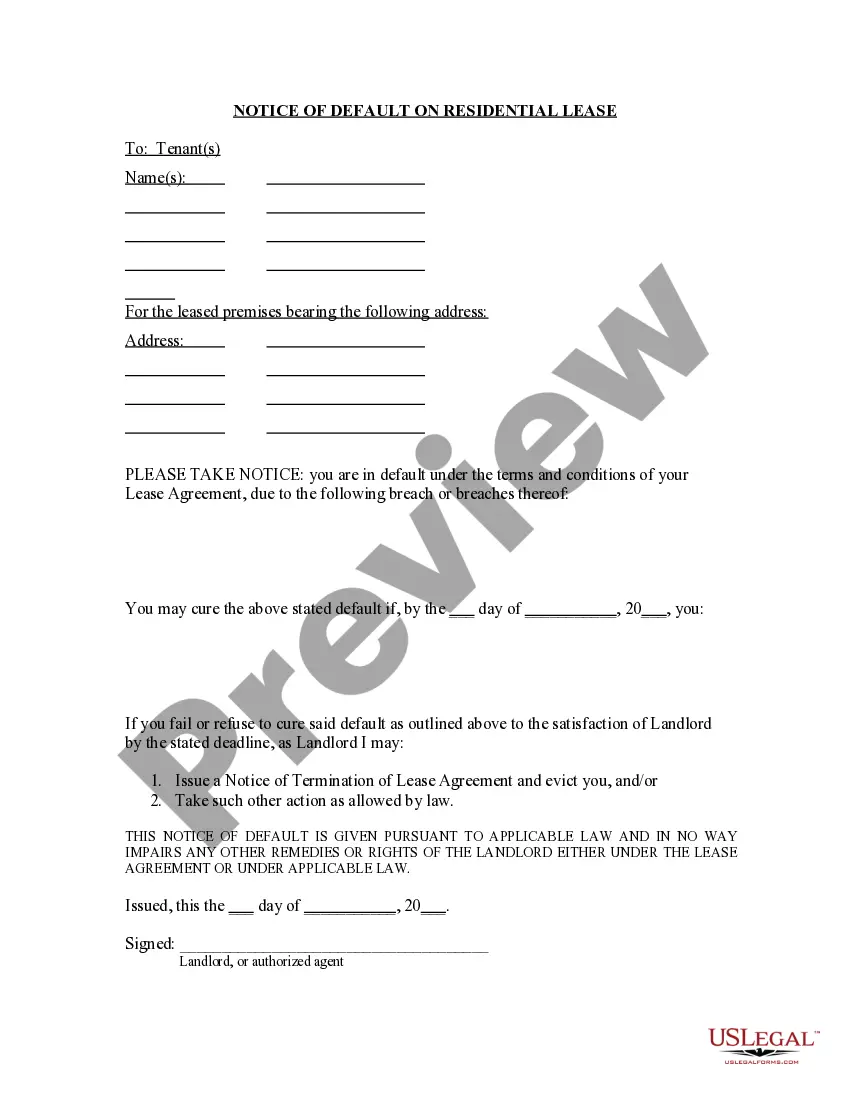
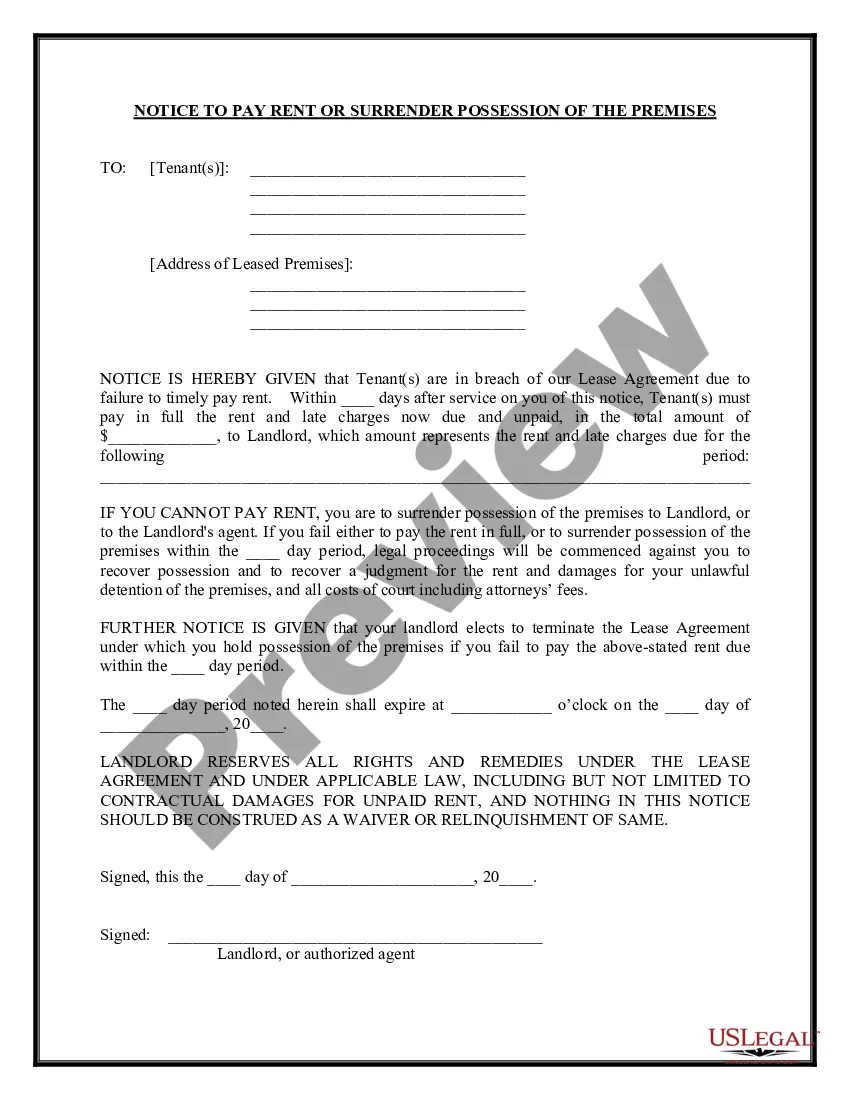
The Notice of Default on Residential Lease is a formal document used by landlords to inform tenants of a failure to comply with the lease terms, specifically in failing to pay rent on time. This notice outlines the specific reasons for the default and provides a deadline for the tenant to remedy the situation. This form is crucial in the landlord-tenant relationship, as it serves as a precursor to potential eviction proceedings, distinguishing it from other formal eviction notices by focusing specifically on the default in rent payment.
Key components of this form
- Identification of the landlord and tenant involved in the lease agreement.
- Specific reasons for the default, primarily focused on late or non-payment of rent.
- Deadline date by which the tenant must cure the default.
- Statement of potential consequences if the tenant does not rectify the default.
- Signature line for the landlord or authorized agent.


Situations where this form applies
This form should be used when a tenant has failed to make rental payments as stipulated in their lease agreement. It acts as a formal notice that allows the tenant a chance to cure the default within a specified timeframe before further legal action, such as eviction, is initiated. Using this form ensures that landlords follow proper legal protocols to maintain compliance with landlord-tenant laws.
Who should use this form
- Landlords who have tenants that are not paying rent on time.
- Property management companies acting on behalf of landlords.
- Individuals renting out residential properties who need to document defaults by tenants.
Steps to complete this form
- Identify the landlord and tenant by entering their names and contact information.
- Specify the property address where the lease agreement is in effect.
- Clearly outline the specific reasons for the default related to the lease terms.
- Set a deadline for the tenant to remedy the default, ensuring the date is clearly indicated.
- Sign the notice to validate it and ensure it conforms to legal requirements.
Does this form need to be notarized?
In most cases, this form does not require notarization. However, some jurisdictions or signing circumstances might. US Legal Forms offers online notarization powered by Notarize, accessible 24/7 for a quick, remote process.
Get your form ready online
Our built-in tools help you complete, sign, share, and store your documents in one place.
Make edits, fill in missing information, and update formatting in US Legal Forms—just like you would in MS Word.
Download a copy, print it, send it by email, or mail it via USPS—whatever works best for your next step.
Sign and collect signatures with our SignNow integration. Send to multiple recipients, set reminders, and more. Go Premium to unlock E-Sign.
If this form requires notarization, complete it online through a secure video call—no need to meet a notary in person or wait for an appointment.
We protect your documents and personal data by following strict security and privacy standards.

Make edits, fill in missing information, and update formatting in US Legal Forms—just like you would in MS Word.

Download a copy, print it, send it by email, or mail it via USPS—whatever works best for your next step.

Sign and collect signatures with our SignNow integration. Send to multiple recipients, set reminders, and more. Go Premium to unlock E-Sign.

If this form requires notarization, complete it online through a secure video call—no need to meet a notary in person or wait for an appointment.

We protect your documents and personal data by following strict security and privacy standards.
Mistakes to watch out for
- Failing to specify the exact amount of rent due.
- Not providing a clear deadline for the tenant to cure the default.
- Omitting the signature of the landlord or authorized agent.
- Not delivering the notice according to legal requirements (e.g., method of delivery).
Why complete this form online
- Convenience of downloading and printing the form at your convenience.
- Editability to customize the form according to specific needs.
- Access to professionally drafted forms, ensuring legality.
- Time-saving, avoiding lengthy consultations with an attorney.
Looking for another form?


Form popularity
FAQ
In Connecticut, landlords cannot simply lock tenants out without following the proper legal procedures. If a landlord issues a Connecticut Notice of Default on Residential Lease, they must give tenants the chance to address the situation before any eviction actions can occur. This legal requirement protects tenants from unlawful eviction tactics. If you're facing this issue, consider using platforms like US Legal Forms for guidance on your rights and the necessary steps to protect yourself.
Connecticut has been noted for having laws that often favor tenants, especially regarding lease agreements and eviction processes. When dealing with a Connecticut Notice of Default on Residential Lease, tenants typically benefit from certain protections that require landlords to follow specific procedures. For example, landlords must provide proper notice before taking any action, which supports tenants’ rights. Always consult with legal resources like US Legal Forms to navigate these regulations effectively.
Yes, you can terminate a lease early in Connecticut under specific circumstances. To do so legally, you may need to serve a Connecticut Notice of Default on Residential Lease to your landlord, outlining the reasons for your early termination. Valid reasons can include issues like unlivable conditions or the landlord's failure to uphold their obligations. Always consider consulting legal advice or using platforms like US Legal Forms to ensure you follow the correct procedures.
A default is typically entered due to a party’s failure to respond to a legal notice or appear in court. Common causes include missed rent payments or neglecting lease obligations. If landlords file a Connecticut Notice of Default on Residential Lease against you, it signifies that they are pursuing rights under the lease due to your default.
A motion to open default in Connecticut allows a party to request a review of a default judgment. It is usually filed when the defaulting party shows good cause for not responding. If you have received a Connecticut Notice of Default on Residential Lease, this motion may be your opportunity to challenge any unfavorable judgments against you.
To respond to a default entry, you should file a motion to set aside the default with the court. This motion must explain why you failed to respond originally and provide valid reasons for reinstating your rights. If you receive a Connecticut Notice of Default on Residential Lease, acting quickly is essential to protect yourself against further legal action.
During a motion for default hearing, the court examines whether the non-responding party received proper notice and if there are valid reasons for their absence. If the court finds in favor of the moving party, it may issue a default judgment. Understanding the implications of a Connecticut Notice of Default on Residential Lease is critical, as it could lead to eviction or other legal actions.
When a motion is defaulted, it means that one party did not respond or appear in court as required. This can result in the opposing party winning by default. In the context of a Connecticut Notice of Default on Residential Lease, this situation may occur if a tenant fails to respond to a landlord’s action regarding non-payment or lease violations.
You default on a lease when you fail to comply with its terms. This often includes not paying rent on time, causing damage to the property, or violating any other lease provisions. Receiving a Connecticut Notice of Default on Residential Lease signifies that the landlord is formally notifying you about your default, which can escalate to more serious consequences if not addressed.
Connecticut recently enacted legislation that enhances tenant protections, including provisions that limit the reasons for eviction and require more transparency in rental agreements. These laws aim to create a fairer rental market, ensuring tenants' rights are safeguarded. If you receive a Connecticut Notice of Default on Residential Lease, familiarizing yourself with these new regulations can empower you to take informed actions.