Connecticut Letter from Tenant to Landlord about Insufficient Notice to Terminate Rental Agreement
About this form
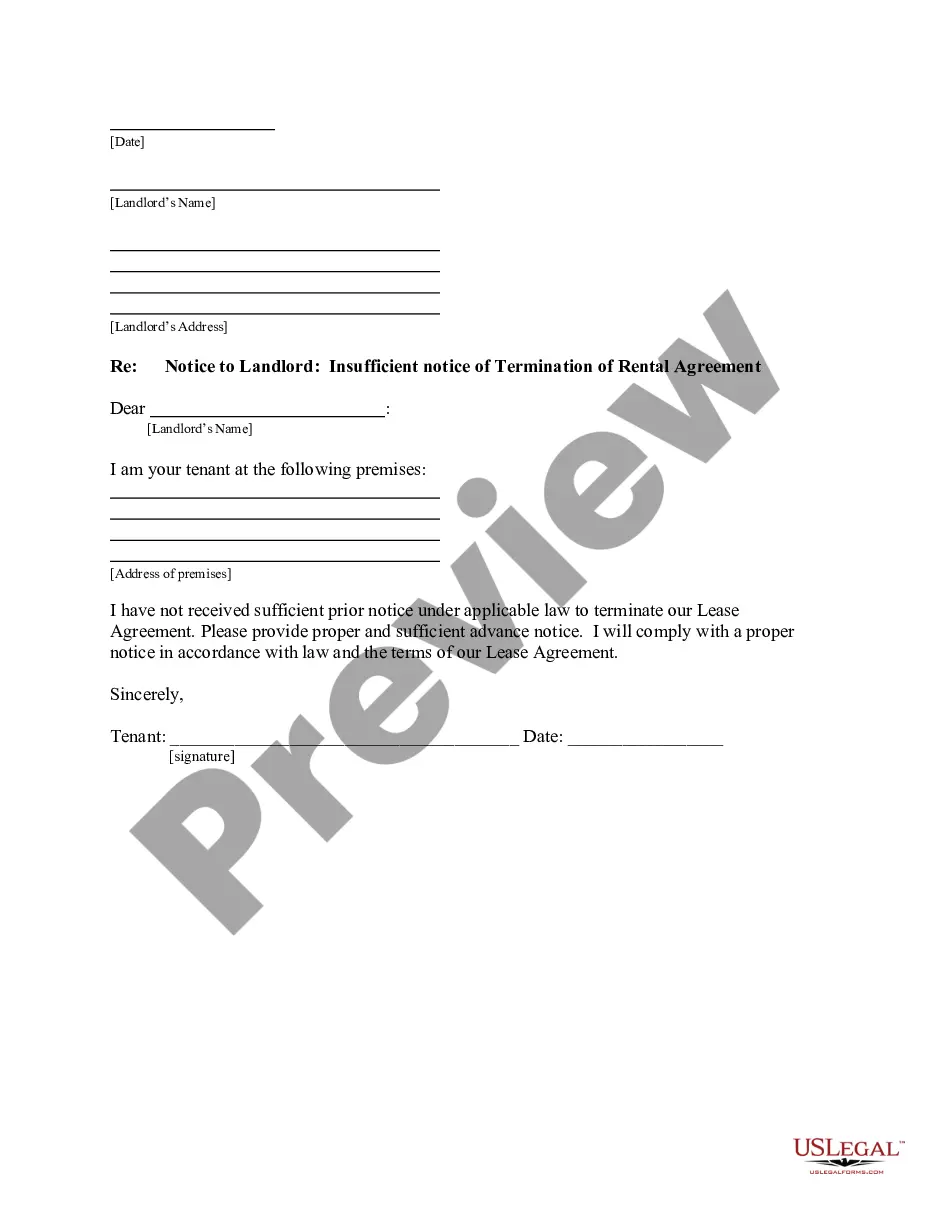
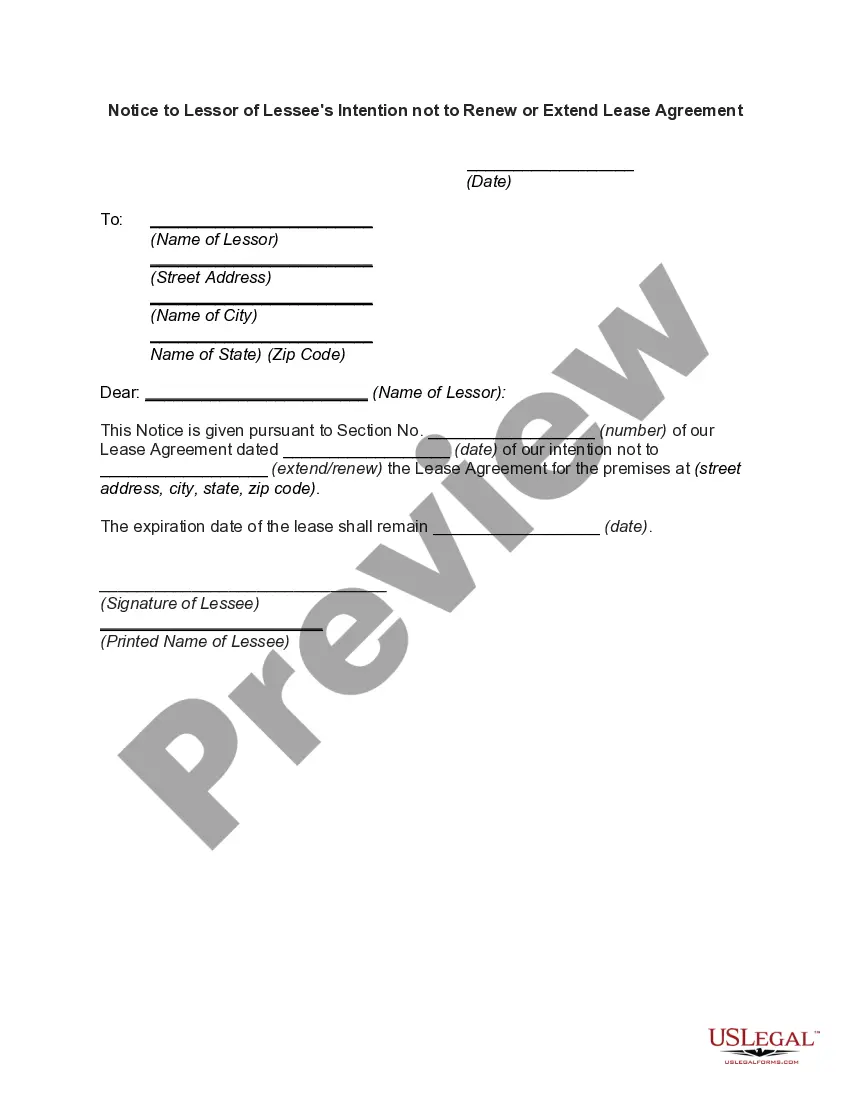
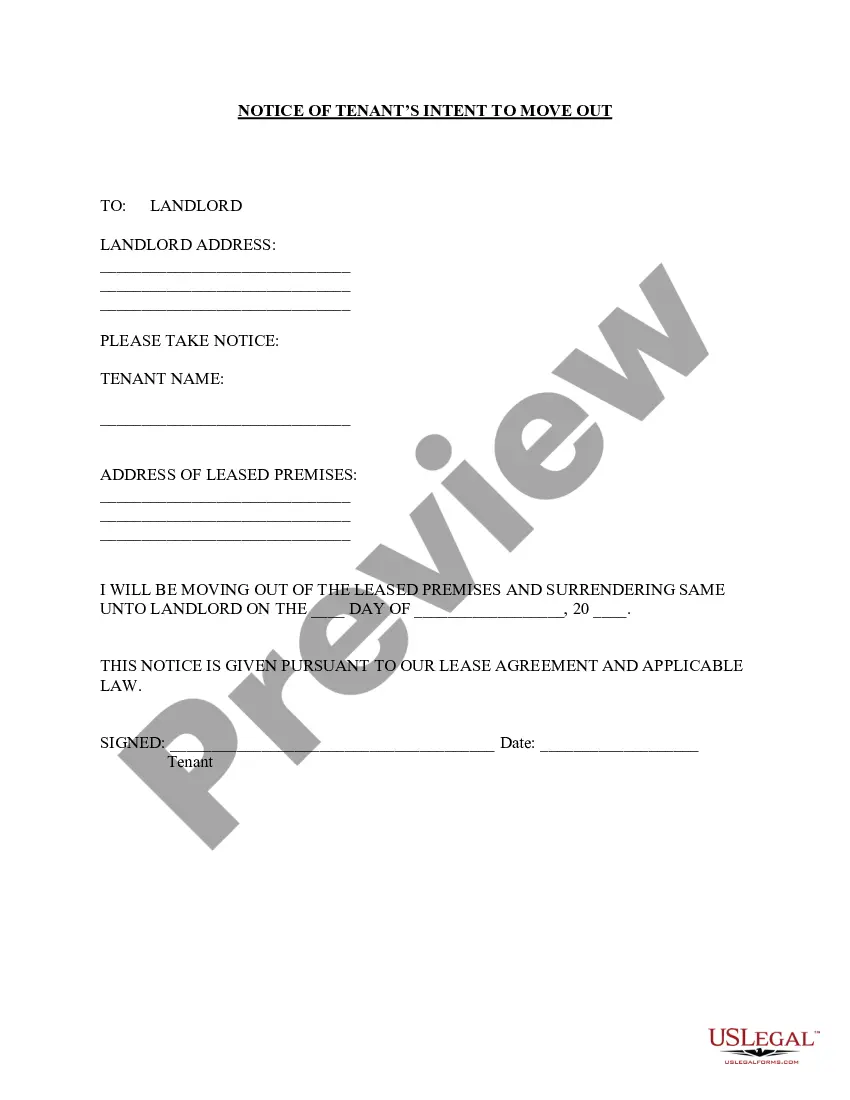
This letter from Tenant to Landlord about insufficient notice to terminate rental agreement serves as a formal notice for tenants who have received inadequate notice regarding changes to their lease. It highlights the tenant's intention to maintain original terms until proper notice is given, differentiating it from other rental-related notices by focusing specifically on insufficient notice periods.
Key parts of this document
- Tenant's name and signature.
- Date of the notice.
- Statement of insufficient notice received from the landlord.
- Indication of the date the tenant will comply with the change.
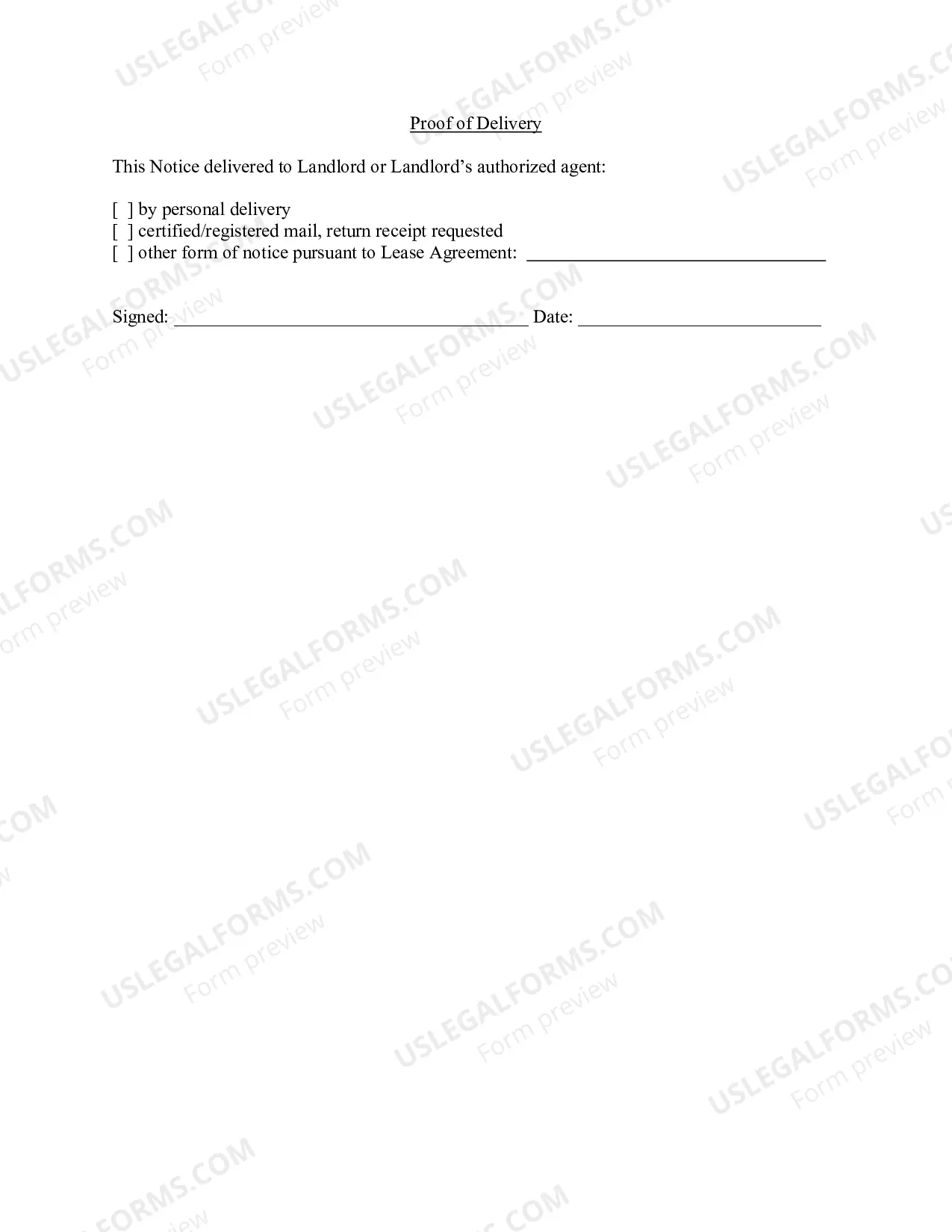
- Proof of delivery options (personal delivery or certified mail).


Common use cases
This form is useful when a tenant receives a notice from the landlord that does not comply with the required notice period as outlined in the lease agreement. It can be used when the changes proposed by the landlord are not acceptable without proper notice, or when the tenant wishes to formally communicate their position and intentions regarding the notice received.
Who this form is for
- Tenants who have received insufficient notice from their landlord regarding lease adjustments.
- Individuals looking to protect their rights under a rental agreement.
- Those who want to formally respond to landlords about proposed changes to rental terms.
How to complete this form
- Identify and write down the tenant's name and address.
- Enter the landlord's name and address.
- State the details regarding the insufficient notice received.
- Specify the date for compliance with the changes.
- Sign and date the letter.
- Select proof of delivery method and add the information, if necessary.
Notarization requirements for this form
Notarization is generally not required for this form. However, certain states or situations might demand it. You can complete notarization online through US Legal Forms, powered by Notarize, using a verified video call available anytime.
Get your form ready online
Our built-in tools help you complete, sign, share, and store your documents in one place.
Make edits, fill in missing information, and update formatting in US Legal Forms—just like you would in MS Word.
Download a copy, print it, send it by email, or mail it via USPS—whatever works best for your next step.
Sign and collect signatures with our SignNow integration. Send to multiple recipients, set reminders, and more. Go Premium to unlock E-Sign.
If this form requires notarization, complete it online through a secure video call—no need to meet a notary in person or wait for an appointment.
We protect your documents and personal data by following strict security and privacy standards.

Make edits, fill in missing information, and update formatting in US Legal Forms—just like you would in MS Word.

Download a copy, print it, send it by email, or mail it via USPS—whatever works best for your next step.

Sign and collect signatures with our SignNow integration. Send to multiple recipients, set reminders, and more. Go Premium to unlock E-Sign.

If this form requires notarization, complete it online through a secure video call—no need to meet a notary in person or wait for an appointment.

We protect your documents and personal data by following strict security and privacy standards.
Typical mistakes to avoid
- Failing to include the date and signature of the tenant.
- Neglecting to clearly state the grounds for dispute regarding the notice.
- Using vague language that does not clearly express the tenant's intentions.
- Not retaining proof of delivery for personal records.
Benefits of using this form online
- Easy access to legally vetted templates drafted by licensed attorneys.
- Ability to download and customize the form to fit individual circumstances.
- Secure and convenient option for handling legal forms from home.
Looking for another form?
Form popularity
FAQ
Used by tenants who received insufficient notice from their landlord about changes to a rental agreement, this form provides a formal notice to preserve the original terms until proper notice is given. It collects the tenant’s name and signature, the date of the notice, a statement that the notice was insufficient, the date the tenant will comply with the change, and proof of delivery options (personal delivery or certified mail).
This form provides a ready-to-use structure for drafting a notice to terminate a rental agreement when a landlord has given insufficient notice. It guides you to include the tenant’s name and signature, the notice date, a statement that the landlord provided insufficient notice, the date you will comply with the change, and proof of delivery options (personal delivery or certified mail).
This CT-focused form guides a tenant to formally respond to landlord-proposed changes when notice was insufficient. It emphasizes documenting the tenant’s name and signature, date of notice, a clear statement that the landlord failed to provide proper notice, the date the tenant will comply, and delivery proof (personal delivery or certified mail) to ensure a clear, verifiable record.
In this context, insufficient notice means the landlord did not provide the required notice period before proposing changes to the lease. The form helps document that deficiency and asserts that the original terms remain in effect until proper notice is given. It also records how you received the notice through delivery proof. Consult a licensed attorney if you need help interpreting your lease terms.
This form is for tenants who have received insufficient notice from their landlord regarding lease adjustments, as described in the form’s description. It is also suited for individuals protecting their rental rights and those who want to formally respond to landlords about proposed changes to rental terms. It captures the tenant’s details, date, and delivery method for a documented response.
This form is specifically designed to address insufficient notice to terminate a rental agreement in Connecticut. Unlike a generic termination letter, it requires and records the notice date, a statement that the landlord provided insufficient notice, the date the tenant will comply, the tenant’s name and signature, and delivery proof (personal delivery or certified mail), creating a documented record.