Connecticut Letter from Tenant to Landlord containing Notice to landlord to cease retaliatory threats to evict or retaliatory eviction
What this document covers
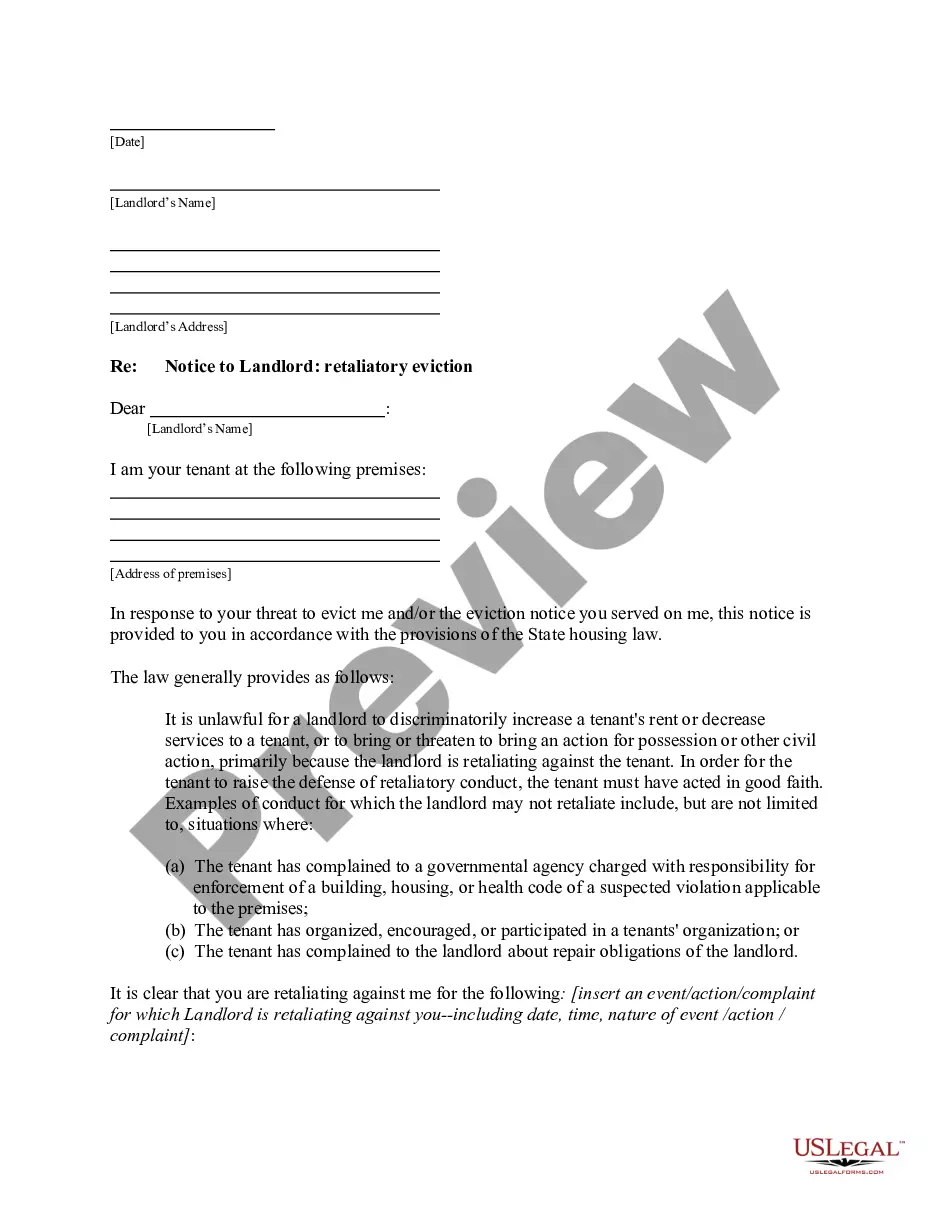
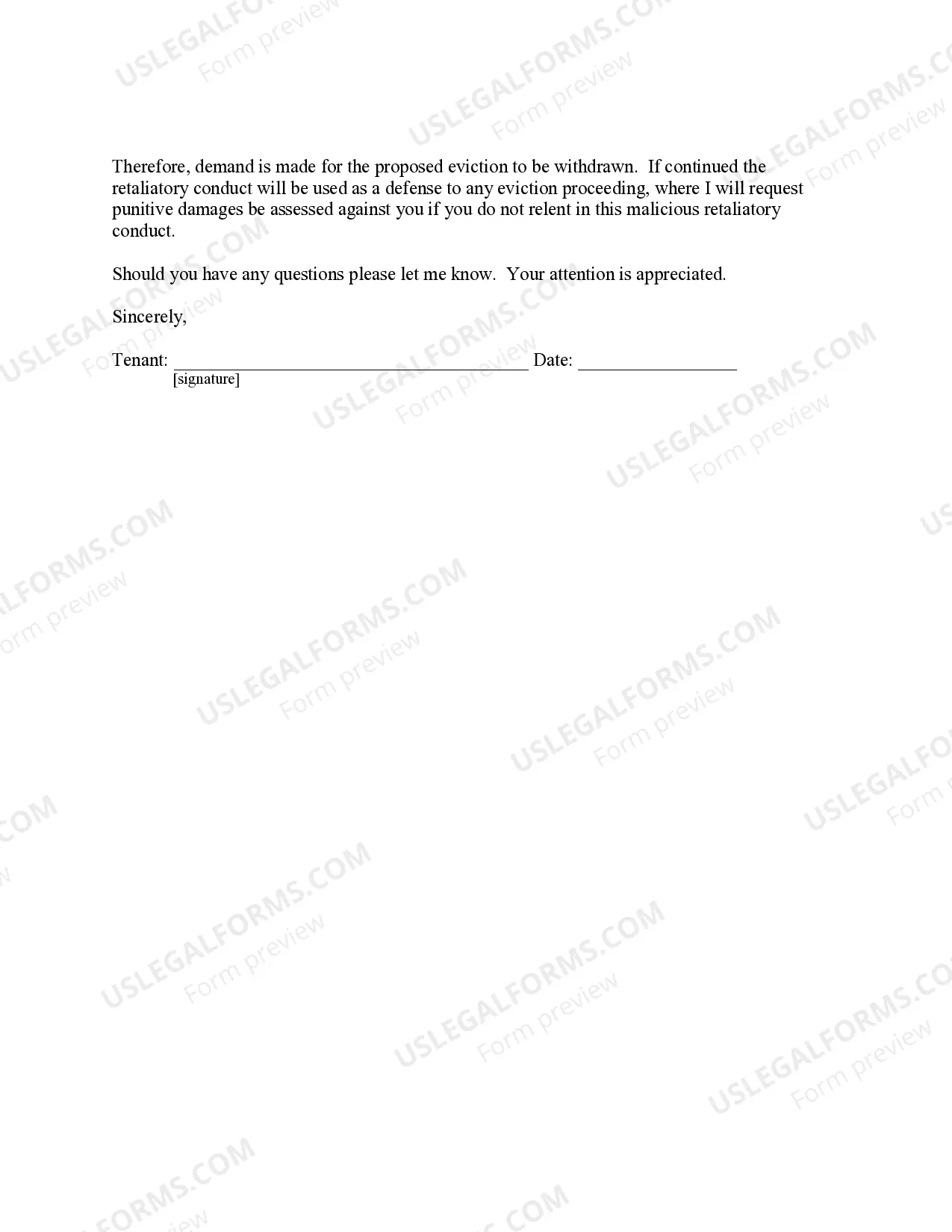
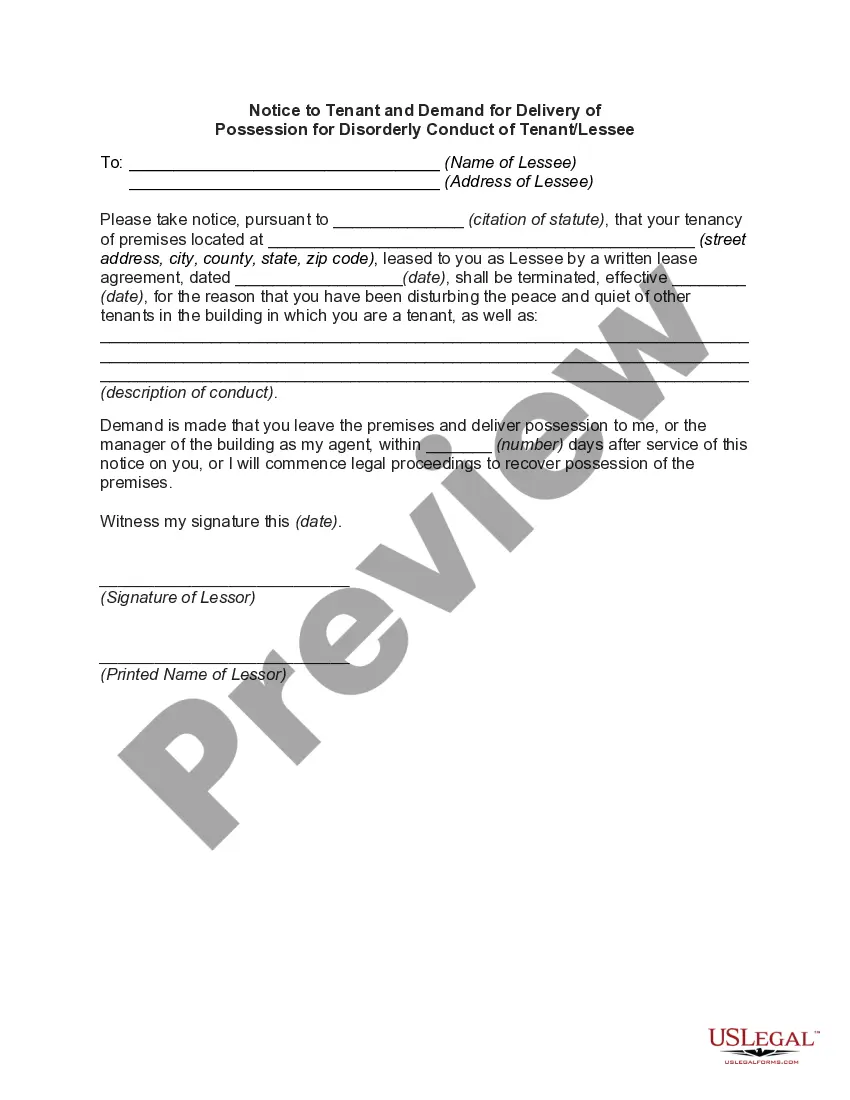
This letter from tenant to landlord serves as a notice to address retaliatory threats made by the landlord to evict the tenant. It is a formal way for the tenant to assert that the eviction threat is retaliation against the tenant's protected actions, which may include filing complaints regarding housing code violations or participating in tenant organizations. This form is essential as it helps legally document the tenant's response and preserves their rights under state housing laws.
Key parts of this document
- Identification of the tenant and landlord
- Clear statement of the landlord's retaliatory eviction threat
- Description of the tenant's actions prompting the threat
- Statement of the tenant's rights under housing law
- Signature of the tenant and date of delivery


When to use this document
This form is appropriate when a tenant has received a threat of eviction from their landlord that the tenant believes is retaliatory. Situations may include instances where the tenant has recently complained about necessary repairs, reported health code violations, or participated in tenant advocacy. This letter provides a structured response and helps safeguard the tenant's legal rights against unfair eviction practices.
Intended users of this form
- Tenants who have received eviction threats from their landlord
- Individuals who believe their landlord is retaliating against them
- People seeking to document their response to a landlord's threats
How to complete this form
- Identify the tenant and landlord by entering their full names and addresses.
- Clearly state the date and details of the landlord's eviction threat.
- Detail the actions taken by the tenant that may have prompted the landlord's retaliation.
- Sign and date the letter to formalize the notice.
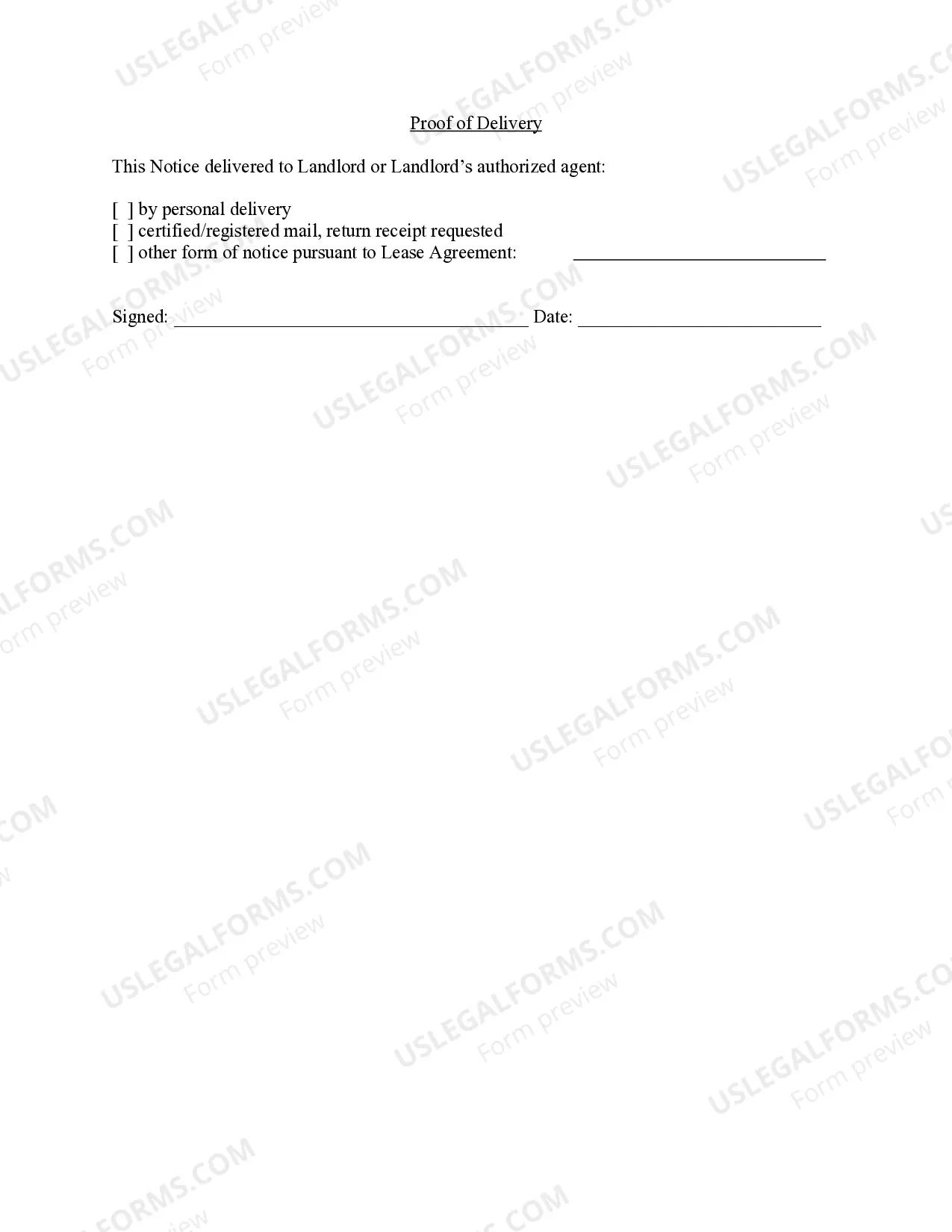
- Deliver the notice to the landlord or their authorized agent either personally or via a method that provides proof of delivery.
Does this document require notarization?
Notarization is not commonly needed for this form. However, certain documents or local rules may make it necessary. Our notarization service, powered by Notarize, allows you to finalize it securely online anytime, day or night.
Get your form ready online
Our built-in tools help you complete, sign, share, and store your documents in one place.
Make edits, fill in missing information, and update formatting in US Legal Forms—just like you would in MS Word.
Download a copy, print it, send it by email, or mail it via USPS—whatever works best for your next step.
Sign and collect signatures with our SignNow integration. Send to multiple recipients, set reminders, and more. Go Premium to unlock E-Sign.
If this form requires notarization, complete it online through a secure video call—no need to meet a notary in person or wait for an appointment.
We protect your documents and personal data by following strict security and privacy standards.

Make edits, fill in missing information, and update formatting in US Legal Forms—just like you would in MS Word.

Download a copy, print it, send it by email, or mail it via USPS—whatever works best for your next step.

Sign and collect signatures with our SignNow integration. Send to multiple recipients, set reminders, and more. Go Premium to unlock E-Sign.

If this form requires notarization, complete it online through a secure video call—no need to meet a notary in person or wait for an appointment.

We protect your documents and personal data by following strict security and privacy standards.
Avoid these common issues
- Not including specific details about the eviction threat.
- Failing to provide proof of delivery to the landlord.
- Leaving out the date of the notice.
Advantages of online completion
- Convenient access to a legally compliant document at any time.
- Easy to download and edit to suit specific scenarios.
- Provides peace of mind knowing the document meets state housing laws.
Legal use & context
- This letter serves as a formal defense against eviction claims based on retaliatory actions.
- It may be used as evidence in court if the landlord attempts to proceed with eviction despite the tenant's protected actions.
- Understanding local laws can enhance the effectiveness of this document in protecting tenant rights.
Main things to remember
- This form is crucial for tenants facing retaliatory eviction threats.
- Proper completion and delivery can help protect tenants' rights.
- Always keep a copy of the notice for your records and for any potential disputes.
Looking for another form?
Form popularity
FAQ
In Connecticut, a notice to quit may be deemed invalid if it lacks proper delivery or does not include the necessary information about the tenancy. A Connecticut Letter from Tenant to Landlord containing Notice to landlord to cease retaliatory threats to evict or retaliatory eviction can help clarify your rights. Additionally, if the notice is served for retaliatory reasons or fails to specify the grounds for eviction, it may also be invalid. Understanding these factors can help you challenge an unjust notice effectively.
To write a dispute letter to your landlord, start by clearly stating your issue and referencing any specific incidents. Include the details of your tenancy, such as your address and lease start date. Incorporate the Connecticut Letter from Tenant to Landlord containing Notice to landlord to cease retaliatory threats to evict or retaliatory eviction to formally address any unjust actions. Be sure to express the solution you are seeking, and maintain a professional tone throughout the letter.
When writing an appeal letter to your landlord, clearly state the reason for your appeal and provide supporting evidence. Address any misunderstandings and emphasize your willingness to work together toward a solution. Reference the support of a Connecticut Letter from Tenant to Landlord containing Notice to landlord to cease retaliatory threats to evict or retaliatory eviction if necessary, ensuring your perspective is well communicated and legally acknowledged.
Begin your dispute letter by clearly identifying the issue and providing essential details, such as dates and the nature of the dispute. Be polite yet firm, and request specific actions from the landlord to resolve the matter. Consider including the idea of a Connecticut Letter from Tenant to Landlord containing Notice to landlord to cease retaliatory threats to evict or retaliatory eviction to strengthen your position and showcase your intention to act legally.
To write a letter to avoid eviction, express your commitment to resolving any issues that may have led to the eviction notice. Acknowledge the landlord's concerns and propose practical solutions or payment plans if applicable. You might want to reference the Connecticut Letter from Tenant to Landlord containing Notice to landlord to cease retaliatory threats to evict or retaliatory eviction, signaling your desire to maintain a good relationship while addressing the situation.
To dispute charges from a landlord, begin by reviewing your lease agreement to understand your rights. Gather any supporting documents such as receipts or photos, and draft a letter that clearly states your position. If necessary, mention the option of a Connecticut Letter from Tenant to Landlord containing Notice to landlord to cease retaliatory threats to evict or retaliatory eviction, showing your intention to resolve the matter amicably while protecting your rights.
Writing a strongly worded letter of complaint requires clarity and directness. Start by addressing the specific issue and express how it affects your living conditions. Be sure to request a resolution by a certain date, and mention the potential for a Connecticut Letter from Tenant to Landlord containing Notice to landlord to cease retaliatory threats to evict or retaliatory eviction if the issue persists. This demonstrates your seriousness in seeking a resolution.
The most common landlord-tenant dispute often revolves around repairs and maintenance issues. Tenants typically seek timely repairs, while landlords may face various challenges in meeting these requests. This can lead to misunderstandings and frustrations if not addressed promptly. To help navigate such situations, using a Connecticut Letter from Tenant to Landlord containing Notice to landlord to cease retaliatory threats to evict or retaliatory eviction can clarify expectations.
Landlord harassment in Connecticut includes any behavior by a landlord that aims to intimidate a tenant, such as repeated threats of eviction or refusing to make necessary repairs. It is essential to recognize these actions, as they may violate tenant rights under state law. If you believe you are experiencing harassment, consider sending a Connecticut Letter from Tenant to Landlord containing Notice to landlord to cease retaliatory threats to evict or retaliatory eviction, which can help assert your rights effectively.
A notice to quit in Connecticut serves as a formal communication from the landlord to the tenant, indicating an intention to terminate the rental agreement. It is not an eviction itself, but it initiates the process that may lead to eviction if the tenant does not comply. Tenants can respond with a Connecticut Letter from Tenant to Landlord containing Notice to landlord to cease retaliatory threats to evict or retaliatory eviction, protecting their rights during this process.