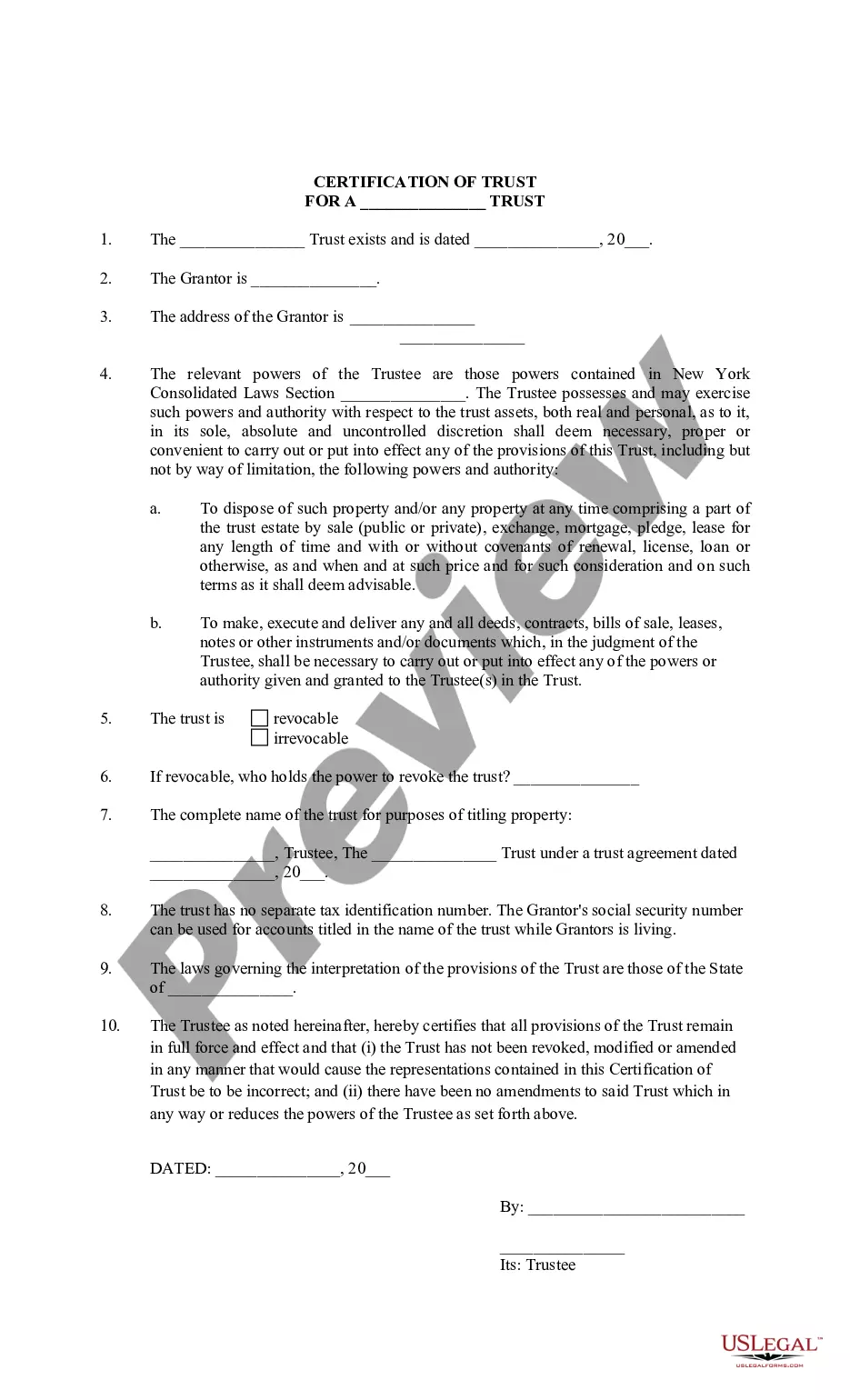
Connecticut Letter from Tenant to Landlord containing Notice to landlord to cease retaliatory decrease in services
About this form
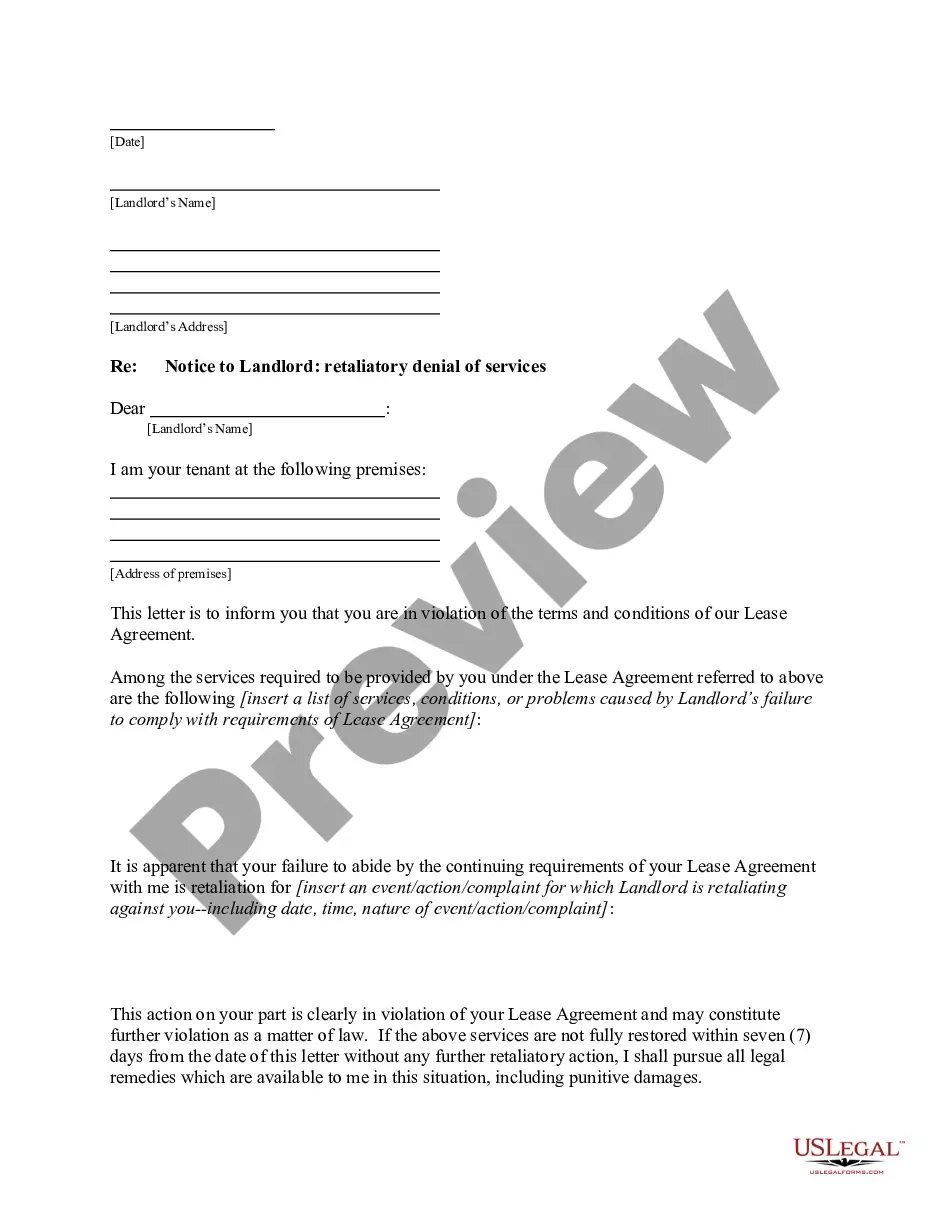
This form is a letter from a tenant to a landlord notifying the landlord to cease any retaliatory actions that decrease services as outlined in the lease agreement. The purpose of this notice is to assert the tenant's rights and address the landlord's potential breach of contract and violation of the law. This form is distinct from standard complaint letters, as it specifically highlights retaliatory actions by the landlord.
Main sections of this form
- Identification of the tenant and the landlord.
- A detailed list of services the landlord is required to provide under the lease agreement.
- A statement of the actions taken by the tenant that may have precipitated the landlord's retaliatory behavior.
- A request for the landlord to cease these retaliatory actions.
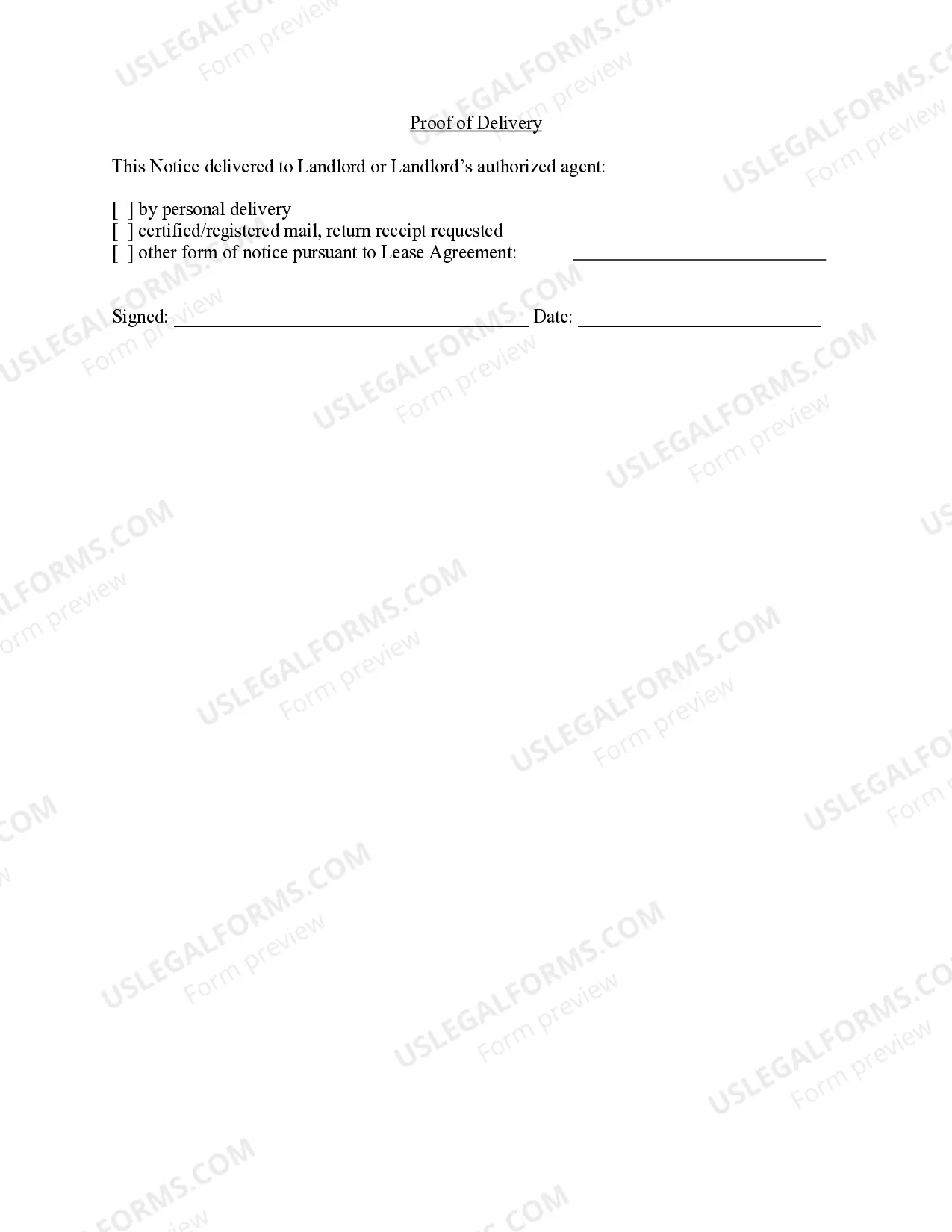
- Proof of delivery options to ensure the notice is formally acknowledged.



When to use this document
This form should be used when a tenant believes that their landlord is decreasing or denying services due to the tenant's previous actions, such as reporting violations or asserting their rights. It is an essential step for tenants seeking to protect themselves against unlawful retaliation, ensuring that the property management complies with the terms of the lease agreement.
Intended users of this form
- Current tenants experiencing a decrease in services after taking a legal or protected action.
- Tenants seeking to formally notify their landlord about potential breaches of the lease agreement.
- Individuals who wish to maintain documentation of their communications with their landlord regarding retaliatory actions.
Instructions for completing this form
- Identify the parties involved by entering the names and contact information of both the tenant and landlord.
- Specify the property address related to the lease agreement.
- List the services the landlord has failed to provide, which are required under the lease.
- Include any relevant details regarding the actions taken by the tenant that may have led to the landlord's retaliatory behavior.
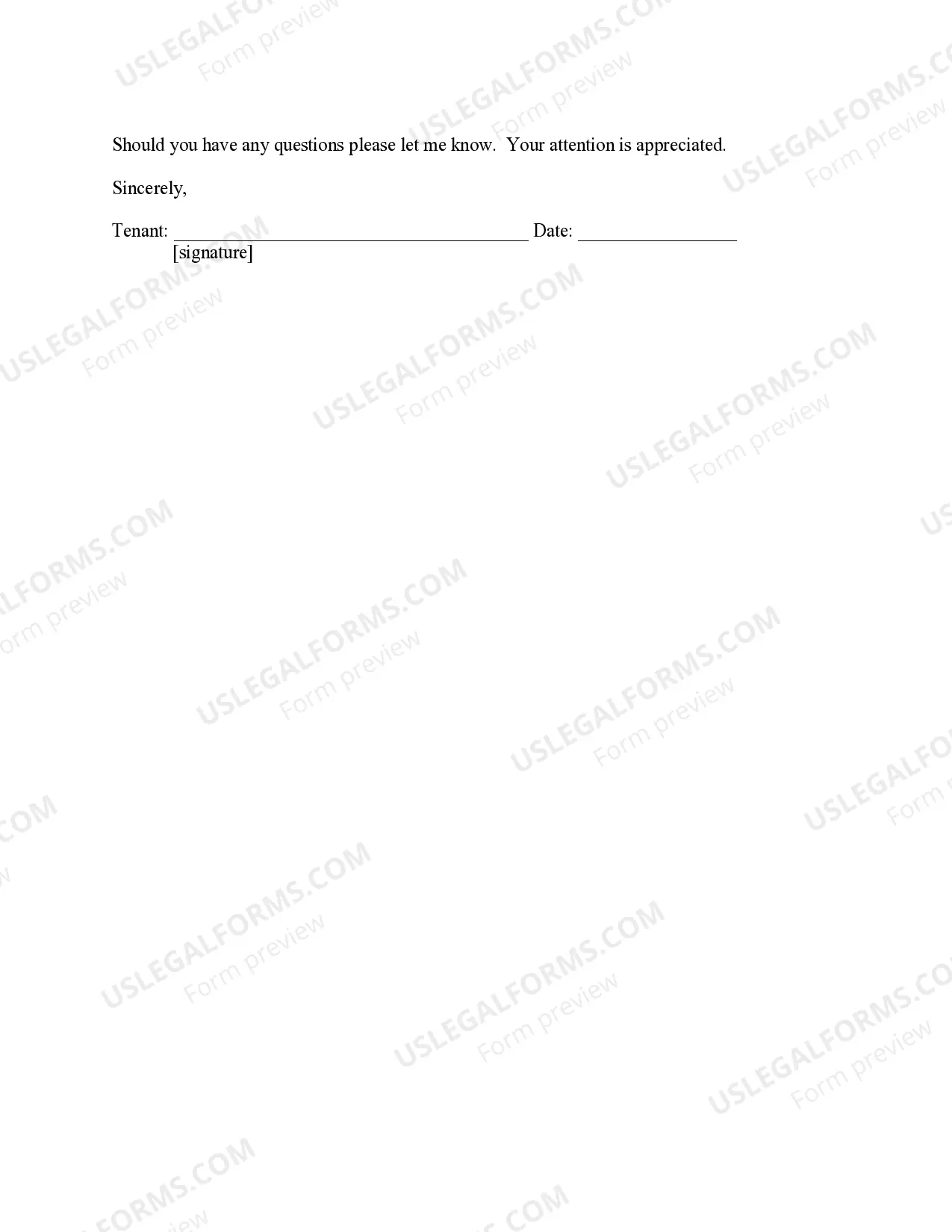
- Sign and date the letter before sending it to the landlord.
Is notarization required?
This form does not typically require notarization unless specified by local law. Ensure you follow state-specific requirements for compliance.
Get your form ready online
Our built-in tools help you complete, sign, share, and store your documents in one place.
Make edits, fill in missing information, and update formatting in US Legal Forms—just like you would in MS Word.
Download a copy, print it, send it by email, or mail it via USPS—whatever works best for your next step.
Sign and collect signatures with our SignNow integration. Send to multiple recipients, set reminders, and more. Go Premium to unlock E-Sign.
If this form requires notarization, complete it online through a secure video call—no need to meet a notary in person or wait for an appointment.
We protect your documents and personal data by following strict security and privacy standards.

Make edits, fill in missing information, and update formatting in US Legal Forms—just like you would in MS Word.

Download a copy, print it, send it by email, or mail it via USPS—whatever works best for your next step.

Sign and collect signatures with our SignNow integration. Send to multiple recipients, set reminders, and more. Go Premium to unlock E-Sign.

If this form requires notarization, complete it online through a secure video call—no need to meet a notary in person or wait for an appointment.

We protect your documents and personal data by following strict security and privacy standards.
Typical mistakes to avoid
- Failing to clearly identify the specific services that have been reduced or denied.
- Not providing sufficient detail about the actions that may be seen as retaliation.
- Ignoring the need for proper proof of delivery to ensure acknowledgment from the landlord.
- Omitting to sign and date the letter, which is essential for the document's validity.
Benefits of completing this form online
- Convenience of downloading and tailoring the form to fit specific circumstances.
- Editable format allows customization for a clear and personalized communication.
- Reliability as the form is drafted by licensed attorneys to ensure adherence to legal standards.
Looking for another form?
Form popularity
FAQ
Suing your landlord for emotional distress typically involves demonstrating that their actions caused you significant harm. Gather evidence of the distress and ensure you have documented communication regarding the issue. Consider drafting a Connecticut Letter from Tenant to Landlord containing Notice to landlord to cease retaliatory decrease in services to formally address the issue before pursuing legal action, as this can also serve as evidence of your attempts to resolve the matter amicably.
Dealing with a disrespectful landlord can be challenging. It's essential to communicate your concerns clearly and professionally, highlighting any specific behaviors that are unacceptable. If informal discussions do not yield results, consider using a Connecticut Letter from Tenant to Landlord containing Notice to landlord to cease retaliatory decrease in services, which formally outlines your grievances and requests action, providing a documented approach to your situation.
A bad landlord may be referred to as an irresponsible or negligent landlord. This type of landlord fails to meet their obligations, such as maintaining the property and ensuring it is livable. If you face issues with a bad landlord in Connecticut, sending a Connecticut Letter from Tenant to Landlord containing Notice to landlord to cease retaliatory decrease in services can be an effective way to address your concerns and seek necessary improvements.
A toxic landlord creates a hostile living environment for tenants. This may involve neglecting repairs, harassing tenants, or providing unsafe living conditions. If you find yourself dealing with a toxic landlord in Connecticut, you can benefit from a Connecticut Letter from Tenant to Landlord containing Notice to landlord to cease retaliatory decrease in services. This formal letter can help you assert your rights and demand necessary changes.
Landlord harassment in Connecticut includes any behavior that interferes with a tenant’s right to quiet enjoyment of their home. Examples include excessive phone calls, refusing repairs, or entering without permission. If you experience harassment, it is essential to document everything, and a Connecticut Letter from Tenant to Landlord containing Notice to landlord to cease retaliatory decrease in services could be a pivotal tool to address such issues legally.
A termination letter from a landlord is a formal document sent to inform a tenant that their lease will not be renewed or that they must vacate the premises. This letter should include the reasons for termination, the final date of occupancy, and any instructions regarding the security deposit or property return. For landlords, sending a Connecticut Letter from Tenant to Landlord containing Notice to landlord to cease retaliatory decrease in services can be a proactive step in maintaining clear communication with tenants.
Yes, a landlord can sue a tenant for emotional distress if the tenant's actions are deemed to have caused significant harm. This usually requires strong evidence that the tenant engaged in intentional misconduct or a pattern of behavior that disrupted the landlord's peace. Keeping records, such as a Connecticut Letter from Tenant to Landlord containing Notice to landlord to cease retaliatory decrease in services, can help document the situation if disputes arise.
A termination letter to a tenant indicates the landlord's intention to end the tenancy. It should clearly state the reason for termination, the date by which the tenant must vacate, and any specific actions the tenant needs to take before leaving. For landlords facing issues, using a Connecticut Letter from Tenant to Landlord containing Notice to landlord to cease retaliatory decrease in services can serve as a basis for communication and may help alleviate misunderstandings.
Yes, you can sue your landlord for emotional distress in Connecticut, but it may require strong proof that your landlord’s actions caused significant emotional harm. The courts often consider whether a landlord's actions were unreasonable or intentionally harmful. Additionally, if you have a Connecticut Letter from Tenant to Landlord containing Notice to landlord to cease retaliatory decrease in services as evidence, this may strengthen your case by showing a clear timeline of retaliation.
Writing a notice to vacate involves clearly stating your intention to leave. Include your name, rental property address, and the date of your planned departure to make it official. Deliver this notice to your landlord in person or via certified mail for proof. Consider exploring templates like the Connecticut Letter from Tenant to Landlord containing Notice to landlord to cease retaliatory decrease in services for assistance.