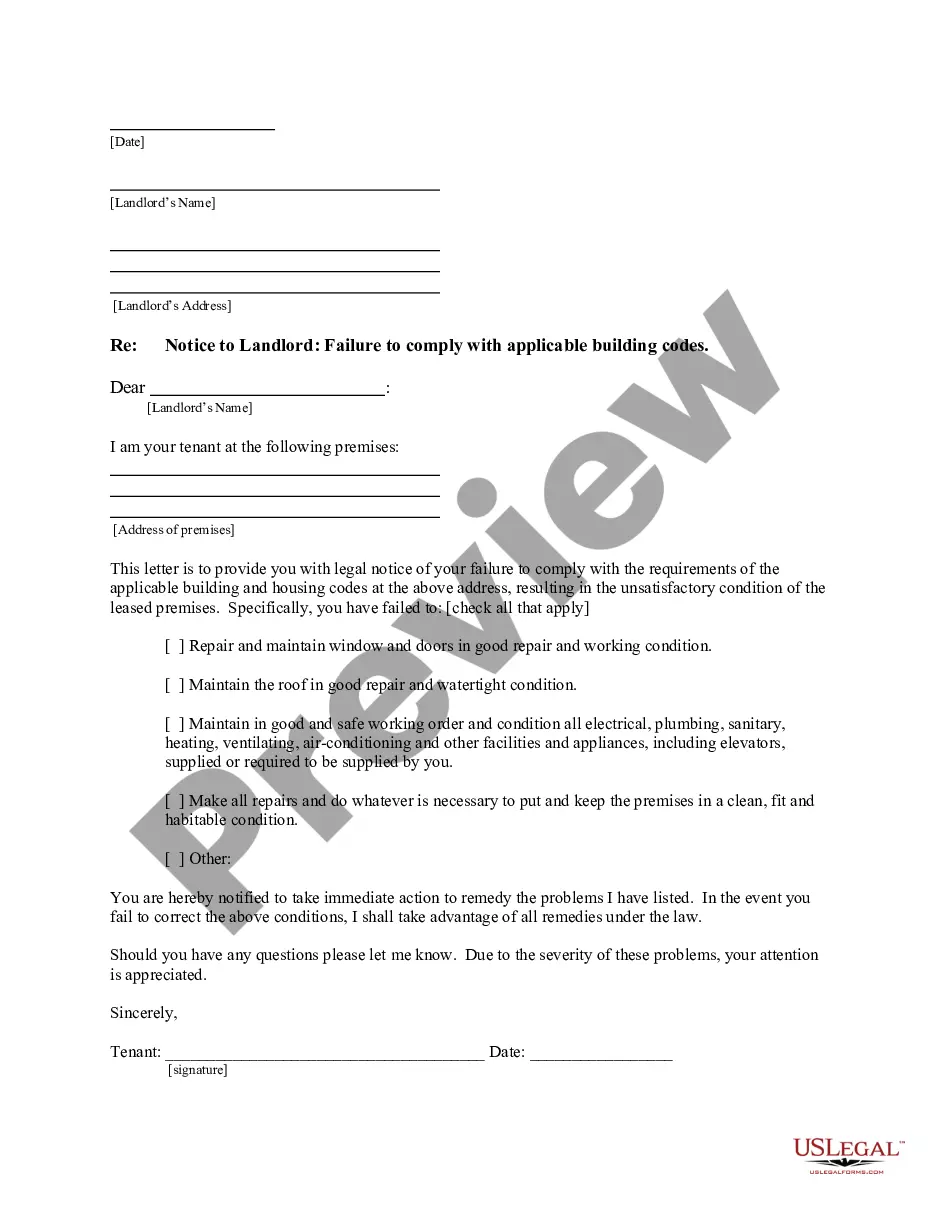
Connecticut Letter from Tenant to Landlord for Failure of Landlord to comply with building codes affecting health and safety or resulting in untenantable condition - demand for remedy
What this document covers
This form is a demand letter from a tenant to a landlord addressing the landlord's failure to comply with building codes that impact health and safety or lead to untenantable conditions. It specifically requests that the landlord remedy unsafe or unhealthy conditions within a specified time frame. This form is essential for tenants seeking to formally address serious issues in their rental property and differs from general complaint letters by emphasizing legal compliance and specific remedy demands.
Main sections of this form
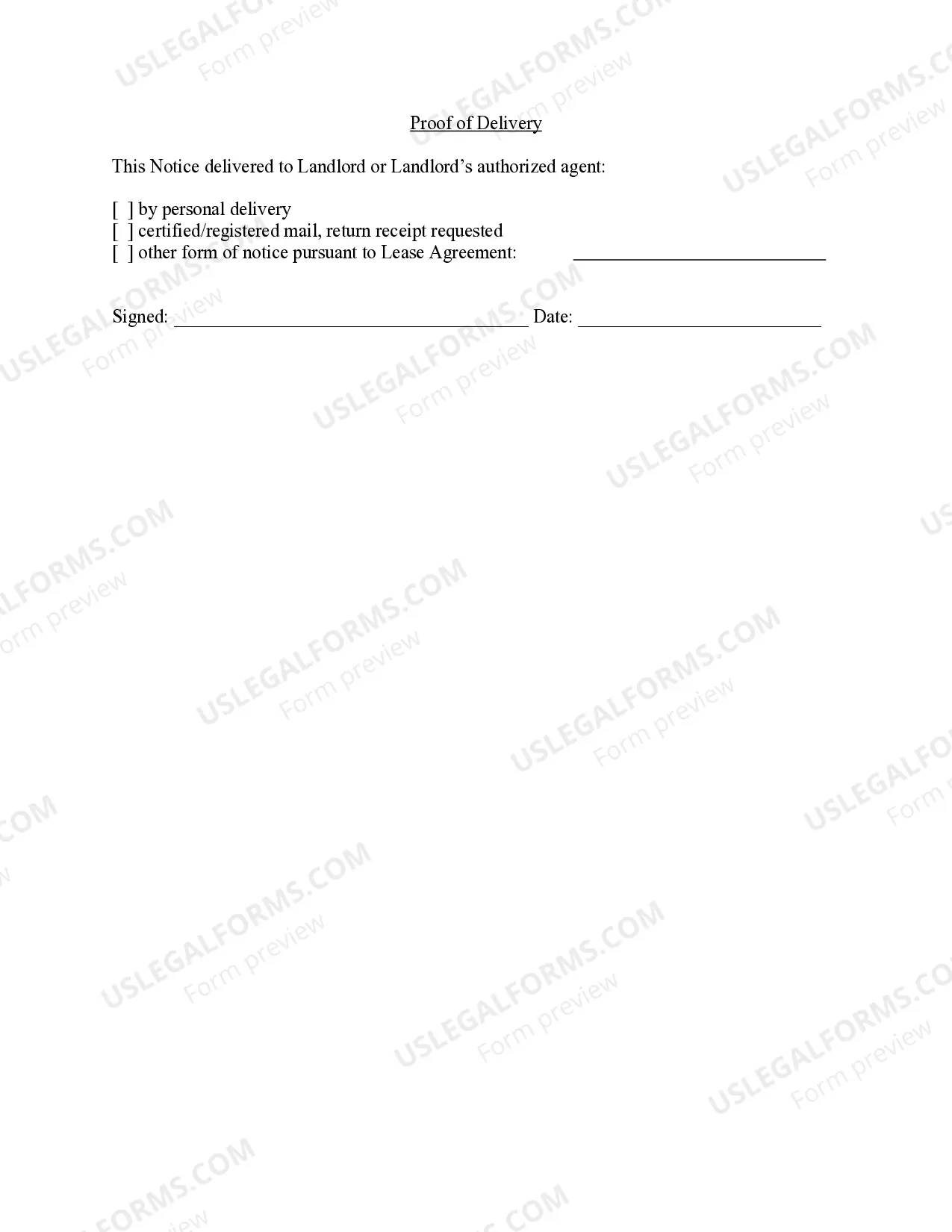
- Delivery details for the notice to the landlord or their authorized agent.
- Clear description of the issues affecting health and safety.
- A demand for urgent repairs within a ten-day period.
- Signature line for the tenant, indicating acknowledgment and intent.
- Date of the letter to establish a timeline for compliance.


Situations where this form applies
This form should be used if you are a tenant facing unaddressed health and safety issues in your rental property, such as mold, pest infestations, or non-functioning utilities. It is particularly relevant when the conditions make the property untenantable or hazardous to your health. Sending this letter formally documents the problems and urges the landlord to take corrective action promptly.
Who this form is for
- Tenants who are experiencing unsafe or unhealthy conditions in their rental property.
- Individuals seeking to address landlord negligence regarding building code compliance.
- Renters wishing to formalize their request for urgent repairs to ensure their rights as tenants are upheld.
Completing this form step by step
- Clearly identify yourself as the tenant with your contact information.
- Specify the address of the rental property in question.
- List the specific health and safety violations you have observed.
- State the exact repairs needed and the ten-day timeline for action.
- Sign and date the letter before delivering it to the landlord.
Notarization guidance
This form does not typically require notarization unless specified by local law. It is, however, advisable to keep a record of the delivery method, such as using certified mail or personal delivery, to ensure it is received by the landlord.
Get your form ready online
Our built-in tools help you complete, sign, share, and store your documents in one place.
Make edits, fill in missing information, and update formatting in US Legal Forms—just like you would in MS Word.
Download a copy, print it, send it by email, or mail it via USPS—whatever works best for your next step.
Sign and collect signatures with our SignNow integration. Send to multiple recipients, set reminders, and more. Go Premium to unlock E-Sign.
If this form requires notarization, complete it online through a secure video call—no need to meet a notary in person or wait for an appointment.
We protect your documents and personal data by following strict security and privacy standards.

Make edits, fill in missing information, and update formatting in US Legal Forms—just like you would in MS Word.

Download a copy, print it, send it by email, or mail it via USPS—whatever works best for your next step.

Sign and collect signatures with our SignNow integration. Send to multiple recipients, set reminders, and more. Go Premium to unlock E-Sign.

If this form requires notarization, complete it online through a secure video call—no need to meet a notary in person or wait for an appointment.

We protect your documents and personal data by following strict security and privacy standards.
Mistakes to watch out for
- Failing to provide a clear description of the health and safety issues.
- Not specifying the repair timeline, which could lead to delays.
- Sending the letter without a signature or date.
- Delivering the notice without proof of delivery, risking non-receipt claims from the landlord.
Advantages of online completion
- Convenience of downloading and filling out the form at your own pace.
- Edit the document to tailor it specifically to your needs.
- Access to professionally drafted legal language that ensures clarity and legality.
Looking for another form?







Form popularity
FAQ
To write a professional letter to your landlord, maintain a respectful tone while outlining your concerns. Include specific details about the problems you face, linking them to building code violations if applicable. The Connecticut Letter from Tenant to Landlord for Failure of Landlord to comply with building codes affecting health and safety or resulting in untenantable condition - demand for remedy can provide a framework for your communication, emphasizing your request for resolution in a professional manner.
A powerful complaint letter communicates your concerns clearly and asserts your rights as a tenant. Structure your letter with a statement of the issue, evidence of the landlord's failure to comply with codes, and a request for a specific remedy. The Connecticut Letter from Tenant to Landlord for Failure of Landlord to comply with building codes affecting health and safety or resulting in untenantable condition - demand for remedy serves as a useful template for creating impactful correspondence.
To write a formal complaint letter to your landlord, begin with a polite salutation and clearly identify yourself as a tenant. Detail the issues you are experiencing, referencing how these matters violate health and safety codes. For guidance, consider the Connecticut Letter from Tenant to Landlord for Failure of Landlord to comply with building codes affecting health and safety or resulting in untenantable condition - demand for remedy, which helps structure your request for resolution.
When writing a strongly worded complaint letter to a landlord, be direct about the issues you face. Cite specific incidents and reference relevant building codes. Utilizing the Connecticut Letter from Tenant to Landlord for Failure of Landlord to comply with building codes affecting health and safety or resulting in untenantable condition - demand for remedy will help you articulate your demand for action, reinforcing your position.
To write a complaint letter about unprofessional behavior, start by clearly stating your concerns in the opening paragraph. Express how the unprofessional conduct has affected your living situation. Use the Connecticut Letter from Tenant to Landlord for Failure of Landlord to comply with building codes affecting health and safety or resulting in untenantable condition - demand for remedy as a guide to structure your letter effectively, ensuring clarity and impact.
A letter from landlord to tenant should start with a proper salutation, followed by a clear statement of the subject matter. It's important to include any necessary details concerning lease agreements or property issues, referencing the Connecticut Letter from Tenant to Landlord for Failure of Landlord to comply with building codes affecting health and safety or resulting in untenantable condition, if relevant. Use a friendly but professional tone, making it easy for the tenant to understand your message.
When writing a certified letter to a landlord, include your name and address, along with the property address. State the purpose clearly, possibly referencing the Connecticut Letter from Tenant to Landlord for Failure of Landlord to comply with building codes affecting health and safety or resulting in untenantable condition to give context. Finally, ensure you keep a copy for your records and obtain a receipt as proof of delivery.
To craft a letter from landlord to tenant to vacate, start with the date and tenant's address, followed by a clear statement of your intent. Specify the date by which the tenant must vacate, ensuring compliance with any legal requirements related to the Connecticut Letter from Tenant to Landlord for Failure of Landlord to comply with building codes affecting health and safety or resulting in untenantable condition. Always maintain a courteous tone to foster a respectful relationship.
Writing a quick notice for a tenant requires a concise layout detailing the intended message. Use straightforward language, state the purpose of the notice, and include legal references if applicable, such as the Connecticut Letter from Tenant to Landlord for Failure of Landlord to comply with building codes affecting health and safety or resulting in untenantable condition. Ensure to provide the necessary timeline for any responses or actions required.
When addressing issues with a landlord, your letter should clearly outline the problems experienced within the rental property. Include specific instances and mention any relevant laws, like the Connecticut Letter from Tenant to Landlord for Failure of Landlord to comply with building codes affecting health and safety or resulting in untenantable condition. Keeping the tone polite yet firm increases the likelihood of prompt action from your landlord.