Connecticut Letter from Tenant to Landlord with Demand that landlord repair floors, stairs or railings
About this form
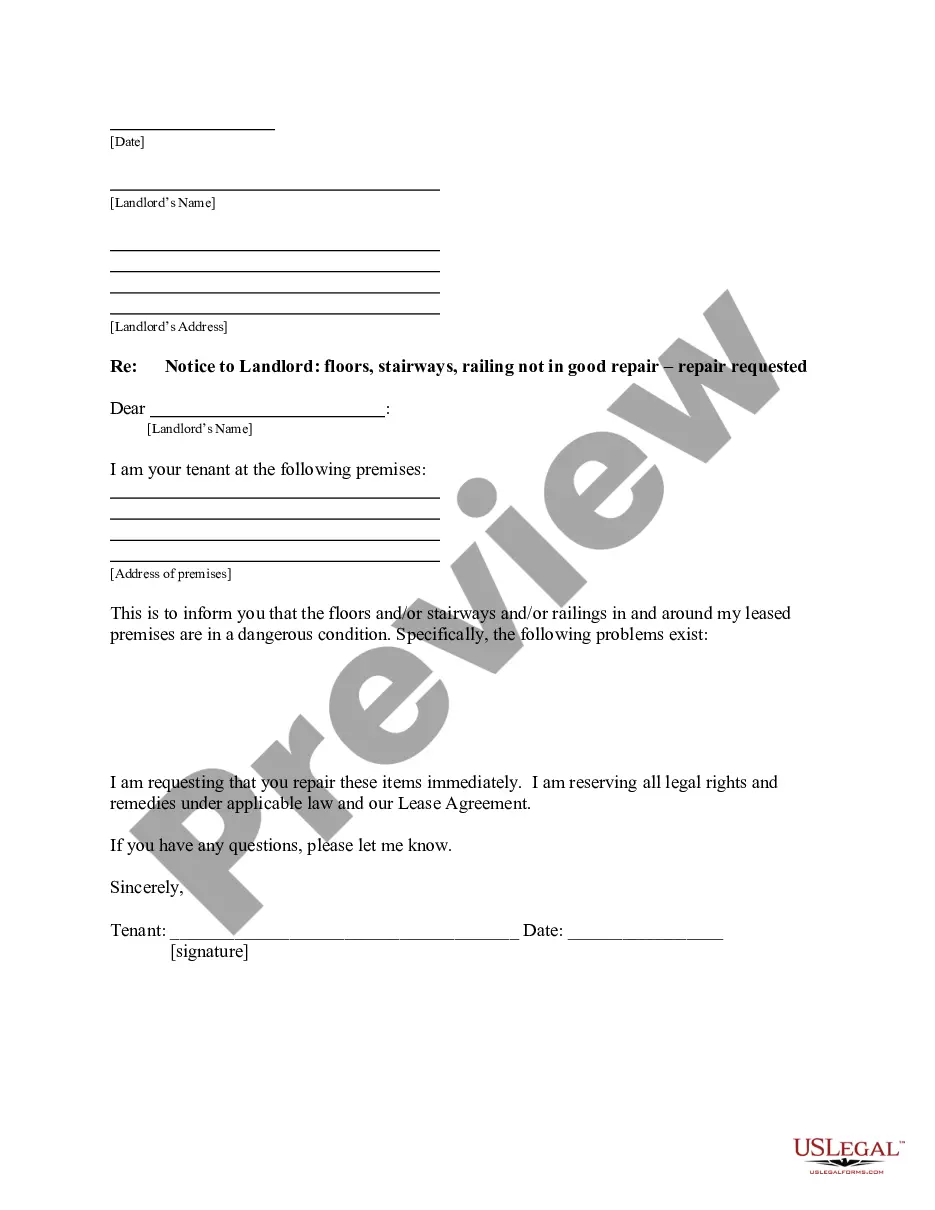
This form is a Letter from Tenant to Landlord with Demand that landlords repair floors, stairs, or railings. It is used by tenants to officially notify landlords of repairs needed on the lease premises, specifically concerning issues with floors, stairways, and railings. This form serves to inform the landlord of their statutory duty to maintain the property, emphasizing the need for prompt repairs to ensure the premises remain safe and habitable.
What’s included in this form
- Tenant's name and contact information
- Landlordâs name and address
- Description of the specific repair issues (floors, stairs, railings)
- Statement outlining the landlord's duty to maintain the property
- Demand for the repairs to be made
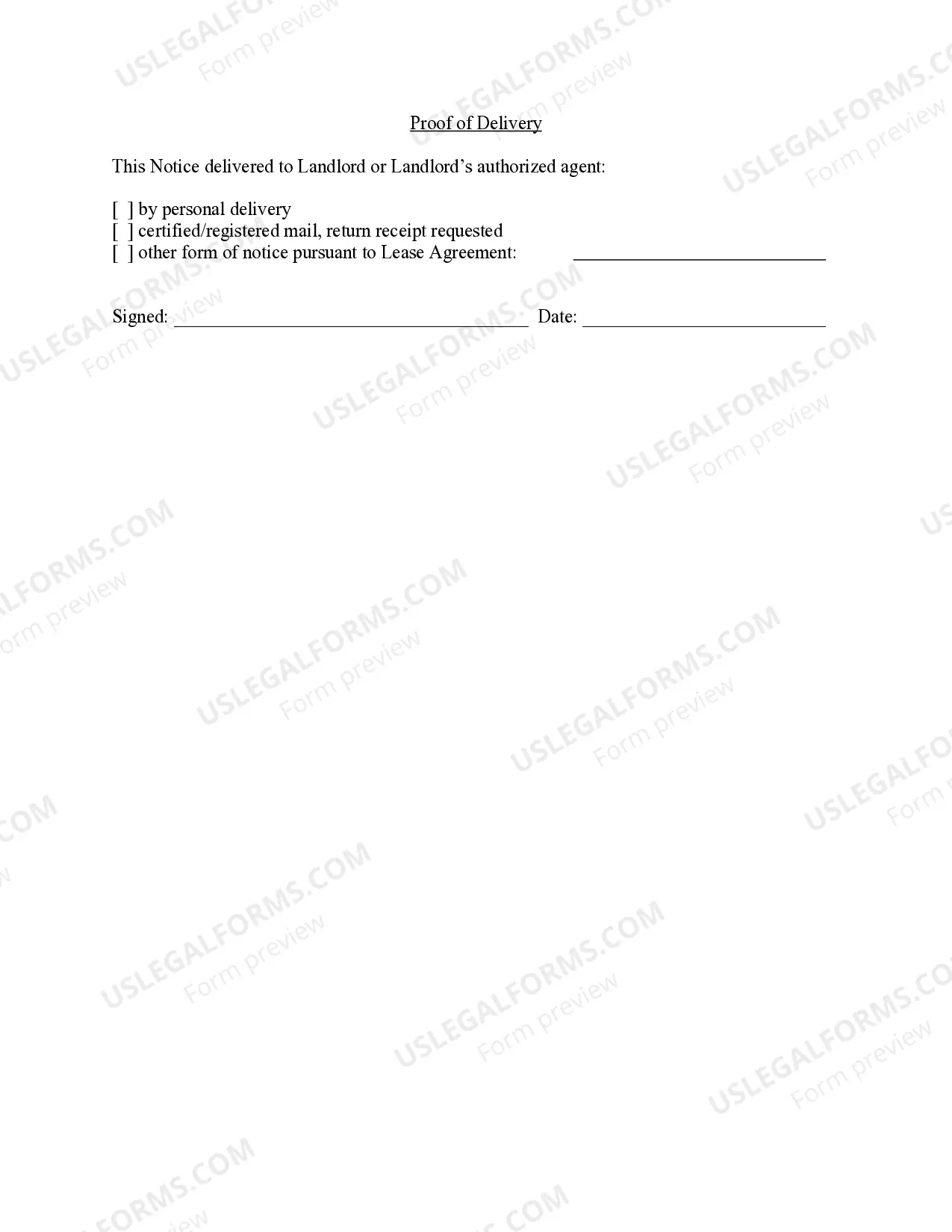
- Proof of delivery options (personal delivery or certified mail)



When this form is needed
This form should be used when a tenant notices that the floors, stairs, or railings of their rental unit are damaged or poorly maintained. If the landlord has not responded to previous verbal requests for repairs or if the issue poses a safety risk, this formal written notice is appropriate. It can also be used as a record of the tenantâs request for repairs if legal action becomes necessary in the future.
Who needs this form
- Tenants living in rental properties
- Individuals who have noticed maintenance issues in their dwelling
- Renters seeking to formally notify their landlord of needed repairs
- Those preparing for potential legal action due to ongoing repair issues
Steps to complete this form
- Identify and enter your name and contact details at the top of the form.
- Fill in the name and address of your landlord.
- Clearly explain the specific repair issues with the floors, stairs, or railings.
- Include a statement reminding the landlord of their duty to maintain the property.
- Sign and date the document at the bottom.
- Choose and complete the proof of delivery method to ensure the landlord receives the notice.
Does this form need to be notarized?
This form does not typically require notarization unless specified by local law. However, it's a good practice to keep a record of the delivery methods used to send the letter to your landlord.
Get your form ready online
Our built-in tools help you complete, sign, share, and store your documents in one place.
Make edits, fill in missing information, and update formatting in US Legal Forms—just like you would in MS Word.
Download a copy, print it, send it by email, or mail it via USPS—whatever works best for your next step.
Sign and collect signatures with our SignNow integration. Send to multiple recipients, set reminders, and more. Go Premium to unlock E-Sign.
If this form requires notarization, complete it online through a secure video call—no need to meet a notary in person or wait for an appointment.
We protect your documents and personal data by following strict security and privacy standards.

Make edits, fill in missing information, and update formatting in US Legal Forms—just like you would in MS Word.

Download a copy, print it, send it by email, or mail it via USPS—whatever works best for your next step.

Sign and collect signatures with our SignNow integration. Send to multiple recipients, set reminders, and more. Go Premium to unlock E-Sign.

If this form requires notarization, complete it online through a secure video call—no need to meet a notary in person or wait for an appointment.

We protect your documents and personal data by following strict security and privacy standards.
Common mistakes to avoid
- Failing to provide a clear description of the repair issues.
- Neglecting to include the landlordâs correct address.
- Not retaining a copy of the letter for personal records.
- Overlooking the need for proof of delivery, which is crucial for documentation.
Advantages of online completion
- Convenience of downloading and completing the form at your convenience.
- Editable templates that can be customized to fit your specific situation.
- Access to forms prepared by licensed attorneys, ensuring legal accuracy.
Legal use & context
This letter serves as a formal request and can strengthen a tenant's case should further action be necessary, such as filing a complaint or seeking legal remedies. It establishes a clear record of the tenant's communication efforts regarding repairs.
What to keep in mind
- This form serves as a formal notification to landlords regarding maintenance issues.
- It asserts the tenant's right to a safe living environment.
- Properly completing and sending this form can expedite necessary repairs.
Looking for another form?

Form popularity
FAQ
To write a demand letter to your landlord for repairs, begin by clearly stating the issues you are facing, including specific areas needing attention. Set a reasonable deadline for the repairs, and reference any previous communications regarding the matter. Make sure to keep a copy of the letter for your records and send it via a traceable method. A well-structured Connecticut Letter from Tenant to Landlord with Demand that landlord repair floors, stairs or railings can be a powerful way to address your concerns.
Yes, you can sue your landlord for emotional distress in Connecticut if you can prove that their actions were outrageous and intended to cause you harm. This includes situations where a landlord fails to address serious issues in your home, leading to significant emotional suffering. Legal proceedings can be complicated, so consult with a professional who can guide you through this process. If you seek to resolve repair issues beforehand, consider initiating contact with a Connecticut Letter from Tenant to Landlord with Demand that landlord repair floors, stairs or railings.
Harassment in Connecticut encompasses actions that intimidate or exploit another person. This can occur in various forms, such as emotional distress, offensive communication, or unwarranted threats. Both tenants and landlords have to navigate these behaviors carefully to prevent possible legal ramifications. If you experience issues related to repairs, a Connecticut Letter from Tenant to Landlord with Demand that landlord repair floors, stairs or railings could serve as an effective tool.
When writing to a tenant about damages, clearly outline the areas of concern, including specific details about the damage and a request for a resolution. Be polite yet firm in your communication to maintain a good relationship. Providing a timeline for necessary fixes can also be beneficial. If you are a tenant needing repairs, a robust alternative is to send a Connecticut Letter from Tenant to Landlord with Demand that landlord repair floors, stairs or railings.
Landlord harassment in Connecticut includes hostile actions that interfere with a tenant's quiet enjoyment of their rental home. This may involve withholding repairs, excessive phone calls, or even threatening eviction without just cause. It is important to document any such interactions. Should your landlord fail to fulfill necessary repairs, you might want to draft a Connecticut Letter from Tenant to Landlord with Demand that landlord repair floors, stairs or railings.
In Connecticut, landlord harassment occurs when a landlord tries to intimidate or control a tenant through threats, excessive demands, or retaliation. If a landlord repeatedly visits your home without notice or cuts off your essential services, this may qualify as harassment. Understanding your rights is crucial, especially when it comes to issues like repairs. If you feel your landlord is not responsive, consider sending a Connecticut Letter from Tenant to Landlord with Demand that landlord repair floors, stairs or railings.
The timeframe for a landlord to fix something in Connecticut can vary based on the nature of the repair. Generally, minor issues may be expected to be resolved within a few weeks, while urgent repairs like those involving floors, stairs, or railings should be prioritized. Sending a Connecticut Letter from Tenant to Landlord with Demand that landlord repair floors, stairs or railings can help expedite the process by formally laying out your expectations.
Landlords in Connecticut are required to make repairs within a reasonable timeframe once they are notified of an issue. Though what is considered 'reasonable' can depend on the severity of the repair, significant health or safety issues should be addressed more urgently. A Connecticut Letter from Tenant to Landlord with Demand that landlord repair floors, stairs or railings can serve as an official notice requesting timely action, helping to clarify expectations.
In Connecticut, tenants may withhold rent if the landlord fails to make necessary repairs after being notified, especially if those repairs affect the habitability of the property. It's essential to document your communication, using a Connecticut Letter from Tenant to Landlord with Demand that landlord repair floors, stairs or railings, to establish a clear timeline. However, it is advisable to consult local laws or seek legal advice before taking this step to ensure compliance.
If a tenant refuses to allow access for necessary repairs, landlords should first try to communicate the importance of the repairs. It may be beneficial to send a written notice, such as a Connecticut Letter from Tenant to Landlord with Demand that landlord repair floors, stairs or railings, highlighting the urgency of the situation. If the tenant continues to deny access, legal steps may be necessary to ensure compliance while following state laws.