Connecticut Discharge and Release of Lien by Corporation or LLC
What this document covers
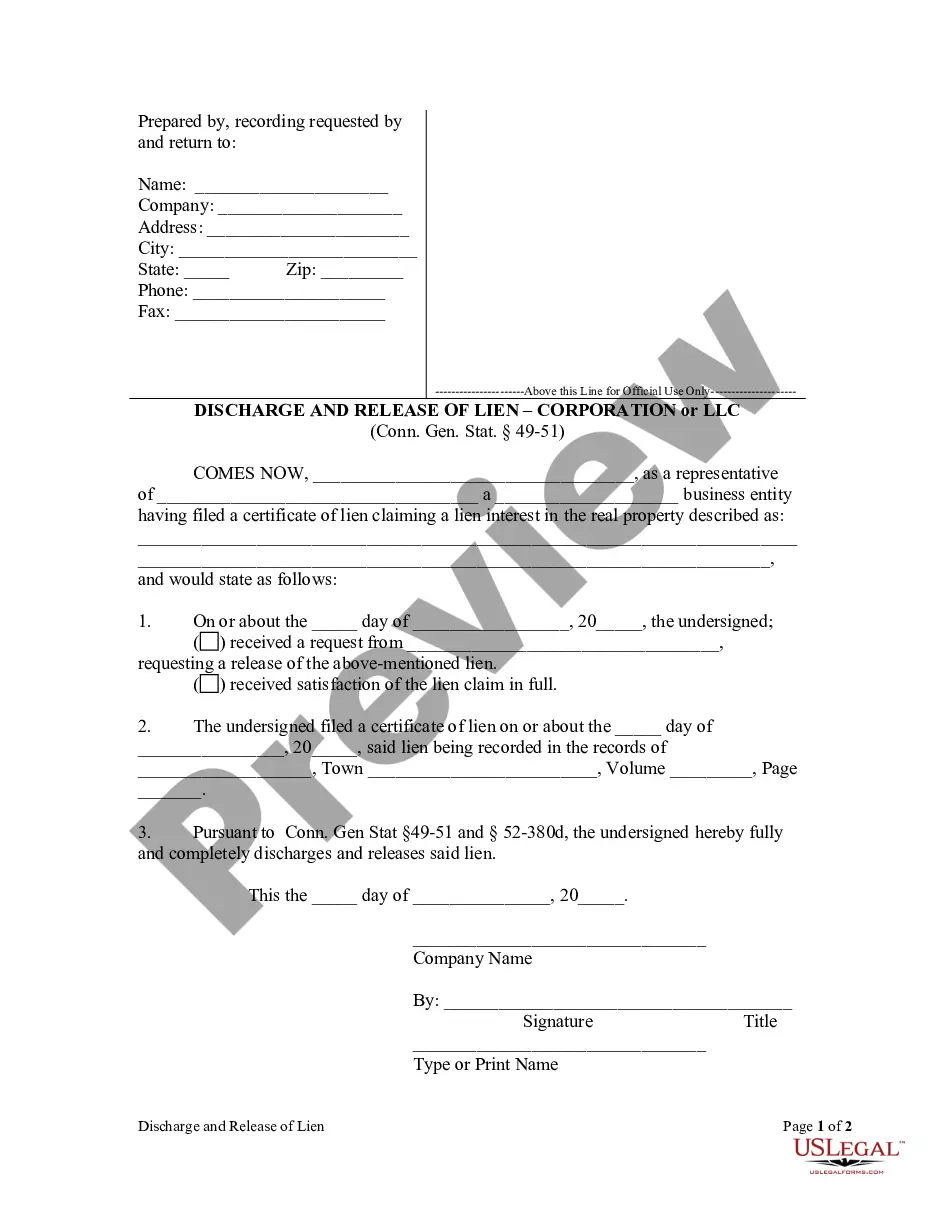
The Discharge and Release of Lien by Corporation or LLC is a legal document used to formally release a lien that has been placed on a property. This form is essential when a lien is found to be invalid or is no longer applicable. It differs from similar forms by specifically addressing the discharge of liens put in place by corporations or limited liability companies (LLCs) under Connecticut law.
Main sections of this form
- Name and information of the business entity discharging the lien.
- Details of the lien being discharged, including the date it was filed and where it is recorded.
- A declaration that the lien has been satisfied or a request for release has been received.
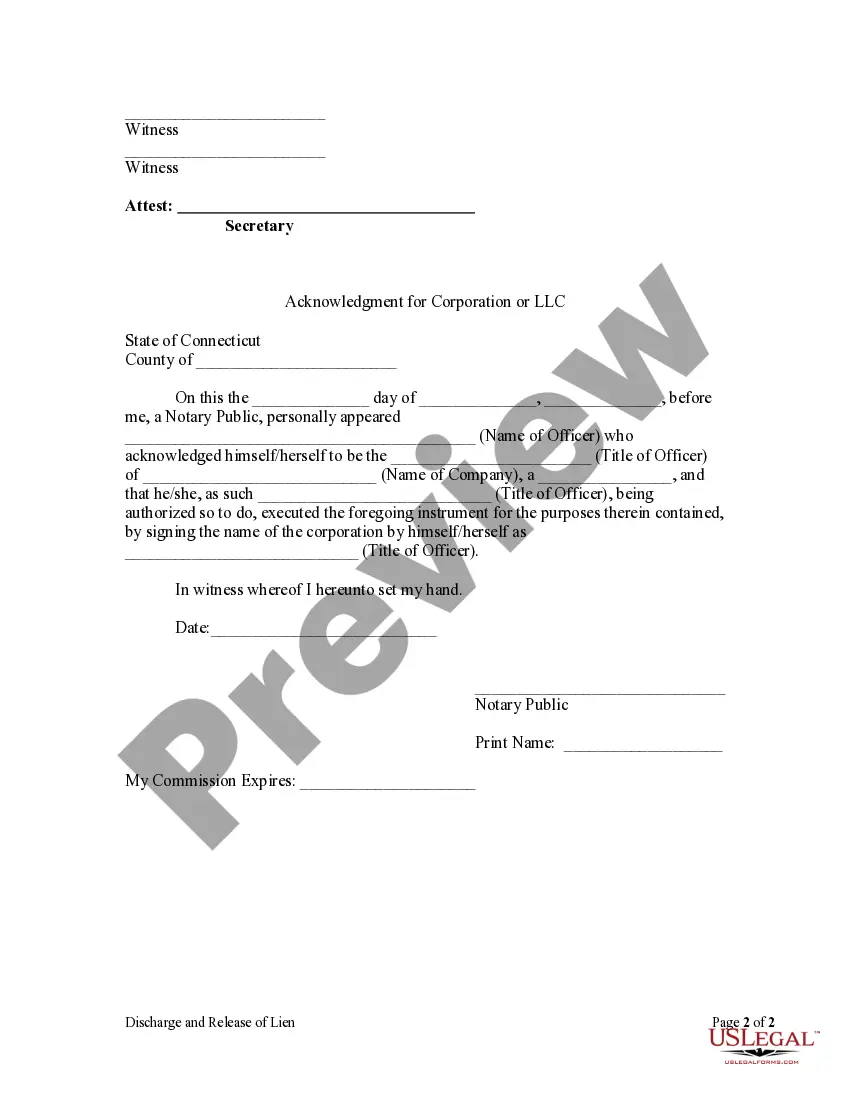
- Signatures from authorized representatives, including a witness and notarization section.
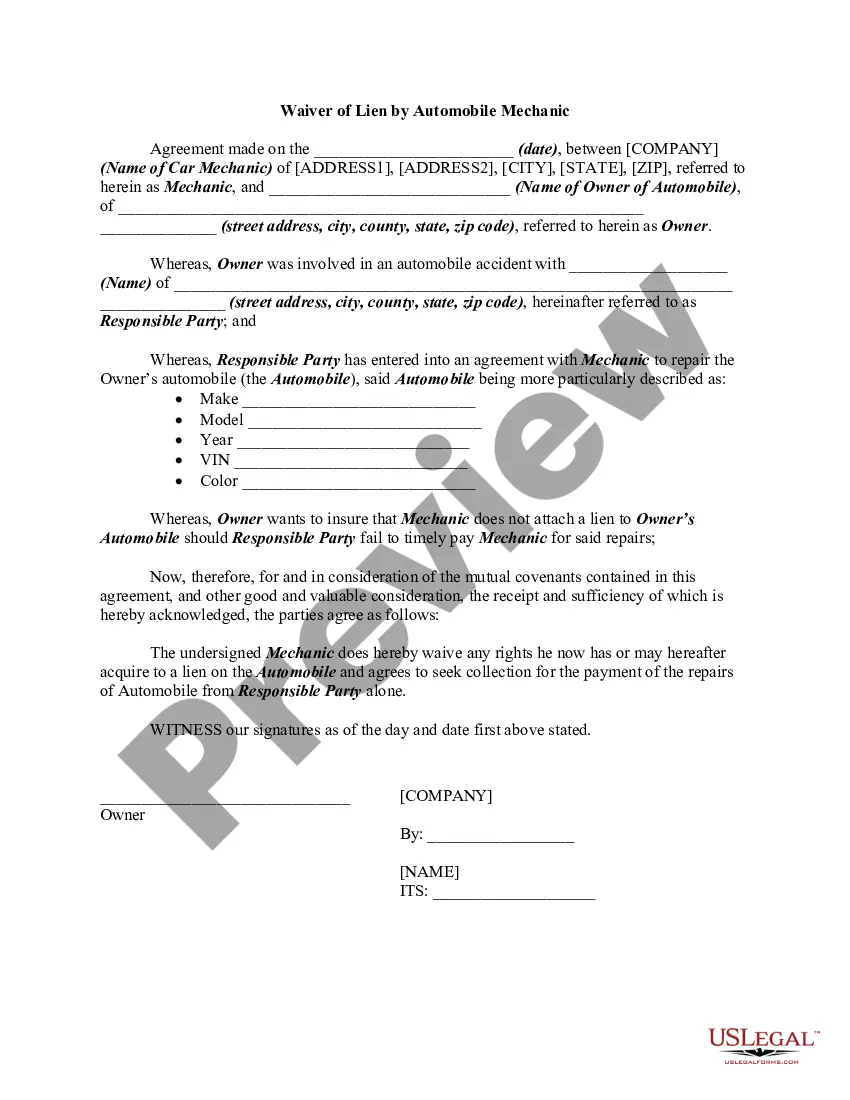
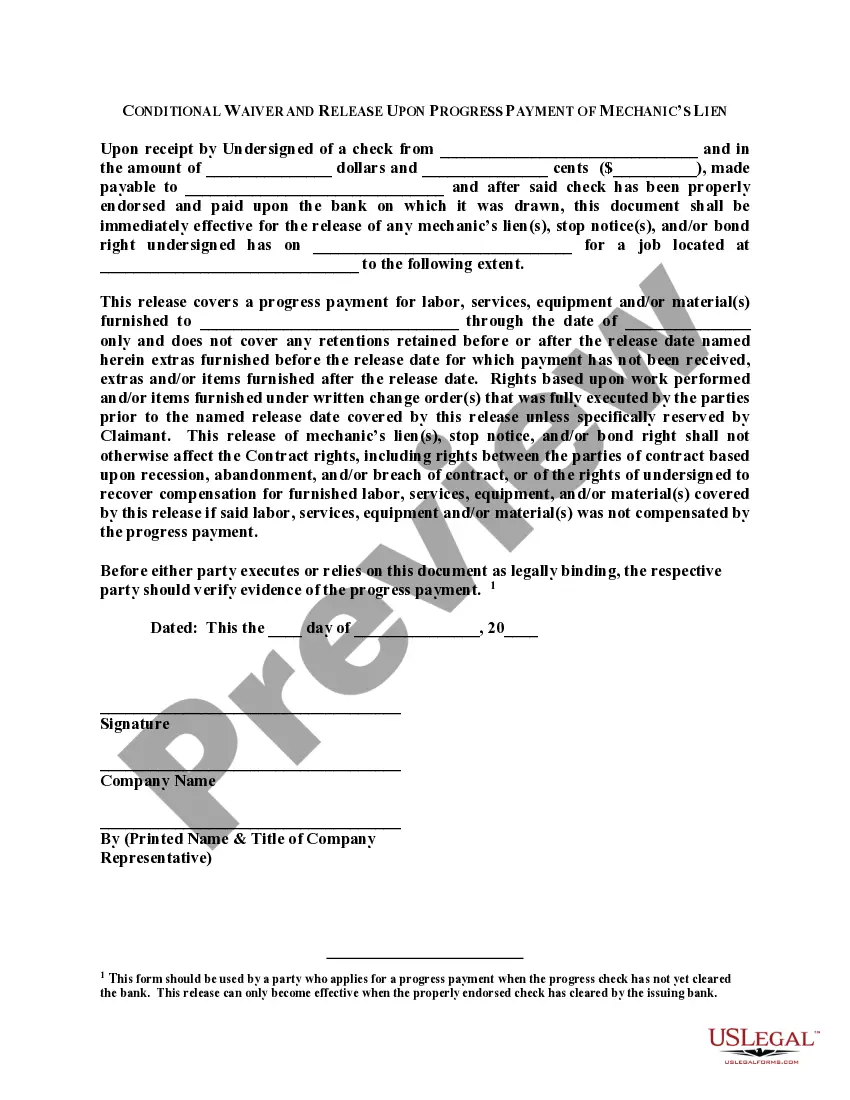
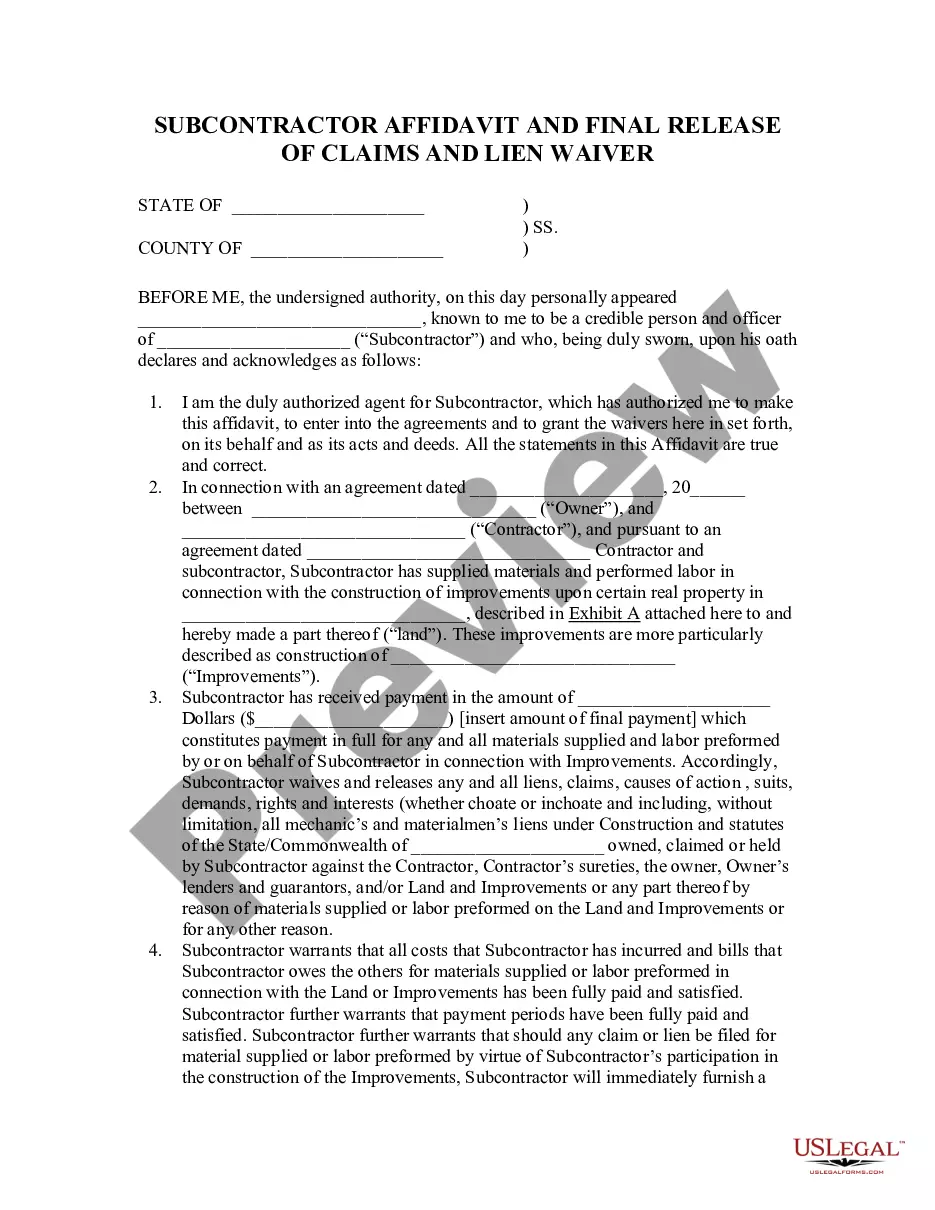
When this form is needed
This form should be used when a corporation or LLC has placed a lien on real property, but the lien is no longer valid or the debt has been satisfied. It is particularly relevant in situations where a lienholder has failed to act upon a demand for discharge of an invalid lien within thirty days, making it necessary for the property owner to assert their rights legally.
Who this form is for
- Corporations and LLCs that have filed a lien against a property.
- Property owners looking to clear a lien that has been deemed invalid.
- Individuals or entities who have received a lien discharge request and wish to comply.
How to prepare this document
- Identify the corporation or LLC name and complete the contact information fields.
- Describe the real property that is subject to the lien.
- Fill in the date when the lien was originally filed and where it is recorded.
- State whether a request for release was received and if the lien was satisfied in full.
- Obtain signatures from the authorized representative(s) and a witness.
- Ensure the form is notarized to meet legal requirements.
Does this document require notarization?
Notarization is required for this form to take effect. Our online notarization service, powered by Notarize, lets you verify and sign documents remotely through an encrypted video session, available 24/7.
Get your form ready online
Our built-in tools help you complete, sign, share, and store your documents in one place.
Make edits, fill in missing information, and update formatting in US Legal Forms—just like you would in MS Word.
Download a copy, print it, send it by email, or mail it via USPS—whatever works best for your next step.
Sign and collect signatures with our SignNow integration. Send to multiple recipients, set reminders, and more. Go Premium to unlock E-Sign.
If this form requires notarization, complete it online through a secure video call—no need to meet a notary in person or wait for an appointment.
We protect your documents and personal data by following strict security and privacy standards.

Make edits, fill in missing information, and update formatting in US Legal Forms—just like you would in MS Word.

Download a copy, print it, send it by email, or mail it via USPS—whatever works best for your next step.

Sign and collect signatures with our SignNow integration. Send to multiple recipients, set reminders, and more. Go Premium to unlock E-Sign.

If this form requires notarization, complete it online through a secure video call—no need to meet a notary in person or wait for an appointment.

We protect your documents and personal data by following strict security and privacy standards.
Common mistakes
- Failing to include all necessary parties in the signature section.
- Omitting the date of the original lien filing or its recording details.
- Not having the document notarized when required.
Why complete this form online
- Convenient access allows for easy filling and downloading at any time.
- Editable fields make customization quick and straightforward.
- Reliability, as the form is drafted by licensed attorneys to ensure compliance with legal standards.
Looking for another form?
Form popularity
FAQ
To file a lien in Connecticut, you first need to prepare a lien form that includes basic information about the property and the debtor. You will then file this form with the town clerk or local land records office in the area where the property is located. Keep in mind that understanding the process of Connecticut Discharge and Release of Lien by Corporation or LLC can be helpful for businesses. If you need assistance, consider using the US Legal Forms platform to access the necessary forms and guidance.
Creating a release of lien involves drafting a document that specifies the lien details and certifies its removal. It's essential to include accurate information such as the lien amount and the relevant parties. For a smooth experience, refer to the resources available through USLegalForms, which can guide you in preparing a Connecticut Discharge and Release of Lien by Corporation or LLC according to the law.
You can obtain a lien release form through local government offices or online resources that provide legal documents. It’s advisable to use platforms like USLegalForms, where you can find a reliable Connecticut Discharge and Release of Lien by Corporation or LLC form tailored to meet state requirements. This ensures you get the correct template and guidance for your needs.
Filling out a lien affidavit requires careful attention to detail. You will need to provide specific information about the lien, including the parties involved, the amount owed, and the property description. Using the Connecticut Discharge and Release of Lien by Corporation or LLC guidelines can help streamline this process, ensuring you complete the affidavit accurately.
A lien release statement is a legal document that confirms a lien has been removed from a property. This statement is crucial for property owners or businesses in Connecticut, as it officially clears any claims against their asset. Understanding the Connecticut Discharge and Release of Lien by Corporation or LLC is important to ensure the document meets all legal requirements.
To file a lien against a corporation in Connecticut, you need to prepare the lien document, ensuring it complies with state laws. Include the corporation's name, address, and details related to the debt. Once ready, file the lien at the appropriate county clerk’s office. Using services from US Legal Forms can streamline the creation and filing of your lien, making the process more manageable.
Filing a lawsuit against a corporation in Connecticut begins with drafting a complaint that outlines your claims. You must file this document with the appropriate court and serve it to the corporation. It's crucial to adhere to specific legal procedures and deadlines. Platforms like US Legal Forms can provide resources and templates to simplify the filing process.
To enforce a judgment against a corporation in Connecticut, you can initiate collection procedures such as garnishment or seizing assets. Your judgment must be properly recorded, and you may need to file additional documents to enforce it effectively. It's advisable to consult legal experts if you encounter challenges. They can also assist in understanding the Connecticut Discharge and Release of Lien by Corporation or LLC if needed.
In Connecticut, a lien generally remains in effect for five years from the date it was filed. However, if the lien is not enforced within that time, it may be subject to discharge. It's essential to monitor the status of your lien, especially if you are looking into a Connecticut Discharge and Release of Lien by Corporation or LLC. Consulting with an attorney can provide clarity on specific situations.
To create a lien release in Connecticut, you must prepare a formal document stating the intention to discharge the lien. Ensure you include relevant details such as the property description and the lienholder's information. After you complete the document, file it with the appropriate registry of deeds. Utilizing platforms like US Legal Forms can help streamline this process with their easy-to-use templates.