Connecticut Warranty Deed from Husband and Wife to an Individual
About this form
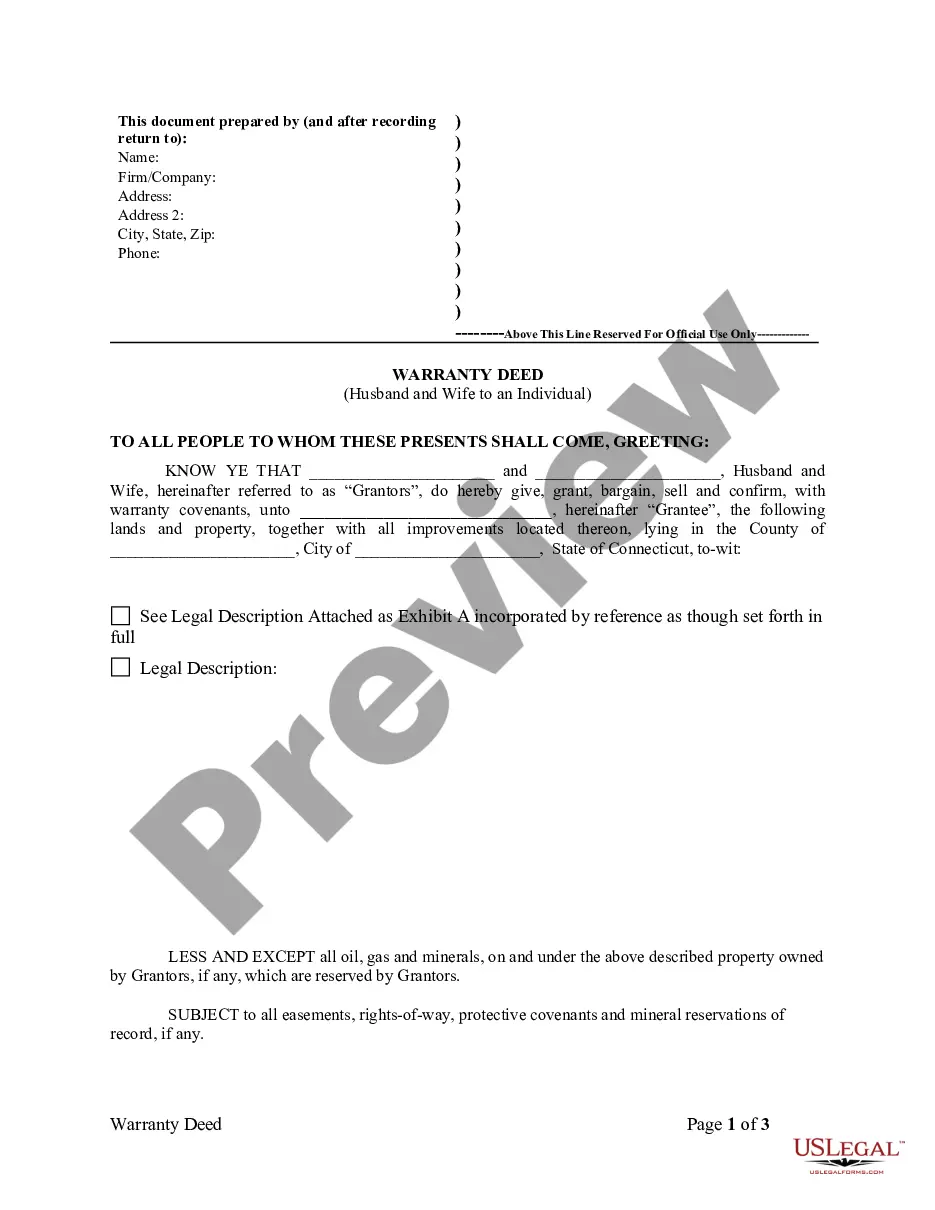
The Warranty Deed from Husband and Wife to an Individual is a legal document used to transfer property ownership from a married couple (grantors) to a single individual (grantee). This form guarantees that the grantors hold clear title to the property, free from any encumbrances, except those specifically noted. It is distinct from other property transfer forms as it specifically outlines the conveyance by a married couple, ensuring legal protections for the grantee.
Key components of this form
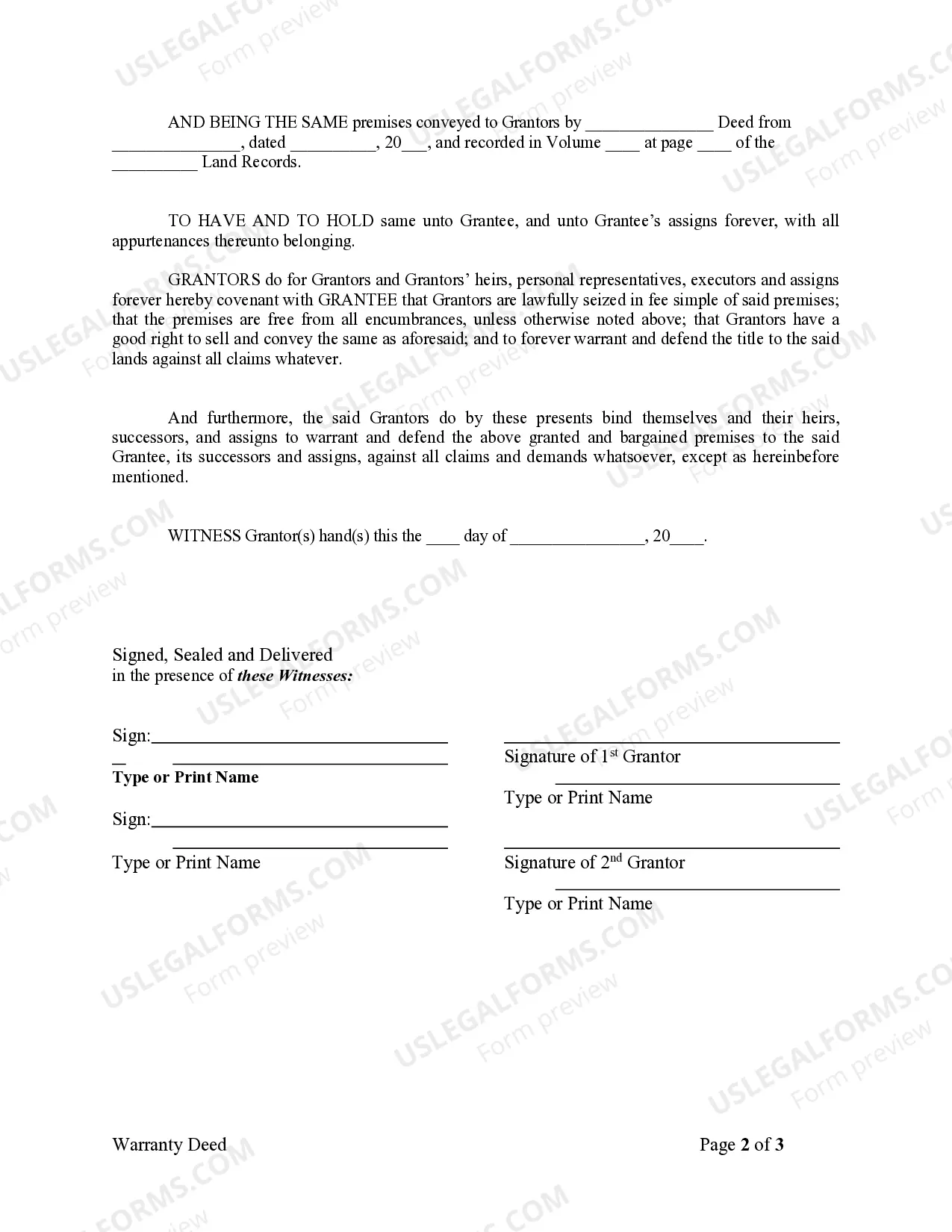
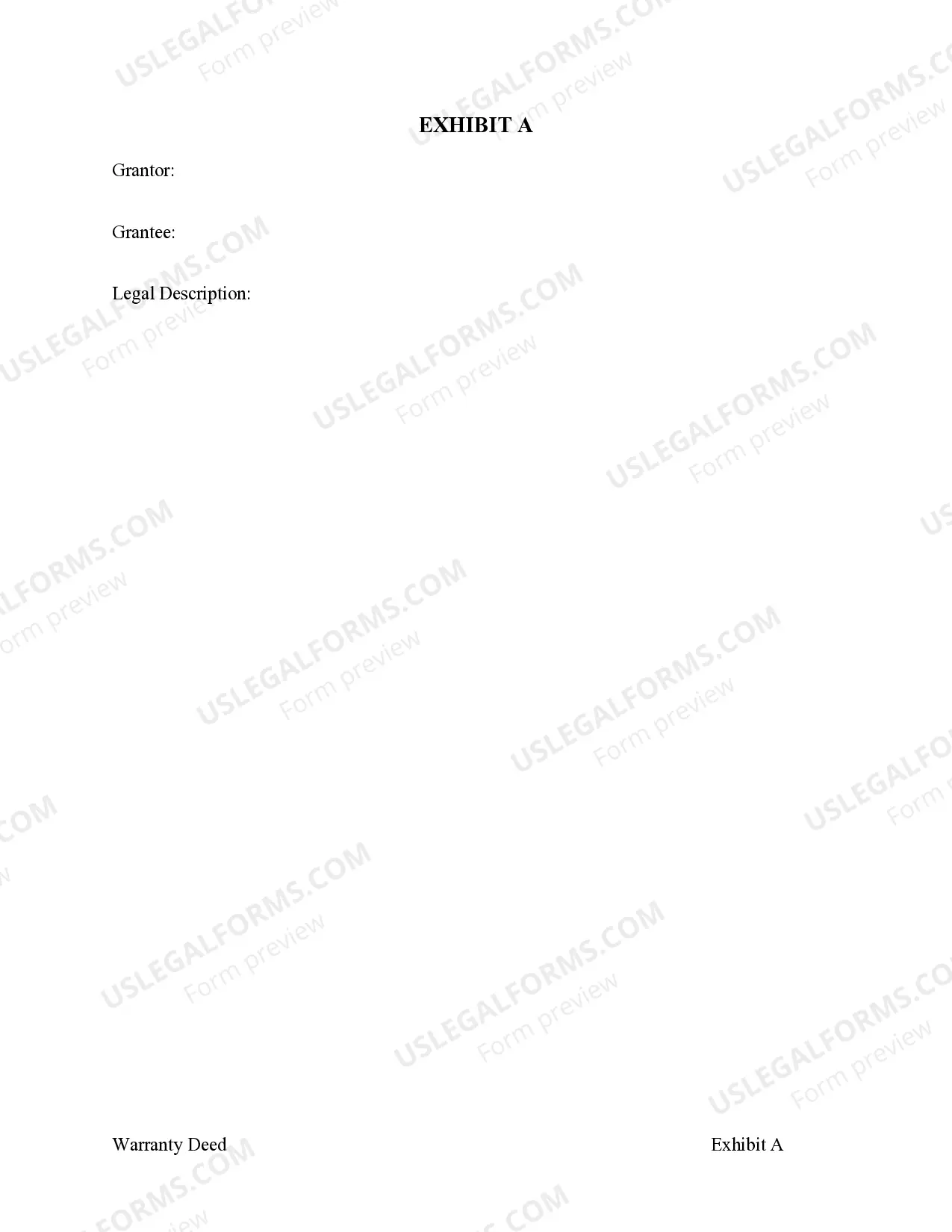
- Grantors' names and signature lines.
- Grantee's name and receiving signature line.
- Property description including any easements or reservations.
- Warranty clause, ensuring clear title and freedom from encumbrances.
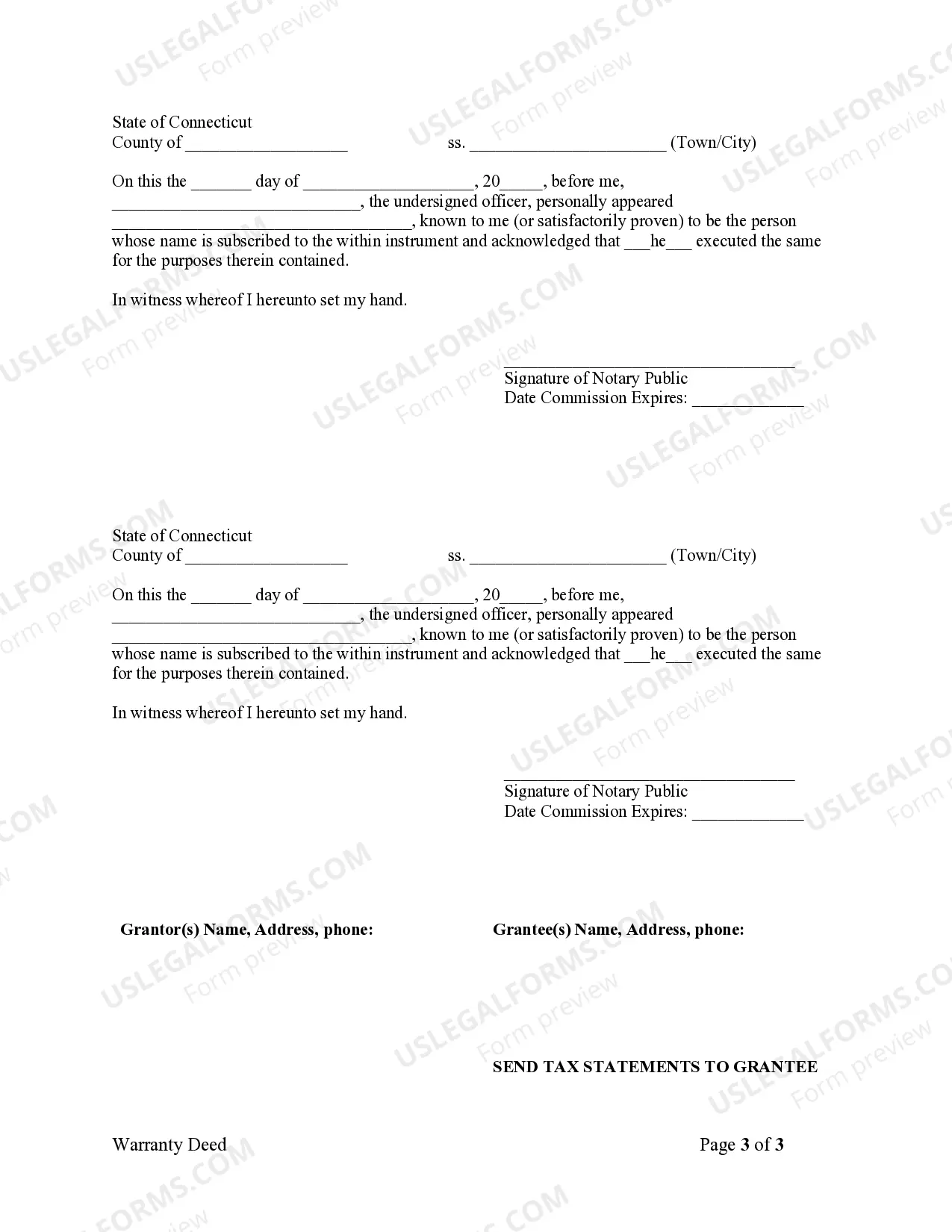
- Notary acknowledgment section.






When to use this document
This form is used when a married couple wishes to transfer ownership of their property to an individual. Situations may include gifting property to a child, selling property to a friend, or facilitating a property division during a marital separation or divorce, while ensuring the transaction is legally secure.
Who should use this form
- Married couples who own property together.
- Individuals receiving property from married grantors.
- Legal representatives handling property transfers on behalf of marriage partners.
How to prepare this document
- Identify the parties involved, including the full names of the husband and wife as grantors and the individual as grantee.
- Provide a detailed description of the property being transferred.
- Specify any easements, rights-of-way, or mineral rights that may apply.
- Complete the date and signature lines for the grantors and witnesses.
- Have the deed notarized to ensure legal validity.
Notarization requirements for this form
Yes, this form must be notarized to be legally valid. Notarization helps verify the identities of the individuals involved and ensures that the document is executed correctly. US Legal Forms offers integrated online notarization services, enabling you to complete this step securely and conveniently without leaving your home.
Get your form ready online
Our built-in tools help you complete, sign, share, and store your documents in one place.
Make edits, fill in missing information, and update formatting in US Legal Forms—just like you would in MS Word.
Download a copy, print it, send it by email, or mail it via USPS—whatever works best for your next step.
Sign and collect signatures with our SignNow integration. Send to multiple recipients, set reminders, and more. Go Premium to unlock E-Sign.
If this form requires notarization, complete it online through a secure video call—no need to meet a notary in person or wait for an appointment.
We protect your documents and personal data by following strict security and privacy standards.

Make edits, fill in missing information, and update formatting in US Legal Forms—just like you would in MS Word.

Download a copy, print it, send it by email, or mail it via USPS—whatever works best for your next step.

Sign and collect signatures with our SignNow integration. Send to multiple recipients, set reminders, and more. Go Premium to unlock E-Sign.

If this form requires notarization, complete it online through a secure video call—no need to meet a notary in person or wait for an appointment.

We protect your documents and personal data by following strict security and privacy standards.
Mistakes to watch out for
- Omitting necessary information about the property description.
- Failing to properly identify the grantee.
- Leaving out required signatures or notarization.
- Not mentioning any existing encumbrances or reservations.
Benefits of using this form online
- Convenience of downloading and completing the form at your own pace.
- Editability allows for easy updates and adjustments before finalizing.
- Access to attorney-drafted legal forms ensures reliability and compliance with legal standards.
Looking for another form?




Form popularity
FAQ
To transfer ownership from husband to wife, you can create a new warranty deed that specifies the change. Utilizing a Connecticut Warranty Deed from Husband and Wife to an Individual ensures that the transfer is clear and legally recognized. Remember to file the deed with the appropriate local office to finalize the transfer.
Transferring a warranty deed involves drafting a new deed that reflects the change in ownership. A Connecticut Warranty Deed from Husband and Wife to an Individual can facilitate this process effectively. After completing the new deed, you must file it with the local land records office to record the transfer.
The best way to transfer property to a family member is typically through a gift deed or warranty deed. A Connecticut Warranty Deed from Husband and Wife to an Individual is an effective choice, as it clearly outlines the transfer of ownership and protects both parties' interests. Also, be aware of any tax implications that may arise from the transfer.
Transferring your home warranty to a new owner usually involves contacting your warranty provider. They will guide you through the necessary steps. If you also intend to transfer ownership of the property, consider filing a Connecticut Warranty Deed from Husband and Wife to an Individual to formalize the change of ownership.
Yes, a warranty deed can indeed be transferred from one owner to another. A Connecticut Warranty Deed from Husband and Wife to an Individual must be properly drafted and executed to ensure legal validity. This process can help clarify ownership and protect the rights of all parties involved.
To add your wife to your warranty deed, you should create a new deed that indicates joint ownership. Using a Connecticut Warranty Deed from Husband and Wife to an Individual is a suitable option for this situation. After preparing the document, file it with your local land records office to complete the process.
You can transfer a deed without an attorney, but it’s vital to ensure you complete all necessary legal documentation correctly. Using resources like uslegalforms can help you understand how to create a Connecticut Warranty Deed from Husband and Wife to an Individual appropriately. Just be mindful of local laws to avoid complications.
You can add a name to a warranty deed through a new deed filing. A Connecticut Warranty Deed from Husband and Wife to an Individual can facilitate this change smoothly. Make sure to file the new deed with the appropriate county office to make it legally binding.
Yes, two people can definitely be on a warranty deed. When you create a Connecticut Warranty Deed from Husband and Wife to an Individual, it allows for multiple names on the title, establishing joint ownership. This arrangement can offer benefits in terms of property rights and responsibilities.
To add your spouse to a warranty deed without refinancing, you generally need to create and file a new Connecticut Warranty Deed from Husband and Wife to an Individual. This document can effectively reflect both names on the title. Ensure that you comply with local regulations and possibly consult an attorney or use a service to guide you through the process.