Connecticut Warranty Deed from Corporation to Two Individuals
About this form
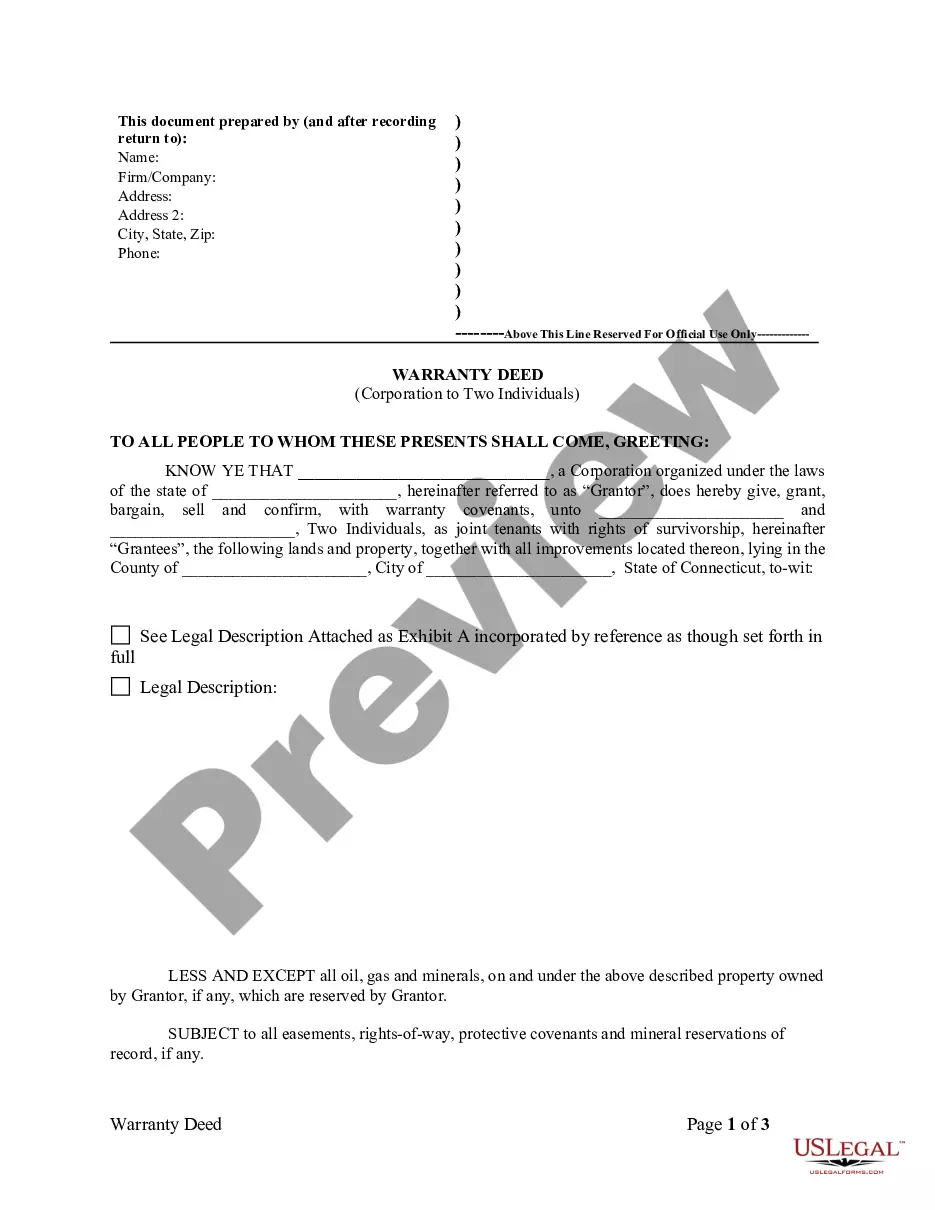
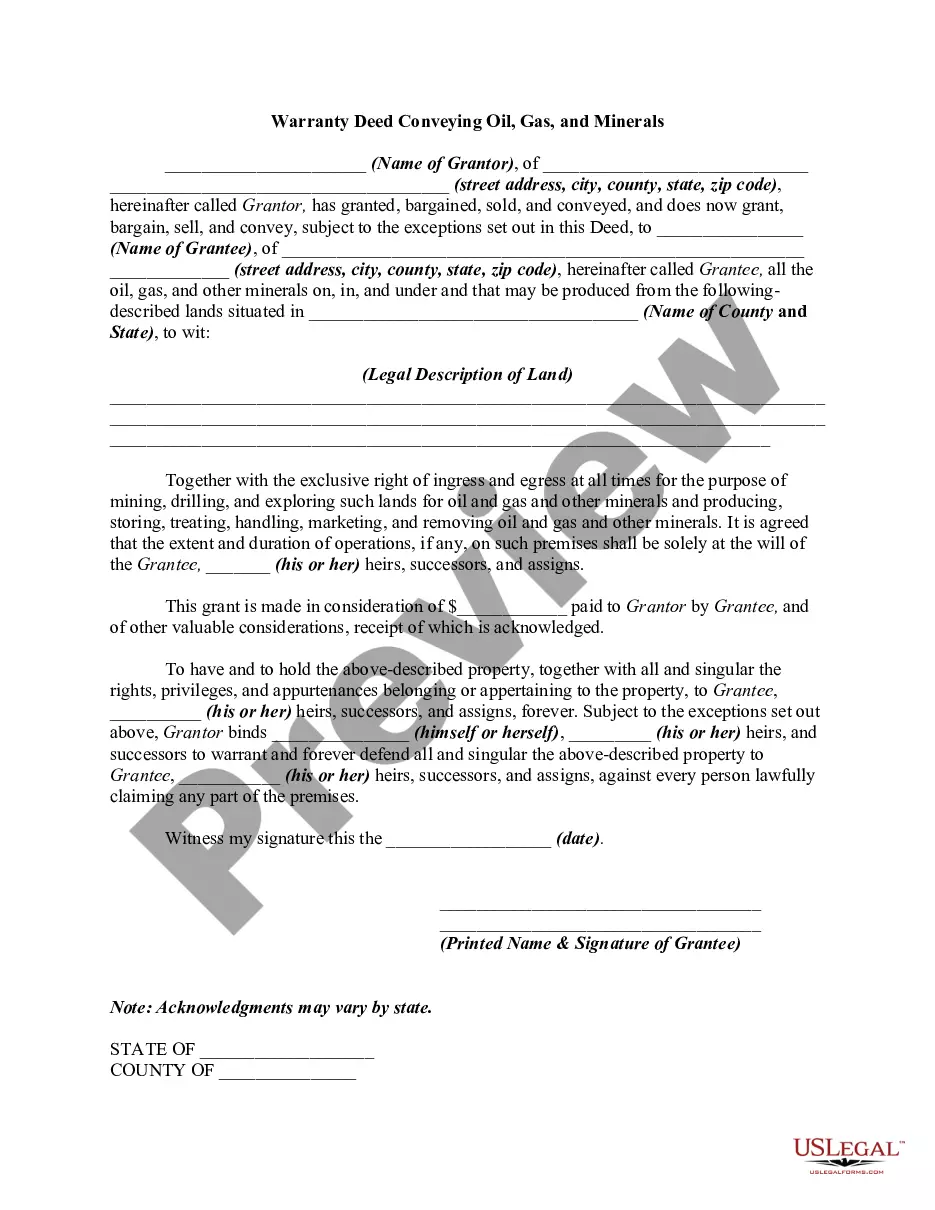
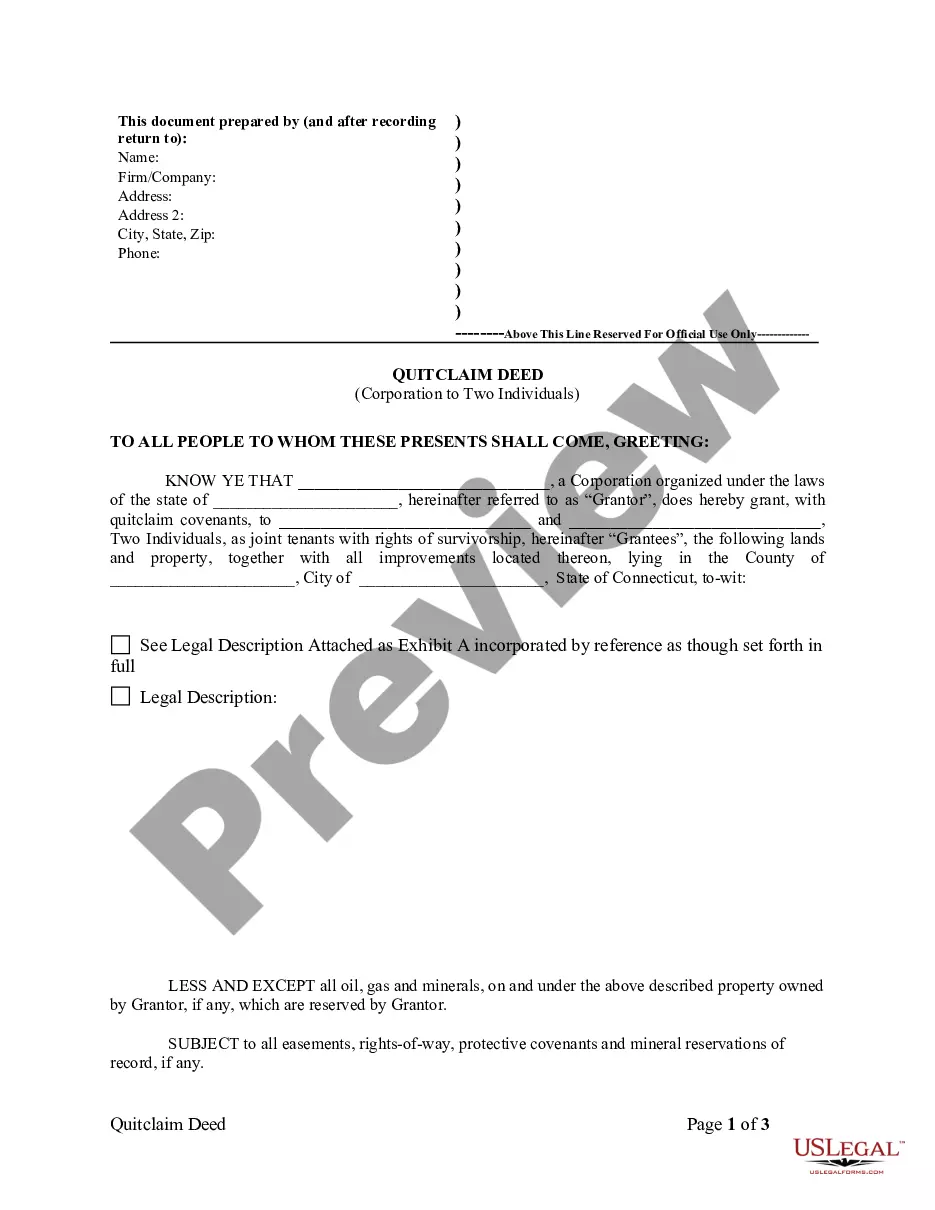
The Warranty Deed from Corporation to Two Individuals is a legal document that allows a corporate entity (the Grantor) to transfer property rights to two individuals (the Grantees). This deed provides a guarantee that the Grantor owns the property and has the right to sell it, ensuring that the property is encumbered only as specified. Unlike other deeds, this form specifically details the joint tenancy with rights of survivorship for the Grantees, making it suitable for individuals looking to co-own property together.
Main sections of this form
- Identification of the Grantor and Grantees, including the corporation and the two individuals.
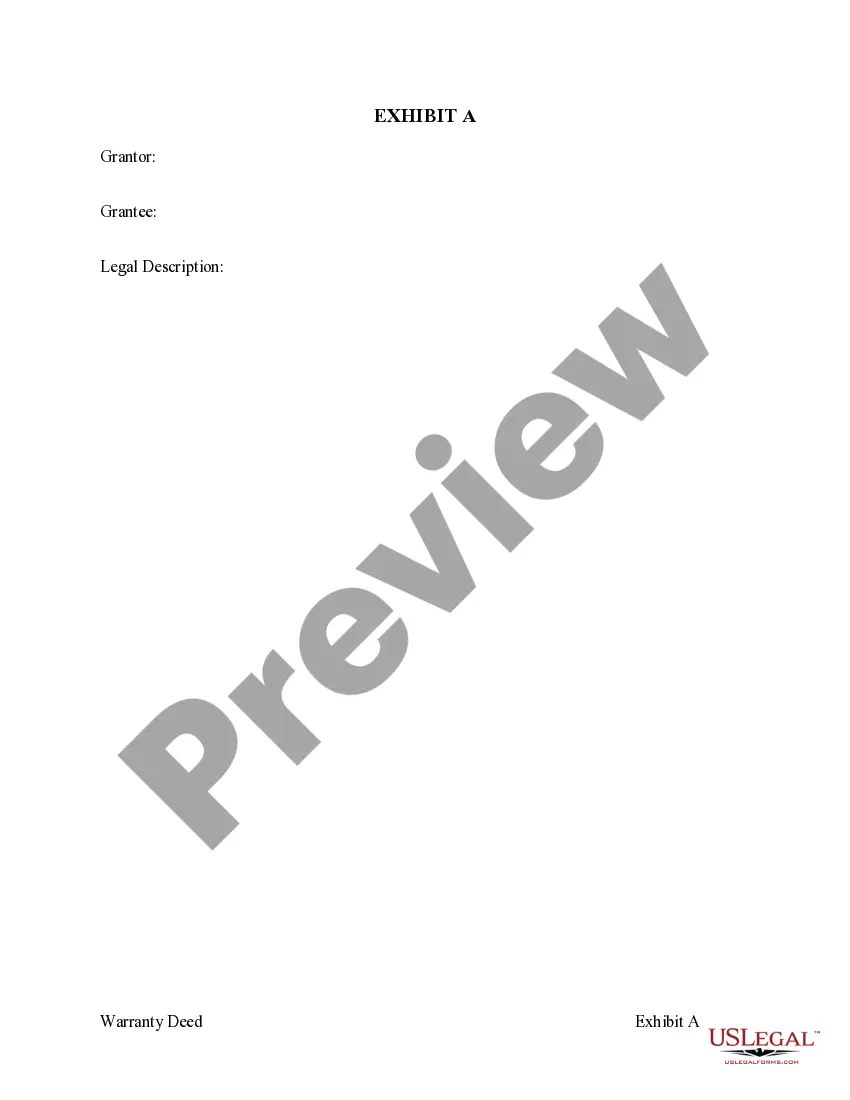
- Legal description of the property being conveyed, referenced in an attached exhibit.
- Clauses confirming that the Grantor has lawful ownership and rights to sell the property.
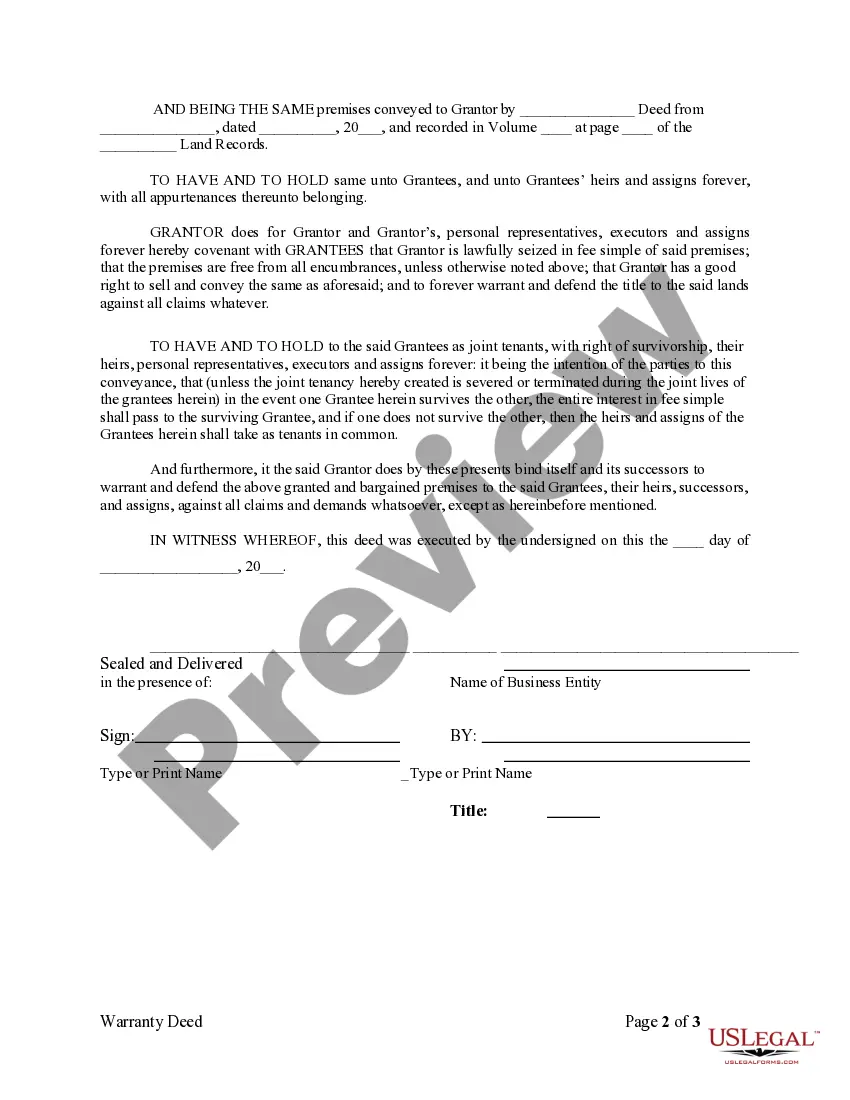
- Joint tenancy provisions that dictate inheritance rights for the Grantees.
- Warranties against encumbrances unless otherwise specified.
- Signature section for the Grantor to execute the deed.


When this form is needed
This warranty deed should be used when a corporation is transferring real estate property to two individuals who wish to hold the property together. It is ideal in situations where the individuals intend to share ownership and want the added benefit of survivorship, ensuring that if one owner passes away, the other automatically retains full ownership of the property. This form can also be useful in estate planning and transferring assets among family members or partners.
Who should use this form
- Corporations looking to convey property to two individual owners.
- Individuals wishing to co-own property as joint tenants with rights of survivorship.
- Real estate professionals assisting clients with property transfers.
- Estate planners managing asset transfers in a corporate context.
Steps to complete this form
- Identify and enter the full legal names of the Grantor corporation and the two Grantees.
- Provide a detailed legal description of the property, as outlined in Exhibit A.
- Include the date when the property was previously conveyed to the Grantor and reference that prior deed.
- Specify any encumbrances on the property, if applicable, and confirm the intended joint tenancy structure.
- Secure the signatures of the authorized representative of the corporation on the designated signature line.
Notarization guidance
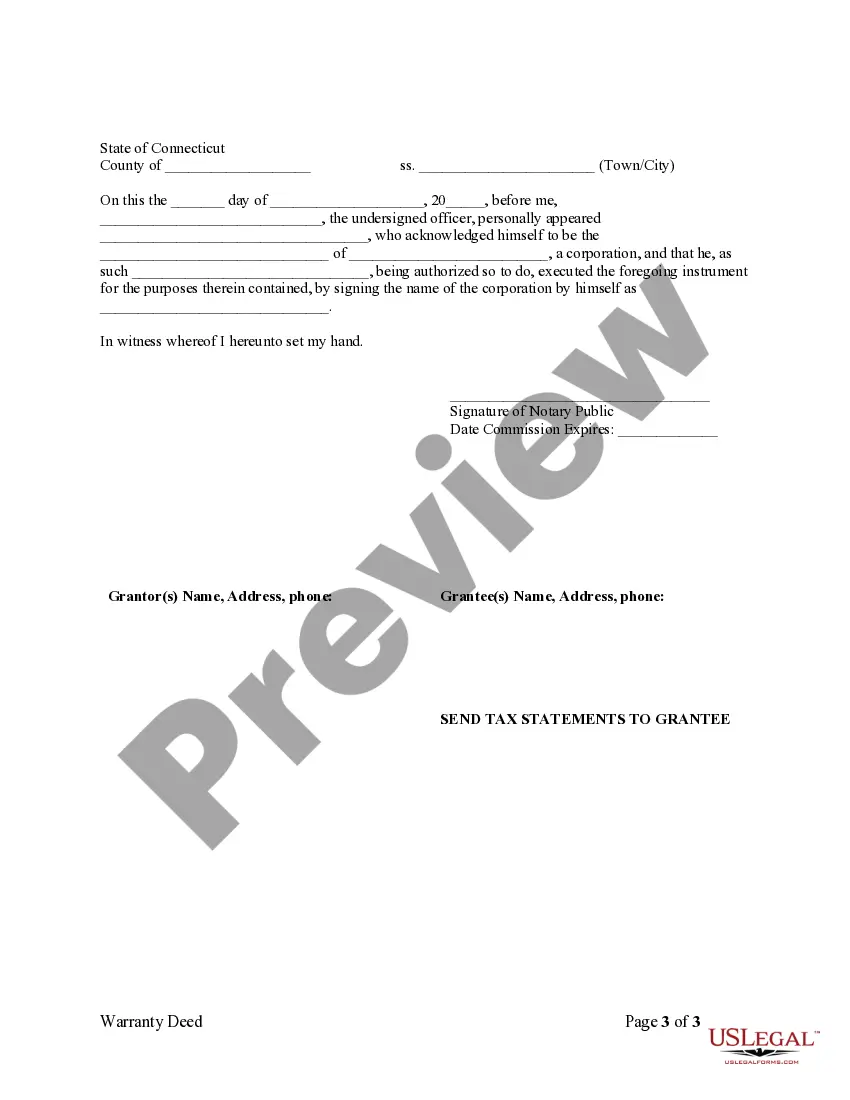
To make this form legally binding, it must be notarized. Our online notarization service, powered by Notarize, lets you verify and sign documents remotely through an encrypted video session.
Get your form ready online
Our built-in tools help you complete, sign, share, and store your documents in one place.
Make edits, fill in missing information, and update formatting in US Legal Forms—just like you would in MS Word.
Download a copy, print it, send it by email, or mail it via USPS—whatever works best for your next step.
Sign and collect signatures with our SignNow integration. Send to multiple recipients, set reminders, and more. Go Premium to unlock E-Sign.
If this form requires notarization, complete it online through a secure video call—no need to meet a notary in person or wait for an appointment.
We protect your documents and personal data by following strict security and privacy standards.

Make edits, fill in missing information, and update formatting in US Legal Forms—just like you would in MS Word.

Download a copy, print it, send it by email, or mail it via USPS—whatever works best for your next step.

Sign and collect signatures with our SignNow integration. Send to multiple recipients, set reminders, and more. Go Premium to unlock E-Sign.

If this form requires notarization, complete it online through a secure video call—no need to meet a notary in person or wait for an appointment.

We protect your documents and personal data by following strict security and privacy standards.
Common mistakes to avoid
- Failing to provide a complete legal description of the property.
- Neglecting to check for existing encumbrances on the property.
- Not including all required parties' signatures on the deed.
- Using incorrect or outdated forms that do not comply with current state laws.
Why complete this form online
- Convenience of accessing and completing the form from any location at any time.
- Editable format that allows users to input information quickly and efficiently.
- Reliability from using attorney-drafted templates ensuring legal compliance.
- Instant downloads available for quick use, avoiding waiting times.
What to keep in mind
- The Warranty Deed from Corporation to Two Individuals facilitates the transfer of property ownership from a corporation to two individuals.
- It ensures that the property is conveyed free of encumbrances, except as noted.
- Joint tenancy with rights of survivorship allows seamless transfer of ownership upon the death of one Grantee.
- Always review state-specific laws for compliance and requirements when using this form.
Looking for another form?
Form popularity
FAQ
Yes, two names can definitely be placed on a deed. When both individuals are named, they share ownership rights to the property. This is particularly relevant when executing a Connecticut Warranty Deed from Corporation to Two Individuals, as it formalizes the shared ownership agreement. Consider consulting USLegalForms for templates and guidance on this process.
A deed can include as many names as necessary, allowing multiple individuals to be co-owners of the property. Each person listed on the deed holds a legal interest in the property. When using a Connecticut Warranty Deed from Corporation to Two Individuals, consider discussing ownership percentages and responsibilities with all parties involved.
To file a quitclaim deed in Connecticut, you must complete the deed form accurately and have it signed and notarized. Then, you will need to file the deed with the town clerk in the town where the property is located. Utilizing a Connecticut Warranty Deed from Corporation to Two Individuals ensures that your filing adheres to the necessary legal standards, promoting a smooth transaction. Resources like USLegalForms can guide you through each step.
When two individuals are on the deed, they share ownership of the property. This joint ownership usually means that both parties must agree on decisions regarding the property. In situations involving a Connecticut Warranty Deed from Corporation to Two Individuals, it’s advisable to have a clear agreement between the co-owners to avoid future disputes.
Yes, you can complete a quitclaim deed yourself in Connecticut. However, it's crucial to ensure that you understand the legalities and requirements involved. A properly executed Connecticut Warranty Deed from Corporation to Two Individuals can simplify the transfer of property. Additionally, using a reliable platform like USLegalForms can make this process easier.
While a quit claim deed can be quick and simple, it carries notable risks that buyers should consider. With a quit claim deed, there are no warranties regarding the title; hence, the buyer may inherit outstanding liens or claims. This uncertainty can undermine the value of a property, especially when it comes to a Connecticut Warranty Deed from Corporation to Two Individuals. Therefore, opting for a warranty deed often proves to be a safer choice for buyers looking for security.
One disadvantage of a warranty deed is the potential for liability. If a title issue arises later, the grantor must address it because they have provided a guarantee of a clear title in a Connecticut Warranty Deed from Corporation to Two Individuals. This means the corporation must remedy the situation if any claims are found, which can incur additional costs.
To transfer a warranty deed in Connecticut, you must first complete the deed form, ensuring that all relevant information—including the names of the new owners—is accurate. After that, the current owner must sign the deed in the presence of a notary. Once signed, you should record the deed with the local town clerk to make the transfer official, securing the new owners' rights.
Yes, a warranty deed can list two people as property owners. In the case of a Connecticut Warranty Deed from Corporation to Two Individuals, both parties will have equal rights to the property. This arrangement allows for shared ownership, giving both individuals the legal backing to manage the property together.
Yes, you can add a name to a warranty deed, including a Connecticut Warranty Deed from Corporation to Two Individuals. To do this, the corporation, as the grantor, will need to execute a new deed that includes the additional party's name. This allows multiple individuals to hold interest in the property, ensuring that both parties are officially recognized as owners.