Connecticut Warranty Deed from Individual to Husband and Wife
About this form
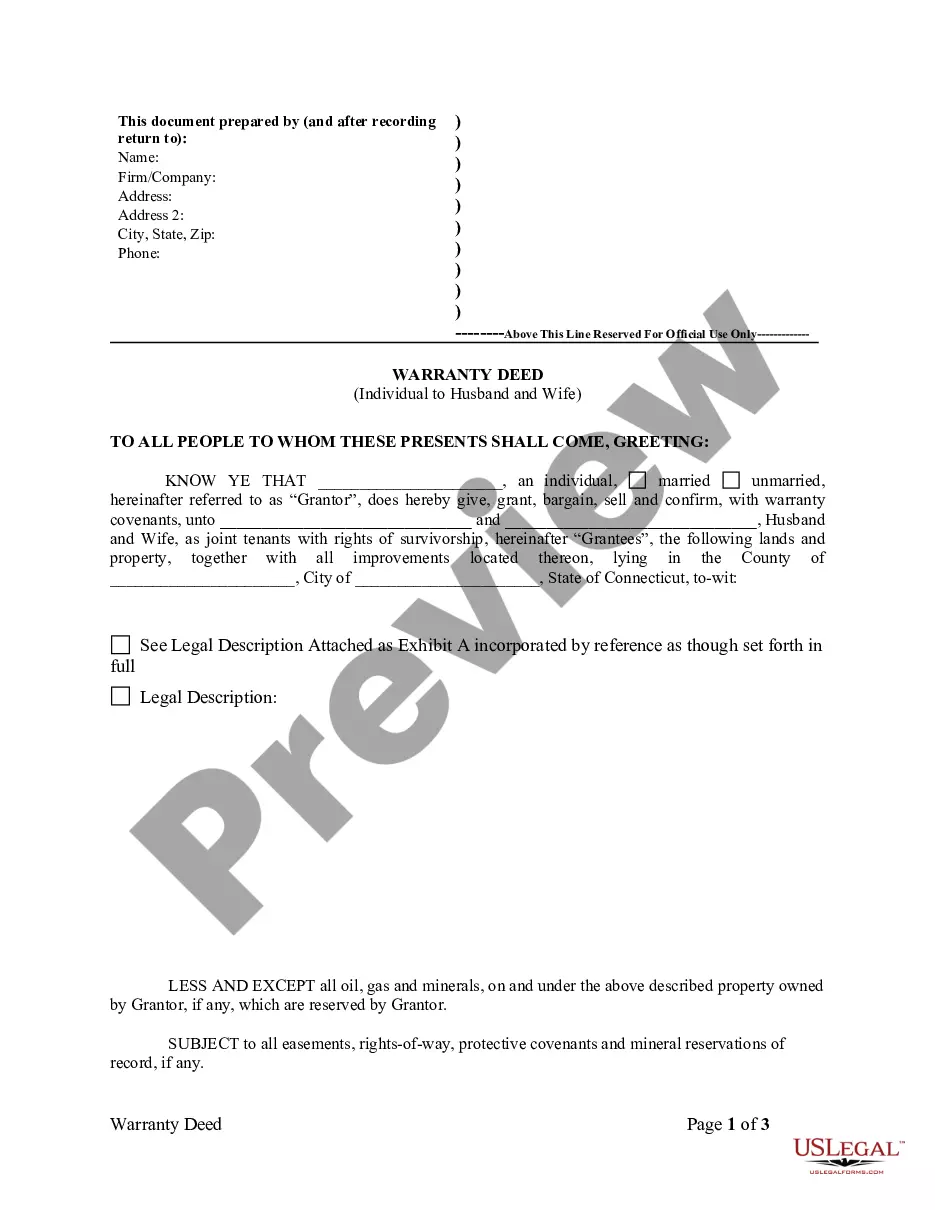
The Warranty Deed from Individual to Husband and Wife is a legal document that transfers ownership of real property from an individual (the Grantor) to a married couple (the Grantees). This type of warranty deed provides assurances about the title to the property, guaranteeing that the Grantor is legally permitted to convey the property and that it is free from encumbrances, except those specifically noted. It differs from other deeds, such as quitclaim deeds, by offering stronger protections to the Grantees regarding the title.
Key components of this form
- Legal description of the property being conveyed.
- Identifying information for the Grantor and Grantees.
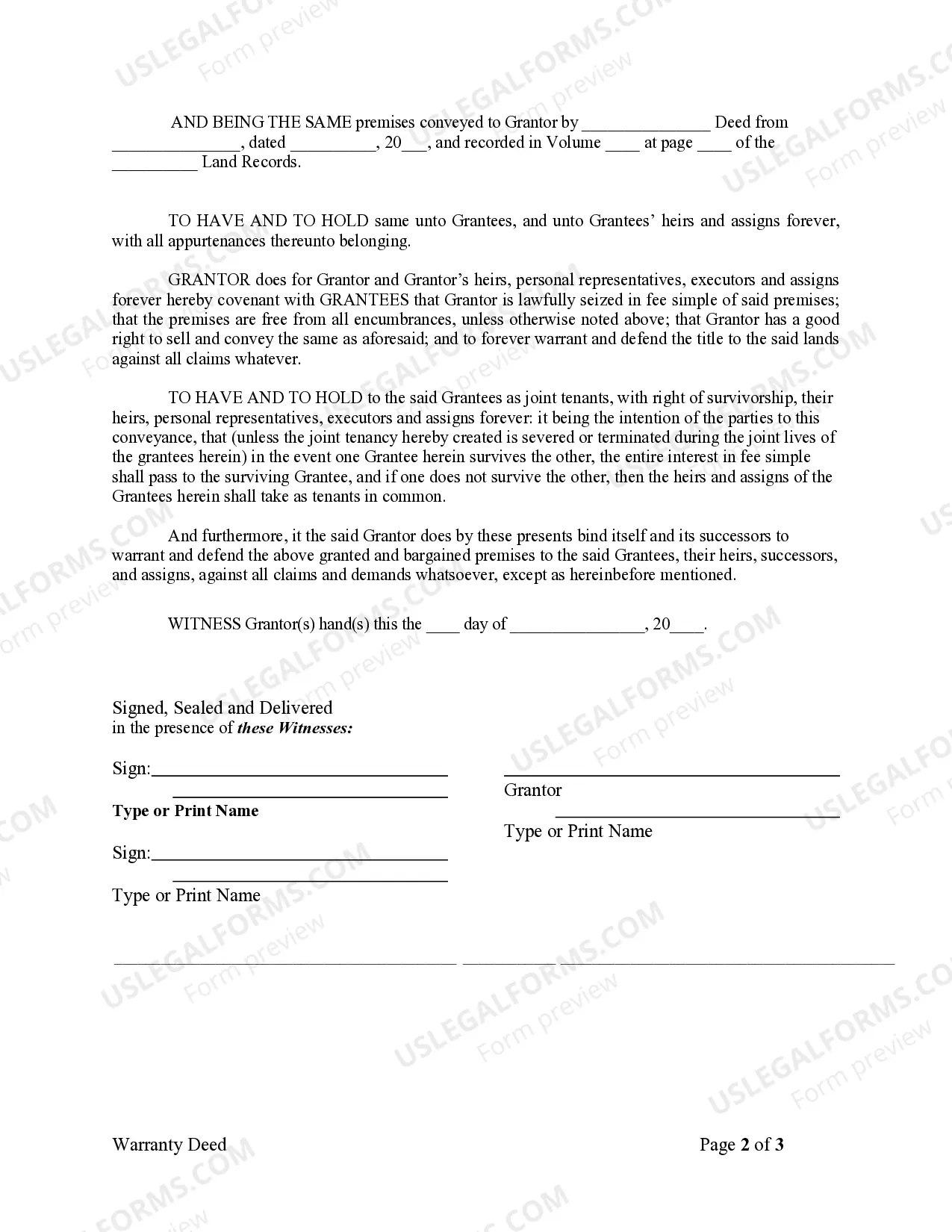
- Clauses regarding the warranty of the title, including assurances of clear ownership.
- Specification of the property transfer as joint tenants with rights of survivorship.
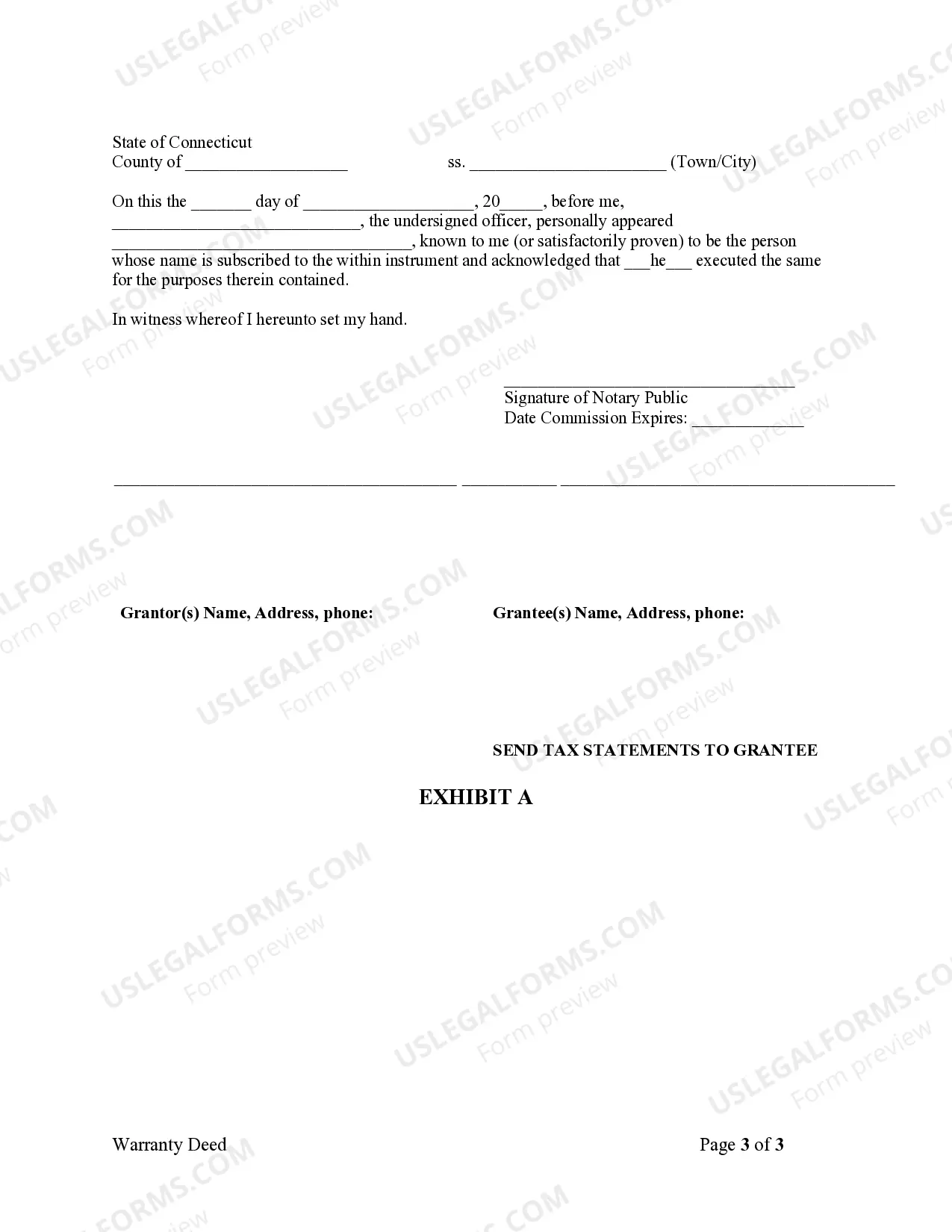
- Sections for signatures and notarization.



When to use this form
This form should be used when an individual wishes to legally transfer property ownership to themselves and their spouse. It is appropriate in situations such as marital property transfers, estate planning, or when consolidating property ownership for married couples. This deed ensures that both partners have equal rights to the property and outlines what happens to the property should one spouse pass away.
Who should use this form
This form is intended for the following users:
- Married individuals transferring property to themselves as a couple.
- Individuals involved in estate planning or property division during marriage.
- Real estate professionals assisting clients with property transfers to married couples.
Steps to complete this form
- Identify and enter the full names and addresses of the Grantor and Grantees.
- Provide a detailed legal description of the property being transferred.
- Enter any existing encumbrances on the property, if applicable.
- Specify the date of the deed and add signature lines for the Grantor and witnesses.
- Include a notary signature block where required.
Does this form need to be notarized?
This document requires notarization to meet legal standards. US Legal Forms provides secure online notarization powered by Notarize, allowing you to complete the process through a verified video call, available 24/7.
Get your form ready online
Our built-in tools help you complete, sign, share, and store your documents in one place.
Make edits, fill in missing information, and update formatting in US Legal Forms—just like you would in MS Word.
Download a copy, print it, send it by email, or mail it via USPS—whatever works best for your next step.
Sign and collect signatures with our SignNow integration. Send to multiple recipients, set reminders, and more. Go Premium to unlock E-Sign.
If this form requires notarization, complete it online through a secure video call—no need to meet a notary in person or wait for an appointment.
We protect your documents and personal data by following strict security and privacy standards.

Make edits, fill in missing information, and update formatting in US Legal Forms—just like you would in MS Word.

Download a copy, print it, send it by email, or mail it via USPS—whatever works best for your next step.

Sign and collect signatures with our SignNow integration. Send to multiple recipients, set reminders, and more. Go Premium to unlock E-Sign.

If this form requires notarization, complete it online through a secure video call—no need to meet a notary in person or wait for an appointment.

We protect your documents and personal data by following strict security and privacy standards.
Common mistakes
- Failing to include the complete legal description of the property.
- Not correctly noting any existing encumbrances or exceptions.
- Omitting signatures from witnesses or a notary.
- Incorrectly listing the names of the Grantees, which can affect ownership rights.
Why complete this form online
- Easy access to legal documents without the need for attorney visits.
- Ability to edit and customize forms according to individual needs.
- Secure and reliable downloading of forms, ensuring legal compliance.
Looking for another form?
Form popularity
FAQ
To fill out a Connecticut Warranty Deed from Individual to Husband and Wife, start by entering the names of the parties involved. Include the legal description of the property, which you can obtain from your local tax assessor's office or previous deeds. Ensure you sign the document in front of a notary public to make it legally binding. Lastly, file the completed warranty deed with your local county clerk's office to officially transfer ownership.
Typically, both parties should be present to transfer a title in New York. This is important to ensure that both parties agree to the terms of the deed and sign the document appropriately. If you are considering the transfer, it's advisable to consult our platform for assistance with handling a Connecticut Warranty Deed from Individual to Husband and Wife to ensure all legal requirements are met.
To add your wife to your warranty deed, you will need to draft a new deed that lists both you and your wife as joint owners. After preparing the document, sign it in front of notary and file it with your local land records office. This simple process secures your interests under a Connecticut Warranty Deed from Individual to Husband and Wife.
Transferring ownership from husband to wife typically requires executing a warranty deed that names the wife as the new owner. You will need to complete the deed, sign it, and then file it with the local recorder's office. This process is a key step in managing a Connecticut Warranty Deed from Individual to Husband and Wife, ensuring clear ownership without disputes.
Yes, two people can be on a warranty deed. In fact, adding a spouse to a warranty deed is a common practice, especially in Connecticut. This allows you both to hold joint ownership and helps clarify property rights, particularly when transferring a Connecticut Warranty Deed from Individual to Husband and Wife.
Yes, a warranty deed can be transferred. This process involves creating a new deed that conveys ownership from one party to another. When transferring a Connecticut Warranty Deed from Individual to Husband and Wife, it is essential to follow the local regulations to ensure a smooth transfer of property rights.
A warranty deed can be deemed invalid for several reasons. For example, if it is not properly signed, witnessed, or notarized, it may not hold up in court. Additionally, any misrepresentation of property boundaries can render a Connecticut Warranty Deed from Individual to Husband and Wife ineffective. To avoid these pitfalls, consider utilizing tools from uslegalforms for correct documentation and guidance.
When two people are on the deed, they typically hold ownership rights together. In the case of a Connecticut Warranty Deed from Individual to Husband and Wife, both parties can make decisions regarding the property, which can be beneficial for a couple. This arrangement can also facilitate smoother transactions when it comes time to sell or refinance. However, it’s crucial for both owners to communicate effectively to avoid conflicts.
Adding a name to a deed can lead to several disadvantages. For example, it may affect mortgage liability, as all owners become responsible for payments. Additionally, if the new co-owner faces legal issues, creditors could claim against the property. Therefore, weighing these potential risks carefully before signing a Connecticut Warranty Deed from Individual to Husband and Wife is important.
There is generally no strict limit on how many names can appear on a deed in Connecticut. However, when creating a Connecticut Warranty Deed from Individual to Husband and Wife, it's essential to consider the implications of shared ownership. More names mean more potential complexities in property management and decision-making. It's wise to ensure that all parties are in agreement about property use and obligations.