Colorado Last Will and Testament for Married person with Minor Children
Understanding this form
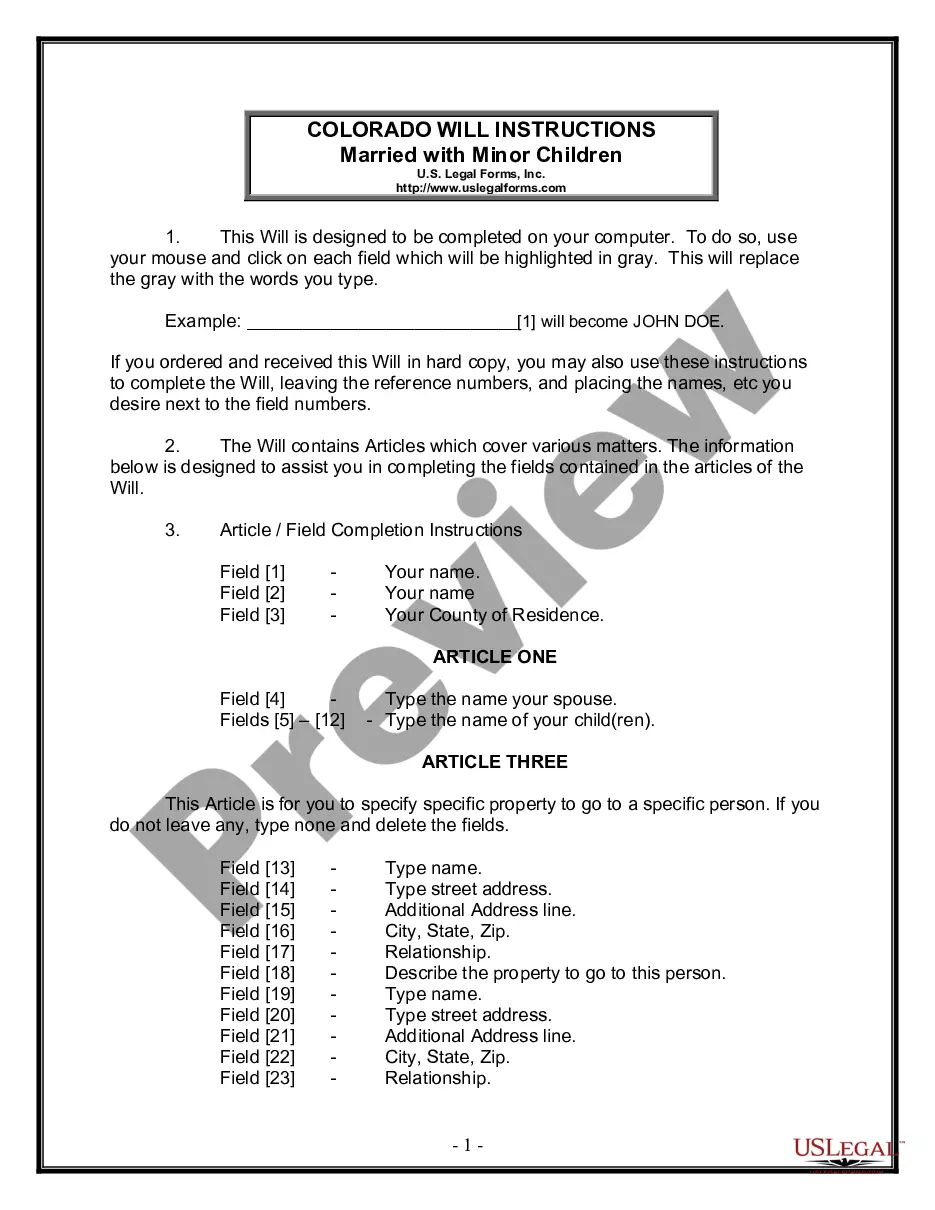
This Last Will and Testament for a married person with minor children is a legal document that expresses your wishes regarding property distribution and care for your children after your death. It appoints a personal representative to manage your estate, specifies who receives your assets, and contains provisions to protect your spouse and minor children. This type of will differs from a simple will by its inclusion of provisions specifically designed for families with minor children, such as establishing trusts for their care and support.
Key parts of this document
- Appointment of a personal representative to oversee your estate.
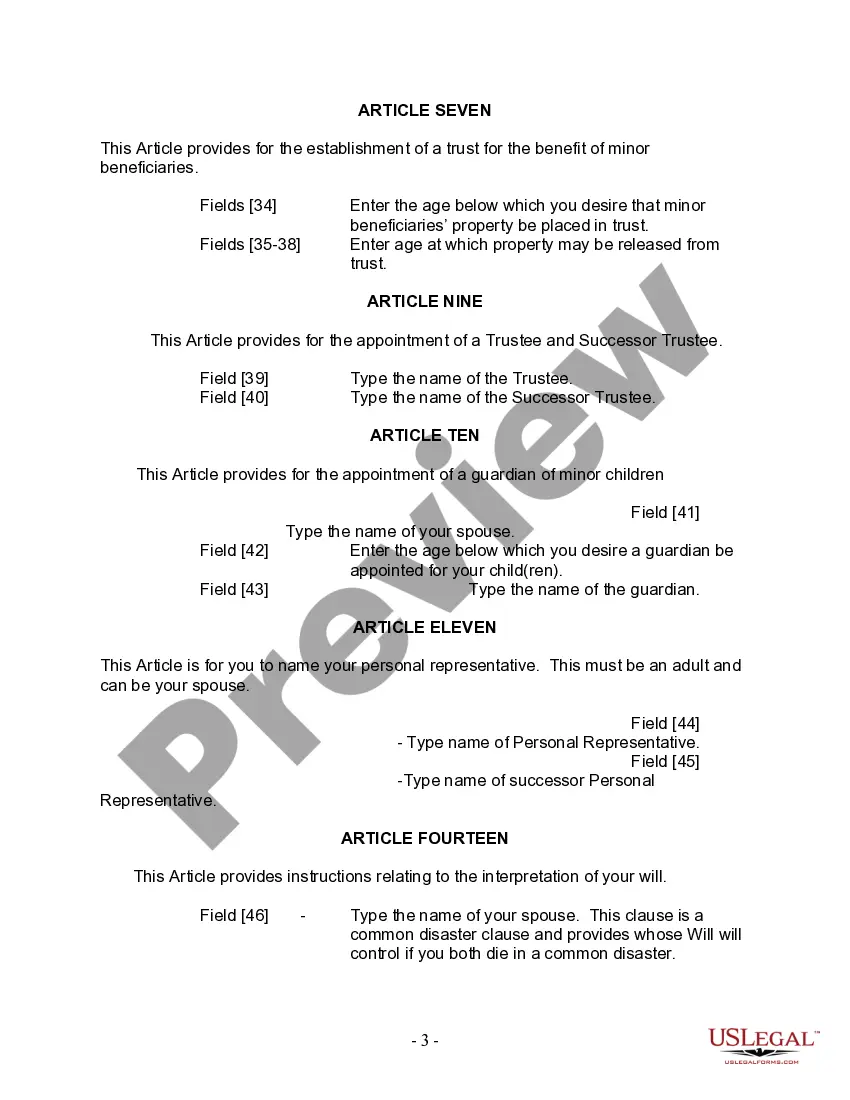
- Specification of property distribution among your spouse and children.
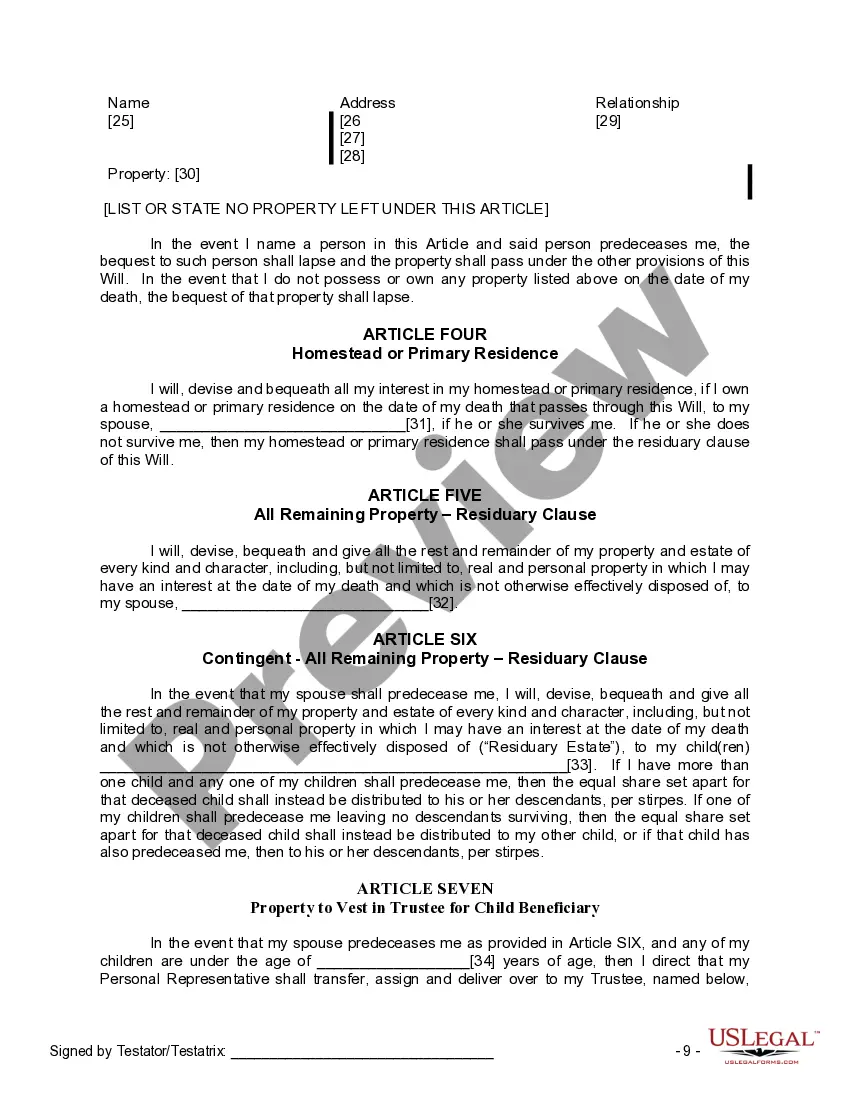
- Creation of a trust for the benefit of minor children.
- Designation of a guardian for your children in case of your passing.
- Instructions for the payment of debts and funeral expenses.
- Specific clauses for the management of the trust by a trustee.









When to use this document
This form should be used if you are a married individual with minor children and wish to outline your wishes for their care and financial support after your death. It is essential to have a will in place to ensure that your assets are distributed according to your wishes and that your children are cared for by a trusted guardian.
Who should use this form
This form is intended for:
- Married individuals with children under the age of majority.
- Anyone wanting to ensure their estate is handled according to their wishes.
- Individuals looking to establish trusts for the benefit of their minor children.
- Parents seeking to appoint guardians for their children in case of untimely death.
How to complete this form
- Identify yourself as the testator and provide your legal information, including your marital status.
- List your spouse's name and the names and birthdates of your minor children.
- Specify how your property will be distributed among your beneficiaries.
- Designate a personal representative and a trustee if minors are involved.
- Sign the will in the presence of two witnesses and a notary public if required.
Is notarization required?
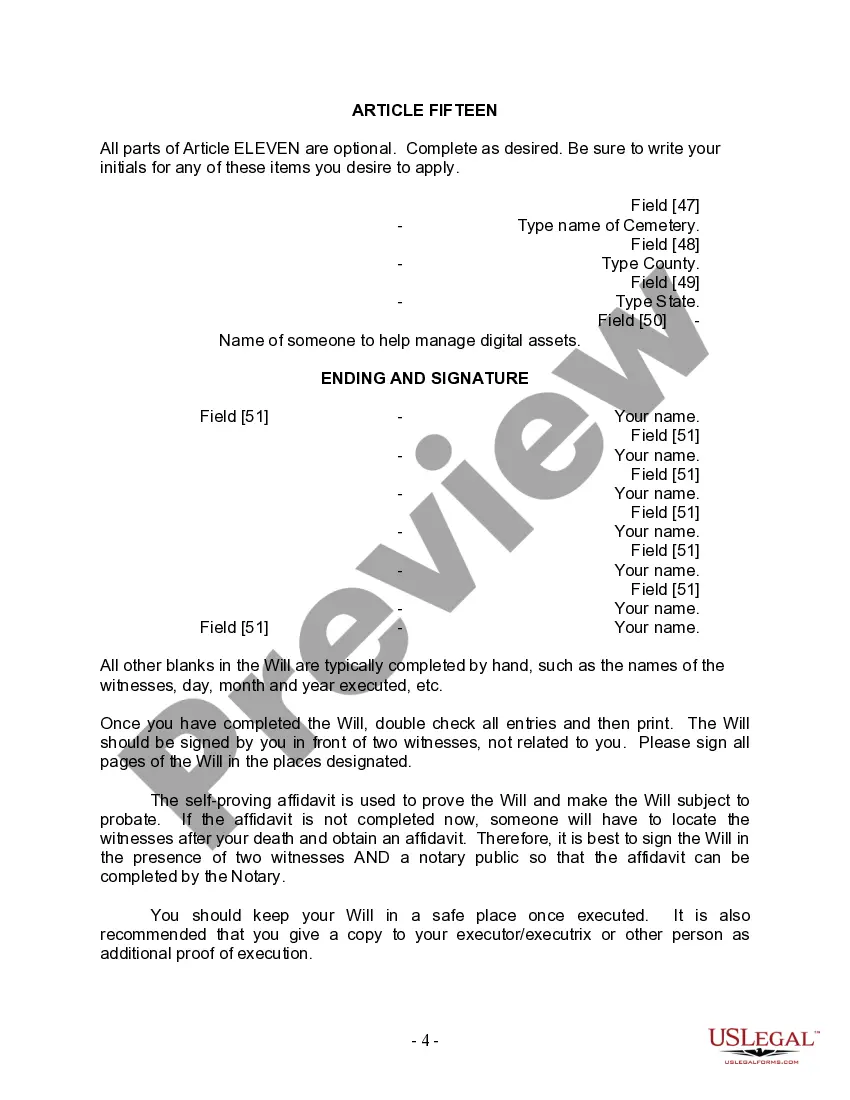
Yes, this form must be notarized to be legally valid. It requires signatures from two witnesses as well as a notary public to authenticate the will, ensuring it fulfills the legal requirements in Colorado for valid wills.
Get your form ready online
Our built-in tools help you complete, sign, share, and store your documents in one place.
Make edits, fill in missing information, and update formatting in US Legal Forms—just like you would in MS Word.
Download a copy, print it, send it by email, or mail it via USPS—whatever works best for your next step.
Sign and collect signatures with our SignNow integration. Send to multiple recipients, set reminders, and more. Go Premium to unlock E-Sign.
If this form requires notarization, complete it online through a secure video call—no need to meet a notary in person or wait for an appointment.
We protect your documents and personal data by following strict security and privacy standards.

Make edits, fill in missing information, and update formatting in US Legal Forms—just like you would in MS Word.

Download a copy, print it, send it by email, or mail it via USPS—whatever works best for your next step.

Sign and collect signatures with our SignNow integration. Send to multiple recipients, set reminders, and more. Go Premium to unlock E-Sign.

If this form requires notarization, complete it online through a secure video call—no need to meet a notary in person or wait for an appointment.

We protect your documents and personal data by following strict security and privacy standards.
Common mistakes
- Failing to have the will signed in front of the required witnesses.
- Not clearly specifying how certain assets should be distributed.
- Forgetting to update the will after significant life changes, such as a divorce or the birth of a child.
Advantages of online completion
- The ability to easily edit the form to fit your specific needs.
- Convenience of completing the form at your own pace from home.
- Access to professionally drafted language that complies with state laws.
Legal use & context
- The Last Will and Testament serves as a legal declaration of how you want your estate to be managed after your death.
- Wills not executed in accordance with state laws may be deemed invalid, stressing the importance of proper signing and witnessing.
- This document is vital to avoid the complications and costs of intestate succession if a valid will is not in place.
What to keep in mind
- This form is essential for married individuals with minor children who want to plan for the future.
- It allows you to specify care arrangements for your children and designate how your assets will be managed and distributed.
- Proper execution, including signatures and notarization, is crucial for the document to be legally effective.
Looking for another form?


Form popularity
FAQ
One of the biggest mistakes with wills is failing to periodically review and update them as life circumstances change, such as marriage, divorce, or the birth of children. In the context of a Colorado Last Will and Testament for Married person with Minor Children, any changes in family dynamics should prompt a review of your estate plan. Staying proactive about these updates can prevent confusion and ensure that your wishes are honored.
Several factors can determine whether a will is valid in Colorado, including the mental capacity of the testator at the time of signing, the proper execution per state laws, and absence of undue influence. Your Colorado Last Will and Testament for Married person with Minor Children should align with these legal standards for it to be enforceable. An attorney or resources like UsLegalForms can guide you in meeting these requirements.
You do not need to update your will specifically because your daughter gets married unless you wish to change her beneficiary status or provision in your Colorado Last Will and Testament for Married person with Minor Children. However, it's a good opportunity to review your will and ensure that all your wishes are adequately reflected. Keeping an open dialogue with your family regarding your estate plans can also provide clarity.
Yes, when you get married, it is essential to review your existing will and potentially update your Colorado Last Will and Testament for Married person with Minor Children. This update ensures that your spouse and any children are included in your estate planning. Don’t overlook this important step, as it can greatly impact how your assets are distributed.
For your will to be valid in Colorado, it must be in writing, signed by you, and witnessed by two individuals who are at least 18 years old. Additionally, the witnesses cannot be beneficiaries of the will. Following these guidelines will help ensure that your Colorado Last Will and Testament for Married person with Minor Children is legally enforceable.
Failing to update your will can lead to unintended consequences, such as not providing for your new spouse or minor children. If your circumstances change, like marriage or the birth of a child, your Colorado Last Will and Testament for Married person with Minor Children should reflect those changes. It's essential to keep your will current to ensure that your wishes are honored.
If you have a will and then get married, your existing will may not automatically include your new spouse. In Colorado, a marriage can revoke your prior will unless it specifically states otherwise. Therefore, it’s wise to review and possibly update your Colorado Last Will and Testament for Married person with Minor Children after tying the knot to make sure your loved ones are properly provided for.
A will may be deemed invalid for several reasons, such as lack of proper witnessing, the testator being under duress, or not meeting the legal requirements set forth in Colorado law. It’s crucial to follow guidelines to ensure that your Colorado Last Will and Testament for Married person with Minor Children is legally binding. Involving a legal expert or using resources like UsLegalForms can help you navigate these requirements effectively.
Creating a Colorado Last Will and Testament for a married person with minor children does not legally require a lawyer. However, consulting a lawyer can provide valuable insights and ensure your will meets all legal standards. This is especially important if you have specific wishes regarding guardianship for your children or other complex arrangements. Platforms like USLegalForms make it easier to prepare your will with templates designed to address the unique needs of your family.
In Colorado, a will does not need to be notarized to be valid. However, notarization can simplify the probate process, especially for a Colorado Last Will and Testament for Married person with Minor Children. This added step can help confirm the authenticity of the document later on. To learn more about the legalities, you can explore the resources available at US Legal Forms.