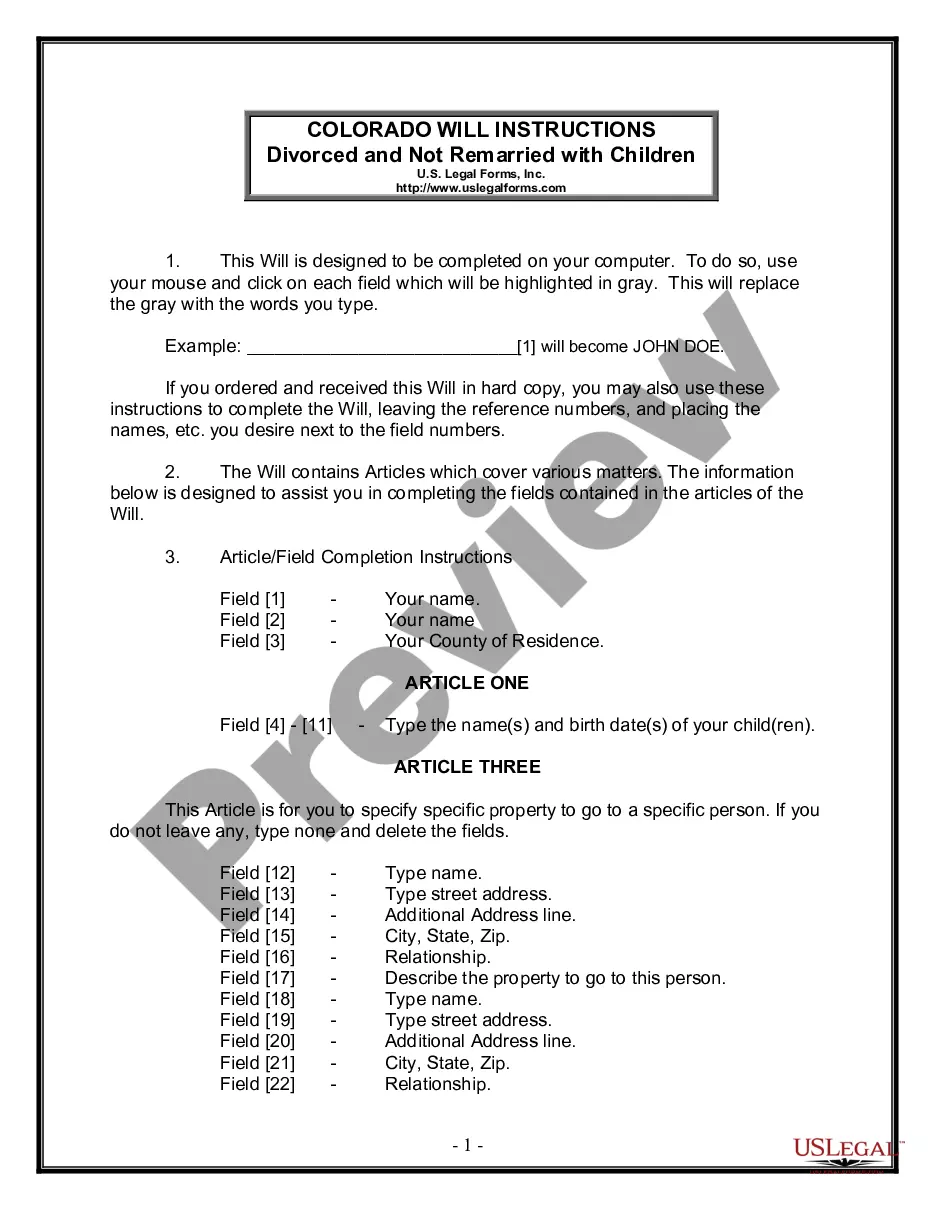
Colorado Last Will and Testament for Divorced Person Not Remarried with Adult and Minor Children
About this form
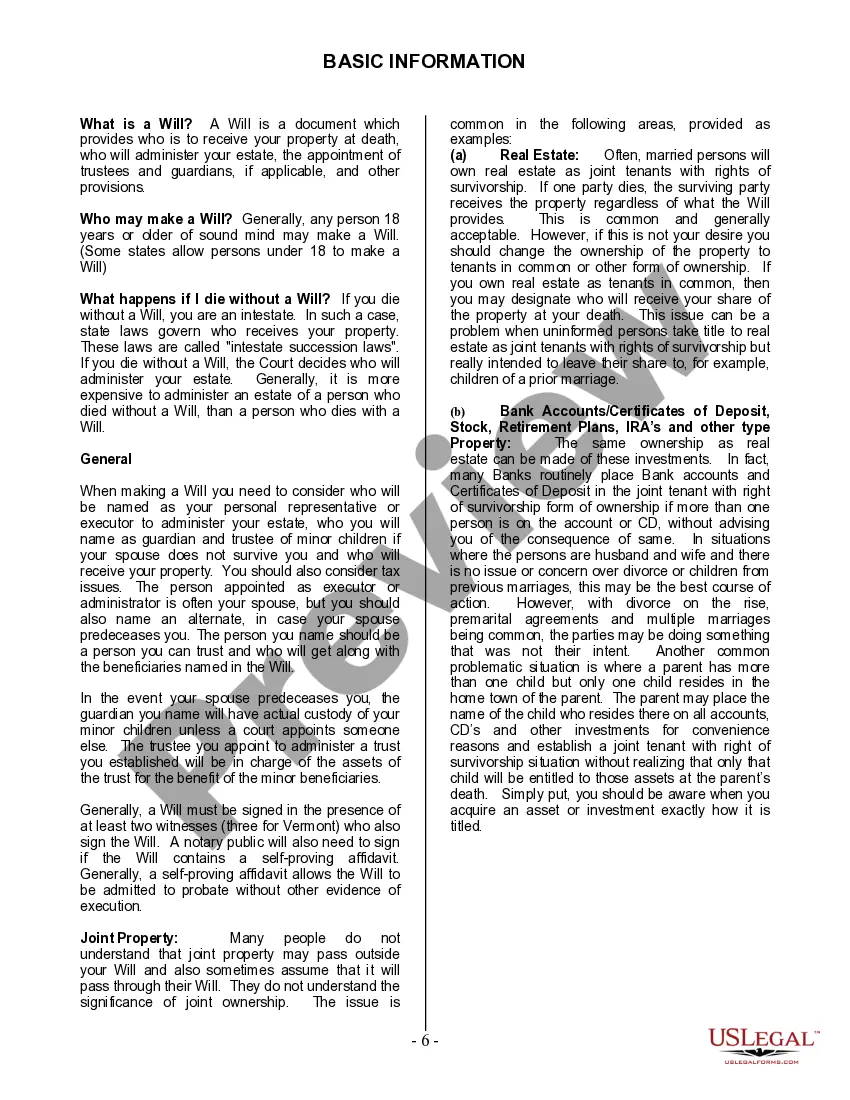
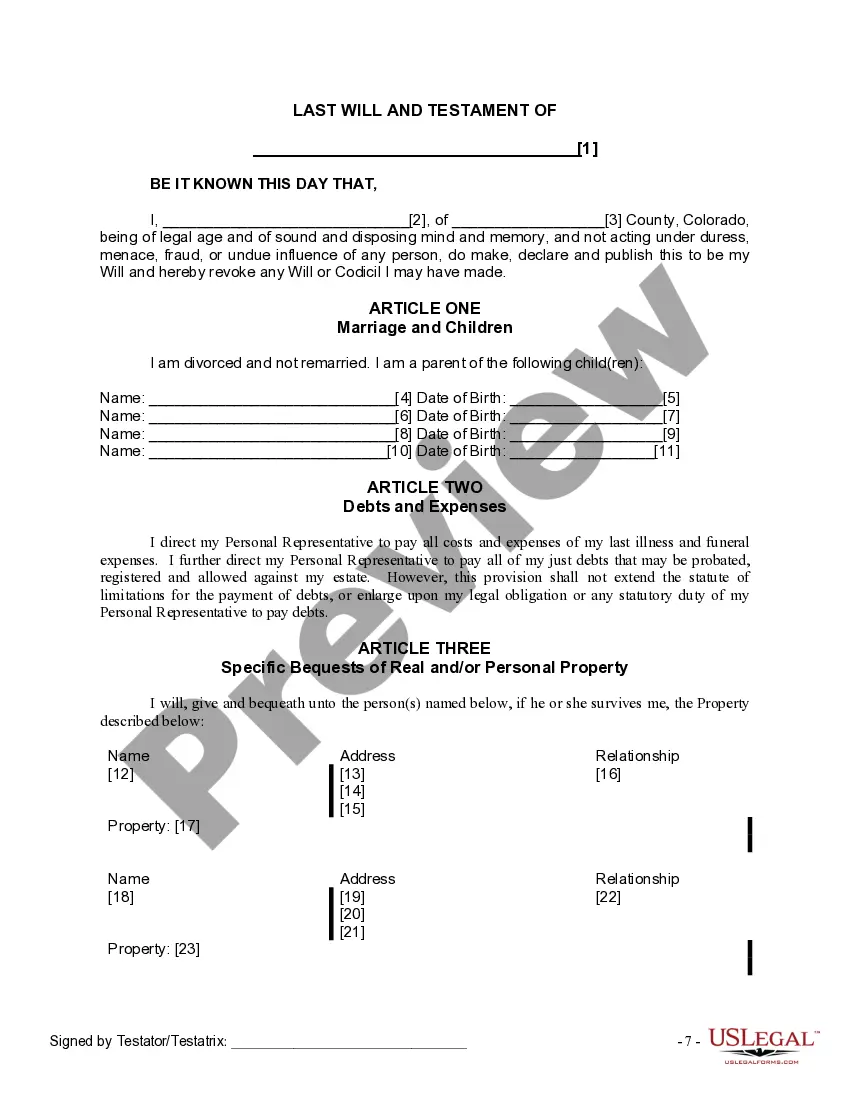
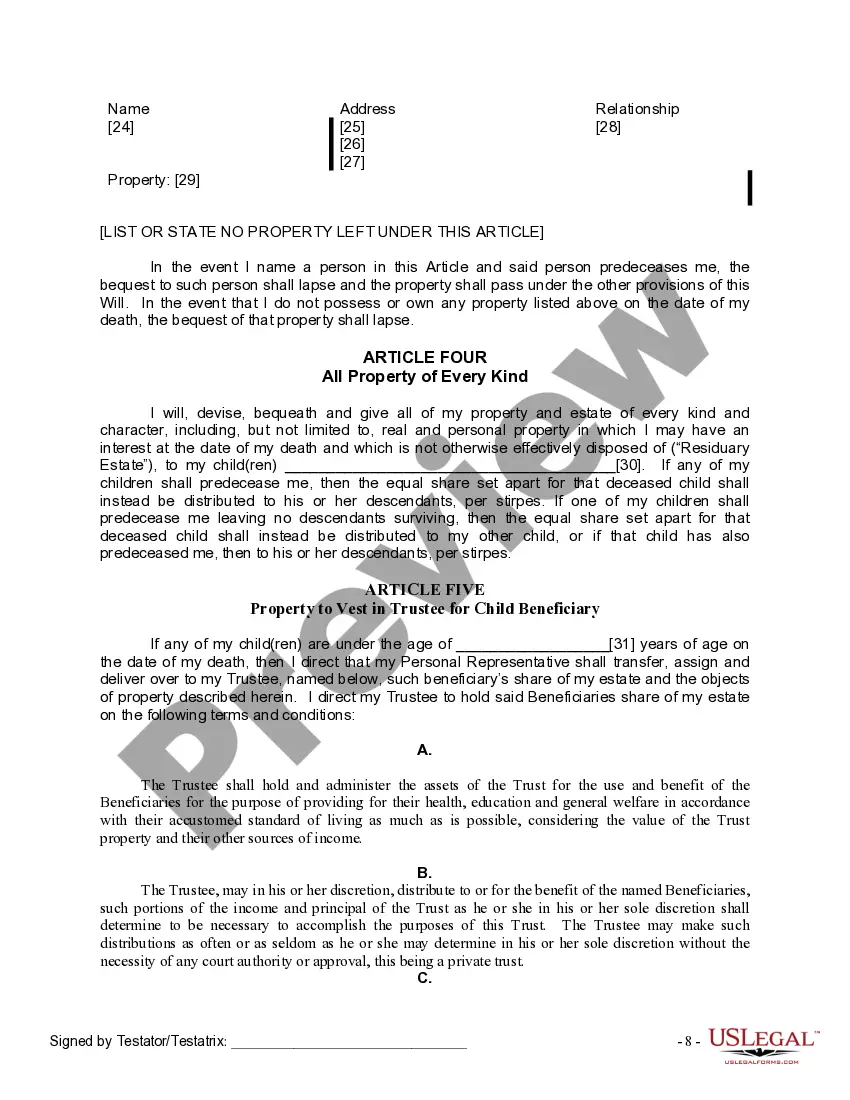
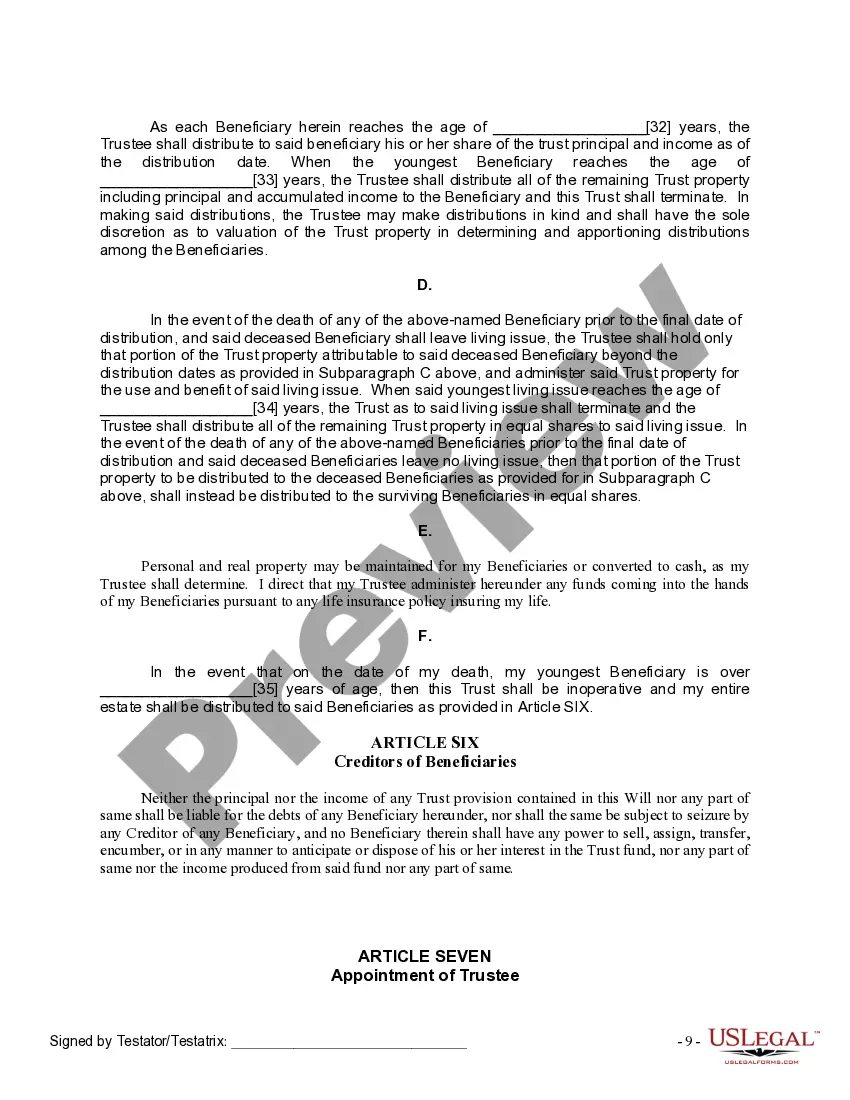
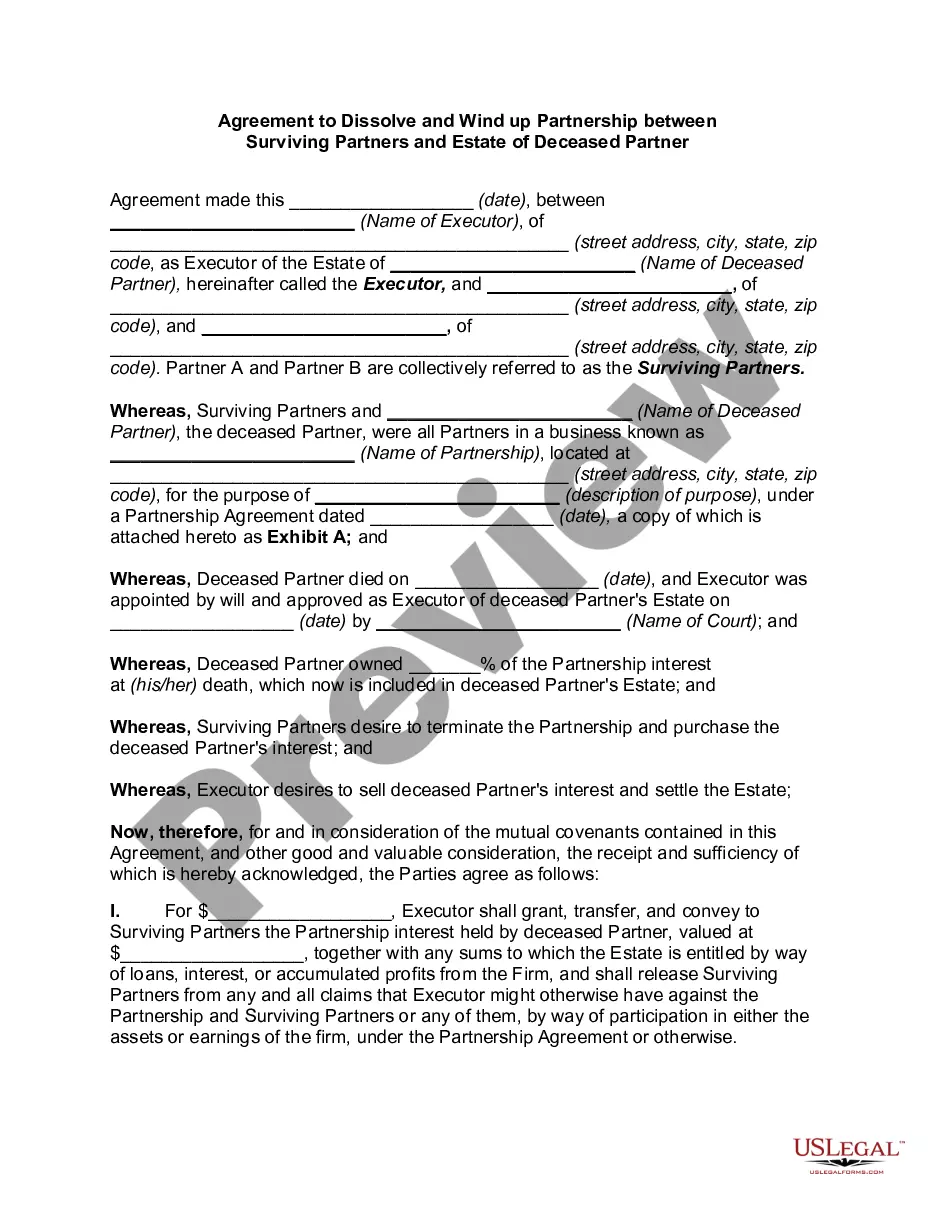
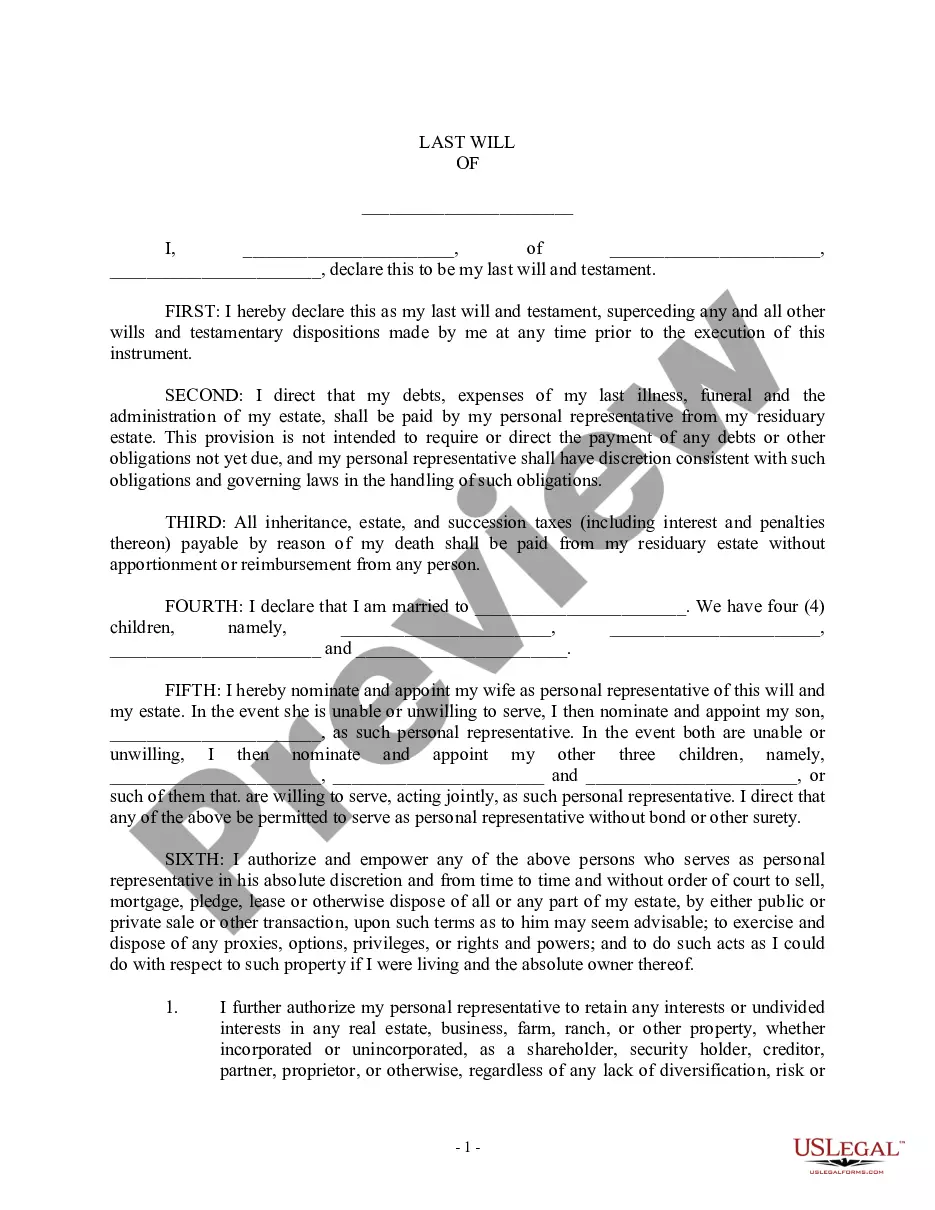
This Last Will and Testament for Divorced Persons Not Remarried with Adult and Minor Children is a legal document that outlines how a person wishes to distribute their property upon death. This particular will is designed for individuals who are divorced, have not remarried, and have both minor and adult children. The will specifies beneficiaries, appoints a personal representative (executor), and includes provisions for the care of minor children's inheritance.
Main sections of this form
- Appointment of Personal Representative: Designates who will administer the estate.
- Distribution of Property: Specifies who receives property and assets.
- Trust for Minor Children: Establishes a trust to manage assets designated for minor beneficiaries.
- Guardian for Minor Children: Appoints a guardian in case of the testator's death.
- Signature Requirements: Includes requirements for witnessing and notarization.




When to use this document
This form is needed when a divorced person who has not remarried wants to ensure their assets are distributed according to their wishes after their death. It is particularly relevant for those with adult and minor children, as it provides specific provisions for the care and management of assets intended for minors.
Who this form is for
- Divorced individuals who have not remarried.
- Parents with both adult and minor children.
- Individuals looking to specify guardianship and distribution of their estate.
- Anyone wanting to establish a trust for the benefit of their minor children.
How to complete this form
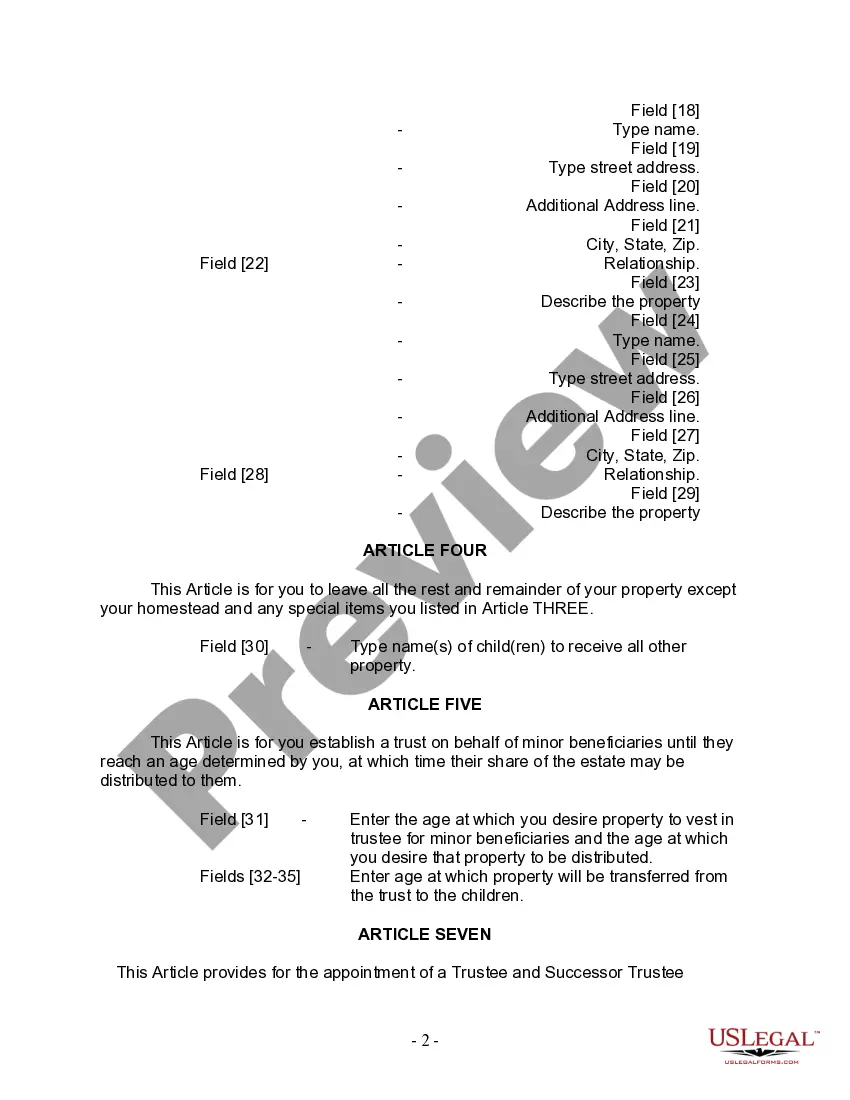
- Identify the parties: Enter your name, county of residence, and the names of your children.
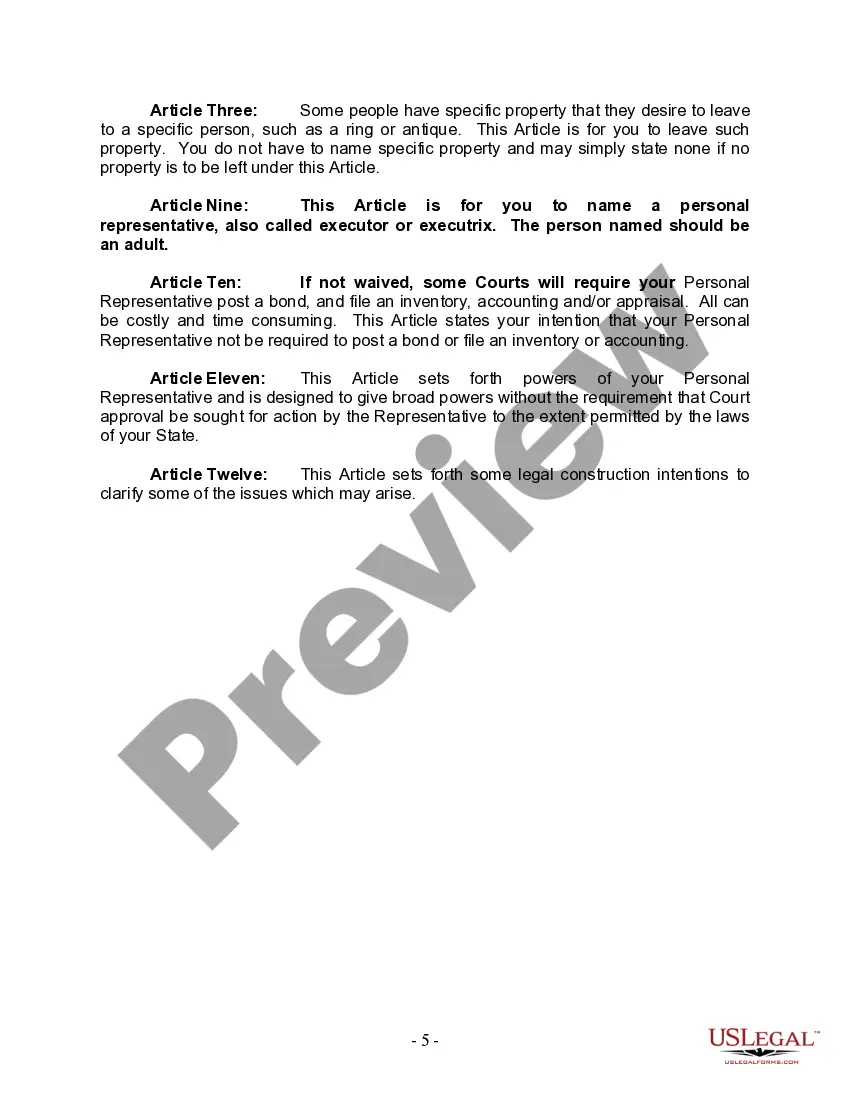
- Designate property: Specify any property or assets you want to give to particular individuals.
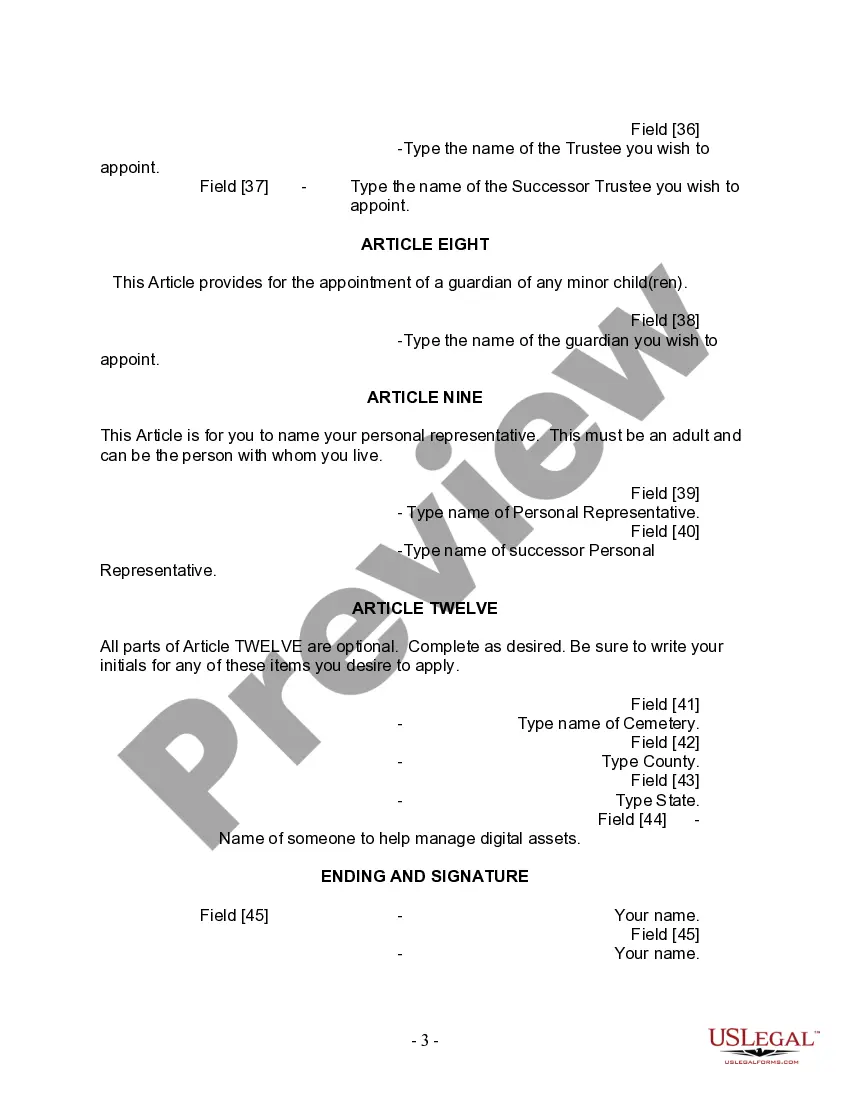
- Establish a trust: Indicate any trusts for minor beneficiaries and the age at which they will receive their share.
- Appoint guardianship: Name a guardian for your minor children.
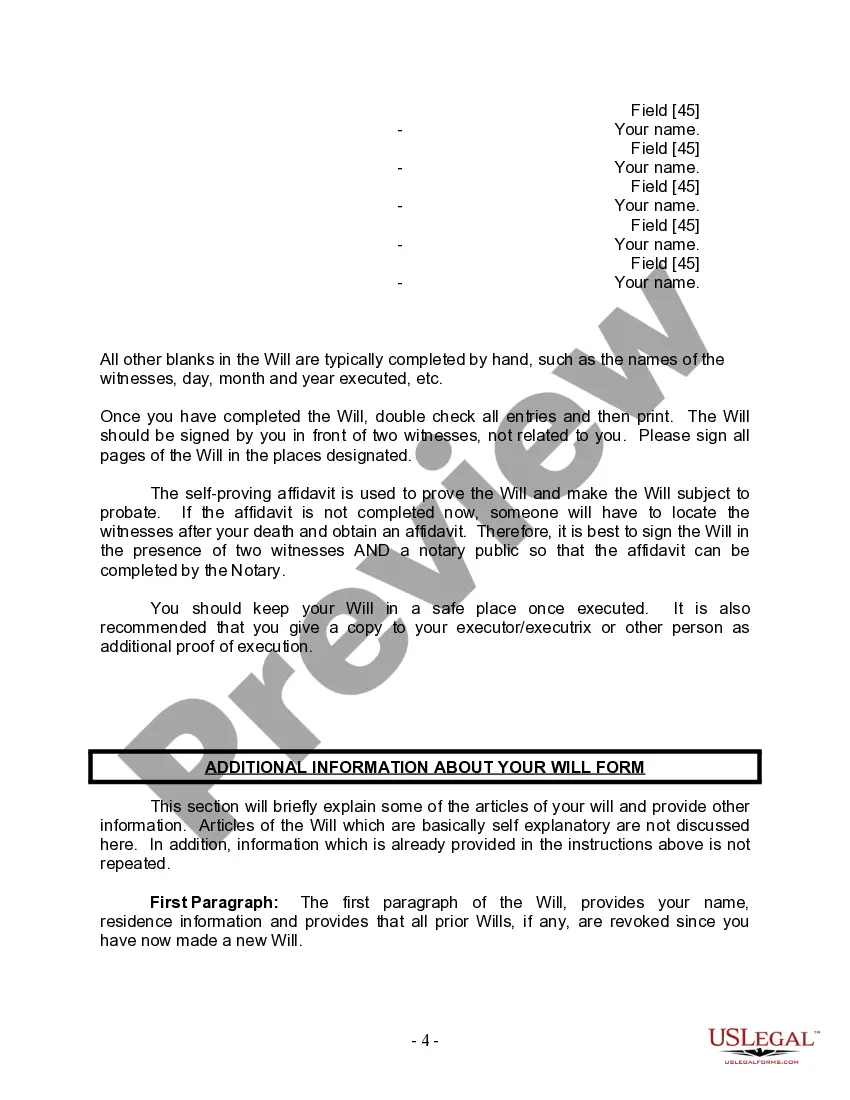
- Signature: Ensure you and two witnesses sign the document, and consider notarization for validity.
Notarization requirements for this form
Yes, this form must be notarized to be legally valid. It is important to have the will signed in the presence of a notary public, especially if it includes a self-proving affidavit, as this simplifies the probate process.
Get your form ready online
Our built-in tools help you complete, sign, share, and store your documents in one place.
Make edits, fill in missing information, and update formatting in US Legal Forms—just like you would in MS Word.
Download a copy, print it, send it by email, or mail it via USPS—whatever works best for your next step.
Sign and collect signatures with our SignNow integration. Send to multiple recipients, set reminders, and more. Go Premium to unlock E-Sign.
If this form requires notarization, complete it online through a secure video call—no need to meet a notary in person or wait for an appointment.
We protect your documents and personal data by following strict security and privacy standards.

Make edits, fill in missing information, and update formatting in US Legal Forms—just like you would in MS Word.

Download a copy, print it, send it by email, or mail it via USPS—whatever works best for your next step.

Sign and collect signatures with our SignNow integration. Send to multiple recipients, set reminders, and more. Go Premium to unlock E-Sign.

If this form requires notarization, complete it online through a secure video call—no need to meet a notary in person or wait for an appointment.

We protect your documents and personal data by following strict security and privacy standards.
Common mistakes
- Failing to have the will signed by two witnesses as required.
- Not updating the will after significant life events (e.g., additional children, changes in relationships).
- Omitting important details about property distribution.
- Not considering potential tax implications of the estate distribution.
Why complete this form online
- Convenience: Complete the form from home at your own pace.
- Editability: Make changes easily before finalizing your will.
- Secure storage: Download and store your will securely for peace of mind.
- Guidance: Clear instructions are included to help you through each section.
Looking for another form?
Form popularity
FAQ
Proving undue influence in Colorado involves demonstrating that the testator was forced or manipulated into making specific decisions about their will. This can include showing that the influencer had a confidential relationship with the testator and that substantial changes were made in the will due to this influence. When drafting a Colorado Last Will and Testament for Divorced Person Not Remarried with Adult and Minor Children, it is essential to ensure your will reflects your true wishes to help prevent claims of undue influence.
In the case of divorced parents, the next of kin generally includes the children, regardless of their age. If both parents are alive, the next of kin designation may go to the children in the absence of specific arrangements in a will. For those preparing a Colorado Last Will and Testament for Divorced Person Not Remarried with Adult and Minor Children, it's vital to clearly specify next of kin to avoid confusion in the future.
A will may be deemed invalid in Colorado if it does not meet the state’s legal requirements, such as lacking proper signatures or witnesses. Additionally, if the testator created the will under undue influence or lacked the mental capacity to make such decisions, it could also be considered invalid. Understanding these factors is crucial for anyone preparing a Colorado Last Will and Testament for Divorced Person Not Remarried with Adult and Minor Children.
To create a valid Colorado Last Will and Testament for Divorced Person Not Remarried with Adult and Minor Children, the document must be in writing, signed by the testator, and witnessed by at least two individuals who are present at the same time. Additionally, the testator must be at least 18 years old and of sound mind when drafting the will. Ensuring these requirements are met helps prevent future disputes regarding the document’s legitimacy.
Several factors help determine the validity of a Colorado Last Will and Testament for Divorced Person Not Remarried with Adult and Minor Children. These include your age, mental capacity at the time of signing, and adherence to the formal requirements set by Colorado law. The presence of witnesses and their ability to attest to your intent and understanding is also critical. Understanding these elements can prevent future conflicts and ensure your estate is handled as you wish.
To create a valid Colorado Last Will and Testament for Divorced Person Not Remarried with Adult and Minor Children, you must be at least 18 years old, of sound mind, and you must sign your will in the presence of two witnesses. The witnesses must also sign the will, confirming that you were of sound mind when you created it. It is crucial to adhere to these requirements to ensure your will is recognized by the court. Utilizing uslegalforms can simplify this process.
Yes, in Colorado, a living will must be signed and dated in the presence of at least one witness or notarized. This adds a layer of protection to your wishes regarding medical decisions. Although the Colorado Last Will and Testament for Divorced Person Not Remarried with Adult and Minor Children is separate, both documents require proper execution to ensure they are honored. Consider using platforms like uslegalforms to guide you through these legal requirements.
A Colorado Last Will and Testament for Divorced Person Not Remarried with Adult and Minor Children can be deemed invalid for several reasons. If the will fails to meet the legal requirements, such as lacking signatures or witnesses, it may not hold up in court. Additionally, if undue influence or fraud is proven, this can also invalidate the will. Being aware of these factors can help you avoid complications.
In Colorado, you do not have to file a Colorado Last Will and Testament for Divorced Person Not Remarried with Adult and Minor Children with the court unless it needs to be probated. While it is not mandatory to file, keeping it safe is important, as it must be accessible after your passing. If you choose not to file it, make sure your executor knows where to find it. This will help ensure your wishes are followed.
Married couples are not required to have separate wills; however, having individual wills can provide clarity and avoid potential conflicts. Each spouse can dictate their wishes regarding assets and guardianship for minor children. This is especially important for a Colorado Last Will and Testament for Divorced Person Not Remarried with Adult and Minor Children to ensure that their specific wishes are honored.