Colorado Last Will and Testament for Divorced person not Remarried with Minor Children
What this document covers
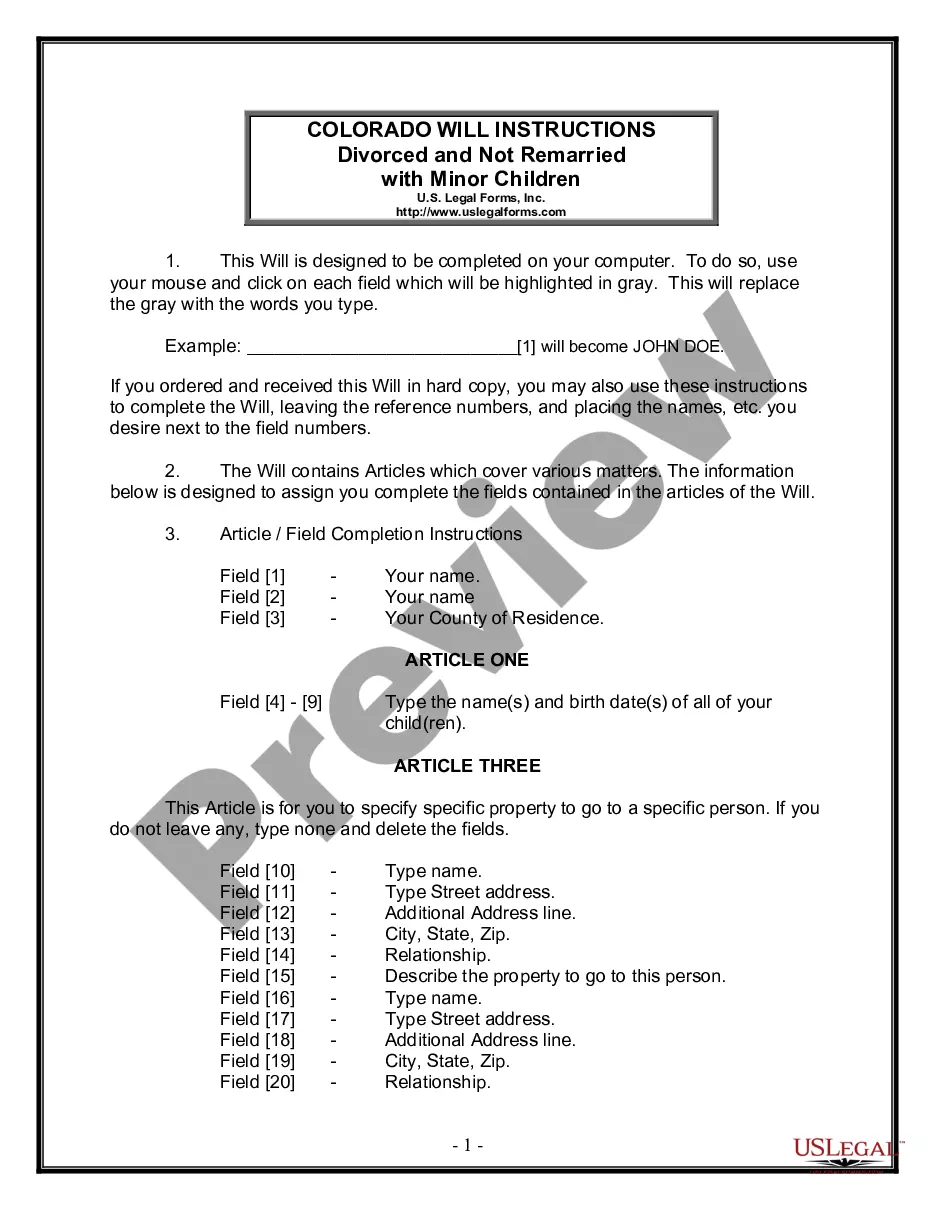
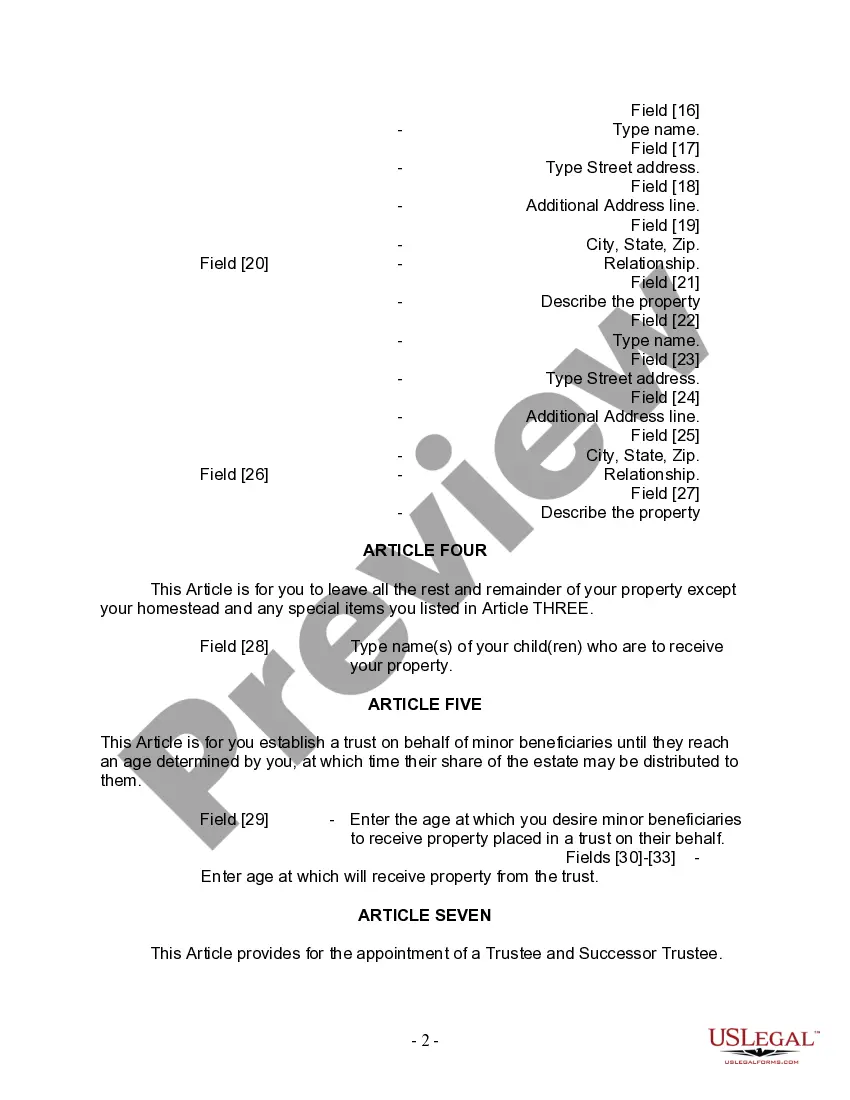
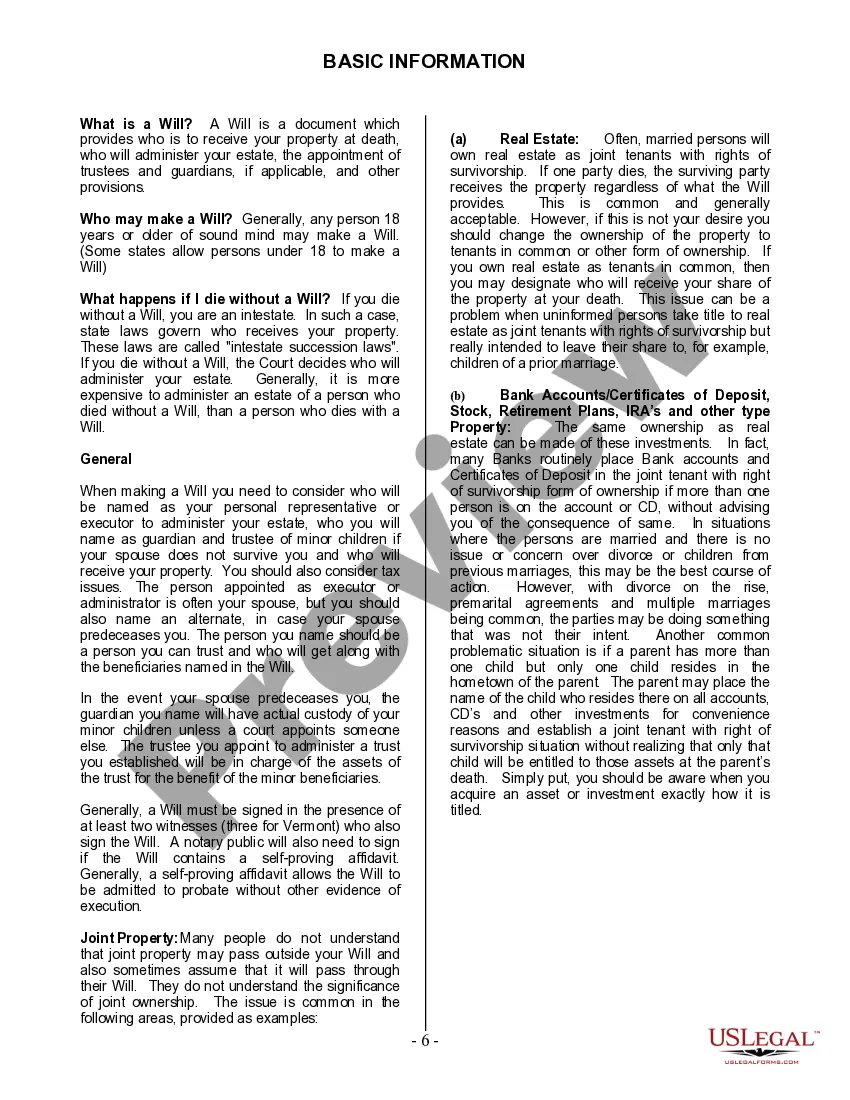
The Last Will and Testament for a Divorced Person Not Remarried with Minor Children is a legal document designed to outline how an individual's property will be distributed upon their death. This form is tailored specifically for individuals who have been divorced, are not remarried, and have minor children. It includes provisions for appointing a personal representative, specifying beneficiaries, and establishing guardianship for minor children, making it distinct from other types of wills which may not address these particular circumstances.
What’s included in this form
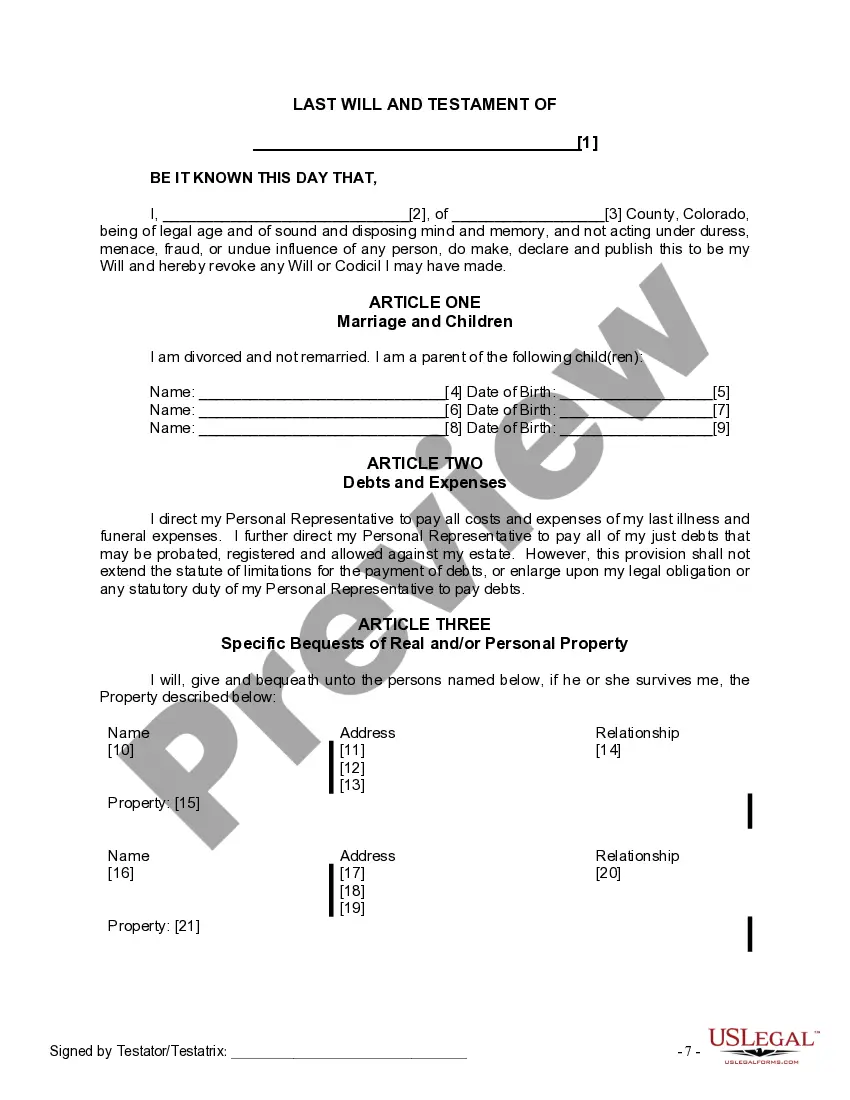
- Personal information: Name and residence information of the testator.
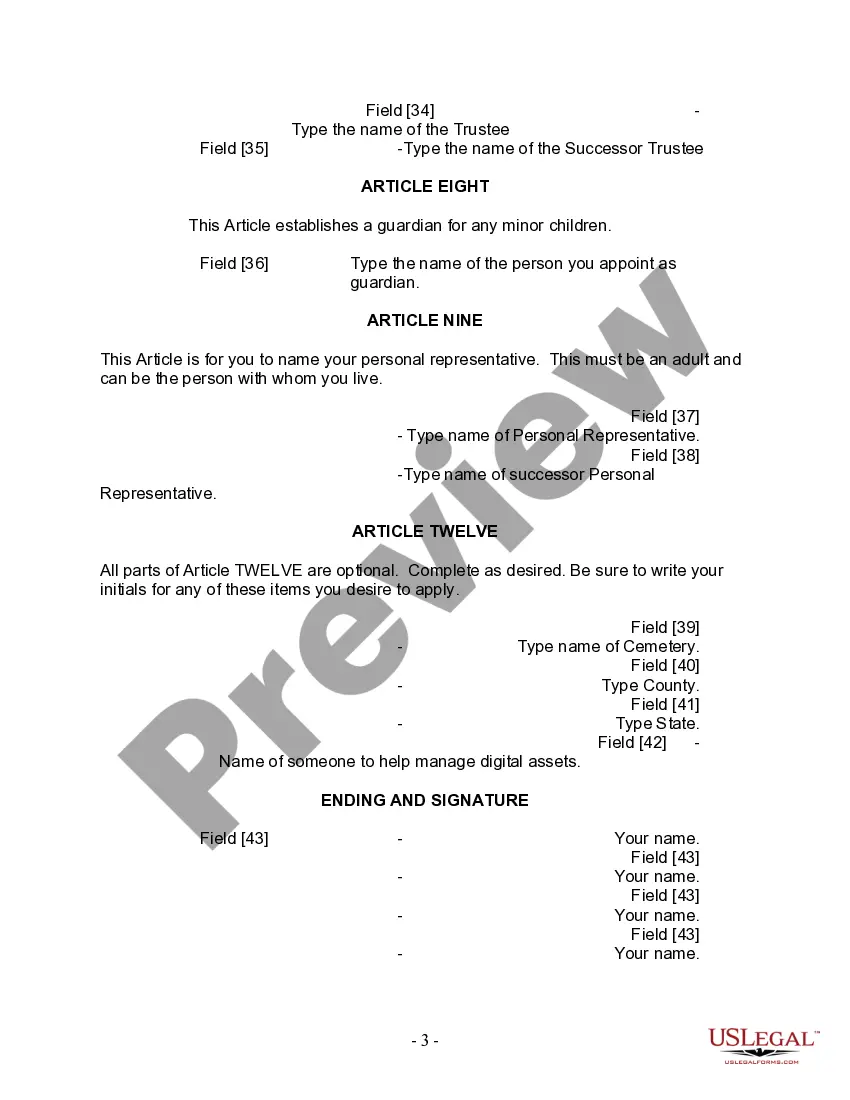
- Guardian appointment: Designates a guardian for minor children.
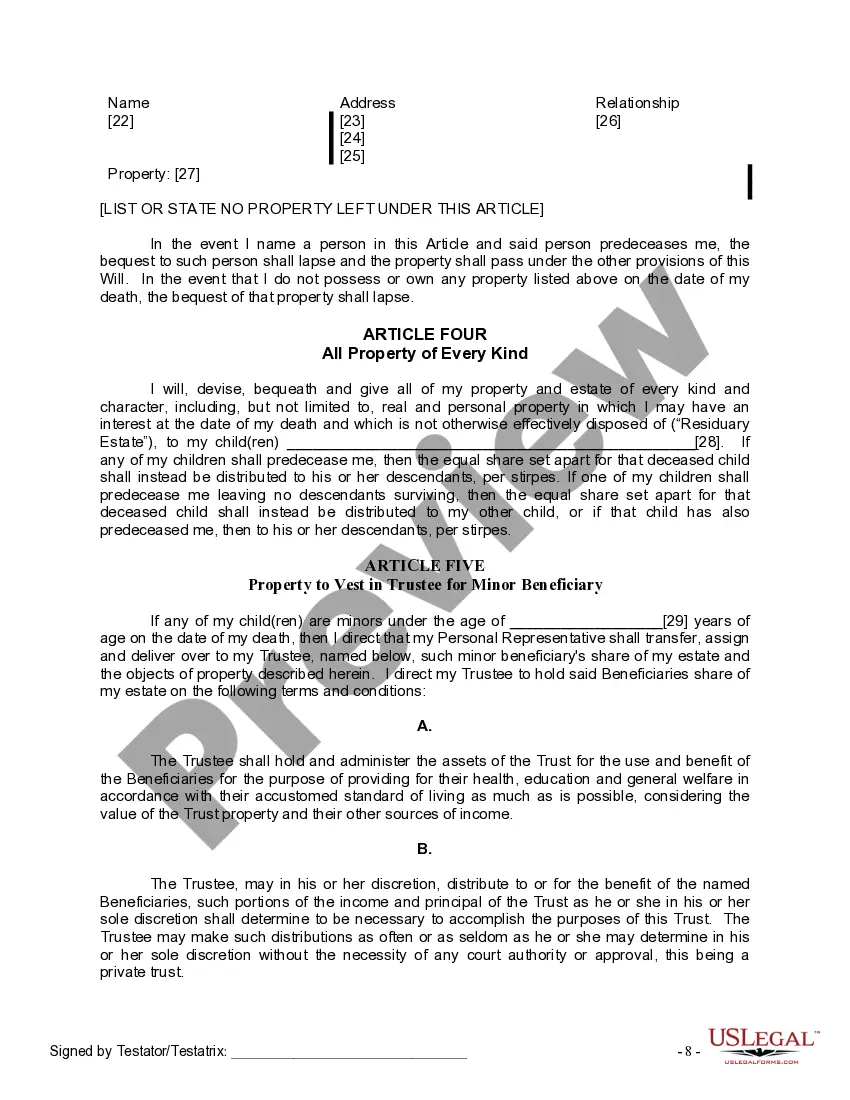
- Specific bequests: Allows for the distribution of specific property to named individuals.
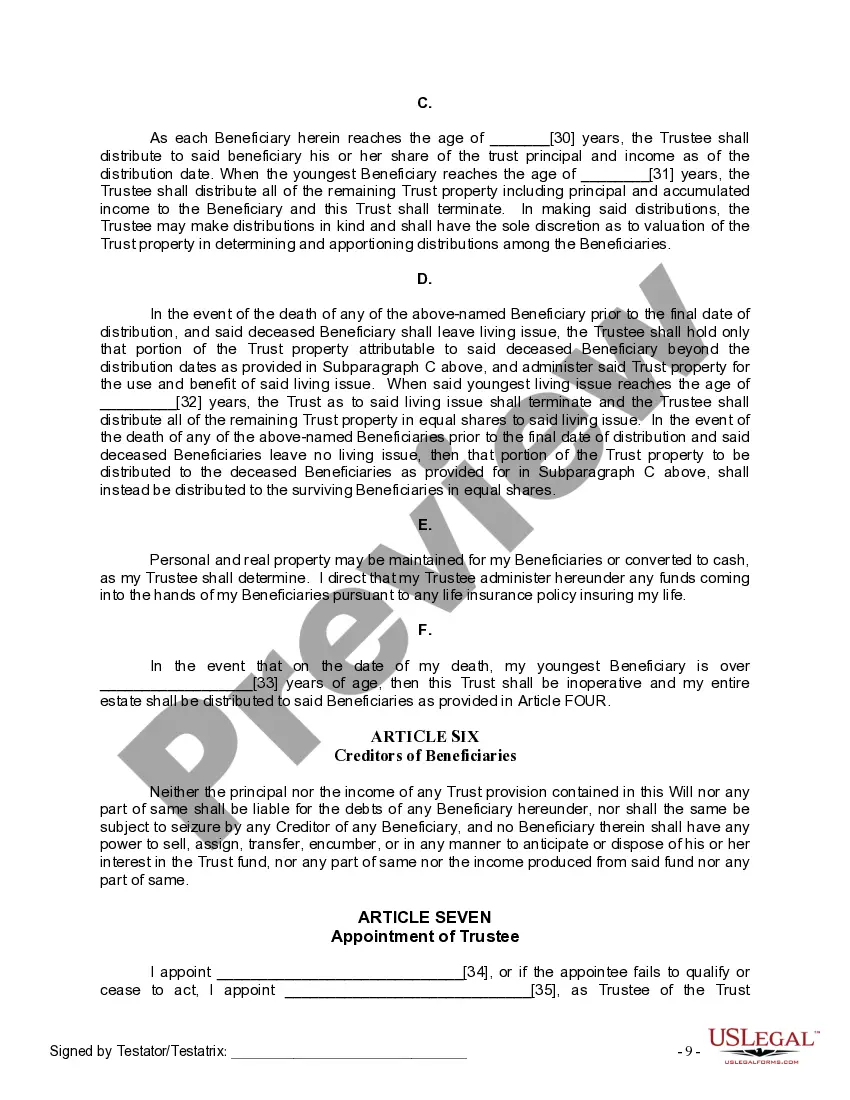
- Trust provisions: Sets terms for a trust to manage assets for minor beneficiaries.
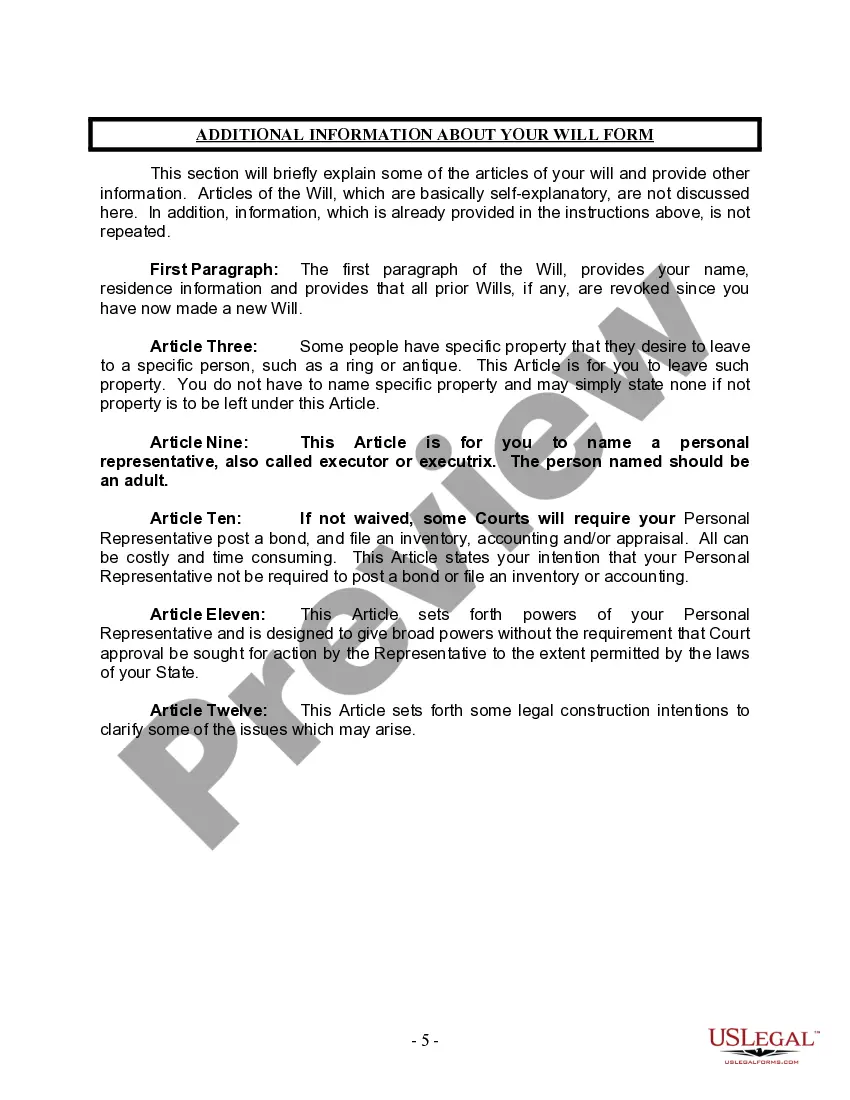
- Appointment of a personal representative: Names the executor of the estate.
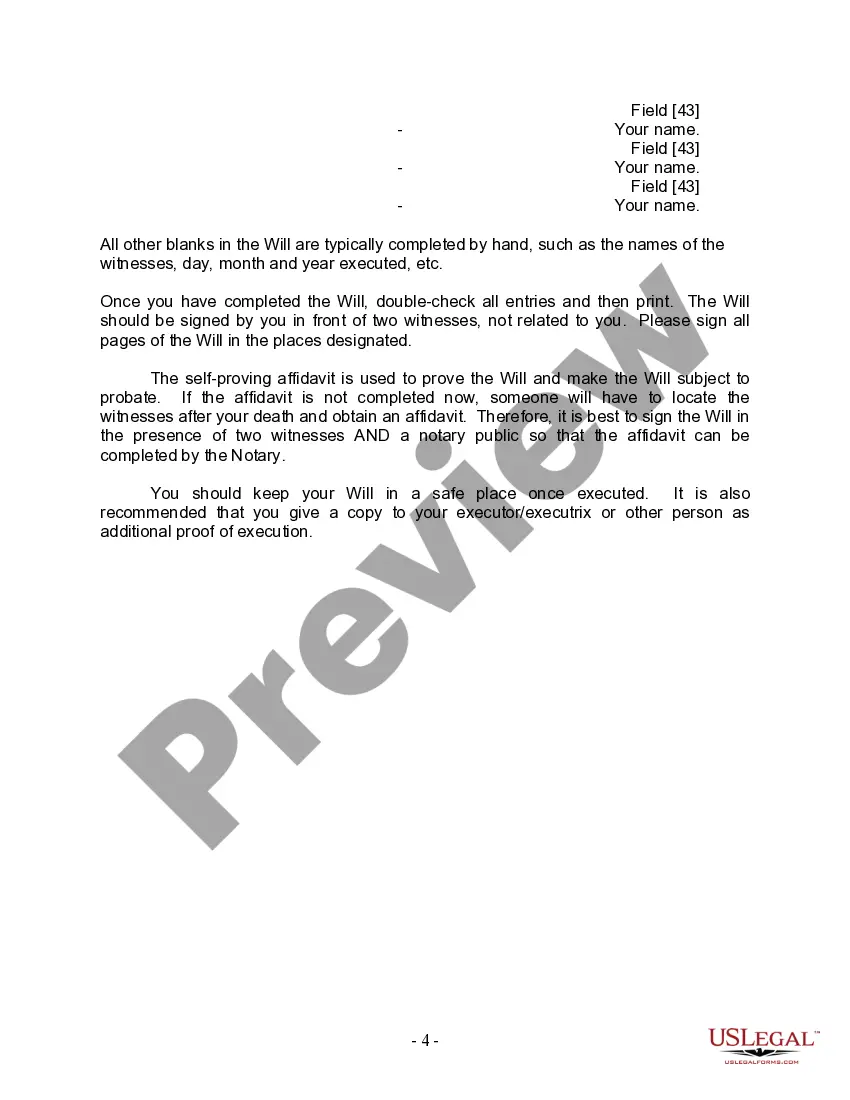
- Notarization and witness requirements: Outlines the signing and witnessing process for legal validity.




Situations where this form applies
This form should be used when a divorced individual with minor children wants to establish a clear plan for their property distribution after death. It is particularly relevant if the individual is not remarried and seeks to ensure their children are cared for and that their wishes are honored regarding asset distribution and guardianship.
Who needs this form
- Divorced individuals with minor children.
- Persons who are not currently remarried.
- Any parent who wishes to specify guardianship and property distribution for their children.
- Individuals seeking to formalize their estate planning to avoid intestacy laws.
Steps to complete this form
- Identify the testator: Enter your full name and county of residence.
- List your children: Provide the names and birth dates of all minor children.
- Specify distributions: Name beneficiaries and describe any specific property bequests.
- Appoint a guardian: Choose a suitable guardian for your minor children if needed.
- Sign and witness: Have the form signed in the presence of two witnesses and a notary public if applicable.
Notarization guidance
This form must be notarized to be legally valid. US Legal Forms provides secure online notarization powered by Notarize, allowing you to complete the process through a verified video call.
Get your form ready online
Our built-in tools help you complete, sign, share, and store your documents in one place.
Make edits, fill in missing information, and update formatting in US Legal Forms—just like you would in MS Word.
Download a copy, print it, send it by email, or mail it via USPS—whatever works best for your next step.
Sign and collect signatures with our SignNow integration. Send to multiple recipients, set reminders, and more. Go Premium to unlock E-Sign.
If this form requires notarization, complete it online through a secure video call—no need to meet a notary in person or wait for an appointment.
We protect your documents and personal data by following strict security and privacy standards.

Make edits, fill in missing information, and update formatting in US Legal Forms—just like you would in MS Word.

Download a copy, print it, send it by email, or mail it via USPS—whatever works best for your next step.

Sign and collect signatures with our SignNow integration. Send to multiple recipients, set reminders, and more. Go Premium to unlock E-Sign.

If this form requires notarization, complete it online through a secure video call—no need to meet a notary in person or wait for an appointment.

We protect your documents and personal data by following strict security and privacy standards.
Typical mistakes to avoid
- Failing to have witnesses sign in the required timeframe.
- Neglecting to appoint a guardian for minor children.
- Not specifying the distribution of all assets, leaving ambiguity.
- Failing to keep the Will in a secure location post-signing.
- Overlooking the requirement for notarization if using a self-proving affidavit.
Benefits of using this form online
- Easy access: Download and complete from the comfort of home.
- Editable: Make changes easily to reflect any updates in your circumstance.
- Cost-effective: Avoid the high fees associated with hiring an attorney for basic will preparation.
- Secure: Reliable platform ensures your information is protected.
Looking for another form?
Form popularity
FAQ
Certain assets remain protected during a divorce, such as inheritances and gifts received before or during the marriage. Additionally, assets that a spouse acquired before the marriage typically fall outside the division process. If you are considering your Colorado Last Will and Testament for Divorced person not Remarried with Minor Children, it’s essential to identify these assets. By ensuring your will reflects your true intentions, you can better protect your children's future.
A will does not typically supersede a divorce agreement, especially in the context of a Colorado Last Will and Testament for Divorced person not Remarried with Minor Children. Divorce agreements often outline asset division and responsibilities, prioritizing these terms. Therefore, if you want specific provisions for your children or other beneficiaries, it is wise to clarify those in both your will and divorce decree. This coordination can help eliminate any potential conflicts.
In the context of a Colorado Last Will and Testament for Divorced person not Remarried with Minor Children, a trust can override a will. Additionally, certain assets like life insurance policies and retirement accounts have designated beneficiaries that take precedence over your will. It’s essential to regularly review and update these documents to align with your current wishes and family situation. This step can help avoid confusion and ensure your assets are distributed as intended.
A Colorado Last Will and Testament for Divorced person not Remarried with Minor Children becomes crucial after a divorce. Generally, divorce can revoke any provisions in your will that favor your former spouse. This way, your will reflects your intentions for your children and any other beneficiaries. Thus, updating your will post-divorce helps ensure that your wishes are clearly outlined.
A will in Colorado can be deemed invalid for various reasons, including lack of witness signatures or improper execution. If the testator was not of sound mind or if the will was created under undue influence, those factors also render it invalid. It is essential to follow Colorado's guidelines closely to ensure your Colorado Last Will and Testament for Divorced person not Remarried with Minor Children is legally binding and effective. At USLegalForms, we provide the necessary resources to help you create a valid will.
Proving undue influence in Colorado involves demonstrating that one party exerted excessive pressure on the testator, affecting their decisions in creating a will. You may need to show a relationship where manipulation took place, along with evidence that the testator's will differed significantly from previous versions. This aspect is crucial for anyone drafting a Colorado Last Will and Testament for Divorced person not Remarried with Minor Children since it can impact the distribution of assets meant for minor children.
A will can be considered invalid if it does not meet Colorado's legal requirements. These requirements include the lack of proper witness signatures or if the testator lacked the mental capacity at the time of signing. Additionally, a will may be challenged if it was created under duress or coercion. Ultimately, ensuring your Colorado Last Will and Testament for Divorced person not Remarried with Minor Children is valid protects your wishes and your children's future.
To draft a will in Colorado, begin by outlining your wishes regarding the distribution of your assets and guardianship of any minor children. Clear language is essential to prevent confusion. Utilizing online resources like US Legal Forms can simplify the drafting process, helping you create a thorough Colorado Last Will and Testament for Divorced person not Remarried with Minor Children that accurately reflects your desires.
In Colorado, a will does not have to be notarized to be legally valid; however, notarization can provide extra assurance. When you notarize your will, it adds a layer of legitimacy that can help prevent disputes among heirs. Using US Legal Forms to create your Colorado Last Will and Testament for Divorced person not Remarried with Minor Children can streamline the process and ensure you have all necessary components covered.
For a will to be valid in Colorado, it must be in writing, signed by the testator, and witnessed by at least two people. Each witness must be at least 18 years old and not a beneficiary of the will. Meeting these requirements ensures that your Colorado Last Will and Testament for Divorced person not Remarried with Minor Children is enforceable and meets legal standards.