Colorado Agent's Affidavit that Power of Attorney not revoked
Understanding this form
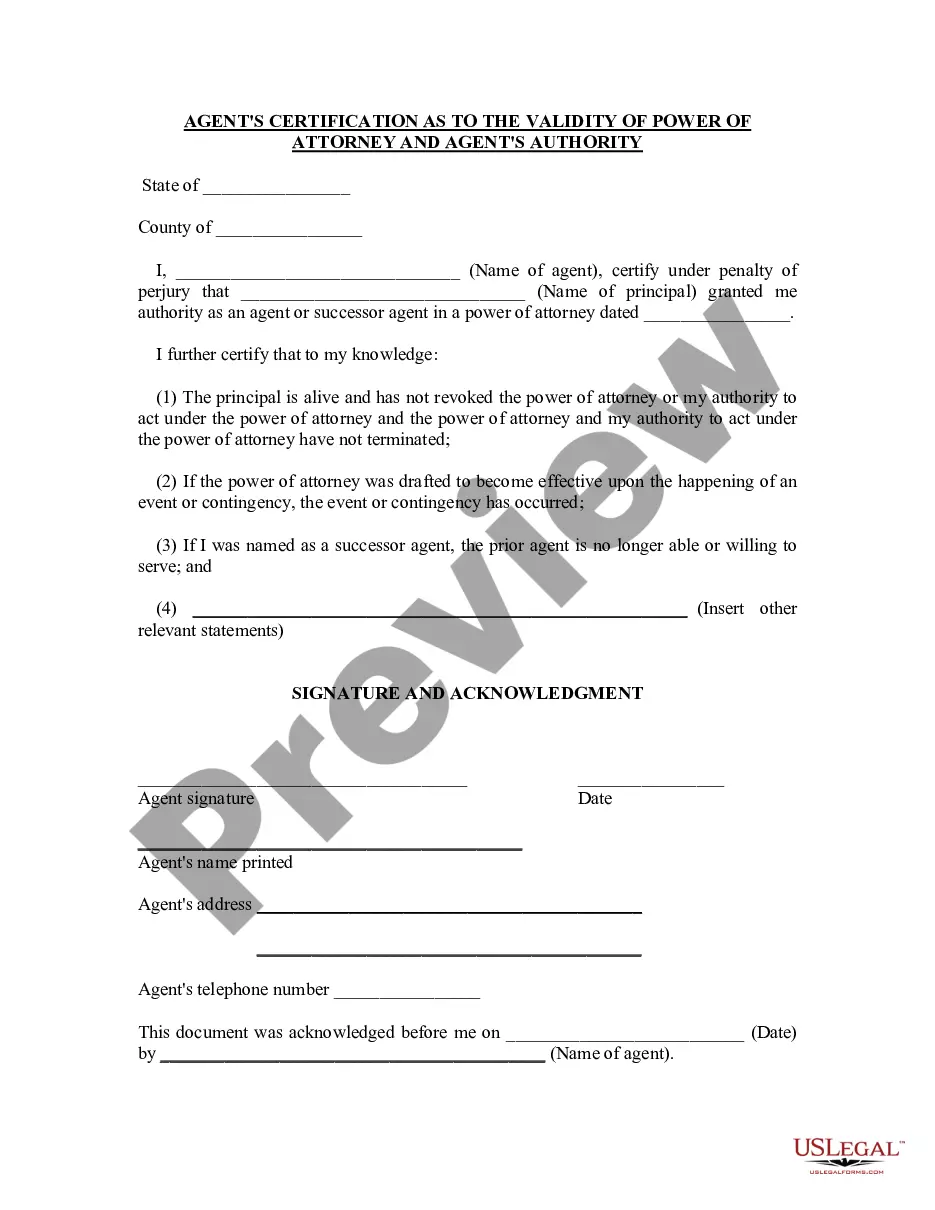
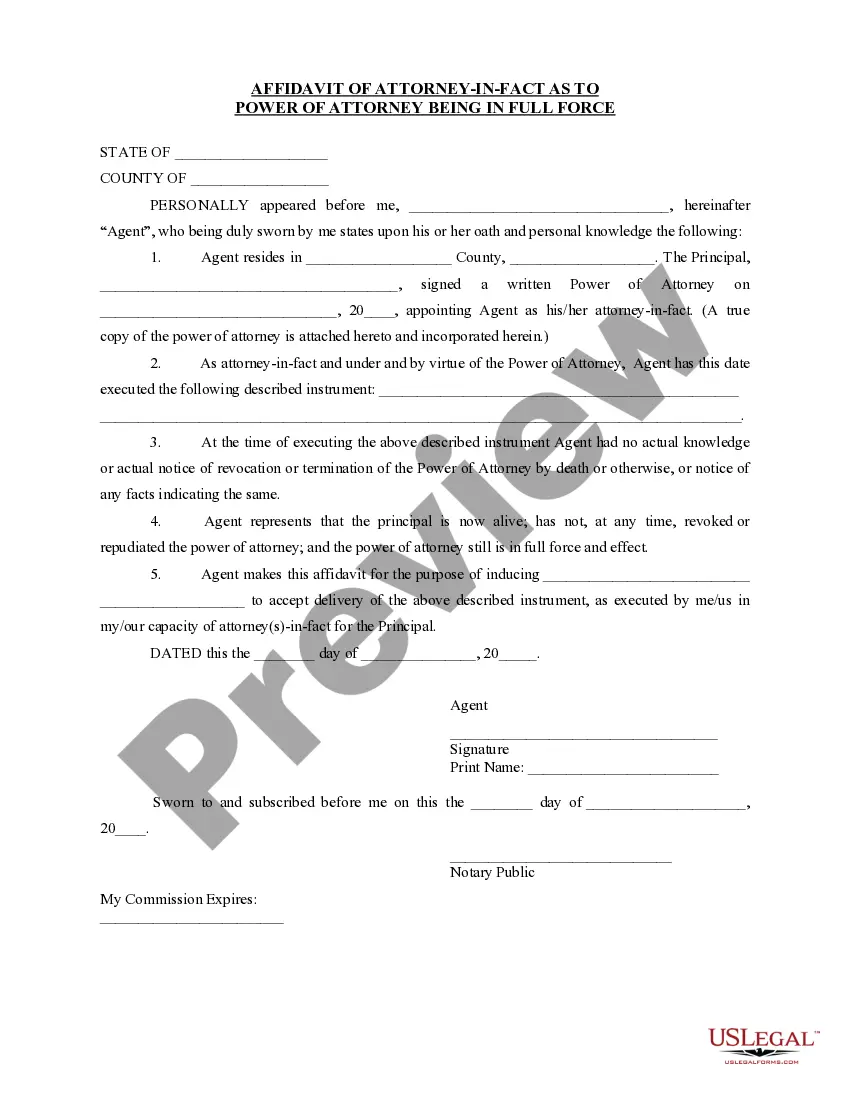
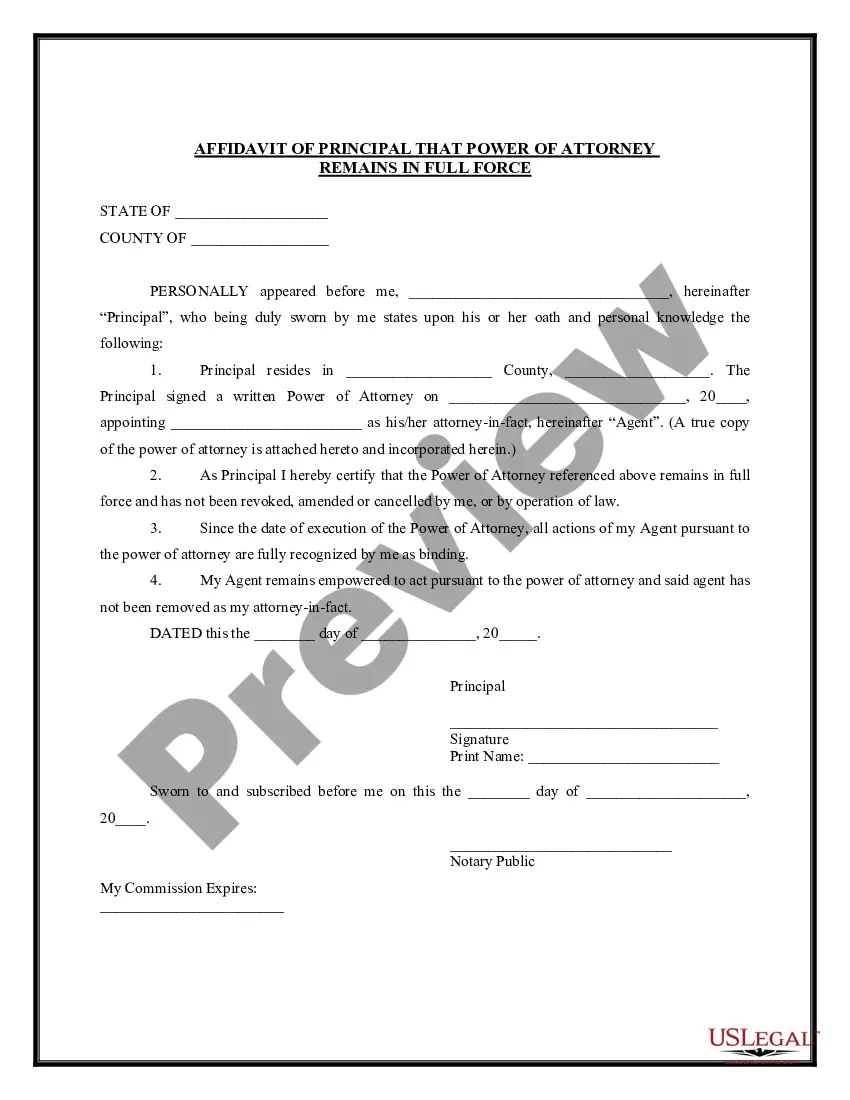
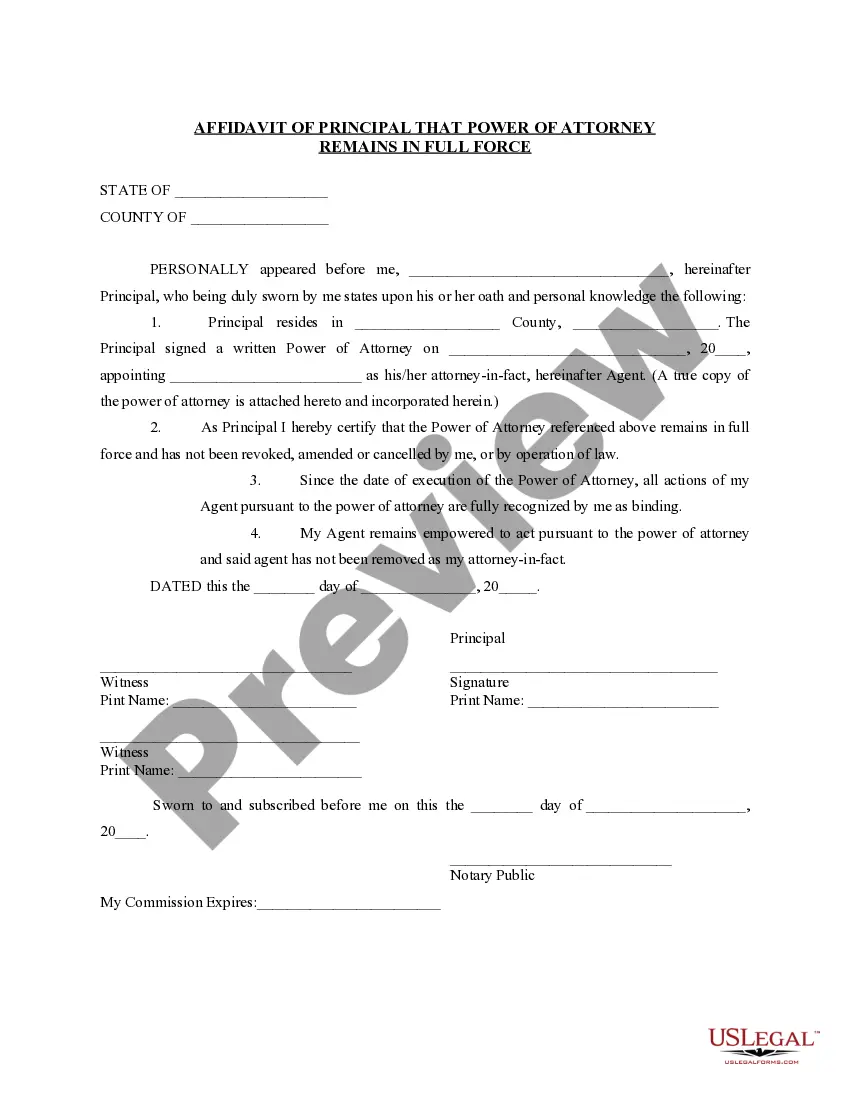
The Agent's Affidavit that Power of Attorney Not Revoked is a legal document that confirms the ongoing validity of a Power of Attorney (POA). It is used when an agent needs to assert that the authority granted by the principal remains active and has not been revoked. This affidavit serves to provide security and assurance to third parties that they can rely on the agentâs authority to act on behalf of the principal, distinguishing it from other legal forms like the Power of Attorney itself.
What’s included in this form
- Name and address of the agent.
- Name of the principal who granted the power of attorney.
- Date when the power of attorney was executed.
- Certification statements regarding the validity of the POA and the principal's capacity.
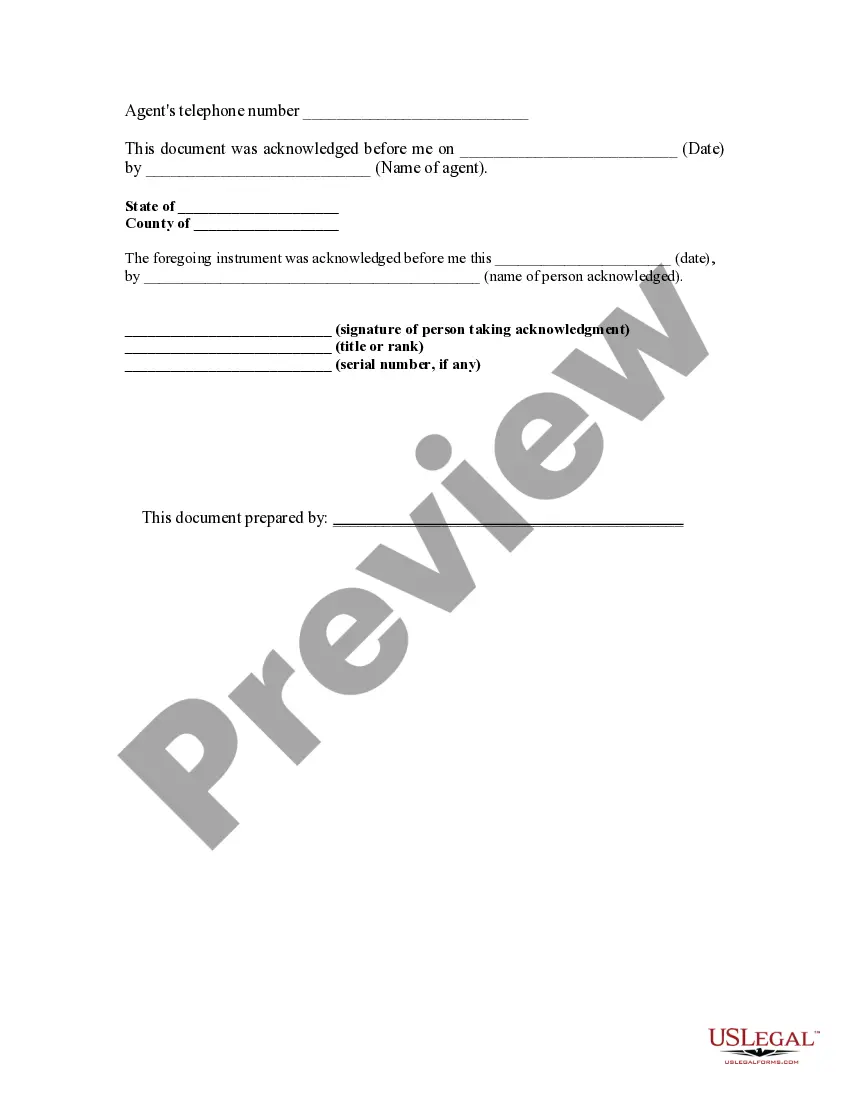
- Agent's signature and acknowledgment before a notary public.
When this form is needed
This form should be used when an agent needs to affirm that a previously granted Power of Attorney is still in effect. Common scenarios include real estate transactions, banking matters, or health care decisions where the agent is required to prove their authority to act on behalf of the principal. It is essential whenever there is a need to confirm that the POA has not been revoked, especially in situations involving third parties who may question the authority of the agent.
Intended users of this form
- Individuals acting as agents under a Power of Attorney.
- Successor agents who need to confirm their authority due to the prior agent's inability to serve.
- Principals who wish to affirm the validity of their Power of Attorney to facilitate transactions.
- Any individual or entity needing confirmation of authority for legal or financial matters involving a principal.
Steps to complete this form
- Identify the state and county where the affidavit is being executed.
- Enter your name as the agent, as well as the name of the principal.
- Provide the date when the original Power of Attorney was created.
- Include necessary certifications that confirm the principalâs status and authority.
- Sign the document and have it acknowledged before a notary public.
Does this form need to be notarized?
Yes, this form must be notarized to be legally valid. The notarization process ensures that the signatures are authentic and that the agent's affidavit can be trusted by third parties. Using US Legal Formsâ integrated online notarization service provides a secure and convenient option for completing this process, with availability around the clock.
Get your form ready online
Our built-in tools help you complete, sign, share, and store your documents in one place.
Make edits, fill in missing information, and update formatting in US Legal Forms—just like you would in MS Word.
Download a copy, print it, send it by email, or mail it via USPS—whatever works best for your next step.
Sign and collect signatures with our SignNow integration. Send to multiple recipients, set reminders, and more. Go Premium to unlock E-Sign.
If this form requires notarization, complete it online through a secure video call—no need to meet a notary in person or wait for an appointment.
We protect your documents and personal data by following strict security and privacy standards.

Make edits, fill in missing information, and update formatting in US Legal Forms—just like you would in MS Word.

Download a copy, print it, send it by email, or mail it via USPS—whatever works best for your next step.

Sign and collect signatures with our SignNow integration. Send to multiple recipients, set reminders, and more. Go Premium to unlock E-Sign.

If this form requires notarization, complete it online through a secure video call—no need to meet a notary in person or wait for an appointment.

We protect your documents and personal data by following strict security and privacy standards.
Typical mistakes to avoid
- Failing to correctly identify the principal and agent names.
- Not providing the correct date of the original Power of Attorney.
- Omitting critical certification statements that could invalidate the affidavit.
- Neglecting to have the document notarized, if required.
Benefits of completing this form online
- Convenient access for downloading and filling out the affidavit at your own pace.
- Editability allows you to customize the document as needed.
- Guidance provided ensures that all necessary components are included for legal validity.
Quick recap
- The Agent's Affidavit confirms the validity of a power of attorney.
- Proper completion and notarization are essential for legal recognition.
- Keep updated records of the power of attorney and its status to avoid any misunderstandings.
Looking for another form?
Form popularity
FAQ
Your name. A statement affirming that you are of sound mind (mentally competent) A statement that you wish to revoke a previously designated Power of Attorney. The date of the original POA.
Revocation Letter means a letter or written communication from Commerce indicating that Commerce has determined that a business shall no longer be designated as a Qualified Kansas Business.
The Principal can override either type of POA whenever they want. However, other relatives may be concerned that the Agent (in most cases a close family member like a parent, child, sibling, or spouse) is abusing their rights and responsibilities by neglecting or exploiting their loved one.
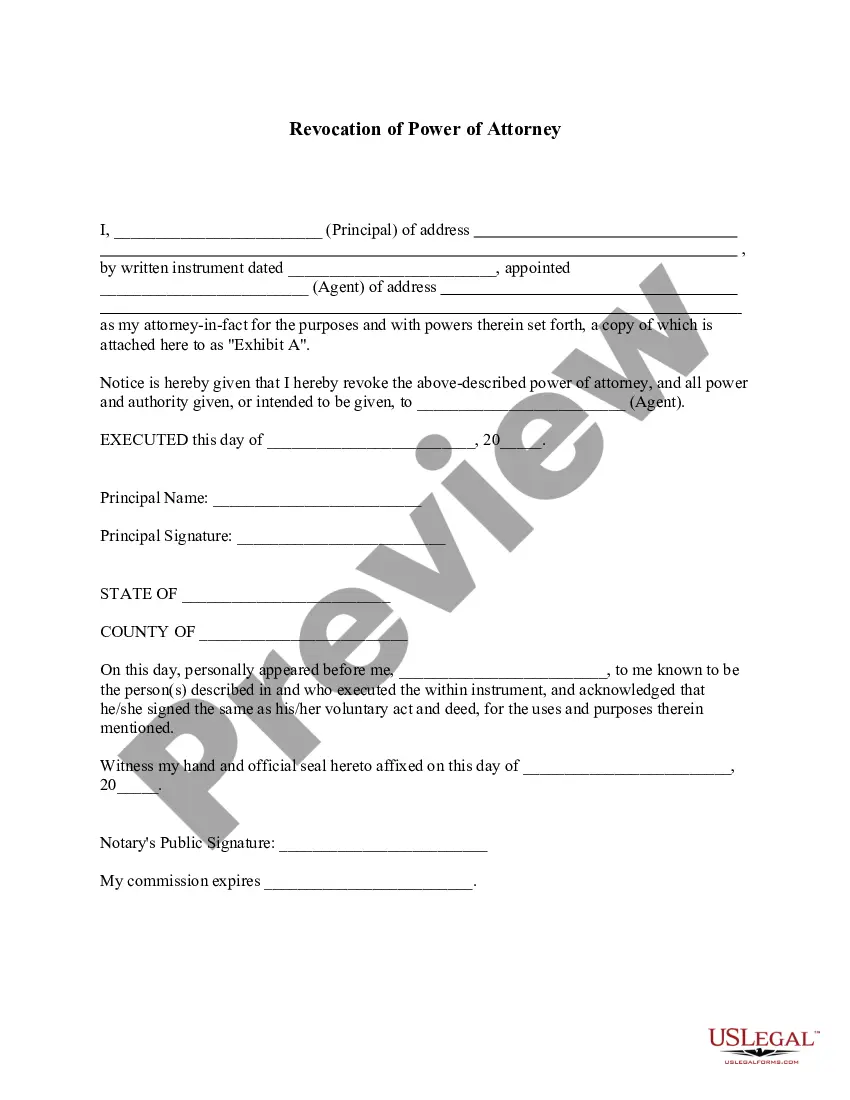
Until an attorney-in-fact's powers are properly revoked, they can continue to legally act for the principal. To cancel a Power of Attorney, the principal can create a document called a Revocation of Power of Attorney or create a new Power of Attorney that indicates the previous Power of Attorney is revoked.
If the agent is acting improperly, family members can file a petition in court challenging the agent. If the court finds the agent is not acting in the principal's best interest, the court can revoke the power of attorney and appoint a guardian. The power of attorney ends at death.
The principal may revoke the power of attorney at any time. All he or she needs to do is send you a letter to this effect.
If you're mentally competent and no longer wish to have someone appointed as your power of attorney, you can cancel it by submitting a formal revocation form, as well as notifying the individual and other relevant third parties, in writing. You may want to cancel your power of attorney for several reasons.
The revocation should include your name, a statement that you are of sound mind, and your wish to revoke the power of attorney. You should also specify the date the original power of attorney was executed and the person selected as your agent.
Unless the power of attorney states otherwise, and they usually don't, a revocation of a POA must be made in writing. A verbal revocation may not be enough.A revocation will reference the existing POA and the current attorney-in-fact and revoke the document and the powers granted.