Colorado Warning of Default on Commercial Lease
What is this form?
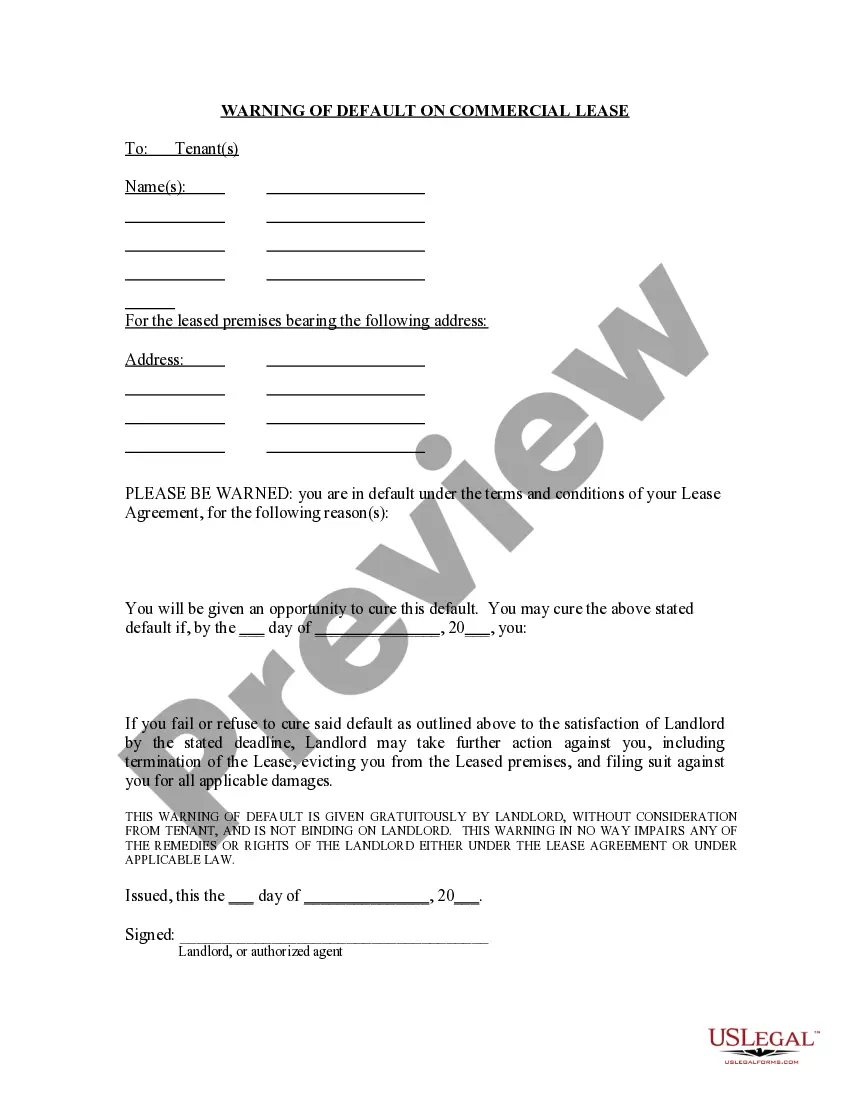
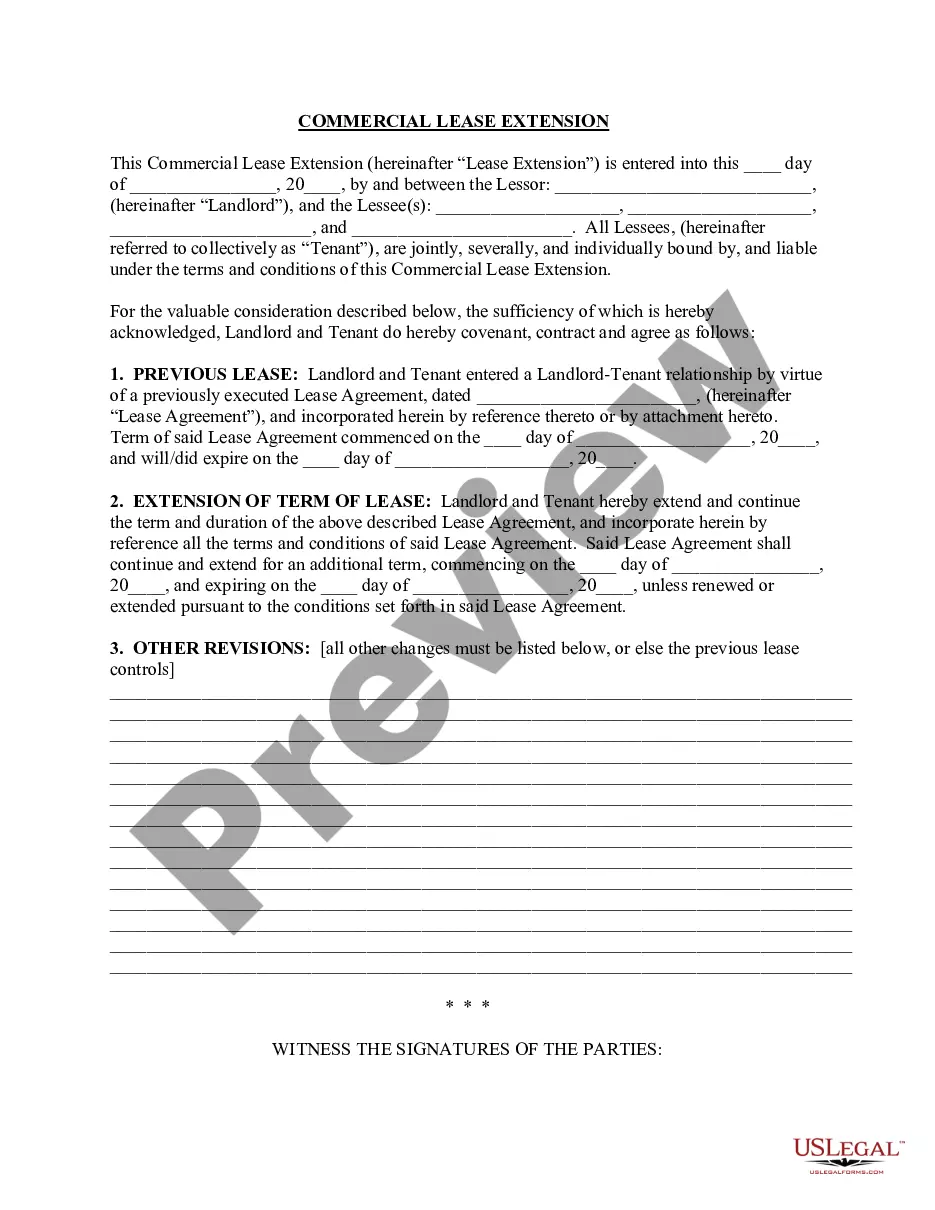
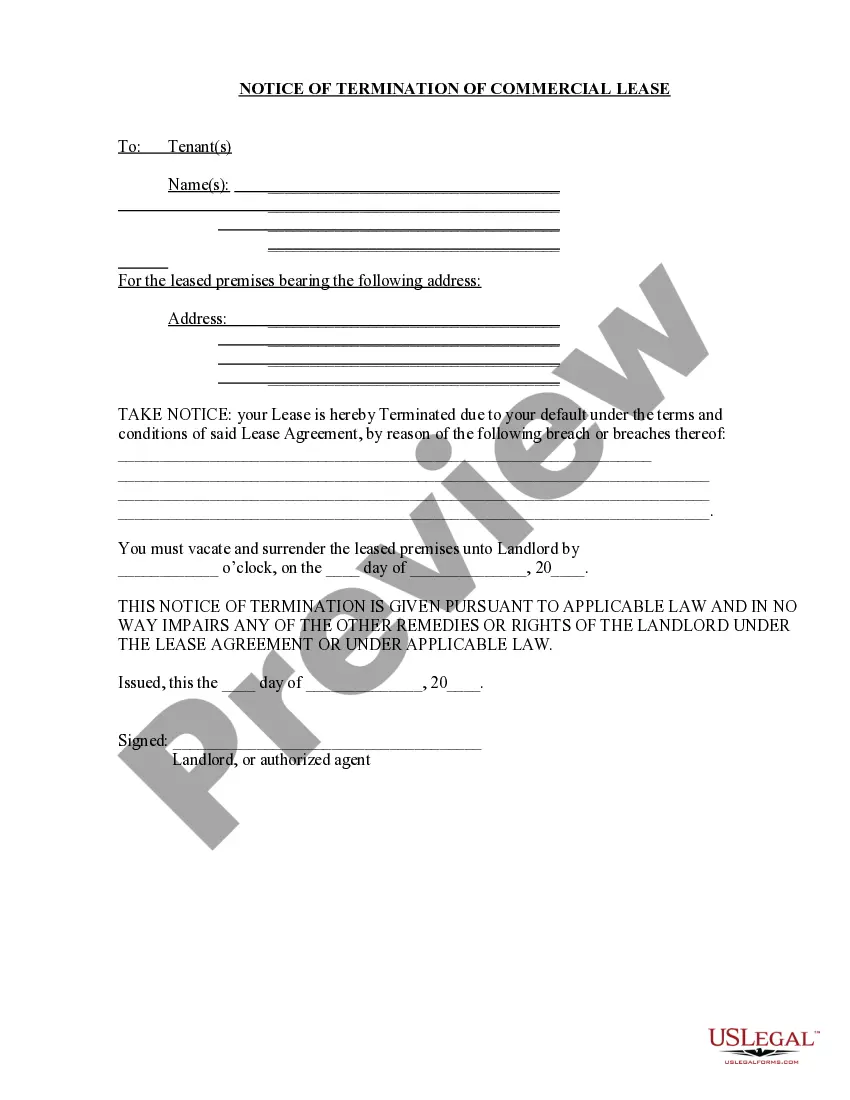
The Warning of Default on Commercial Lease is a formal notice issued by a landlord to a tenant, indicating that the tenant is at risk of defaulting on their lease agreement. This form serves to inform the tenant of specific concerns, typically involving overdue rent or other lease obligations, and warns them that failure to address these issues may lead to eviction or further legal action. This notice is essential in landlord-tenant law as it establishes a clear communication pathway before any drastic measures, such as eviction, are taken.
Form components explained
- Notice declaration from the landlord indicating the warning of default.
- Space to specify the date the warning is issued.
- Signature line for the landlord or their authorized agent.
- Clarification that this warning does not impact the landlord's rights or remedies under the lease or law.

Situations where this form applies
This form should be used by landlords when a tenant is failing to meet specific lease obligations, particularly when rent payments are overdue. It serves as a proactive measure to notify the tenant of potential default, allowing them an opportunity to remedy the situation before further action, such as eviction proceedings, is initiated.
Intended users of this form
- Landlords managing commercial lease agreements.
- Authorized agents representing landlords.
- Property management professionals handling tenant relations.
Steps to complete this form
- Identify the parties involved: clearly state the landlord's name and information.
- Specify the tenant's name and the leased property address to ensure clarity.
- Enter the date of the warning at the top of the form.
- Fill in any specific details regarding the default issues, such as payment amounts and due dates, if applicable.
- Have the landlord or authorized agent sign the form to validate it.
Does this document require notarization?
This form usually doesn’t need to be notarized. However, local laws or specific transactions may require it. Our online notarization service, powered by Notarize, lets you complete it remotely through a secure video session, available 24/7.
Get your form ready online
Our built-in tools help you complete, sign, share, and store your documents in one place.
Make edits, fill in missing information, and update formatting in US Legal Forms—just like you would in MS Word.
Download a copy, print it, send it by email, or mail it via USPS—whatever works best for your next step.
Sign and collect signatures with our SignNow integration. Send to multiple recipients, set reminders, and more. Go Premium to unlock E-Sign.
If this form requires notarization, complete it online through a secure video call—no need to meet a notary in person or wait for an appointment.
We protect your documents and personal data by following strict security and privacy standards.

Make edits, fill in missing information, and update formatting in US Legal Forms—just like you would in MS Word.

Download a copy, print it, send it by email, or mail it via USPS—whatever works best for your next step.

Sign and collect signatures with our SignNow integration. Send to multiple recipients, set reminders, and more. Go Premium to unlock E-Sign.

If this form requires notarization, complete it online through a secure video call—no need to meet a notary in person or wait for an appointment.

We protect your documents and personal data by following strict security and privacy standards.
Common mistakes to avoid
- Failing to include the correct tenant information, which can lead to confusion.
- Not specifying the exact nature of the default in the warning.
- Neglecting to date the notice, which is crucial for establishing timelines.
Benefits of using this form online
- Convenience of downloading the form anytime and anywhere.
- Editability allows landlords to customize the form to fit specific situations.
- Reliability, as the forms are drafted by licensed attorneys to meet legal standards.
Legal use & context
- The Warning of Default is a preliminary step before eviction and must comply with local landlord-tenant laws.
- This document does not alter the tenantâs lease obligations but formally documents the landlord's concerns.
Key takeaways
- The Warning of Default on Commercial Lease is an essential legal notice for landlords.
- Using this form helps formalize communication and provides tenants with an opportunity to correct issues.
- Ensure compliance with state-specific laws regarding landlord-tenant relations.
Looking for another form?

Form popularity
FAQ
Several factors can invalidate a lease agreement in Colorado, including mutual mistake, fraud, or the absence of essential terms. If a lease lacks clarity or contains illegal provisions, it may also be deemed unenforceable. Additionally, if a Colorado Warning of Default on Commercial Lease is issued and the tenant fails to respond appropriately, this could contribute to invalidating their rights under the lease.
To terminate a commercial lease in Colorado, a landlord must follow the procedures outlined in the lease agreement and state law. This often requires delivering a valid Colorado Warning of Default on Commercial Lease, which informs the tenant of their violations. If the tenant does not remedy these issues within a specified timeframe, the landlord can proceed with termination and possibly initiate eviction proceedings.
A landlord can terminate a lease in Colorado when the tenant fails to comply with the terms of the lease agreement, such as not paying rent on time or violating specific lease clauses. In these situations, the Colorado Warning of Default on Commercial Lease serves as a formal notice, giving tenants time to rectify the situation. If the issue remains unresolved, the landlord is within their rights to terminate the lease and seek possession of the property.
A notice of default is a formal communication from the landlord to the tenant indicating that the tenant has breached the lease agreement. This notice typically provides details about the default and a specified period for rectification. Understanding the significance of a notice of default and the associated Colorado Warning of Default on Commercial Lease can protect your rights and responsibilities.
Default in a lease agreement refers to the failure of a party to fulfill their responsibilities as specified in the lease. This can include non-payment of rent, violating lease terms, or other breaches. Clarifying what constitutes default is vital in understanding the Colorado Warning of Default on Commercial Lease and the potential repercussions for both tenants and landlords.
If a tenant defaults on a business lease, the landlord may take several actions including issuing a notice of default, seeking monetary compensation, or even terminating the lease agreement. It could lead to eviction proceedings or negatively impact your credit and future leasing opportunities. Being aware of the implications highlighted in the Colorado Warning of Default on Commercial Lease can help you navigate these situations more effectively.
The default clause in a commercial lease outlines the actions that can be taken if either party fails to fulfill their obligations. This typically includes various remedies available to the landlord, such as termination of the lease or eviction procedures. Understanding the default clause is key to managing risks associated with a Colorado Warning of Default on Commercial Lease.
While every situation is unique, common reasons to break a commercial lease include significant property damage or the landlord’s failure to maintain the premises. If there are safety violations or if the property becomes unusable due to unforeseen circumstances, these can serve as valid grounds. It's always advisable to review the Colorado Warning of Default on Commercial Lease to understand your rights before making such decisions.
An event of default occurs when a tenant fails to meet the obligations outlined in a lease agreement. This can include not paying rent on time or violating specific terms set in the leasing document. Recognizing an event of default is essential to understanding the Colorado Warning of Default on Commercial Lease, which notifies tenants of potential consequences.
A commercial lease can be voided for several reasons, including failure to comply with lease terms and conditions, misrepresentation during the lease signing, or if the lease contains illegal provisions. Moreover, events like bankruptcy or lack of proper licenses can also trigger this outcome. It's crucial to understand the implications of the Colorado Warning of Default on Commercial Lease, as these factors may lead to termination.