Colorado Notice of Default in Payment of Rent as Warning Prior to Demand to Pay or Terminate for Nonresidential or Commercial Property
What this document covers
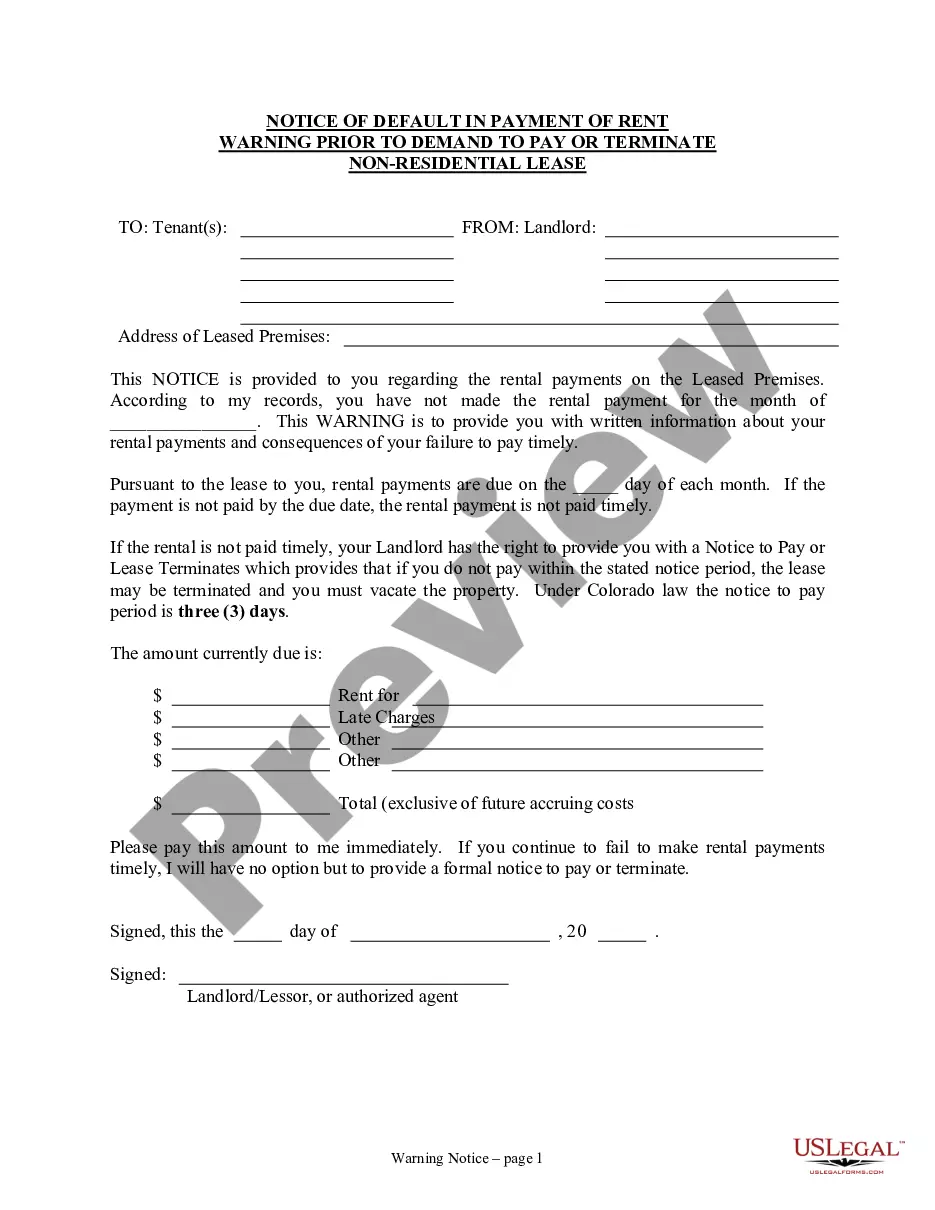
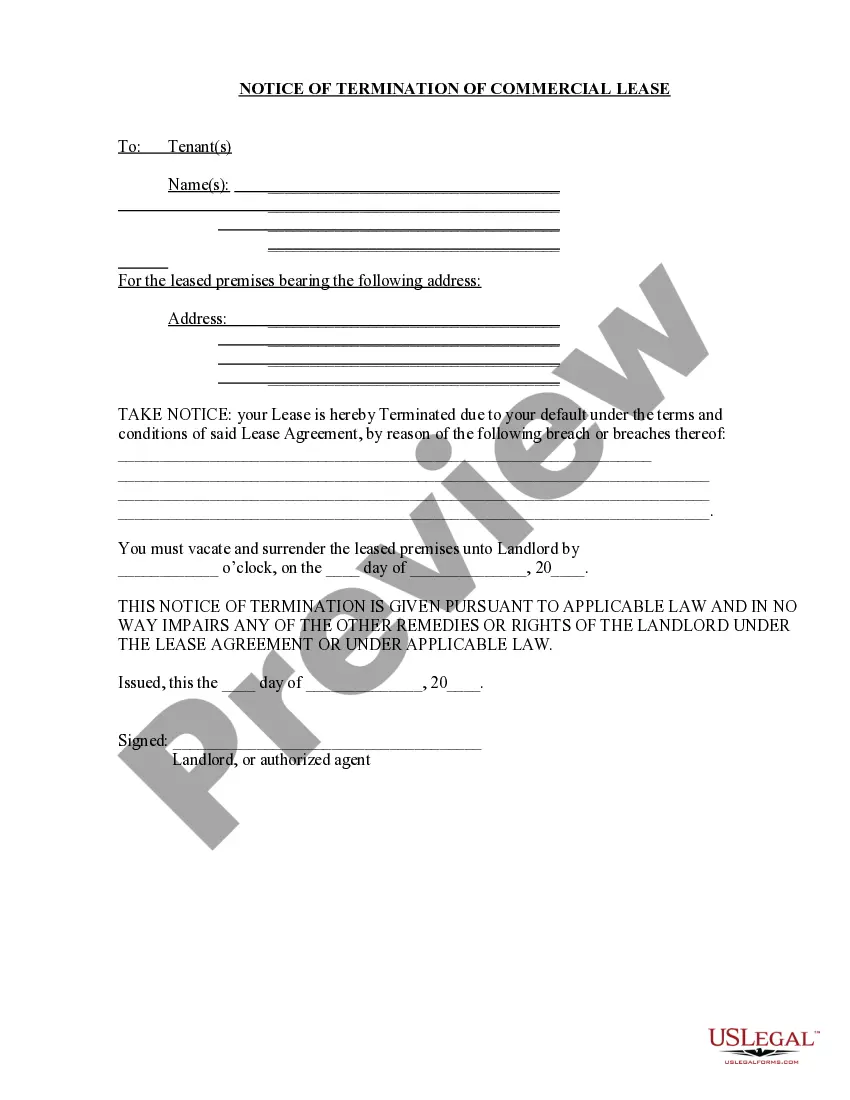
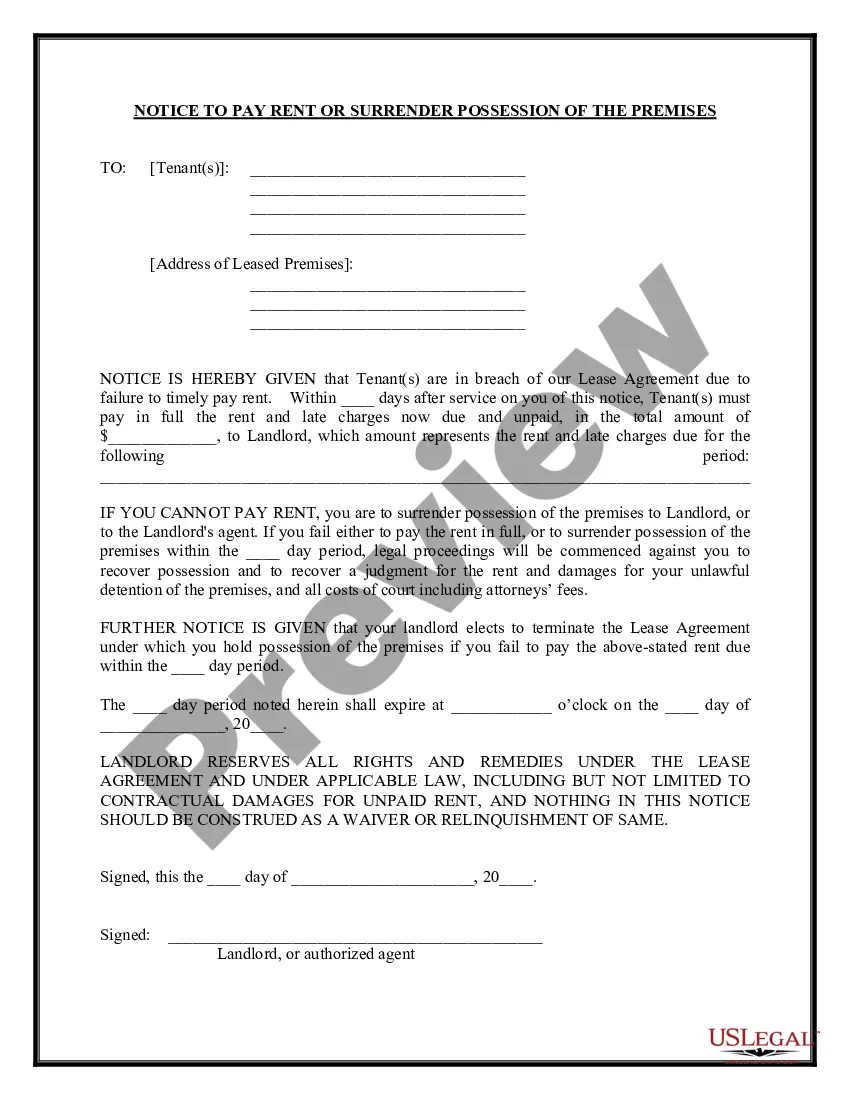
This Notice of Default in Payment of Rent as Warning Prior to Demand to Pay or Terminate for Nonresidential or Commercial Property is a crucial document for landlords. It alerts tenants about their failure to pay rent on time and serves as an initial warning before any formal demands to pay or terminate the lease occur. This form highlights the due date of rent and outlines the potential consequences of missing payments, distinguishing it from other eviction or termination notices.
What’s included in this form
- Landlord and Tenant Information: Names and addresses of both parties involved.
- Leased Premises Address: Specific location of the rental property.
- Payment Details: Includes the due date, amount due, and any late charges.
- Warning Statement: Advises the tenant of their default and consequences if payment is not made.
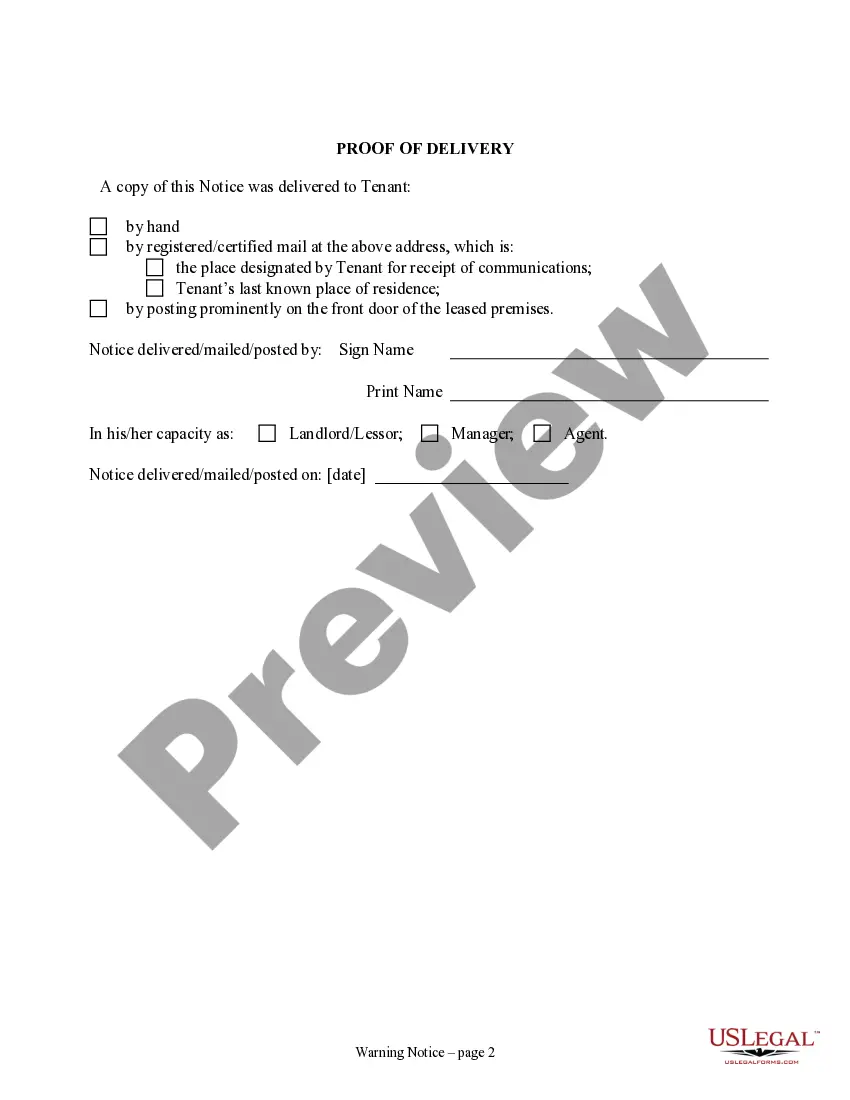
- Proof of Delivery: Methods used to deliver the notice to the tenant.

Common use cases
Intended users of this form
- Landlords managing nonresidential or commercial properties.
- Property managers acting on behalf of landlords.
- Real estate professionals overseeing rental agreements.
Instructions for completing this form
- Identify the parties: Fill in the names and addresses of both landlord and tenant.
- Specify the property: Enter the address of the leased premises.
- Enter payment details: Specify the month for which rent is overdue and the total amount due.
- Include the warning statement: Clearly state the consequences of non-payment.
- Document delivery: Fill out the proof of delivery section to confirm how the notice was provided to the tenant.
Is notarization required?
In most cases, this form does not require notarization. However, some jurisdictions or signing circumstances might. US Legal Forms offers online notarization powered by Notarize, accessible 24/7 for a quick, remote process.
Get your form ready online
Our built-in tools help you complete, sign, share, and store your documents in one place.
Make edits, fill in missing information, and update formatting in US Legal Forms—just like you would in MS Word.
Download a copy, print it, send it by email, or mail it via USPS—whatever works best for your next step.
Sign and collect signatures with our SignNow integration. Send to multiple recipients, set reminders, and more. Go Premium to unlock E-Sign.
If this form requires notarization, complete it online through a secure video call—no need to meet a notary in person or wait for an appointment.
We protect your documents and personal data by following strict security and privacy standards.

Make edits, fill in missing information, and update formatting in US Legal Forms—just like you would in MS Word.

Download a copy, print it, send it by email, or mail it via USPS—whatever works best for your next step.

Sign and collect signatures with our SignNow integration. Send to multiple recipients, set reminders, and more. Go Premium to unlock E-Sign.

If this form requires notarization, complete it online through a secure video call—no need to meet a notary in person or wait for an appointment.

We protect your documents and personal data by following strict security and privacy standards.
Avoid these common issues
- Failing to specify the correct month for overdue rent.
- Not providing all required contact information for the landlord.
- Neglecting to sign the notice, rendering it invalid.
Advantages of online completion
- Convenience: Download and fill the form from your own device at any time.
- Editability: Easily modify the form to suit your situation as changes occur.
- Reliability: Ensure compliance with the latest legal standards and formats.
Legal use & context
- This form serves as a legal warning that protects the landlord's rights under the lease.
- It provides documentation for any future legal actions if rent remains unpaid.
- Tenants are afforded a chance to rectify their payment before possible eviction proceedings.
Quick recap
- The Notice of Default in Payment of Rent is essential for landlords managing nonresidential properties.
- This document offers tenants a final opportunity to pay before facing potential lease termination.
- Clearly state the details of payment defaults and adhere to state-specific regulations for effective communication.
Looking for another form?

Form popularity
FAQ
When there is no written lease and has never been a written lease, the State of Colorado assumes a month-to-month tenancy. To terminate this type of month-to-month lease, either the tenant or the landlord must give the other 21 days written notice before the end of the current rental month.
State law regulates several rent-related issues, including the amount of notice (at least 10 days in Colorado for month-to-month leases) landlords must give tenants to raise the rent and how much time (three days in Colorado) a tenant has to pay rent or move before a landlord can file for eviction.
Substantial Violation If the landlord is evicting the tenant for any of these reasons, the landlord must give the tenant a three-day notice to quit. (Colo. Rev.If the tenant does not move out of the rental unit by the end of three days, then the landlord can file an eviction lawsuit against the tenant.
A commonly used privacy clause allows a landlord access to the rental property at reasonable times and with reasonable notice to the tenant to make necessary repairs or reasonable inspections. Additionally, a landlord has the right to enter a rental unit without notice in emergencies.
A landlord needs to give a written notice to the tenant to move-out allowing 21 days for the tenant to vacate specifying the exact date on when the tenancy will end.
For evictions to terminate a lease, the first step is to serve the tenant with a Demand for Compliance or Possession Notice (JDF 101) or a Notice to Quit (JDF 97). You then have to wait for at least 3 days to elapse. If the last day of any period is a Saturday, Sunday, or legal holiday, the period is extended.
Evicting a tenant in Colorado can take around 2 weeks to 4 months, depending on whether the eviction is for illegal activity or another type of eviction. If the tenant files an answer with the court, the process could take longer (read more).