Colorado Letter from Landlord to Tenant about time of intent to enter premises
What this document covers
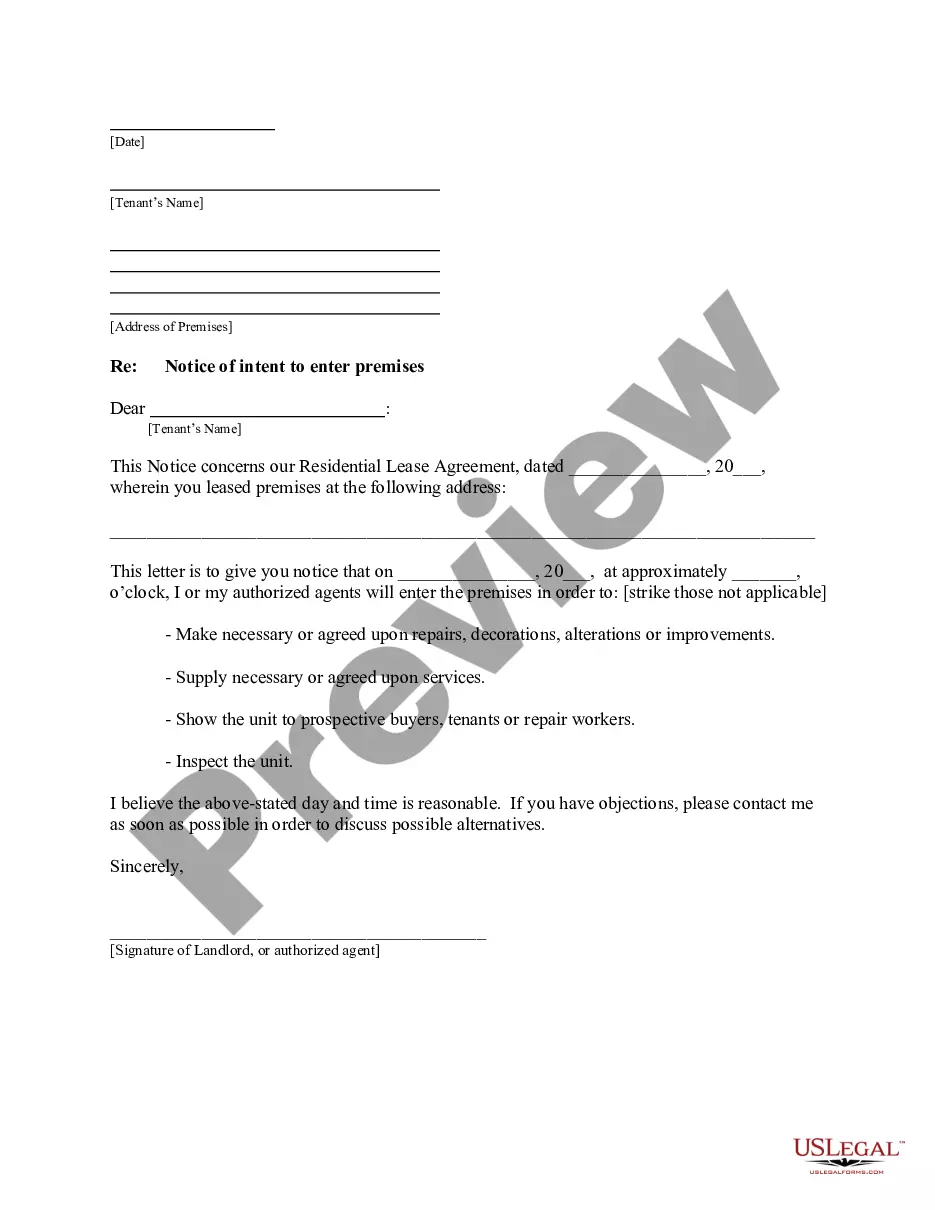
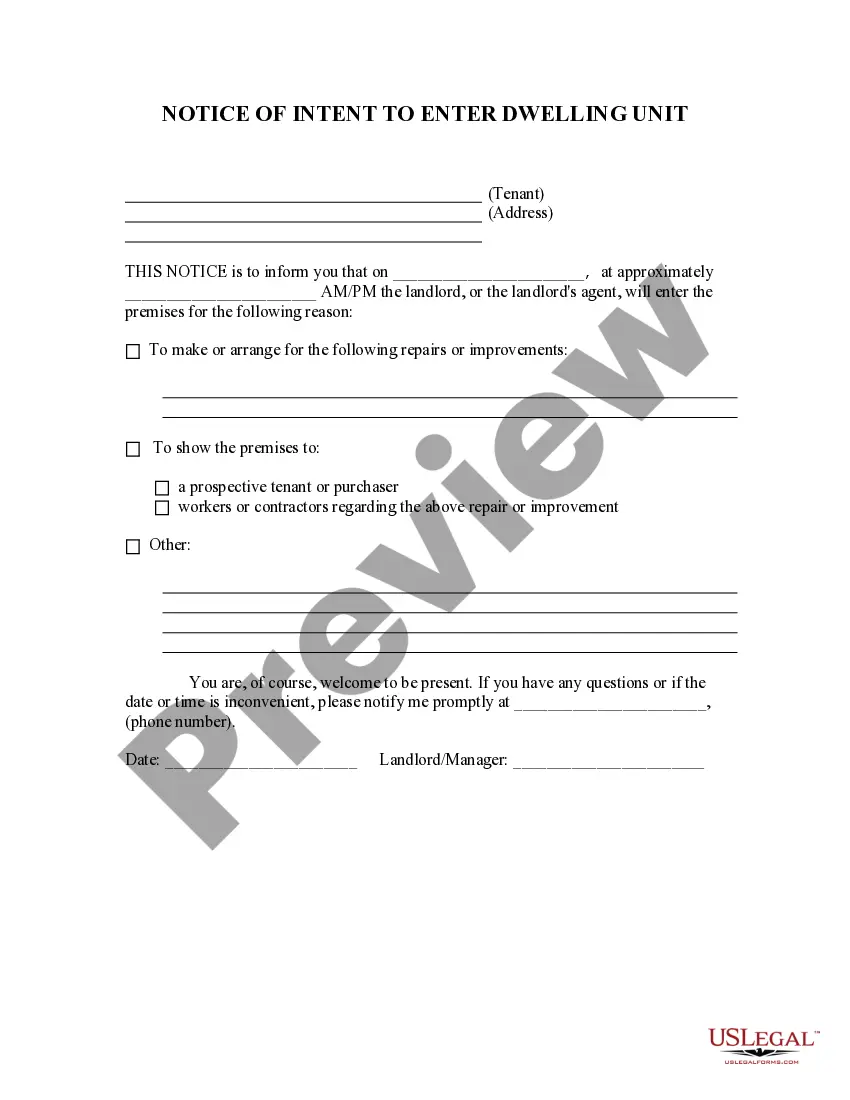
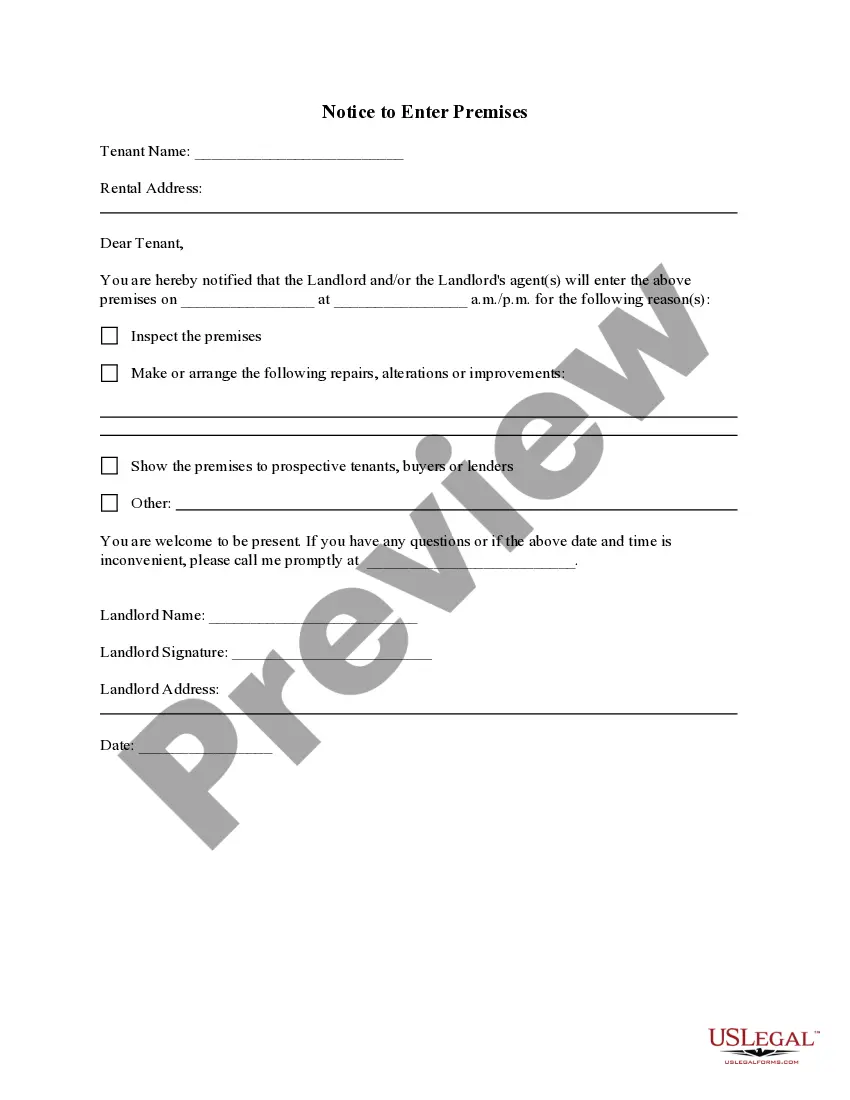
This form is a formal notice from the landlord to the tenant regarding the intent to enter the rental property. It is essential for landlords to provide tenants with advance notice before entering the premises for reasons such as repairs, inspections, or viewings. This process helps maintain a respectful landlord-tenant relationship and ensures compliance with legal requirements. Unlike other forms of communication, this letter serves as a documented notification, outlining the specific date and time of entry, and the reasons for it.
Key parts of this document
- Rental property address
- Date and time of intended entry
- Specific reasons for entry (repairs, inspections, etc.)
- Landlord's contact information
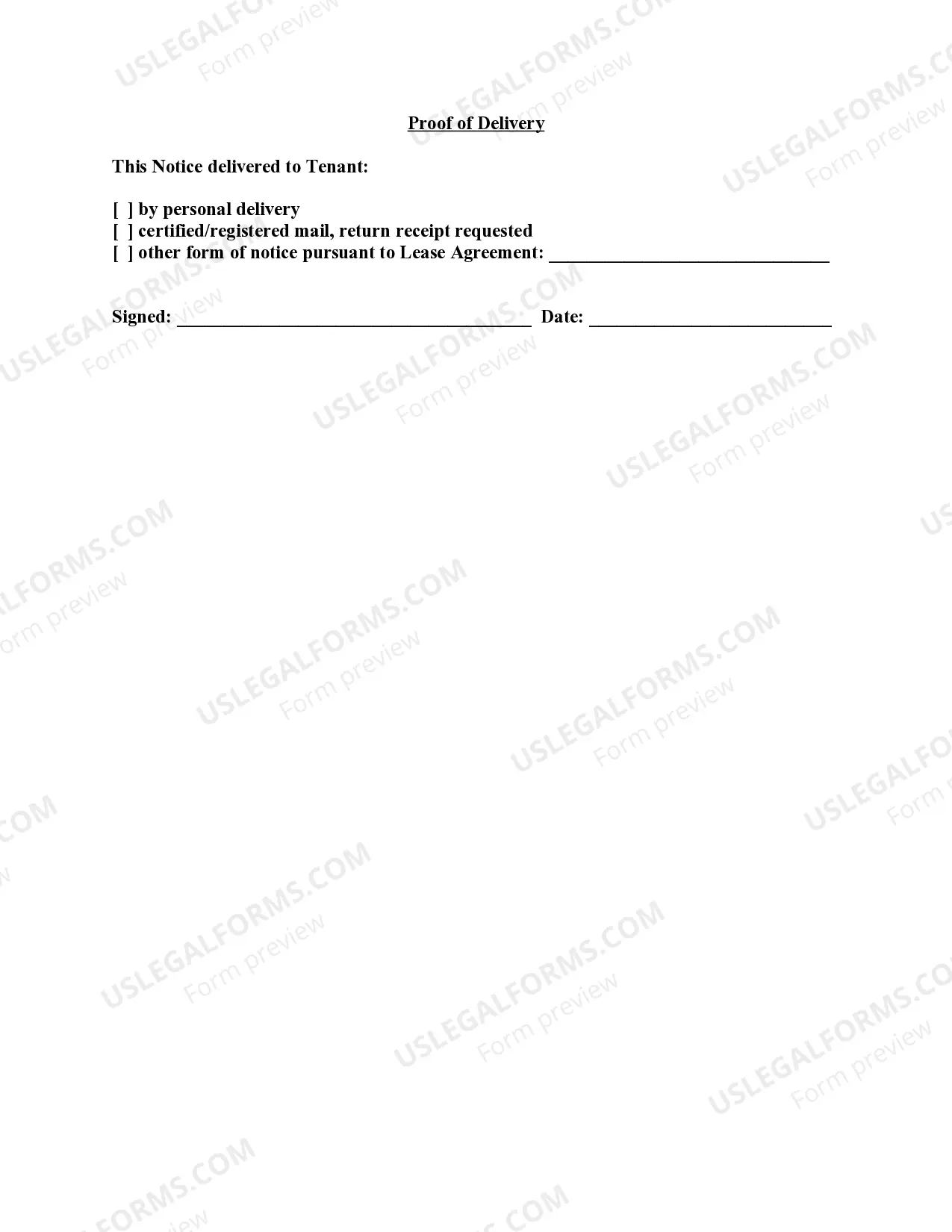
- Delivery proof options
Situations where this form applies
Who can use this document
- Landlords managing rental properties
- Property managers acting on behalf of landlords
- Real estate agents needing to show properties
- Authorized agents performing maintenance or repairs
Completing this form step by step
- Identify the relevant lease agreement by entering the lease date.
- Fill in the address of the rental property.
- Specify the date and time you plan to enter the premises.
- Select the applicable reasons for entering the property.
- Sign the letter as the landlord or authorized agent.
- Document the method of delivery and provide a signature for proof.
Notarization requirements for this form
This form does not typically require notarization unless specified by local law. Always check your stateâs specific regulations to ensure compliance.
Get your form ready online
Our built-in tools help you complete, sign, share, and store your documents in one place.
Make edits, fill in missing information, and update formatting in US Legal Forms—just like you would in MS Word.
Download a copy, print it, send it by email, or mail it via USPS—whatever works best for your next step.
Sign and collect signatures with our SignNow integration. Send to multiple recipients, set reminders, and more. Go Premium to unlock E-Sign.
If this form requires notarization, complete it online through a secure video call—no need to meet a notary in person or wait for an appointment.
We protect your documents and personal data by following strict security and privacy standards.

Make edits, fill in missing information, and update formatting in US Legal Forms—just like you would in MS Word.

Download a copy, print it, send it by email, or mail it via USPS—whatever works best for your next step.

Sign and collect signatures with our SignNow integration. Send to multiple recipients, set reminders, and more. Go Premium to unlock E-Sign.

If this form requires notarization, complete it online through a secure video call—no need to meet a notary in person or wait for an appointment.

We protect your documents and personal data by following strict security and privacy standards.
Typical mistakes to avoid
- Failing to provide adequate notice as required by state law.
- Leaving out the reasons for entry.
- Not signing the letter, which invalidates it as a notice.
- Using vague language instead of clearly stating the purpose of entry.
Benefits of using this form online
- Immediate access to downloadable templates saved time and effort.
- Easy to edit and customize to fit specific needs.
- Reliable, professionally drafted content ensures legal compliance.
- Paperless storage allows for quick reference and organization.
Legal use & context
- Validating the notice provides legal protection for landlords.
- This form helps resolve disputes by documenting the landlord's intentions.
- It serves as a critical part of maintaining a good tenant relationship.
Quick recap
- Inform tenants ahead of time about intent to enter the property.
- Ensure all necessary details are clearly stated in the notice.
- Follow state-specific regulations regarding notice delivery and timing.
- Use this form to avoid legal disputes related to property access.
Looking for another form?

Form popularity
FAQ
An intent to rent letter is a formal document indicating a landlord's intention to lease a property to a prospective tenant. This letter typically outlines basic lease terms and can serve as a precursor to a full rental agreement. It helps establish expectations and builds a professional relationship between the landlord and tenant. Consider incorporating information regarding a Colorado Letter from Landlord to Tenant about time of intent to enter premises to ensure mutual awareness.
To write an effective letter of intent, start with a clear subject line or opening statement regarding your intent. Structure your letter with an introduction, body, and conclusion, providing specific details about your proposal or request. Ensure that your language is straightforward, avoiding any ambiguity. If relevant, include a Colorado Letter from Landlord to Tenant about time of intent to enter premises to specify your plans transparently.
An example of a letter of intent to rent includes essential components such as the names of both parties, the property address, and the proposed rental terms. It may also outline start and end dates of the lease, payment details, and conditions regarding property access. This document serves as a foundation for future agreements and helps to avoid misunderstandings. For more tailored examples, you can explore resources like uslegalforms to find templates that match your needs.
When writing a letter from a landlord to a tenant, start with a respectful greeting. Clearly address the purpose of the letter, whether it's about rent collection, maintenance, or notification of intent to enter premises. State your points concisely yet thoroughly, ensuring the tenant understands their rights and responsibilities. For instance, if you need to enter the premises, refer to the Colorado Letter from Landlord to Tenant about time of intent to enter for clarity.
A letter of intent from a landlord outlines the terms under which they plan to rent a property to a tenant. This document typically details the prospective rent amount, occupancy dates, and any other associated agreements. It establishes a mutual understanding and serves as a preliminary step before signing a lease. Importantly, this letter can include a Colorado Letter from Landlord to Tenant about time of intent to enter premises to specify conditions under which the landlord may access the property.
To write a letter of intent for rent, start by clearly stating your purpose. Include the full name and address of both the landlord and the tenant. Specify the rental terms such as the monthly rent amount, duration of the lease, and any specific requests about entering the premises. Utilize a professional tone throughout to maintain clarity in your communication.
In Colorado, tenants should generally provide at least 30 days' notice before moving out, or as stated in your lease agreement. Communicating clearly through a written notice is essential, and documenting your interactions can provide clarity. Use tools such as the Colorado Letter from Landlord to Tenant about time of intent to enter premises to formalize your communications for smooth transitions.
Maintenance typically cannot enter your unit without notice under Colorado law, unless it is an emergency. It’s important for you to receive prior notification, usually 24 hours in advance, so you can prepare accordingly. Utilizing the Colorado Letter from Landlord to Tenant about time of intent to enter premises can clarify these situations for both parties.
An entry note is a formal notification that a landlord issues to inform you of their intention to enter your rental unit. This document highlights the date, time, and purpose for entry, aligning with the rules established in the Colorado Letter from Landlord to Tenant about time of intent to enter premises. Understanding this process fosters effective communication and respect in rental agreements.
Yes, landlords must provide notice before entering in Colorado, typically 24 hours in advance. This notice should indicate the intent to enter and the purpose of the visit. Referencing the Colorado Letter from Landlord to Tenant about time of intent to enter premises can help you manage expectations and preparations.