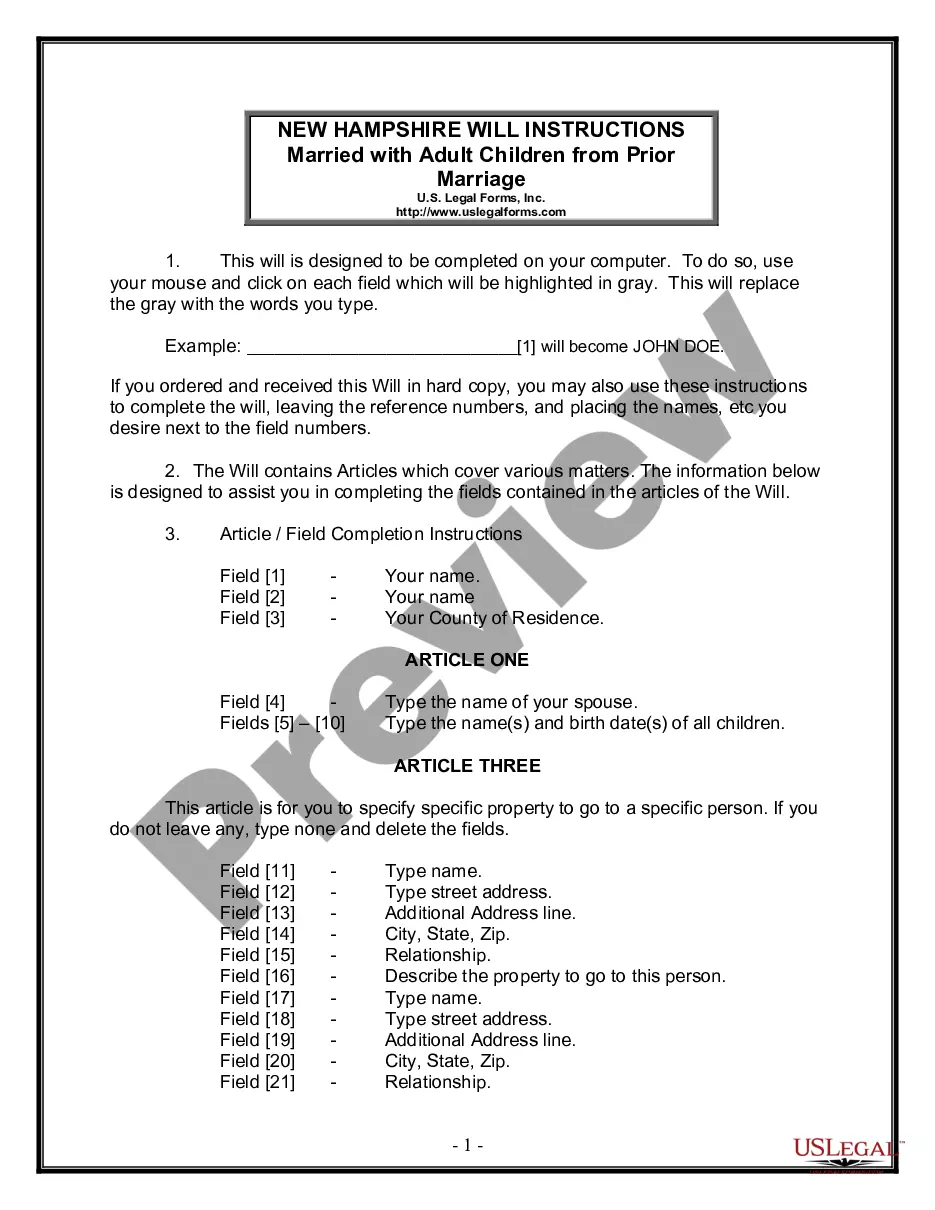
California Last Will and Testament for other Persons
Overview of this form
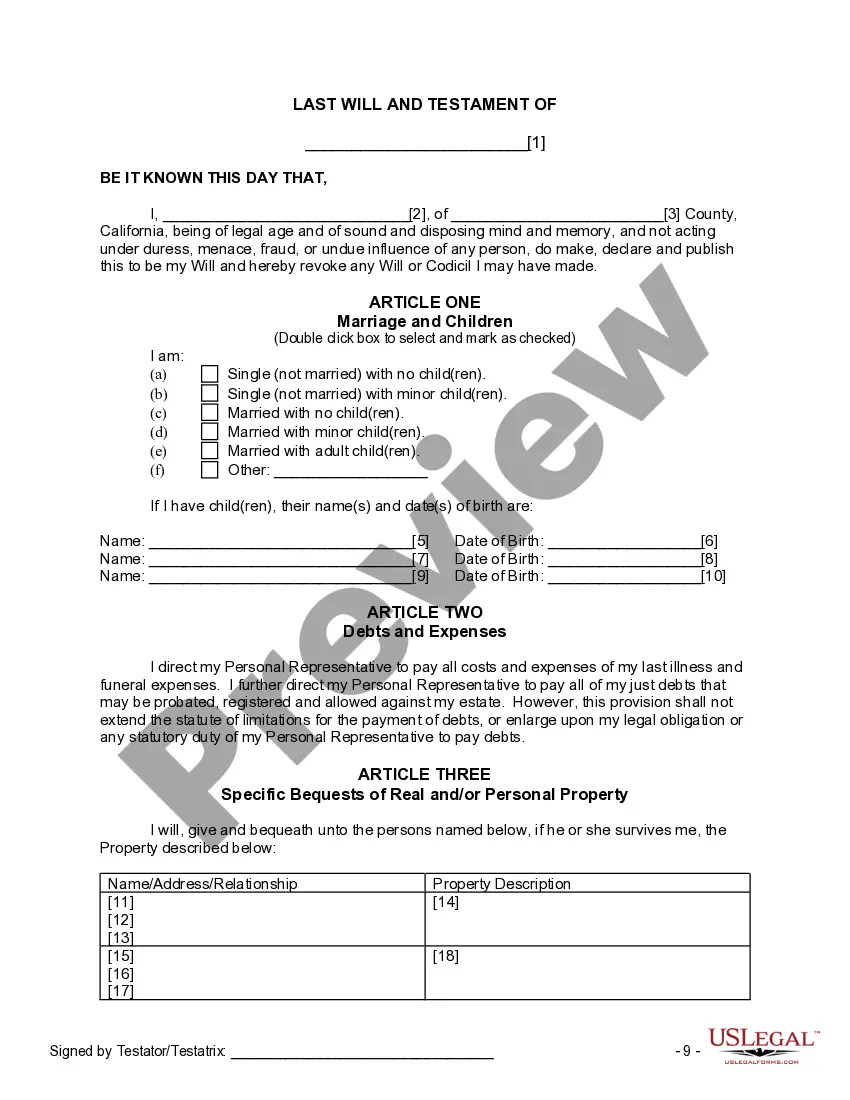
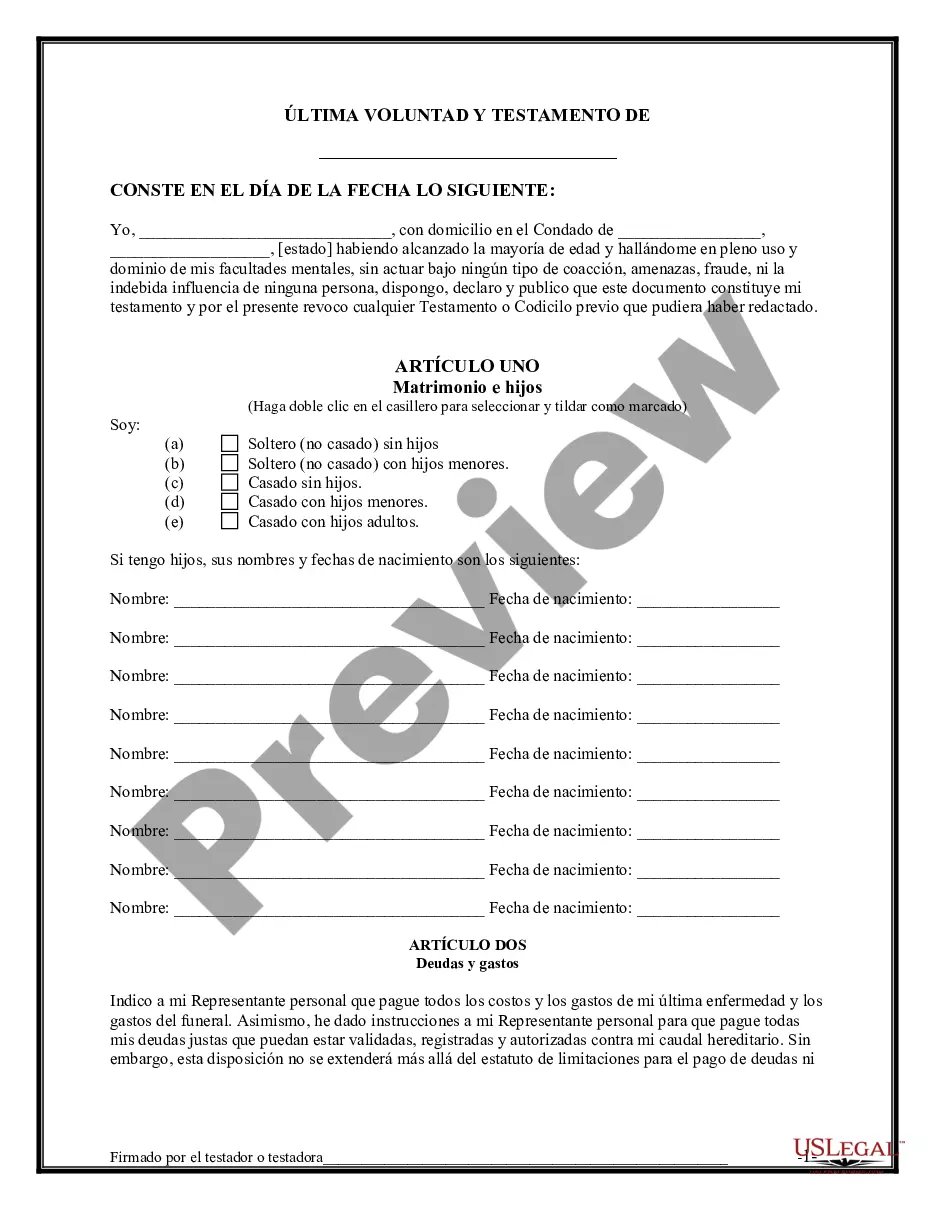
The Last Will and Testament for Other Persons is a legal document that dictates how a person's assets will be distributed after their death. This will is specifically created for individuals who may not find a suitable existing document that fits their circumstances. It includes provisions for naming beneficiaries, appointing executors, and addressing guardianship for minor children, tailored specifically for residents of California.
Key parts of this document
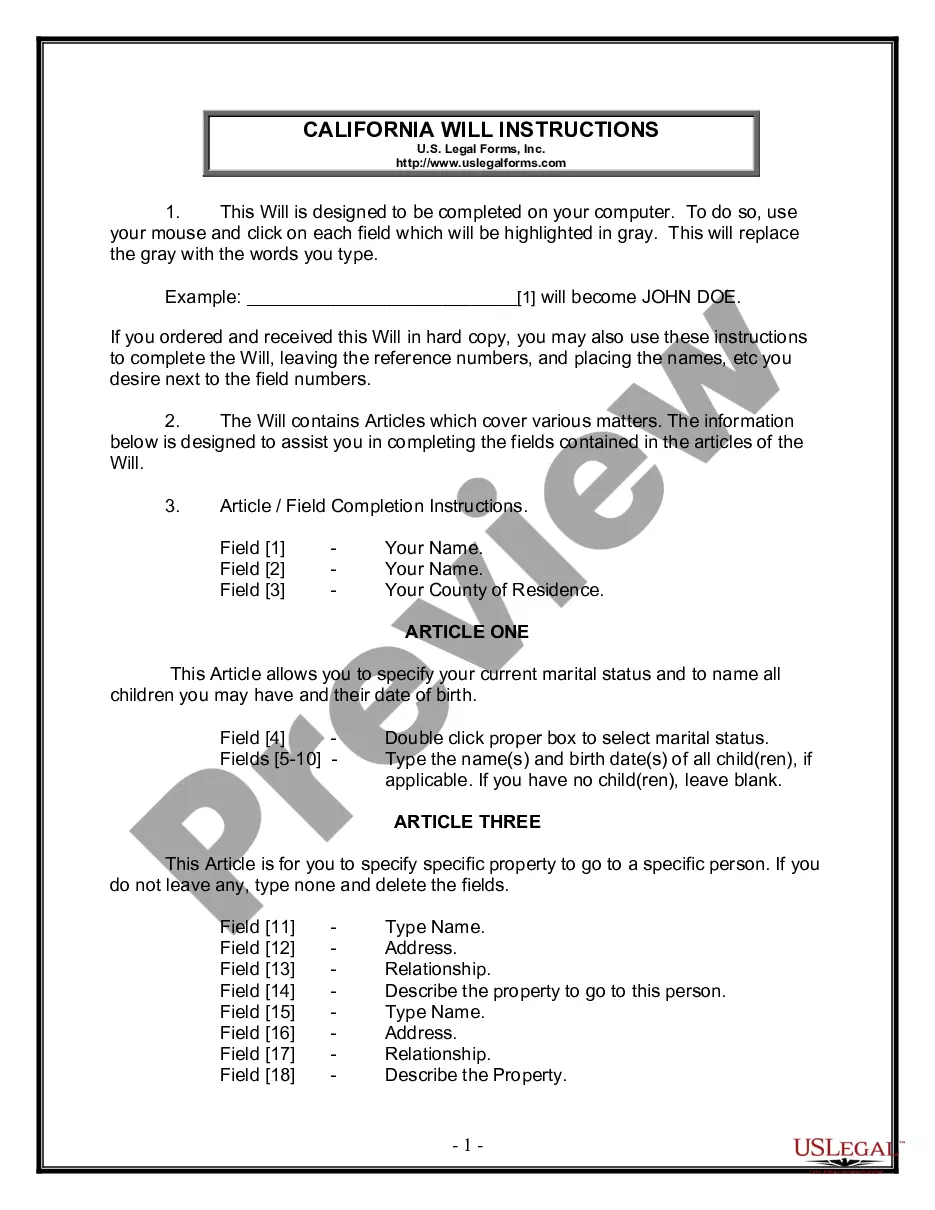
- Your name and county of residence.
- Marital status and details of any children.
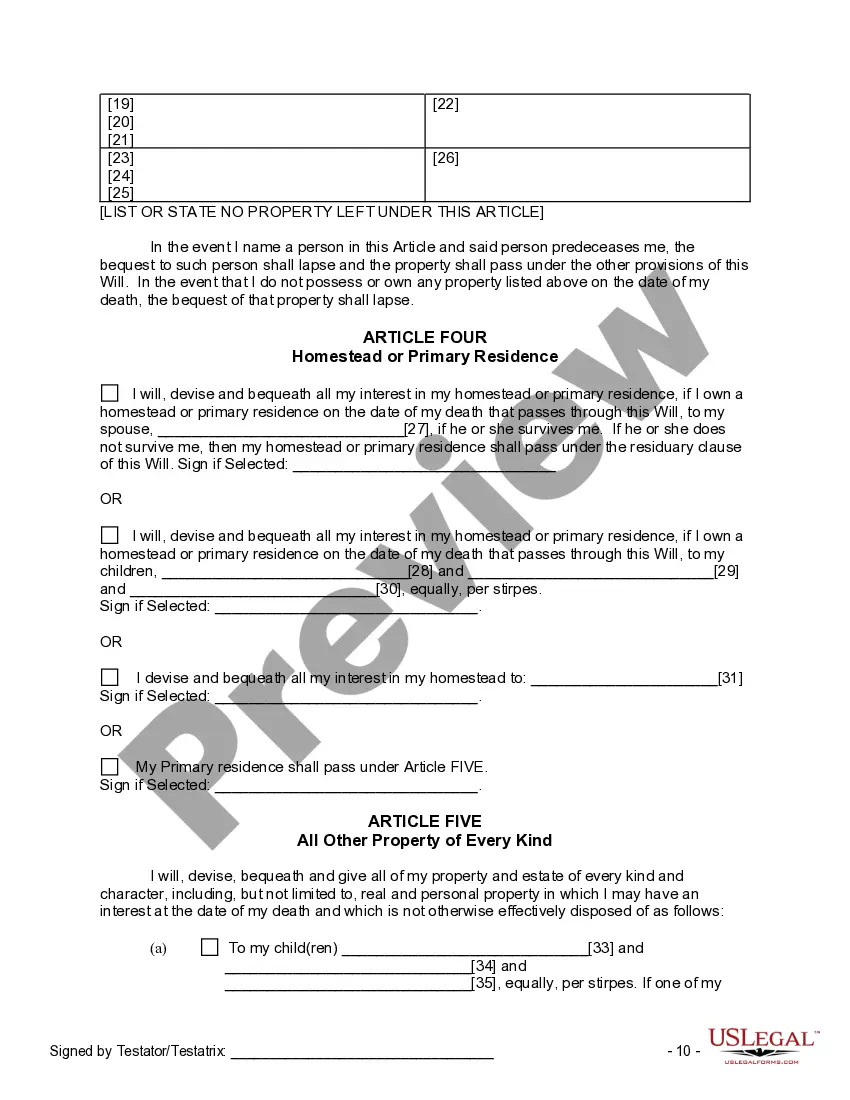
- Specific property bequests to named individuals.
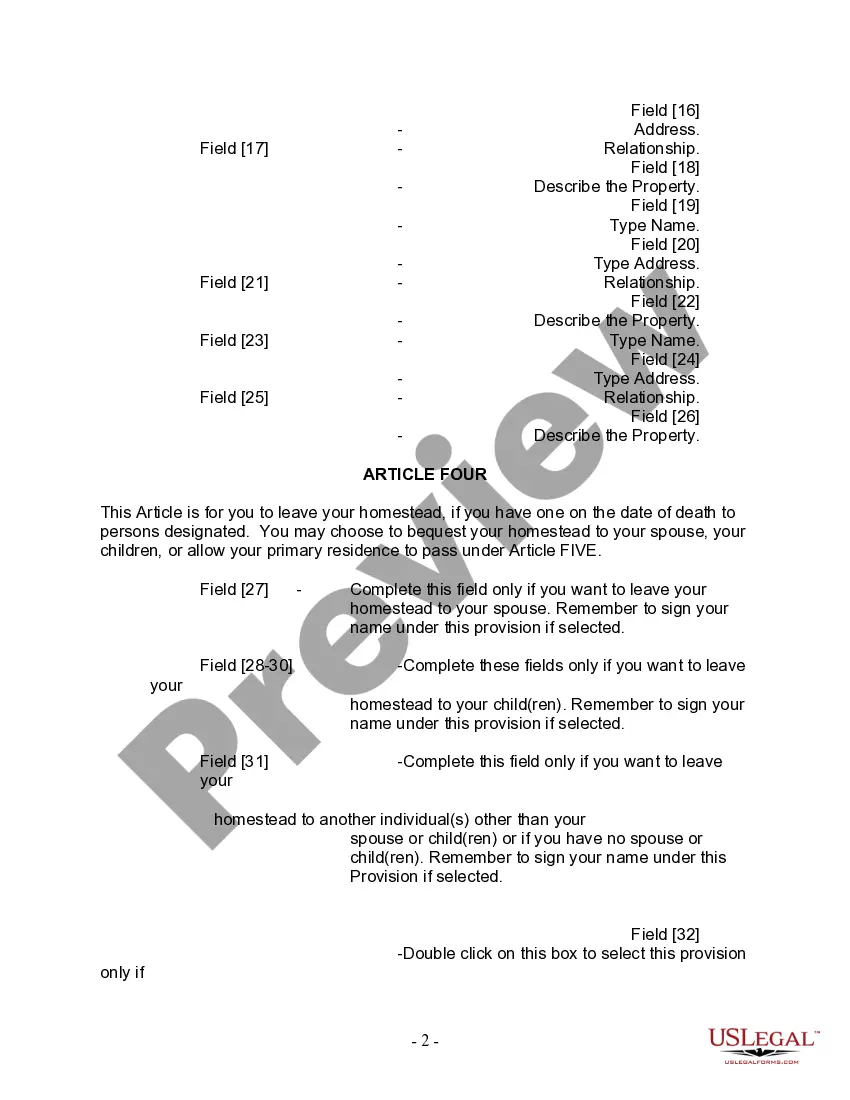
- Instructions regarding the disposition of your homestead or primary residence.
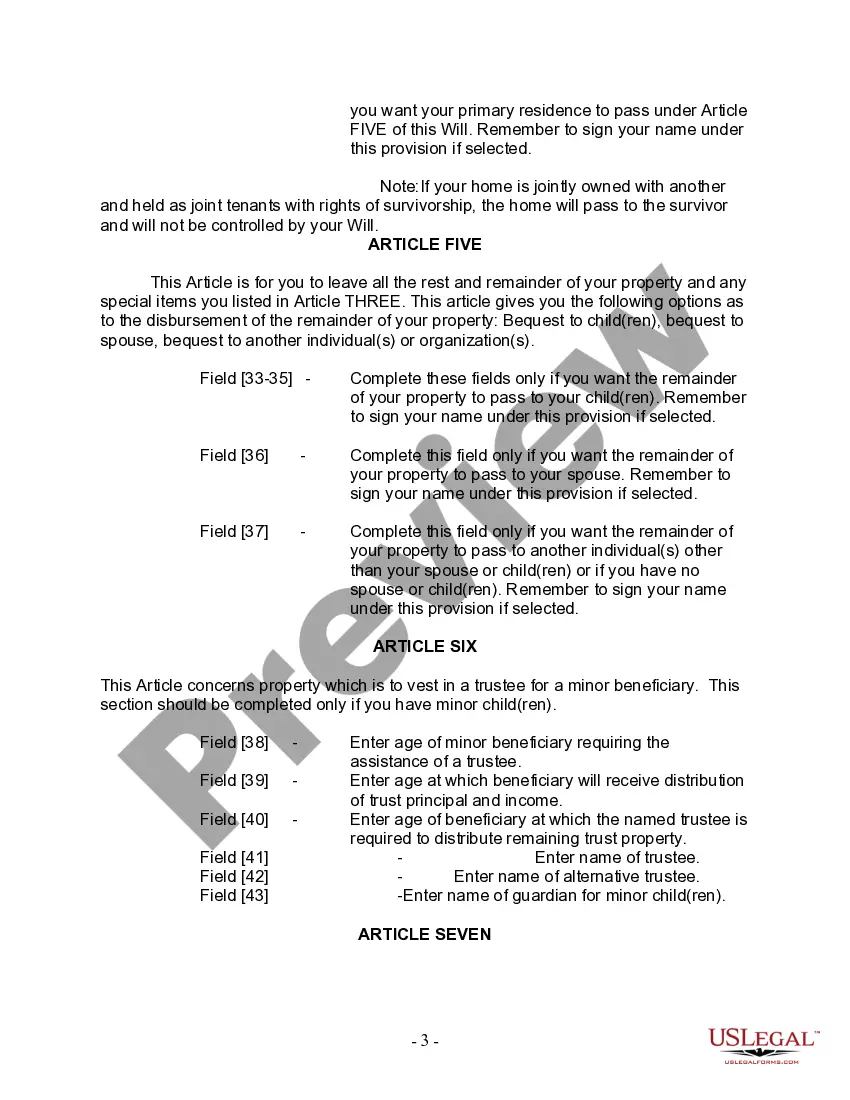
- Provisions for the remainder of your property.
- Appointment of a personal representative to oversee your estate.




When to use this form
This Last Will and Testament is ideal for individuals in California who wish to ensure their wishes regarding property distribution and guardianship are legally documented. It is especially useful for those who do not have an existing will or find that existing forms do not meet their specific needs. Whether you have minor children, wish to stipulate bequests, or designate an executor of your estate, this form covers essential components to secure your intentions.
Who should use this form
- Individuals aged 18 or older who are residents of California.
- People with specific wishes about their property distribution after death.
- Parents of minor children who want to appoint guardians.
- Anyone who does not have an existing valid will.
Completing this form step by step
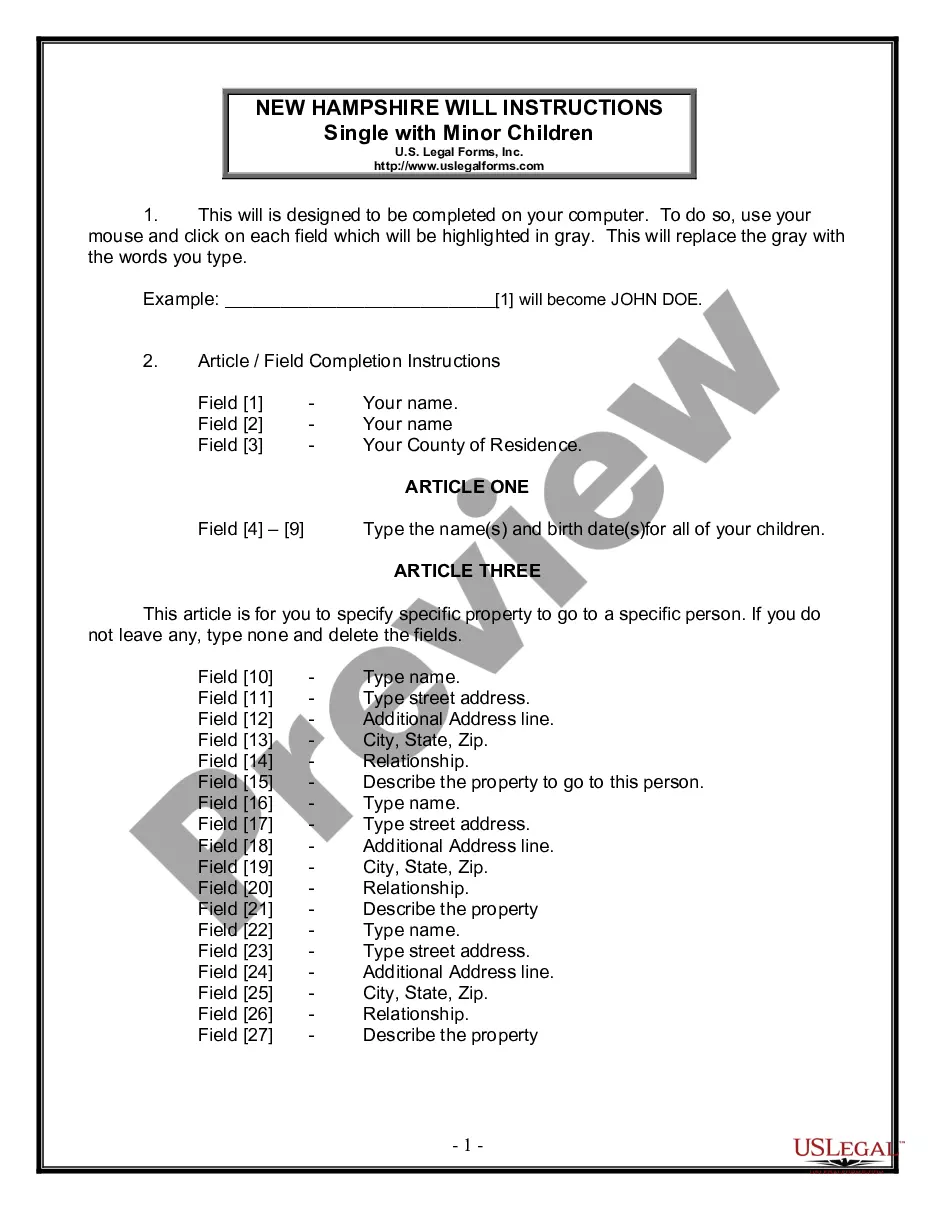
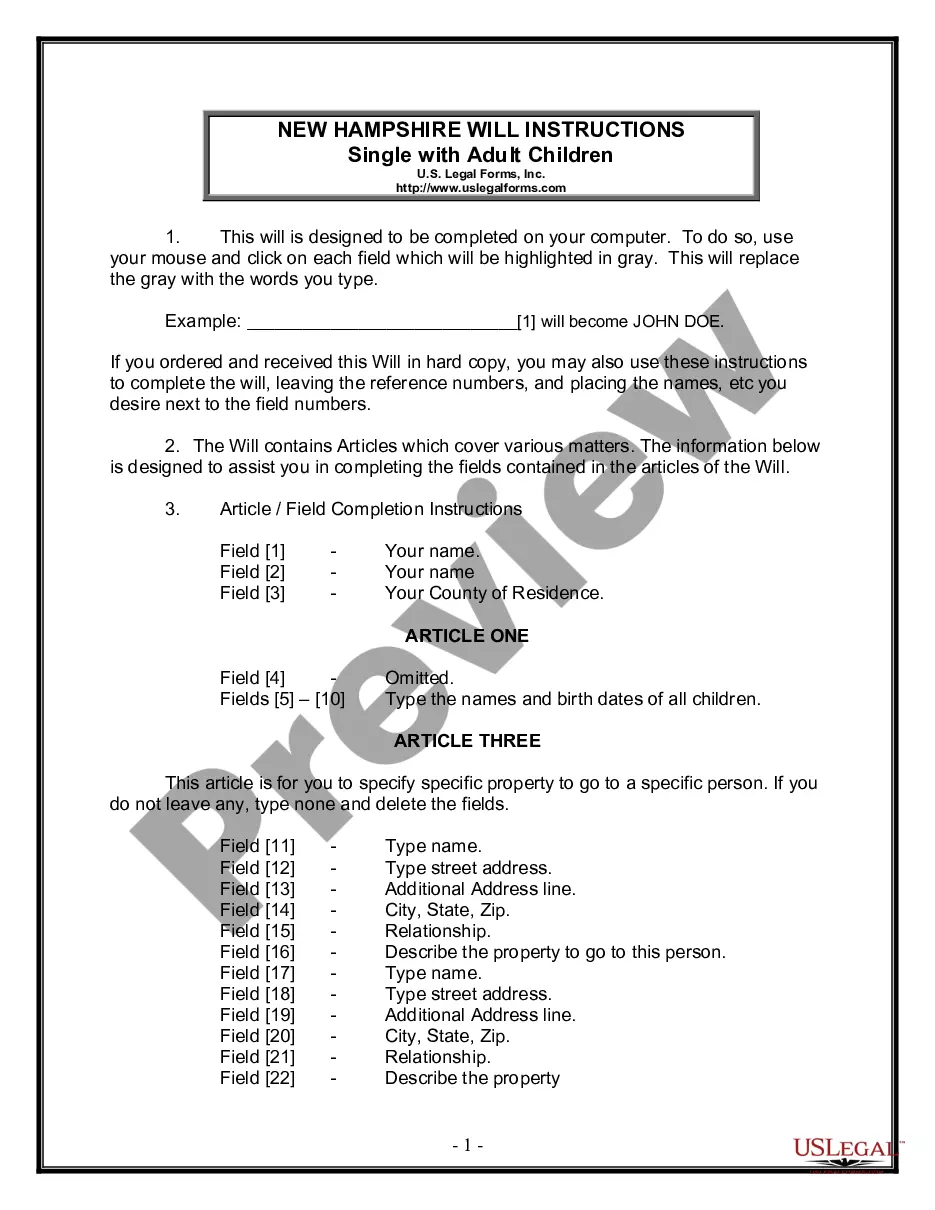
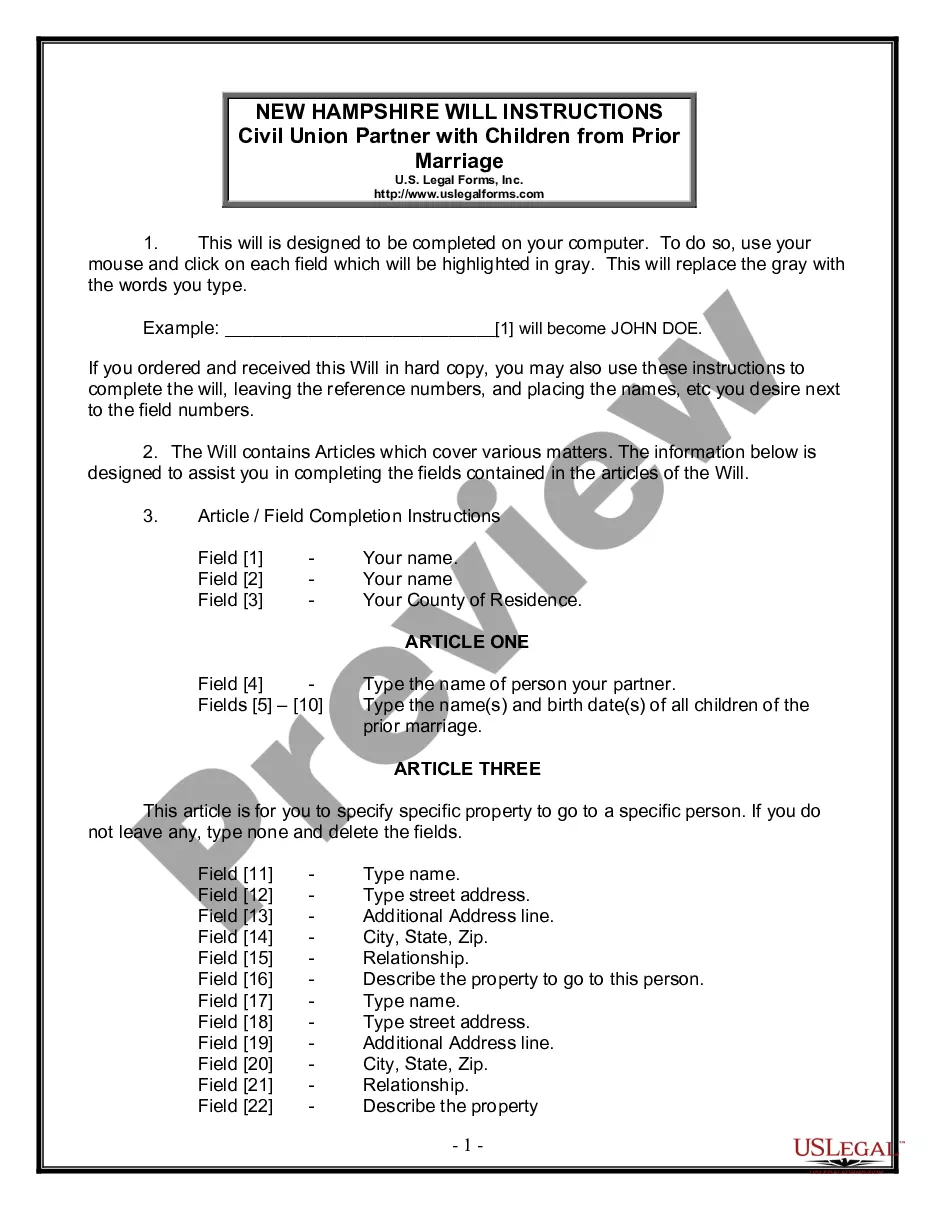
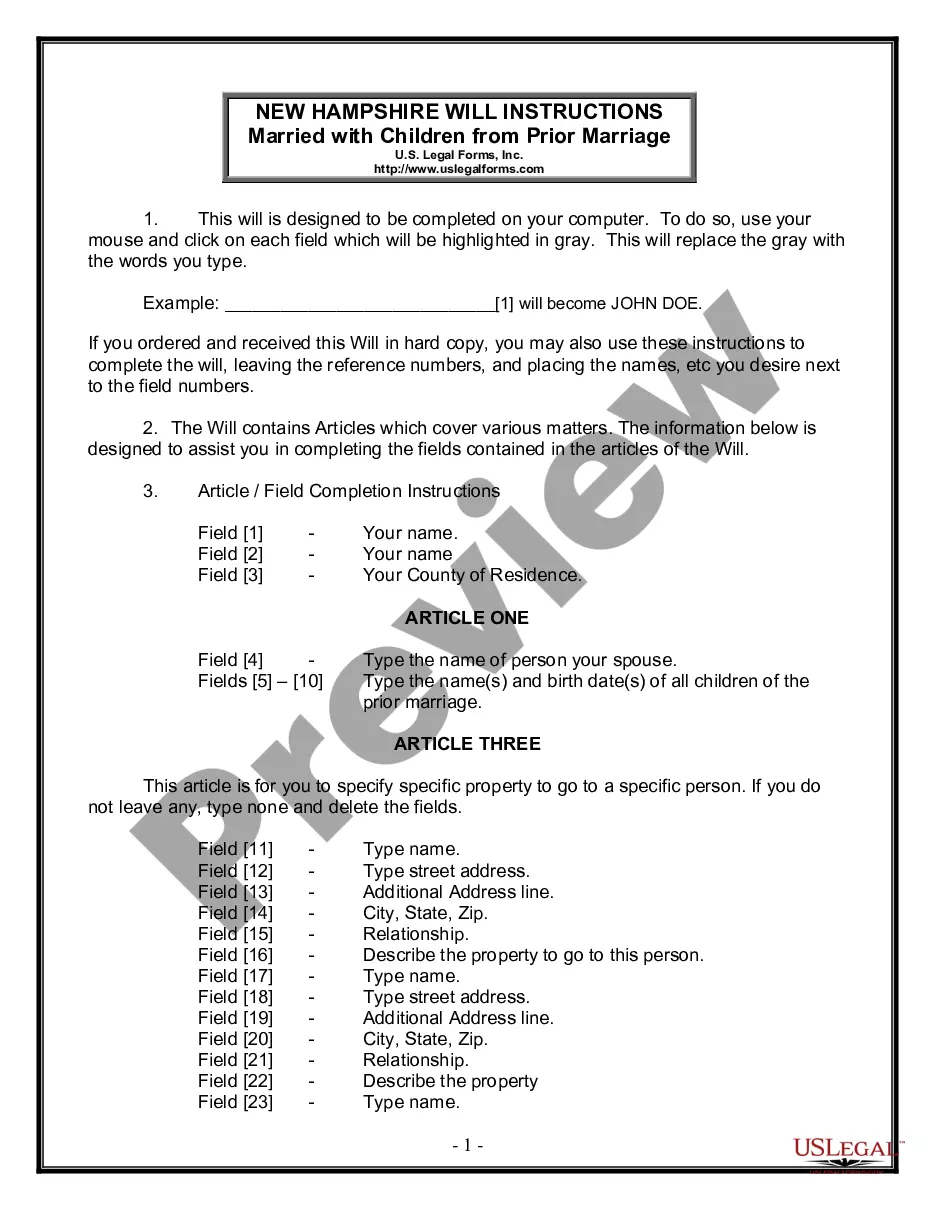
- Begin by entering your name and county of residence at the top of the document.
- Specify your marital status and list any children along with their dates of birth.
- Detail any specific properties and who should receive them under the appropriate articles.
- Decide on the distribution of your homestead and other remaining assets.
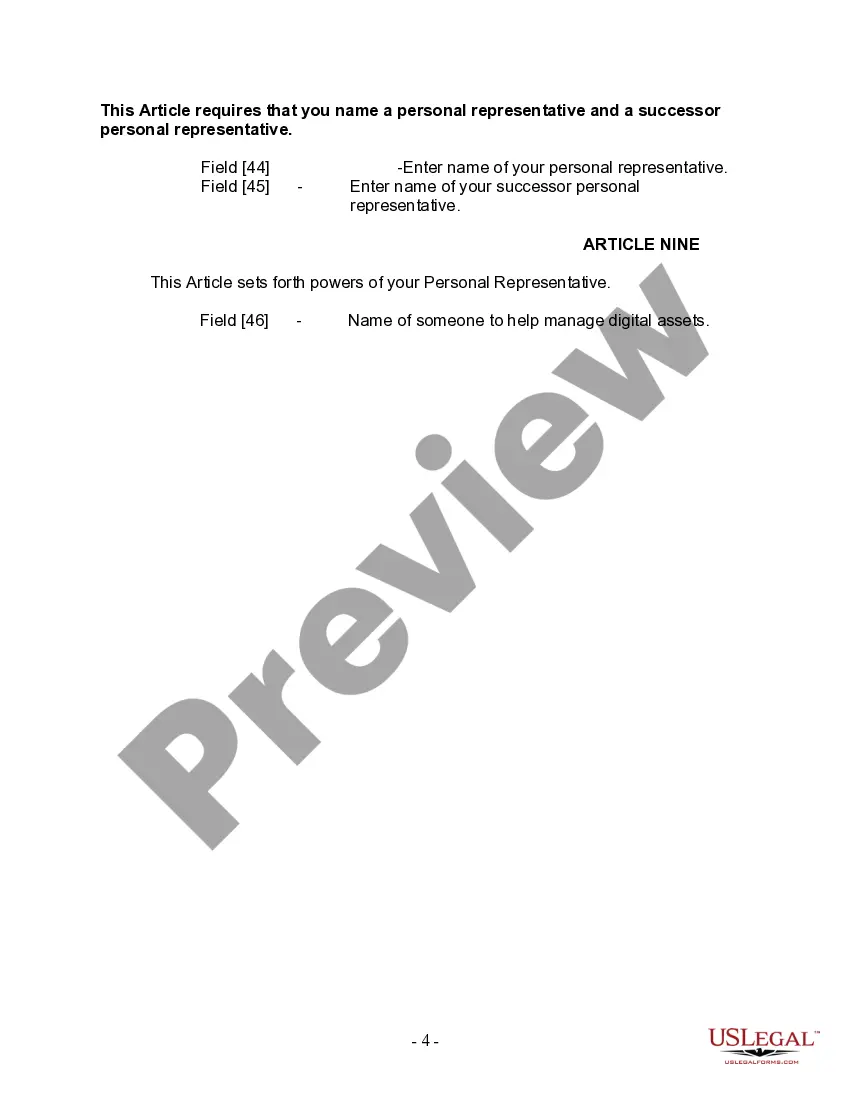
- Appoint a personal representative and a successor to manage your estate.
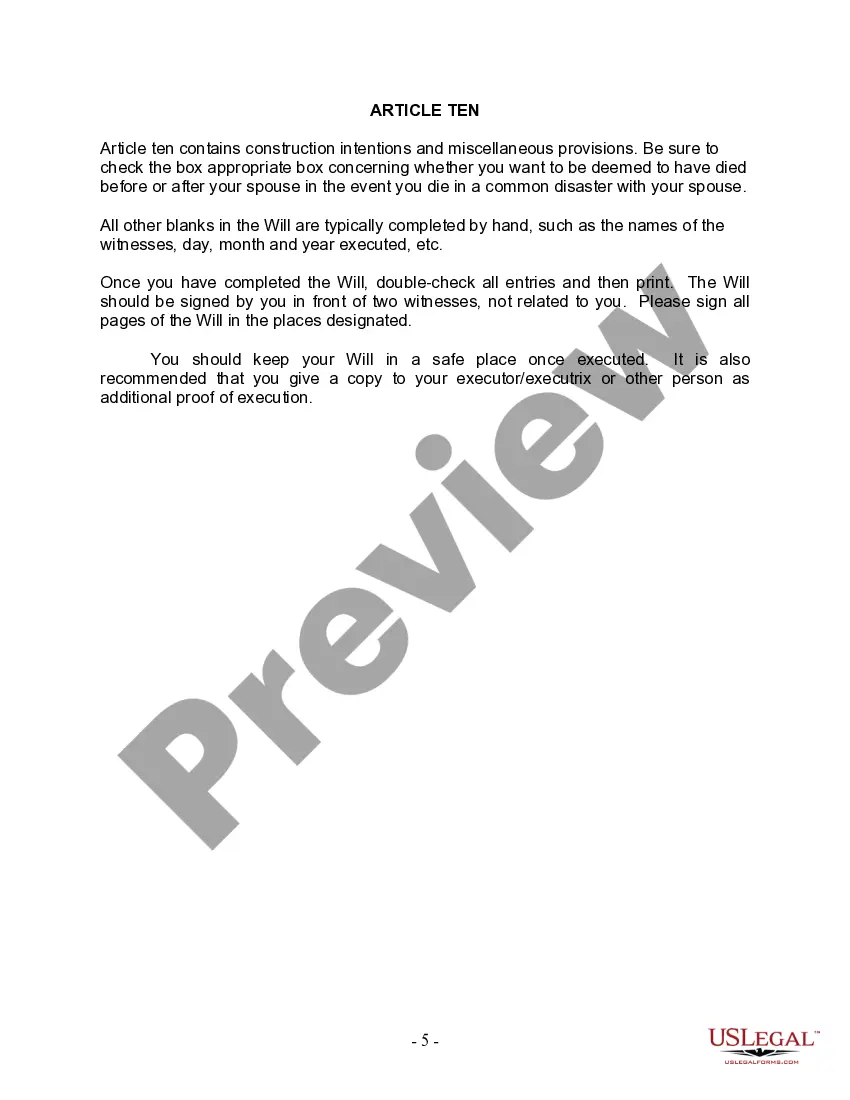
- Sign the will in front of two witnesses who are not related to you, ensuring all required fields are completed.
Does this form need to be notarized?
In most cases, this form does not require notarization. However, some jurisdictions or signing circumstances might. US Legal Forms offers online notarization powered by Notarize, accessible 24/7 for a quick, remote process.
Get your form ready online
Our built-in tools help you complete, sign, share, and store your documents in one place.
Make edits, fill in missing information, and update formatting in US Legal Forms—just like you would in MS Word.
Download a copy, print it, send it by email, or mail it via USPS—whatever works best for your next step.
Sign and collect signatures with our SignNow integration. Send to multiple recipients, set reminders, and more. Go Premium to unlock E-Sign.
If this form requires notarization, complete it online through a secure video call—no need to meet a notary in person or wait for an appointment.
We protect your documents and personal data by following strict security and privacy standards.

Make edits, fill in missing information, and update formatting in US Legal Forms—just like you would in MS Word.

Download a copy, print it, send it by email, or mail it via USPS—whatever works best for your next step.

Sign and collect signatures with our SignNow integration. Send to multiple recipients, set reminders, and more. Go Premium to unlock E-Sign.

If this form requires notarization, complete it online through a secure video call—no need to meet a notary in person or wait for an appointment.

We protect your documents and personal data by following strict security and privacy standards.
Avoid these common issues
- Failing to sign the will in front of the required witnesses.
- Not checking that all fields are completed before finalizing the document.
- Neglecting to update the will after major life changes, such as marriage or the birth of children.
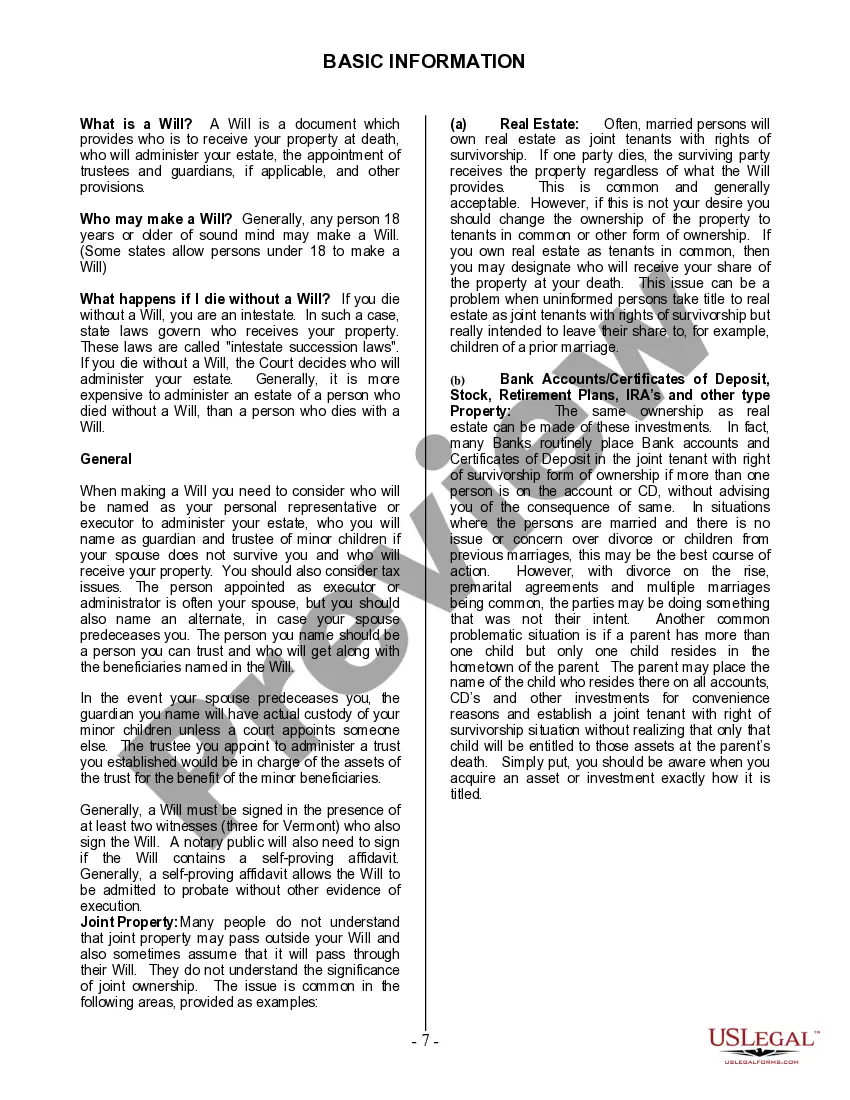
- Assuming that joint property will be distributed according to the will, instead of understanding its separate legal status.
Why use this form online
- Convenient access that allows you to complete the form at your own pace.
- Edit and customize the document easily to suit your specific needs.
- Drafted by licensed attorneys, ensuring compliance with California law.
- Immediate download for quick use, eliminating waiting times associated with traditional legal services.
Main things to remember
- The Last Will and Testament for Other Persons is essential for guiding asset distribution.
- This form is specifically tailored to meet California's legal requirements.
- Proper completion and witness signatures are crucial for the validity of the will.
- Keep your will updated to reflect any significant life changes.
Looking for another form?
Form popularity
FAQ
Yes, in the absence of a will, a spouse automatically inherits a substantial portion of the deceased's estate in California. Depending on the family dynamics and any children involved, specific inheritance laws may apply. Familiarizing yourself with the California Last Will and Testament for other Persons can provide clarity regarding inheritance rights and expectations.
A beneficiary can request a copy of the will from the executor or attorney managing the estate. If the will is filed with the probate court, it is also accessible for viewing. Understanding the California Last Will and Testament for other Persons is essential for beneficiaries to navigate their inheritances and rights effectively.
Executors in California must disclose critical information regarding the estate to beneficiaries. This includes the assets, debts, and the terms outlined in the California Last Will and Testament for other Persons. Such transparency helps maintain trust and collaboration among all parties involved during the probate process.
Beneficiaries of a trust in California are entitled to a copy of the trust document. This ensures they are aware of their rights and interests in the trust assets. Comprehending the provisions of the California Last Will and Testament for other Persons and related trust documents plays a significant role in estate planning and asset management.
In California, the legal heirs are typically the deceased's spouse, children, parents, and siblings. If there are no immediate family members, more distant relatives may be considered heirs. Understanding who qualifies as a legal heir can be crucial when dealing with a California Last Will and Testament for other Persons and ensuring proper estate distribution.
Yes, beneficiaries are entitled to receive a copy of the will in California. When a person passed away and their California Last Will and Testament for other Persons is in probate, it is vital that beneficiaries understand their rights and inheritances. The executor is responsible for providing the will to all named beneficiaries, ensuring they are informed about the distribution of the estate.
In California, anyone can request to see a copy of a will once it has been filed with the probate court. This includes family members, beneficiaries, and even individuals who might be interested in the estate. The California Last Will and Testament for other Persons becomes a public document through this process, allowing transparency regarding the deceased's wishes.
To fill out a California Last Will and Testament for other Persons, start by gathering the necessary information, such as the names and details of your beneficiaries and any assets you wish to include. Use clear language to specify how you want your estate distributed after your passing. It is essential to follow California's legal requirements, which include having the will signed and witnessed appropriately. Consider using the uslegalforms platform for easy access to templates and guidance that meet California's regulations.
In California, you do not have to file a California Last Will and Testament for other Persons with the court unless it goes through probate. If you create a will and your estate meets certain thresholds, you may need to file it for validation during probate proceedings. However, many individuals opt to keep their wills private and only present them when necessary. Utilizing platforms like USLegalForms can help you create a legally sound will, making it easier to understand your filing obligations.
Yes, you can write a will on a piece of paper in California, but it must meet certain requirements to be considered valid. This is called a holographic will, which means it is handwritten and signed by you. Ensure that it clearly expresses your intentions regarding your California Last Will and Testament for other Persons to avoid any misunderstandings later. Remember to date the document and consult legal resources if you're unsure.