California Last Will and Testament for Married Person with Minor Children
What is this form?
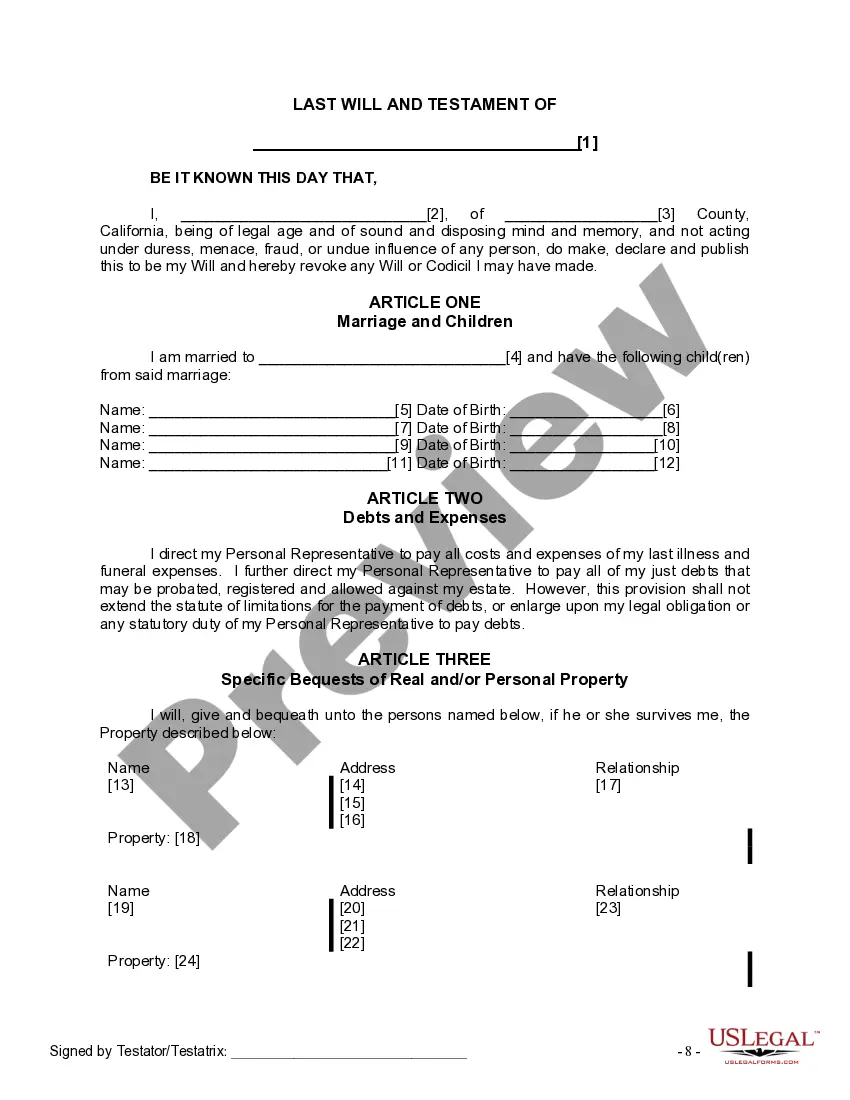
The Last Will and Testament for a Married Person with Minor Children is a legal document that outlines how a person wishes to distribute their assets after death, especially when they have a spouse and minor children. This form provides critical provisions for appointing an executor, designating heirs, and establishing a trust for minor beneficiaries. It's specifically designed for married individuals with minor children, differentiating it from more general wills that do not provide for these specific circumstances.
Key components of this form
- Executor appointment: Designate a personal representative to manage your estate.
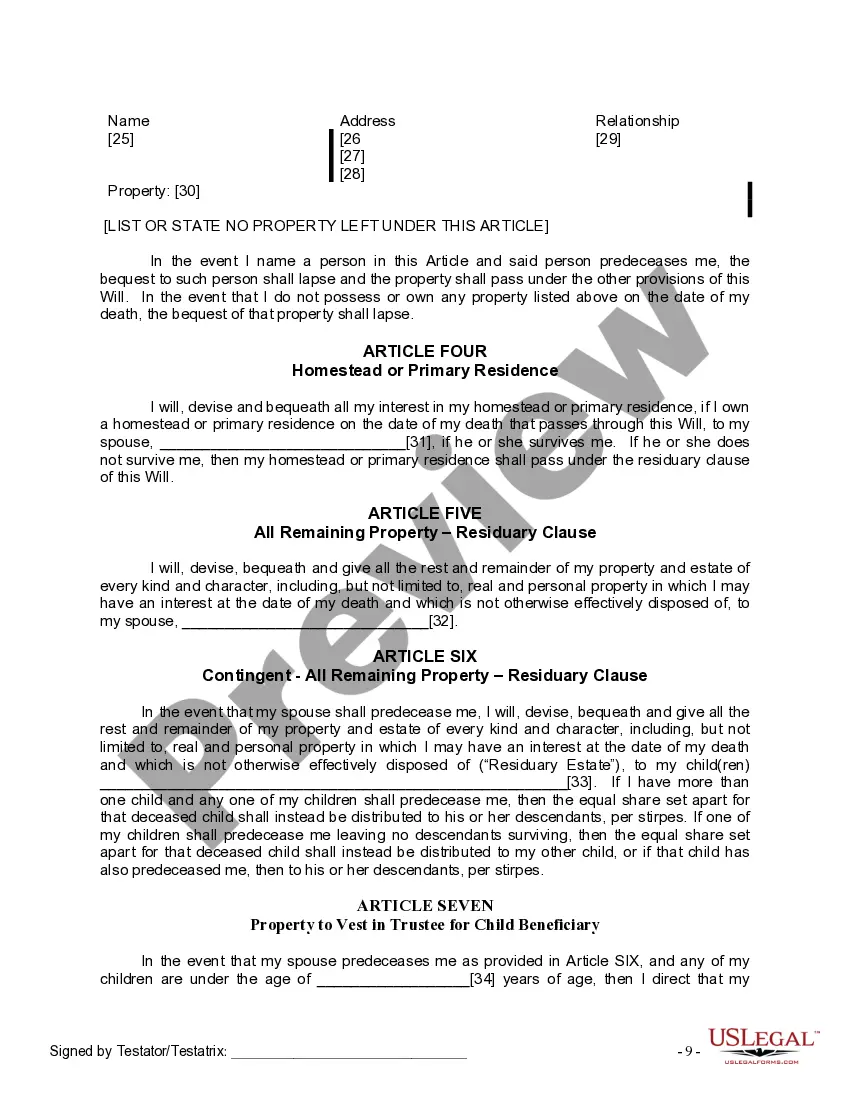
- Distribution of assets: Specify who receives property and personal belongings.
- Trust creation: Establish a trust for minors to manage their inheritance until they reach adulthood.
- Guardian appointment: Name a guardian for minor children if both parents are deceased.
- Residuary provisions: Detail how remaining assets should be distributed.






When to use this form
This form is essential for married individuals with minor children who want to ensure that their wishes regarding asset distribution and guardianship are legally recognized. It's particularly useful in scenarios such as planning for unexpected events like illness or untimely death, providing peace of mind regarding the future of their family.
Who can use this document
- Married individuals who have minor children.
- Anyone seeking a clear legal framework to manage the distribution of their assets upon death.
- Parents concerned about the future care and support of their children in the event of both parents' passing.
- Individuals looking to establish trusts for minors to ensure responsible asset management.
How to prepare this document
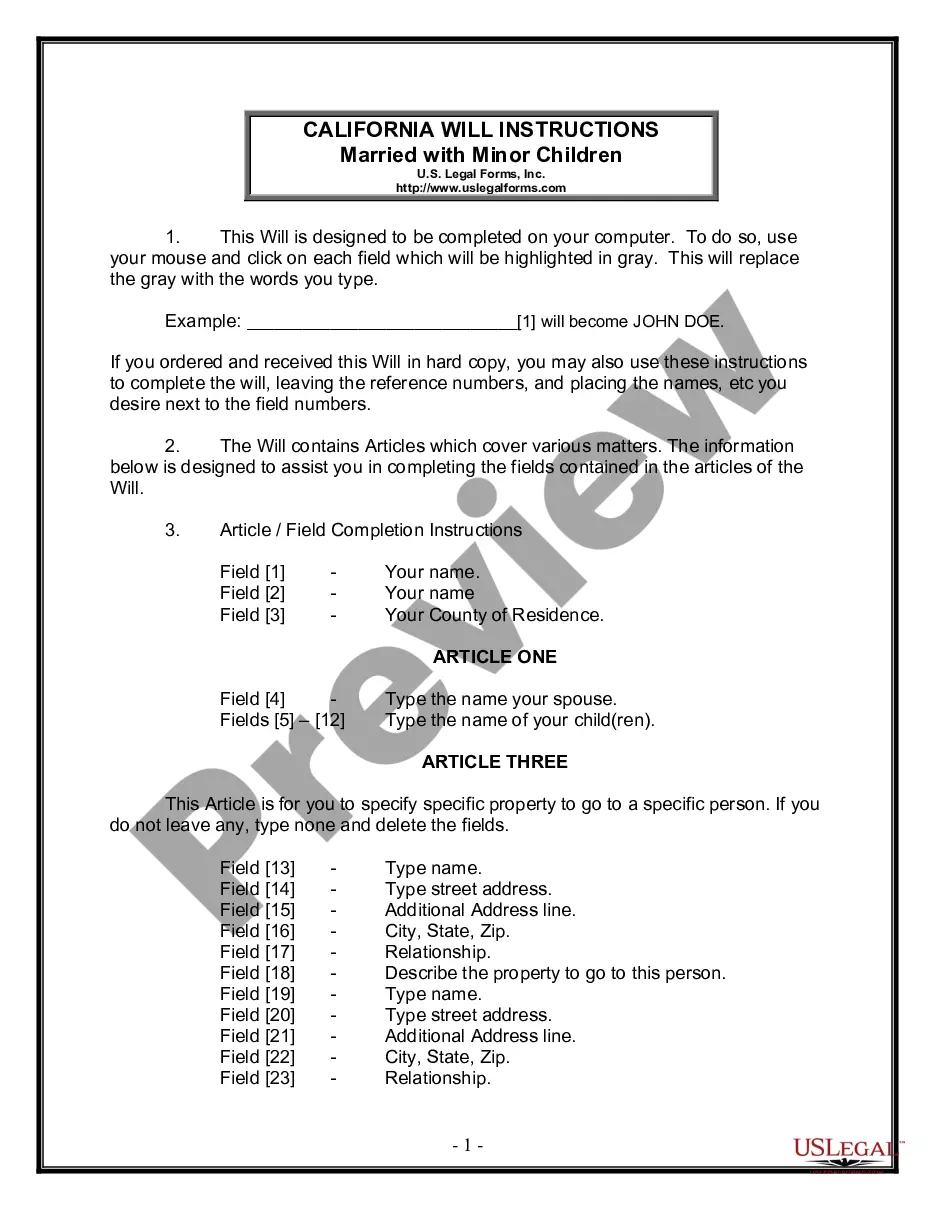
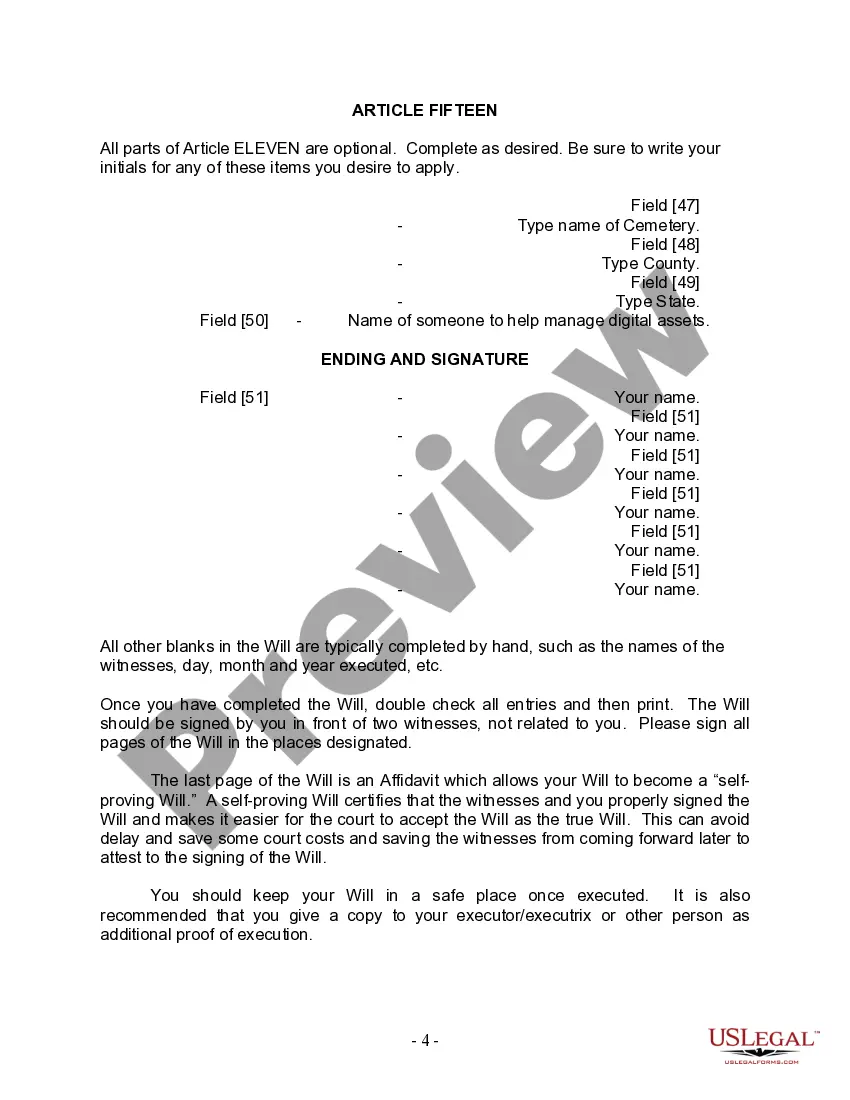
- Open the form on your computer and replace the highlighted fields with your information.
- Enter your name and county of residence, and provide your spouse's and children's names.
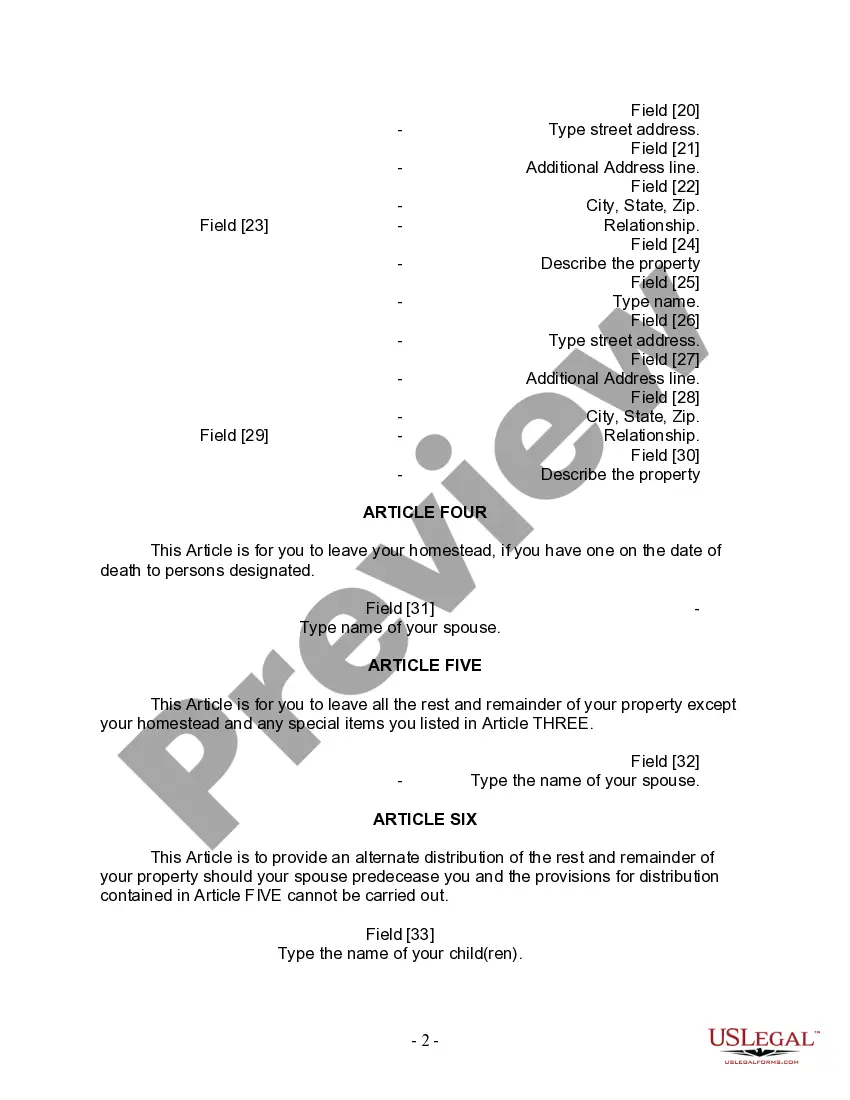
- Specify any specific property to be bequeathed to named individuals.
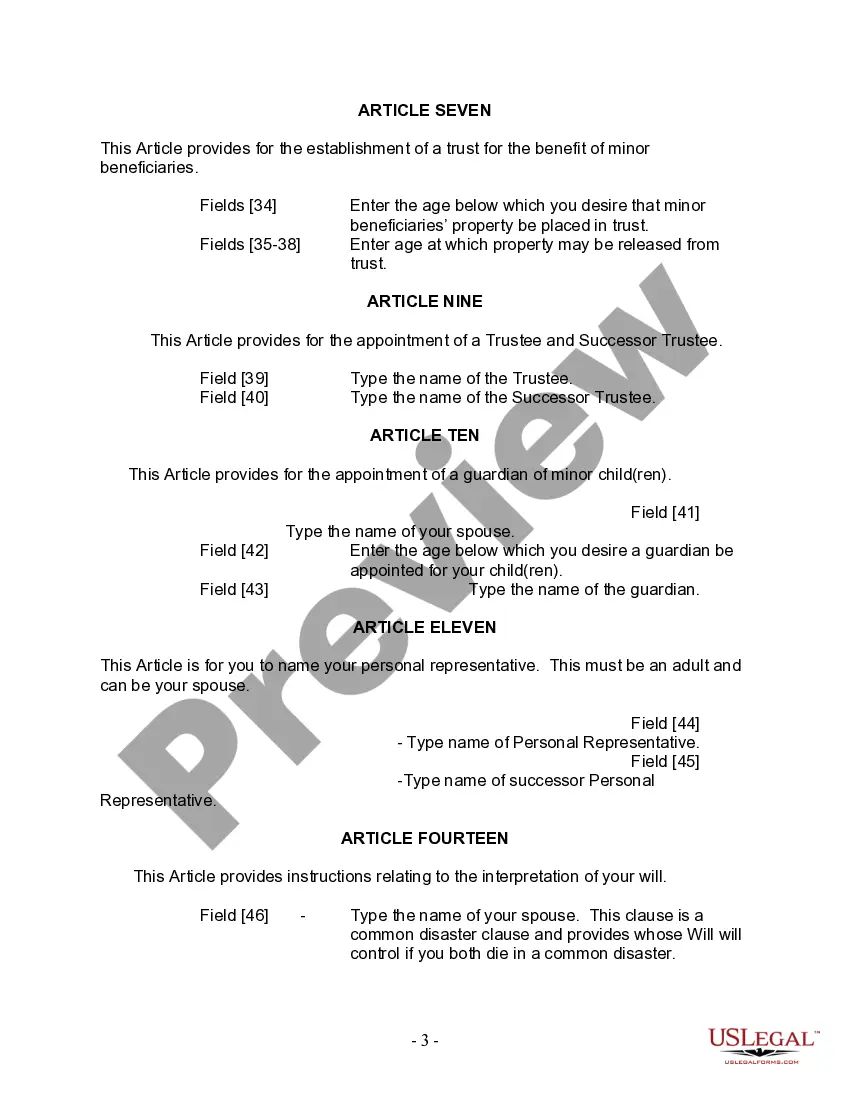
- Complete the sections for guardianship and trustee appointments as required.
- Review all entries for accuracy, then print and sign the document in front of two witnesses.
Notarization guidance
Yes, this form must be notarized to be legally valid in most states. The signing of this will should be done in front of two witnesses, who must also sign the document in order to affirm its legitimacy. Additionally, if your state has adopted a self-proving affidavit statute, the will may require notarization for its provisions to be recognized without further evidence.
Get your form ready online
Our built-in tools help you complete, sign, share, and store your documents in one place.
Make edits, fill in missing information, and update formatting in US Legal Forms—just like you would in MS Word.
Download a copy, print it, send it by email, or mail it via USPS—whatever works best for your next step.
Sign and collect signatures with our SignNow integration. Send to multiple recipients, set reminders, and more. Go Premium to unlock E-Sign.
If this form requires notarization, complete it online through a secure video call—no need to meet a notary in person or wait for an appointment.
We protect your documents and personal data by following strict security and privacy standards.

Make edits, fill in missing information, and update formatting in US Legal Forms—just like you would in MS Word.

Download a copy, print it, send it by email, or mail it via USPS—whatever works best for your next step.

Sign and collect signatures with our SignNow integration. Send to multiple recipients, set reminders, and more. Go Premium to unlock E-Sign.

If this form requires notarization, complete it online through a secure video call—no need to meet a notary in person or wait for an appointment.

We protect your documents and personal data by following strict security and privacy standards.
Common mistakes to avoid
- Failing to have the will signed by two witnesses.
- Not updating the will after major life events, such as the birth of additional children.
- Inadequately specifying assets or failing to designate beneficiaries clearly.
- Neglecting to store the completed will in a secure and accessible place.
Benefits of completing this form online
- Convenience of completing the form digitally from anywhere.
- Editable fields that allow for easy customization to meet individual needs.
- Access to reliable, attorney-drafted templates that ensure legal compliance.
- Ability to save and print the document for future reference or for use in court.
- Guidance and instructions provided within the form to aid in accurate completion.
What to keep in mind
- A Last Will and Testament is essential for married individuals with minor children to ensure their wishes are fulfilled.
- It provides clear guidelines for asset distribution, trustee and guardian appointments, and the establishment of trusts.
- Completing the form involves specifying beneficiaries, signing in front of witnesses, and ensuring compliance with state-specific requirements.
Looking for another form?
Form popularity
FAQ
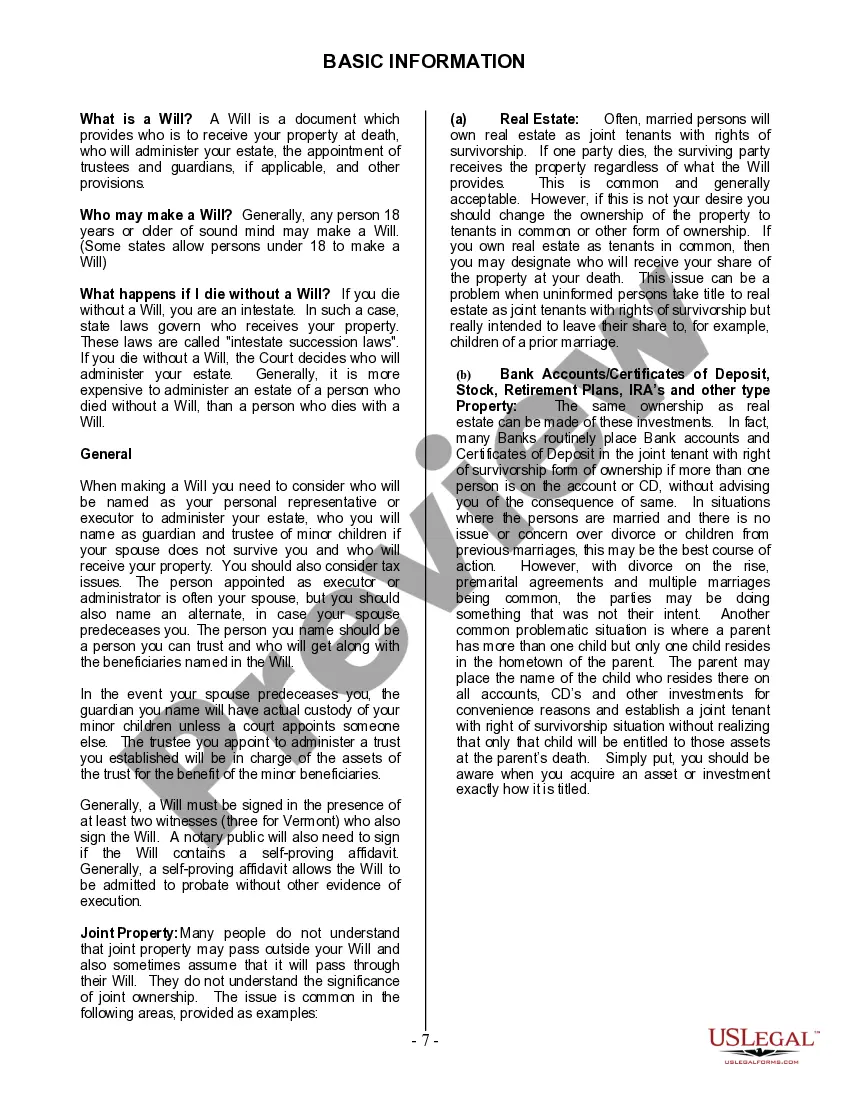
In California, a spouse does not automatically inherit everything if there are surviving children or other family members. However, a California Last Will and Testament for Married Person with Minor Children can clarify your wishes and distribute your estate according to your preferences. It's crucial to create a will that outlines your desires to prevent misunderstandings among family members.
For parents with minor children, creating a will is essential to guarantee your children’s care. A California Last Will and Testament for Married Person with Minor Children allows you to designate guardians and make provisions for their financial support. This approach ensures peace of mind, knowing your wishes are legally documented and respected.
Yes, in California, marriage generally revokes a will unless it was created in contemplation of that marriage. This means that if you create a California Last Will and Testament for Married Person with Minor Children before getting married, you should update it afterward. It is important to regularly review your will to ensure that it reflects your current family structure and intentions.
Creating a will for a married couple with children in California is crucial for outlining the distribution of assets. A California Last Will and Testament for Married Person with Minor Children ensures that your children are taken care of in the event of your passing. This document can specify guardians for your minor children, making sure they are raised by someone you trust.
In California, a minor can inherit a house, but there are specific legal processes involved. Typically, a minor cannot directly manage inherited property until they reach adulthood. However, a California Last Will and Testament for Married Person with Minor Children can designate a guardian or trust to handle the inheritance, ensuring that the minor's interests are protected.
In California, for a last will and testament to be legal, it must comply with state laws, including being in writing and signed by you in the presence of at least two witnesses. If you are creating a California Last Will and Testament for Married Person with Minor Children, ensure that you also include provisions for guardianship and asset distribution. The will should also express your clear intentions to avoid misunderstandings. Form templates from US Legal Forms can help you meet these legal requirements easily.
To write a will for child custody, articulate your preferred guardians for your minor children. Include their names, relationship to you, and why you trust them. Furthermore, incorporate your thoughts on how you wish your children to be raised. Utilizing resources like US Legal Forms can simplify this process by providing you with templates for your California Last Will and Testament for Married Person with Minor Children.
Writing a legal letter for child custody involves clearly outlining your custody wishes and the reasons behind them. You should address your letter to the appropriate parties, include the child's full name, and specify your proposal in a calm and rational manner. If you need assistance, services like US Legal Forms can provide templates to help guide your writing, ensuring that your wishes align with legal standards.
In Minnesota, a will does not necessarily have to be notarized. To ensure validity, pouring over the requirements relevant to your situation, such as those applicable for a California Last Will and Testament for Married Person with Minor Children, can be helpful. Notarization can add an extra layer of legitimacy, especially if you're concerned about potential disputes down the line. It's wise to follow state laws or speak to a professional for clarity.
Yes, you can write a will without a lawyer in California, using your California Last Will and Testament for Married Person with Minor Children. There are various online resources and templates available that guide you through the process. However, it’s important to ensure that your will meets all the legal requirements of California to avoid issues later. If you have complex circumstances, consulting with an attorney may still be beneficial.