California Last Will and Testament for a Married Person with No Children
Overview of this form
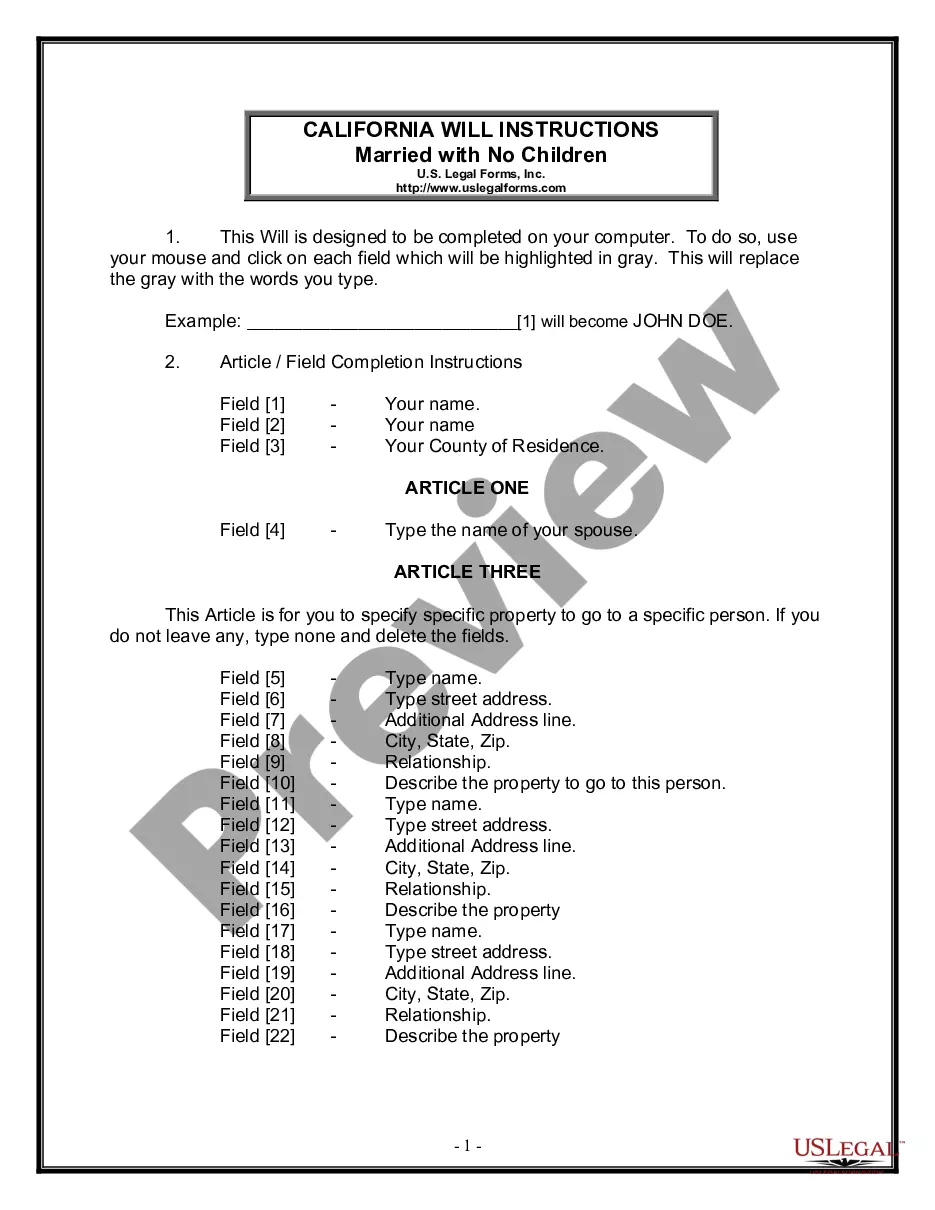
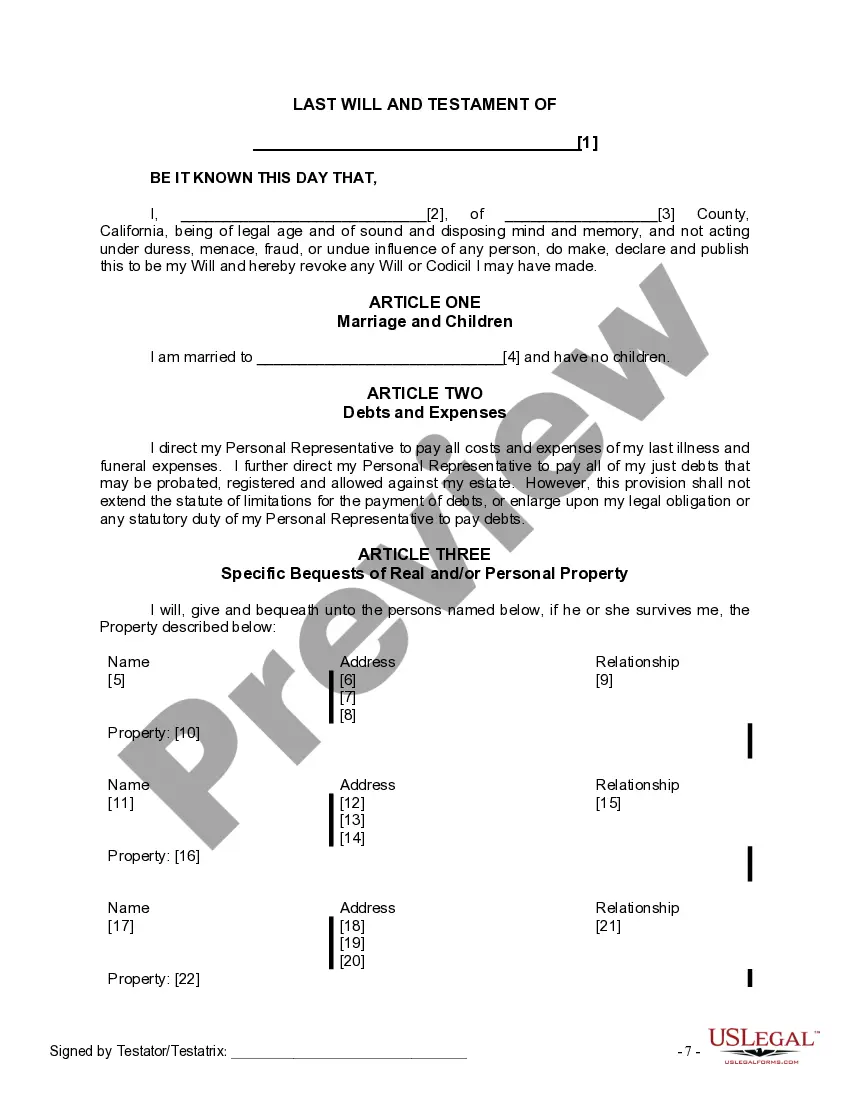
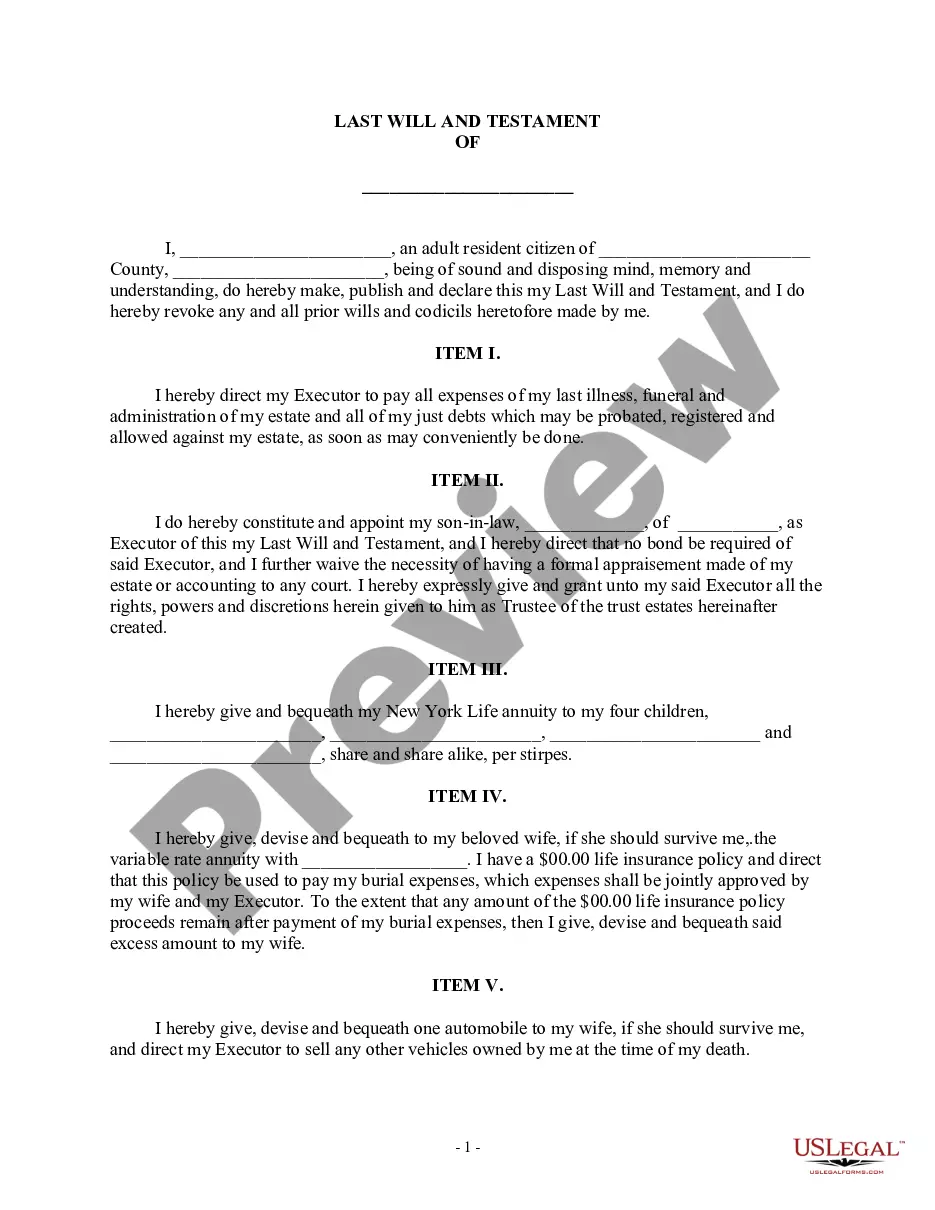
This Last Will and Testament for a Married Person with No Children is a legal document that outlines how a person wishes to distribute their property upon death. Unlike wills for individuals with children, this form specifically addresses the needs of married couples without children, enabling spouses to clearly designate their intentions regarding asset distribution. It includes provisions for a personal representative, often known as an executor, and outlines the distribution of both specific bequests and the residuary estate to the surviving spouse.
What’s included in this form
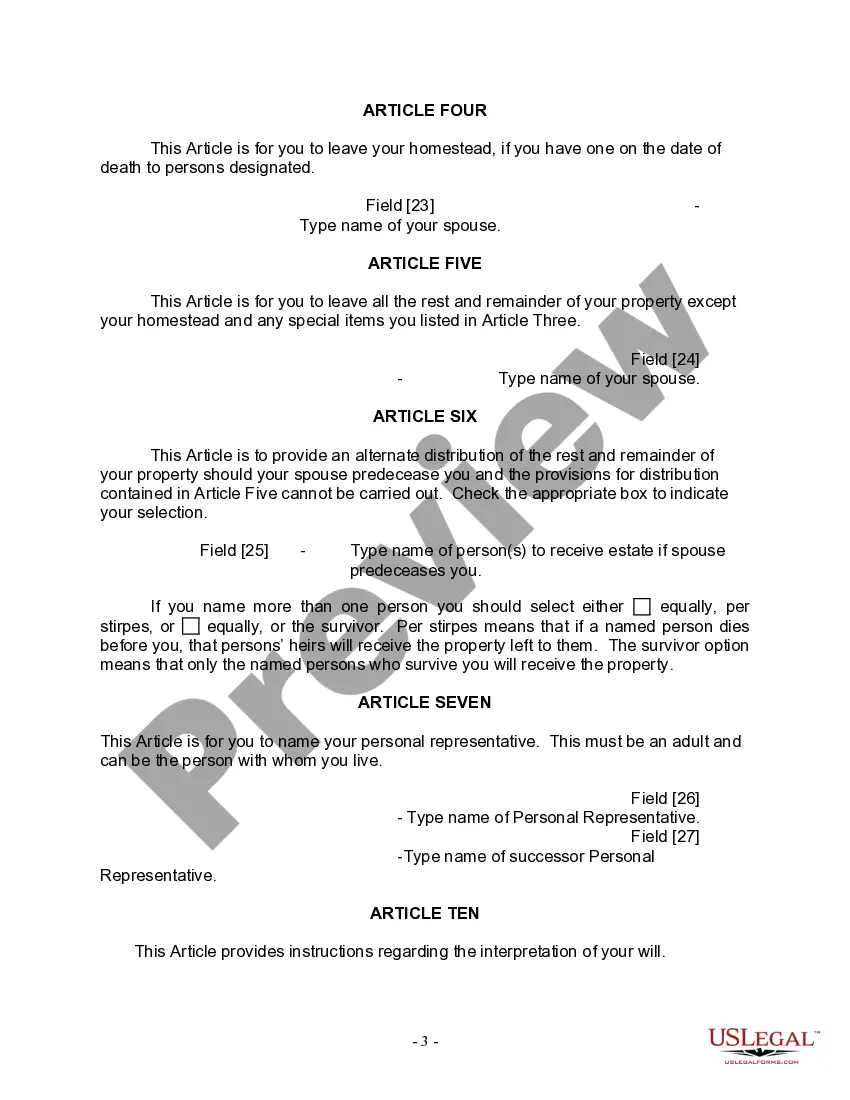
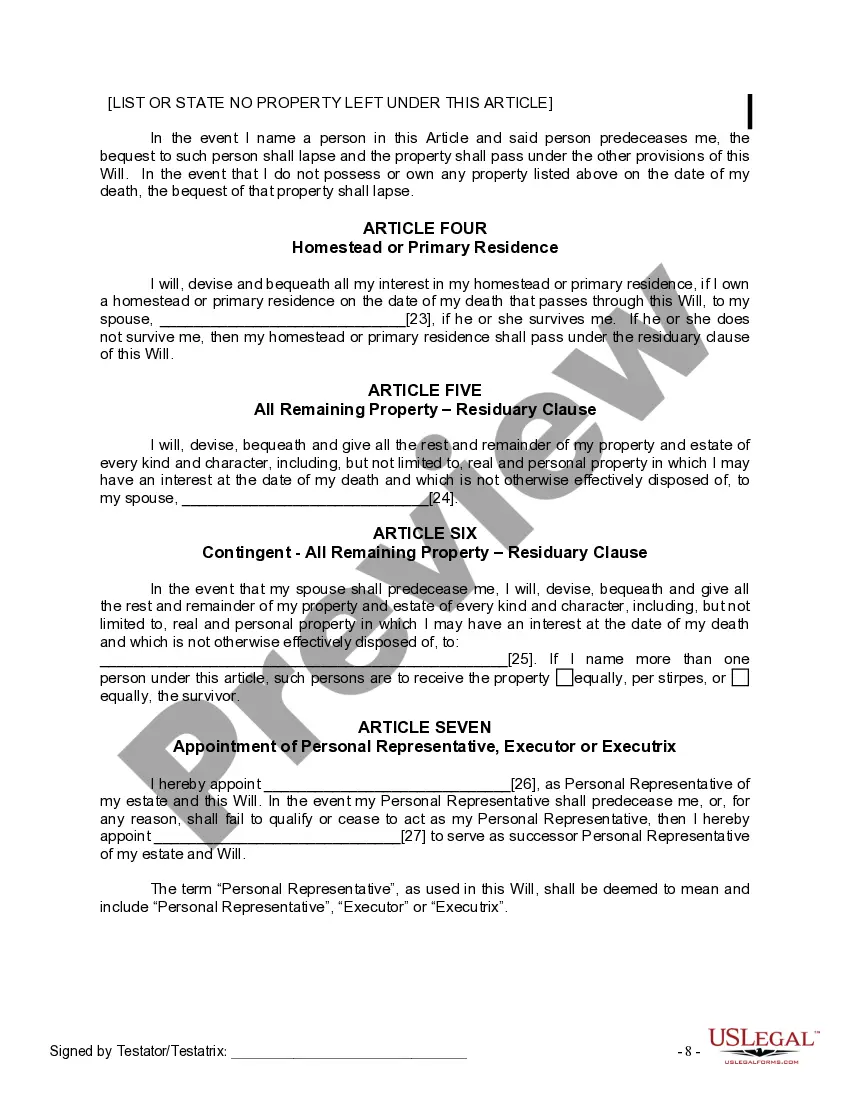
- Appointment of Personal Representative: Designate an executor to manage the estate.
- Specific Bequests: Specify any particular items or properties to be given to individuals.
- Homestead Provision: Direct the distribution of the primary residence to the spouse.
- Residuary Clause: Outline what happens to the remaining estate after specific bequests.
- Alternate Beneficiaries: Provide instructions for property distribution if the spouse predeceases.




When to use this form
This form is essential for individuals who are married and wish to prepare a will without any children. It is particularly useful in situations where there is a desire to clearly specify the distribution of assets to a spouse while ensuring that any specific wishes regarding property are legally documented. It is necessary to use this form to avoid intestacy issues, where state laws would determine the distribution of your estate if no valid will exists.
Intended users of this form
- Married individuals with no children.
- Spouses wanting to ensure a smooth transfer of assets to each other.
- Persons looking to appoint an executor to manage their estate after death.
- Individuals wanting to specify the distribution of unique property items to loved ones.
Completing this form step by step
- Enter your personal details, including your name and county of residence.
- Designate your spouse's name in the appropriate section.
- Specify any specific properties or items you wish to bequeath to individuals.
- Appoint a personal representative to manage your estate after your passing.
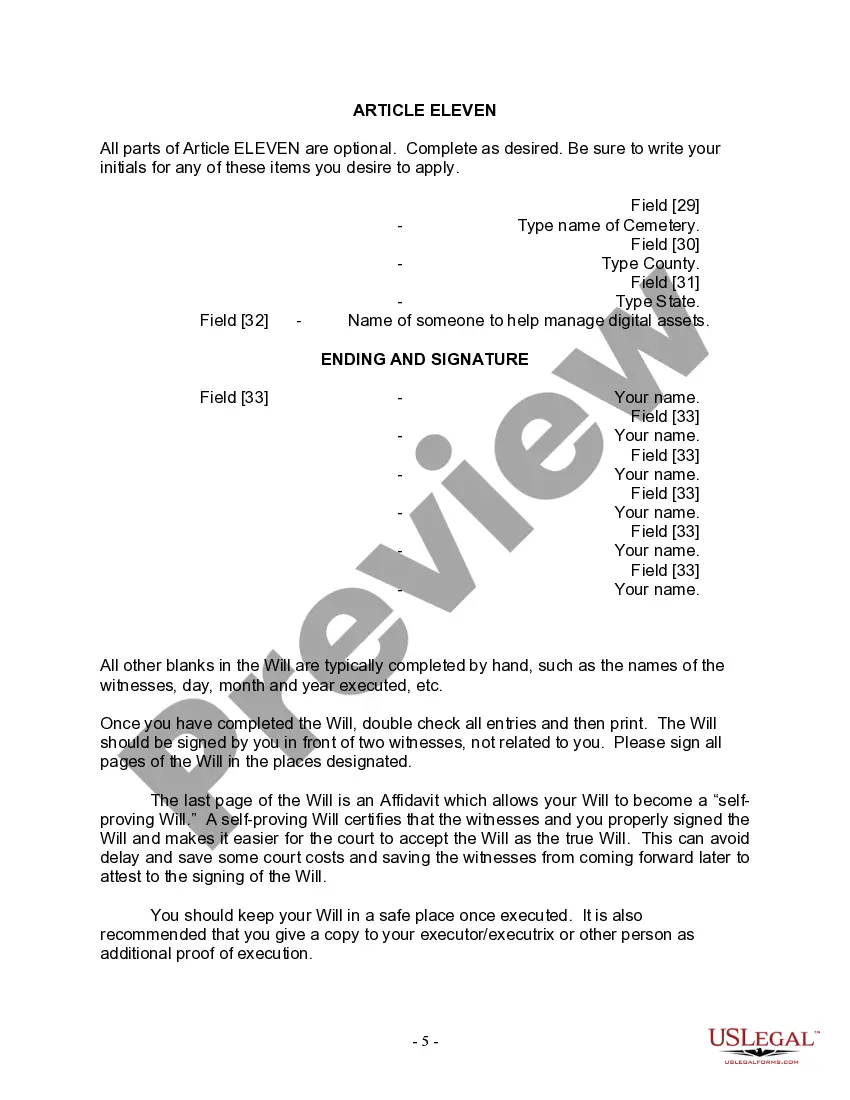
- Gather and sign the will in the presence of two witnesses, ensuring they sign as well.
Notarization requirements for this form
Yes, this form must be notarized to be legally valid in California. A notarization adds an extra layer of verification, making it easier for the court to accept your will during the probate process. US Legal Forms provides integrated online notarization services, available 24/7 via secure video call.
Get your form ready online
Our built-in tools help you complete, sign, share, and store your documents in one place.
Make edits, fill in missing information, and update formatting in US Legal Forms—just like you would in MS Word.
Download a copy, print it, send it by email, or mail it via USPS—whatever works best for your next step.
Sign and collect signatures with our SignNow integration. Send to multiple recipients, set reminders, and more. Go Premium to unlock E-Sign.
If this form requires notarization, complete it online through a secure video call—no need to meet a notary in person or wait for an appointment.
We protect your documents and personal data by following strict security and privacy standards.

Make edits, fill in missing information, and update formatting in US Legal Forms—just like you would in MS Word.

Download a copy, print it, send it by email, or mail it via USPS—whatever works best for your next step.

Sign and collect signatures with our SignNow integration. Send to multiple recipients, set reminders, and more. Go Premium to unlock E-Sign.

If this form requires notarization, complete it online through a secure video call—no need to meet a notary in person or wait for an appointment.

We protect your documents and personal data by following strict security and privacy standards.
Avoid these common issues
- Failing to sign the will with witnesses present, which can invalidate the document.
- Not designating alternate beneficiaries, leaving assets unaccounted for if the primary beneficiary predeceases.
- Overlooking the specific instructions for property distribution, potentially leading to disputes among heirs.
Why use this form online
- Convenience of completing and downloading the will from anywhere at any time.
- Editability allows you to modify the document easily as circumstances change.
- Access to professionally drafted legal language ensures reliability and accuracy.
Legal use & context
- The Last Will and Testament is enforceable upon execution and can significantly reduce estate disputes.
- It provides a clear outline for asset distribution, which can expedite the probate process.
- Ensure compliance with state-specific laws for the will to be valid and executable.
Quick recap
- This Last Will and Testament is tailored for married individuals without children.
- Proper execution involves signatures from two witnesses and potentially notarization.
- Significant assets should be specifically allocated to avoid ambiguity.
Looking for another form?







Form popularity
FAQ
Yes, you can write your own will in California. However, it is important to ensure that it meets all legal requirements to be considered valid. A California Last Will and Testament for a Married Person with No Children can be particularly straightforward, but it’s wise to follow proper guidelines. Using a reliable platform like US Legal Forms can simplify the process, providing templates and guidance tailored to your specific needs.
Yes, in California, marriage typically revokes any existing wills unless the will was specifically made in contemplation of the marriage. This means if you draft a California Last Will and Testament for a Married Person with No Children before marrying, that will may become invalid once you say 'I do.' To ensure your estate plan reflects your intentions after marriage, consider updating your will promptly. Services like USLegalForms can help you create or revise your will to properly address these changes.
In California, under the laws regarding a California Last Will and Testament for a Married Person with No Children, a spouse does automatically inherit a significant portion of the estate. If there are no children or other descendants, the surviving spouse usually inherits all community property and a share of separate property. This setup ensures that the surviving spouse is financially protected even without a detailed estate plan. However, creating a Last Will and Testament is still recommended to clarify your wishes.
In California, marriage can impact will provisions; however, it does not automatically override a will. If a spouse is not mentioned in the will, California law may grant them a share of the estate. For this reason, a California Last Will and Testament for a Married Person with No Children is essential to clarify your intentions and protect your spouse's rights.
When a wealthy individual with no family passes away, their assets may be subject to state laws governing inheritance. Often, the estate goes through probate, and the state may have the final say on asset distribution. To avoid complications, it is prudent to create a California Last Will and Testament for a Married Person with No Children, directing your wealth to your chosen beneficiaries.
You can leave your estate to anyone you choose, including friends, colleagues, or charitable organizations. Choosing beneficiaries allows you to control who benefits from your assets after your passing. Writing a California Last Will and Testament for a Married Person with No Children ensures that your wishes are clear and legally binding.
If you have no family, you might choose to leave your estate to friends, charities, or organizations that reflect your values. It is essential to think about what matters to you and how you want your legacy to be remembered. A California Last Will and Testament for a Married Person with No Children provides a structured way to allocate your assets according to your preferences.
If you have no family, your assets will typically be distributed according to California's intestate succession laws. This means the state will determine who receives your property, often distributing it to distant relatives or, in some cases, the state itself. To avoid this situation, consider creating a California Last Will and Testament for a Married Person with No Children, where you can specify your wishes regarding asset distribution.
Yes, creating a California Last Will and Testament for a Married Person with No Children is essential, even if you do not have children. A will allows you to define how you want your assets handled, protecting your spouse's rights. It ensures that your belongings go to the right places according to your wishes. By having a will, you can help your spouse navigate the complexities that may arise without one.
If you pass away without a will in California, your spouse will inherit a significant portion of your estate, but the specifics depend on various factors. Having a California Last Will and Testament for a Married Person with No Children ensures that your spouse receives your assets exactly as you desire. This document can protect your spouse's interests and clarify the distribution of your estate. It is always wise to create a will to avoid any uncertainties.