California Grant Deed - Parents to Child with Reservation of Life Estate
Understanding this form
The Grant Deed - Parents to Child with Reservation of Life Estate is a legal document that allows parents to transfer ownership of property to their child while retaining the right to live on the property for the duration of their lives. This form differs from standard property transfer documents because it ensures that the parents maintain use of the property, thus providing them security while allowing the child to become the legal owner. It is often used in estate planning to facilitate the transfer of property between family members while avoiding probate issues.
Form components explained
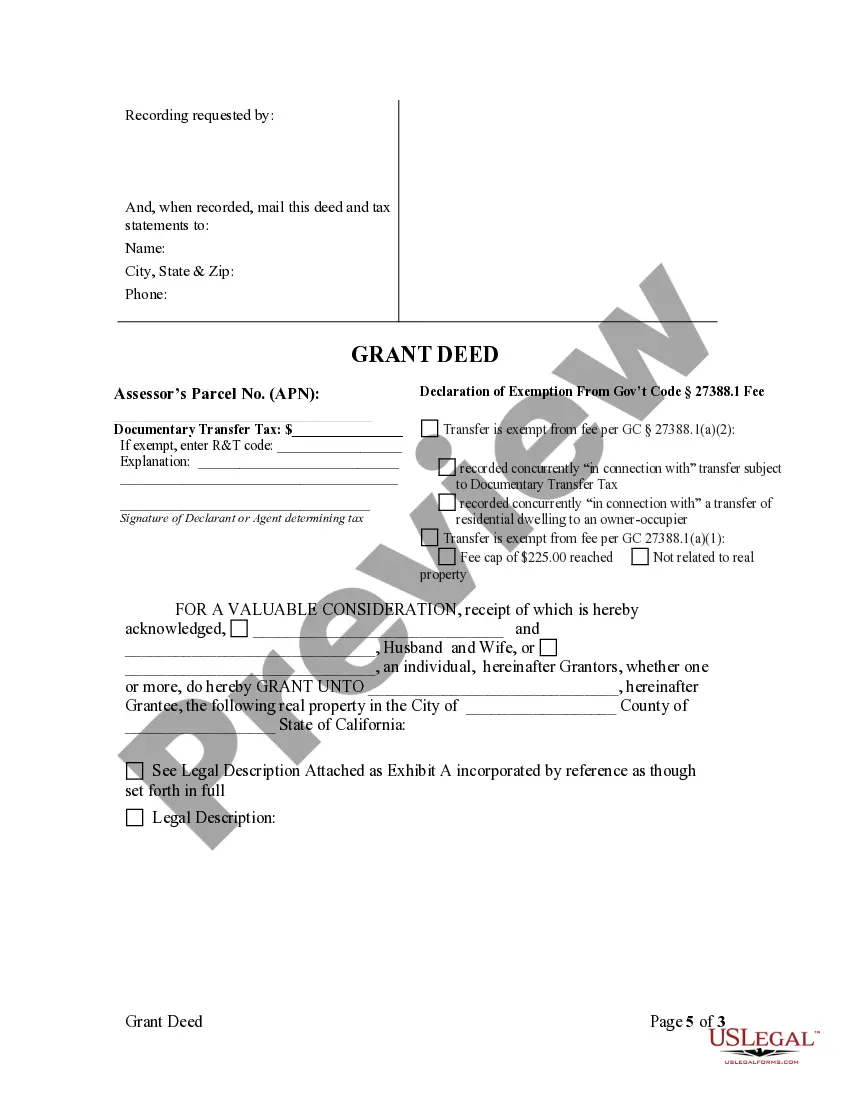
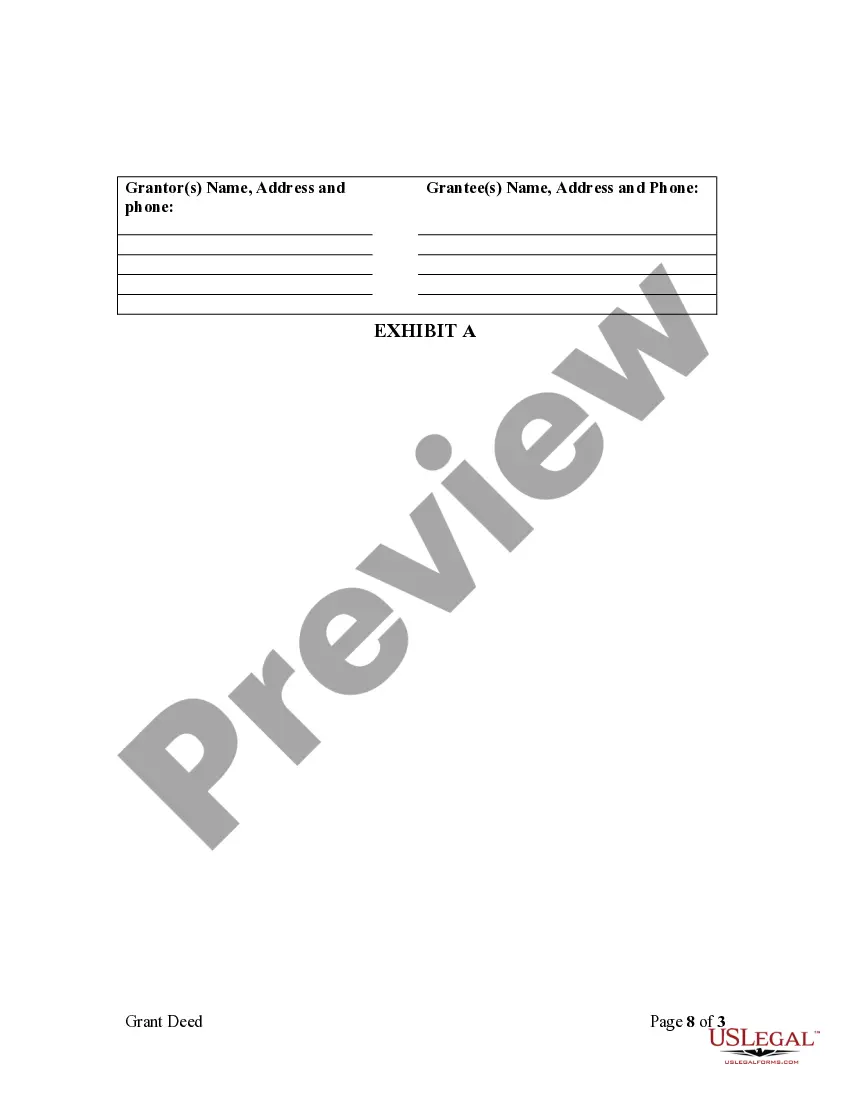
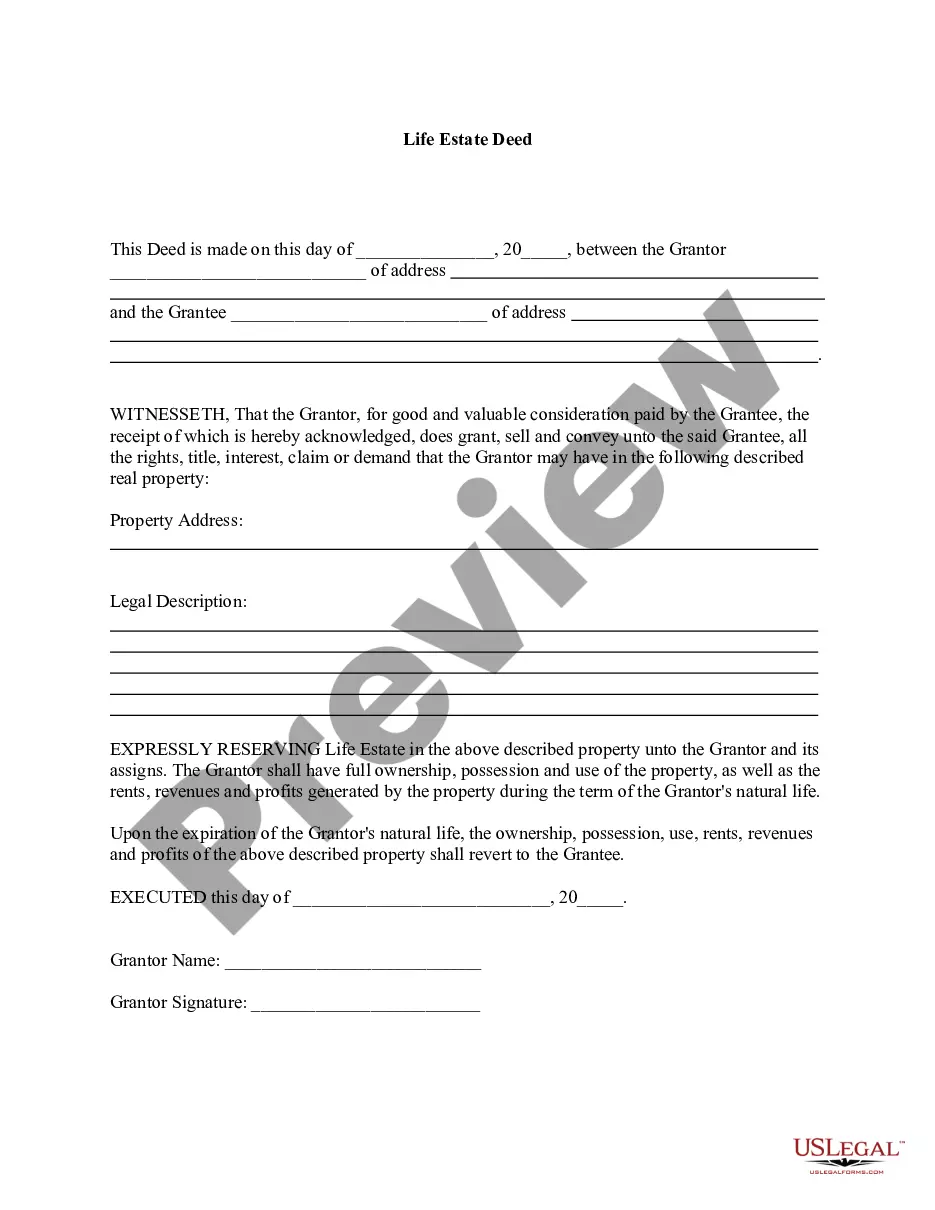
- Identification of the grantors (parents) and grantees (child).
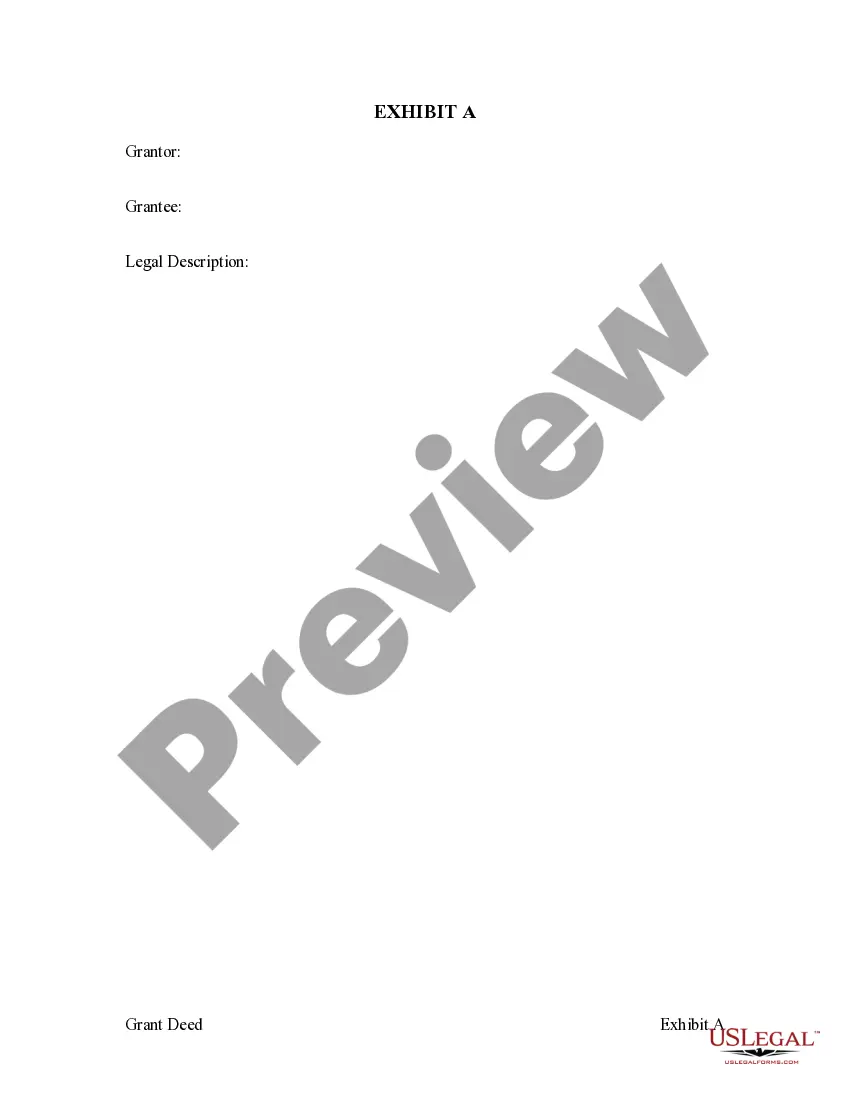
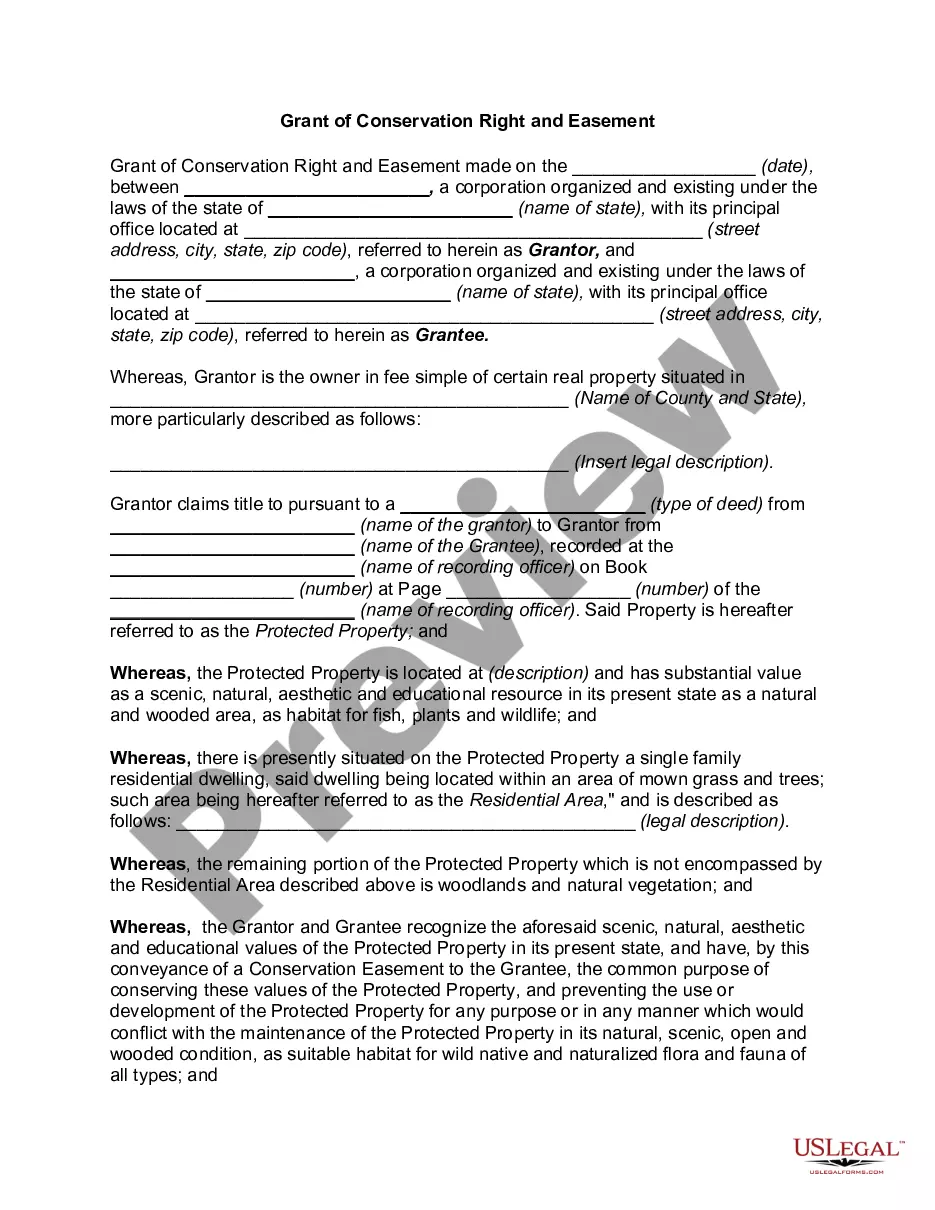
- Description of the property being transferred.
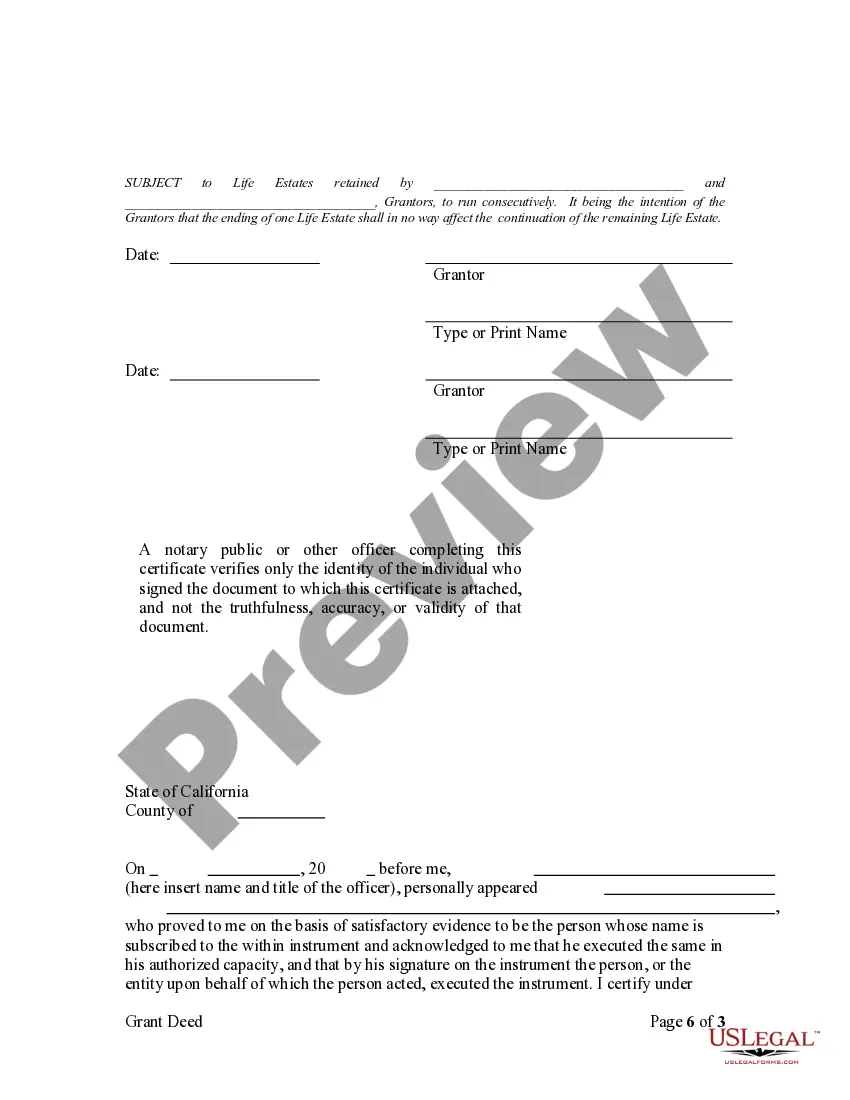
- Specification of the life estate reserved for the grantors.
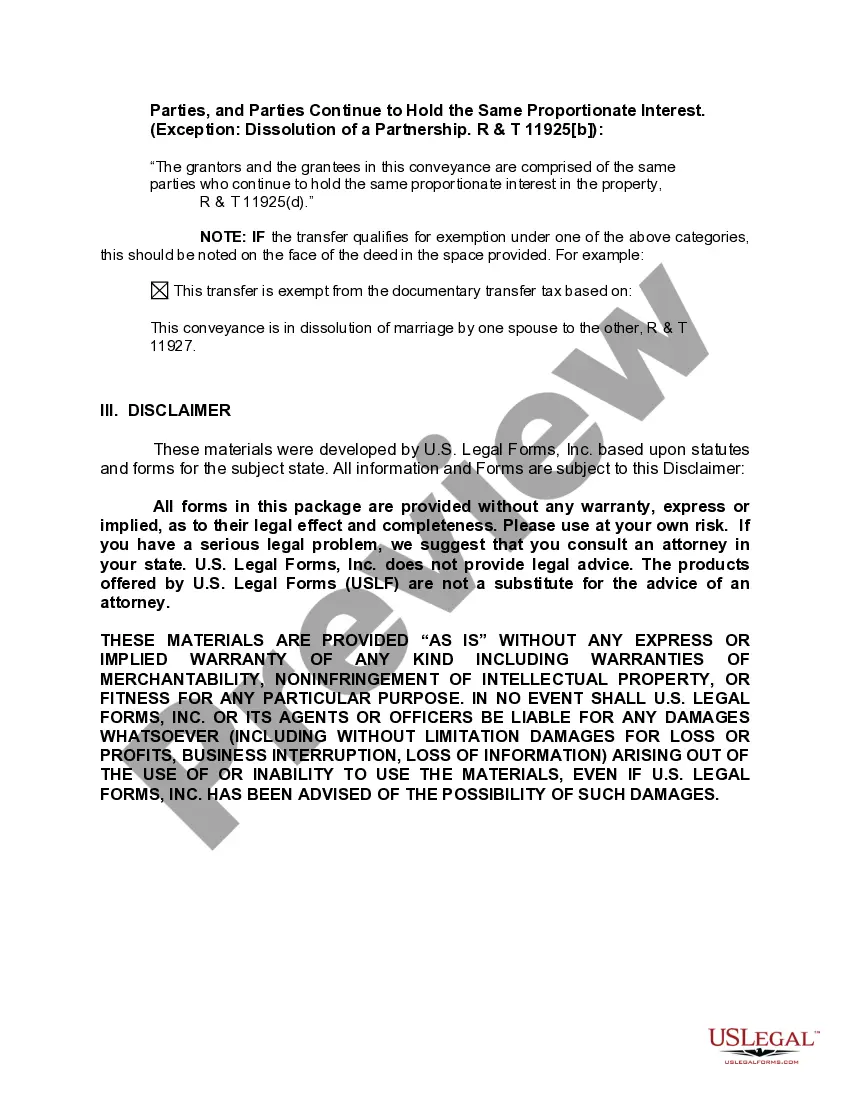
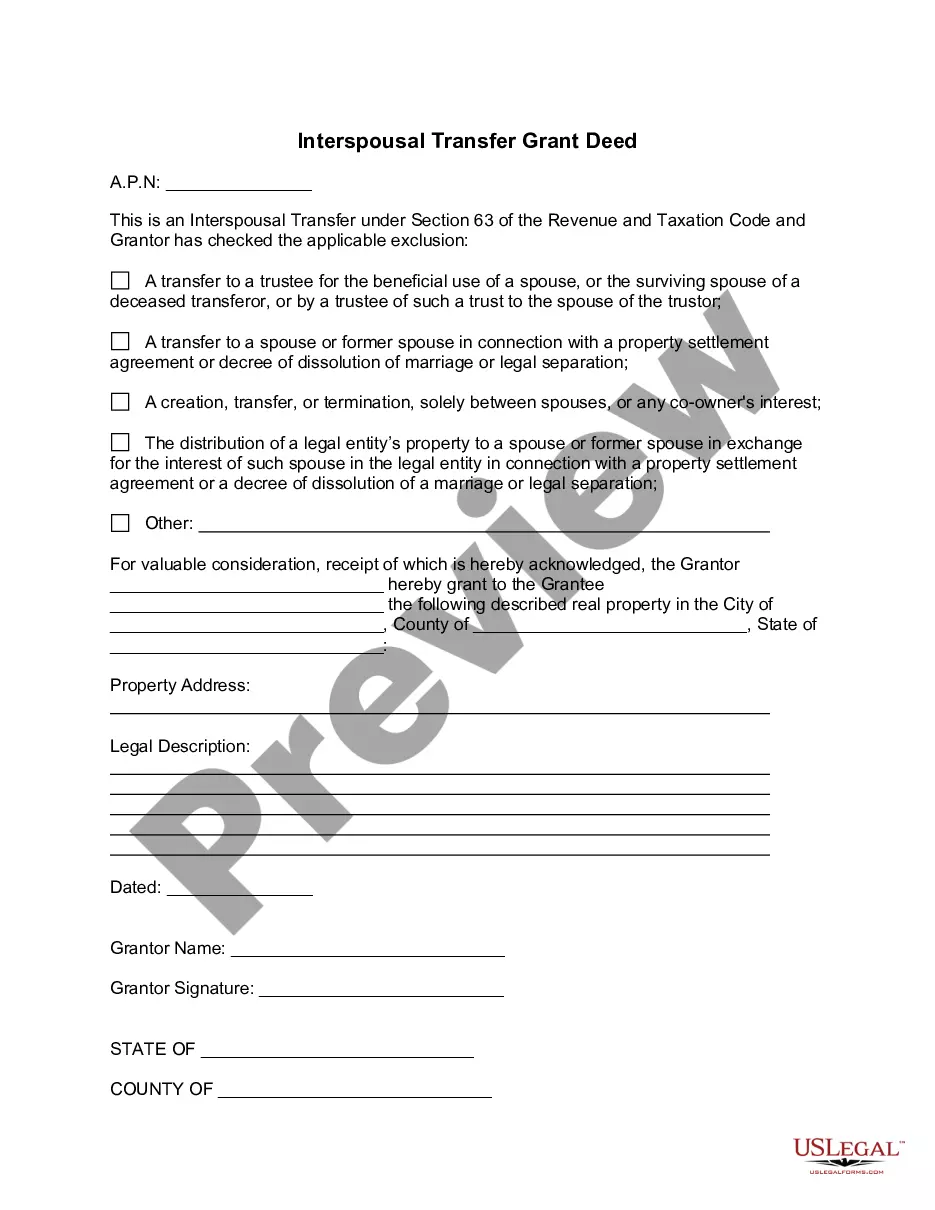
- Legal language that confirms the transfer complies with state laws.
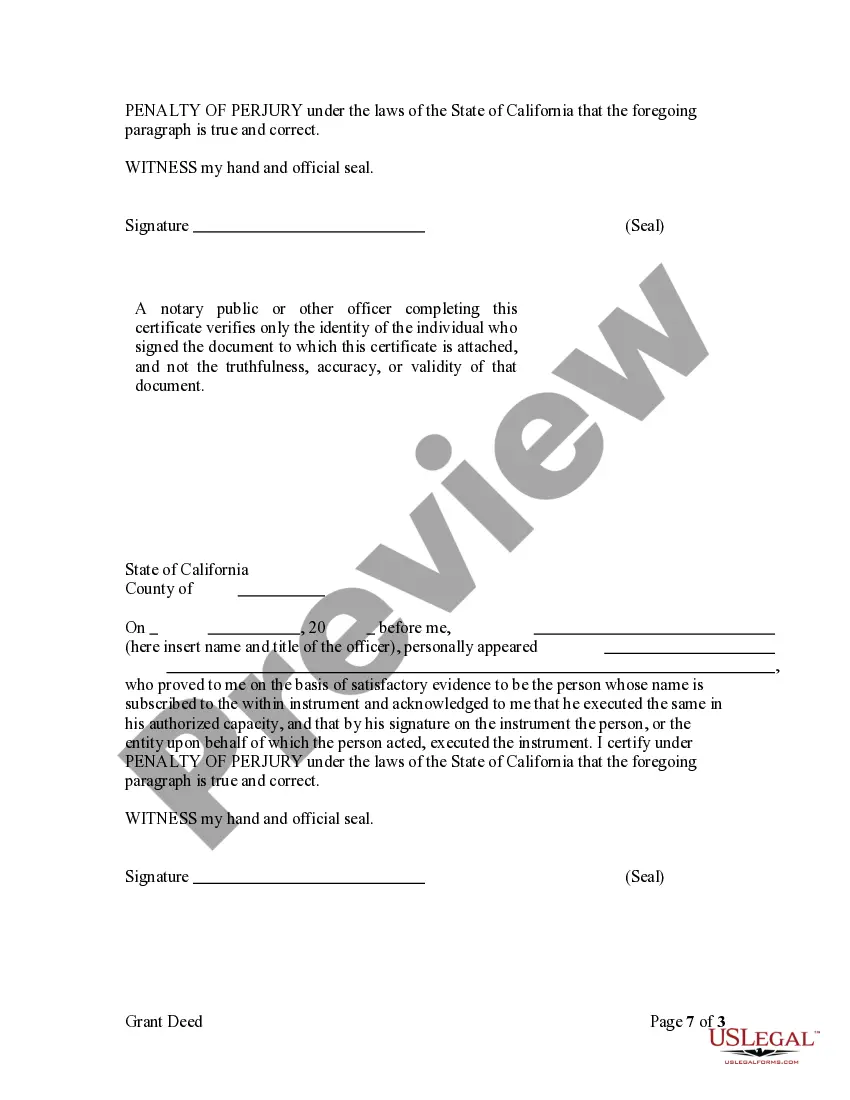
- Space for notarization to validate the deed.


When to use this form
This form is useful in scenarios where parents wish to gift their property to their child while still wanting to live in the home. It can also be appropriate in situations where the parents want to minimize their taxable estate or provide for their child in a structured manner. Using this deed can help avoid complications in property transfer upon the parents' passing, ensuring a smoother transition of ownership.
Who this form is for
This form is intended for:
- Parents looking to transfer property ownership to their adult child.
- Individuals seeking to maintain control over a property while providing for family members.
- Homeowners who want to facilitate estate planning to avoid probate.
How to complete this form
- Identify and enter the full names and addresses of the parents as grantors.
- Enter the name and address of the child as the grantee.
- Clearly describe the property being transferred, including the address and legal description.
- Indicate the reservation of life estate by specifying that the grantors retain the right to live in the property for their lifetime.
- Sign the document in the presence of a notary public to ensure it is legally binding.
Does this document require notarization?
This form needs to be notarized to ensure legal validity. US Legal Forms provides secure online notarization powered by Notarize, allowing you to complete the process through a verified video call, available anytime.
Get your form ready online
Our built-in tools help you complete, sign, share, and store your documents in one place.
Make edits, fill in missing information, and update formatting in US Legal Forms—just like you would in MS Word.
Download a copy, print it, send it by email, or mail it via USPS—whatever works best for your next step.
Sign and collect signatures with our SignNow integration. Send to multiple recipients, set reminders, and more. Go Premium to unlock E-Sign.
If this form requires notarization, complete it online through a secure video call—no need to meet a notary in person or wait for an appointment.
We protect your documents and personal data by following strict security and privacy standards.

Make edits, fill in missing information, and update formatting in US Legal Forms—just like you would in MS Word.

Download a copy, print it, send it by email, or mail it via USPS—whatever works best for your next step.

Sign and collect signatures with our SignNow integration. Send to multiple recipients, set reminders, and more. Go Premium to unlock E-Sign.

If this form requires notarization, complete it online through a secure video call—no need to meet a notary in person or wait for an appointment.

We protect your documents and personal data by following strict security and privacy standards.
Common mistakes
- Failing to accurately describe the property, which can lead to legal disputes.
- Not including the life estate clause, which negates the purpose of the deed.
- Not having the deed notarized, which can make it unenforceable.
- Using outdated forms that do not comply with current state law.
Why use this form online
- Convenience of downloading and completing the form at your own pace.
- Editability allows customization to fit specific property transfer needs.
- Access to legal documents drafted by licensed attorneys, ensuring reliability.
Looking for another form?



Form popularity
FAQ
This is a California real estate deed that transfers ownership from parents to their child while the parents reserve a life estate to live in the home for life. It supports estate planning by allowing title transfer while providing occupancy rights, and it requires identifying the grantors and grantees, describing the property, including the life estate terms, and space for notarization and recording.
Using this form, the grantors (parents) transfer ownership to the child (grantee) while reserving a life estate for the parents. The document identifies both parties, describes the property, specifies the life estate terms, includes the required legal language, and provides space for notarization. After signature and notarization, the deed is recorded with the county recorder.
Life estate deeds can be less flexible: the grantors retain occupancy rights, which may complicate selling or refinancing until the life estate ends. The child’s ownership is limited during the grantors’ lifetimes, and there may be ongoing maintenance, tax, or benefit considerations. For specifics, consult a licensed attorney familiar with California real estate.
One method shown by this form is to transfer title to the child while the parents keep a life estate, allowing occupancy during the parents’ lives and potentially aiding probate avoidance. This is an estate planning option to consider alongside other approaches, discussed with a qualified attorney.
During the life estate, the life tenants (the parents) typically remain responsible for ongoing costs like property taxes. After the life estate ends, the child generally becomes the owner and assumes future tax responsibilities. Exact duties can vary by agreement and California law, so it’s wise to consult a licensed attorney for specifics.
It differs by reserving a life estate for the parents, allowing them to live in the home for life while transferring ownership to the child. A standard grant deed transfers ownership outright with no retained occupancy rights or life estate. This form also includes specific components for grantors, grantees, property description, life-estate terms, legal language, and notarization space.