California Assumption Agreement of Deed of Trust and Release of Original Mortgagors
What this document covers
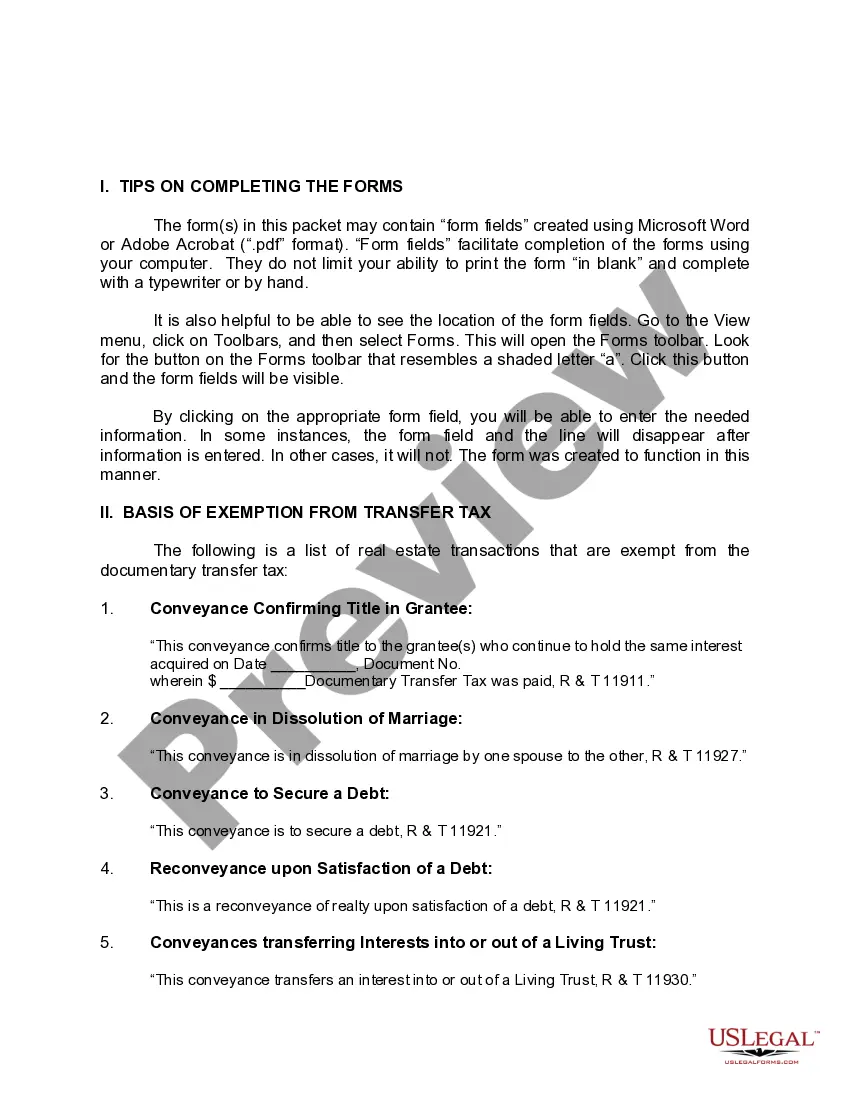
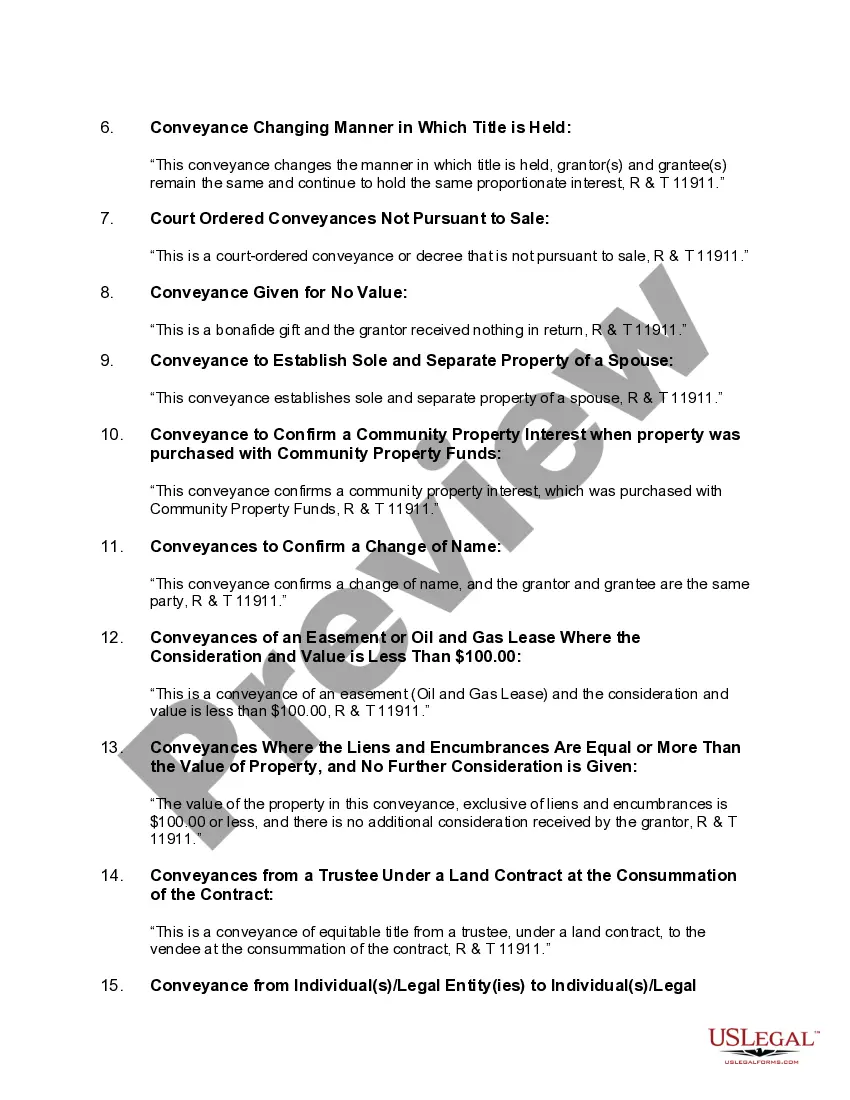
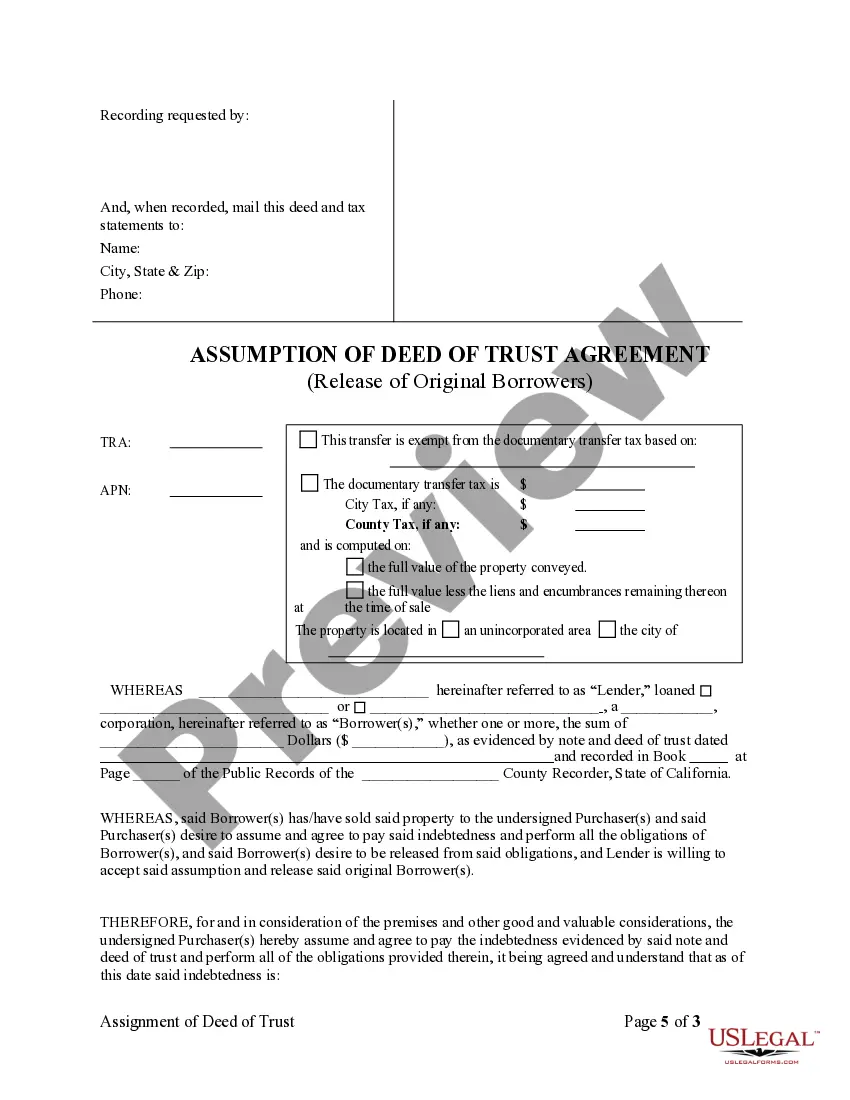
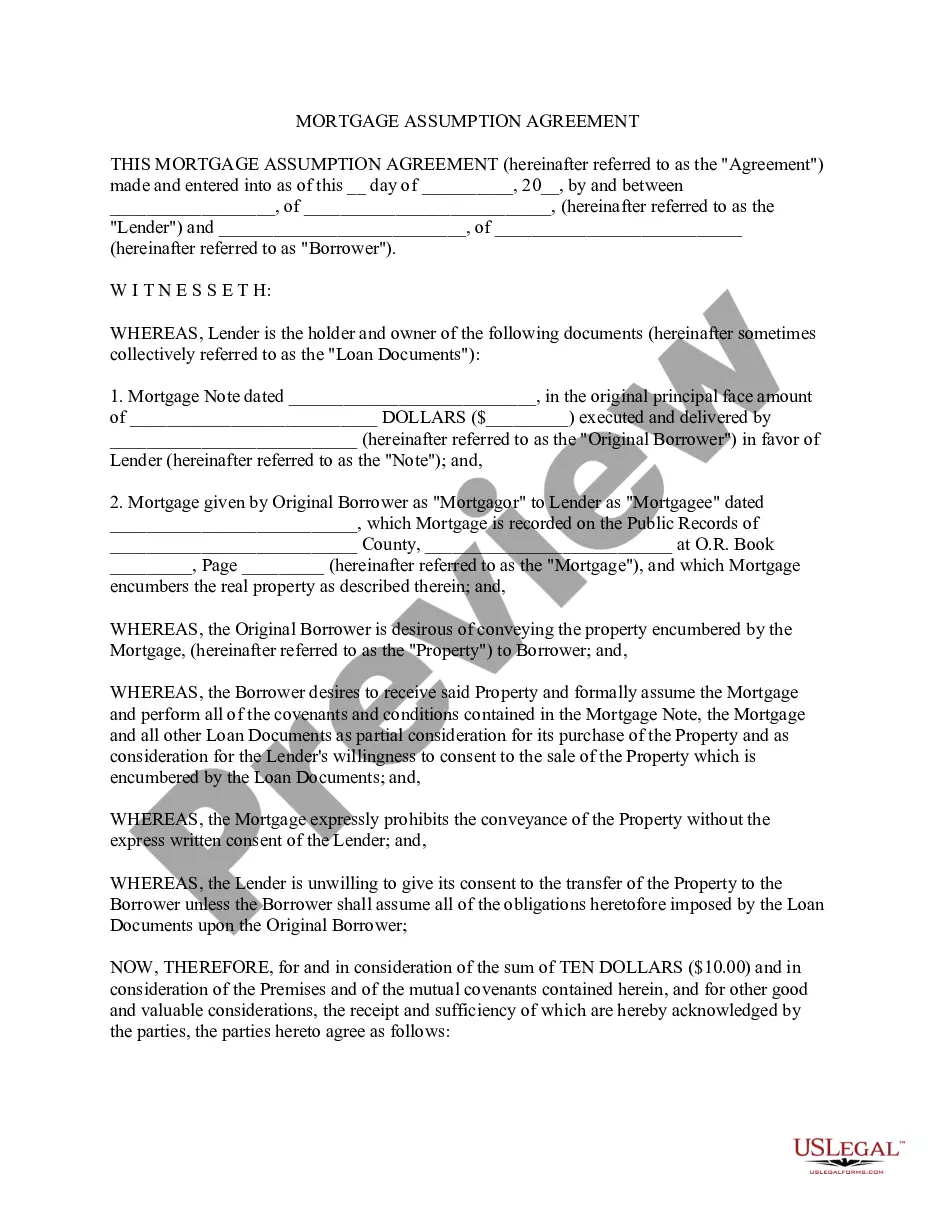
The Assumption Agreement of Deed of Trust and Release of Original Mortgagors is a legal document that allows new purchasers of a property to assume responsibility for the existing mortgage. This form ensures that the lender releases the original mortgagors from future liability on the loan. Unlike a traditional mortgage agreement, this form specifically addresses the transfer of debt obligations in real estate transactions.
Main sections of this form
- Identification of the original mortgagors and the new purchasers.
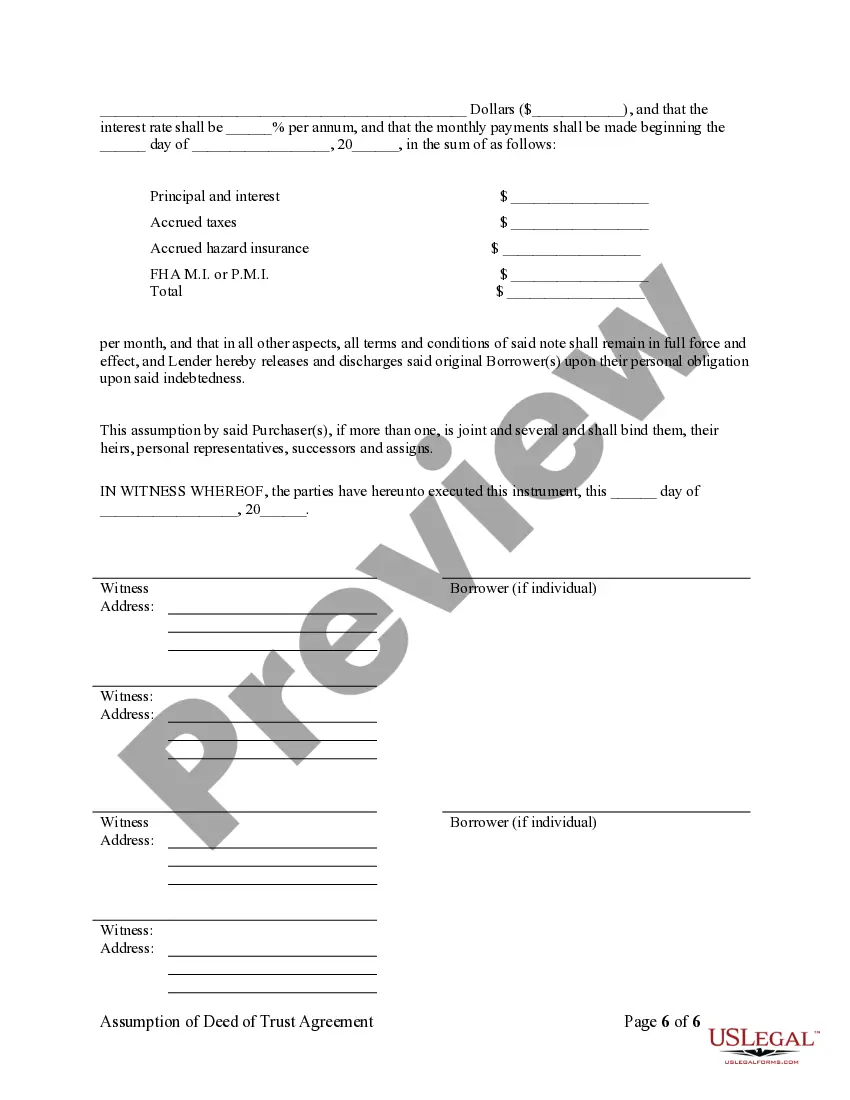
- Details of the mortgage debt being assumed, including total amount and interest rate.
- Agreement clause where new purchasers agree to pay the debt.
- Release clause discharging original mortgagors from future liability.
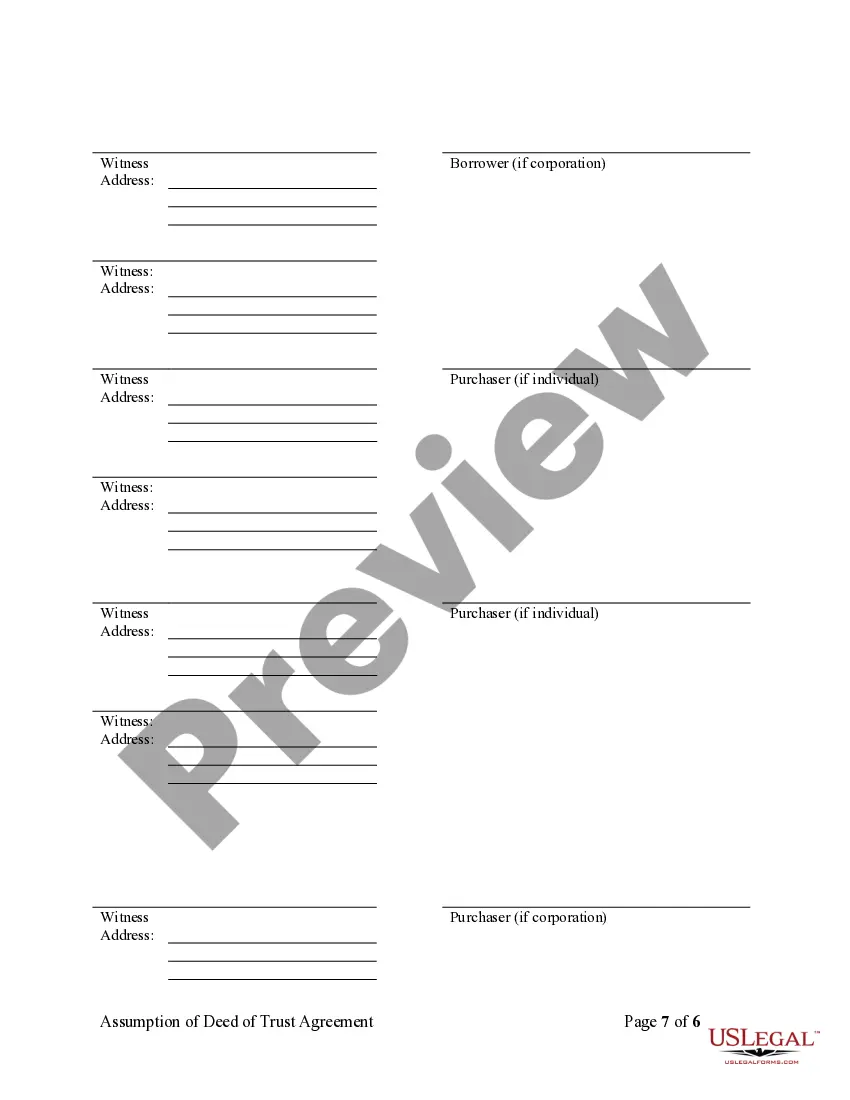
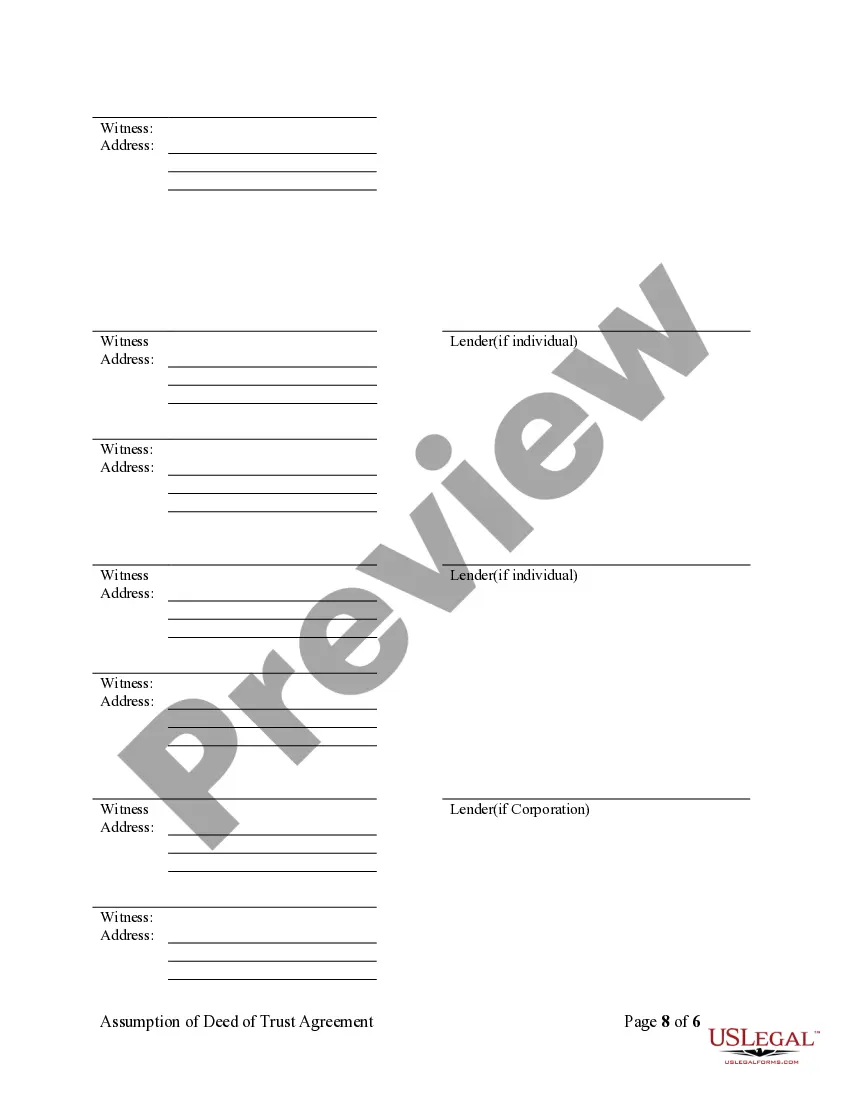
- Signatures of all parties involved, with witness lines if necessary.



When to use this document
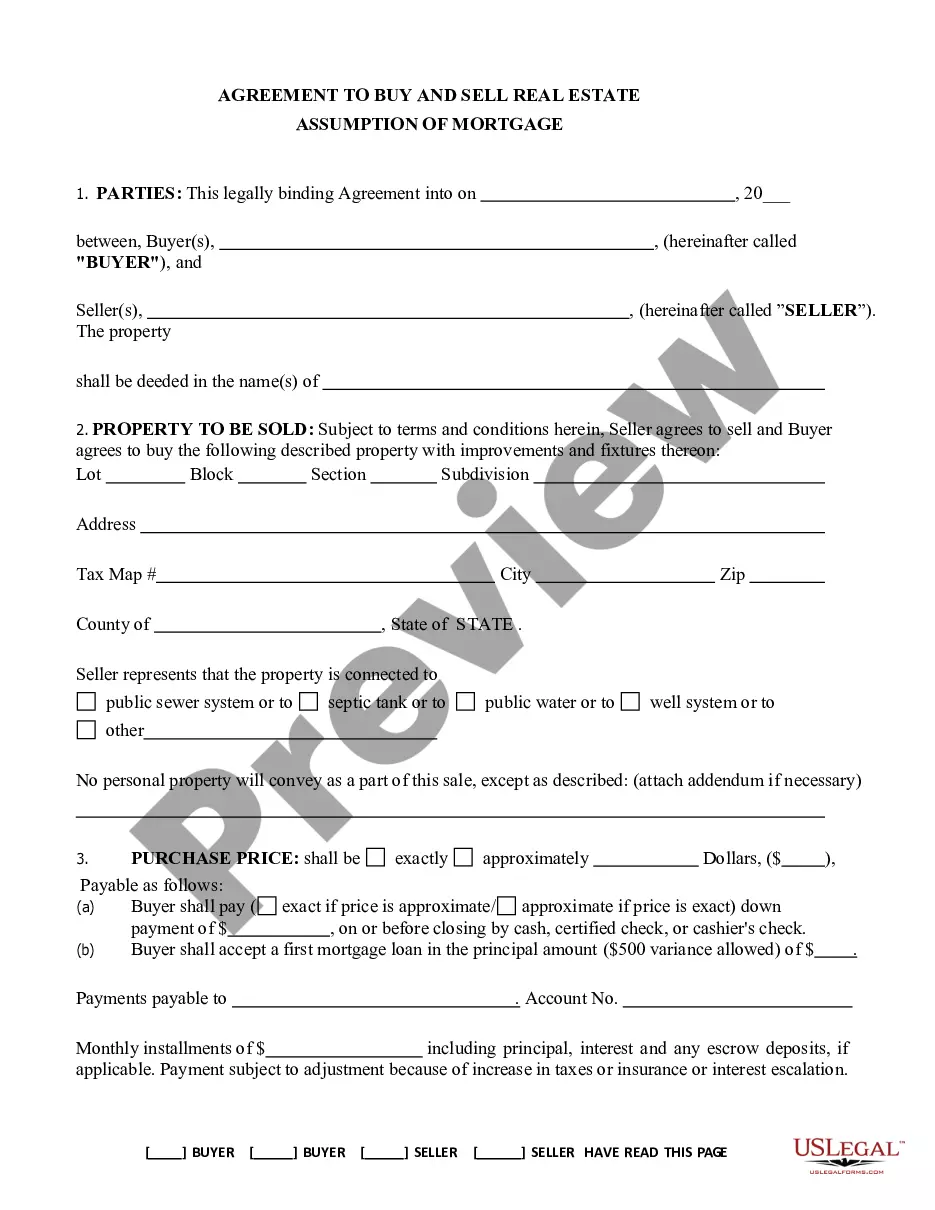
This form is typically used when a property is being sold and the new buyer wishes to take over the existing mortgage. It is essential in situations where the seller wants to transfer their mortgage obligations to the buyer, particularly in cases of property sales, refinancing, or when assuming loans as part of an estate transfer.
Intended users of this form
This form is suitable for:
- New purchasers of real estate looking to assume an existing mortgage.
- Lenders and mortgagees who need to formalize the assumption of debt.
- Original mortgagors who wish to be released from their mortgage obligations.
How to complete this form
- Identify all parties involved, including original mortgagors and new purchasers.
- Specify the total debt amount that is being assumed along with the interest rate.
- Enter the monthly payment details including principal, taxes, and insurance amounts.
- Ensure all parties sign the document with appropriate witness signatures.
- Keep a copy of the completed form for all parties involved for their records.
Does this form need to be notarized?
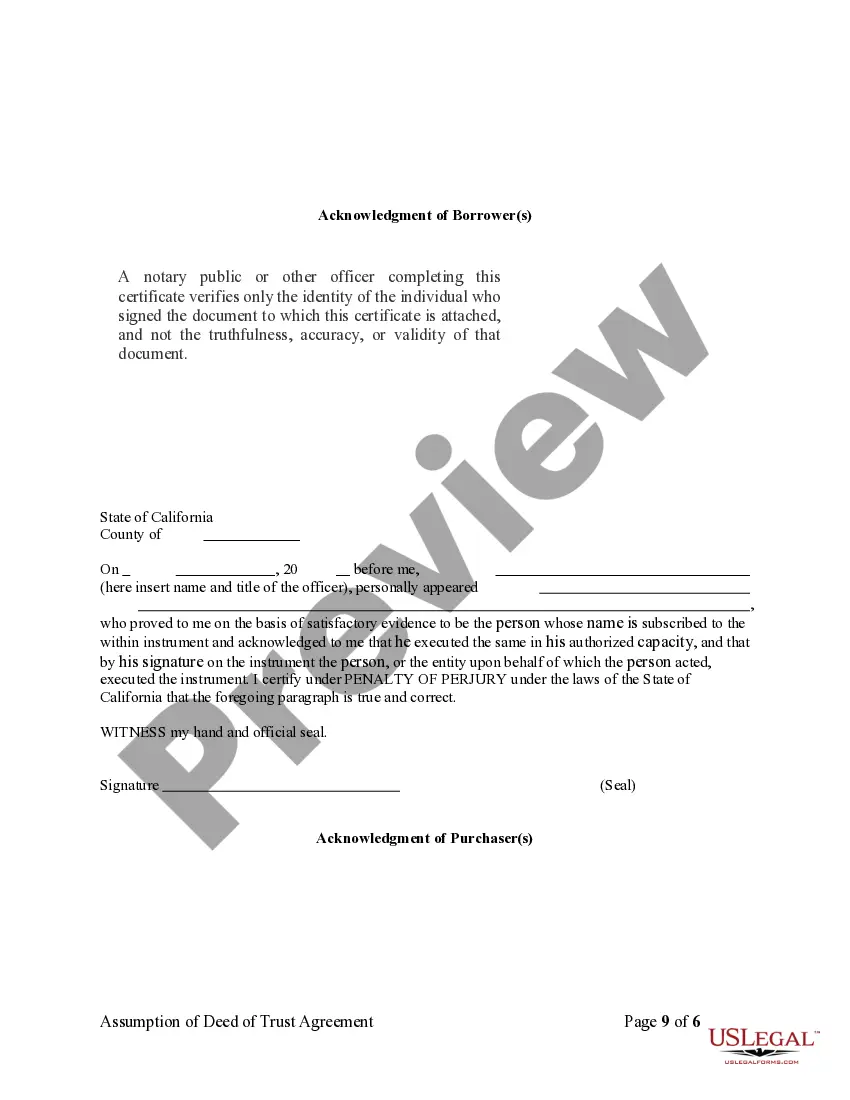
This document requires notarization to meet legal standards. US Legal Forms provides secure online notarization powered by Notarize, allowing you to complete the process through a verified video call, available 24/7.
Get your form ready online
Our built-in tools help you complete, sign, share, and store your documents in one place.
Make edits, fill in missing information, and update formatting in US Legal Forms—just like you would in MS Word.
Download a copy, print it, send it by email, or mail it via USPS—whatever works best for your next step.
Sign and collect signatures with our SignNow integration. Send to multiple recipients, set reminders, and more. Go Premium to unlock E-Sign.
If this form requires notarization, complete it online through a secure video call—no need to meet a notary in person or wait for an appointment.
We protect your documents and personal data by following strict security and privacy standards.

Make edits, fill in missing information, and update formatting in US Legal Forms—just like you would in MS Word.

Download a copy, print it, send it by email, or mail it via USPS—whatever works best for your next step.

Sign and collect signatures with our SignNow integration. Send to multiple recipients, set reminders, and more. Go Premium to unlock E-Sign.

If this form requires notarization, complete it online through a secure video call—no need to meet a notary in person or wait for an appointment.

We protect your documents and personal data by following strict security and privacy standards.
Common mistakes to avoid
- Failing to include all signatures required, particularly from witnesses.
- Not specifying the exact amount of the loan being assumed.
- Leaving out important terms, such as interest rates and payment details.
- Using the form without checking local laws that may affect its validity.
Benefits of using this form online
- Convenience of accessing and completing the form at any time.
- Easy editability allows customization for individual circumstances.
- Reliability from a reputable source with forms crafted by licensed attorneys.
Looking for another form?


Form popularity
FAQ
To obtain a copy of your deed of trust in California, you can visit your county recorder's office. They maintain records of all deeds, including the California Assumption Agreement of Deed of Trust and Release of Original Mortgagors. Additionally, you can access some records online through the county’s official website. If you prefer convenience, consider using services like uslegalforms, which simplifies the search for legal documents.
Choosing whether to be on the mortgage or the deed largely depends on your financial situation and investment strategy. Being on the mortgage means you bear the financial responsibility, while being on the deed grants you ownership rights. Consider your long-term goals and risk tolerance when making this decision. If you're involved in agreements like the California Assumption Agreement of Deed of Trust and Release of Original Mortgagors, having clear insights will aid in making an informed choice.
Using a deed of trust can provide several advantages over a mortgage. For instance, it typically allows for faster foreclosure in case of default, which can be beneficial for lenders and can lead to lower costs. This structure also allows more flexibility in terms of financing options. If you're considering a transaction involving a California Assumption Agreement of Deed of Trust and Release of Original Mortgagors, recognizing the benefits can help guide your decision.
To file a deed of trust in California, you need to prepare the necessary documents, including the deed of trust itself, and gather the required signatures. Following that, file the documents with the county recorder’s office where the property is located. It's essential to ensure everything is filled out correctly to avoid delays. The California Assumption Agreement of Deed of Trust and Release of Original Mortgagors can assist in managing these steps effectively.
Lenders often prefer deeds of trust because they provide a faster and less expensive route to foreclosure. This minimizes their risk, as they can reclaim the property more efficiently in case of default. Additionally, deeds of trust can lead to lower financial losses for lenders, making them more appealing than traditional mortgages. Exploring the California Assumption Agreement of Deed of Trust and Release of Original Mortgagors can further enlighten you on these benefits.
A disadvantage of a deed of trust lies in the non-judicial foreclosure process it enables. This means that lenders can foreclose without court involvement, often making the process quicker and less transparent. As a borrower, this shift in power can leave you with limited options if you face financial difficulties. Understanding details like the California Assumption Agreement of Deed of Trust and Release of Original Mortgagors can help you navigate these challenges.
Releasing a trust typically requires the formal termination of the trust agreement by the trustee. This may involve distributing the trust's assets to the beneficiaries and ensuring all legal obligations are met. If the trust includes a deed of trust, the California Assumption Agreement of Deed of Trust and Release of Original Mortgagors can be a useful tool during the release process.
California primarily uses deeds of trust instead of traditional mortgages for real estate transactions. A deed of trust involves three parties: the borrower, the lender, and a trustee, which can simplify foreclosure processes. Understanding this structure is essential when dealing with the California Assumption Agreement of Deed of Trust and Release of Original Mortgagors.
An assumption and release agreement for a mortgage in California allows one borrower to take over another’s mortgage responsibilities while releasing the original mortgagors from liability. This can be an essential part of the California Assumption Agreement of Deed of Trust and Release of Original Mortgagors. By utilizing such an agreement, all parties can clarify their obligations and ensure a smooth transition.
Yes, you can sell a house with a deed of trust, but there are specific steps to follow. The sale typically involves the buyer assuming the current mortgage obligations, which requires formal agreements like the California Assumption Agreement of Deed of Trust and Release of Original Mortgagors. This process helps ensure that both the seller and buyer are protected during the transaction.