California Notice of Default on Residential Lease
Understanding this form
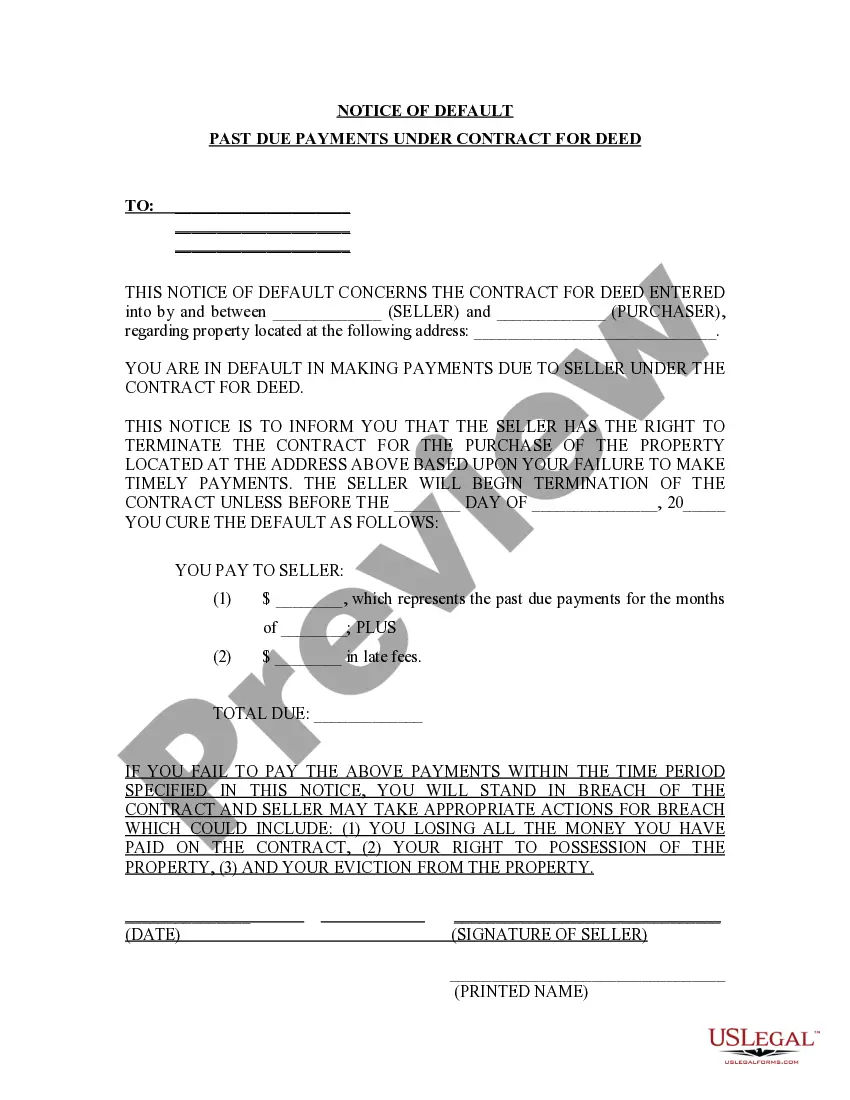
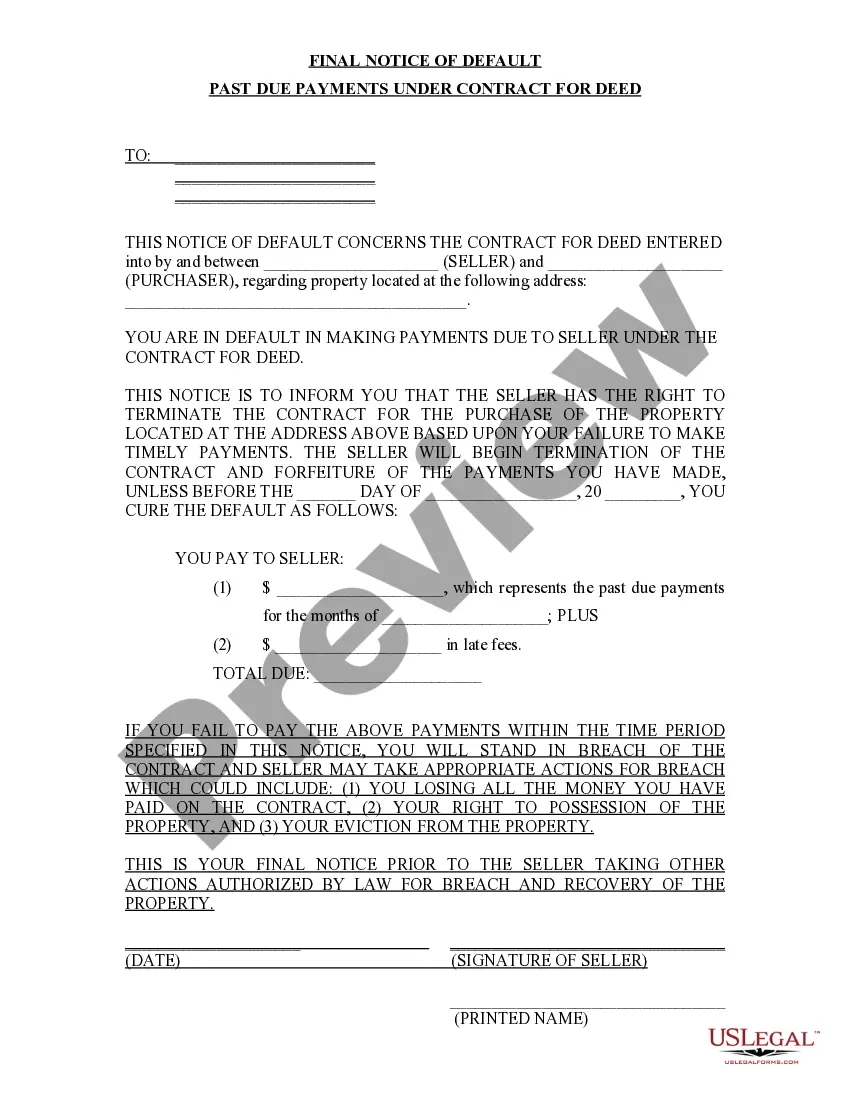
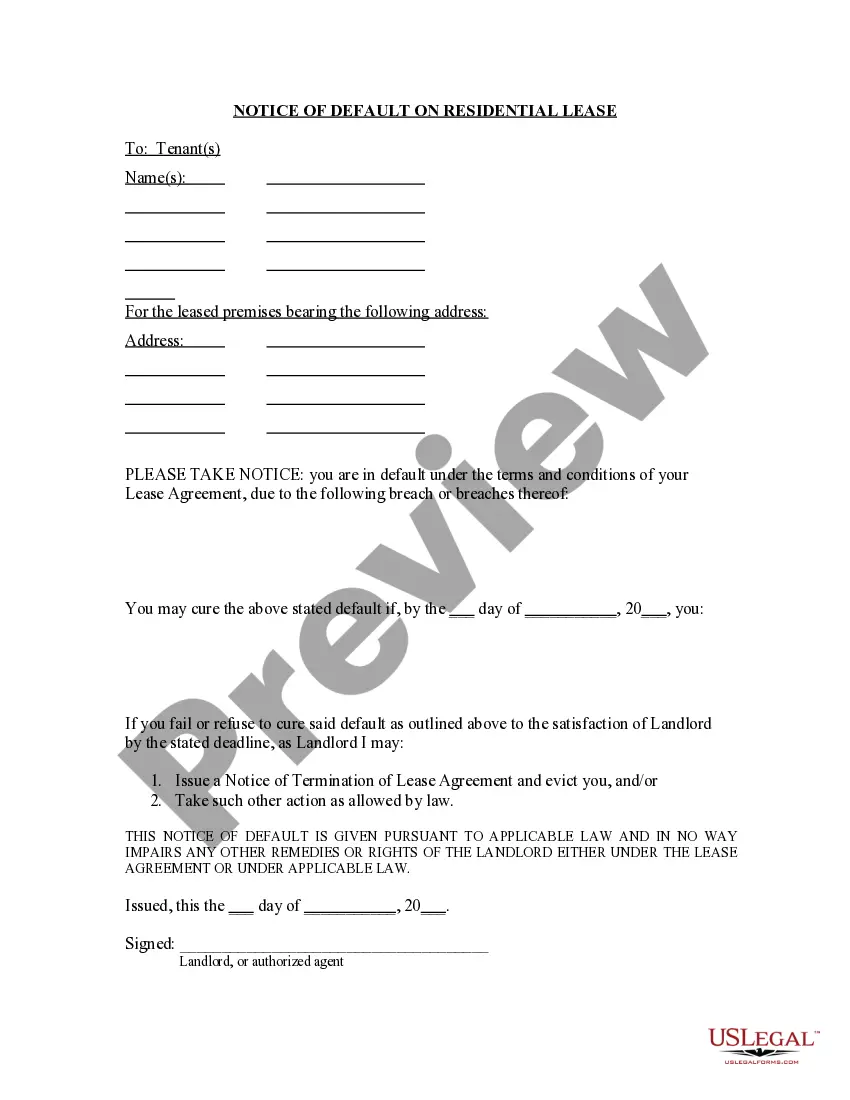
The Notice of Default on Residential Lease is a legal document that informs a tenant they have failed to meet specific obligations outlined in their lease agreement. This form serves as an official notification of the default, providing reasons for the default and a deadline to remedy the situation. Unlike similar forms, this notice sets the groundwork for potential eviction proceedings if the tenant does not respond appropriately.
Main sections of this form
- Identification of the parties involved: landlord and tenant.
- Specific reasons for the default, such as non-payment of rent.
- A clear deadline by which the tenant must cure the default.
- Legal language stating the landlord's rights to terminate the lease or take further actions.
- Space for the landlord's signature and the date of notice issuance.



When to use this form
This form should be used when a tenant has failed to fulfill their obligations under the lease agreement, particularly in failing to pay rent on time. Landlords typically must provide notice to tenants before starting eviction proceedings, making this form an essential step in the process. It formalizes the landlord's intentions and sets expectations for the tenant to rectify the situation.
Intended users of this form
- Landlords seeking to notify tenants of a rental default.
- Property management companies handling rental properties.
- landlords in need of documentation for legal compliance regarding eviction processes.
Instructions for completing this form
- Identify the parties involved, ensuring correct names and addresses.
- Specify the property in question, including the full address.
- Clearly articulate the reasons for the default, such as non-payment of rent.
- Set a deadline for the tenant to cure the default.
- Sign and date the notice to maintain a record of issuance.
Notarization requirements for this form
In most cases, this form does not require notarization. However, some jurisdictions or signing circumstances might. US Legal Forms offers online notarization powered by Notarize, accessible 24/7 for a quick, remote process.
Get your form ready online
Our built-in tools help you complete, sign, share, and store your documents in one place.
Make edits, fill in missing information, and update formatting in US Legal Forms—just like you would in MS Word.
Download a copy, print it, send it by email, or mail it via USPS—whatever works best for your next step.
Sign and collect signatures with our SignNow integration. Send to multiple recipients, set reminders, and more. Go Premium to unlock E-Sign.
If this form requires notarization, complete it online through a secure video call—no need to meet a notary in person or wait for an appointment.
We protect your documents and personal data by following strict security and privacy standards.

Make edits, fill in missing information, and update formatting in US Legal Forms—just like you would in MS Word.

Download a copy, print it, send it by email, or mail it via USPS—whatever works best for your next step.

Sign and collect signatures with our SignNow integration. Send to multiple recipients, set reminders, and more. Go Premium to unlock E-Sign.

If this form requires notarization, complete it online through a secure video call—no need to meet a notary in person or wait for an appointment.

We protect your documents and personal data by following strict security and privacy standards.
Common mistakes
- Failing to provide a clear reason for the default.
- Not setting a specific deadline for the tenant to respond.
- Omitting signatures or dates, making the notice invalid.
- Using unclear or ambiguous language that may confuse the tenant.
Why complete this form online
- Easy access to legal templates drafted by licensed attorneys.
- Convenient editing to customize the form to specific circumstances.
- Immediate download for timely delivery to tenants.
- Compliance with legal standards ensures enforceability of the notice.
Legal use & context
- This form helps protect landlords' rights under landlord-tenant laws.
- It serves as formal documentation of the landlord's attempts to resolve issues prior to eviction.
- The notice establishes a timeline for tenants to comply with lease terms and avoid further legal actions.
Main things to remember
- The Notice of Default is essential for formally notifying a tenant of their default.
- It is crucial to follow legal requirements specific to your state.
- Completing the form accurately can help prevent potential eviction litigation.
Looking for another form?








Form popularity
FAQ
The default clause in a lease outlines the conditions under which a tenant is considered in default. This section typically includes various violations such as unpaid rent or property damage. Understanding this clause is essential because it often leads to the issuance of a California Notice of Default on Residential Lease, giving landlords the right to reclaim the property. When signing a lease, read this clause carefully to avoid complications down the line.
When you default on a leased car, the leasing company usually has the right to repossess the vehicle. This process can involve additional fees and penalties, and it will also impact your credit score negatively. If this occurs, you should be aware of how a California Notice of Default on Residential Lease can indicate similar rights and actions that landlords may take in residential situations. It's beneficial to communicate with the leasing company as soon as you foresee any issues.
Defaulting on a lease typically occurs when a tenant fails to meet the obligations outlined in the lease agreement. This can include not paying rent on time, damaging the property, or violating other terms of the lease. If you find yourself in this situation, it's important to understand that landlords may initiate a California Notice of Default on Residential Lease, which can lead to further legal action. Always consult with a legal expert to understand your rights and options.
In California, the amount of notice to give a tenant to move out depends on the length of their tenancy. Generally, a 30-day notice suffices for tenants who have lived in the property for less than a year, while a 60-day notice applies for longer tenancies. Understanding these timelines is essential, and resources like US Legal Forms can provide you with the right tools to issue a California Notice of Default on Residential Lease effectively.
Serving a tenant notice in California involves providing the notice directly to the tenant or posting it at their property if they are unavailable. Additionally, sending a copy by mail is often required to ensure compliance. Use platforms like US Legal Forms to easily navigate the requirements for a California Notice of Default on Residential Lease.
To serve notice in California, ensure that you follow the appropriate method, which may include personal delivery, posting the notice on the property, and sending it by mail. The process may vary based on the type of notice, so it's important to understand the specifics for the California Notice of Default on Residential Lease. Utilize US Legal Forms to gain access to templates and detailed guidance.
Serving a notice to a residential tenant in California typically requires delivering the notice personally or leaving it with someone at the tenant's residence. You may also send the notice by mail if you include a second notice via certified mail. Using a comprehensive resource like US Legal Forms can simplify issuing a California Notice of Default on Residential Lease.
In California, a landlord can use email to give notice, but only if the tenant has agreed to receive notices this way. It is crucial to ensure that the email includes all relevant information, such as the reason for the notice and the date of issue. For a formal approach, consider using traditional methods or platforms like US Legal Forms to understand better how to issue a California Notice of Default on Residential Lease.
When it is stated that a tenant will be in default, it indicates that the tenant has failed to meet their lease obligations, such as late rent payments. This situation may prompt landlords to send a California Notice of Default on Residential Lease. Understanding this can help tenants take proactive measures to address any issues before they escalate. Clear communication with your landlord can significantly reduce the chances of falling into default.
The default clause in a lease clearly defines circumstances under which a tenant or landlord can be considered in default. This section typically outlines the rights of both parties, including the procedures after a breach occurs. If a tenant defaults, landlords may issue a California Notice of Default on Residential Lease as a formal step in the legal process. Familiarizing oneself with the default clause can prevent disputes and lead to smoother leasing experiences.