California Complaint to Quiet Title to Real Property - General
About this form
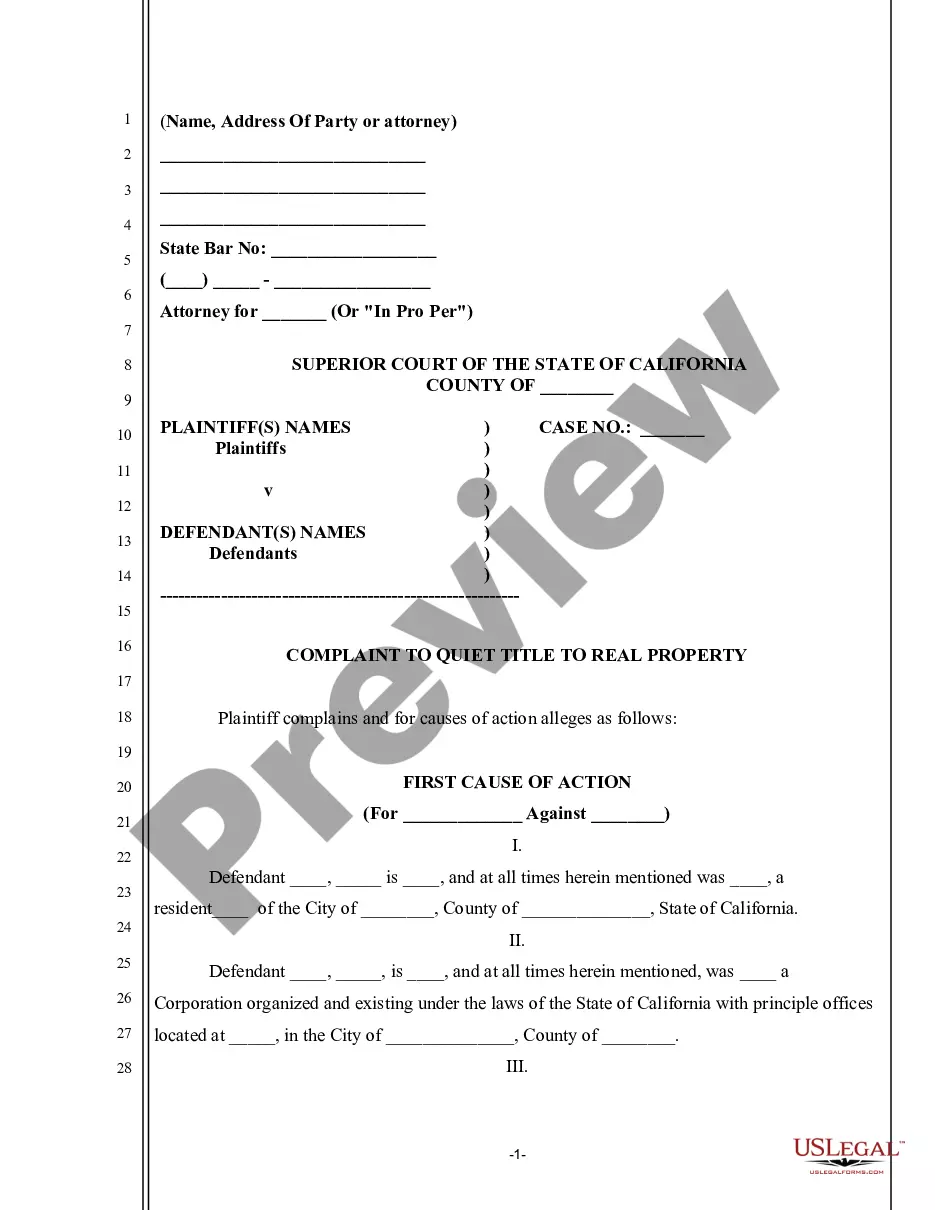
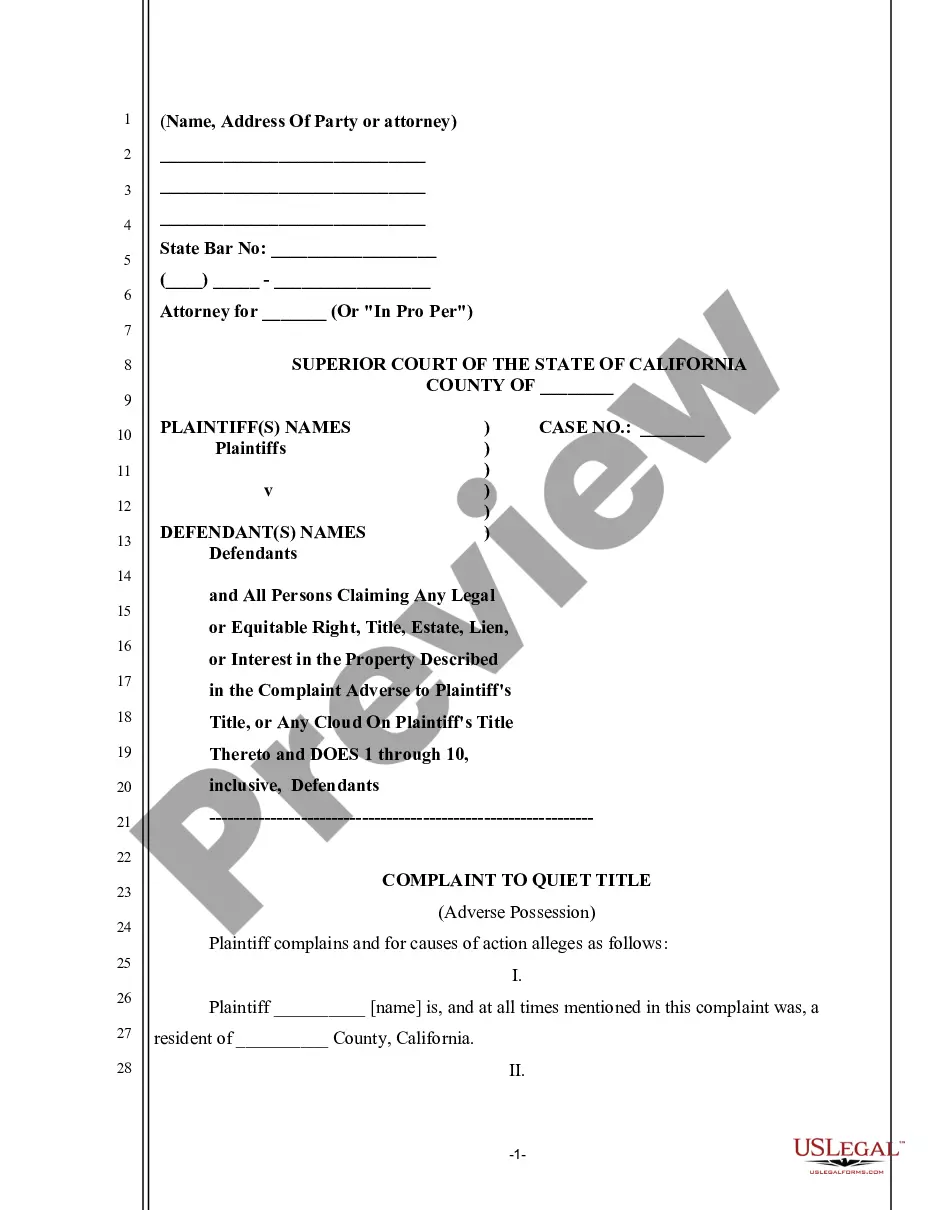
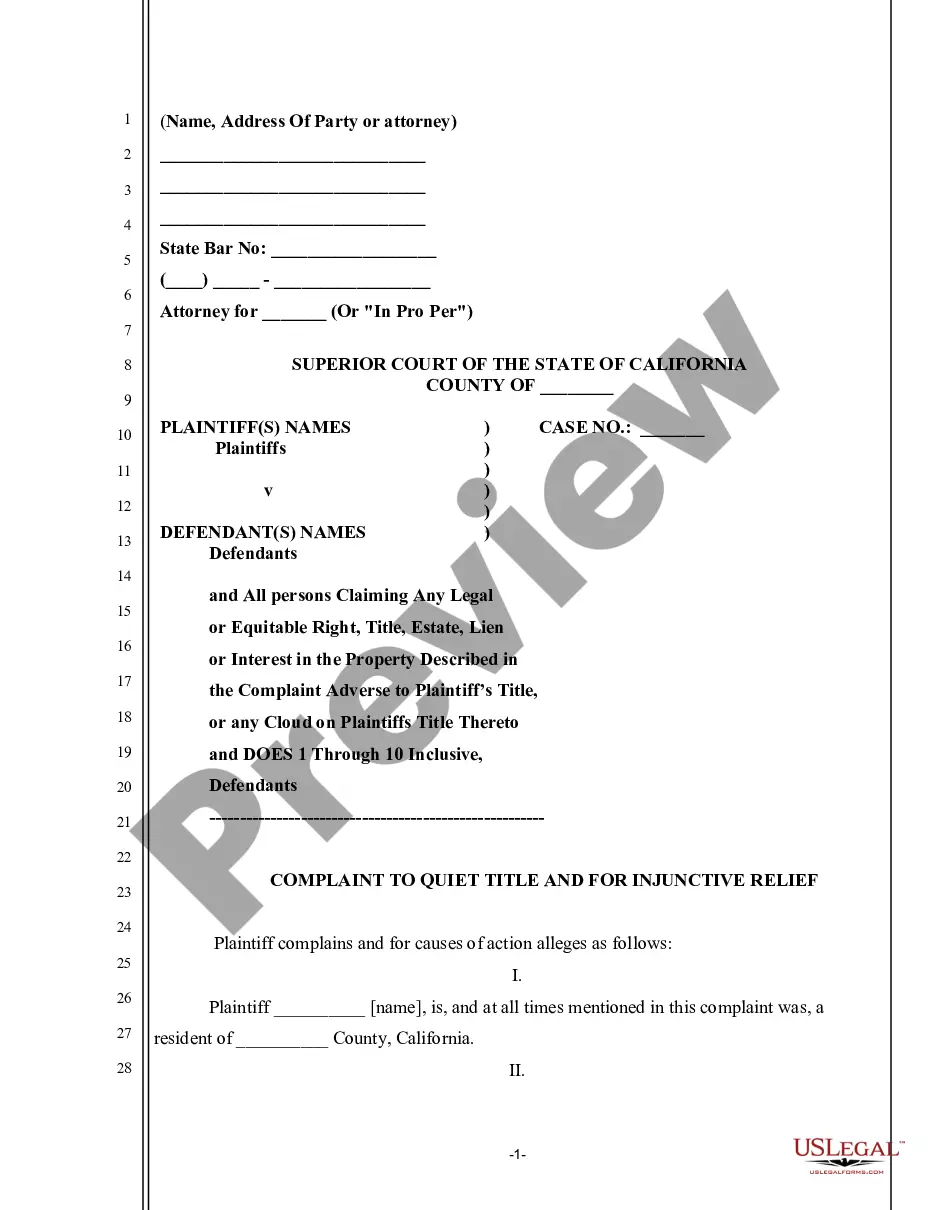
This form is a Complaint to Quiet Title to Real Property. It is used to resolve disputes regarding the legal ownership of real estate. The complaint aims to establish that the title of the property is solely vested in the plaintiff, stating that defendants have no rights to the property. This form is essential when there are conflicting claims regarding a property title and helps to prevent further disputes or claims against the property.
Key parts of this document
- Identification of the plaintiff and defendants, including their names and roles.
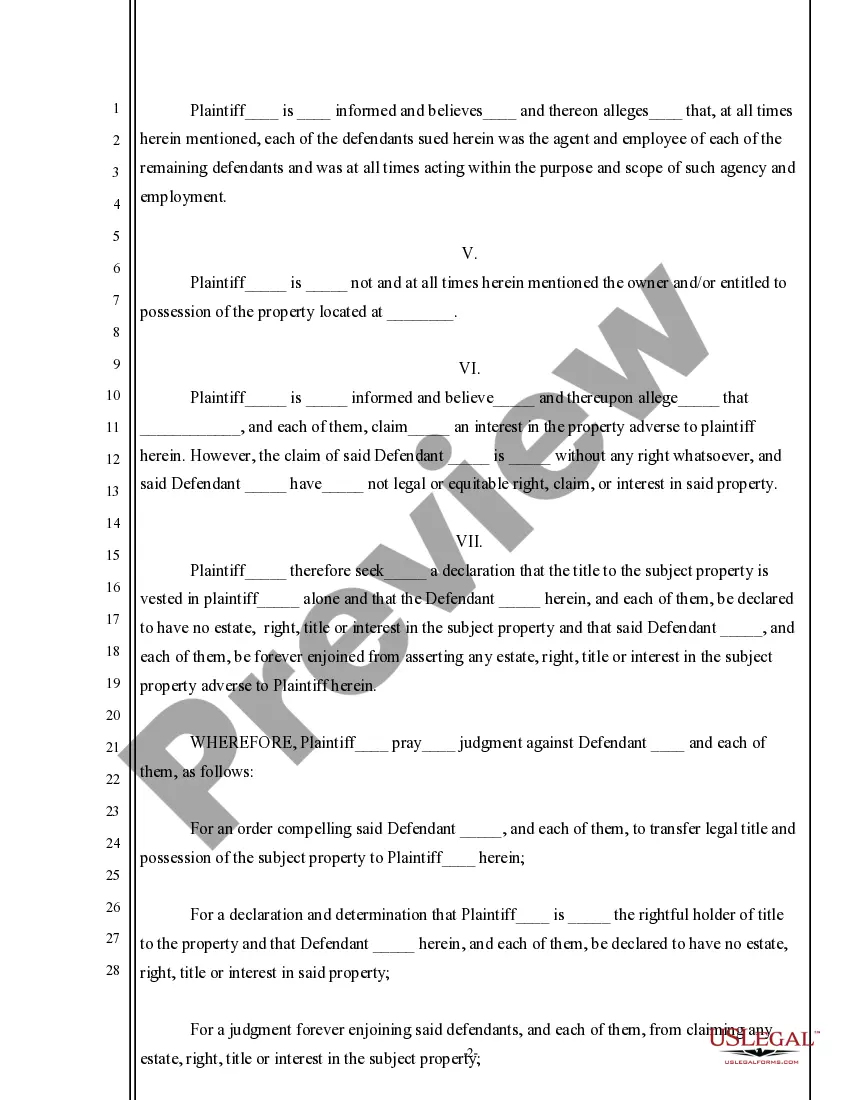
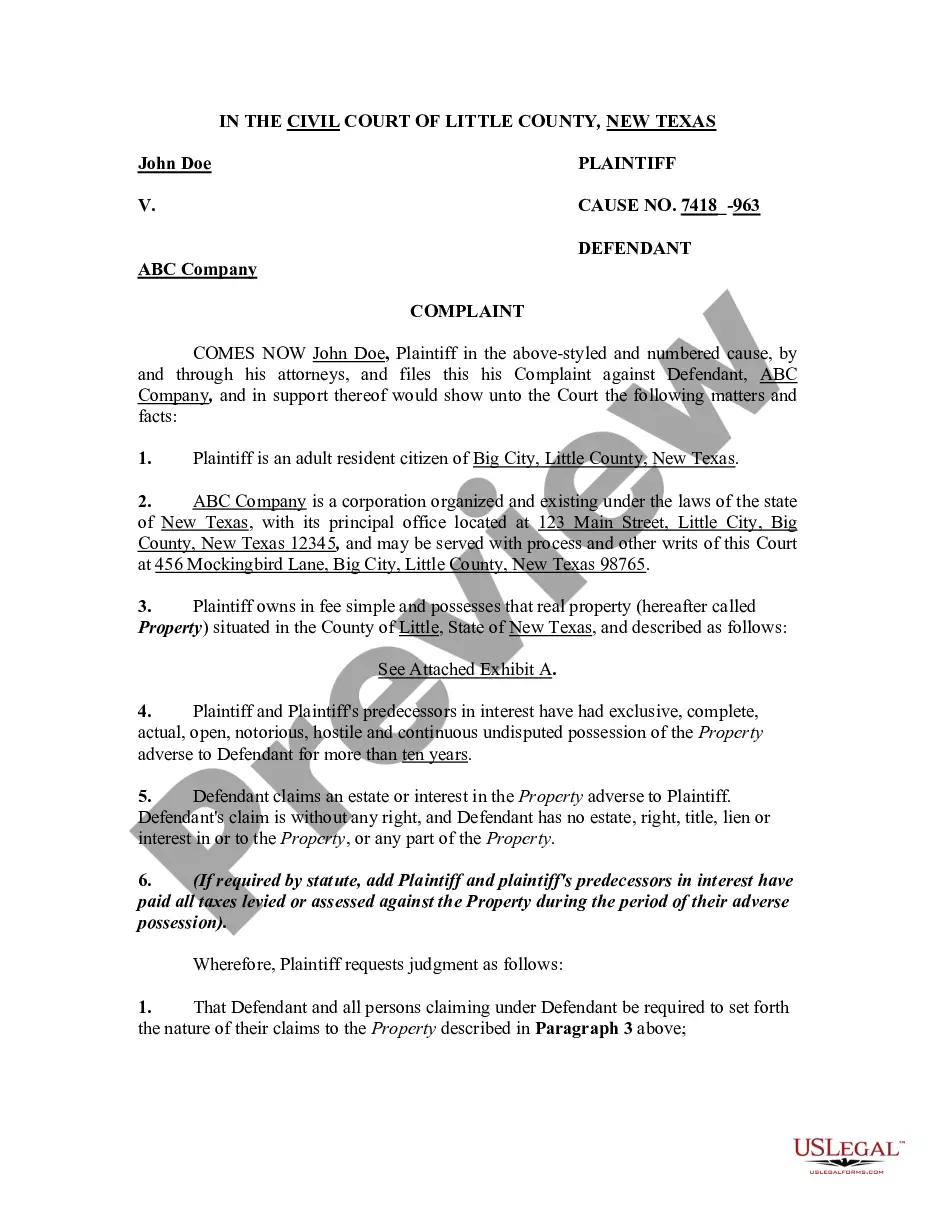
- Allegations of the case, detailing the basis for the action to quiet title.
- A request for the court to declare the plaintiff as the sole title holder.
- A request for an injunction against defendants from claiming any rights to the property.
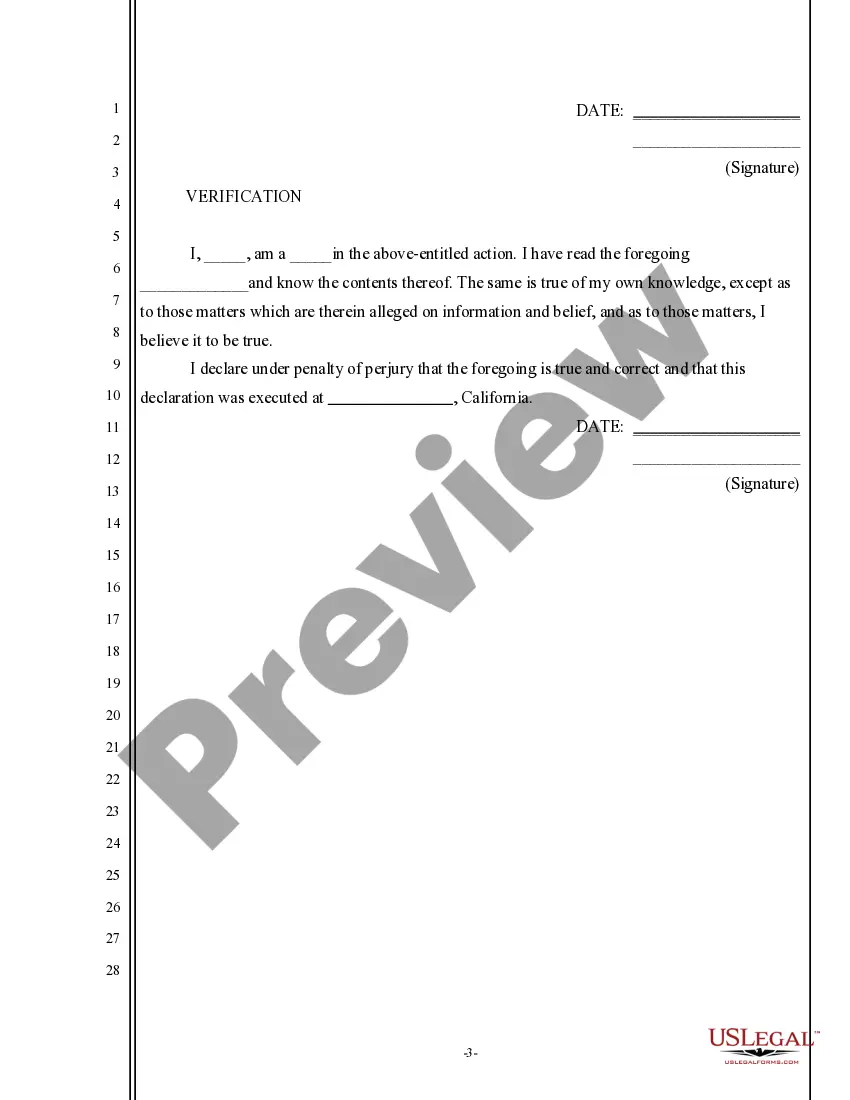
- Signature lines for the plaintiff and any legal representation, with date and verification statement.
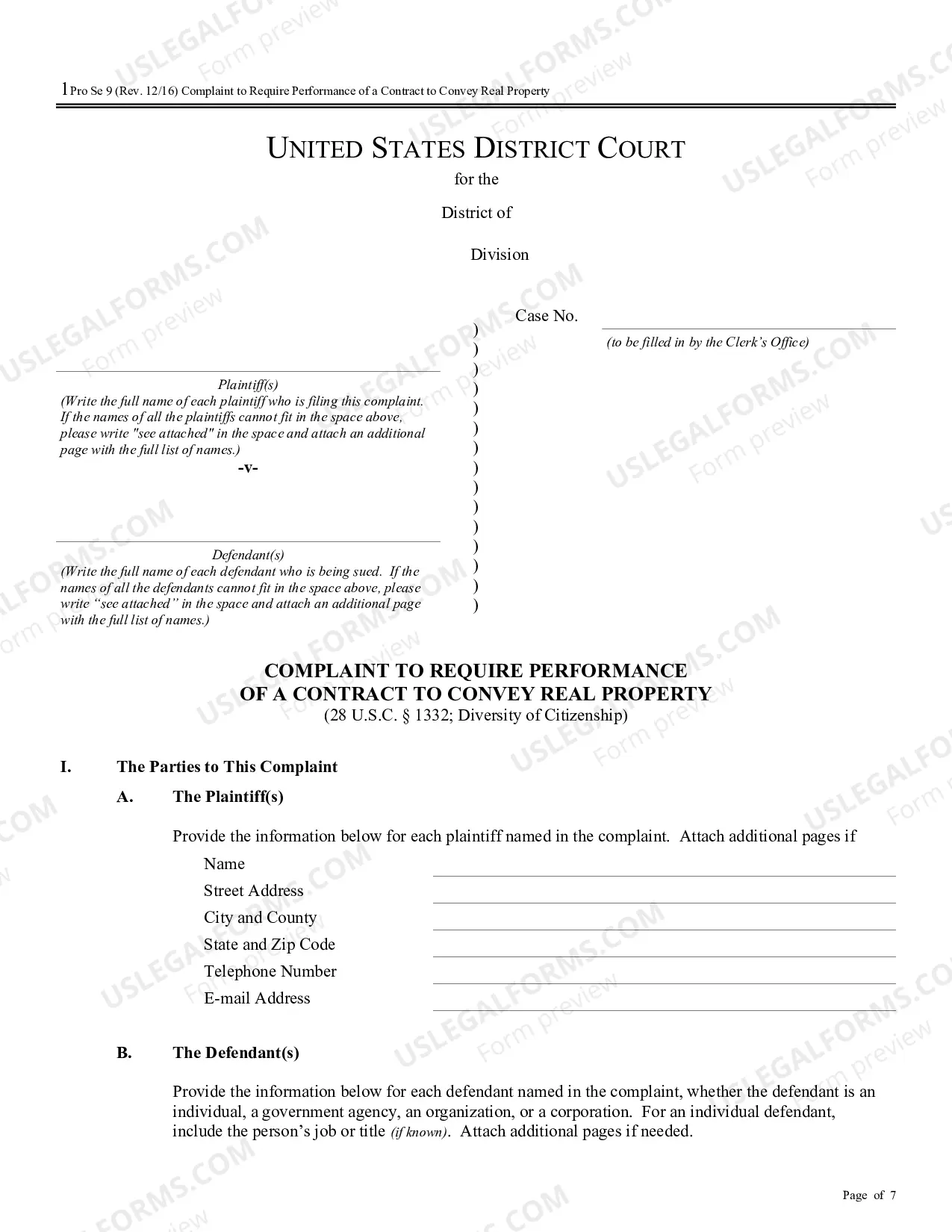
Situations where this form applies
This form should be used when an individual or entity seeks to resolve a dispute over the ownership of real property. You may need this form if you are facing challenges from other parties asserting claims to your property, if you wish to clarify your title in court, or if you believe there has been a mistake or unauthorized claim regarding your real estate rights.
Intended users of this form
This form is ideal for:
- Homeowners asserting their ownership against unlawful claims.
- Real estate investors facing disputes over property titles.
- Individuals seeking to clarify ownership following the death of a relative.
- Property owners who have received notices of conflicting claims or interest.
How to prepare this document
Follow these steps to complete the Complaint to Quiet Title to Real Property:
- Identify and list all parties involved, including full names and addresses.
- Clearly state your ownership of the property to establish your rights.
- Detail any claims made by the defendants that are contrary to your ownership.
- Request the court to declare you as the sole owner and to enjoin defendants from claiming any rights.
- Sign and date the complaint, ensuring all required parties have verified the statements.
Is notarization required?
This form does not typically require notarization unless specified by local law. Always check specific jurisdictional requirements to confirm if notarization is necessary for your case.
Get your form ready online
Our built-in tools help you complete, sign, share, and store your documents in one place.
Make edits, fill in missing information, and update formatting in US Legal Forms—just like you would in MS Word.
Download a copy, print it, send it by email, or mail it via USPS—whatever works best for your next step.
Sign and collect signatures with our SignNow integration. Send to multiple recipients, set reminders, and more. Go Premium to unlock E-Sign.
If this form requires notarization, complete it online through a secure video call—no need to meet a notary in person or wait for an appointment.
We protect your documents and personal data by following strict security and privacy standards.

Make edits, fill in missing information, and update formatting in US Legal Forms—just like you would in MS Word.

Download a copy, print it, send it by email, or mail it via USPS—whatever works best for your next step.

Sign and collect signatures with our SignNow integration. Send to multiple recipients, set reminders, and more. Go Premium to unlock E-Sign.

If this form requires notarization, complete it online through a secure video call—no need to meet a notary in person or wait for an appointment.

We protect your documents and personal data by following strict security and privacy standards.
Typical mistakes to avoid
- Failing to correctly identify all parties involved in the dispute.
- Not providing sufficient evidence or details supporting the claim of ownership.
- Omitting necessary signatures or dates from the form.
- Ignoring jurisdiction-specific requirements or local rules.
Why complete this form online
- You can complete the form at your convenience, from anywhere with internet access.
- The form is easy to edit, allowing you to ensure all information is accurate before submission.
- Your form will be drafted based on the latest legal standards, providing peace of mind.
- This form is legally binding and can be enforced by the court once filed.
- A successfully completed quiet title action will help prevent future claims on the same property.
- It is important to present accurate and truthful information to avoid potential legal issues.
Quick recap
- The Complaint to Quiet Title is essential for establishing clear ownership of real property.
- Filing this form helps resolve disputes and prevents others from claiming rights to your property.
- Ensure all information is accurate and reflect jurisdiction-specific requirements when filing.
Looking for another form?

Form popularity
FAQ
California Complaint to Quiet Title to Real Property - General is a civil form used to resolve disputes over who owns real estate. It asks the court to declare the plaintiff the sole title holder and to issue an injunction against others asserting rights. The form guides you through identifying the parties, setting forth allegations, requesting relief, and signing with verification.
To file, fill in the plaintiff and defendant details, provide factual allegations supporting why title should be quiet, request that the court declare you the sole title holder, and ask for an injunction preventing others from claiming rights. Include signature lines, date, and a verification statement as applicable, then file with the appropriate California court.
Per the form components, the essential elements are identification of the plaintiff and defendants, allegations of the case supporting the quiet title action, a specific request for the court to declare the plaintiff the sole title holder, a request for an injunction against others, and signature lines with a verification statement.
This form includes a verification statement and signature lines for the plaintiff (and attorney, if any), indicating the complaint can be verified. The form itself does not state that verification is required by law, so check California court rules and potentially consult an attorney to confirm whether verification is necessary in your case.
This form resolves disputes over ownership by presenting allegations to show the plaintiff's title is sole and preventing others from asserting rights via an injunction, thereby clarifying ownership and reducing future claims against the property. It aligns with the listed components: party identification, allegations, sole-title relief, and verification.
This General version is designed for standard quiet title disputes and focuses on establishing the plaintiff's sole title and obtaining an injunction, using a straightforward set of components (party identification, factual allegations, a sole-title declaration, an injunction request, and verification). Other variants may be tailored to specific facts or contexts.