California Complaint for Reformation of Contract
What this document covers
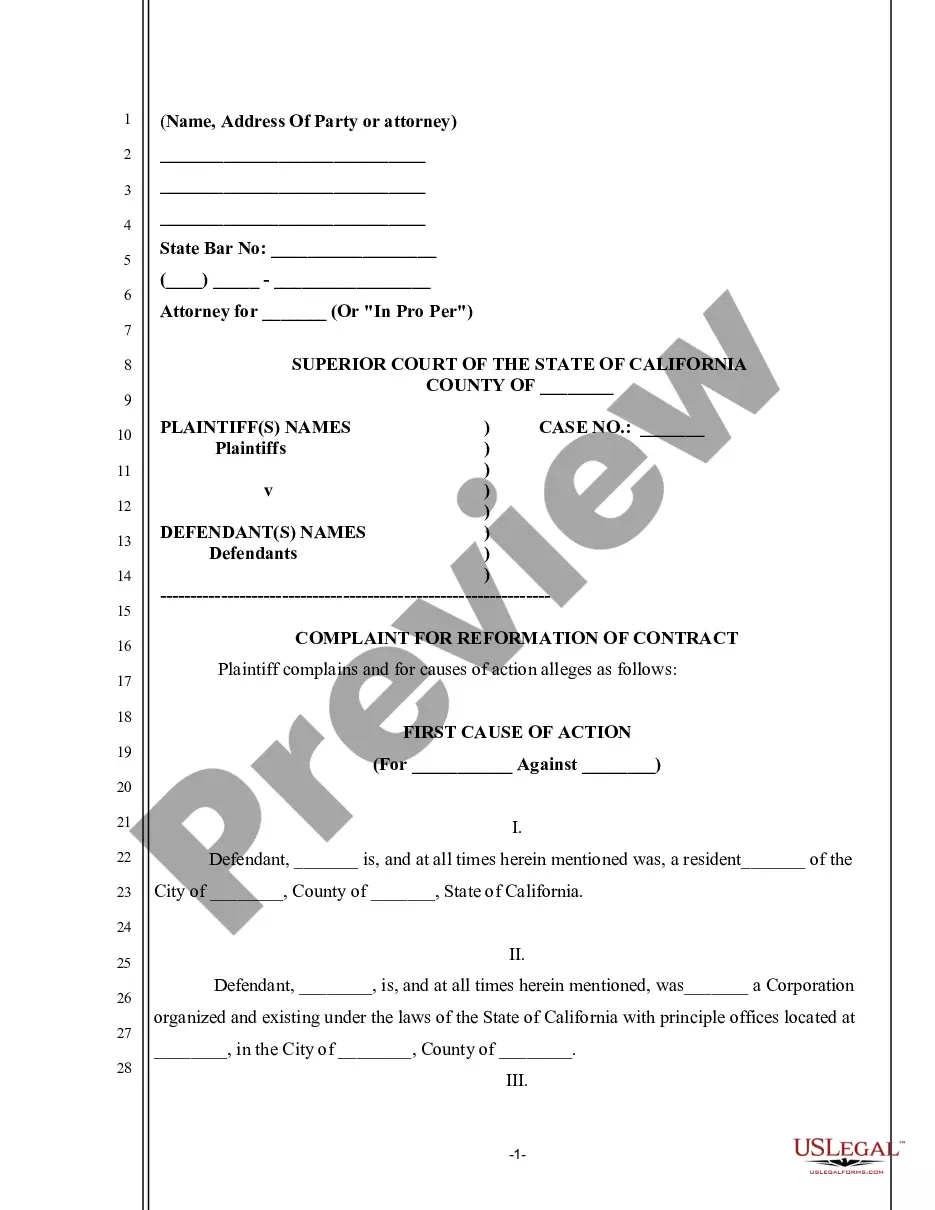
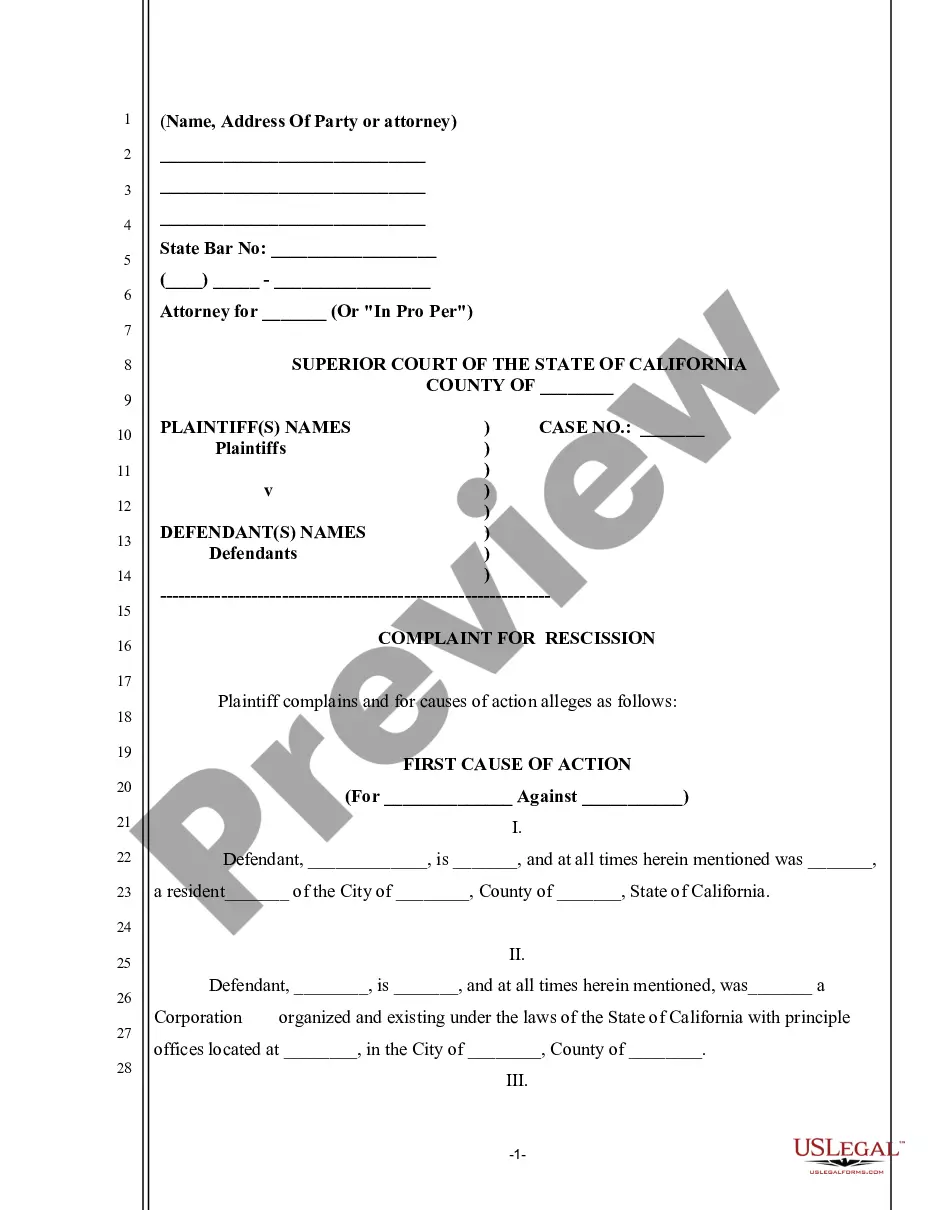
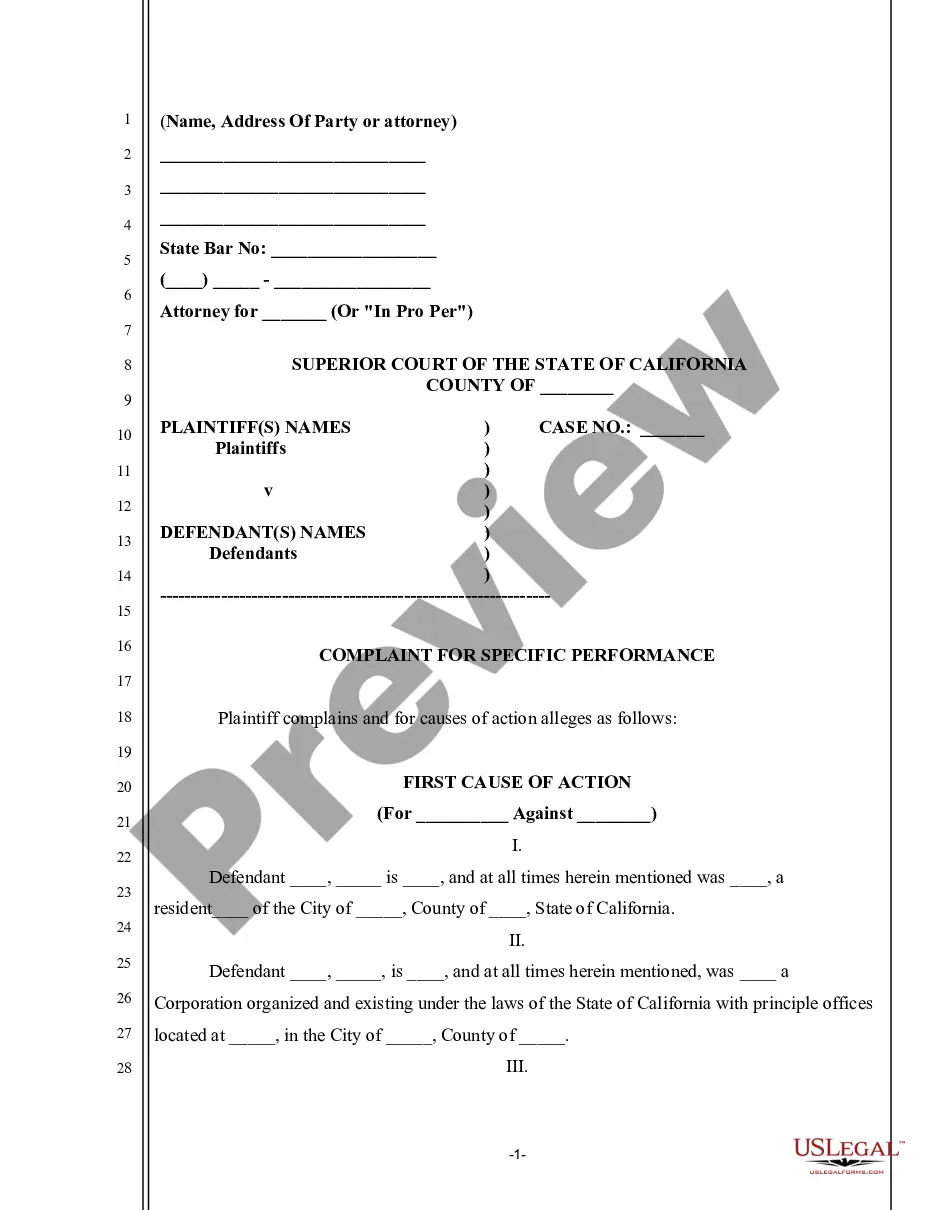
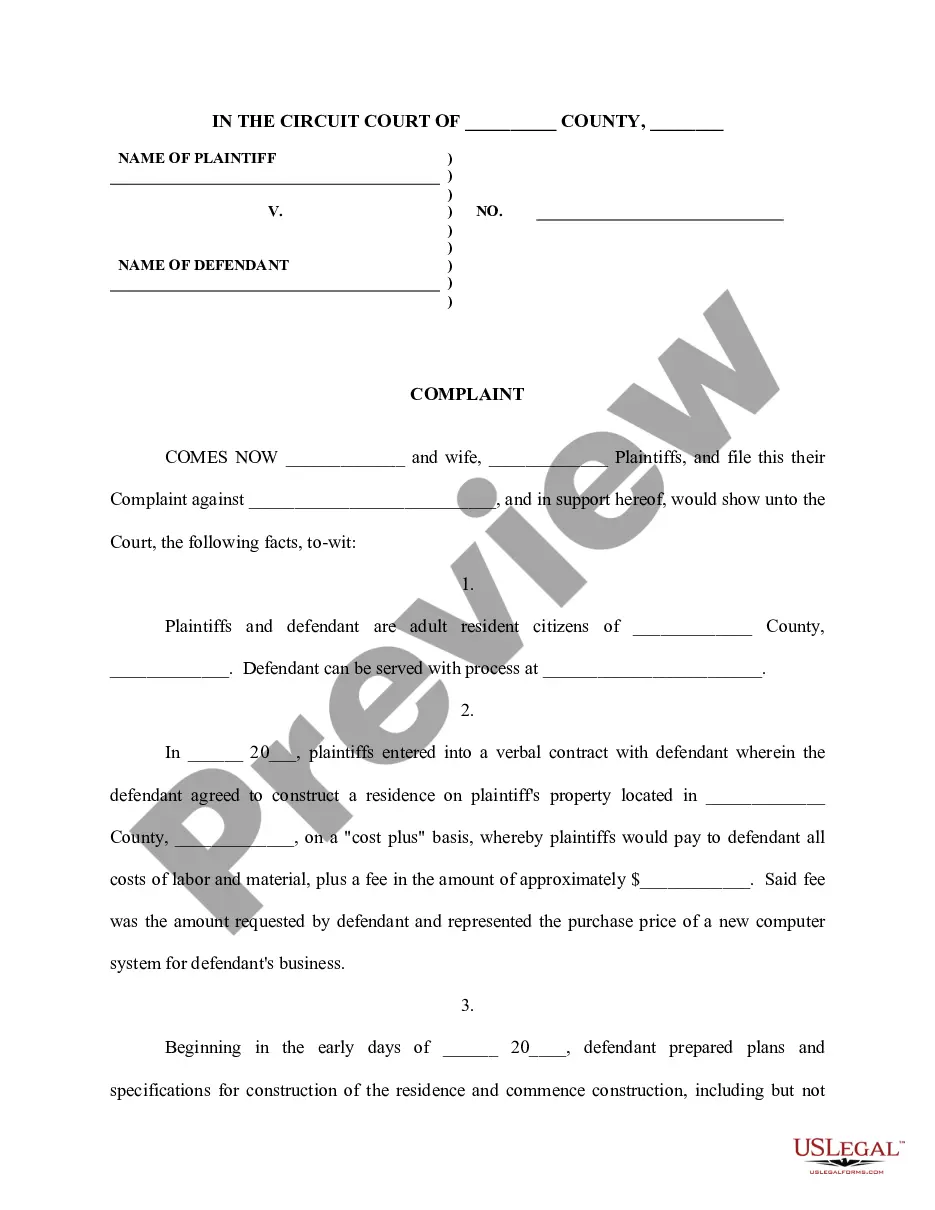
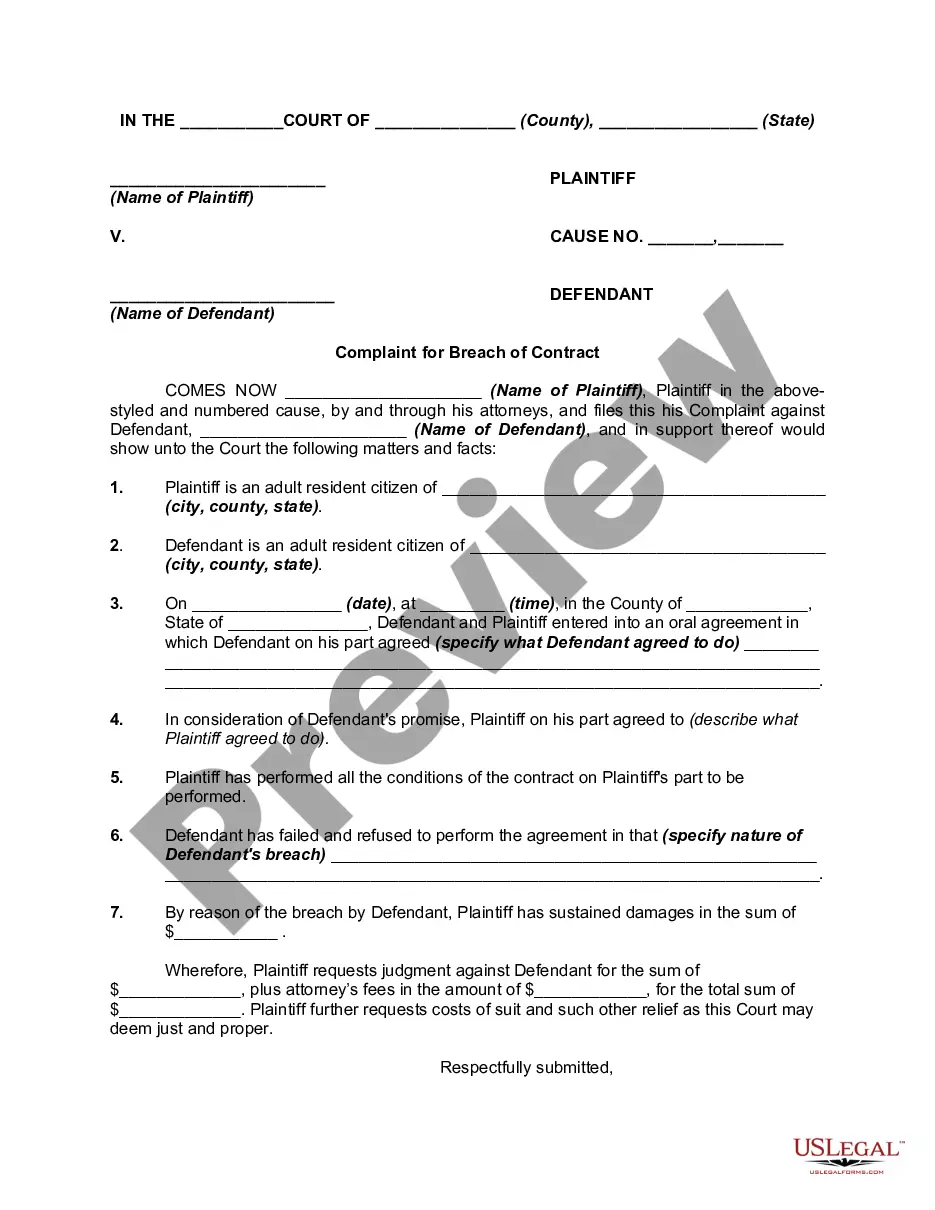
The Complaint for Reformation of Contract is a legal document used to request a court to modify an existing contract to accurately reflect the true intentions of the parties involved. This form is specifically designed for situations where a written agreement does not align with the original agreement made orally or contains mistakes that need correcting. It differs from other contract-related forms by focusing on the reformation process rather than enforcement or breach.
What’s included in this form
- Identification of the plaintiff(s) and defendant(s).
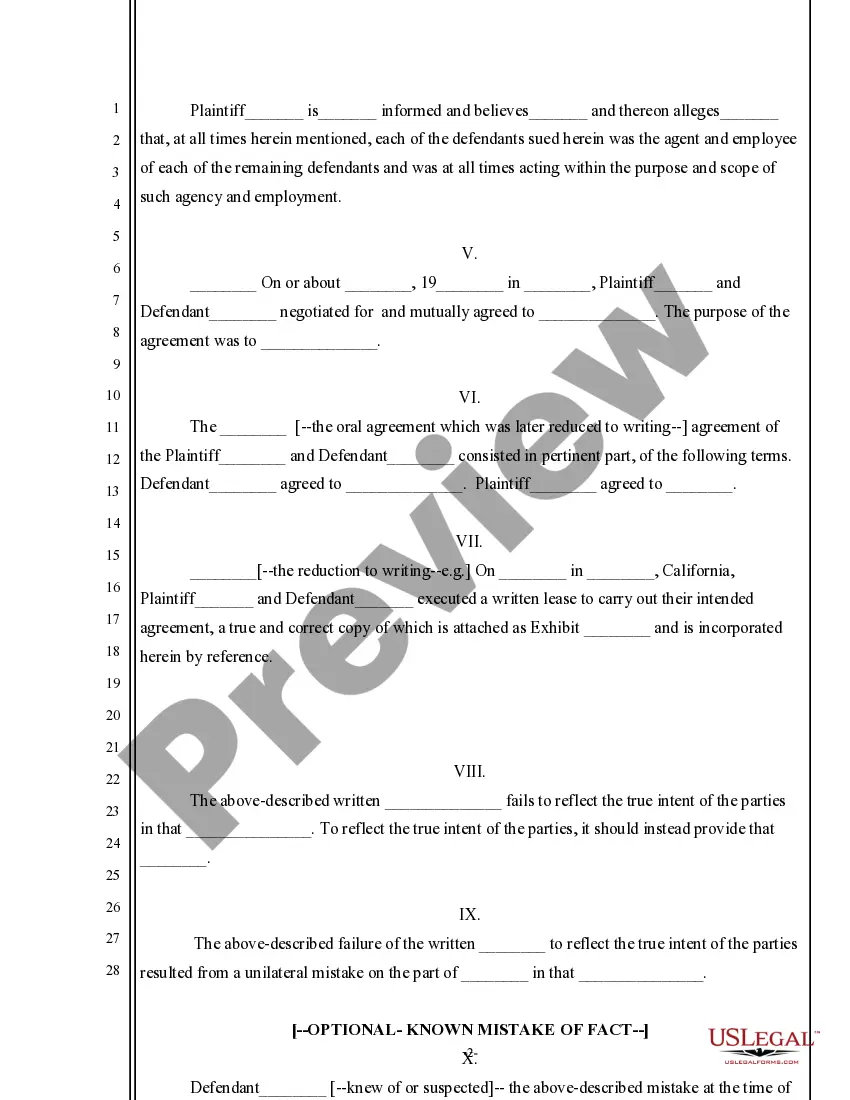
- Details of the original agreement and its intended purpose.
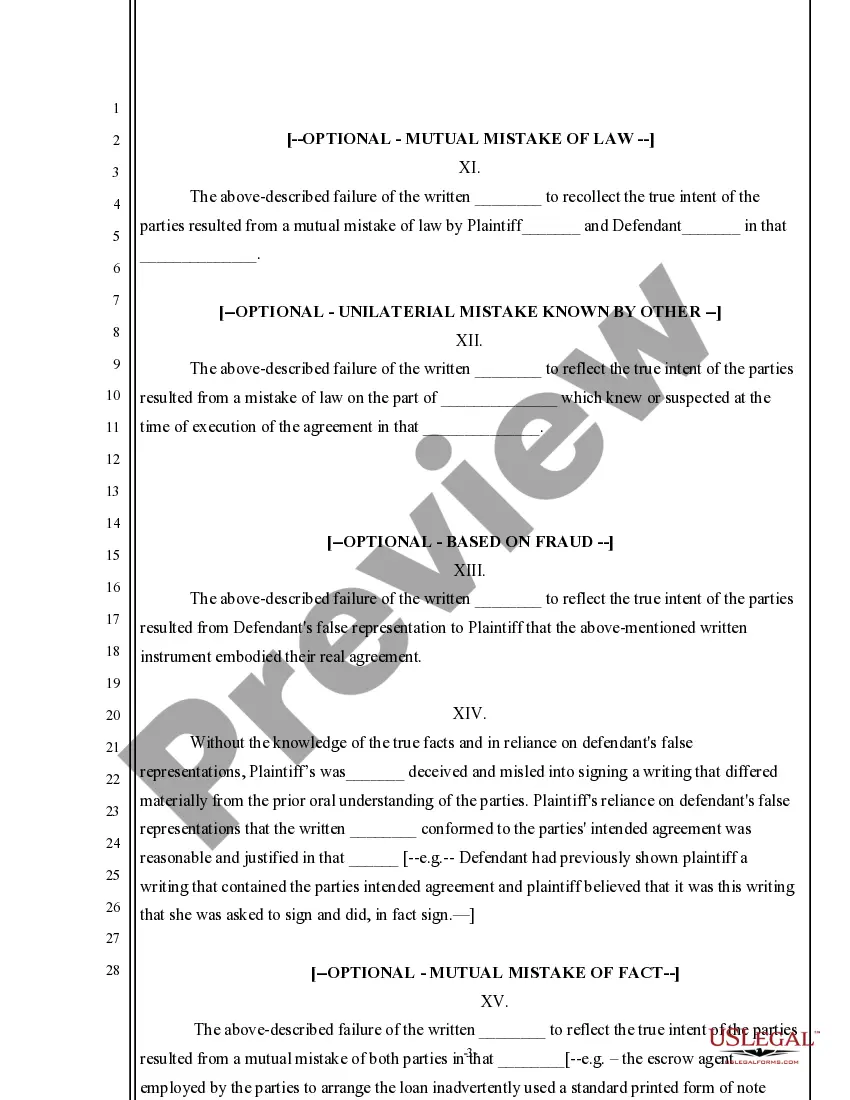
- Allegations of mistakes, including unilateral or mutual mistakes.
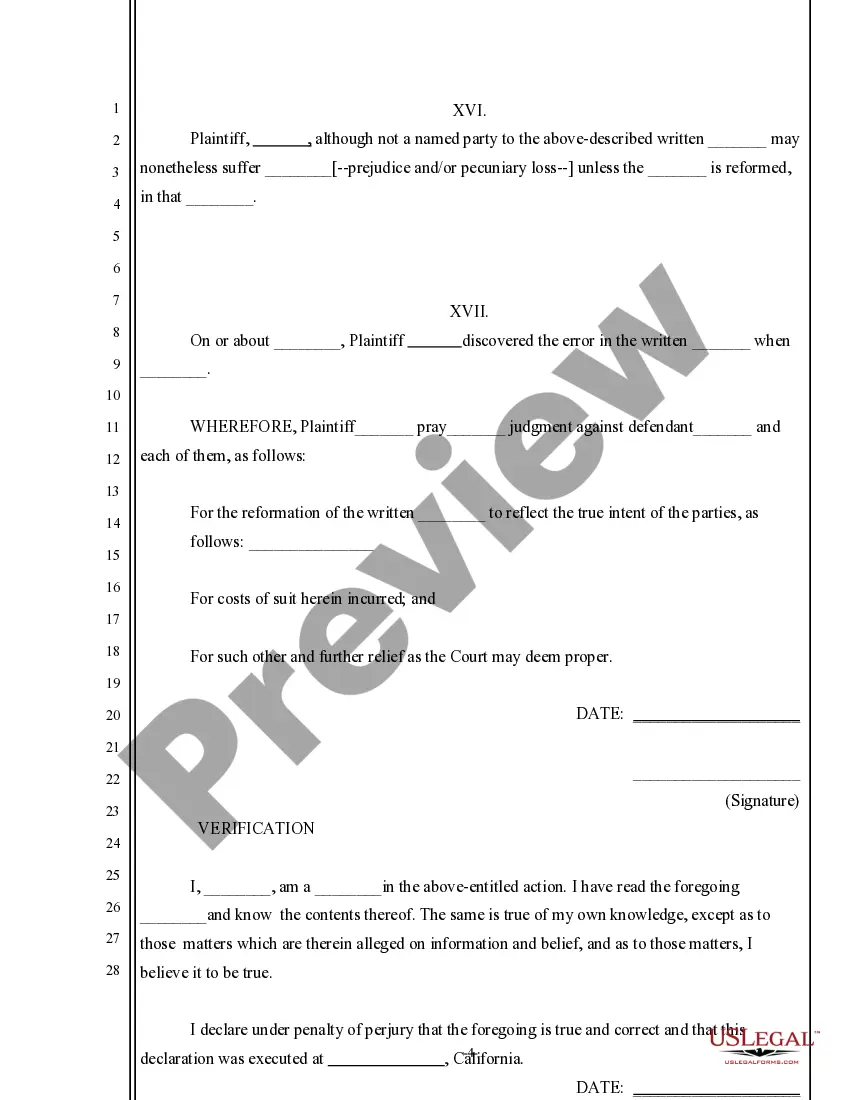
- Requests for reformation specifying how the document should read.
- Verification section for affirming the truthfulness of the allegations.

Common use cases
This form is commonly used when the written contract does not accurately reflect what the parties intended. You may need to use this form if you discover that:
- The final written contract contains errors or omissions from the original agreement.
- There was a misunderstanding or miscommunication during the contract formation.
- One party was misled or acted under false representations regarding the contract terms.
- Both parties had a different understanding of the terms that were not captured in writing.
Who this form is for
This form is intended for individuals or entities that are party to a contract in which they seek correction of terms due to misunderstanding or clerical errors. Specifically, it is suitable for:
- Individuals seeking to correct contract discrepancies.
- Businesses that wish to ensure their contracts reflect the true agreements made.
- Representatives or attorneys acting on behalf of a party to the contract.
How to prepare this document
- Identify and state the names and designations of the parties involved.
- Clearly outline the relevant facts regarding the original agreement, including dates and terms.
- Describe the specific mistake or misunderstanding that occurred.
- Specify how the contract should be amended to reflect the true intentions of the parties.
- Ensure you complete the verification section to affirm the contents are true.
Does this document require notarization?
Notarization is generally not required for this form. However, certain states or situations might demand it. You can complete notarization online through US Legal Forms, powered by Notarize, using a verified video call available anytime.
Get your form ready online
Our built-in tools help you complete, sign, share, and store your documents in one place.
Make edits, fill in missing information, and update formatting in US Legal Forms—just like you would in MS Word.
Download a copy, print it, send it by email, or mail it via USPS—whatever works best for your next step.
Sign and collect signatures with our SignNow integration. Send to multiple recipients, set reminders, and more. Go Premium to unlock E-Sign.
If this form requires notarization, complete it online through a secure video call—no need to meet a notary in person or wait for an appointment.
We protect your documents and personal data by following strict security and privacy standards.

Make edits, fill in missing information, and update formatting in US Legal Forms—just like you would in MS Word.

Download a copy, print it, send it by email, or mail it via USPS—whatever works best for your next step.

Sign and collect signatures with our SignNow integration. Send to multiple recipients, set reminders, and more. Go Premium to unlock E-Sign.

If this form requires notarization, complete it online through a secure video call—no need to meet a notary in person or wait for an appointment.

We protect your documents and personal data by following strict security and privacy standards.
Typical mistakes to avoid
- Failing to provide specific details of the original agreement and its terms.
- Not clearly stating how the written contract deviates from the intended agreement.
- Leaving out relevant dates or contextual information that supports the claim.
- Neglecting to sign or properly verify the document.
Advantages of online completion
- Immediate access to a comprehensive, attorney-drafted template.
- Easy editing capabilities to tailor the form to your specific needs.
- Convenient and secure download process, allowing for quick use.
- Guidance throughout the form completion to avoid common errors.
Looking for another form?

Form popularity
FAQ
The California Complaint for Reformation of Contract is a legal document used to request a court to modify an existing contract so it accurately reflects the parties' true intentions. It's appropriate when the written agreement does not reflect the oral agreement or contains clerical or substantive mistakes. It differs from enforcement or breach actions by targeting modification rather than performance.
Reformation is appropriate when the contract does not reflect the actual agreement due to mistakes or misrepresentations, so the court can modify it to reflect the true terms. The California Complaint for Reformation of Contract is designed to obtain that modification rather than seeking damages for breach.
The form requires identifying the plaintiff(s) and defendant(s); detailing the original agreement and its intended purpose; alleging mistakes (unilateral or mutual); requesting reformation specifying how the document should read; and including a verification section affirming the truth of the allegations.
This form is intended for individuals or entities who are party to a contract and seek to correct terms due to misunderstanding or clerical errors. It applies to individuals, businesses, or representatives/attorneys acting on behalf of a party.
Common use cases include discovering that the final written contract contains errors or omissions, misunderstandings during formation, misrepresentations influencing terms, or parties having different understandings not captured in writing.
This form focuses on correcting the contract to reflect the true agreement, rather than enforcing performance or seeking damages for a breach. It initiates a reformation remedy and relies on the identified components (parties, original terms, mistake allegations, proposed reads, and verification) to support modification.