California Notice of Dishonored Check - Civil - Keywords: bad check, bounced check
Overview of this form
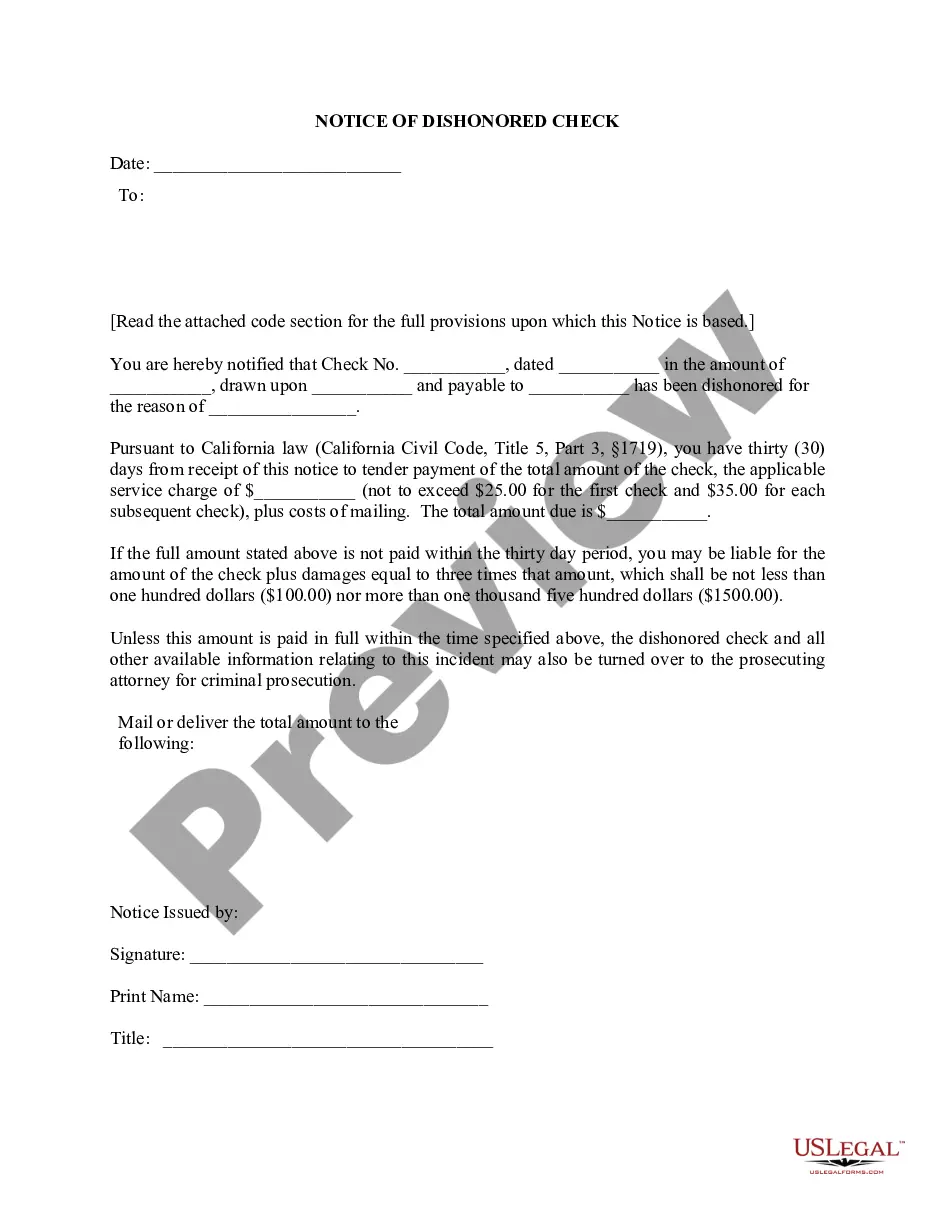
This is a Notice of Dishonored Check - Civil, commonly referred to as a bad check or bounced check. This form serves to formally inform the issuer that their check was not honored by the bank due to insufficient funds or a nonexistent account. Unlike other forms that may address informal demands for payment, this notice is an essential step in initiating the recovery process under applicable state laws.
What’s included in this form
- Check details: Includes the check number, date, amount, and the bank upon which the check was drawn.
- Reason for dishonor: Clearly states why the check was not honored, such as insufficient funds.
- Payment demand: Specifies the total amount owed, including a service charge and costs of mailing.
- Timeframe for payment: Grants the debtor thirty days to pay the total amount due.
- Consequences of non-payment: Outlines potential damages, including treble damages if payment is not made within the specified timeframe.


When this form is needed
You should use this form when you receive a check that has been returned due to insufficient funds or if the issuer has no account. It is important to notify the check issuer to give them an opportunity to settle the debt. This may be necessary before pursuing further legal action to recover the owed amount.
Who needs this form
This form is intended for:
- Landlords collecting unpaid rent via check.
- Business owners receiving checks for goods or services that have bounced.
- Individuals who have been issued bad checks and need to formally notify the issuer.
Instructions for completing this form
To properly complete this form, follow these steps:
- Identify the issuer by entering their name and address.
- Fill in the details of the dishonored check, including the check number, date, and amount.
- Specify the reason the check was dishonored (e.g., insufficient funds).
- Calculate the total amount due, including applicable service charges.
- Indicate the deadline for payment (thirty days from receipt of this notice).
Notarization guidance
This form does not typically require notarization unless specified by local law.
Get your form ready online
Our built-in tools help you complete, sign, share, and store your documents in one place.
Make edits, fill in missing information, and update formatting in US Legal Forms—just like you would in MS Word.
Download a copy, print it, send it by email, or mail it via USPS—whatever works best for your next step.
Sign and collect signatures with our SignNow integration. Send to multiple recipients, set reminders, and more. Go Premium to unlock E-Sign.
If this form requires notarization, complete it online through a secure video call—no need to meet a notary in person or wait for an appointment.
We protect your documents and personal data by following strict security and privacy standards.

Make edits, fill in missing information, and update formatting in US Legal Forms—just like you would in MS Word.

Download a copy, print it, send it by email, or mail it via USPS—whatever works best for your next step.

Sign and collect signatures with our SignNow integration. Send to multiple recipients, set reminders, and more. Go Premium to unlock E-Sign.

If this form requires notarization, complete it online through a secure video call—no need to meet a notary in person or wait for an appointment.

We protect your documents and personal data by following strict security and privacy standards.
Mistakes to watch out for
- Failing to include all necessary check details, which may delay the recovery process.
- Not specifying the deadline for payment clearly, leading to confusion for the debtor.
- Overlooking the requirement to send the notice via certified mail, which is essential for legal documentation.
Why use this form online
- Conveniently download and complete the form from home, saving time.
- Edit the template to meet your specific needs and situation.
- Ensure compliance with local laws with a form drafted by licensed attorneys.
Legal use & context
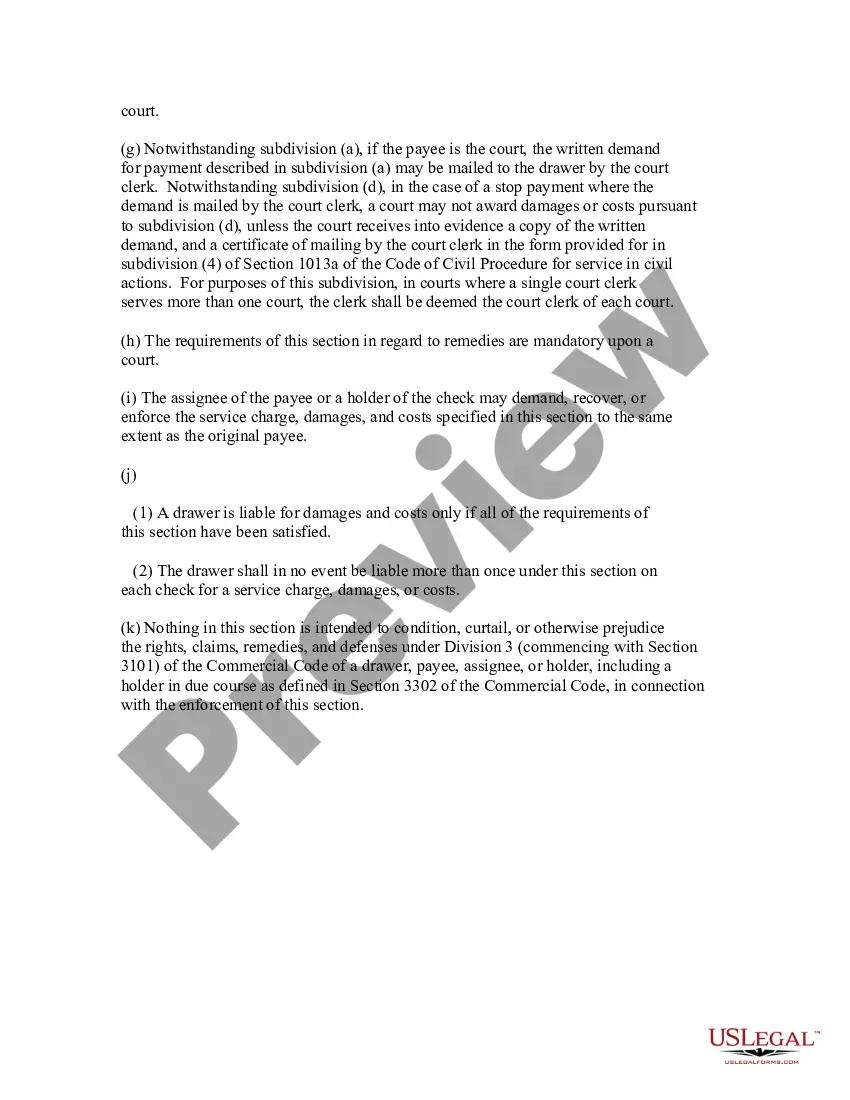
- This form provides legal notice to the debtor about the dishonored check.
- Failure to use this notice can limit the payeeâs ability to recover damages.
- Understanding the legal implications is crucial for both payee and debtor to avoid further complications.
Main things to remember
- The Notice of Dishonored Check is essential for recovering funds from unpaid checks.
- Timing is crucial; use this form promptly upon discovering the dishonored check.
- Understanding state-specific requirements can enhance your chances of successful recovery.
Looking for another form?

Form popularity
FAQ
To write a strong demand payment letter, be clear and direct about what you want. Start with your contact information, then state the purpose of the letter and include specific details about the amount due and the original check. Emphasize your willingness to resolve the matter promptly while highlighting the possibility of legal action, such as a California Notice of Dishonored Check, if necessary. Using templates from USLegalForms can simplify this process and strengthen your letter.
Yes, you can sue someone for writing you a bad check in California. If the check was not honored and remains unpaid, you are entitled to take legal action to recover your funds. This process often involves sending a demand letter first, ensuring the recipient understands the situation before pursuing a formal lawsuit, possibly leading to a California Notice of Dishonored Check.
In California, the penalty for a bounced check can include various fees and potential legal consequences. The amount due may increase due to additional charges from the bank and the recipient’s fees. If the situation escalates, the holder of the bad check can seek damages via a California Notice of Dishonored Check. Understanding these penalties underscores the importance of managing transactions carefully.
To fight a stop payment check, gather all relevant documents, including the original check and any communications about the stop payment. Contact your bank to understand the terms of the stop payment and any potential fees involved. You may need to consider legal steps, especially if the check was issued without valid grounds, which may lead to a California Notice of Dishonored Check.
Yes, you can write a demand letter without a lawyer. It is a straightforward process that allows you to communicate your intentions clearly. Ensure you include all necessary details and maintain a professional tone throughout the letter. Using resources like USLegalForms can help you structure your demand letter properly while targeting issues related to bad checks and bounced checks.
To write a demand letter for a bad check, include your name and address, the check's details, and a clear request for payment. Be specific about the amount owed and any additional fees incurred due to the bounced check. You may want to mention the consequences of not responding, including possible legal actions, such as filing a California Notice of Dishonored Check. This letter serves as a critical first step in resolving the issue amicably.
To dispute a bounced check, first contact the issuer to address the issue directly. If necessary, gather evidence such as the check and communication records to support your claim. In cases where resolution is not achievable, the California Notice of Dishonored Check - Civil can provide a structured approach to take legal action, ensuring all parties are treated fairly under the law.
The phrase 'bounced check' describes the action of a check that is returned to the issuer without being processed. This occurs when the account does not contain sufficient funds to cover the check amount, making it unable to move forward. Being familiar with the California Notice of Dishonored Check - Civil helps in understanding the ramifications of a bounced check.
In practice, 'bounced cheque' and 'dishonored cheque' refer to the same issue—a check that cannot be processed due to insufficient funds. However, the term 'dishonored' emphasizes the legal implications involved, whereas 'bounced' highlights the physical rejection of the check by the bank. The California Notice of Dishonored Check - Civil can clarify the legal context surrounding this terminology.
Yes, writing a bad check can be considered a crime in California. If the check was issued with the intent to defraud or if the issuer knows there are not enough funds, they could face criminal charges. Under the California Notice of Dishonored Check - Civil, victims also have recourse to recover their losses, making it crucial for both parties to understand the legal standing.