California Quitclaim Deed from Corporation to Two Individuals
Understanding this form
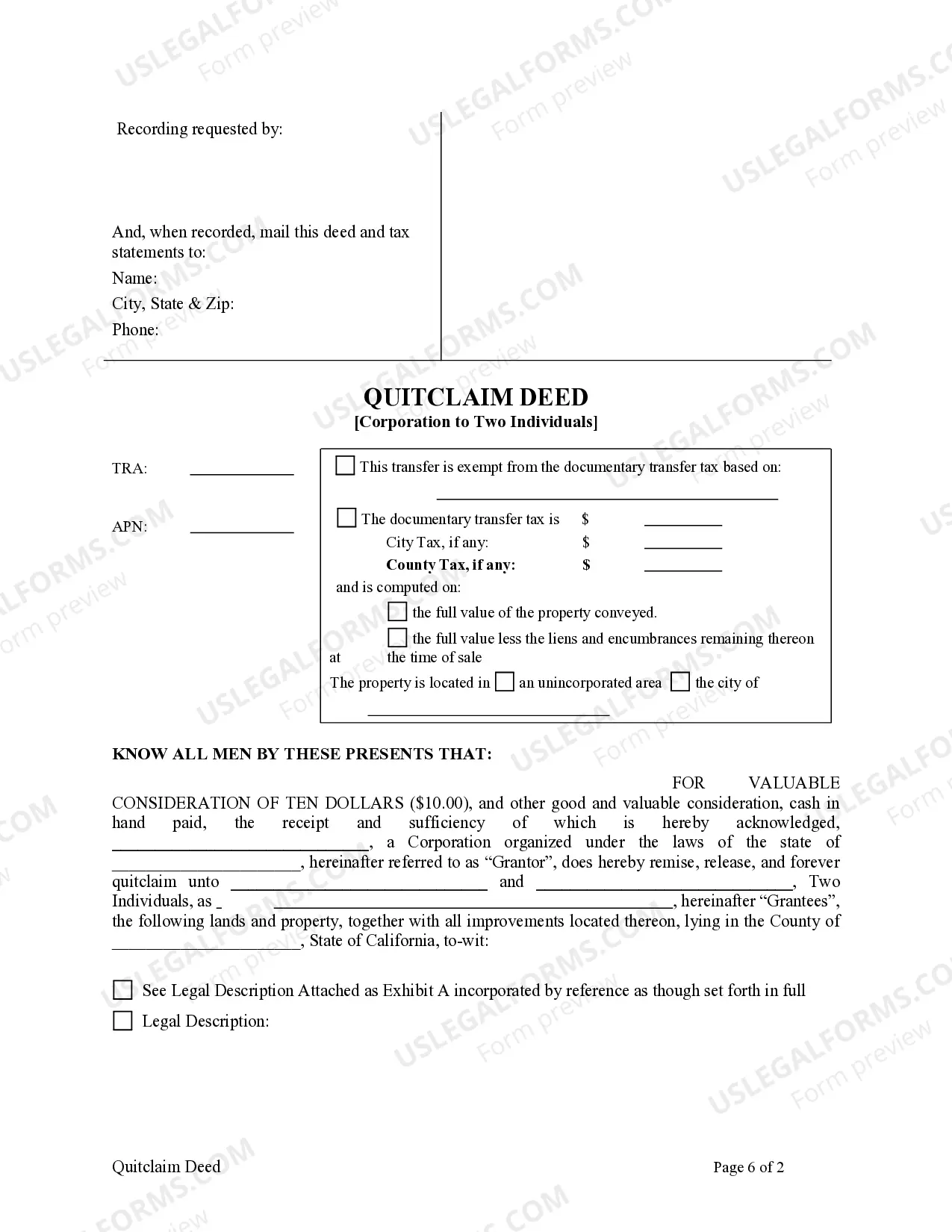
This Quitclaim Deed from Corporation to Two Individuals is a legal document used to transfer property ownership from a corporation (the Grantor) to two individuals (the Grantees). Unlike a warranty deed, a quitclaim deed does not guarantee that the Grantor holds clear title to the property or that the property is free of any liens or encumbrances. This form specifically conveys the property while reserving mineral rights, making it suitable for scenarios where mineral interests are to remain with the corporation.
What’s included in this form
- Identification of the Grantor (corporation) and Grantees (two individuals).
- Description of the property being conveyed.
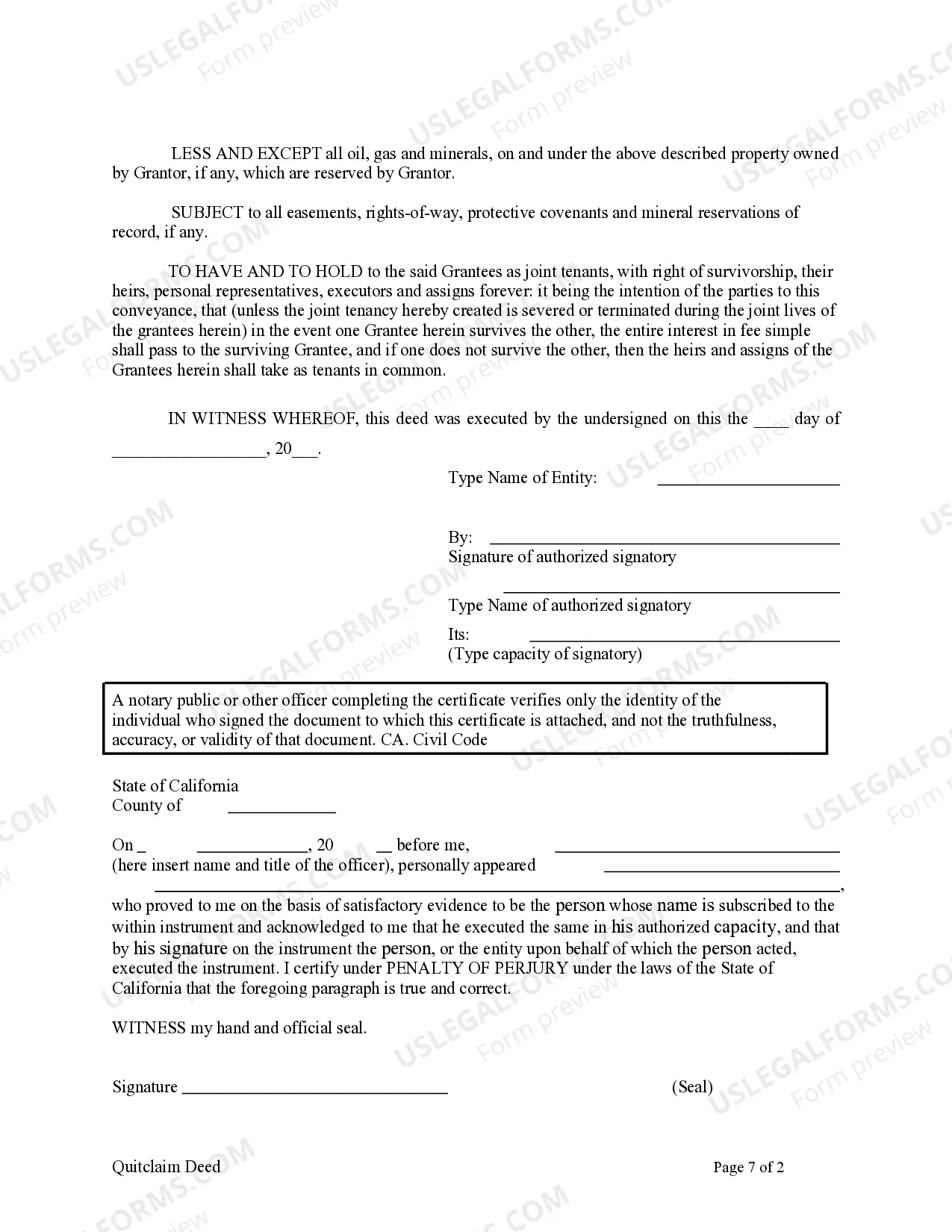
- Language specifying the reservation of oil, gas, and mineral rights.
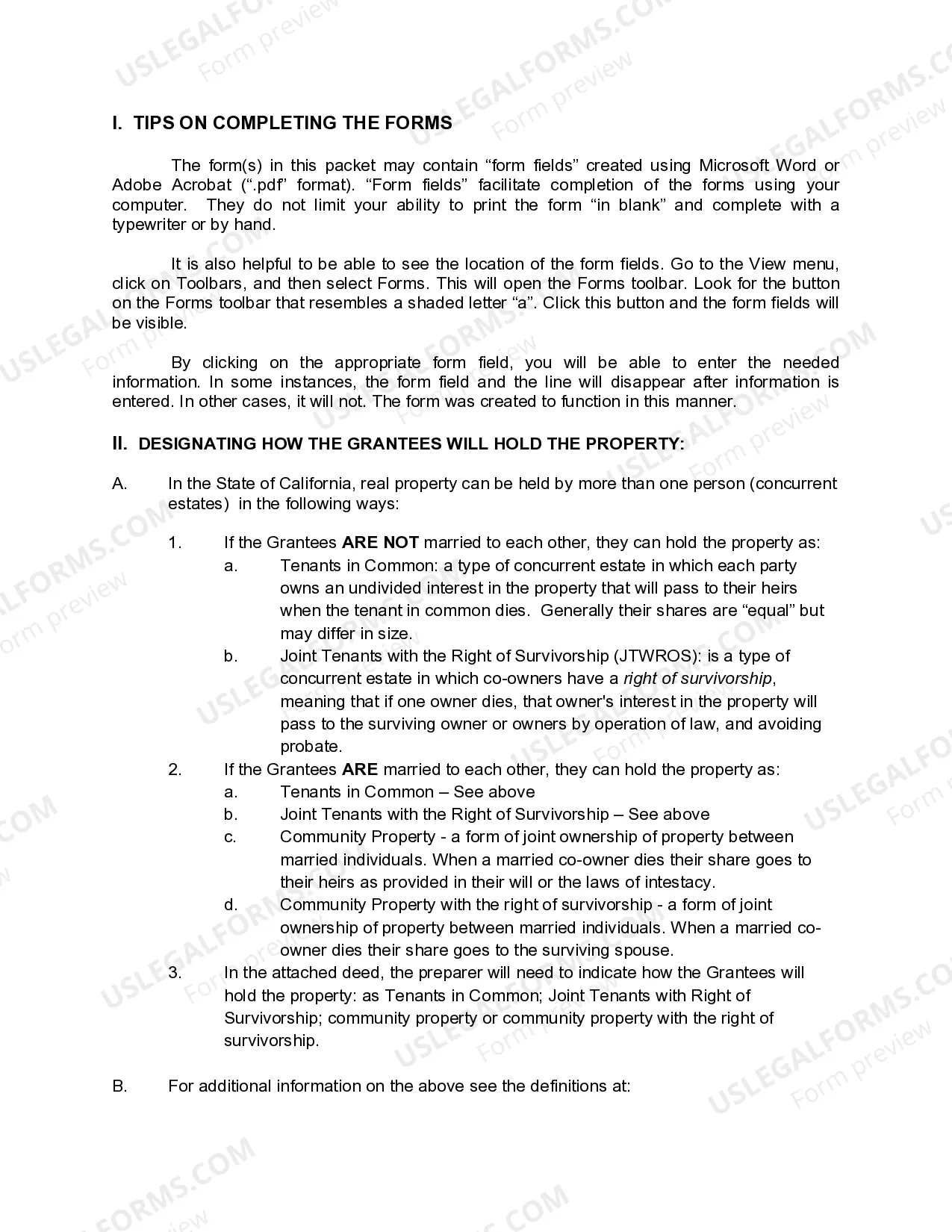
- Designating how the Grantees will hold the property (e.g., Tenants in Common or Joint Tenants with Right of Survivorship).
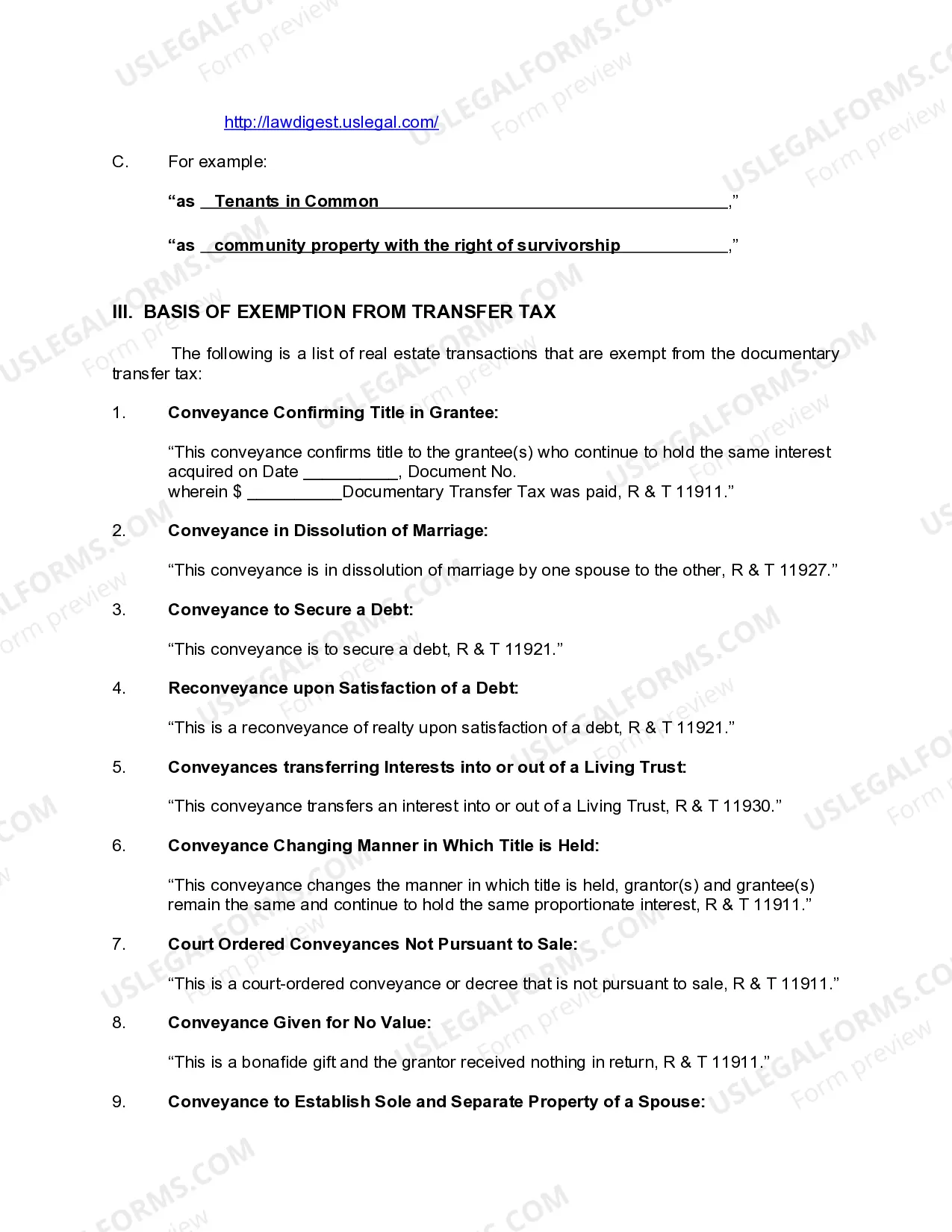
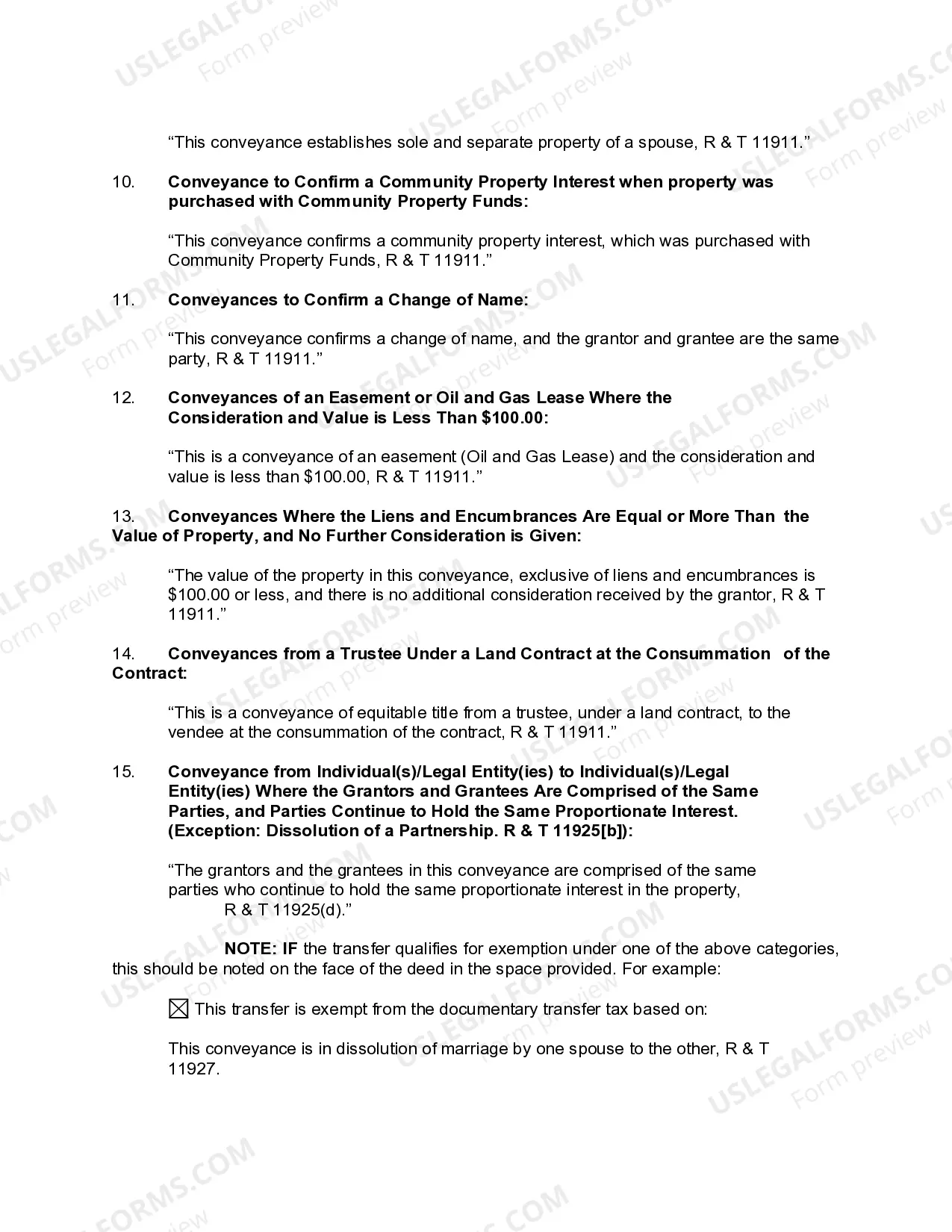
- Exemption clauses for documentary transfer tax, if applicable.




Situations where this form applies
This form is needed when a corporation wishes to transfer ownership of real property to two individuals. It is often used in situations such as divestiture, estate planning, or when simplifying ownership among partners or shareholders. The quitclaim deed is appropriate when there are no concerns about the title's validity and is often used in transfers among family or acquaintances.
Intended users of this form
The following individuals or entities should consider using this form:
- Certain corporations looking to transfer property to individuals.
- Individuals purchasing property from a corporation without asking for warranties on the title.
- Legal representatives acting on behalf of a corporation in property transfers.
How to complete this form
Follow these steps to complete the Quitclaim Deed:
- Identify the parties: clearly state the corporation as the Grantor and the two individuals as the Grantees.
- Describe the property: provide a legal description of the property being conveyed.
- Designate how the Grantees will hold the property: select from options like Tenants in Common or Joint Tenants with Right of Survivorship.
- Fill out any exemptions for the documentary transfer tax if applicable.
- Have the document signed and dated by the authorized representative of the corporation.
Notarization guidance
This form does not typically require notarization unless specified by local law. However, having the deed notarized can provide additional legal validation to the transaction, particularly if required by certain jurisdictions to prevent fraud.
Get your form ready online
Our built-in tools help you complete, sign, share, and store your documents in one place.
Make edits, fill in missing information, and update formatting in US Legal Forms—just like you would in MS Word.
Download a copy, print it, send it by email, or mail it via USPS—whatever works best for your next step.
Sign and collect signatures with our SignNow integration. Send to multiple recipients, set reminders, and more. Go Premium to unlock E-Sign.
If this form requires notarization, complete it online through a secure video call—no need to meet a notary in person or wait for an appointment.
We protect your documents and personal data by following strict security and privacy standards.

Make edits, fill in missing information, and update formatting in US Legal Forms—just like you would in MS Word.

Download a copy, print it, send it by email, or mail it via USPS—whatever works best for your next step.

Sign and collect signatures with our SignNow integration. Send to multiple recipients, set reminders, and more. Go Premium to unlock E-Sign.

If this form requires notarization, complete it online through a secure video call—no need to meet a notary in person or wait for an appointment.

We protect your documents and personal data by following strict security and privacy standards.
Mistakes to watch out for
- Failing to properly describe the property, leading to potential legal issues later.
- Not specifying how the Grantees will hold the property, which can influence their rights.
- Overlooking tax exemption boxes that might apply to the transfer.
- Not having the deed executed in accordance with state laws regarding corporate property transfers.
Advantages of online completion
- Convenience of obtaining a professional legal form without needing to visit an attorney.
- Editability allows you to customize the details to fit your specific transaction.
- Immediate access to the form means you can proceed with your property transfer without delay.
- Reliability from forms drafted by licensed attorneys ensures compliance with legal standards.
What to keep in mind
A quitclaim deed transfers property ownership without warranties from the Grantor.
This form is ideal for corporations transferring property to individuals.
Understanding how to hold the property is crucial to avoid future disputes.
Looking for another form?

Form popularity
FAQ
Yes, you can add someone to your house deed in California through a quitclaim deed. This process involves preparing a new deed that includes the new party's name alongside yours. Remember, this action can have legal and tax implications, so it's wise to consult a professional for personalized advice. US Legal Forms provides various templates and guidance for modifying property deeds, making this process more straightforward for you.
To execute a quitclaim deed in California, you must first obtain the appropriate form, which outlines the parties involved and the property being transferred. Next, the deed must be signed and notarized; this process ensures that the transfer is valid and enforceable. Finally, file the completed deed with the county recorder's office to update public records. Using US Legal Forms can help you easily navigate and complete this process smoothly.
In California, adding someone to a deed can trigger certain tax implications, notably a reassessment of the property's value for property tax purposes. This reassessment generally occurs unless certain criteria are met, such as the transfer being a gift between family members. It's crucial to understand these implications because they can affect future tax obligations. For detailed guidance on managing these tax consequences, US Legal Forms offers resources that simplify the process.
In California, when a corporation transfers ownership of property through a quitclaim deed, the deed must be signed by an authorized officer of the corporation. This generally includes the president, vice president, or another designated officer. It's important that the officer also affix the corporate seal to verify the deed, ensuring that the transfer is legally binding. For assistance with this process, consider using US Legal Forms to generate the necessary documents.
When a corporation transfers ownership of property, the California Quitclaim Deed from Corporation to Two Individuals must be signed by an authorized officer of the corporation. This ensures that the transfer is legally binding and accepted. Typically, this officer may be the president or the secretary, depending on the corporation's bylaws. Proper execution of the deed safeguards the interests of both the corporation and the individuals involved in the transfer.
Individuals who want to transfer property ownership quickly and with minimal fuss often benefit the most from a California Quitclaim Deed from Corporation to Two Individuals. This type of deed allows for a straightforward transfer without the need for extensive legal formalities. For example, family members or business partners may find this method ideal for simplifying transactions. Overall, it can save time and reduce the hassle associated with more complex deed types.
In California, a quitclaim deed must be signed by the granter, the individual or entity transferring the property. If a corporation is involved in the transfer, the authorized officers of the corporation must sign the deed. It is essential to ensure all signatures are notarized to complete the California Quitclaim Deed from Corporation to Two Individuals, as this adds an extra layer of authenticity and legal standing.
Anyone can prepare a quitclaim deed in California, but it is best completed by someone who understands the legal implications. Professionals like attorneys, title agents, or real estate experts can provide valuable insights and ensure that the deed is correctly filled out. Utilizing the US Legal Forms platform offers an easy way to access templates and additional guidance for your California Quitclaim Deed from Corporation to Two Individuals.
Deeds in California, including quitclaim deeds, are typically prepared by attorneys, title companies, or licensed real estate professionals. This preparation often involves specific language and formatting that must comply with California law. By engaging with experts, you can be confident that your California Quitclaim Deed from Corporation to Two Individuals is properly drafted and executed.
In California, a quitclaim deed can be prepared by anyone with a basic understanding of the document requirements. However, it is highly advisable to seek assistance from a legal professional to ensure that the California Quitclaim Deed from Corporation to Two Individuals meets all state laws and regulations. A knowledgeable attorney can help customize the deed for your specific circumstances, ensuring accuracy and legal validity.