California Quitclaim Deed from Individual to Husband and Wife
What is this form?
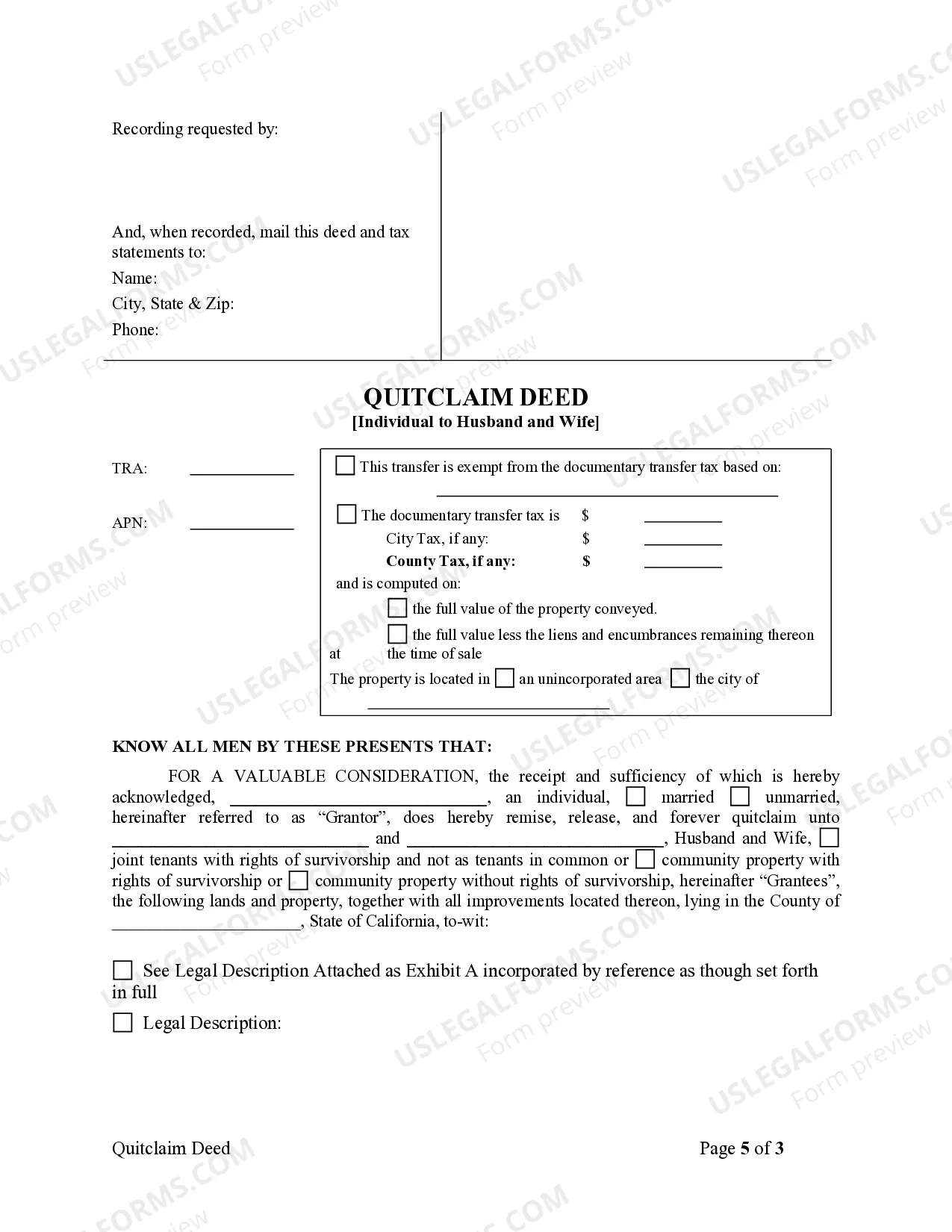
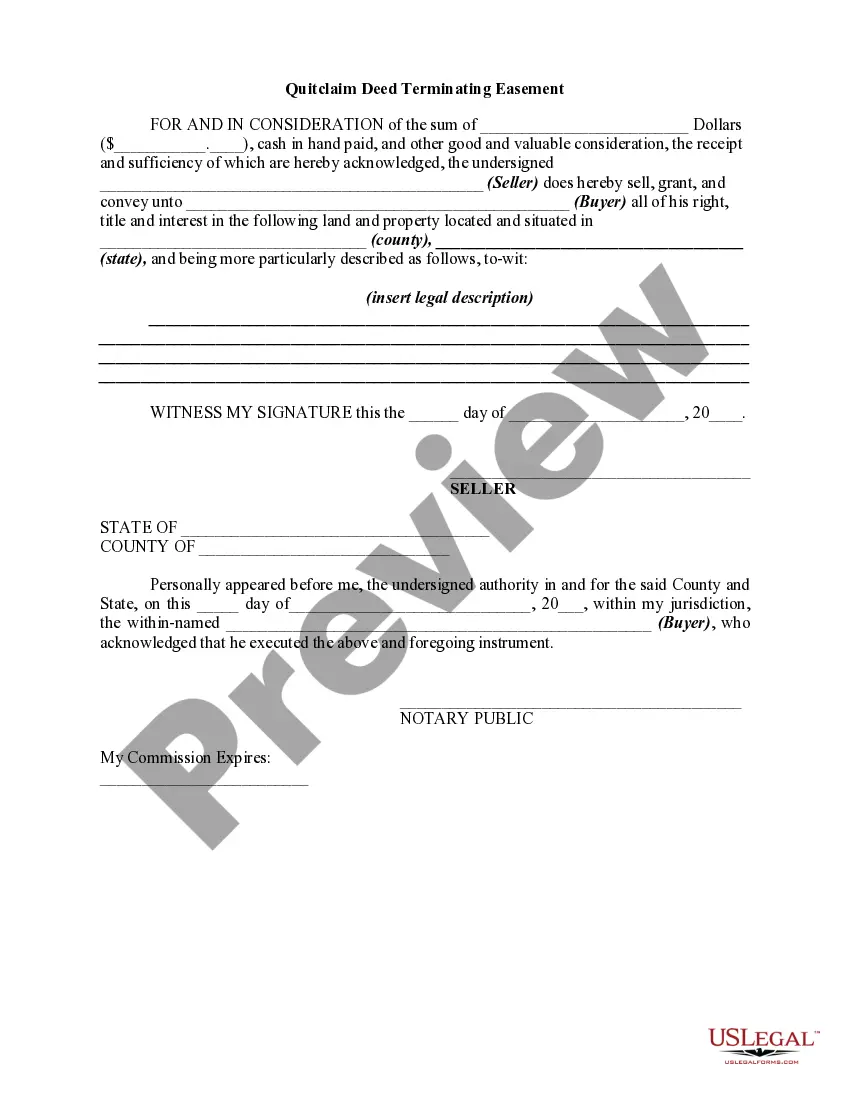
The Quitclaim Deed from Individual to Husband and Wife is a legal document that allows an individual (the Grantor) to transfer ownership of property to a couple (the Grantees) who are married. This form is distinct from other property transfer documents because it conveys the property without guarantees about the title, allowing for a simple claim of ownership from one party to another. It is typically used in situations where a person wants to transfer property to a spouse or both spouses wish to clarify ownership of real estate.
What’s included in this form
- Identification of the Grantor and Grantees, specifying that the Grantees are husband and wife.
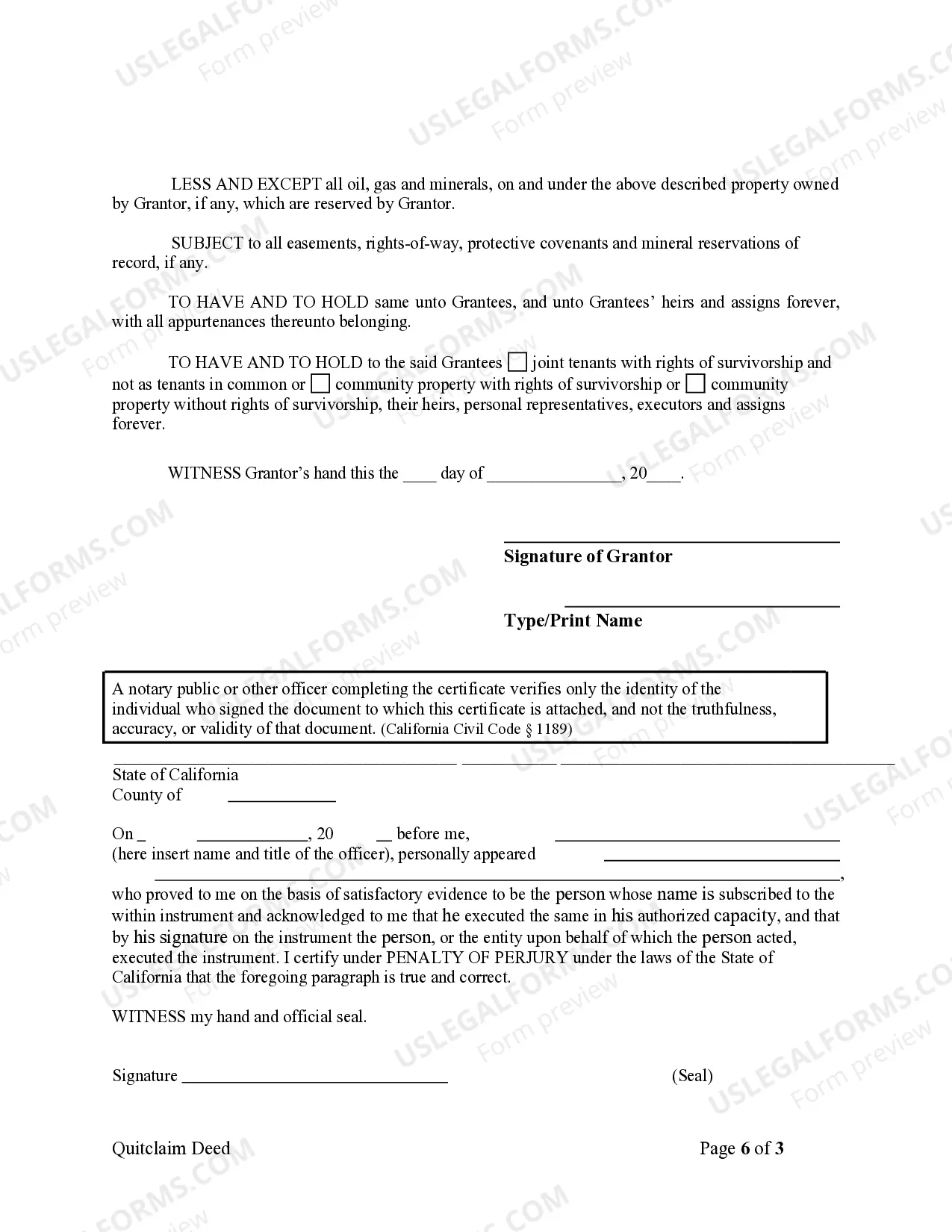
- Description of the property being conveyed, including any exclusions such as oil, gas, and minerals.
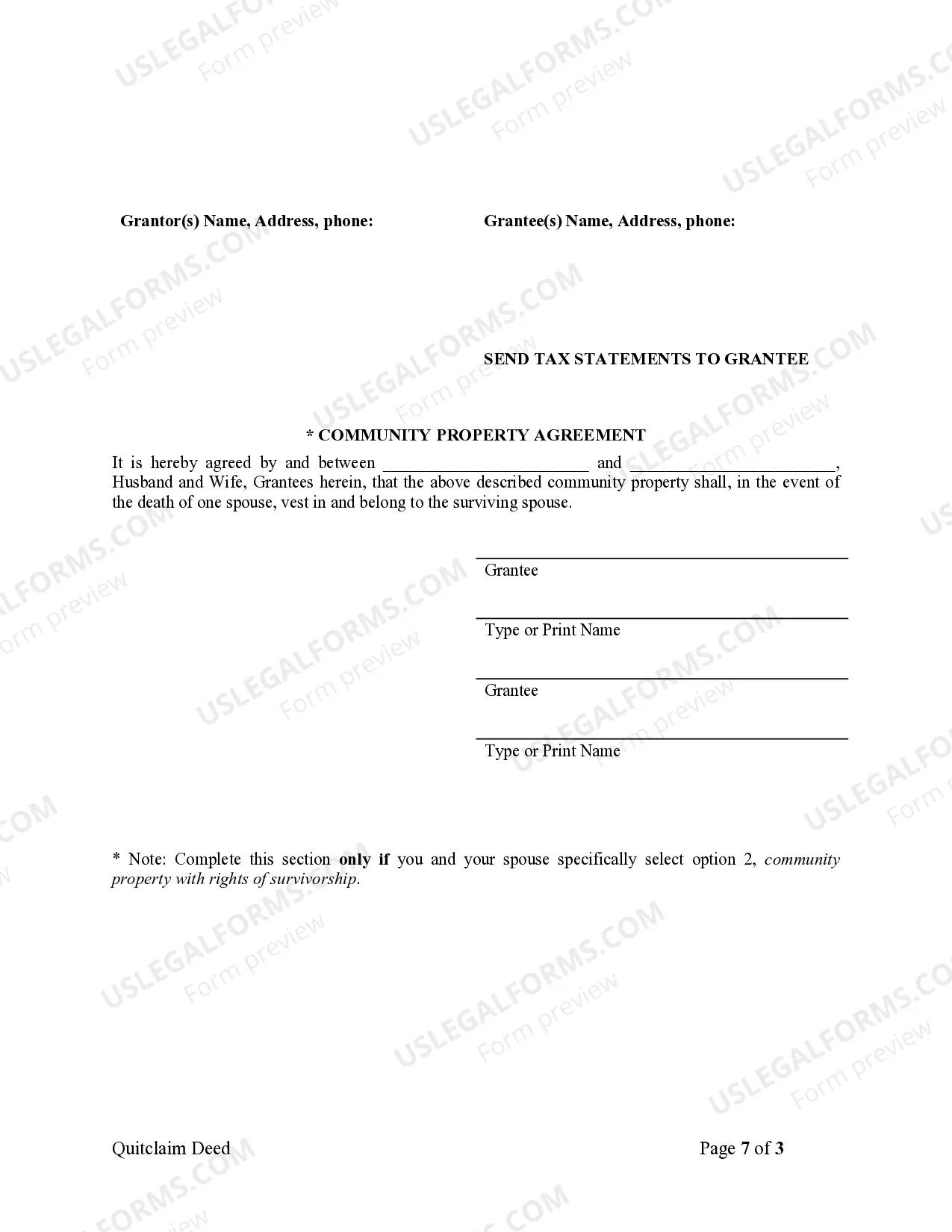
- Statement of the type of ownership being established, such as joint tenants with rights of survivorship.
- Signature fields for both the Grantor and Grantees, validating the transfer of property.
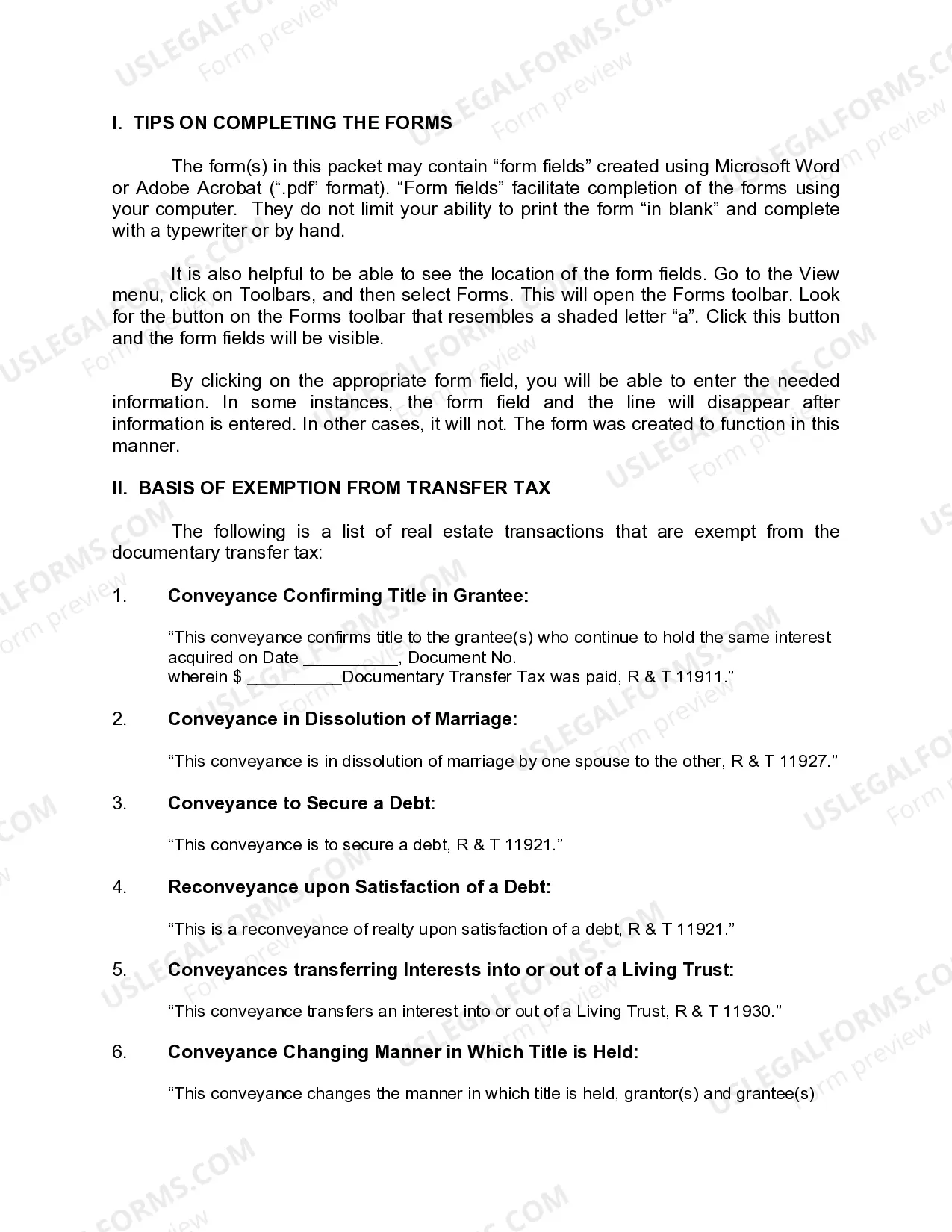
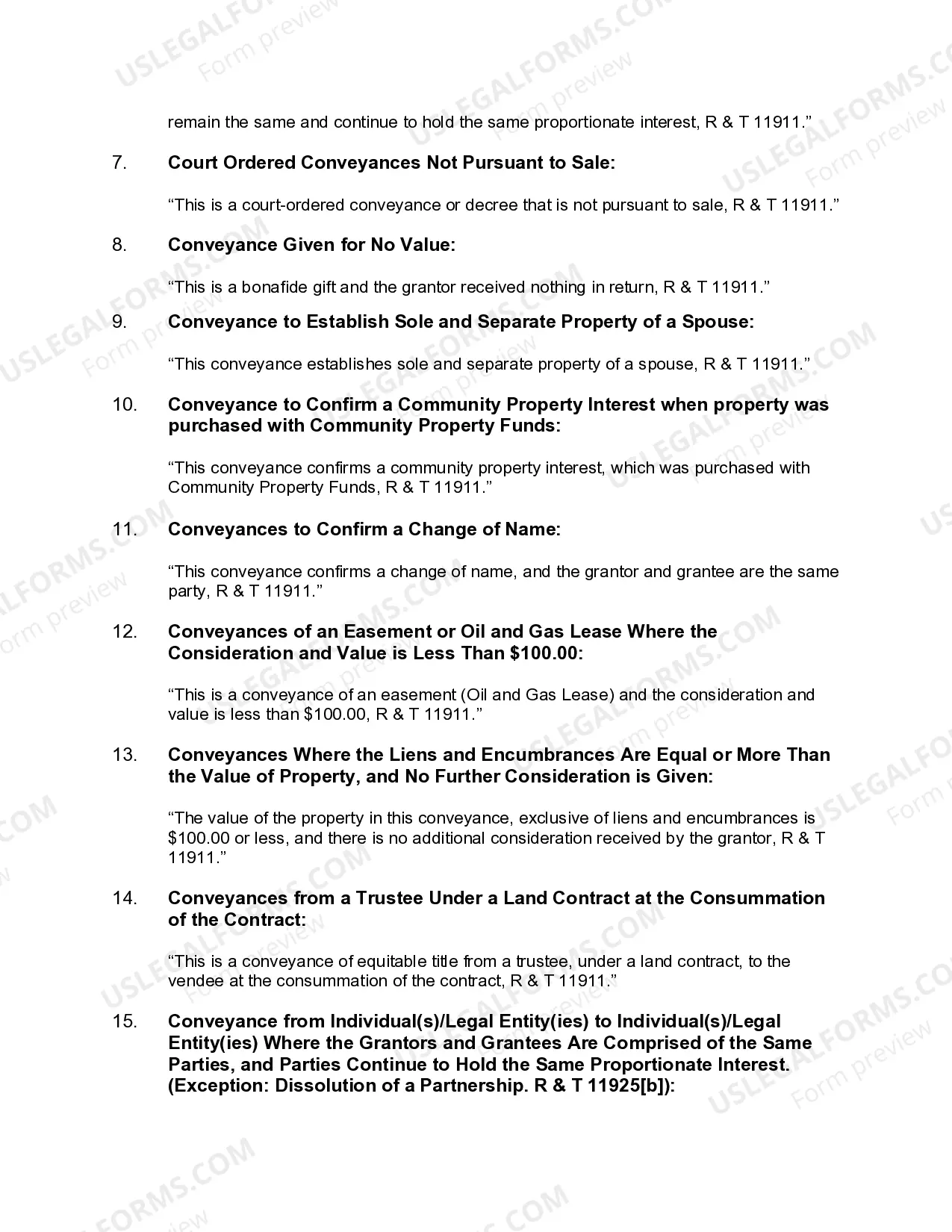
- Space to note any exemptions from transfer taxes.





Common use cases
This form is used when an individual wishes to transfer property they own to their spouse or both spouses. Itâs commonly employed during situations such as the consolidation of property ownership in marriage, financial planning, or to clarify the ownership of property within a marriage. It can also be relevant when one spouse inherits property and wants to add the other spouse to the title.
Who can use this document
- Individuals looking to transfer ownership of real estate to their spouse.
- Married couples seeking to clarify or consolidate property ownership.
- Homeowners who want to remove a name from the title for legal or financial reasons.
- People involved in a divorce who wish to transfer property to one spouse.
Completing this form step by step
- Identify the parties involved: Fill in the names of the Grantor and Grantees, ensuring that both Grantees are listed as husband and wife.
- Specify the property details: Provide a complete legal description of the property being transferred.
- Indicate any reservations: Note any reservations, such as oil, gas, and mineral rights, if applicable.
- Sign and date the document: The Grantor must sign the deed in the presence of a notary if required by local law.
- File the deed: Record the completed quitclaim deed with the appropriate county office to finalize the transfer.
Notarization guidance
This form does not typically require notarization unless specified by local law. However, having the document notarized can add an extra layer of validation and security to the transaction.
Get your form ready online
Our built-in tools help you complete, sign, share, and store your documents in one place.
Make edits, fill in missing information, and update formatting in US Legal Forms—just like you would in MS Word.
Download a copy, print it, send it by email, or mail it via USPS—whatever works best for your next step.
Sign and collect signatures with our SignNow integration. Send to multiple recipients, set reminders, and more. Go Premium to unlock E-Sign.
If this form requires notarization, complete it online through a secure video call—no need to meet a notary in person or wait for an appointment.
We protect your documents and personal data by following strict security and privacy standards.

Make edits, fill in missing information, and update formatting in US Legal Forms—just like you would in MS Word.

Download a copy, print it, send it by email, or mail it via USPS—whatever works best for your next step.

Sign and collect signatures with our SignNow integration. Send to multiple recipients, set reminders, and more. Go Premium to unlock E-Sign.

If this form requires notarization, complete it online through a secure video call—no need to meet a notary in person or wait for an appointment.

We protect your documents and personal data by following strict security and privacy standards.
Mistakes to watch out for
- Failing to provide a complete legal description of the property.
- Not clearly indicating the type of ownership (e.g., joint tenants vs. tenants in common).
- Neglecting to sign the document, which can render it invalid.
- Overlooking local recording requirements or deadlines.
Advantages of online completion
- Convenient access to a legally compliant quitclaim deed template.
- Edit and customize the form to meet individual needs easily.
- Instant download for immediate use, saving time and effort.
- Guidance provided for correctly filling out all necessary fields.
Looking for another form?
Form popularity
FAQ
A quitclaim deed is often most beneficial for spouses, family members, or parties who trust each other. This deed allows one individual to transfer their interest in a property to another without assuring the ownership title's validity. For example, when transferring property using a California Quitclaim Deed from Individual to Husband and Wife, this method is straightforward and efficient, particularly in personal dealings where trust is established.
The most common deed used to convey property in California is the Grant Deed. This type of deed provides assurances to the buyer regarding the title of the property. Unlike a quitclaim deed, a Grant Deed includes guarantees that the property hasn’t been sold to someone else and that there are no hidden liabilities. If you're considering a California Quitclaim Deed from Individual to Husband and Wife for a quick transfer without such assurances, it is important to understand the limitations.
An Interspousal transfer deed in California is a specific type of deed used to transfer property between spouses. This deed simplifies the process of transferring ownership. Typically, it does not involve a sale, as the transfer is often for estate planning purposes or during a divorce. If you're looking to execute a California Quitclaim Deed from Individual to Husband and Wife, using an Interspousal transfer deed may streamline your transaction significantly.
In California, anyone can prepare a quitclaim deed as long as they include all necessary information and comply with state regulations. However, it's beneficial to consult a legal professional for help, especially if you want to ensure accuracy. Services like US Legal Forms offer ready-made templates along with instructions for completing the deed correctly. This can save you time and effort while ensuring that the transfer is legally sound.
The most common way to transfer ownership of real property is through a quitclaim deed, especially a California Quitclaim Deed from Individual to Husband and Wife. This method is straightforward and allows for a simple transfer of title without the need for a sale. Using this deed ensures that the new owners are legally recognized, making it a reliable choice for property transfers between spouses.
Yes, you can transfer shares from husband to wife, typically through a stock transfer form. This form must be completed with relevant information about the shares and the parties involved. In some cases, a quitclaim deed may be involved if the shares are part of the property being transferred. Consulting resources like US Legal Forms can offer clarity and guidance for your specific circumstances.
Transferring property from husband to wife after death may require specific legal steps. Typically, you may need to refer to the deceased's will or trust documents, which can dictate the transfer process. If there is a trust in place, it can streamline the transfer. Online services like US Legal Forms can provide the necessary forms and guidance, ensuring the process adheres to California laws.
Transferring ownership in California typically involves using a quitclaim deed, which is an effective tool for a California Quitclaim Deed from Individual to Husband and Wife. Start by drafting the quitclaim deed, including the legal description of the property. Next, both parties must sign the deed in front of a notary, and finally, file the deed with your local county recorder. This process securely updates the ownership records.
To add your spouse to your deed in California, you can use a California Quitclaim Deed from Individual to Husband and Wife. This document allows you to transfer ownership of the property directly to both you and your spouse. You must fill out the quitclaim deed form, have it notarized, and then file it with the county recorder’s office. This process helps ensure that both names appear on the property title.
Adding someone to a deed, such as your spouse, may have tax implications. When you use a California Quitclaim Deed from Individual to Husband and Wife, it can affect property tax assessments. Additionally, transferring real property could trigger reassessment, which could lead to an increase in property taxes. Consulting with a tax advisor or real estate attorney can provide clarity on your specific situation.