Arizona OSC for Failure to Pay Child Support
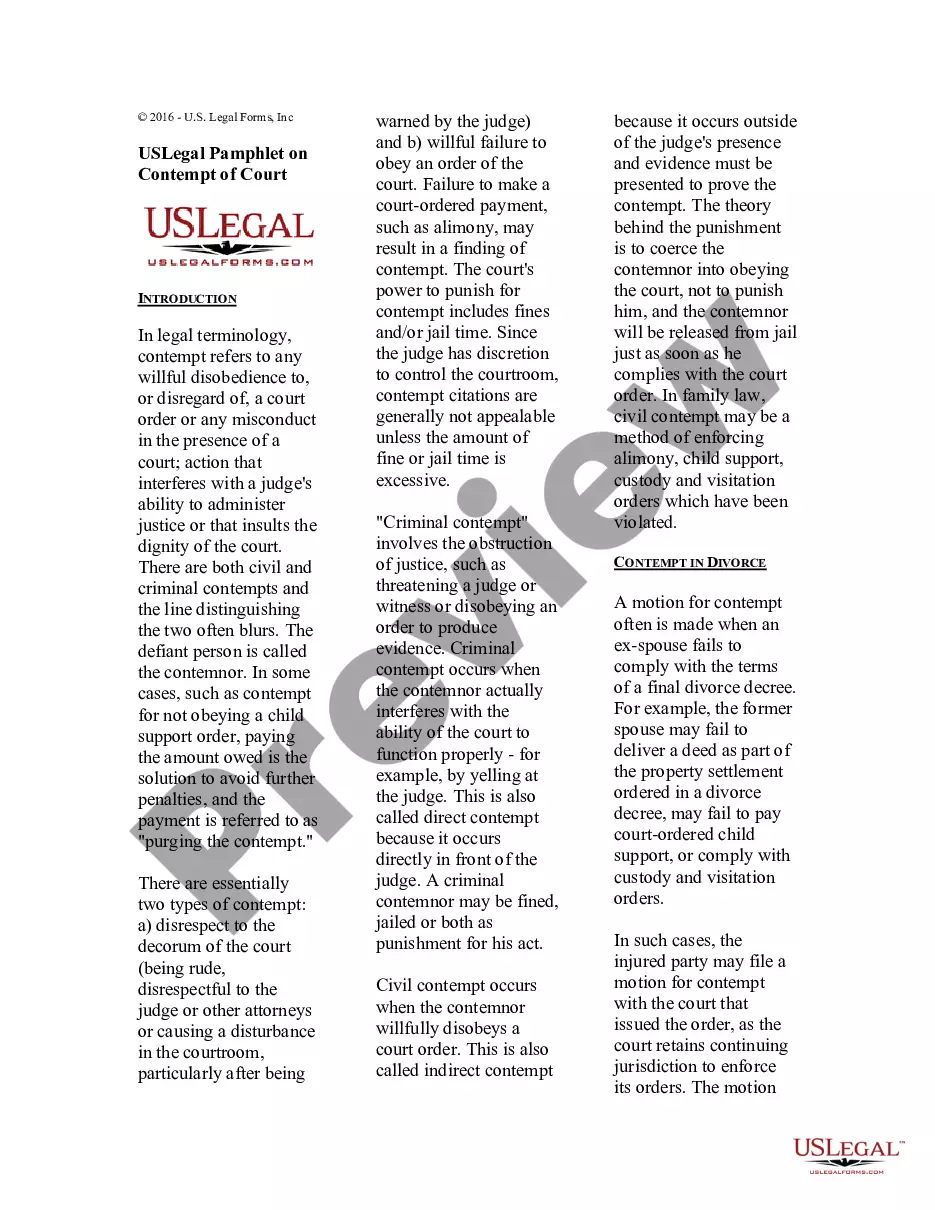
Understanding this form
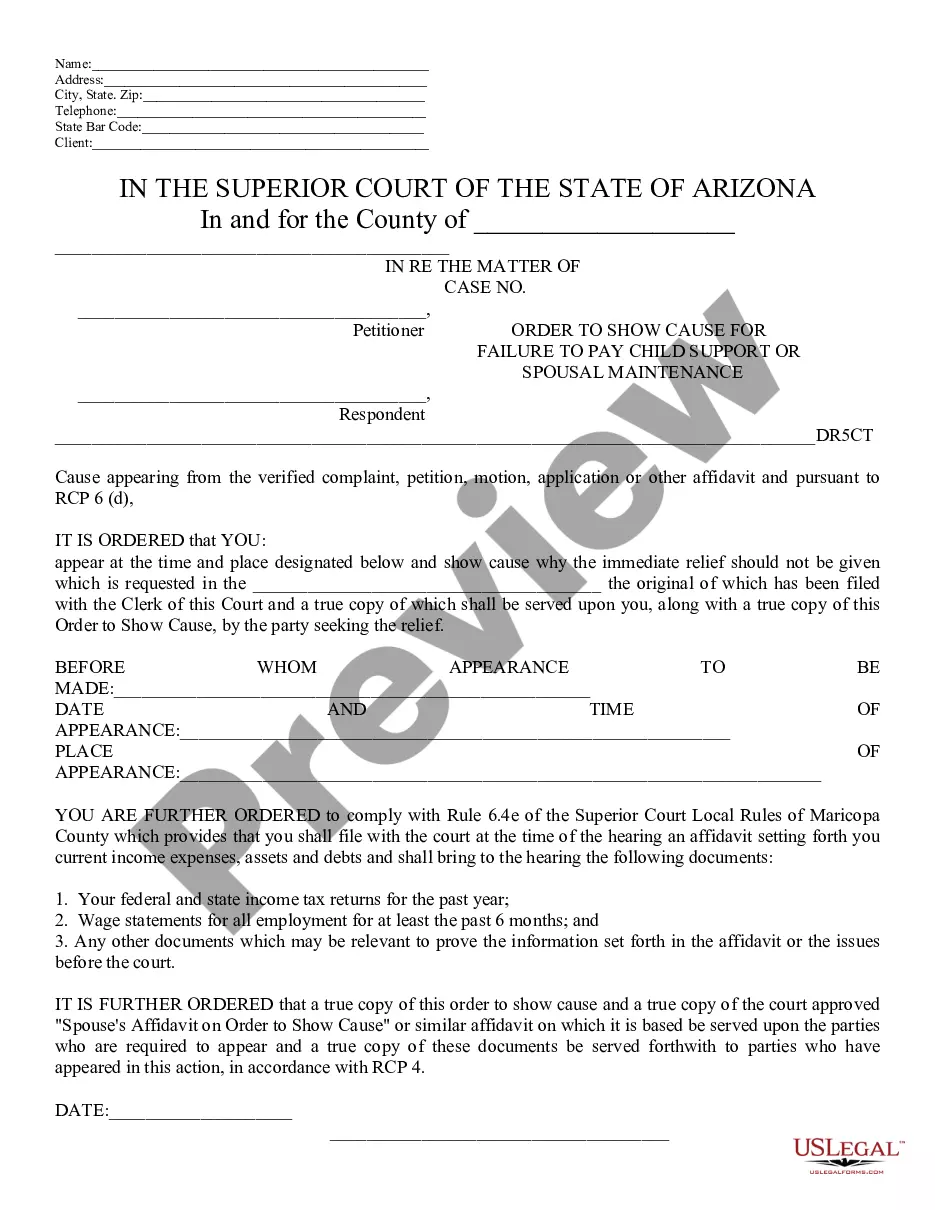
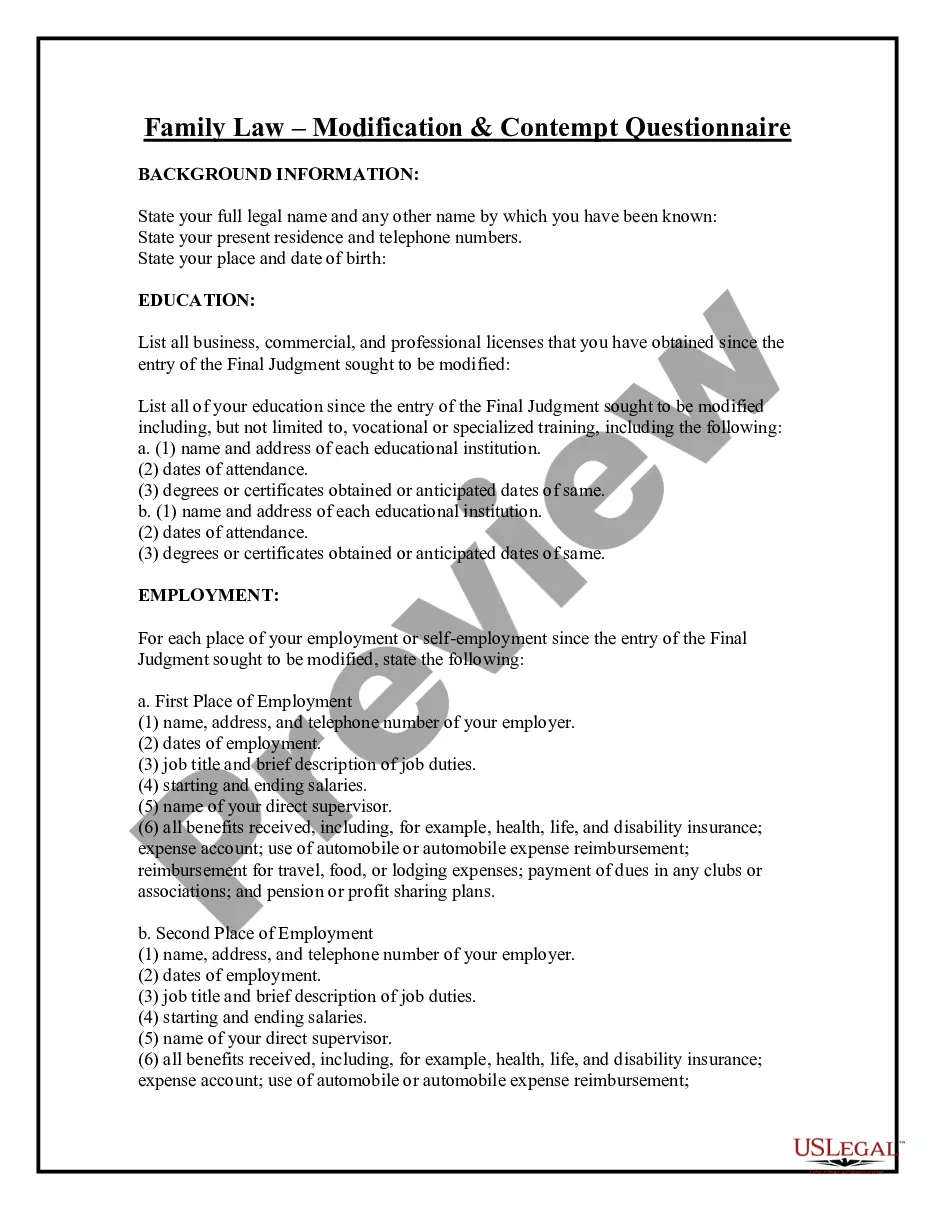
The Order to Show Cause for Failure to Pay Child Support is a legal document issued by the court compelling a party to appear and explain why they have not complied with an existing child support order. Unlike a standard child support order, this form specifically addresses situations where a party is alleged to have failed to make payments, highlighting the urgency of the matter and the potential consequences of non-compliance.
What’s included in this form
- Title and case information: Identifies the parties involved and the jurisdiction.
- Order details: Specifies the requirement for the respondent to appear in court.
- Submission guidelines: Outlines necessary documents to bring to the hearing.
- Judicial order: Signed by a judge or court commissioner, granting legal authority.

When to use this form
This form is used when a party is not fulfilling their child support obligations, and the other party wishes to seek enforcement of the court order. It is essential in situations where financial support is critical for the well-being of the child or children involved.
Intended users of this form
- Parents who are receiving child support but are not receiving the expected payments.
- Guardians seeking to enforce a child support order on behalf of the child.
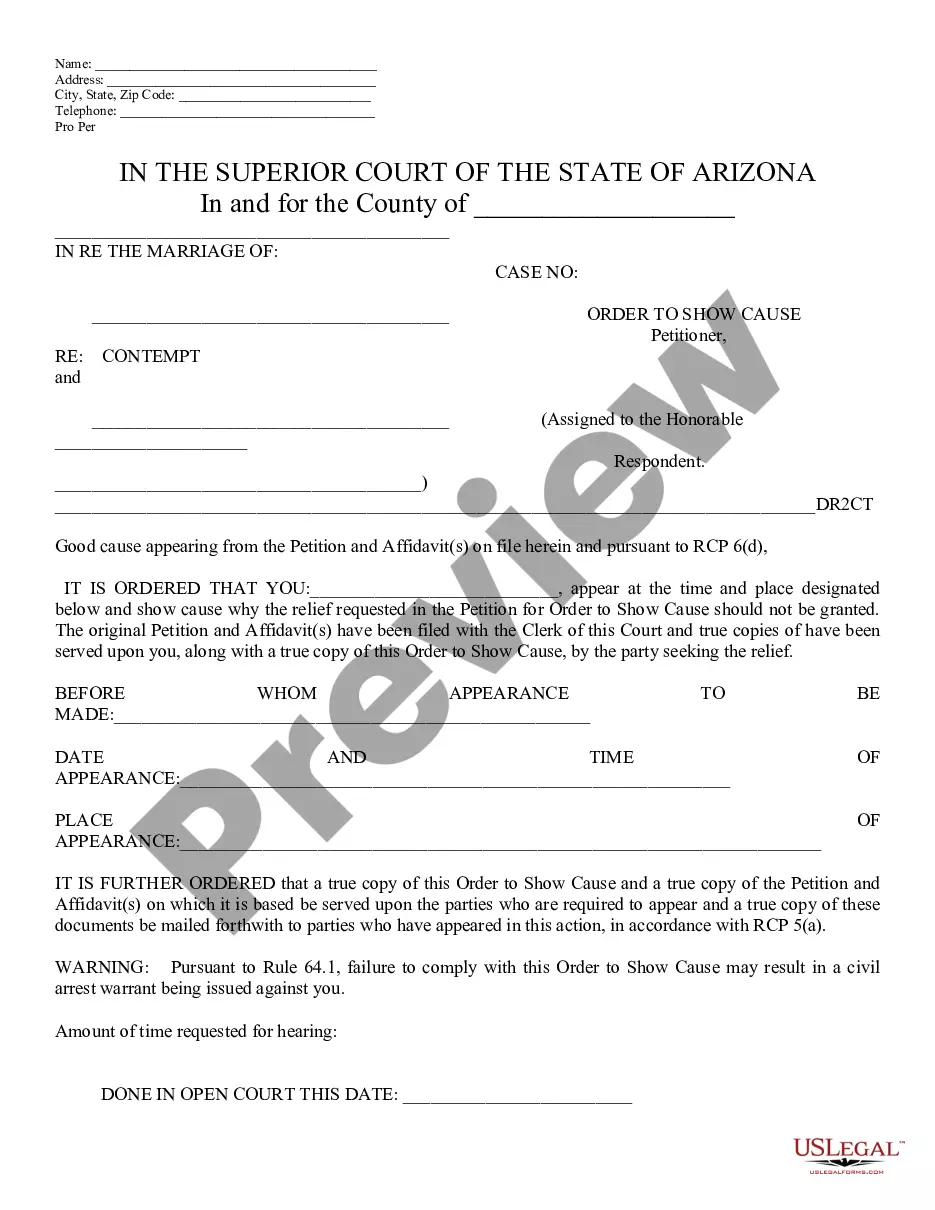
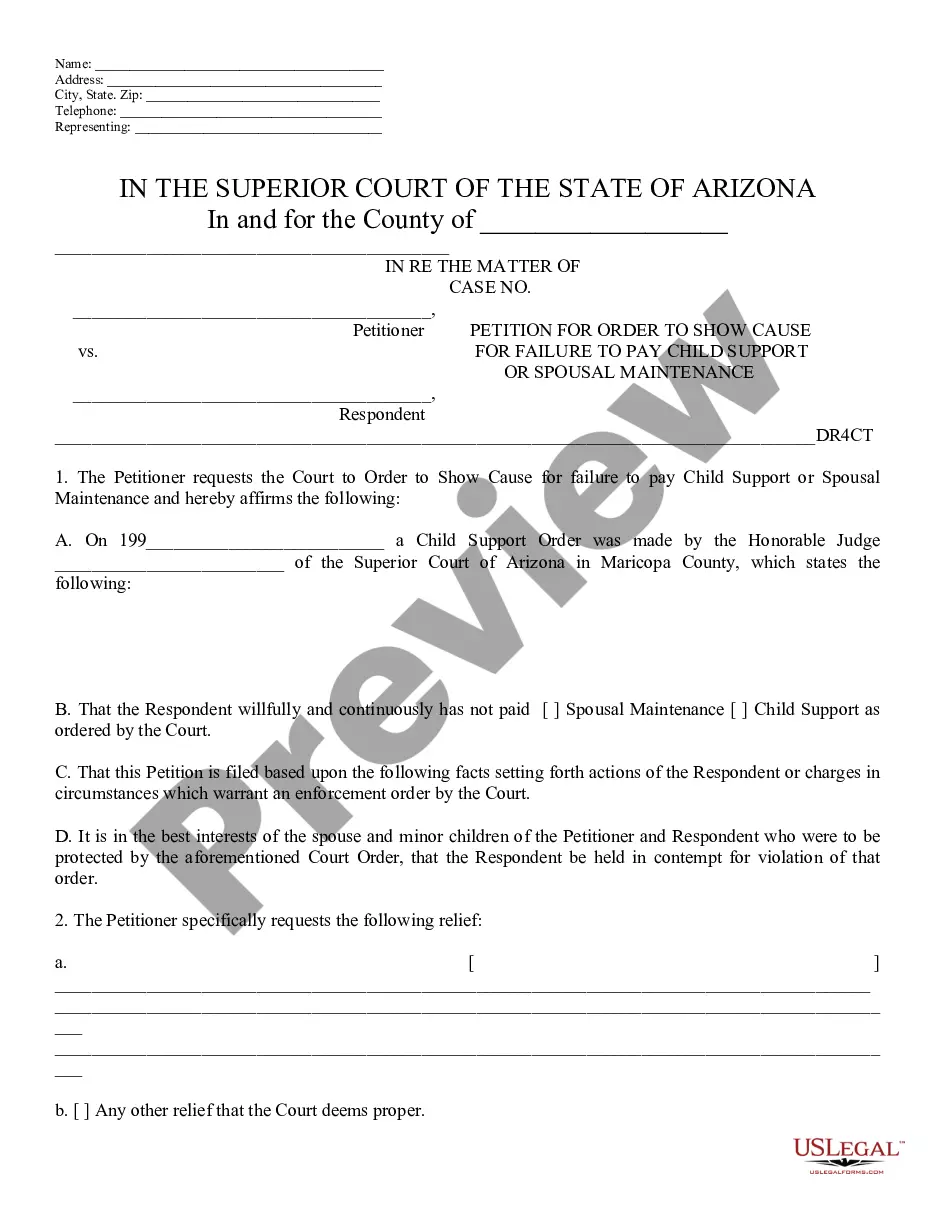
- Individuals pursuing legal remedy for non-payment of spousal maintenance, if applicable.
Instructions for completing this form
- Fill in the address, telephone number, and bar code of your attorney, if applicable.
- Enter the details of the court, including the county and case number.
- Provide information about the petitioner and respondent involved in the case.
- List the date, time, and location for the required appearance in court.
- Prepare the required documents to present at the hearing, such as tax returns and wage statements.
Notarization requirements for this form
This form does not typically require notarization to be legally valid. However, some jurisdictions or document types may still require it. US Legal Forms provides secure online notarization powered by Notarize, available 24/7 for added convenience.
Get your form ready online
Our built-in tools help you complete, sign, share, and store your documents in one place.
Make edits, fill in missing information, and update formatting in US Legal Forms—just like you would in MS Word.
Download a copy, print it, send it by email, or mail it via USPS—whatever works best for your next step.
Sign and collect signatures with our SignNow integration. Send to multiple recipients, set reminders, and more. Go Premium to unlock E-Sign.
If this form requires notarization, complete it online through a secure video call—no need to meet a notary in person or wait for an appointment.
We protect your documents and personal data by following strict security and privacy standards.

Make edits, fill in missing information, and update formatting in US Legal Forms—just like you would in MS Word.

Download a copy, print it, send it by email, or mail it via USPS—whatever works best for your next step.

Sign and collect signatures with our SignNow integration. Send to multiple recipients, set reminders, and more. Go Premium to unlock E-Sign.

If this form requires notarization, complete it online through a secure video call—no need to meet a notary in person or wait for an appointment.

We protect your documents and personal data by following strict security and privacy standards.
Common mistakes
- Failing to include all necessary parties in the address section.
- Not providing accurate dates and times for the court appearance.
- Omitting required documents that must accompany the form.
- Not understanding the local rules governing child support enforcement.
Benefits of using this form online
- Convenience of downloading and filling the form at your own pace.
- Guaranteed reliability as the forms are drafted by licensed attorneys.
- Editability to customize the document according to your specific case needs.
Looking for another form?






Form popularity
FAQ
The consequences for not paying child support in Arizona include legal actions such as wage garnishment, asset seizure, and potential incarceration. Additionally, parents may face increased interest on unpaid amounts and damage to their credit ratings. The ramifications demonstrate the seriousness of adhering to child support obligations. Seeking expert help from services like uslegalforms can help navigate these challenges effectively.
In Arizona, child support arrears are generally not forgiven unless specific circumstances apply, such as substantial changes in financial status or a court order. Parents should understand that the obligation to support a child is taken very seriously. If you are struggling with arrears, seeking mediation or legal advice through platforms like uslegalforms can provide insight into potential avenues for relief. It’s critical to act before the situation escalates further.
Not paying child support in Arizona leads to serious consequences, including wage garnishment, tax refund interception, and even loss of professional licenses. Additionally, a parent may face misdemeanor charges and be subject to jail time for willful noncompliance. The legal repercussions highlight the urgency of addressing any child support issues. It's advisable to consult with professionals like uslegalforms to help manage such situations effectively.
Child support obligations are enforced by a parent filing a petition to hold the non-paying parent in contempt of court. A parent will be held in contempt of court if the parent had knowledge of the court's support order, had the ability to pay the child support, and willfully and intentionally refused to do so.
Even if the parents reconcile, child support is not usually automatically terminated.However, either parent can petition to end the child support order with the court. The court has the discretion to decide whether or not to end the order.
Failing to make your court-ordered child support payment is a crime. In Arizona, failure of parent to provide for child is a class VI felony that can land you up to 1.5 years in prison.Your back-child support amount does not go away and will continue to draw interest until it is paid.
Close a Case If you are the custodial parent, and you are not currently receiving cash assistance (TANF) or Medicaid (AHCCCS) and wish to discontinue child support services, your case can be closed by written request, providing there are no assigned arrears owed to the State.
Parents paying support for multiple children will need to file a Petition to modify child support when each child reaches the age of 18 and graduates high school.
All parties must sign the Agreement to Stop the Income Withholding Order (and Support Order) in front of a Clerk of the Court or a Notary. If DCSS was involved in the child support case, a representative from the agency must also sign the agreement.
In this situation, there is a temptation to withhold child support, but this is not allowed. Child support payments and visitation are considered by law to be separate issues.You have an obligation to financially support your children, regardless of any visitation issues.