Arizona Warranty Deed from Husband to Himself and Wife
Understanding this form
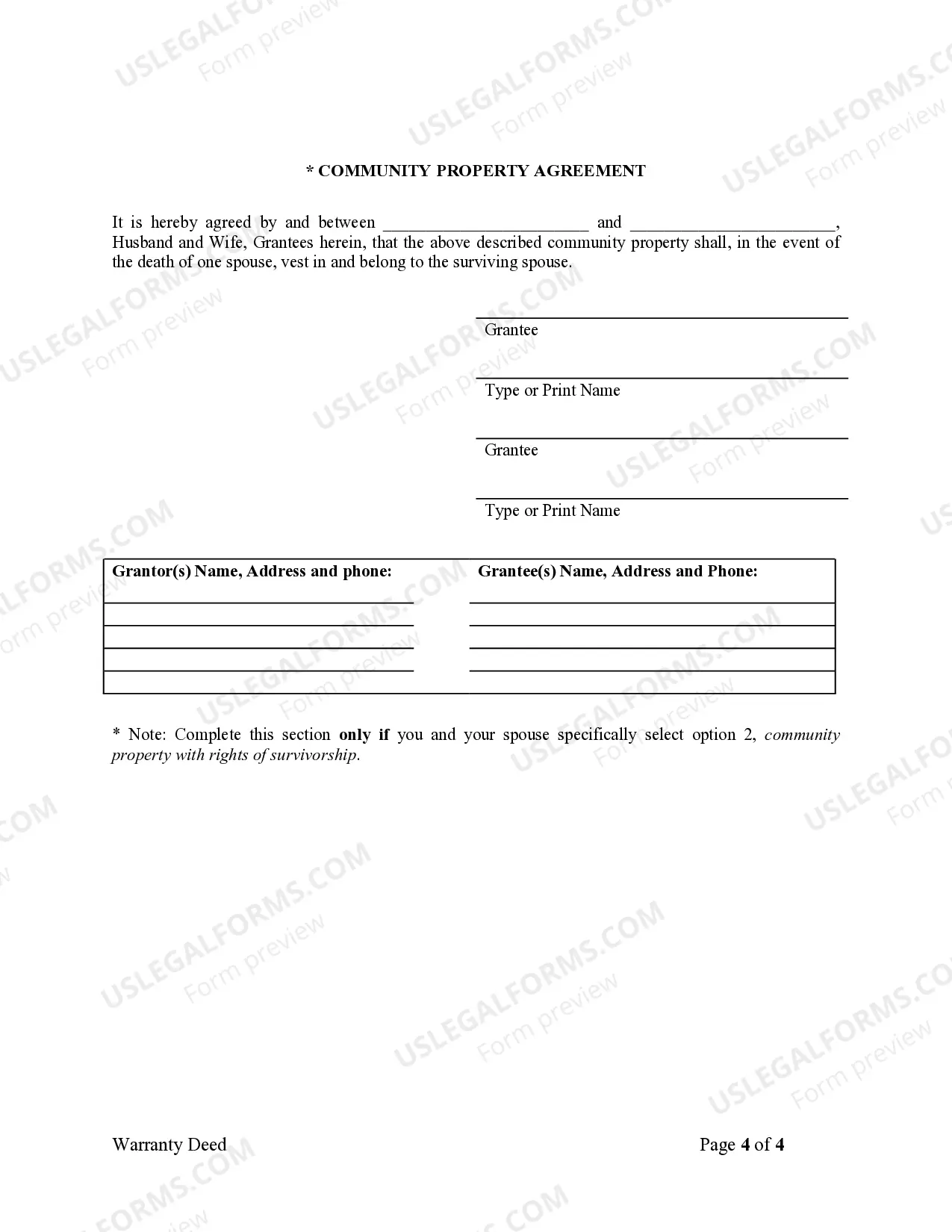
The Warranty Deed from Husband to Himself and Wife is a legal document that allows a husband to transfer ownership of property to himself and his wife as joint tenants. This form ensures that both spouses have equal rights to the property and includes specific legal protections against encumbrances. Unlike other types of deeds, such as quitclaim deeds, this warranty deed provides a guarantee of clear title, making it a secure option for property transfer between spouses.
What’s included in this form
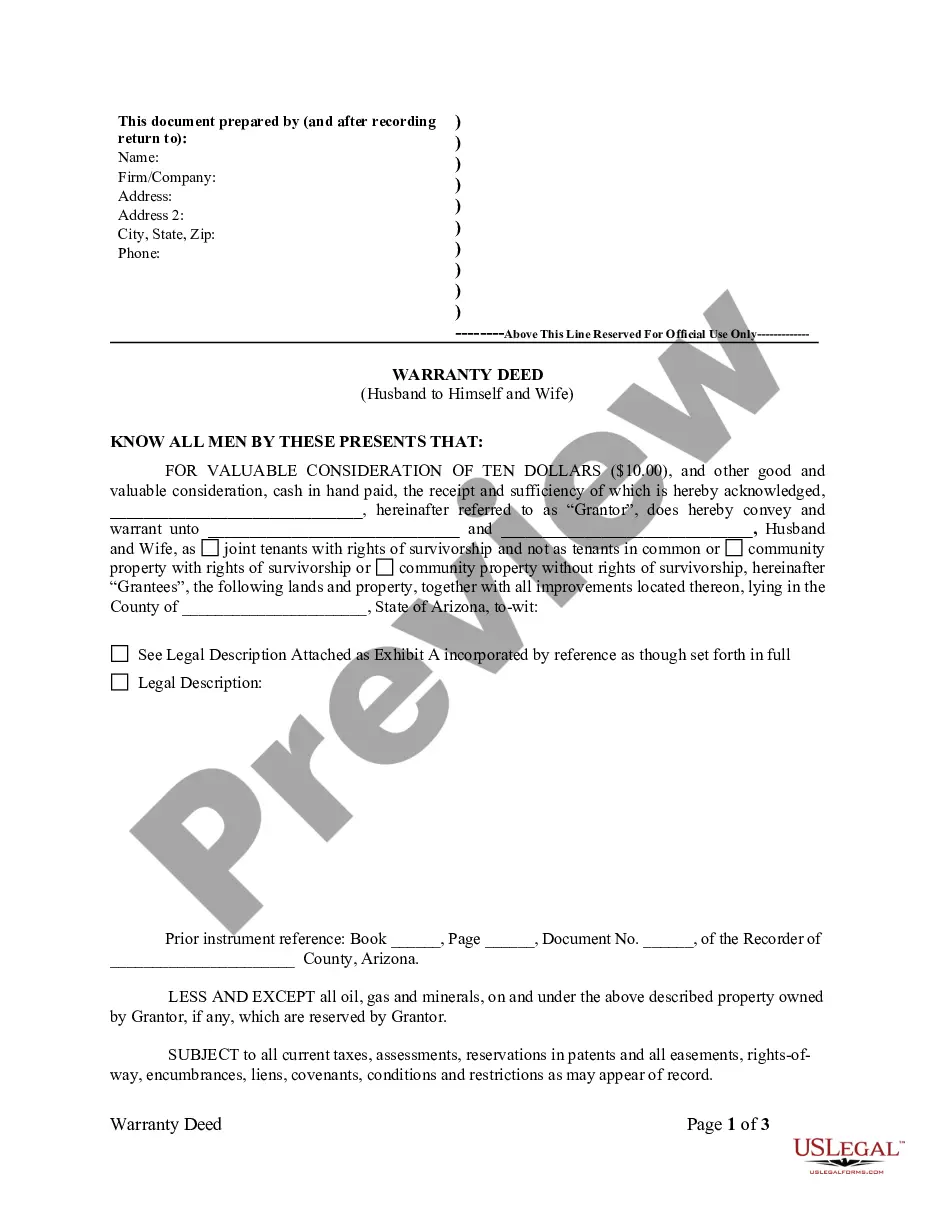
- Identification of the grantor (husband) and grantees (husband and wife).
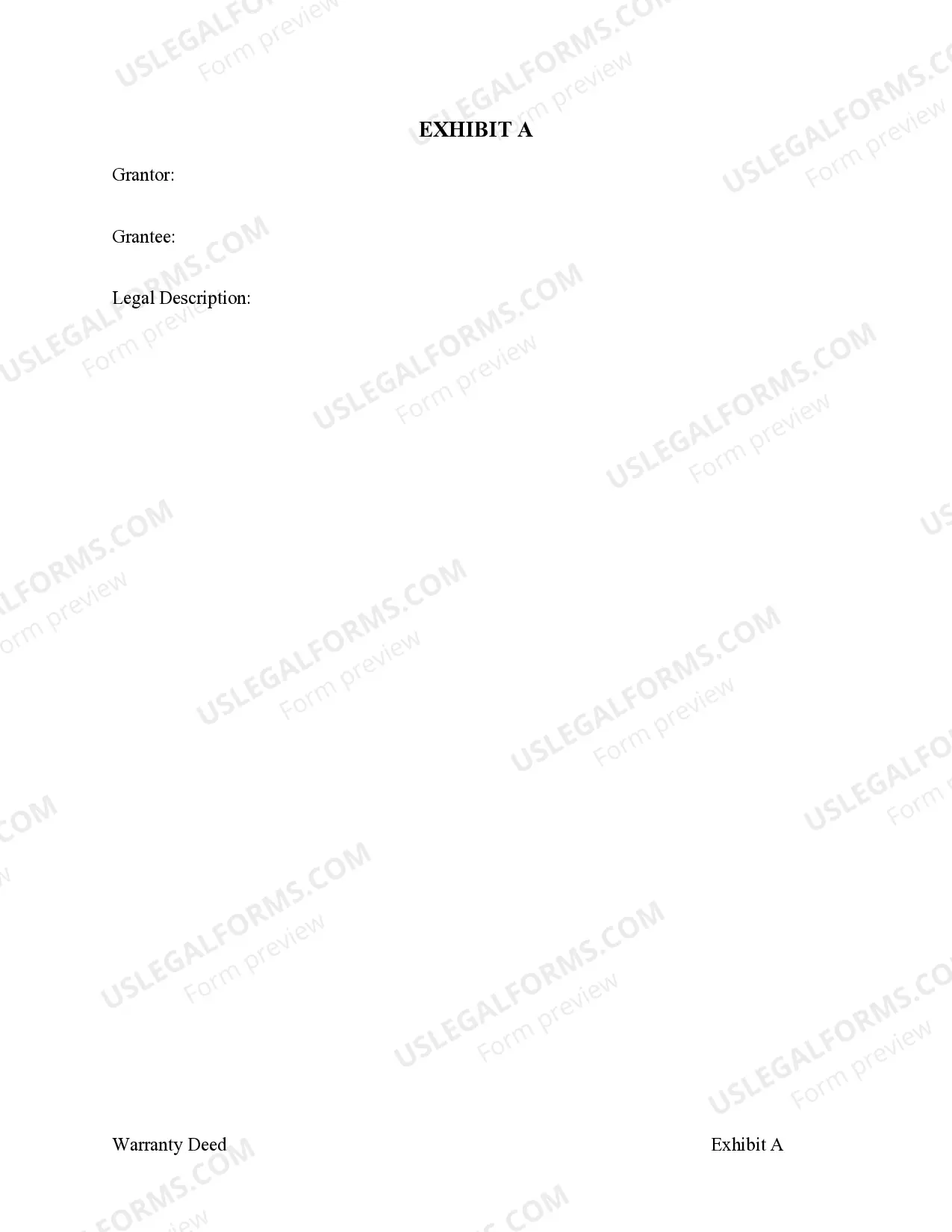
- Legal description of the property included in the deed.
- Warranty clause, confirming the property is free of encumbrances unless stated otherwise.
- Joint tenancy with rights of survivorship clause, outlining ownership rights.
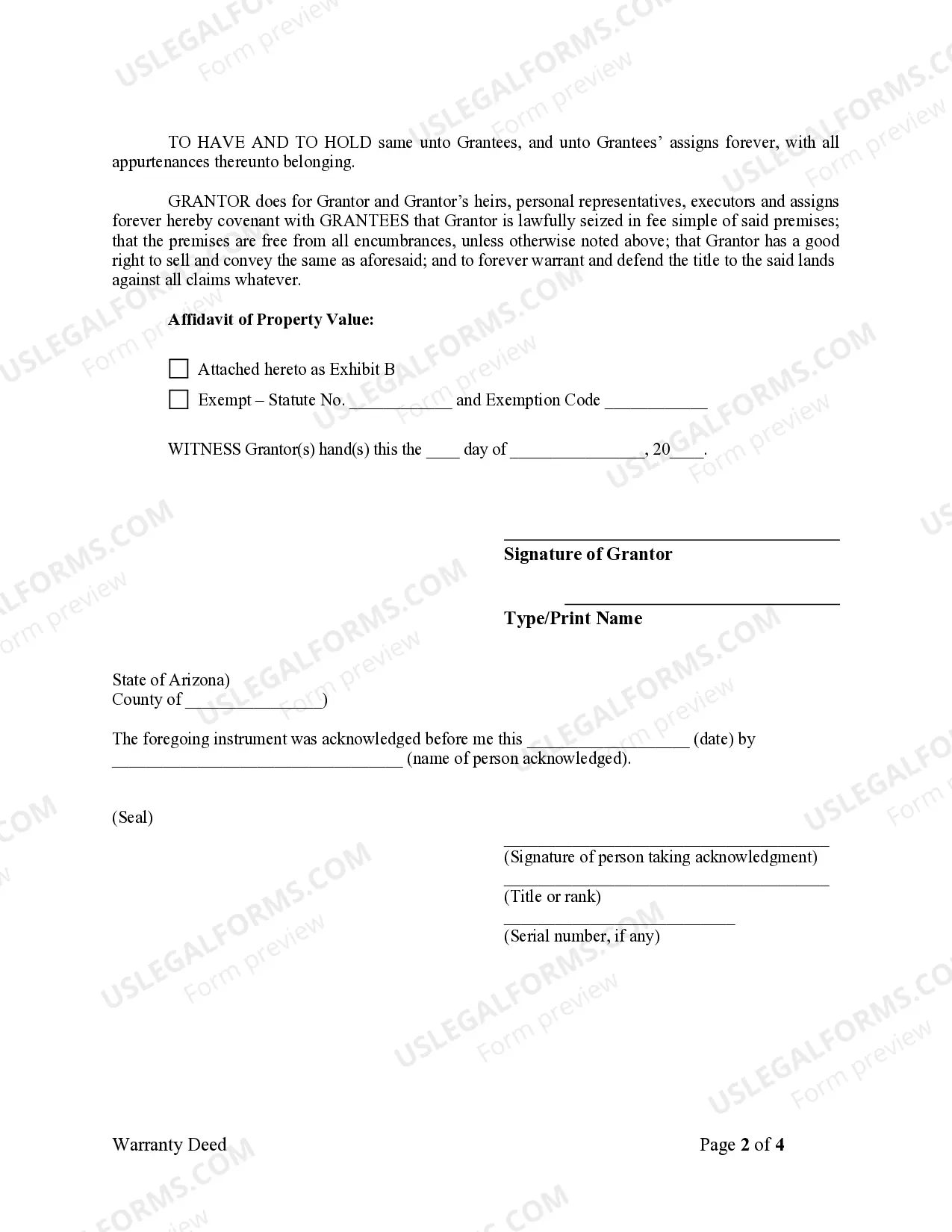
- Signature line for the grantor and acknowledgment by a notary public.



When to use this document
This form is typically used when a husband wants to ensure that ownership of property is shared with his wife. Situations may include marriage, estate planning, or clarification of property rights. It is particularly relevant in cases where the couple wants to simplify property transfers in the event of death, by establishing joint tenancy which includes rights of survivorship.
Who can use this document
- Married couples looking to establish joint ownership of property.
- Individuals wanting to clarify property rights and intentions between spouses.
- Husbands transferring property to themselves and their wives.
Instructions for completing this form
- Identify the parties involved: the grantor (husband) and the grantees (husband and wife).
- Provide a detailed legal description of the property, ensuring it matches official records.
- Include the date of execution on the signature line.
- Have the grantor sign the deed in the presence of a notary public.
- Confirm that the notary public completes the acknowledgment section, providing details of their commission.
Notarization guidance
Notarization is required for this form to take effect. Our online notarization service, powered by Notarize, lets you verify and sign documents remotely through an encrypted video session, available 24/7.
Get your form ready online
Our built-in tools help you complete, sign, share, and store your documents in one place.
Make edits, fill in missing information, and update formatting in US Legal Forms—just like you would in MS Word.
Download a copy, print it, send it by email, or mail it via USPS—whatever works best for your next step.
Sign and collect signatures with our SignNow integration. Send to multiple recipients, set reminders, and more. Go Premium to unlock E-Sign.
If this form requires notarization, complete it online through a secure video call—no need to meet a notary in person or wait for an appointment.
We protect your documents and personal data by following strict security and privacy standards.

Make edits, fill in missing information, and update formatting in US Legal Forms—just like you would in MS Word.

Download a copy, print it, send it by email, or mail it via USPS—whatever works best for your next step.

Sign and collect signatures with our SignNow integration. Send to multiple recipients, set reminders, and more. Go Premium to unlock E-Sign.

If this form requires notarization, complete it online through a secure video call—no need to meet a notary in person or wait for an appointment.

We protect your documents and personal data by following strict security and privacy standards.
Common mistakes
- Failing to accurately describe the property, which can lead to disputes.
- Not having the deed notarized, which may invalidate the document.
- Skipping essential signatures or dates, making the deed incomplete.
Advantages of online completion
- Convenient access from anywhere, allowing for easy completion at your own pace.
- Editable templates ensure that you can customize the form as needed.
- Reliable, attorney-drafted documents that comply with legal standards.
Looking for another form?


Form popularity
FAQ
Adding someone to your deed in Arizona involves creating a new deed, which can be an Arizona Warranty Deed from Husband to Himself and Wife. You'll need to accurately describe the property and include the name of the individual you are adding. Once the deed is signed and notarized, you will file it with the local county recorder's office. Using platforms like USLegalForms can simplify this process by providing the necessary templates and guidelines.
To add someone to your house title in Arizona, you typically need to prepare a new deed, such as the Arizona Warranty Deed from Husband to Himself and Wife. This document should include the legal description of the property and the names of both parties involved. After completing the deed, you must sign it in the presence of a notary and then file it with the county recorder's office. This process ensures the new title reflects the updated ownership.
When you add someone to a deed in Arizona, such as transferring property with an Arizona Warranty Deed from Husband to Himself and Wife, you may face tax implications. This can include potential gift tax considerations if the equity transferred exceeds a certain amount. Additionally, adding someone to your deed may affect the property tax assessments, possibly resulting in higher taxes. It's advisable to consult a tax professional to understand these implications fully.
Transferring property title to a family member in Arizona can be achieved through various types of deeds, including a warranty deed. To do this, you must complete the deed accurately, sign it, and have it notarized. Using tools and resources from UsLegalForms when preparing an Arizona Warranty Deed from Husband to Himself and Wife can provide guidance, ensuring a smooth and compliant title transfer.
To add a spouse to a deed in Arizona, you would typically use a warranty deed to transfer the property into joint ownership. You will need to complete the deed, ensuring it is signed and notarized by both parties. Utilizing an Arizona Warranty Deed from Husband to Himself and Wife simplifies this process, allowing both partners to equally share in the property's rights and responsibilities.
The most common type of deed used in Arizona is the warranty deed. This deed provides the highest level of protection for buyers because it guarantees that the seller has clear title to the property. When creating an Arizona Warranty Deed from Husband to Himself and Wife, this type allows both spouses to confidently hold an equal interest in the property.
In Arizona, to properly record a deed, you must ensure it is signed by all parties and notarized. The deed should include a legal description of the property and comply with state laws. For those transferring property via an Arizona Warranty Deed from Husband to Himself and Wife, it is crucial to record the deed with the county recorder's office promptly to ensure public notice of ownership.
A warranty deed in Arizona is a legal document that conveys ownership of property from one party to another. When using an Arizona Warranty Deed from Husband to Himself and Wife, it guarantees that the husband holds clear title to the property and commits to defending that title against any claims. This type of deed offers a level of protection for both spouses in Arizona real estate transactions.
In divorce proceedings, a quitclaim deed is often used for property transfers. However, an Arizona Warranty Deed from Husband to Himself and Wife can also be used if additional protection is desired. This ensures that the transferring party warranties their ownership, providing a clearer title for the receiving spouse after the divorce.
Filing a warranty deed in Arizona involves a few straightforward steps. First, prepare your Arizona Warranty Deed from Husband to Himself and Wife, ensuring all required information is included. Next, have the document notarized, then submit it to the county recorder’s office for recording, which makes the deed a matter of public record.