Arkansas Bill of Sale with Warranty for Corporate Seller
About this form
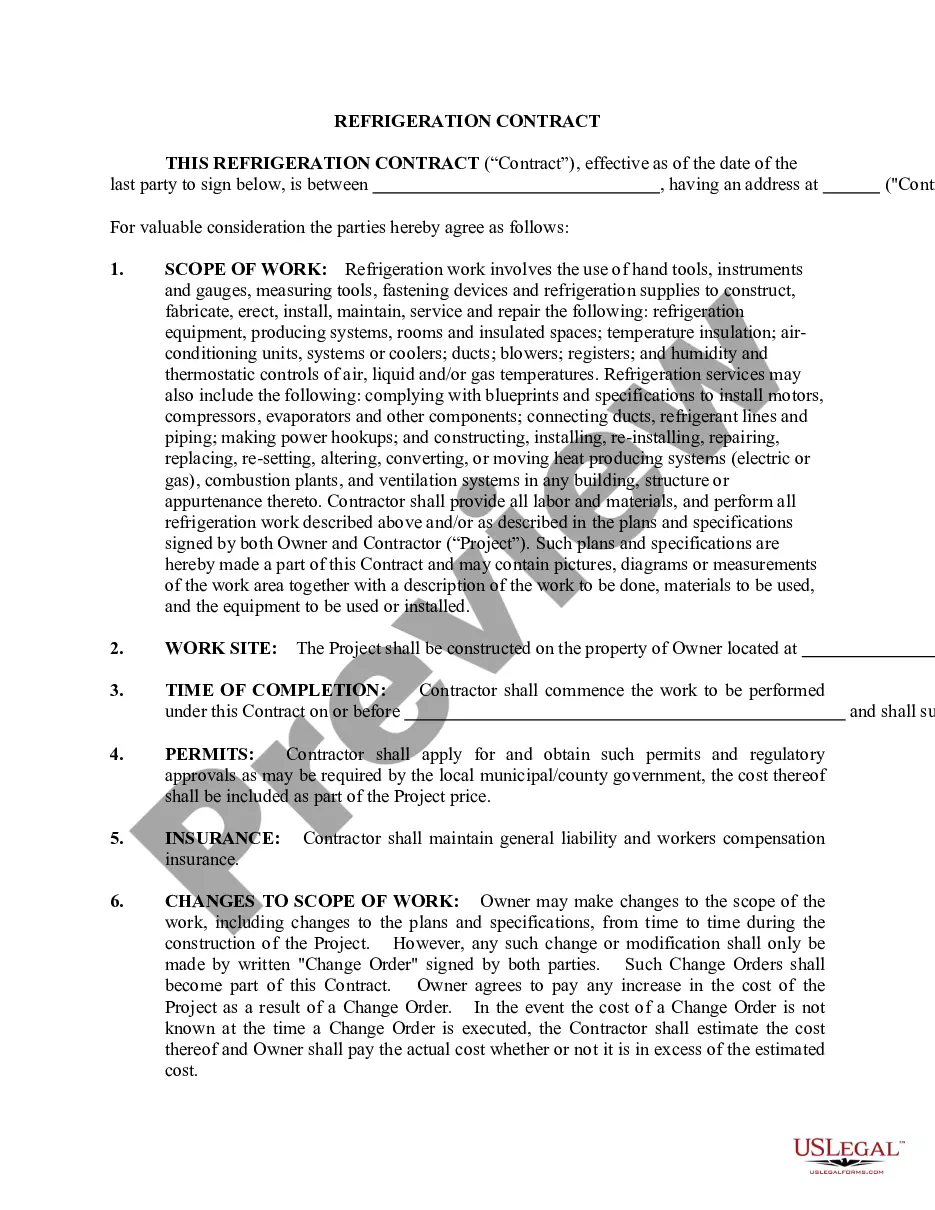
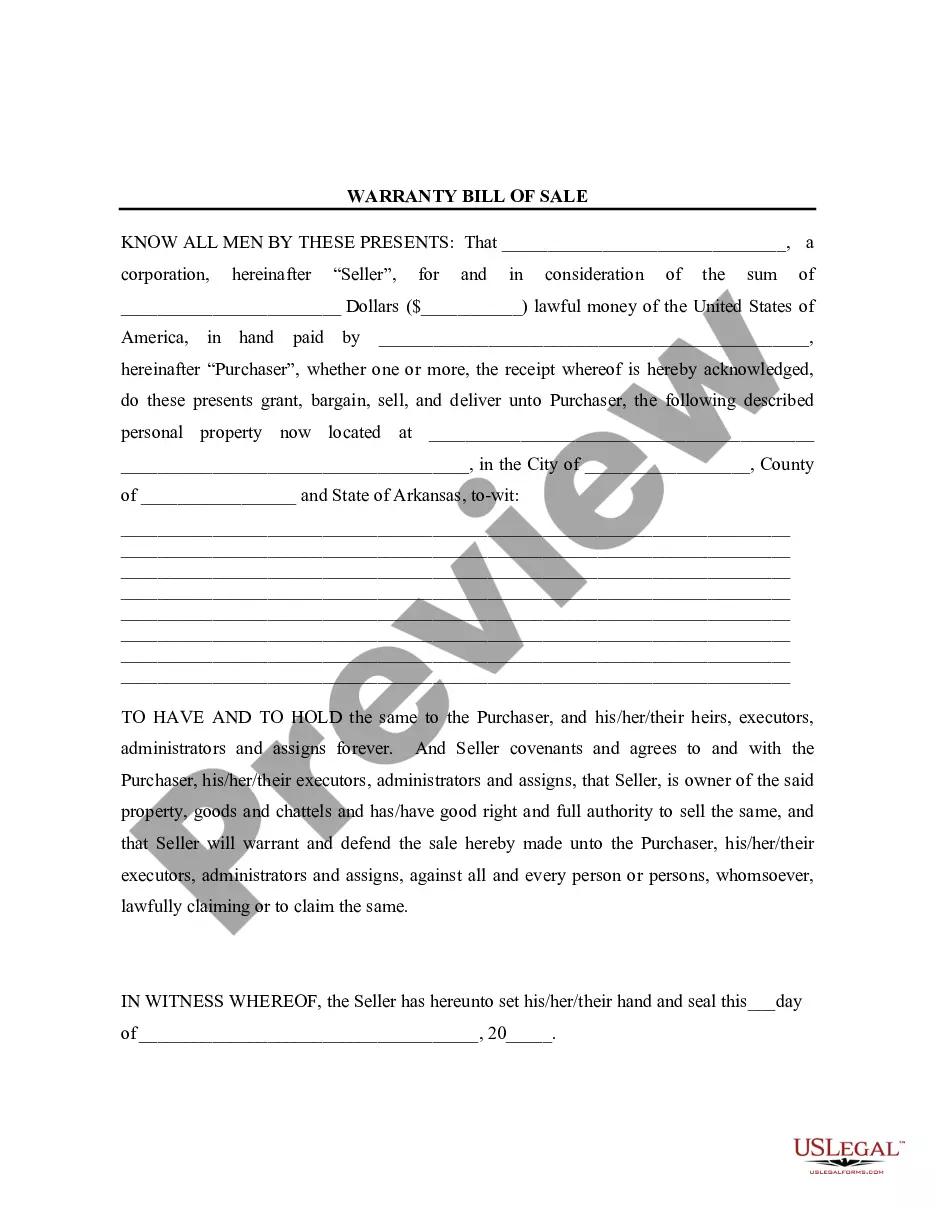
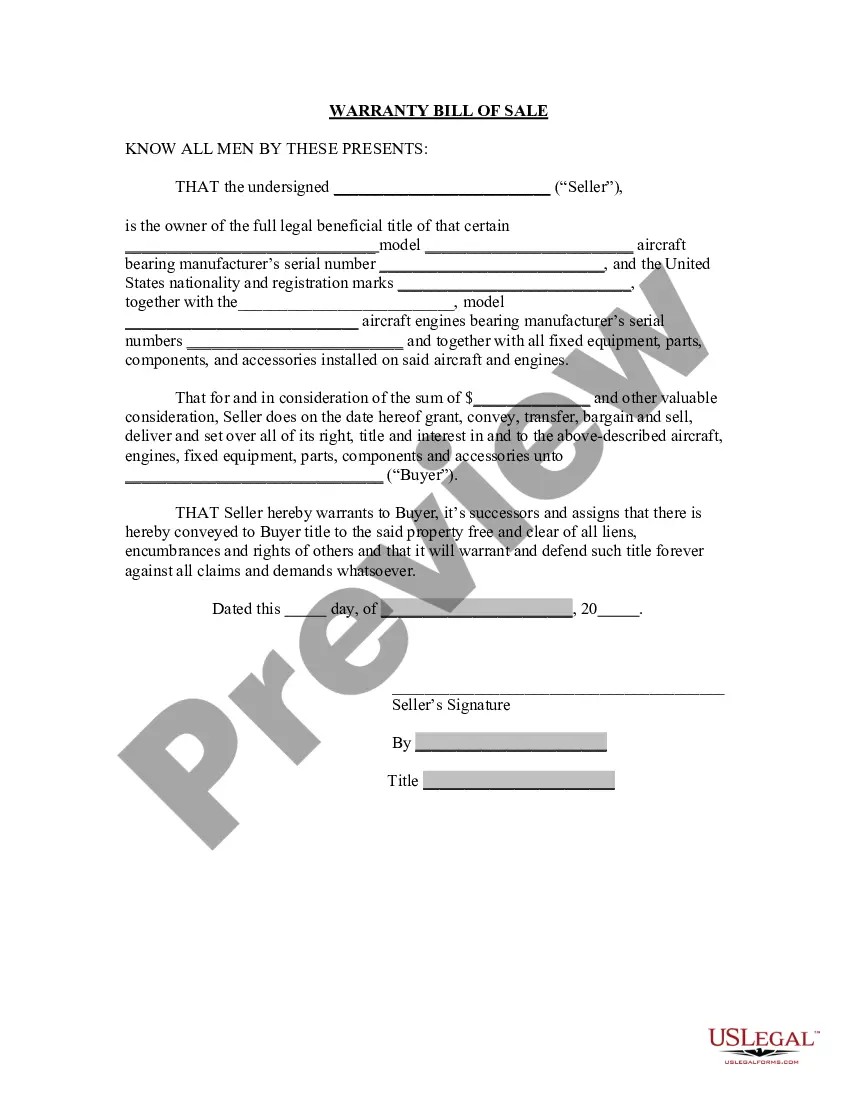
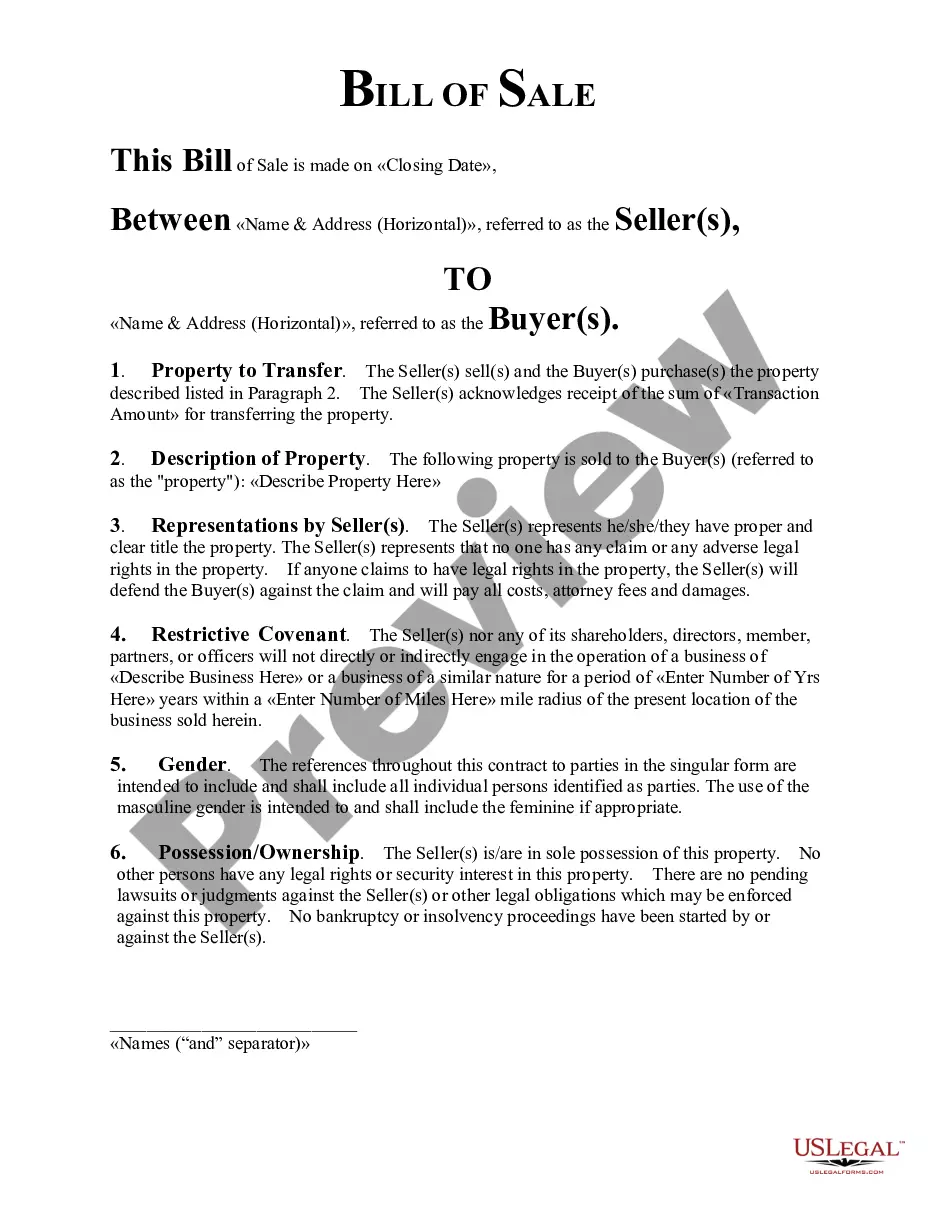
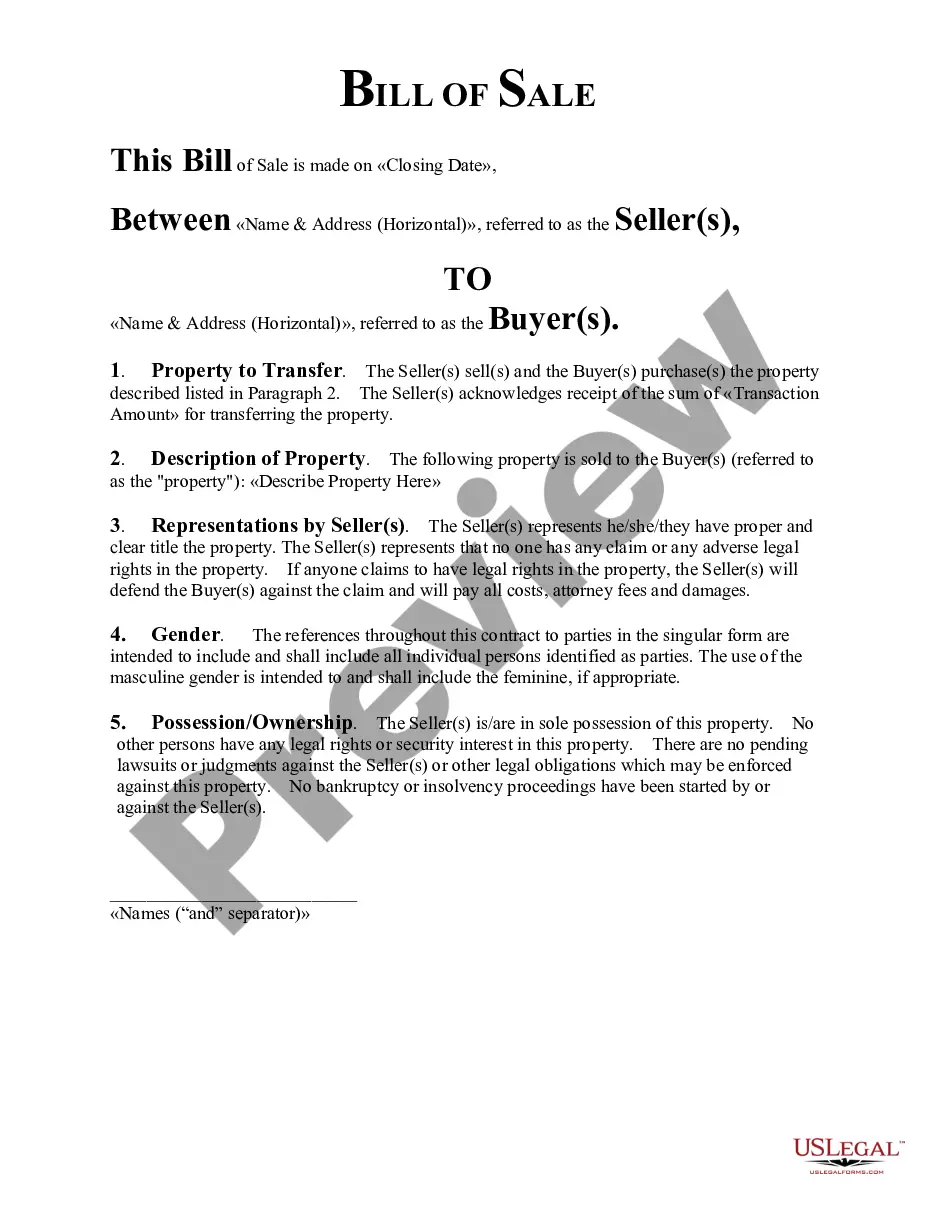
The Bill of Sale with Warranty for Corporate Seller is a legal document used when a corporation sells property. Unlike a Quitclaim Conveyance, this form includes a warranty, assuring the buyer that the seller has the legal right to sell the specified property and will defend against any claims to it. This form is essential for formalizing the sale and protecting the interests of both the seller and the buyer within the appropriate jurisdiction.
What’s included in this form
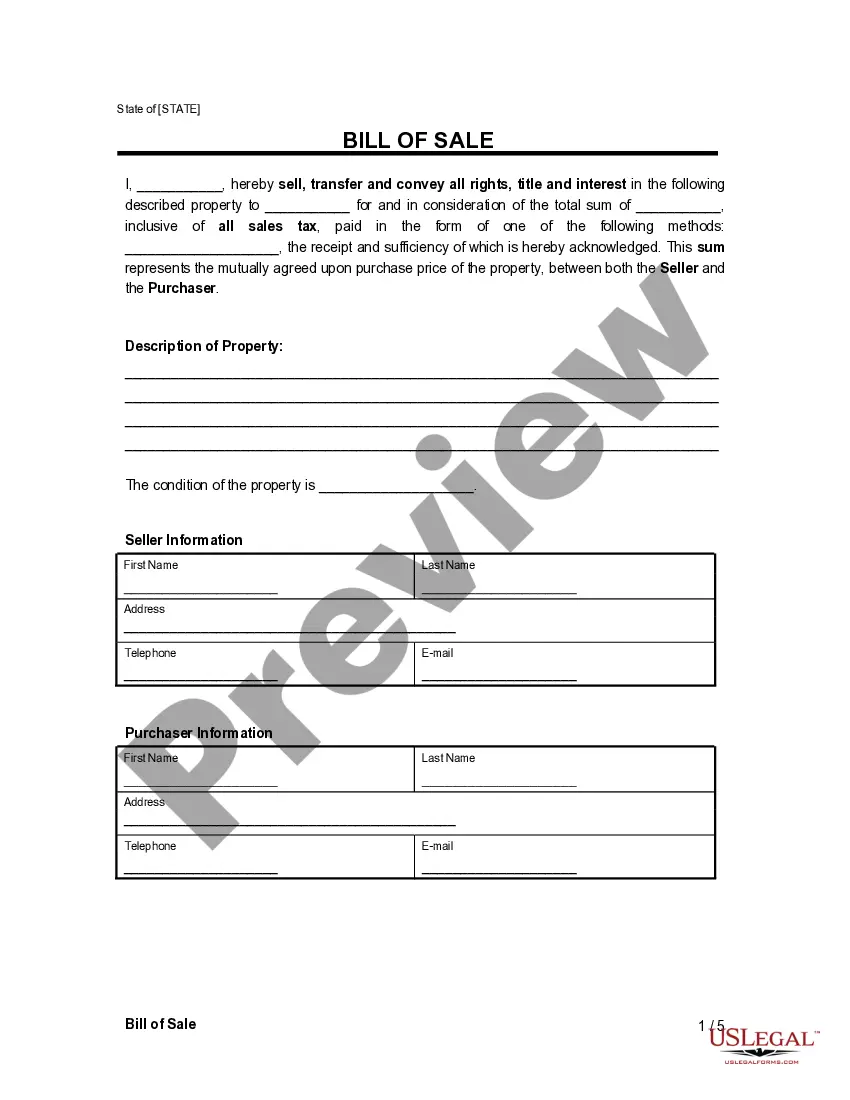
- Identification of the Seller and Purchaser: Names and details of the parties involved in the sale.
- Description of the Property: Complete details of the personal property being sold.
- Purchase Price: The total amount being paid for the property.
- Warranties by the Seller: Assurance that the seller owns the property and has the right to sell it.
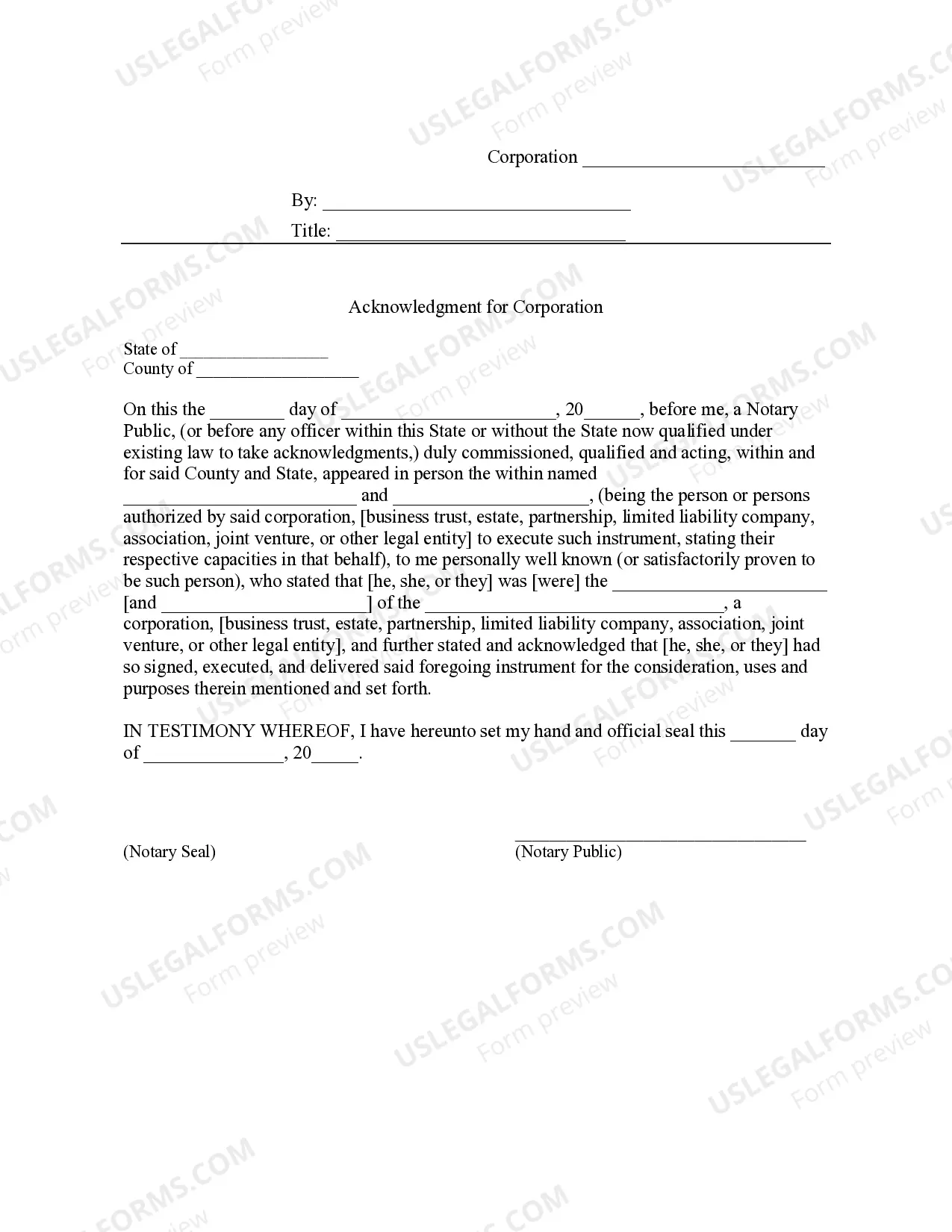
- Acknowledgment Section: Certification of the document by a notary public.
When to use this form
This form is used in various situations where a corporation sells personal property and wishes to provide a warranty to the buyer. It is appropriate in transactions involving equipment sales, corporate asset transfers, or when a corporation liquidates assets. Using this form ensures that buyers have legal recourse in case of any disputes regarding ownership or claims against the property sold.
Who can use this document
- Corporation selling personal property.
- Business buyers looking to acquire assets from a corporate seller.
- Corporate legal teams involved in the sale of company assets.
- Individuals or entities purchasing property directly from a corporation.
Steps to complete this form
- Identify the Seller by entering the corporation's name and key details.
- Enter the Purchaser's name and contact information.
- Specify the property being sold with a complete description.
- Fill in the total purchase price in both words and numerals.
- Sign the document in front of a notary public to ensure it is legally binding.
Does this form need to be notarized?
To make this form legally binding, it must be notarized. Our online notarization service, powered by Notarize, lets you verify and sign documents remotely through an encrypted video session.
Get your form ready online
Our built-in tools help you complete, sign, share, and store your documents in one place.
Make edits, fill in missing information, and update formatting in US Legal Forms—just like you would in MS Word.
Download a copy, print it, send it by email, or mail it via USPS—whatever works best for your next step.
Sign and collect signatures with our SignNow integration. Send to multiple recipients, set reminders, and more. Go Premium to unlock E-Sign.
If this form requires notarization, complete it online through a secure video call—no need to meet a notary in person or wait for an appointment.
We protect your documents and personal data by following strict security and privacy standards.

Make edits, fill in missing information, and update formatting in US Legal Forms—just like you would in MS Word.

Download a copy, print it, send it by email, or mail it via USPS—whatever works best for your next step.

Sign and collect signatures with our SignNow integration. Send to multiple recipients, set reminders, and more. Go Premium to unlock E-Sign.

If this form requires notarization, complete it online through a secure video call—no need to meet a notary in person or wait for an appointment.

We protect your documents and personal data by following strict security and privacy standards.
Common mistakes
- Failing to provide a complete description of the property, which may lead to disputes.
- Not including the correct purchase price in both numerical and written form.
- Neglecting to have the document notarized, if required.
- Using outdated or incomplete forms for the state of sale.
Why use this form online
- Convenience of accessing and downloading the form anytime, anywhere.
- Editable fields allow you to input information easily before printing.
- Compliance with state-specific requirements ensuring legal validity.
- Instant access compared to traditional forms that require mail or in-person visits.
Summary of main points
- A Bill of Sale with Warranty for Corporate Seller is vital for transferring ownership of personal property legally.
- This form includes warranties that protect the Purchaser against future claims on the property.
- Notarization is required to validate the document, ensuring it complies with state regulations.
- Using this form online provides convenience, compliance, and ease of use.
Looking for another form?

Form popularity
FAQ
Yes, a bill of sale can be handwritten in Arkansas. It is a legitimate option as long as it contains all necessary information regarding the transaction. To streamline and secure the process, you may want to use an official form like the Arkansas Bill of Sale with Warranty for Corporate Seller, which ensures that you cover all necessary details effectively.
You can indeed write a bill of sale by hand. While hand-written documents are valid, it is crucial to ensure clarity and detail in your writing. Remember, using a structured format can help avoid confusion. The Arkansas Bill of Sale with Warranty for Corporate Seller is available in a user-friendly format that guides you through the process.
In Arkansas, a bill of sale does not need to be notarized to be valid. This document serves as a critical proof of the transaction between the buyer and seller. While notarization adds an extra layer of security, the Arkansas Bill of Sale with Warranty for Corporate Seller can still provide important protections and warranties without it.
Yes, a hand-written bill of sale is legal in Arkansas. However, it is essential to include key details like the buyer's and seller's information, the item being sold, and the sale amount. Using a customizable form can help ensure you do not miss any vital information. For a complete and secure transaction, consider using the Arkansas Bill of Sale with Warranty for Corporate Seller.
Writing an Arkansas Bill of Sale with Warranty for Corporate Seller involves several key steps. Begin by including the full names and addresses of both the seller and the buyer. Next, clearly describe the item being sold, including any serial numbers or identifying details. Finally, ensure both parties sign the document to make it legally binding. To simplify this process, consider using the uSlegalforms platform, which provides templates and guidance specifically for creating effective bills of sale in Arkansas.
A bill of sale serves as a document that confirms the transfer of ownership, but it does not provide legal title in all cases. To obtain title, other documentation may be required, depending on the type of equipment. An Arkansas Bill of Sale with Warranty for Corporate Seller is instrumental in this process, as it provides a clear record of the transaction that can be used to support title claims.
In Arkansas, a bill of sale is not always legally required, but it is highly recommended for any significant transaction. Having an Arkansas Bill of Sale with Warranty for Corporate Seller can safeguard your interests by providing clear documentation of the sale. This document can also be necessary for tax purposes and future reference, ensuring both parties agree on transaction details.
The primary difference lies in the level of protection offered. A standard bill of sale merely documents the transaction, while a warranty bill of sale guarantees certain conditions about the item being sold. An Arkansas Bill of Sale with Warranty for Corporate Seller includes these warranties, providing reassurance about the condition and title of the sold item, making it a preferred choice for corporate transactions.
While a bill of sale serves as proof of transaction, it does not replace the title for items like vehicles or real estate. Instead, it document the ownership transfer, providing essential details about the transaction. When using an Arkansas Bill of Sale with Warranty for Corporate Seller, always check if additional forms are necessary to receive the title, especially for valuable items.
Reporting the sale of business equipment typically involves notifying the state and federal tax authorities. You must fill out the appropriate tax forms to accurately reflect this sale. Using an Arkansas Bill of Sale with Warranty for Corporate Seller simplifies this process, as it serves as formal documentation of the transaction. This record helps ensure compliance and protects your interests.