Arkansas Quitclaim Deed from Husband and Wife to Corporation
What this document covers
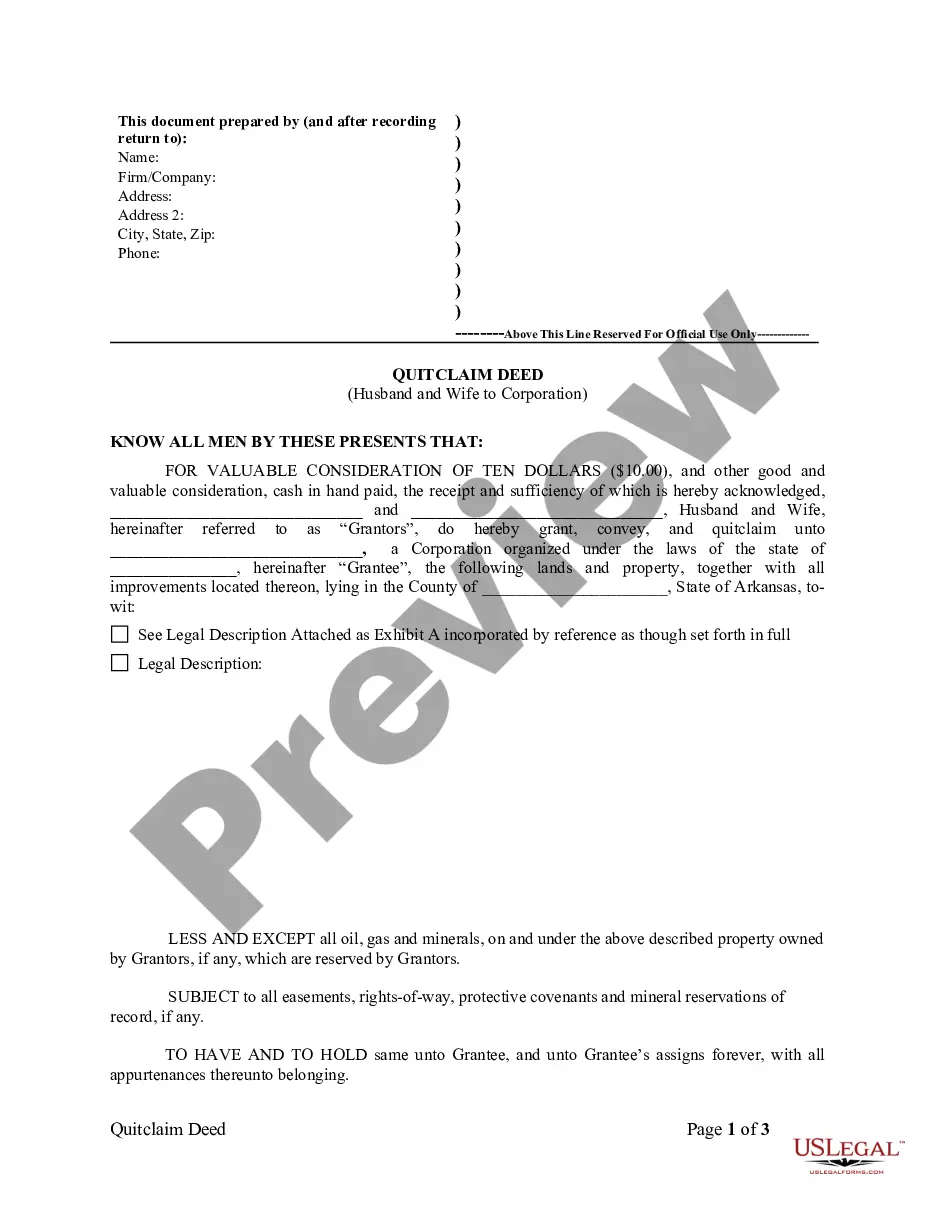
The Quitclaim Deed from Husband and Wife to Corporation is a legal document that allows a married couple to transfer their property rights to a corporation without warranty. In contrast to other deeds, such as warranty deeds, a quitclaim deed does not guarantee that the title is free of claims. This form is essential for property transactions where the owners wish to relinquish their interest in their property to a business entity quickly and efficiently.
Key parts of this document
- Identification of the grantors (husband and wife) and the grantee (corporation).
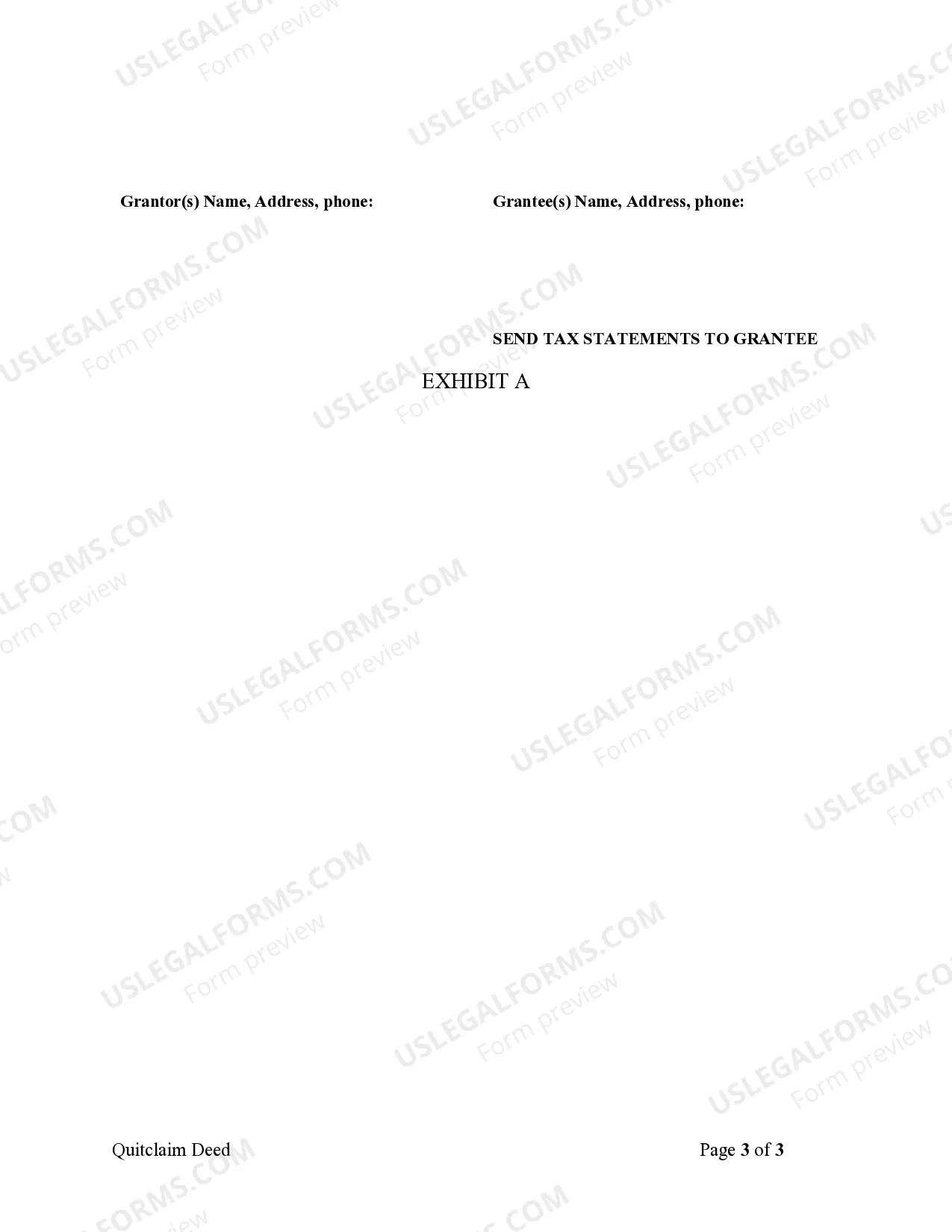
- Legal description of the property being transferred.
- Consideration for the transfer, often expressed as a monetary value.
- Provisions for the reservation of oil, gas, and minerals.
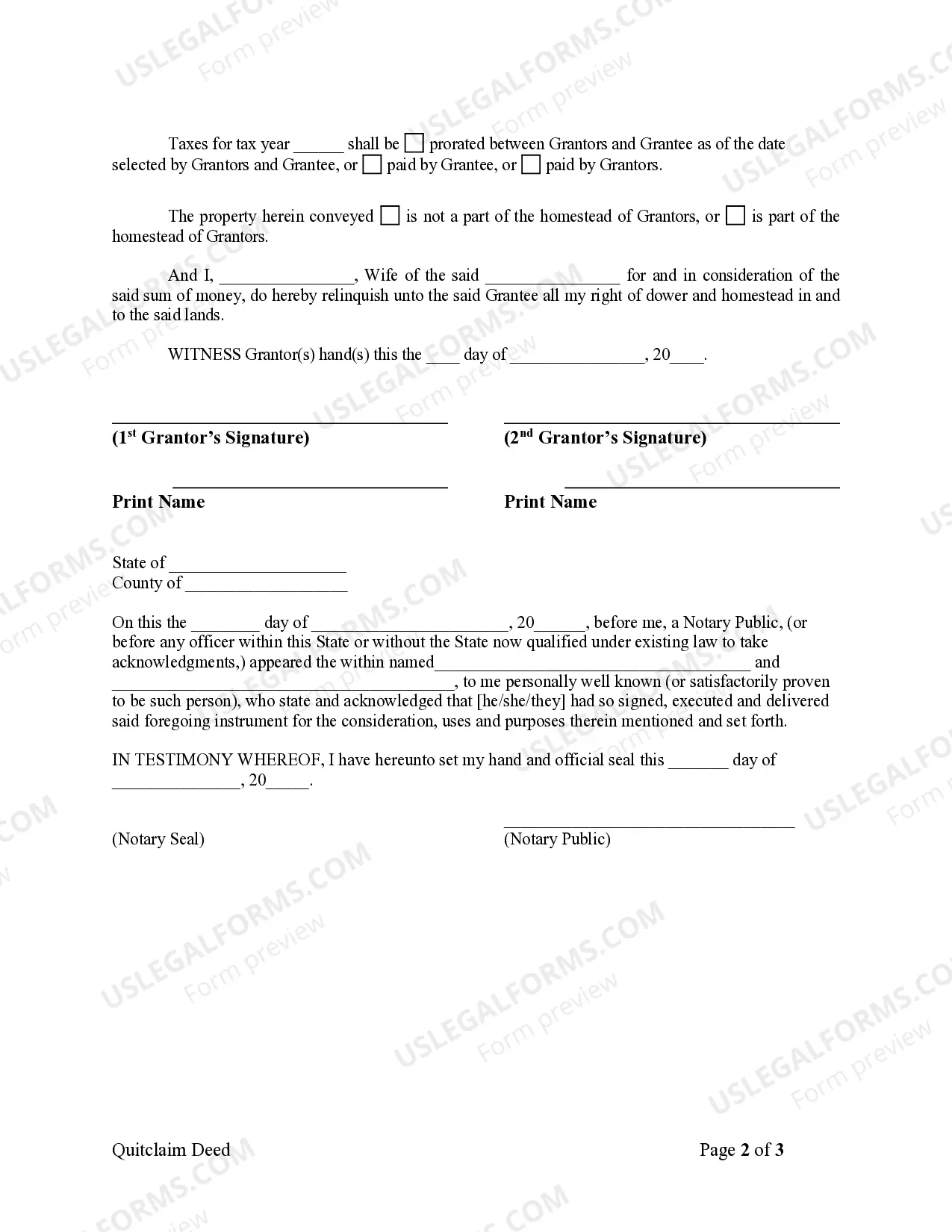
- Clauses regarding the prorating of property taxes.
- Signature lines for the grantors, including notarization section for legal verification.




When this form is needed
This form is typically used when a husband and wife jointly own real estate and decide to transfer their ownership to a corporation, either for business purposes or estate planning. It is suitable in situations where the couple no longer requires the property or wishes to consolidate ownership under a corporate entity for liability protection or operational efficiency.
Who needs this form
- Couples who jointly own property and want to transfer their interest to a corporation.
- Businesses seeking to acquire real estate from married individuals.
- Individuals involved in property investment or real estate management.
Steps to complete this form
- Identify the parties involved by entering the names of the grantors (husband and wife) and the grantee (corporation).
- Specify the legal description of the property, ensuring it is accurate and corresponds with public records.
- Declare the consideration for the transaction in monetary terms.
- Determine how property taxes for the current year will be handled.
- Each grantor must sign the form in the presence of a notary public to validate the transaction.
Notarization requirements for this form
To make this form legally binding, it must be notarized. Our online notarization service, powered by Notarize, lets you verify and sign documents remotely through an encrypted video session.
Get your form ready online
Our built-in tools help you complete, sign, share, and store your documents in one place.
Make edits, fill in missing information, and update formatting in US Legal Forms—just like you would in MS Word.
Download a copy, print it, send it by email, or mail it via USPS—whatever works best for your next step.
Sign and collect signatures with our SignNow integration. Send to multiple recipients, set reminders, and more. Go Premium to unlock E-Sign.
If this form requires notarization, complete it online through a secure video call—no need to meet a notary in person or wait for an appointment.
We protect your documents and personal data by following strict security and privacy standards.

Make edits, fill in missing information, and update formatting in US Legal Forms—just like you would in MS Word.

Download a copy, print it, send it by email, or mail it via USPS—whatever works best for your next step.

Sign and collect signatures with our SignNow integration. Send to multiple recipients, set reminders, and more. Go Premium to unlock E-Sign.

If this form requires notarization, complete it online through a secure video call—no need to meet a notary in person or wait for an appointment.

We protect your documents and personal data by following strict security and privacy standards.
Common mistakes
- Failing to provide an accurate legal description of the property.
- Not having the signatures properly notarized.
- Omitting information regarding the reservation of oil, gas, and mineral rights.
- Not specifying how property taxes will be handled.
Advantages of online completion
- Convenience of completing the form from anywhere at any time.
- Editable fields allow users to customize the form to their unique situation.
- Access to forms drafted by licensed attorneys, ensuring legal compliance.
Main things to remember
- The quitclaim deed is a quick method for married couples to transfer property to a corporation.
- Accurate property descriptions and notarization are crucial for validity.
- Understanding of tax prorations is necessary for a clear transfer of ownership.
Looking for another form?
Form popularity
FAQ
Several factors can void an Arkansas Quitclaim Deed from Husband and Wife to Corporation. These include a lack of mutual consent from all parties involved, failure to follow proper signing and notarization processes, or if the deed contains fraudulent information. Additionally, if the property was part of a divorce settlement without proper legal documentation, the quitclaim deed may also be deemed invalid. It's crucial to ensure all requirements are met to avoid complications.
A quitclaim deed from one spouse to another is a legal document that transfers ownership interest in property without ensuring the title's validity. In the context of an Arkansas quitclaim deed from husband and wife to corporation, it allows for a clear transfer of property rights. This transfer can help clarify ownership and simplify the legal process, especially during significant life changes.
Some disadvantages of an Arkansas quitclaim deed include a lack of warranty regarding the title's validity, which can lead to ownership disputes later. Additionally, if there are existing liens or debts associated with the property, the new owner might inherit those obligations. It’s essential to consider these factors before proceeding with a quitclaim deed.
A spouse may execute an Arkansas quitclaim deed from husband and wife to corporation to simplify property ownership, especially during divorce or separation. This deed helps clarify the ownership status of shared property. Furthermore, it provides a simple method for one party to transfer their interest to a corporation or another entity.
The usual reason for utilizing an Arkansas quitclaim deed from husband and wife to corporation is to transfer property ownership quickly and easily. This deed type allows the owners to relinquish their claim without warranties regarding the title's validity. People often use it to resolve property rights among family members or to facilitate business transactions.
Yes, a title company can assist in preparing and executing a quitclaim deed in Arkansas. They ensure that all necessary information is correctly filled out, reducing the risk of errors. Working with a title company provides peace of mind, as they also offer guidance on navigating the filing process.
The primary beneficiary of an Arkansas quitclaim deed from husband and wife to corporation is usually the corporation receiving the property. This transfer allows the corporation to gain ownership without the complexities of a traditional sale. Additionally, the spouses benefit by clarifying ownership, especially during separation or divorce, which can simplify asset division.
To file an Arkansas quitclaim deed from husband and wife to corporation, start by filling out the appropriate deed form. Ensure that both spouses sign the deed in front of a notary public. Then, submit the completed form to the local county recorder's office, along with any required fees. This process officially updates the property ownership records.
Filling out a quitclaim deed in Arkansas requires key information to be included. Start by entering the names of the current owner and the new owner, followed by the property description. If you're working on an Arkansas Quitclaim Deed from Husband and Wife to Corporation, be sure to specify this on the form, which can usually be found on platforms like USLegalForms. After accurately completing the details, remember to sign and have the document notarized.
Yes, you can prepare a quitclaim deed yourself, especially if you are comfortable with basic legal forms. There are useful resources available, like USLegalForms, which provide templates specifically designed for an Arkansas Quitclaim Deed from Husband and Wife to Corporation. Using these templates can simplify the process and help ensure that all necessary information is included. However, consider consulting a legal professional for peace of mind.