Arkansas Warranty Deed from two Individuals to Corporation
What this document covers
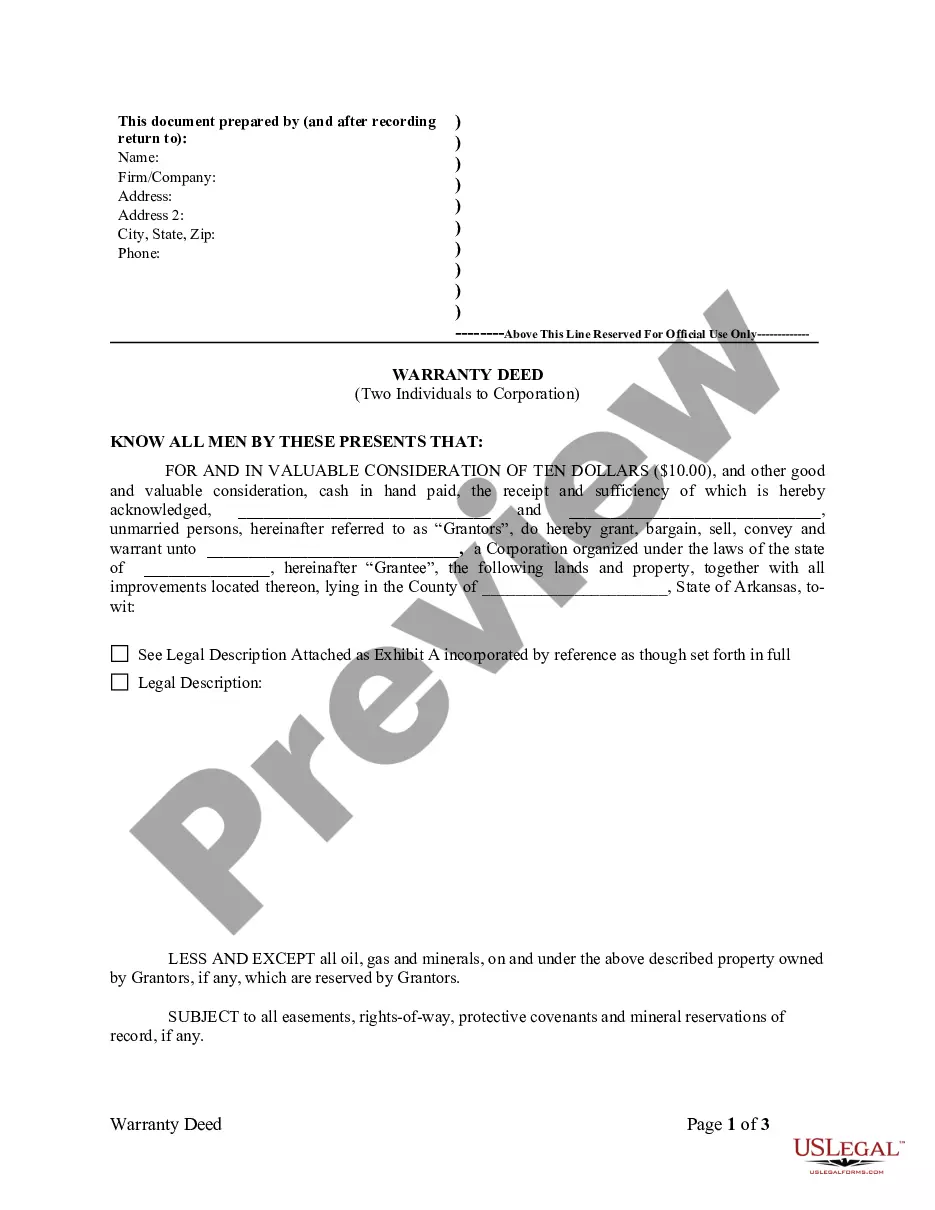
The Warranty Deed from two Individuals to Corporation is a legal document that allows two individuals (the Grantors) to transfer property ownership to a corporation (the Grantee). This type of deed ensures that the Grantors guarantee the title to the property, meaning they assert their legal right to sell it. It is essential for formalizing property transactions and protecting the interests of both parties involved. This deed differs from other types of deeds by specifically involving a corporation as the recipient of the property, which may have different legal implications than transferring ownership to another individual.
What’s included in this form
- Identification of the Grantors (two individuals conveying the property).
- Identification of the Grantee (the corporation receiving the property).
- Detailed legal description of the property being transferred.
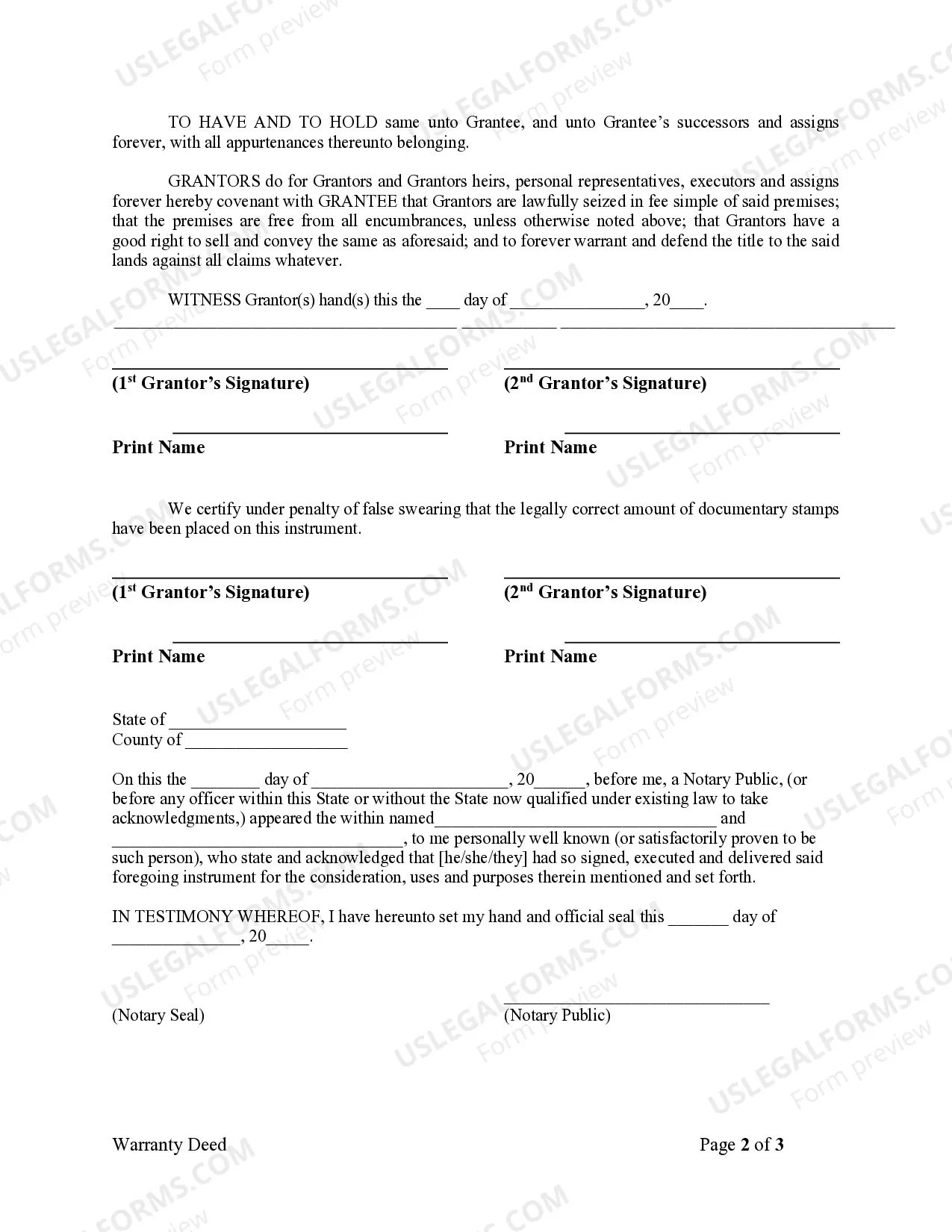
- Warranties provided by the Grantors regarding the ownership and encumbrances of the property.
- Signatures of the Grantors to validate the transfer.



Situations where this form applies
This form is used when two individuals wish to legally transfer real property ownership to a corporation. It is applicable in scenarios such as business expansion, property investment, or when transferring assets to a newly formed corporation. It also serves to clarify the legal standing and minimize disputes over ownership once the transfer is complete.
Who can use this document
- Individuals who jointly own property and want to transfer it to a corporation.
- Corporate representatives involved in property acquisition.
- Real estate professionals facilitating a transaction between individuals and corporations.
- Lawyers or legal advisors preparing documents for their clients in a property transfer situation.
Completing this form step by step
- Identify the parties involved: enter the names and addresses of the Grantors and Grantee.
- Provide a clear legal description of the property being transferred, as required.
- Specify any exceptions, such as reserved mineral rights.
- Have both Grantors sign and date the document in the designated areas.
- Ensure that all information is accurate and complete before submission.
Notarization requirements for this form
This form does not typically require notarization unless specified by local law. However, obtaining notarization can further validate the document and protect against disputes related to the authenticity of the signatures.
Get your form ready online
Our built-in tools help you complete, sign, share, and store your documents in one place.
Make edits, fill in missing information, and update formatting in US Legal Forms—just like you would in MS Word.
Download a copy, print it, send it by email, or mail it via USPS—whatever works best for your next step.
Sign and collect signatures with our SignNow integration. Send to multiple recipients, set reminders, and more. Go Premium to unlock E-Sign.
If this form requires notarization, complete it online through a secure video call—no need to meet a notary in person or wait for an appointment.
We protect your documents and personal data by following strict security and privacy standards.

Make edits, fill in missing information, and update formatting in US Legal Forms—just like you would in MS Word.

Download a copy, print it, send it by email, or mail it via USPS—whatever works best for your next step.

Sign and collect signatures with our SignNow integration. Send to multiple recipients, set reminders, and more. Go Premium to unlock E-Sign.

If this form requires notarization, complete it online through a secure video call—no need to meet a notary in person or wait for an appointment.

We protect your documents and personal data by following strict security and privacy standards.
Common mistakes
- Failing to provide a complete and accurate legal description of the property.
- Not properly identifying the parties involved in the transfer.
- Omitting signatures or dates where required.
- Assuming the form is valid without confirming local legal requirements.
Advantages of online completion
- Immediate availability: download the form instantly after purchase.
- Editability: fill out the form at your convenience, allowing for accuracy.
- Reliability: forms drafted by licensed attorneys to ensure legal compliance.
Legal use & context
- This Warranty Deed effectively transfers ownership and provides legal assurances about the property's title.
- Delegates responsibility for the propertyâs legal matters to the new corporate owner.
- Ensures that the Grantors cannot later claim rights over reserved mineral interests if properly documented.
Quick recap
- The form is essential for transferring property from individuals to a corporation.
- Accurate completion is crucial to avoid legal issues in the future.
- Always consider state-specific regulations when using this form.
Looking for another form?







Form popularity
FAQ
To transfer a deed from an individual to an LLC, create a new deed that identifies the individual as the grantor and the LLC as the grantee. You will need to ensure the deed meets state requirements and is properly executed. Utilizing platforms like uslegalforms can help simplify the process of creating an Arkansas Warranty Deed from two Individuals to Corporation, ensuring accuracy and compliance.
Yes, you can sell a property with a warranty deed in place. The warranty deed serves as a proof of ownership, assuring potential buyers that the seller has the right to sell the property. When selling a property involving an Arkansas Warranty Deed from two Individuals to Corporation, it's best to ensure all aspects of the deed are clear to avoid future disputes.
To transfer a warranty deed, you'll need to draft a new deed that clearly states the transfer of ownership. Make sure all parties involved sign the document, and have it notarized. After preparing the Arkansas Warranty Deed from two Individuals to Corporation, file it with the appropriate county office to officially record the transfer.
One disadvantage of a warranty deed is that it provides broad guarantees about the property's title. If any issues arise, such as claims from previous owners, the grantor may be liable. It is vital to consider these risks when executing an Arkansas Warranty Deed from two Individuals to Corporation, as they can affect both financial and legal outcomes.
To transfer ownership of property in Illinois, you'll need to prepare a new deed that identifies the current owner and the new owner. You should include all necessary information, like legal descriptions, and have the deed signed and notarized. Consulting with a legal expert can streamline the process, especially if you’re considering transferring an Arkansas Warranty Deed from two Individuals to Corporation.
Yes, a warranty deed can be transferred to another party. This process typically involves filling out a new deed and ensuring it complies with state laws. When transferring an Arkansas Warranty Deed from two Individuals to Corporation, it's crucial to meet the legal requirements for a successful transfer to ensure ownership is clear and protected.
A corporation typically conveys real estate using a deed by having an authorized officer sign it on behalf of the corporation. In this context, an Arkansas Warranty Deed from two Individuals to Corporation ensures that the property is transferred with clear title and guarantees against any claims. This kind of deed provides a higher level of protection to the corporate buyer. By utilizing the right legal forms, you can streamline this process effectively.
Yes, two people can be named on a warranty deed in Arkansas. The deed can reflect their ownership stake, which can be useful for transferring property to a corporation or another party, such as in the Arkansas Warranty Deed from two Individuals to Corporation. This flexibility allows co-owners to manage the property collaboratively and ensures both parties have equal rights.
In Arkansas, it is not mandatory for an attorney to prepare a deed, but involving one can be beneficial to ensure accuracy. An attorney can guide you through the process of creating a proper warranty deed, like the Arkansas Warranty Deed from two Individuals to Corporation. Legal assistance can also help avoid future disputes related to property ownership.
The easiest way to transfer ownership of a house often involves drafting a warranty deed, like the Arkansas Warranty Deed from two Individuals to Corporation. Ensure that the deed includes all required information and signatures from both the seller and buyer. After that, recording it with the county helps provide proof of the transaction for future reference.