Arkansas Warranty Deed from Corporation to Individual
About this form
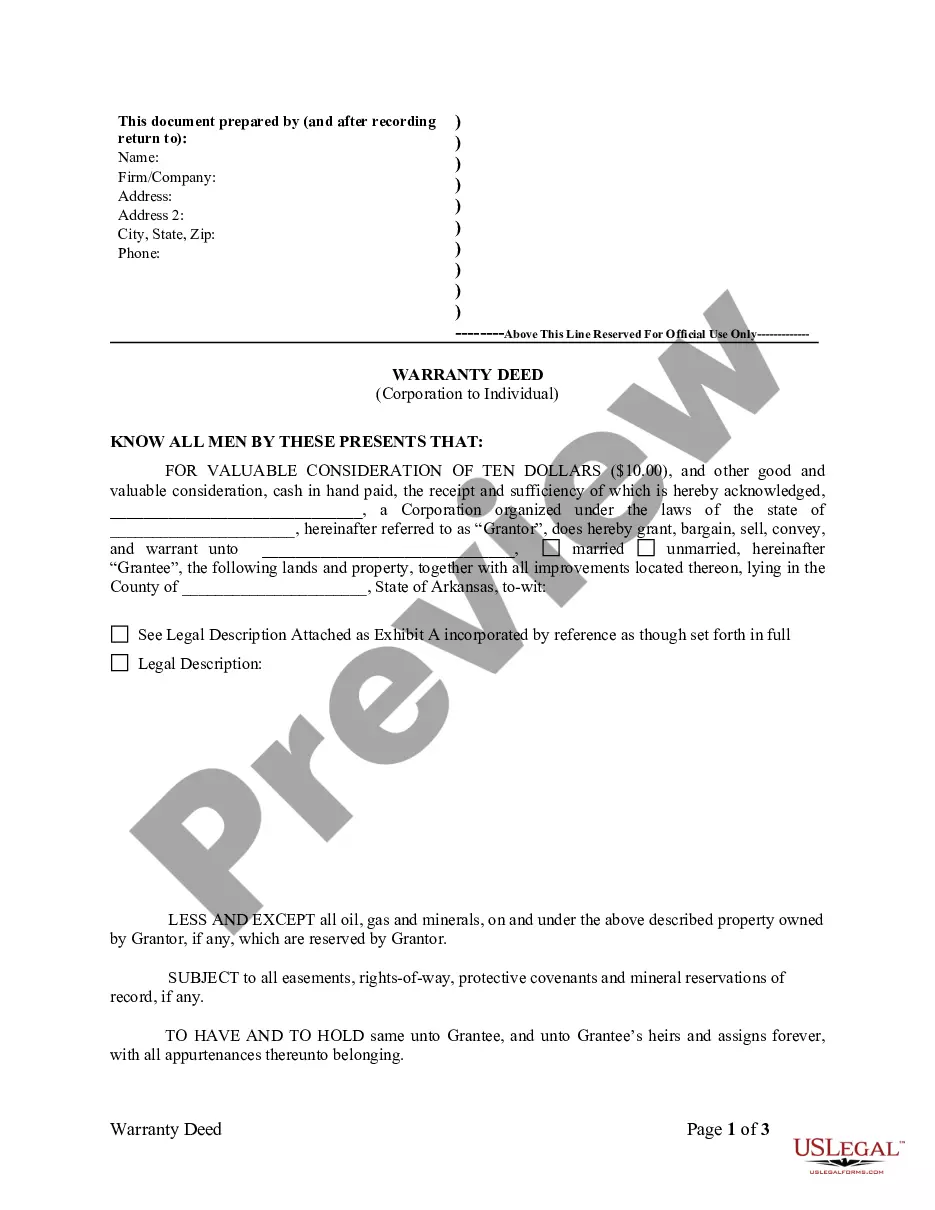
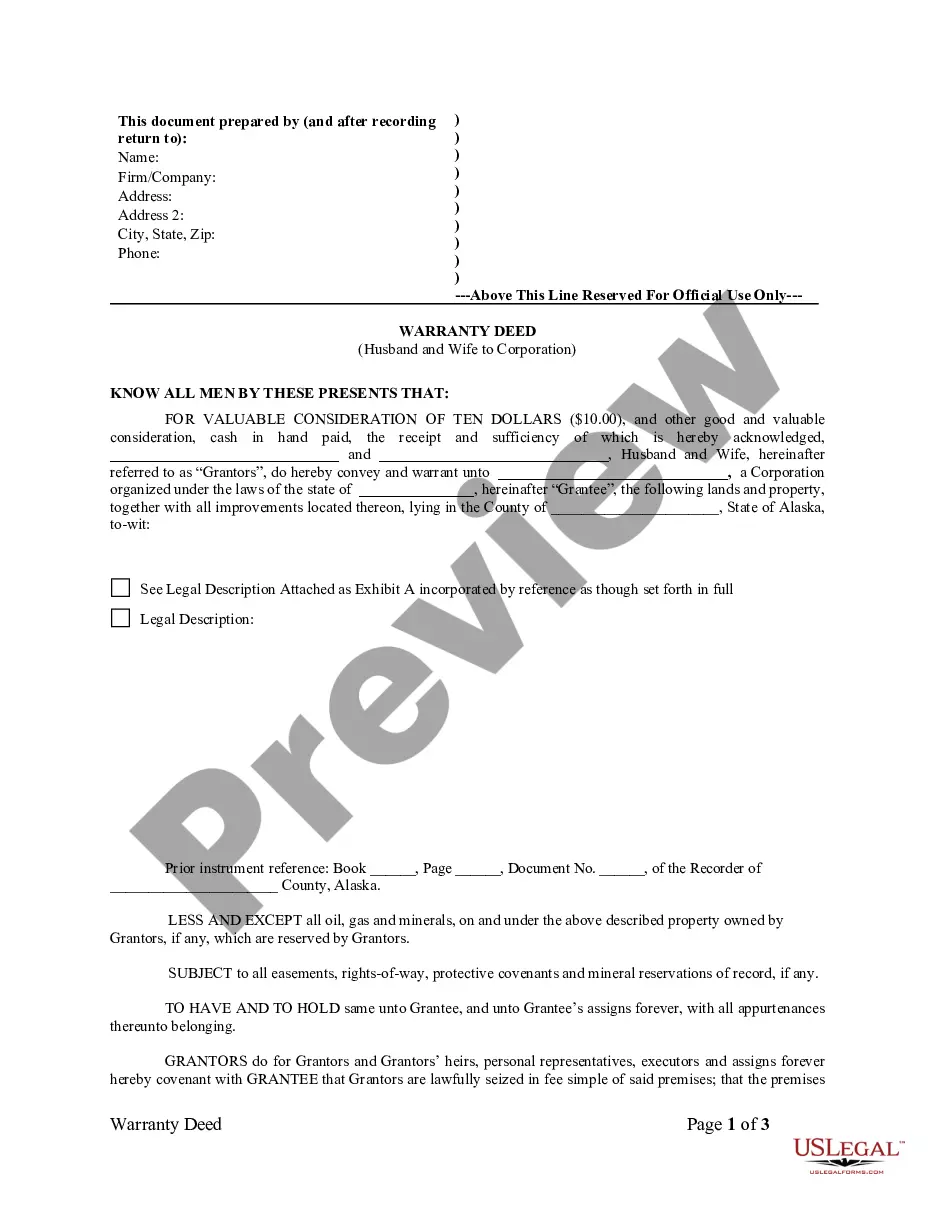
The Warranty Deed from Corporation to Individual is a legal document through which a corporation (the Grantor) transfers property ownership to an individual (the Grantee). This form ensures that the property is conveyed free of any encumbrances, except for specifically noted reservations, such as oil, gas, and minerals. It is important to differentiate this type of warranty deed from others, as it specifically involves corporate entities as parties to the transaction, ensuring compliance with state laws.
Key parts of this document
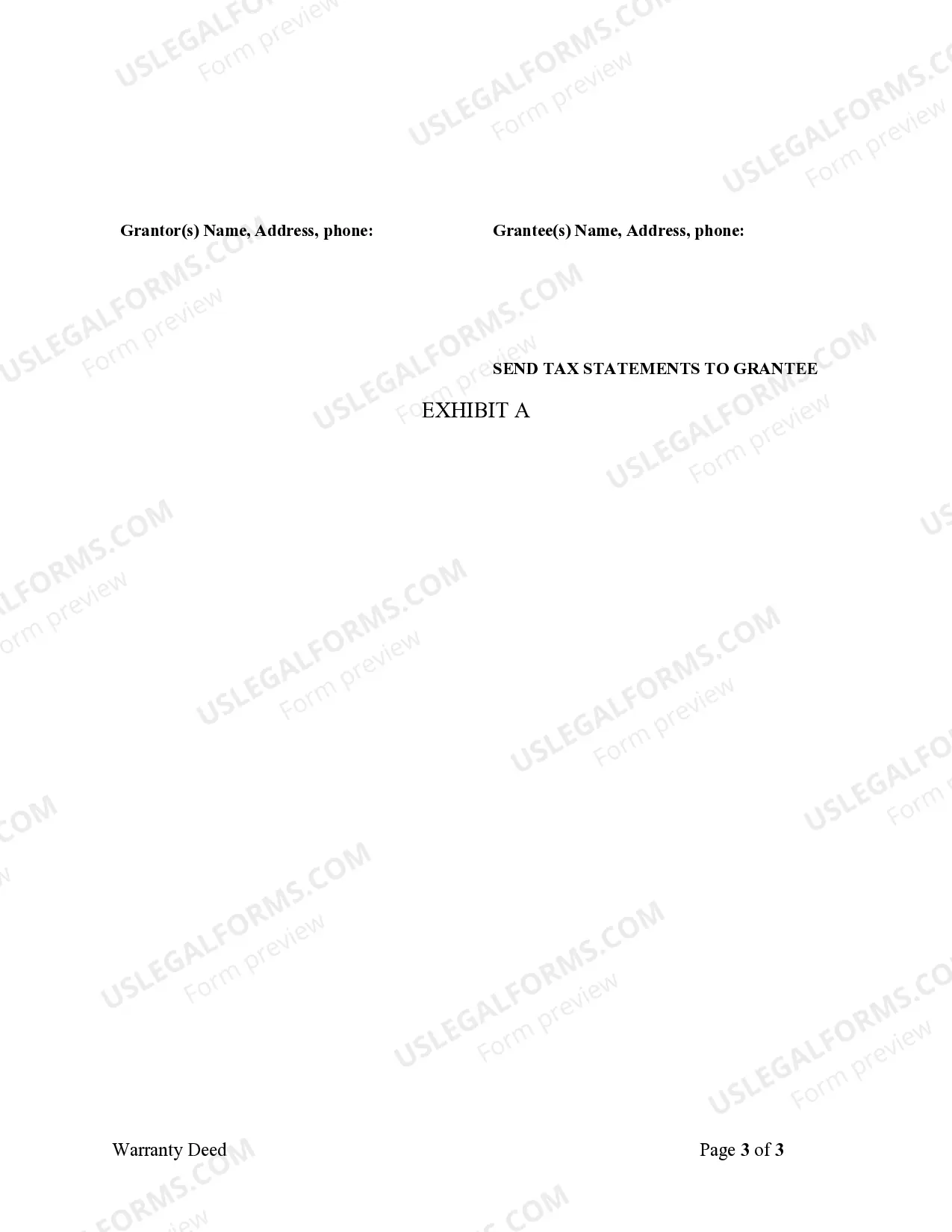
- Legal description of the property attached as Exhibit A.
- Grantor's covenant stating they hold clear title to the property.
- Exclusions for oil, gas, and minerals if applicable.
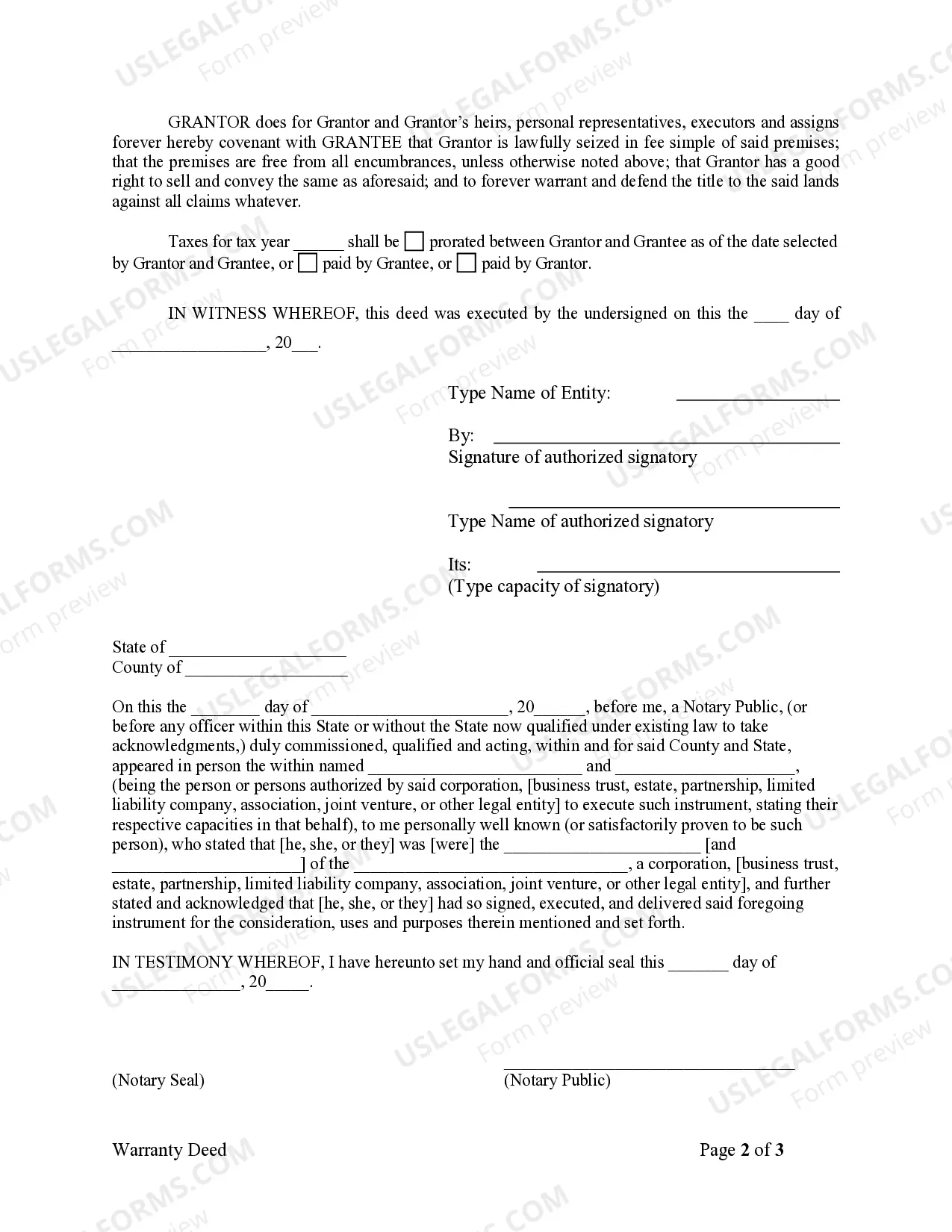
- Proration of taxes for the selected tax year between Grantor and Grantee.
- Signature of a notary public to validate the deed.




Common use cases
This form should be used when a corporation wishes to transfer ownership of real property to an individual. Examples of scenarios include a business liquidation, transferring property as a gift, or completing a sale of corporate real estate assets. It protects the Grantee by providing legal assurances about the title and any encumbrances.
Who can use this document
This form is intended for:
- Corporations that own real estate and want to transfer ownership.
- Individuals receiving property from a corporation.
- Attorneys assisting clients in real estate transactions involving corporations.
Completing this form step by step
- Identify the parties: Confirm the corporation's and individual's names and details.
- Specify the property: Attach the legal description in Exhibit A accurately.
- Include any exclusions: Note any reservations regarding oil, gas, and minerals.
- Determine tax prorations: Agree on how taxes will be handled for the fiscal year.
- Obtain notarization: Have the document signed in front of a notary public for validation.
Does this form need to be notarized?
This document requires notarization to meet legal standards. US Legal Forms provides secure online notarization powered by Notarize, allowing you to complete the process through a verified video call, available 24/7.
Get your form ready online
Our built-in tools help you complete, sign, share, and store your documents in one place.
Make edits, fill in missing information, and update formatting in US Legal Forms—just like you would in MS Word.
Download a copy, print it, send it by email, or mail it via USPS—whatever works best for your next step.
Sign and collect signatures with our SignNow integration. Send to multiple recipients, set reminders, and more. Go Premium to unlock E-Sign.
If this form requires notarization, complete it online through a secure video call—no need to meet a notary in person or wait for an appointment.
We protect your documents and personal data by following strict security and privacy standards.

Make edits, fill in missing information, and update formatting in US Legal Forms—just like you would in MS Word.

Download a copy, print it, send it by email, or mail it via USPS—whatever works best for your next step.

Sign and collect signatures with our SignNow integration. Send to multiple recipients, set reminders, and more. Go Premium to unlock E-Sign.

If this form requires notarization, complete it online through a secure video call—no need to meet a notary in person or wait for an appointment.

We protect your documents and personal data by following strict security and privacy standards.
Typical mistakes to avoid
- Failing to accurately describe the property in Exhibit A.
- Not including all necessary signatures and notary acknowledgment.
- Omitting specific reservations regarding oil, gas, and minerals.
- Inaccurately handling tax proration agreements.
Why use this form online
- Easy access to professionally drafted templates that meet legal standards.
- Time-saving download feature, allowing for immediate use.
- Editability lets users customize details specific to their transaction.
- Continuous updates ensure compliance with current laws and regulations.
Main things to remember
- The Warranty Deed from Corporation to Individual is essential for facilitating property transfers from corporations to individuals.
- Key elements include a detailed property description and tax prorations.
- Notarization is required for the deed to be legally enforceable.
- Using this form online offers convenience and legal assurance.
Looking for another form?



Form popularity
FAQ
To record a warranty deed in Arkansas, you'll first need to complete the Arkansas Warranty Deed from Corporation to Individual. Ensure that all necessary details, such as the grantor's and grantee's information, are accurate. Next, take the completed deed to the county clerk's office where the property is located. Recording the deed formally establishes the transfer of ownership, ensuring that your interests are protected.
A special warranty deed requires the names of the grantor and grantee, the legal description of the property, and the grantor's signature. Furthermore, it must include a statement that limits the grantor's liability to matters arising during their ownership. These components together create an effective legal instrument for property transfer.
Yes, a warranty deed can be transferred, similar to other types of property deeds. The new owner must execute a new deed to formalize the transfer, ensuring they have all the applicable details for proper documentation. Utilizing the Arkansas Warranty Deed from Corporation to Individual allows for a smooth transition of ownership.
A special warranty deed is a type of deed where the grantor guarantees the title against defects during their ownership period but not before that. This means the grantor is only responsible for issues they created. It's a less comprehensive guarantee than a full warranty deed, making it important to evaluate when obtaining an Arkansas Warranty Deed from Corporation to Individual.
To draft a valid special warranty deed in Arkansas, you must include essential elements such as the names of the parties, property legal description, and grantor's signature. Furthermore, the deed should state that the grantor only warrants the title against issues that arose during their ownership. These details ensure the document fulfills legal specifications.
The primary limitation of a special warranty deed is that it only guarantees the title against defects that occurred during the time the grantor owned the property. Therefore, it does not protect the grantee from any claims made before the grantor acquired the property. Understanding this is key when considering the Arkansas Warranty Deed from Corporation to Individual.
A warranty deed in Arkansas must include the names of the grantor and grantee, a legal description of the property, and clear language indicating the transfer of ownership. Additionally, it needs the signature of the grantor and must be notarized. This creates a legally binding document that safeguards ownership rights.
Yes, when a corporation transfers ownership of property, the deed must be signed to be valid. The signing must be done by an authorized representative of the corporation, ensuring that the document reflects the corporation's intent to transfer the property. This is crucial for the Arkansas Warranty Deed from Corporation to Individual process.
To transfer ownership of a property in Arkansas, you need to prepare a deed, typically a warranty deed. Complete the Arkansas Warranty Deed from Corporation to Individual by including necessary details such as the names of the parties, legal description of the property, and signature of the grantor. Once completed, file the deed with the appropriate county clerk's office to make it official.
Transferring a warranty deed first involves completing the deed with accurate details of both the grantor and grantee. After filling out the deed, sign it in front of a notary and then file it with your local county clerk's office. This is essential to finalize the transfer under the Arkansas Warranty Deed from Corporation to Individual.