Alabama Last Will and Testament for a Married Person with No Children
What this document covers
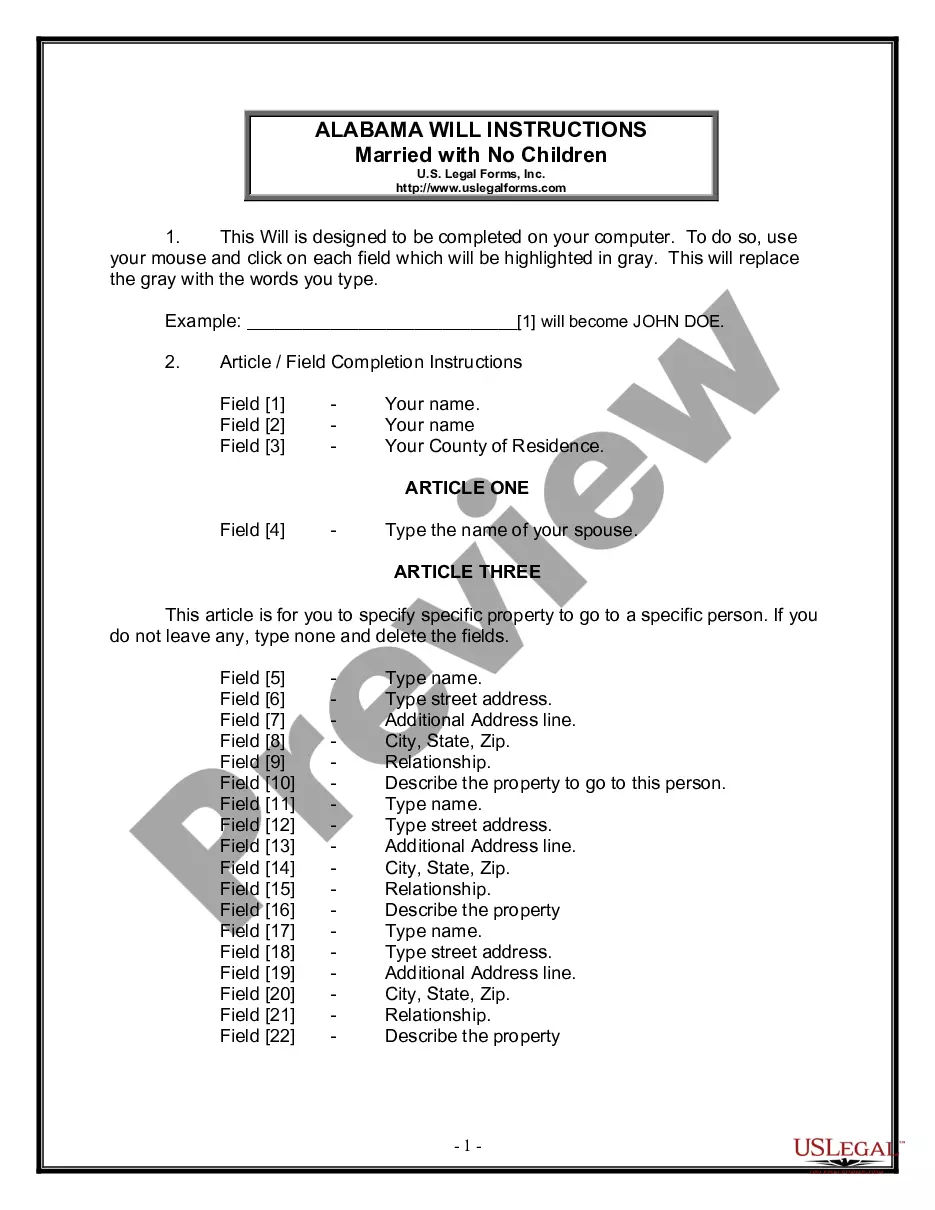
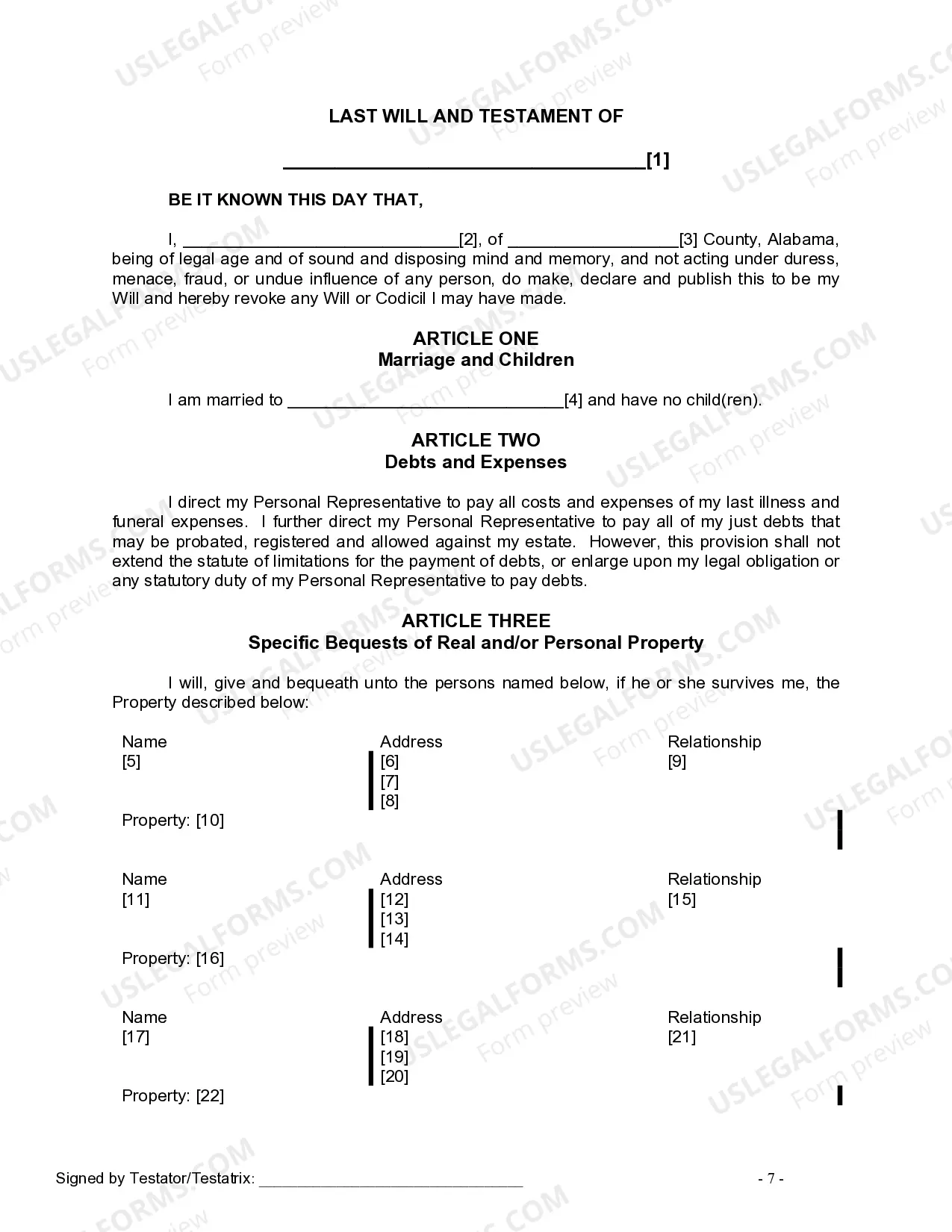
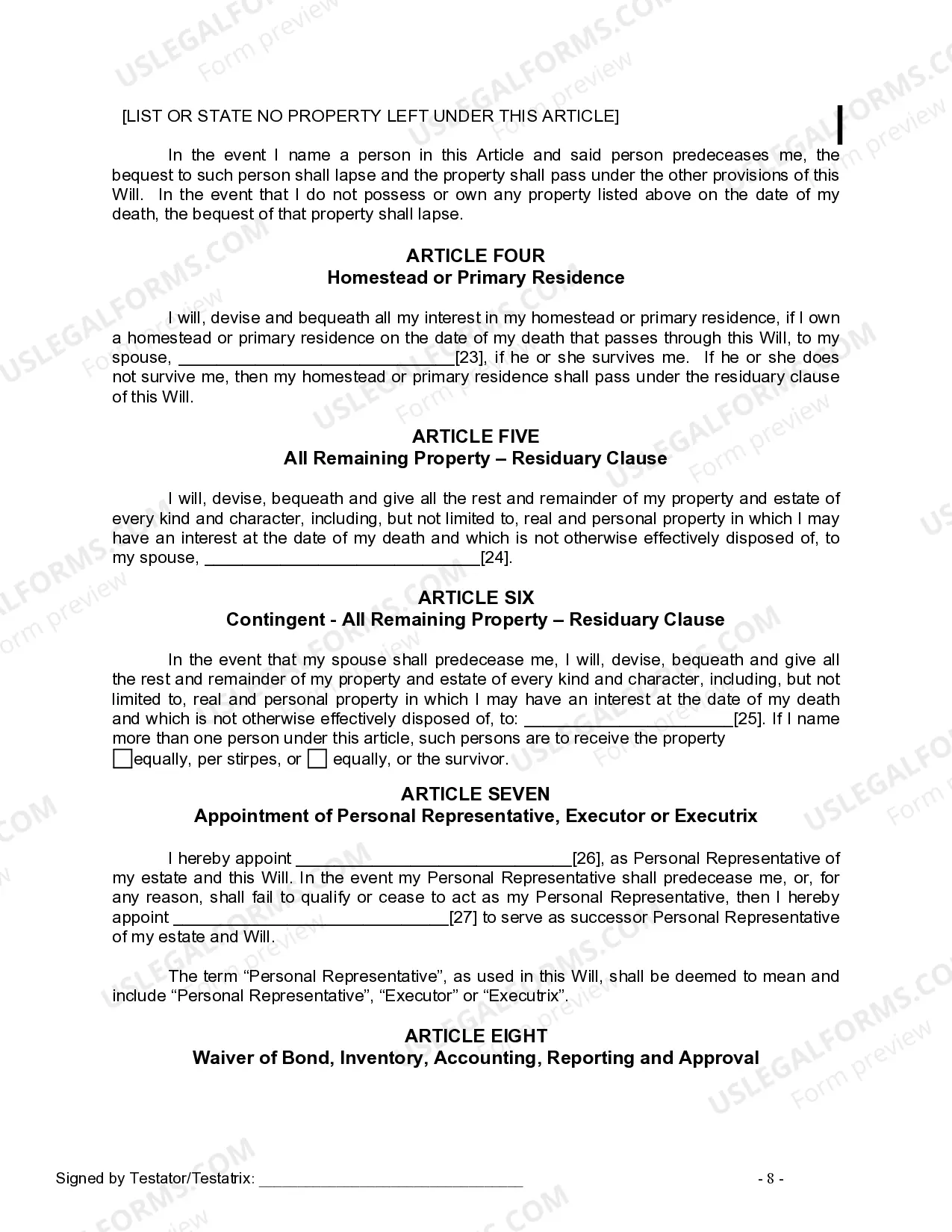
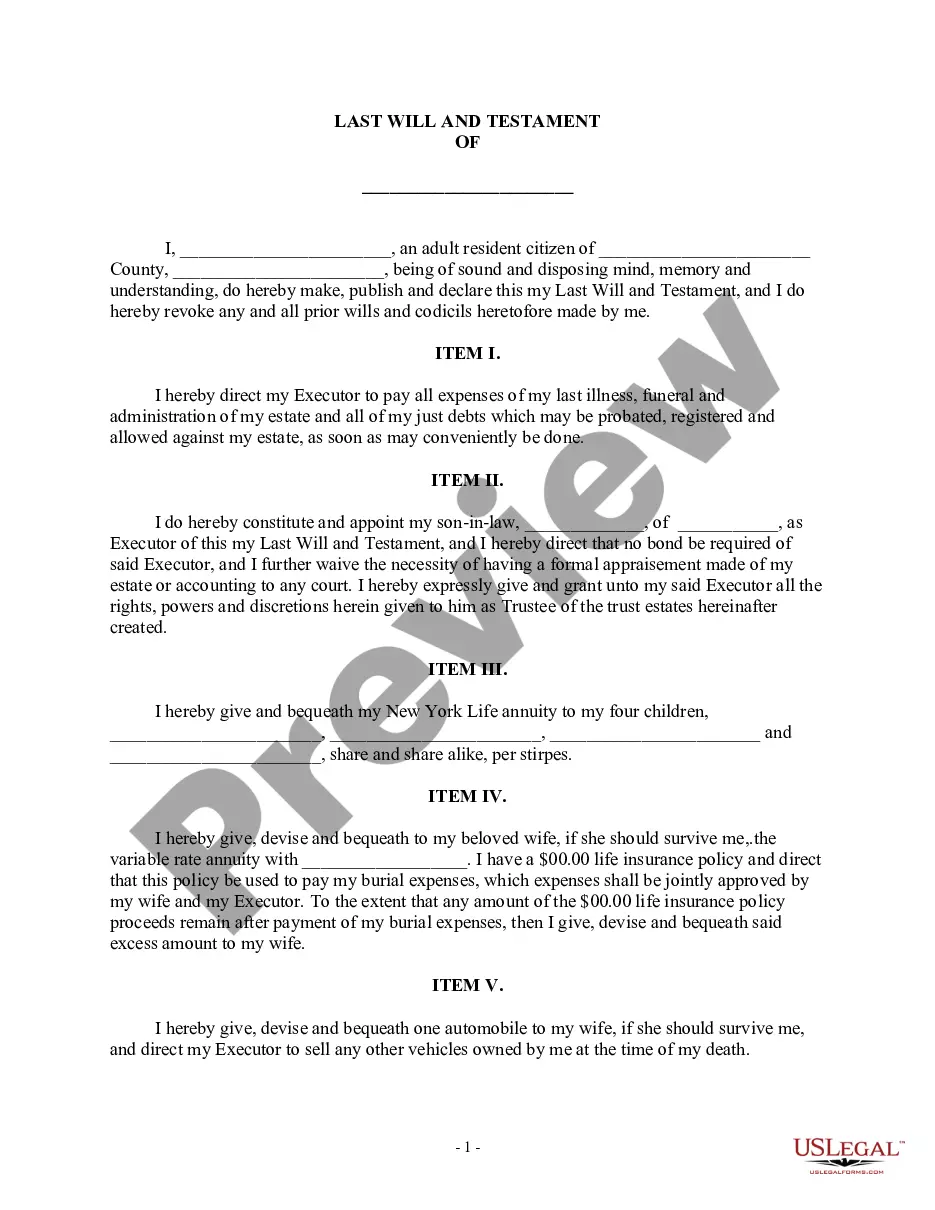
This Last Will and Testament for a Married Person with No Children is a legal document that outlines how a personâs assets will be distributed upon their death. Specifically designed for married individuals without children, this will allows the creator to appoint a personal representative, designate beneficiaries, and provide instructions for their estate. Unlike other wills, this version emphasizes spousal rights and divides property accordingly.
Key parts of this document
- Personal Information: Includes the testator's name and county of residence.
- Spouse Designation: Specifies the name of the spouse who will inherit property.
- Specific Bequests: Lists any specific items or property intended for designated individuals.
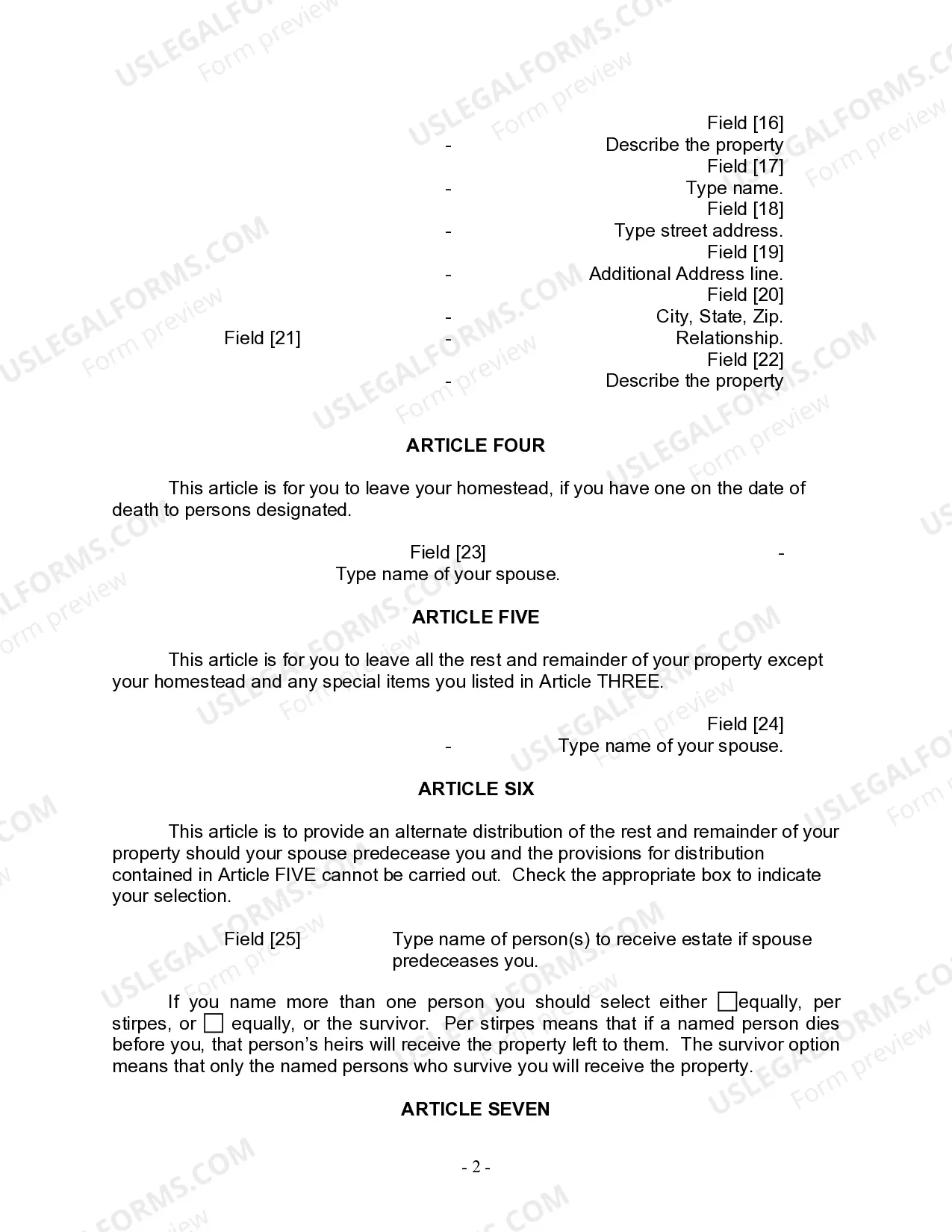
- Homestead Provision: Addresses the distribution of the primary residence to the spouse.
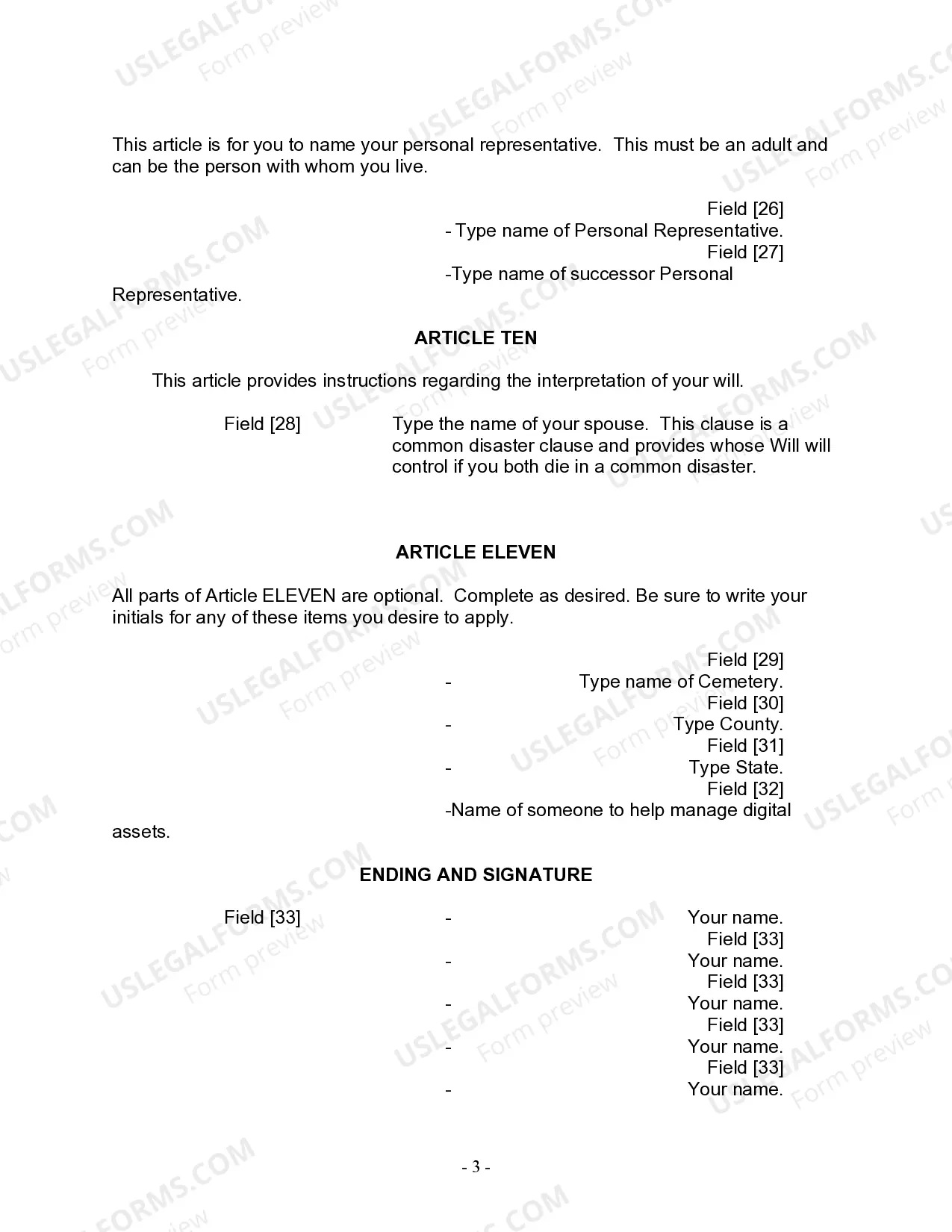
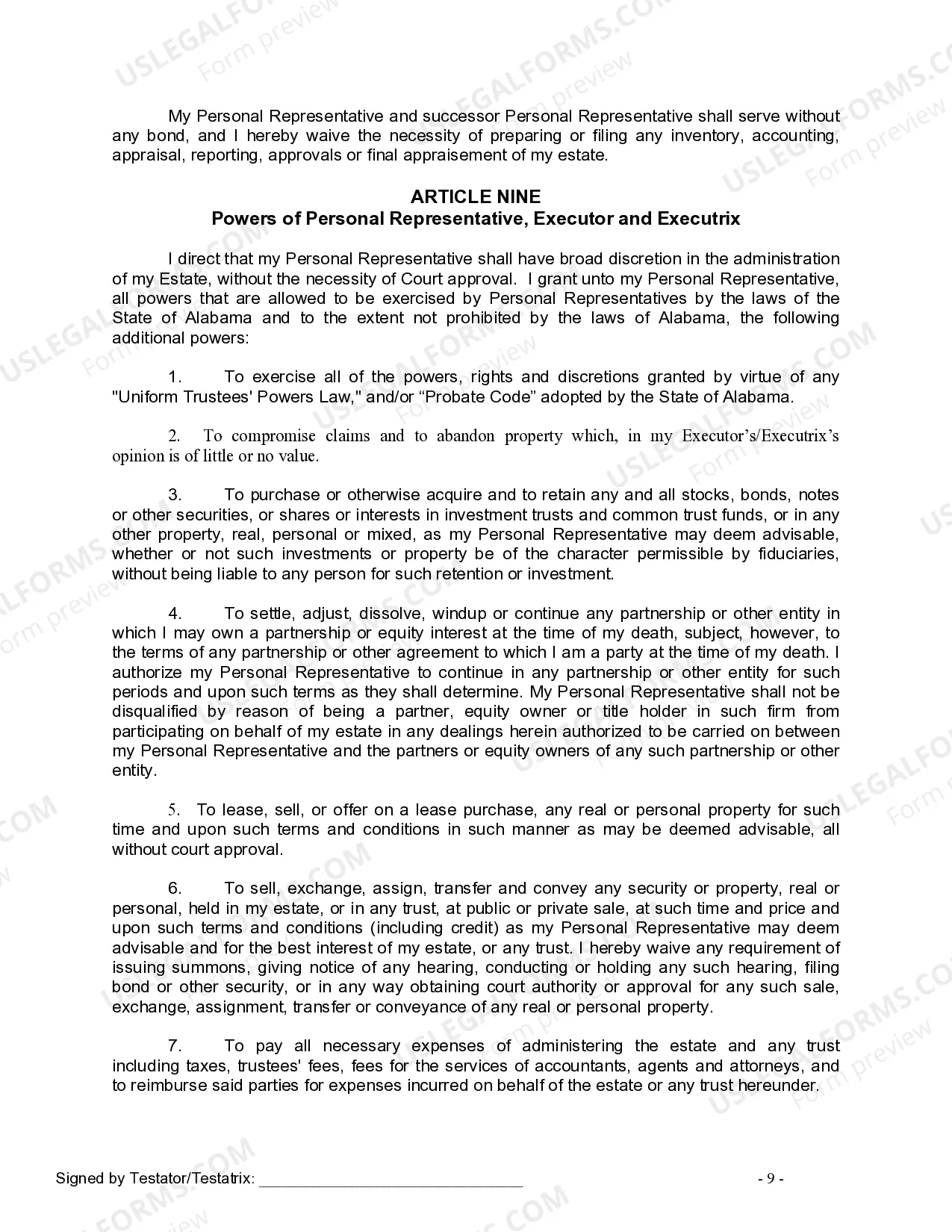
- Personal Representative: Allows the appointment of an executor to manage the estate.
- Self-Proving Affidavit: Includes provisions for notarization to streamline the probate process.




Common use cases
This form is essential when a married person with no children wants to clearly define how their assets will be allocated after their death. It is particularly useful for individuals who want to ensure their spouse is the primary beneficiary and to avoid potential disputes among family members. Utilize this form to make your wishes known and legally binding, preventing the default rules of intestacy from applying.
Who should use this form
- Married individuals without children.
- Individuals seeking to designate a personal representative for their estate.
- Those who wish to specify how their property and assets will be distributed after their death.
- Individuals looking to streamline the probate process with a self-proving affidavit.
How to complete this form
- Identify all parties involved: include your name, residence, and your spouseâs name.
- Specify any specific property you wish to leave to designated individuals.
- Fill in provisions regarding your homestead, directing it to your spouse.
- Appoint a personal representative responsible for managing your estate.
- Obtain the necessary signatures from witnesses and a notary if including a self-proving affidavit.
Does this form need to be notarized?
Yes, this form must be notarized to be legally valid. Notarization helps ensure the authenticity of the signatures and can expedite the probate process. With US Legal Forms, you have access to secure online notarization services available 24/7, allowing you to complete this step easily.
Get your form ready online
Our built-in tools help you complete, sign, share, and store your documents in one place.
Make edits, fill in missing information, and update formatting in US Legal Forms—just like you would in MS Word.
Download a copy, print it, send it by email, or mail it via USPS—whatever works best for your next step.
Sign and collect signatures with our SignNow integration. Send to multiple recipients, set reminders, and more. Go Premium to unlock E-Sign.
If this form requires notarization, complete it online through a secure video call—no need to meet a notary in person or wait for an appointment.
We protect your documents and personal data by following strict security and privacy standards.

Make edits, fill in missing information, and update formatting in US Legal Forms—just like you would in MS Word.

Download a copy, print it, send it by email, or mail it via USPS—whatever works best for your next step.

Sign and collect signatures with our SignNow integration. Send to multiple recipients, set reminders, and more. Go Premium to unlock E-Sign.

If this form requires notarization, complete it online through a secure video call—no need to meet a notary in person or wait for an appointment.

We protect your documents and personal data by following strict security and privacy standards.
Common mistakes to avoid
- Failing to have the will signed in the presence of required witnesses.
- Not updating the will after significant life changes, such as marriage or purchasing property.
- Overlooking the inclusion of a self-proving affidavit, which can complicate the probate process.
Benefits of using this form online
- Convenience of completing the form from home and at your own pace.
- Editability allows you to revise any details before finalizing the document.
- Access to legally sound templates drafted by licensed attorneys, reducing errors.
Looking for another form?
Form popularity
FAQ
To ensure your will is valid in Alabama, it must meet three essential criteria. First, you must be at least 18 years old and of sound mind. Second, your will needs to be in writing and signed by you or a person at your direction. Lastly, it must be witnessed by at least two individuals who are present at the same time. These criteria are crucial for creating a legal Alabama Last Will and Testament for a Married Person with No Children.
In Alabama, notarization is not a requirement for the validity of a will. However, using a self-proving affidavit can streamline the probate process. This can be particularly beneficial for your Alabama Last Will and Testament for a Married Person with No Children, as it allows you to affirm the will’s authenticity without the need for witnesses later. Therefore, while notarization is not mandatory, it is a useful option.
Several factors can render a will invalid in Alabama. Common reasons include lack of proper execution, being under undue influence, or lacking mental capacity at the time of signing. Moreover, if the will does not meet the specifications for an Alabama Last Will and Testament for a Married Person with No Children, it may also face challenges. Ensuring compliance with these rules helps ensure that your wishes are honored.
In Alabama, you do not need to register your will for it to be valid. A will becomes effective once executed according to the state's requirements. However, keeping your Alabama Last Will and Testament for a Married Person with No Children in a safe place and informing your spouse or a trusted person about its location is advisable. This practice can ease the process of locating it after your passing.
While a spouse is often the primary beneficiary in Alabama, they do not automatically inherit everything. If you leave behind children, the distribution may change according to state laws. By creating an Alabama Last Will and Testament for a Married Person with No Children, you can ensure your spouse inherits precisely what you wish.
In Alabama, a spouse is entitled to a share of the deceased partner's estate as dictated by state law. If there are no children, the spouse generally inherits all property without any division. However, specifying this in an Alabama Last Will and Testament for a Married Person with No Children helps clarify your wishes and avoid potential disputes.
If a person dies without a will in Alabama, their estate is distributed according to the state's intestacy laws. In such cases, a spouse inherits the estate first, and if there are no children, the spouse receives everything. This is why having an Alabama Last Will and Testament for a Married Person with No Children is so important—it clearly outlines your wishes.
When a person passes away without a will, Alabama's laws dictate the order of inheritance. Typically, the spouse is first in line, followed by children, parents, and then siblings. For those with an Alabama Last Will and Testament for a Married Person with No Children, the order may change based on the will's instructions.
In the absence of a will, property typically passes to a spouse in Alabama, as the law prioritizes marital rights. This means that if you do not create an Alabama Last Will and Testament for a Married Person with No Children, your spouse will generally inherit your estate. However, having a will allows you to specify any unique desires for distribution.
In Alabama, a last will and testament does not override the legal rights conferred by marriage. When you create an Alabama Last Will and Testament for a Married Person with No Children, it is important to note that your spouse has certain rights to inherit regardless of your will's provisions. Therefore, you should clearly state your intentions in the will to avoid confusion.